Feeds:
Posts
Comments

Posts Tagged ‘survival’

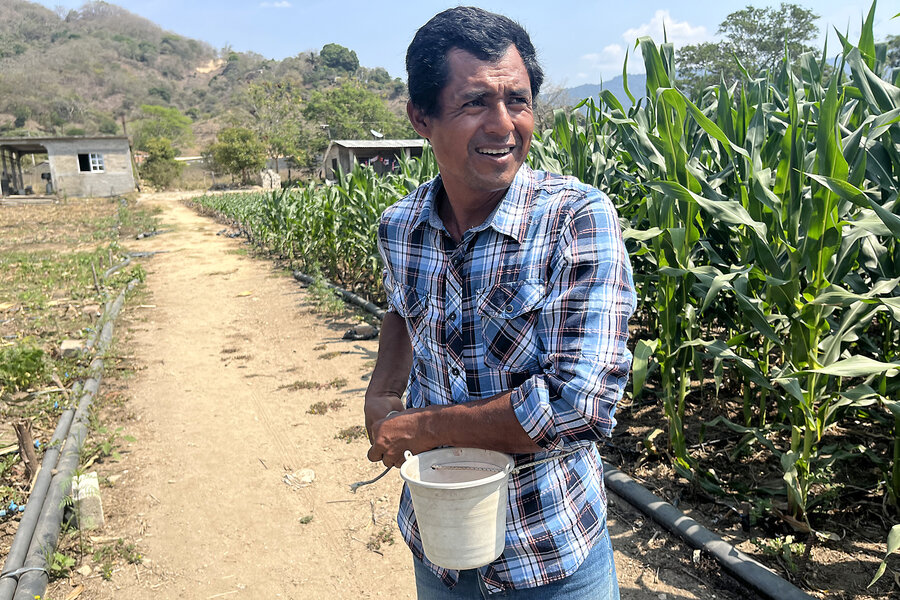
Photo: Whitney Eulich.
Fernando Matus Hernández ties a small bucket filled with heirloom corn kernels around his waist before planting them on his family’s farm in Oaxaca, Mexico.
Small farms like his are an endangered species.

Agricultural capitalism is making it hard for small farms to survive, but so are some environmental regulations, normally a public good. How can we protect both the environment and the small farms that feed us?

At the Christian Science Monitor, Erika Page, Whitney Eulich, and Srishti Jaswal have an in-depth report on the challenges facing farmers today.

“Julie De Smedt tries not to picture her future too often. When she does, she has trouble imagining herself anywhere but here, planted on this stretch of fertile land that runs from her childhood home to the River Scheldt.

“Her family’s cattle ranch is the last farm left on this sleepy Belgian country road. If she were a statistic, she would have left for the city. But at 21 years old, she’s made up her mind.

“ ‘I want to take over the farm,’ says Ms. De Smedt, who lives doors down from her grandparents and cousins on both sides. ‘I don’t want to be anywhere else.’

“But she knows how unlikely her dream is. Sometime soon, all her family farm’s land will be converted into a nature reserve. The European Union is pushing to restore ecosystems in the face of widespread environmental degradation, which contributes to climate change, so the state has expropriated their land.

“The family is not against green policies. ‘There has to be nature, and there have to be people who defend nature,’ says Wendy Vasseur, Ms. De Smedt’s mother, looking through the back door of a cow barn at the line of trees that marks the boundary of the future reserve. But nobody seems to care what will become of their family and the life they have built on this land, they say. …

“Small-farm owners around the globe, in fact, are feeling that same sense of helplessness. From Germany and Spain to India and Canada, farmers are rising up to protest not only burdensome new environmental regulations but also the impact of corporate mega-farms and cheap food imports, which have caused their costs to rise and their profits to fall dramatically. So, many around the world have driven their tractors into capital cities, sometimes spraying manure on city streets and sidewalks. They’ve blocked major freeways, set fires in urban metro stations, and demanded changes to policies that, to them, feel like death sentences. 

“ ‘What they want is a decent living,’ says Morgan Ody, general coordinator of La Via Campesina, an international small-farmers organization. ‘What they want is respect for their work.’

It would be a mistake, she says, to see the latest wave of protests as simply right-wing backlash against the green agenda.

“True, some farmers oppose green policies on political grounds, but many support them. As rural areas lose population, farmers on every continent say they are being sacrificed to meet the demands of a society that no longer values the people who feed it. …

“A cow and a pig were all Ms. De Smedt’s grandfather needed to open this farm in the 1950s. As agriculture intensified and industrialized, the farm, too, grew. Today, the wooden barns the family built itself hold 250 cattle, whose meat is sold mainly to French grocery chain Carrefour. 

“They fatten their cows on corn and beets they grow on the land destined for the nature reserve. And they will continue for as long as they can, Ms. Vasseur says. But it is a perpetual battle to keep the farm going, and Ms. Vasseur has to work a full-time job at a nearby factory to make ends meet.

“The price they can charge for their beef has not kept up with the rising costs of inputs such as fertilizer and pesticides needed to keep poisonous weeds at bay. Now, the family business has to deal with rules governing crop rotation and fallow land. …

“Their story has repeated itself around the world for decades, says Timothy Wise, a researcher and senior adviser at the Institute for Agriculture and Trade Policy, an international nonprofit that promotes sustainable food production. ‘Bigger farms get bigger, and smaller farms disappear. Rural communities just get hollowed out.’ 

“Between 2005 and 2020, the EU lost nearly 40% of its farms and over 5 million farmers, most of them smallholders. At the same time, the amount of land being farmed has stayed the same. …

“That isn’t how Lieven Nachtergale wants things to end. As coordinator of the Sigma Plan, the project responsible for Belgium’s new nature reserve, Mr. Nachtergale does not enjoy removing farmers from their land. He does, however, think it’s necessary: Natural habitats in the densely populated region of Flanders have been badly degraded, and floods pose a growing risk. In such cases, the needs of the land, if not the planet, must take precedence.

“But the real problem he sees is a model of intensified agriculture that has become so disconnected from the natural world. Fields treated with herbicides, pesticides, and heavy doses of fertilizer leave native species next to no room to thrive, he says. 

“The EU’s Nature Restoration Law requires countries to restore 30% of their natural ecosystems by 2030 and 90% by 2050. Mr. Nachtergale’s team is helping Flanders establish 36,000 hectares (almost 90,000 acres) of nature reserve, the equivalent of 5% of the land area being farmed.

“Over the years, he has grown increasingly interested in figuring out how nature and agriculture might better work together. He is working on a pilot project that would give farmers who want to produce in a ‘nature-inclusive’ way 2 hectares of land (5 acres) for every hectare of their own that they contribute. The goal is to restore ecosystems while keeping family farmers on the land. 

“ ‘We will need farmers in the future to do this kind of management,’ he says. But he recognizes the challenge of competing with bigger industrialized farms. ‘If we want to change the system and give the farmers a better future, I think we should pay more for what they are producing.’ “

More from farmers around the world at the Monitor, here. No paywall. Subscriptions welcome.
Read Full Post »

110620ebola_congo20nurse

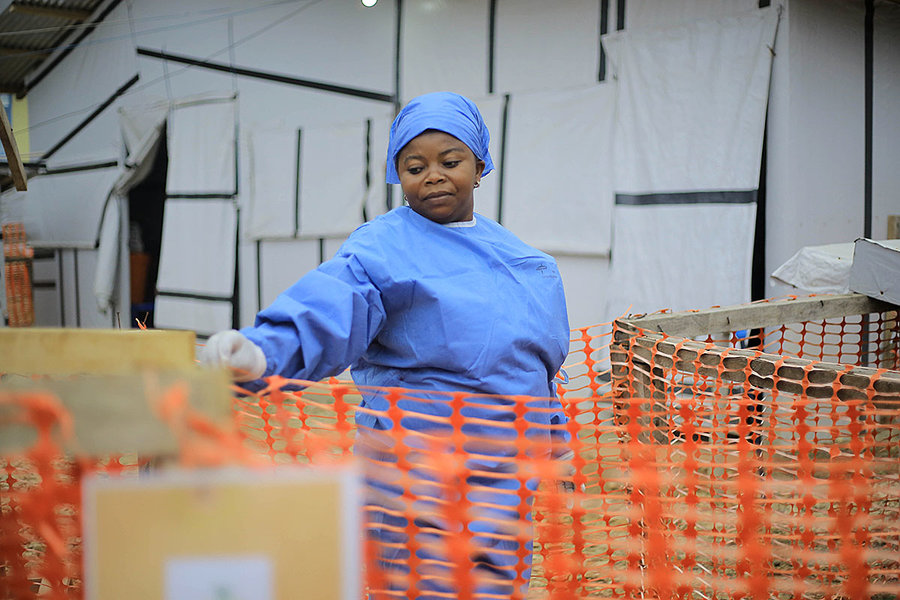
Photo: Kudra Maliro
Regina works at the Ebola treatment center in Beni, Congo, where she was once a patient. She often tells other patients, “I had this horrible thing, too, and look at me now. You can’t give up.”

When people recover from a natural disaster or a disease that loved ones did not survive, rather than feeling elated to be alive, they may feel only darkness about their losses. Some have learned to try healing their spirits a bit by helping others in similar situations.

Ryan Lenora Brown writes at the Christian Science Monitor, “When Regina Kavira Mbangamuke’s toddler son fell sick late last year, she did what any mother would. She pressed his feverish body to hers. She wiped away his tears and his sweat. She whispered tiny comforts in his ear. Don’t be afraid, my baby.

“And when he died, she fell into a sadness so deep and physical it took a week for her to realize there might be something else wrong.

“Ebola can be like that, Ms. Mbangamuke knows now. First it tries to take the people you love most in the world. And then it tries to kill you too.

“But as she tells her story to her patients at the Ebola treatment center in this city in eastern Congo, where she now works as a nursing assistant, it has a more hopeful postscript.

‘I say, my brother, my sister, I had this horrible thing too, and look at me now,’ she says. ‘You cannot give up.’

“Like nearly every one of the 1,000 people who have survived Ebola in eastern Congo in the past 15 months, Ms. Mbangamuke’s survival is interlaced with profound loss.

“But Ebola also affords les guéris – the cured – with an unusual opportunity. They are considered likely immune to the disease, and so also to the cruel distance it demands. They don’t need to wear the spacesuit-like protective gear that other Ebola responders don to avoid touching the sick. They can hold hands and rock babies. They can hug and clean and console. And in a place where trust in outsiders is in short supply, the hundreds of survivors who now work in the Ebola response provide something else: familiarity.

“ ‘This work helps the response, but it also helps the people doing it,’ says Solange Kahambu Kamuha, a psychologist with UNICEF, the U.N. children’s agency, in Beni. …

“[A] young man in bed shakes his head weakly. No, he says, he won’t go. He heard that everyone who goes into an Ebola treatment center dies. From the outside, rumors like this can sound fanciful. The disease was invented by the rich to make money. The disease was brought in to kill the political opposition. Hospitals inject their patients with Ebola to keep the outbreak going.

“But each outlandish-seeming rumor contains a kernel of truth. … Even the idea that patients are being infected in hospitals is rooted in the truth that many have gotten sick after visiting one. …

“There is simply little reason to believe that outsiders ever have their best interests at heart, says [Dr. Maurice Kakule Mutsunga, the chair of the local Ebola survivors organization]. ‘All around, people see tanks and U.N. soldiers, and still our war doesn’t end,’ he points out, referring to the decades of civil war that have roiled this part of Congo. Why should Ebola, and its new army of outsiders, be any different?

“Ms. Mbangamuke sees the skepticism, and to her too, it makes sense. Ebola has broken all of society’s rules.

“ ‘Here in the Congo, to take care of people is the normal thing, but in times of Ebola people cannot do the normal thing’ for their own families, she says.

“For her, it is still nearly impossible to make sense of a world that would take her child and spare her. The camaraderie she feels with her colleagues, their unspoken understanding, the easy laughter that passes between them as they mix sugary cups of tea in the break area, none of it gives meaning to her son’s death. But it is a way for her to try to restore some measure of balance.

“ ‘Every old woman I see [in the treatment center], she becomes like my own mother. Every baby, it’s like my own baby.’ ”

More at the Christian Science Monitor, here.

Read Full Post »

80ced23a-0936-4595-a3aa-f67f8329d099_750x422

Photo: NOAA
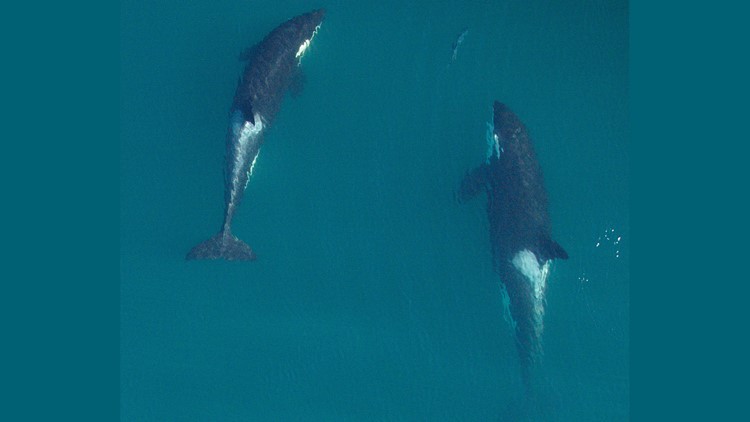
Aerial image of Granny J2 (right) and a juvenile orca, J45, chasing a salmon in September 2016. Ultimately J2 captured the salmon and presented it to J45.

Being a grandparent himself, my husband recently took note of some research on grandmothers in the animal kingdom and judged it blogworthy. This version of the story appeared online at King5News.

Michael Crowe reports, “A team of researchers have found having a young orca’s grandmother around improves survival of the offspring. A study published last week in the Proceedings of the National Academy of Sciences tests the ‘grandmother effect’ in Southern and Northern Resident killer whales off Washington state and British Columbia. …

“The study used decades of photo census records of the two populations to study survival of individual whales and connected family groups through observation. And they found if a grandmother whale died, it reduced the survival of her ‘grandwhales’ in the two years following her death.

“ ‘The statistics showed they were healthier and lived longer when they had a thriving grandmother,’ said Howard Garrett, co-founder of the Orca Network.

“Dr. Deborah Giles, a killer whale researcher at the University of Washington Center for Conservation Biology, said the study confirmed decades of observations.

“ ‘They’re incredibly socially bonded animals,’ Giles said. She said it’s a fascinating relationship, because whales can live decades after they cease reproducing – killer whales have evolved one of the longest post-reproductive spans outside humans.

“She recalled an aerial photo of J2 (also known as ‘Granny’) from 2016 sharing fish with J45 – her apparent great-grandson. J45’s mother had recently died, and he was not yet old enough to thrive without support. Though J2 was thin and towards the end of her life, she helped the younger relation.

‘It sticks out to me, because this is an animal in here late 80s, maybe old as early hundreds,’ said Giles. ‘She’s clearly trying to keep that fish in the pathway of her relative so he’ll eat it. …

” ‘She could have eaten that fish in one bite, but she chose to corral it toward him so he’d grab it.’

“The study also notes the importance of grandmother whales in lean salmon years when the female leaders serve as ‘repositories for ecological knowledge.’ …

“ ‘The grandmothers have that long perspective, the multi-decade look at where the salmon have been, the nooks and crannies,’ said Garrett. ‘… So they’re constantly in that role of guide, mentor, teacher. They share not only their food, but their traditions, their ways.’ …

“There are 73 Southern Resident whales we know of, Giles said, and of that, there are just four grandmothers remaining – one in J pod, one in K pod, and two in L pod. She worries that these grandmothers will only become more important to the endangered Southern Resident killer whales’ survival. …

“Garrett also hopes deeper knowledge of the whales’ behaviors will encourage people to help protect them.

“ ‘I think the study helps people learn more detail, more higher resolution if you will, of how they live and who they are,’ he said. ‘They really are individuals with their own identities, their own roles, their own place in their societies and in their families. And the more we get to know them in that kind of intricate detail, the more we feel close to them, and want to help them in any way we possibly can.’ ”

More here.

Photo: Shutterstock
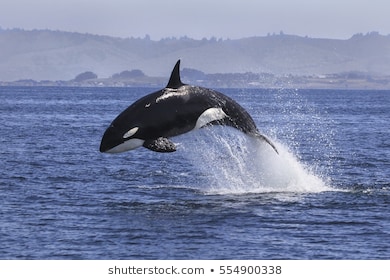
Another name for the orca is killer whale.

killer-whale-orcinus-orca-260nw-554900338

Read Full Post »

Well, I had a treat last week! I went to watch horseshoe crabs being tagged for research — kind of like birdbanding, but for crabs. The woman with the funny expression above was actually enjoying the whole thing and helping to take notes for the scientist, Kim Gaffett.

Kim, who may be best known to New Shoreham visitors for birdbanding, has been working for some years with Connecticut’s Sacred Heart University on an initiative called the Limulus Project. The idea is to learn more about the amazing horseshoe crab, a species that, depending on whom you ask, has managed to survive between two and five mass extinctions on Planet Earth, including the one that wiped out the dinosaurs.

In spite of their amazing record of survival, the crabs are considered threatened today, so it’s important to study them and try to find out what’s going on. As I wrote a few years ago, their blood has the ability to clot in the presence of bacteria, so it has become invaluable to pharmaceutical companies. Researchers are supposed to draw the blood as one would for a human and then have the fishermen return the crabs to the ocean, but that may not be happening consistently.

I asked Kim how she knew she would find any crabs that particular morning, and she told me that when there is a high tide and a full moon in June (flood tide), the horseshoe crabs come up to the shore to mate. The male has one claw like a boxing glove, with which he attaches to the female’s shell in order to be available when she drops her eggs. The eggs are fertilized outside the body. Sometimes other males are hanging around, and it’s possible for one batch of eggs to get fertilized by more than one male.

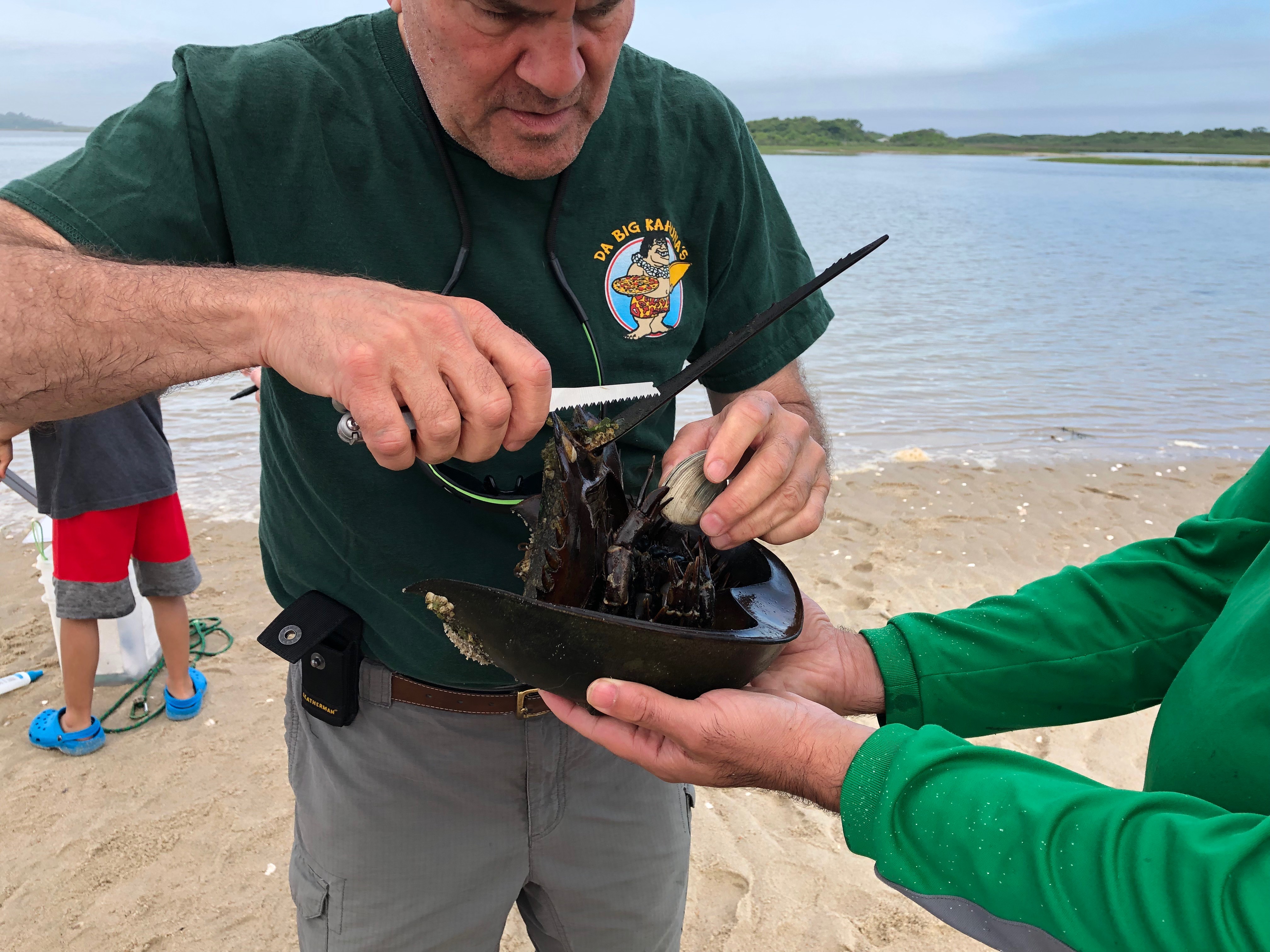
All sorts of marine life forms attach themselves to horseshoe crabs — seaweed, barnacles, slipper shells. Kim calls the crabs “their own ecosystem.” The crabs’ fellow travelers don’t usually cause any trouble, but as you can see below, a quahog had snapped onto a claw of one crab. A citizen scientist is shown detaching it.

From Phys.org, I read this about horseshoe crabs’ survival: “They have a special kind of blood, which … coagulates when it encounters bacteria. They can ‘wall up’ any wounds they receive.

“Another key to their survival seems to be their tolerance of habitats that fluctuate in salinity (levels of salt). When environmental changes happen, they can move to safety.

“An ability to live with low levels of oxygen is also important. [Natural History Museum expert Richard Fortey] adds, ‘The horseshoe crab was able to cope with periods of oceanic deoxygenation that were fatal to many marine organisms.’ ”

I was also interested in what Quartz had to say: “These amazing crab species are among the handful of species referred to as ‘living fossils’ because their current form resembles those found in the fossil record. Externally at least, the crab hasn’t changed much in nearly 450 million years. In that time, it has survived all five of Earth’s great mass extinctions, the worst of which killed off an estimated 95% of all marine species, and the most recent of which did away with the dinosaurs. …

“The crab’s blue blood contains a chemical called limulus amebocyte lysate (LAL), which thickens when it comes in contact with toxins produced by bacteria that can cause life-threatening conditions in humans. Labs use LAL to test equipment, implants, and other devices for these toxins.”

Kim says she hopes labs will start using the synthetic version of LAL more and give the horseshoe crab a break.

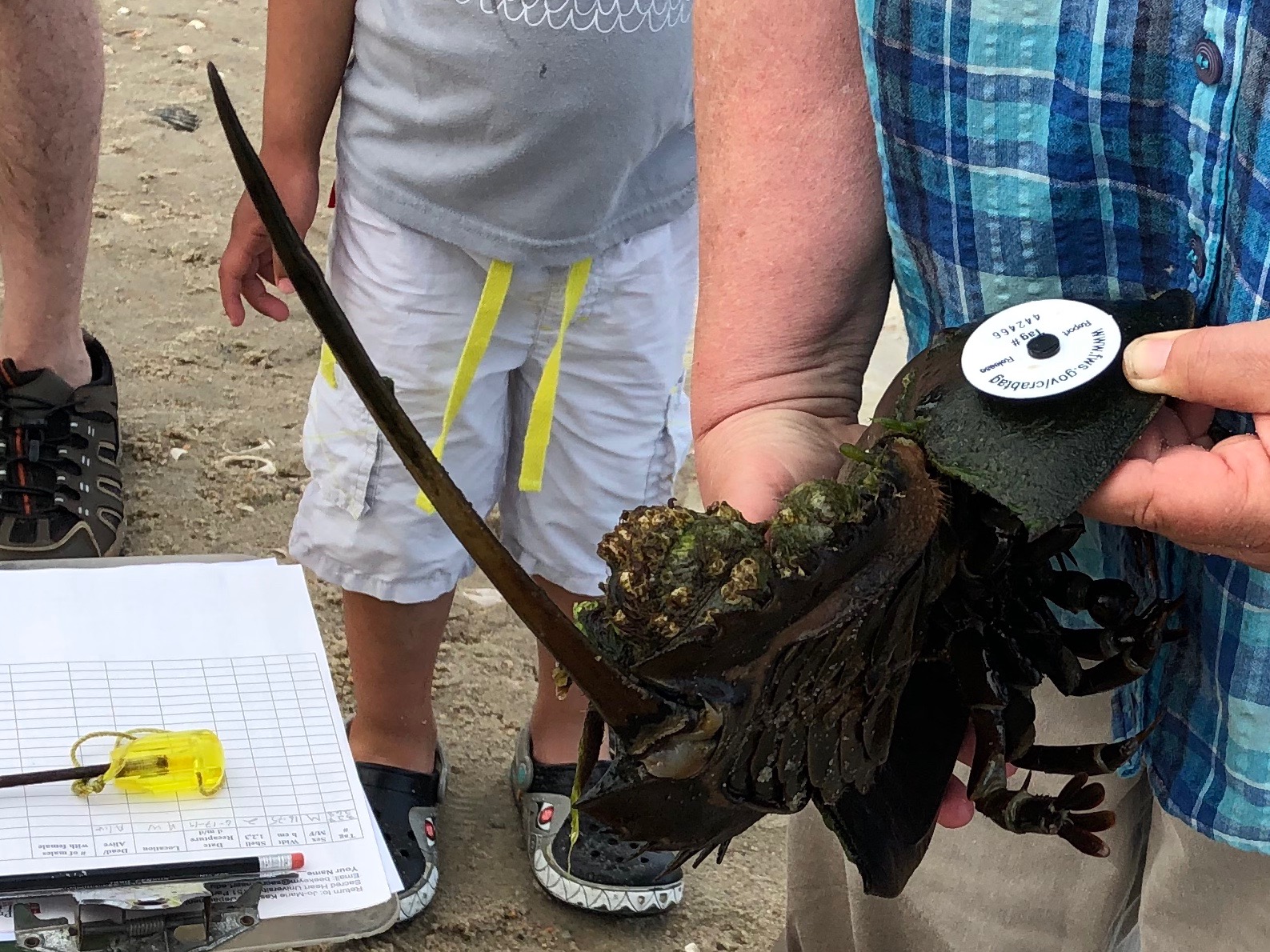
Note the tag below. Kim found one crab with a tag from a previous year, and she attached another tag to a newer find.

061719-removing-clam-from-horseshoe-crab

061719-.horsehoe-crab-tagging

Read Full Post »

110714-a-pigeon-that-I-pass-alas


Sometimes when I’m trying to cross a city street in traffic that’s coming from all directions, I think about how people who don’t visit cities much — Inuit people, say, or rural tribesmen in Africa  — would cope. Probably about as well as I would cope dealing with the habits of lions or polar bears. We all develop the survival skills we need most.

Birds do, too. According to Scientific American, urban birds develop skills that let them outwit their country cousins on certain tests.

Christopher Intagliata reports,”While visiting Barbados, McGill University neurobiologist Jean-Nicolas Audet noticed that local bullfinches were accomplished thieves.

” ‘They were always trying to steal our food. And we can see those birds entering in supermarkets, trying to steal food there.’

“And that gave him an idea. ‘Since this bird species is able to solve amazing problems in cities, and they’re also present in rural areas, we were wondering’ are the rural birds also good problem-solvers, and they just don’t take advantage of their abilities? …

“So Audet and his McGill colleagues captured Barbados bullfinches, both in the island’s towns and out in the countryside. They then administered the bird equivalent of personality and IQ tests: assessing traits like boldness and fear, or timing how quickly the finches could open a puzzle box full of seeds.

“And it turns out the city birds really could solve puzzles faster. They were bolder, too, except when it came to dealing with new objects—perhaps assuming, unlike their more naive country cousins, that new things can either mean reward … or danger.

“The study is in the journal Behavioral Ecology [Jean-Nicolas Audet et al, The town bird and the country bird].”

More here.

Read Full Post »

I used to love finding little red salamanders when I was a child.

I didn’t know they played an important role in the ecosystem, even balancing out processes that contribute to climate change. Of course, when I was a child, nobody talked about ecosystems or climate change. But I’m glad to learn salamanders are important. Small things often are.

Writes Richard Conniff in the NY Times, “According to a new study in the journal Ecosphere, salamanders play a significant role in the global carbon cycle. …

“The study — by Hartwell H. Welsh Jr., a herpetologist at the United States Forest Service’s research station in Arcata, Calif., and Michael L. Best, now at the College of the Redwoods in Eureka, Calif. — notes that salamanders’ prey consists almost entirely of ‘shredding invertebrates,’ bugs that spend their lives ripping leaves to little bits and eating them.

“Leaf litter from deciduous trees is on average 47.5 percent carbon, which tends to be released into the atmosphere, along with methane, when the shredding invertebrates shred and eat them.

“If there aren’t as many shredders at work and the leaves remain in place, uneaten, they are covered by other leaves. … The anaerobic environment under those layers preserves the carbon until it can be captured by the soil, a process called humification.

“At least in theory, having more salamanders in a forest should mean fewer shredding invertebrates and more carbon safely locked underground.”

Read how they tested their theory, here.

 Photo: Todd W. Pierson/University of Georgia

Read Full Post »

I have blogged several times about vanishing languages and the people who seek to preserve them.

Now it seems that community radio is getting into the act, with programs that are becoming a piece of the cultural-survival puzzle. This is happening worldwide, including in the United States.

“The swift and sure loss of indigenous language in the U.S. was hardly an accident,” writes Alexis Hauk at the Atlantic. “From the latter part of the 19th century to the latter part of the 20th, the Bureau of Indian Affairs systematically sent generations of Native American kids into boarding schools that were more focused on punishment and assimilation than on education. In a piece for NPR in 2008, Charla Bear reported on the terrible conditions that persisted at these schools for a century—how kids were given Anglo names, bathed in kerosene, and forced to shave their heads.

“In recent years, the government has taken steps to reverse some of the damage. In 1990, the Native American Languages Act was passed, recognizing the right of indigenous populations to speak their own language.”

Lobbying by Loris Taylor, the CEO and president of Native Public Media, “helped lead to the creation in 2009 of the [Federal Communications Commission]’s ‘Tribal Priority’ for broadcasting,” writes Hauk, “and then, a year later, to the establishment of the FCC Office of Native Affairs and Policy, which promotes technology and communication access on tribal lands.”

Mark Camp, deputy executive director at Cultural Survival, says that “Congress’s passage of the Community Radio Act in 2011 means that community radio stations could soon—in Camp’s words—’mushroom,’ which offers a lot of potential for Native American media on reservations, where there is usually little infrastructure and in many cases no electricity (certainly no wifi). In these areas, a low-power FM station that’s plugged into the grid in the center of town allows people with battery-powered, handheld radios to listen in to what’s happening all around them.” Read more.

Update: Asakiyume adds this link from “The Take Away.”

Arizona’s KUYI 88.1 broadcasts in Hopi to approximately 9,000 people. Photograph: KUYI

http://cdn.theatlantic.com/static/mt/assets/culture_test/kuyi%20615%20radio.jpg

Read Full Post »