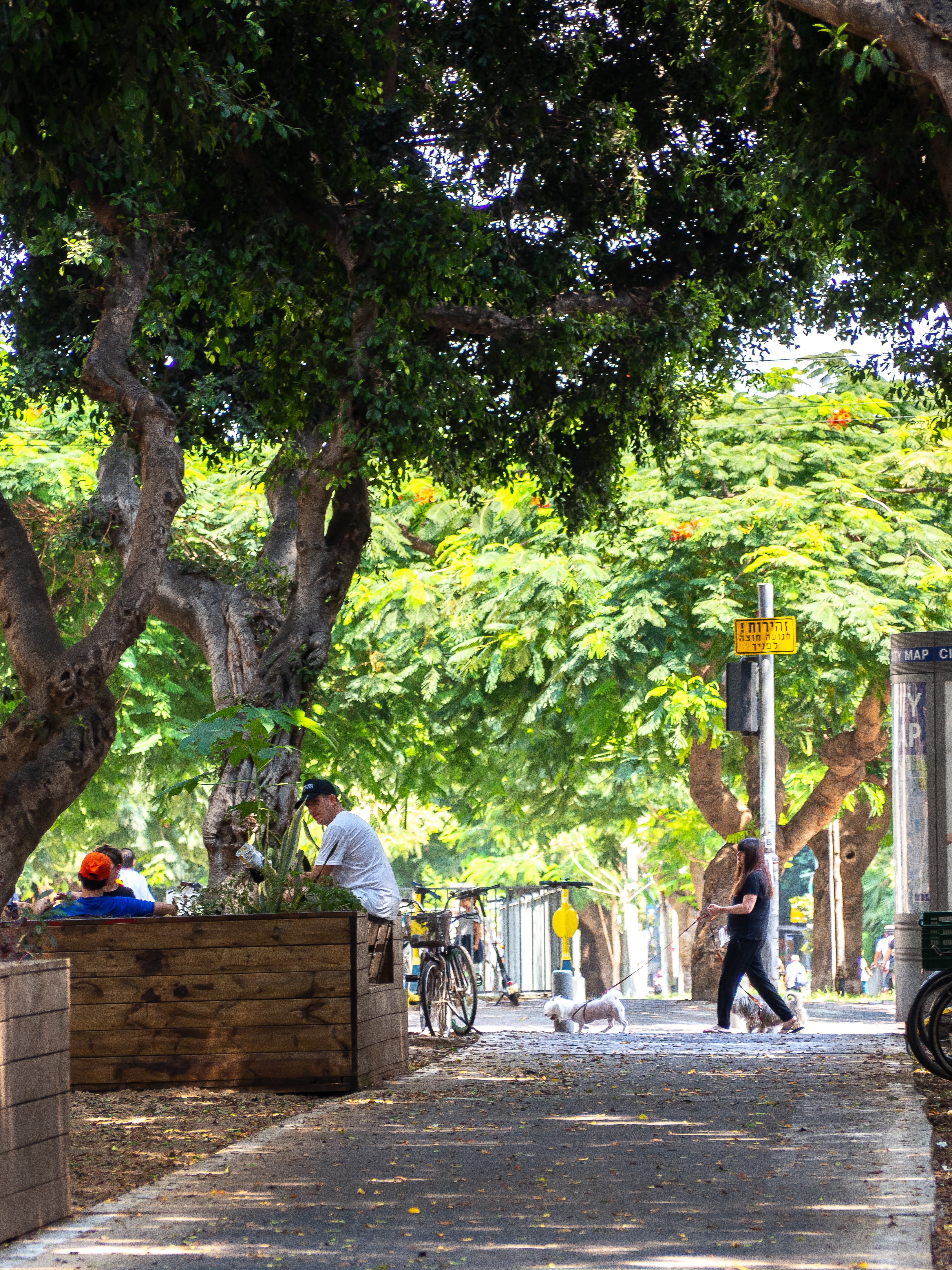
Photo: Yoav Aziz/Unsplash.
Urban trees on Rothschild Boulevard, Tel Aviv, Israel.
If you search this blog on “urban trees,” you will see many posts showing how trees in cities are beneficial both for the environment and human health. I never tire of new research on this topic. Today’s research comes from medical journal the Lancet via Forbes magazine.
Robert Hart reports, “Planting more trees in cities could cut the number of people dying from high temperatures in summer, according to a study published in the Lancet medical journal … a strategy that could help mitigate the effects of climate change as it continues to drive temperatures upwards.
“Cities experience much warmer temperatures than the rural areas surrounding them—a phenomenon known as the urban heat island effect—a result of vegetation and green spaces being replaced with structures like roads and buildings that absorb heat.
“The effect is particularly problematic in summer, when temperatures can soar to dangerous levels and more people die of heat-related causes, but can be tackled by planting more trees, researchers suggest.
“An analysis of mortality data from some 57 million people living in 93 European cities in the summer of 2015—the most recent year for which data is available — revealed that 6,700 deaths could be attributed to the hotter urban environment.
“The researchers estimated nearly 40% of these deaths could have been prevented if urban tree cover were increased up to 30% (the average was 15%).
“The researchers said their study … is the first to estimate the burden associated with urban heat islands and the first to estimate how increasing tree coverage, which helps reduce temperature, could combat this.
“Study co-author Mark Nieuwenhuijsen, director of urban planning, environment and health at the Barcelona Institute for Global Health, said the findings should encourage city planners and policymakers to include green spaces in their developments, particularly as we already know green spaces have other health benefits like ‘reducing cardiovascular disease, dementia and poor mental health’ and improve cognitive function.
“The research identifies a way for city planners to combat the impact of rising temperatures, wrote Kristie Ebi, a professor for health and the environment at the University of Washington, in a linked comment. Such action is especially important as climate change continues to drive temperatures upwards and it must be combined with other initiatives like modifying infrastructure to reduce heat, added Ebi, who was not involved in the research. …
“Heat has a profound impact on our health. Extreme heat is responsible for hundreds of thousands of deaths around the world every year, according to the World Health Organization, and is associated with an increased risk of conditions including heart disease, diabetes and obesity. Heat also exacerbates mental health conditions, hampers cognitive functioning and makes us more aggressive.
“Climate change, which experts say is indisputably linked to human use of fossil fuels, is set to drive temperatures higher and a slew of countries around the world have broken heat records over the last few years. This is expected to continue and extreme weather events, including flooding and major storms are set to increase in both severity and frequency as a result. Beyond the direct impact, this can help other diseases spread through water and expand the range of animals that carry them.” More at Forbes.
This 2017 post mentions John’s work with the Arlington Tree Committee to get sidewalk trees to homeowners. Another post, from 2018, says lack of trees increases depression. This 2019 post is on trees in Paris. I also wrote a 2020 entry about preserving the tree canopy in Baltimore, here.
And those are just a few angles I’ve covered. The other day on Mastodon, someone wrote that trees make her incredibly happy. I guess I am not the only one.





 Suzanne's Mom's Blog