
Feeds:
Posts
Comments

Posts Tagged ‘US’

Map: Cloudwards.

Using Google searches to analyze which books are most popular in each US state seems about as flaky a brand of research as can be, but it’s kind of fun anyway. I mean: The favorite genre in Texas is fantasy? I need to ponder that for a while.

Kelly Jensen writes at Book Riot, “Are there different preferences for book genres depending on what state you’re in? According to new research from Cloudwards, there are trends in book preferences based on location.

“Utilizing Google Trends data over the last 12 months, Cloudwards explored the most searched genre in each of the 50 states, plus the District of Columbia. All searches were limited to Google Trends ‘Books and Literature’ category, and the researchers used a variety of common genre terms to determine the frequency of interest in them by state. Some of the genre categories were a little unconventional for the average reader –- how do you determine the difference between ‘fiction’ and ‘family’ as terms -– but the major genres were included, including romance, fantasy, mystery, and so forth.

“Romance dominated in terms of genre popularity across the US, with 22 states seeing it as their top searched genre. In terms of geographic region, romance was especially popular in the south, with states like Florida, Georgia, Louisiana, Tennessee, Kentucky, and Virginia ranking it as their top genre.

“Fiction and poetry tied for next most popular genres, each either nine states reporting it as the most searched genre. The researchers note that these findings aren’t surprising, given that fiction is broad and encompassing. As for poetry, it is likely not surprising to see people looking for more information about poetry; the research here isn’t about poetry being the most read genre, but rather, one of the most researched genres.

“The next most popular genres were fantasy (six states), family (3 states), mystery (1 state), and fantasy (1 state).

“It should come as little surprise there is so much national interest in romance. It is a genre that consistently sells well across all of its subgenres, and in 2023, print romance books sold upwards of 39 million copies. …

“One of the most surprising findings might be that only one state ranked historical fiction as its most popular genre. That state was Massachusetts. It is a perennially popular genre among readers, and it is a genre that has been a long-running staple on best-of and awards lists. …

“The researchers note that their methodology lacks scientific scrutiny but shows a general idea of interest in different reading genres. Among some of the weaknesses of this study are the loosely-defined genres, as well as the lack of nuance when it comes to format of genre. It’s not clear whether or not the researchers looked into genres outside of those which ranked among the top in the US, as there’s no full list of utilized search terms. There is no indication in the research, for example, whether or not science fiction or westerns were researched, and while horror is a mood and not a genre, it is surprising to see zero representation for horror here, either.

“Furthermore, poetry encompasses a wide variety of genres, as it is a format, rather than a genre. It’s also worth wondering where and how graphic novels in their myriad genres fit in with reader popularity.

“If there’s a takeaway, it’s this: no matter how frequently romance novels can be derided or belittled in pop culture, it’s a genre that is thriving, that is growing, and that tops the list of genres readers are interested in in nearly half of the United States.”

This is fun, but I really think that a more useful study would analyze books sales and library book preferences, don’t you?

It’s hard for me to name a book genre that is my favorite. I love fantasy, but I read many more mysteries than fantasies as there are so few good fantasies. I love certain kinds of biography but read more fiction than biography. I live in Massachusetts but hate historical fiction. If asked about your favorite genre, how would you answer?

More at Book Riot, here. See unscientific results for individual states here.
Read Full Post »

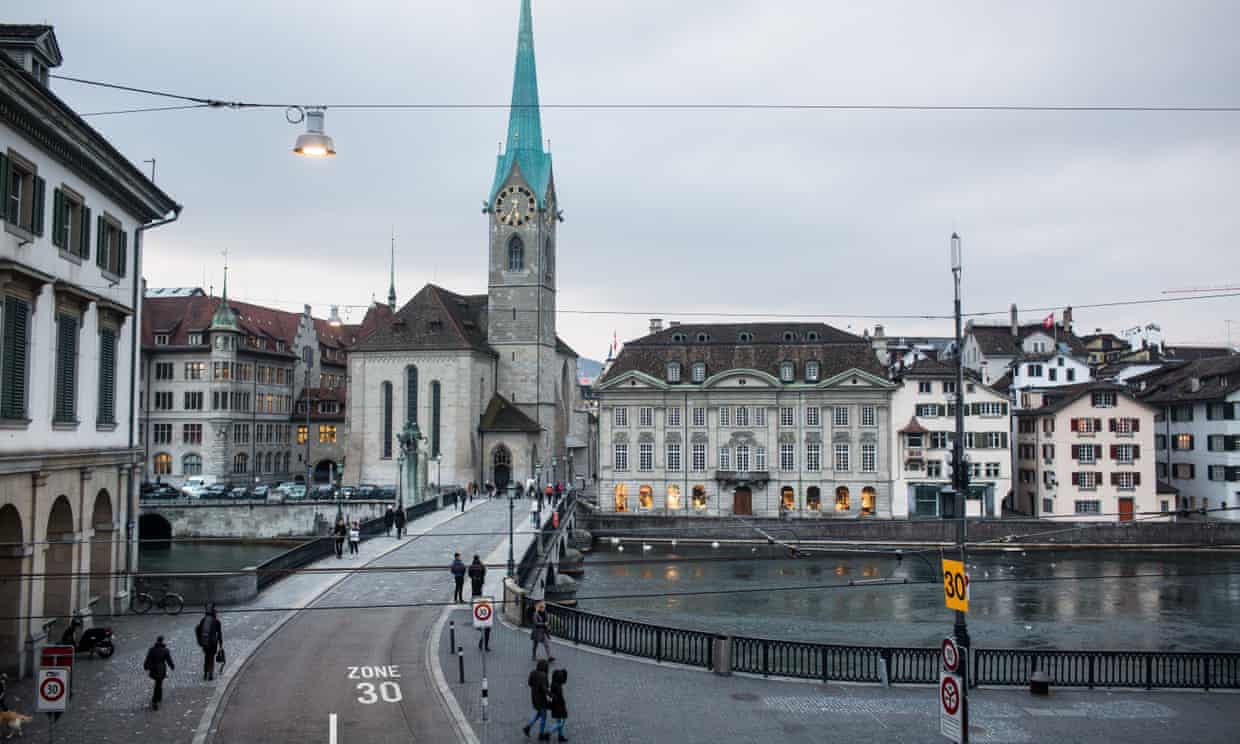
Photo: Robert Ormerod/The Observer.
Zurich city center, where 99.2% of residents live within a 15-minute walk of essential services such as health care and education. 

My parents always preferred homes that were out in the countryside, and as much as I loved my walks in the woods as a child, I knew from car-free summers on Fire Island that being able to walk to everything was pretty great. After marriage, my husband and I always chose homes in walkable communities, whether we were in upstate New York or Massachusetts or Minnesota.

Ajit Niranjan writes at the Guardian on the topic of walkable communities.

“When Luke Harris takes his daughter to the doctor, he strolls down well-kept streets with ‘smooth sidewalks and [ramps] for strollers at every intersection.’ If the weather looks rough or he feels a little lazy, he hops on a tram for a couple of stops.

“Harris’s trips to the pediatrician are pretty unremarkable for fellow residents of Zurich, Switzerland; most Europeans are used to being able to walk from one place to another in their cities. But it will probably sound like fantasy to those living in San Antonio, Texas. That’s because, according to new research, 99.2% of Zurich residents live within a 15-minute walk of essential services such as health care and education, while just 2.5% of San Antonio residents do.

“ ‘Zurich feels extraordinarily walkable to me, coming from the US,’ said Harris, a landscape architect from Portland, Oregon. ‘Most of the things you need are within walking distance – and if they’re not, it’s easy to take public transport.’

“Just a tiny fraction of 10,000 cities around the world can be considered ’15-minute cities,’ according to a study published in the journal Nature Cities [in September]. The researchers used open data to work out the average distance people must walk or bike to reach essential services – such as supermarkets, schools, hospitals and parks – and calculated the proportion of residents who have the necessities at their fingertips.

“ ‘When we looked at the results, we were amazed by how unequal they are,’ said Matteo Bruno, a physicist at Sony Computer Science Laboratories in Rome and lead author of the study.

“The researchers selected 54 cities to explore in detail and found that the most accessible cities were midsize European ones such as Zurich, Milan, Copenhagen and Dublin – all of which had essential services that could be accessed within 15 minutes by more than 95% of residents. At the bottom of the rankings were sprawling North American cities with a high dependency on cars, such as San Antonio, Dallas, Atlanta and Detroit.

“Small cities tended to score better but the researchers found that in some big metropolises, such as Berlin and Paris, more than 90% of residents live within a 15-minute walk of essential services.

“The authors developed an algorithm to explore how much these cities would have to change to become more accessible. They found Atlanta would have to relocate 80% of its amenities to achieve an equal distribution per resident, while Paris would need to relocate just 10%.

“Hygor Piaget, a co-author of the study who grew up in São Paulo, where 32% of people live within a 15-minute walk of essential services, said the study was not a proposal to destroy cities and reallocate their services but a mathematical exercise to get people thinking. ‘We’re searching for ways to make the lives of most people better,’ he said.

“The concept of a 15-minute city has been attacked in recent years by conspiracy theorists who see it as a government plot to control movement and restrict freedom. The vitriol has frustrated scientists, urban planners and doctors. …

“The authors say the study is limited by the quality of the open data, which is patchier in cities outside of Europe and North America, and how practical it is to walk in some cities. Heavy traffic, high crime, bad weather and steep hills may discourage people from walking even geographically short distances. …

“Researchers caution that making a city more accessible is not enough in itself to wean residents away from private cars. The Netherlands boasts some of the best bicycle infrastructure in Europe but has more cars per person than rural countries such as Ireland and Hungary.”

More at the Guardian, here. No firewall, but please donate occasionally. Not owned by US oligarchs!

Read Full Post »