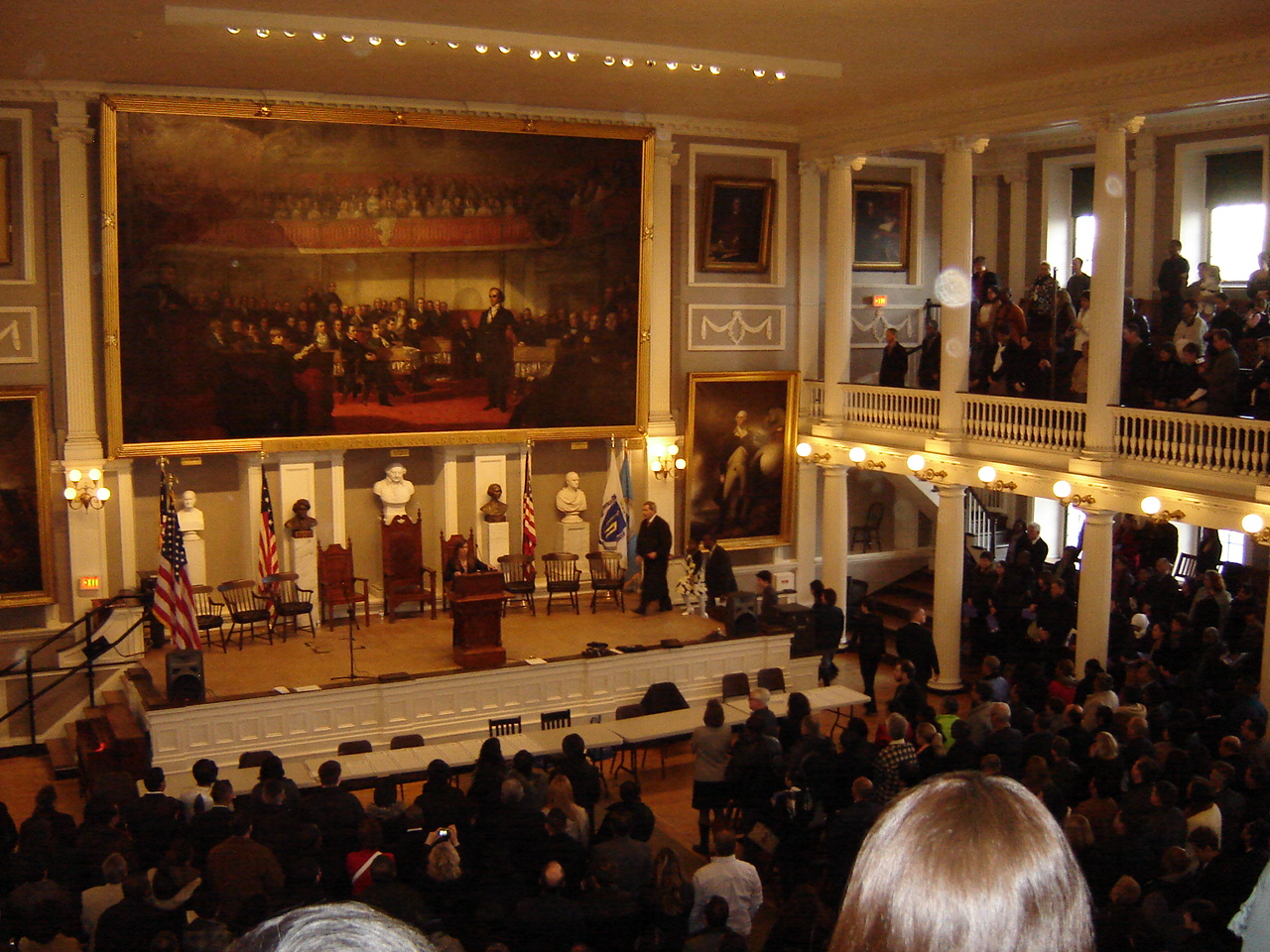
I have always wanted to attend a citizenship ceremony. It turns out the Boston branch of the U.S. Citizenship and Immigration Services performs them every week at historic Faneuil Hall, which was a witness to some of the first rumblings of the American Revolution. It’s an imposing place for a great event.
There were 376 immigrants from 79 countries today (Belarus, Egypt, Sweden, and 76 others). It was moving to think about those 376 people wanting to be citizens and also to think about the United States as a place that can mean hope and opportunity. I did find myself wondering whether some of the new Americans were feeling a little sad, especially refugees and the elderly, who might be thinking about the way their homeland used to be — or could have been.
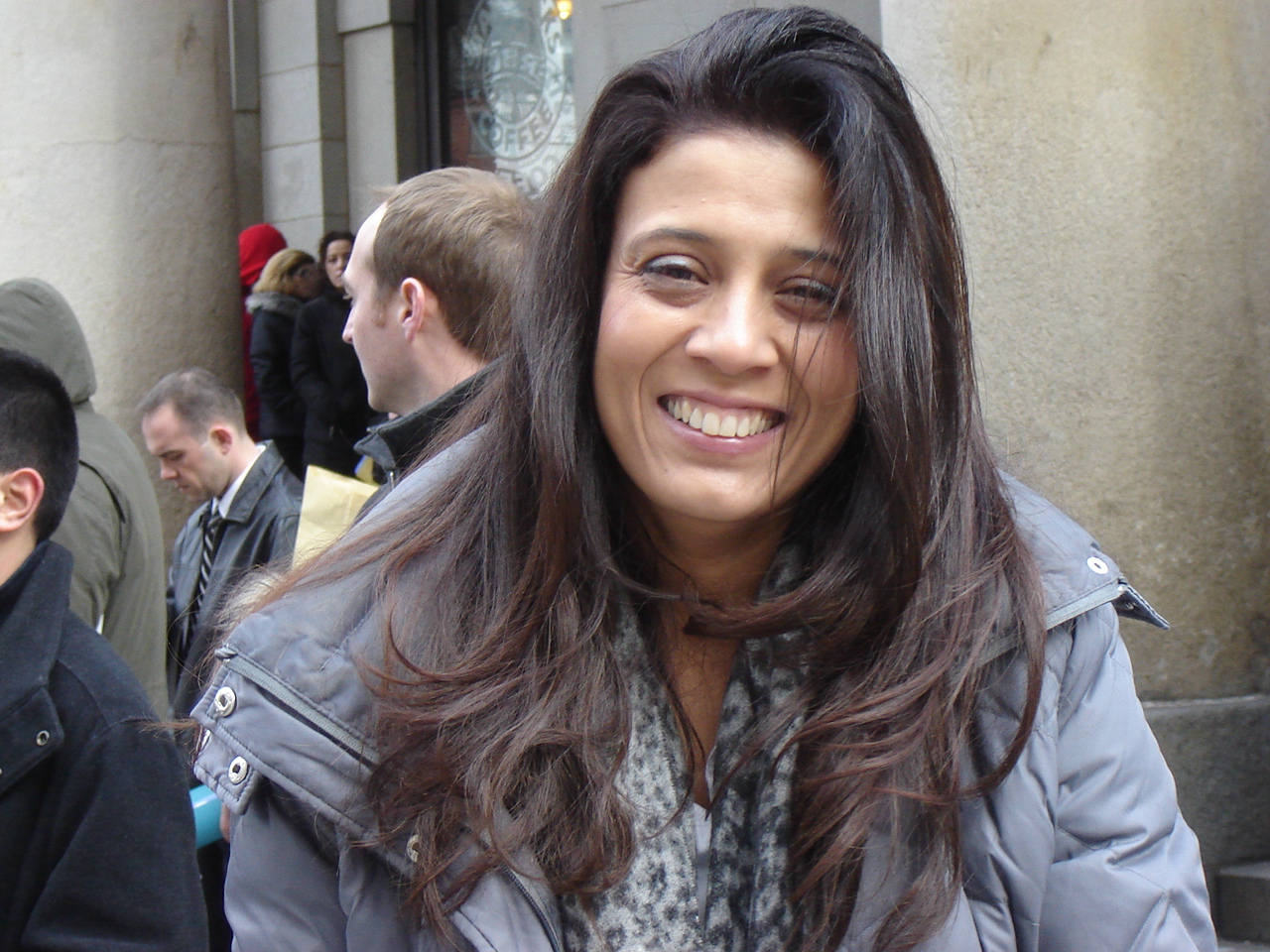
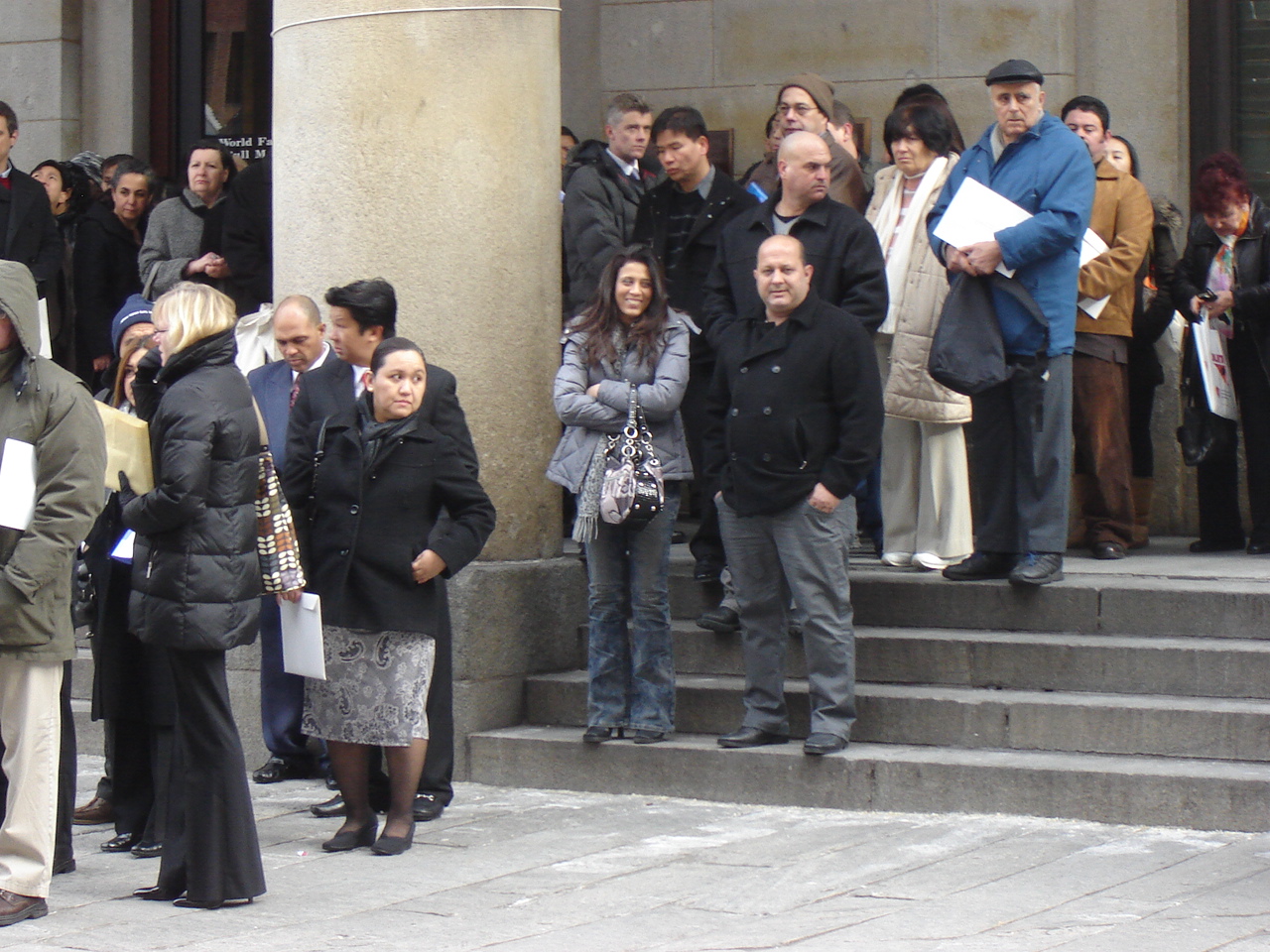
I saw Ione lining up outside. She looked happy and beautiful. Inside, I was surprised to observe a man I knew through my work also becoming a citizen.
The first announcement made me chuckle:”Is there anyone on the floor who speaks Russian?”
As things got underway, the supervisor from the Boston office of U.S. Citizenship and Immigration Services explained that the order of activities related to the different color packets given out to organize the applicants. (He referred to one kind of packet as “skin-colored,” which considering his experience and the broad spectrum of skin colors in the room, seemed odd.) Staff conducted people efficiently along tables where their papers got checked. Then the judge entered.
When the judge entered, the hall became a courtroom. Becoming a citizen is a judicial process, we were told. A young man sang the national anthem. The judge started out lightheartedly by reading the list of 79 countries, making comments about his visits to a particular country or about the country’s soccer status. (I guess “football” is an international language.)
In the solemn part, everyone took an oath of loyalty to the United States. As the complicated phrases were read aloud, the applicants held up their right hands and repeated the historical words about rejecting monarchs and potentates and serving in the military if required by law.
Finally, the judge asked the small citizen daughter of one new American to lead everyone in the Pledge of Allegiance. It was hard to speak. A wonderful moment.

 Suzanne's Mom's Blog
Congratulations to Ione and family! In a few years I hope to be able to go to Faneuil Hall to take the oath.
LikeLike
Wait till you see this crazy oath! But what’s nice about it is the sense of history, the sense of hundreds of years of new Americans — back to the time when the language was more understandable — reciting it together at Faneuil Hall yesterday.
LikeLike
This is wonderful–your photos and the way you tell it. *THIS* makes me love America. (Though what’s this about the crazy oath?)
LikeLike
It’s the oath they have always used. I should try to find out how far back it goes. The judge kept apologizing for the “archaic” language and said he didn’t know the meaning of “potentate” either. But I thought it worked in the same way that I imagine the Latin Mass worked. Probably the majority of people would have found any oath foreign sounding.
LikeLike
Congrats, Ione!!!
LikeLike
She was so happy. We need citizens like that.
LikeLike
Hurrah!
LikeLike
Thanks, John. I will tell her I posted and you all were happy for her.
LikeLike
Thank you for sharing with other this special day. The naturalization process was a very long, yet rewarding experience for my husband, Reis, and myself. My husband was the handsome bald man standing next to me on the steps. We appreciate everyone’s well wishes.
LikeLike
Thanks for commenting on the post! You both looked happy, and I think America needs people who are really happy to be citizens. 🙂
LikeLike