Feeds:
Posts
Comments

Photo: Noble and Greenough School.
A group of 25 students and faculty from Shooting Touch and the Noble and Greenough School went to Rwanda for a trip to help spread Shooting Touch’s mission of health advocacy for women and children and empowerment through sport.

You may remember my young friend Shagufa Habibi, who escaped an abusive child marriage in Afghanistan through the power of sport. It all started with her taking up golf. In May, she will graduate from Brandeis with a master’s degree.

Today’s article also addresses the power of sport. In this case, basketball.

Tara Sullivan reports at the Boston Globe, “Vin Bui met the initial offer of financial assistance and basketball support with a requisite dose of skepticism, narrowing his eyes just enough to make any self-respecting Dorchester native proud. But since the AAU team he was building for his niece, Christina Pham, and her fellow players was still in its infancy, he figured it couldn’t hurt to listen to a pitch. [So] he took a call from a local organization called Shooting Touch.

“He had no idea it would change his world. …

‘I figured it was a basketball pyramid scheme, too good to be true. Money, enrichment, and education. Come on. But I took the chance and called them up. They ended up being everything they said and more.’ …

“Had Bui heard of Shooting Touch before, he would not have been surprised. The program, which grew from its roots in Rwanda to expand into Boston, defines itself as ‘an international sport-for-development organization whose mission is to use the mobilizing power of basketball to bridge health and opportunity gaps for youth and women facing racial, gender, and economic inequalities.’ …

“From sponsoring an AAU team in the city to sending players on an international relief trip abroad, what you get is an ongoing lesson in how small acts of empowerment for those who have it least but appreciate it most can truly make the world a better place.

“[Seven] years after joining forces with Shooting Touch, Bui, Pham, and Pham’s fellow basketball player Tahira Muhammed are 6,000 miles across the world, completing a circle that Shooting Touch founder Lindsey Kittredge could barely imagine more than a decade ago, when she and her husband started the grassroots program.

“As part of a group of 25 students and faculty from Shooting Touch and the Noble and Greenough School (where both young women go to school and play on the championship-winning basketball team), their current trip to Rwanda connects two chambers of the same charitable heart, with Rwandan Shooting Touch participants and their Boston counterparts meeting for the first time.

“ ‘It is pretty emotional,’ Kittredge said recently. … ‘It’s proving the point and seeing the future potential of this sport and what it can build, how you can reach anybody in any demographic, any environment, any geographic presence or background, and you can make an impact for positive health.’

“To help understand it best, think of Shooting Touch as being built on two primary pillars — basketball and women’s health. See it as living proof of how each pillar can keep the other up, and realize how it can do it in a country once ravaged by genocide with long-standing human rights issues rooted in misogyny and gender-based violence just as faithfully as it does in Boston neighborhoods such as Dorchester and Roxbury. …

“In Rwanda, women’s health clinics run concurrently with basketball skills events, serving women from the youngest to oldest ages, offering vaccinations, malaria and HIV screenings, examinations, and information free for all. The level of empowerment that goes with that is almost impossible to calculate, just as the network of experience, people, and contacts young women in Boston can make through the program. When kids are empowered, when they see opportunities they might have never known existed, they head into an adult world much better prepared for success.”

More at the Globe, here.
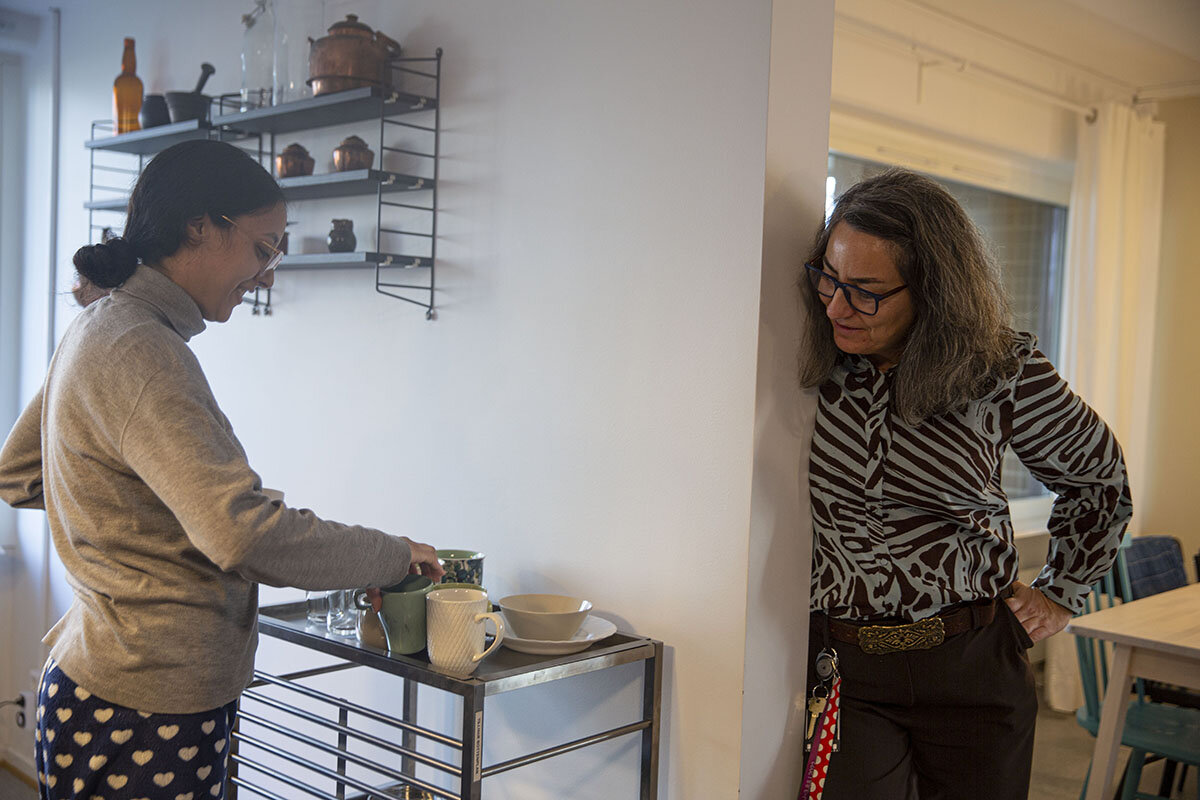
Photo: Dominique Soguel.
Young migrants who arrive in Sweden alone become part of a “big family” with older people in this unusual living arrangement.

You may have heard of anti-immigrant sentiment rising in Sweden, a country that historically has been welcoming to victims of war and persecution. But no story is the whole story.

At the Christian Science Monitor Dominique Soguel reports about the ongoing generosity of many Swedes.

“It was when his older Swedish neighbors threw him a high school graduation party that Afghan native Zia Sarwary finally felt a sense of belonging in this picturesque seaside city [Helsingborg].

“ ‘It meant everything to me,’ says Mr. Sarwary, who at the age of 13 arrived alone in Sweden during the 2015 refugee crisis. ‘That was the beginning of feeling at home.’

“Mr. Sarwary is one of dozens of tenants living in Sällbo, a shared-living project mixing elder Swedes and young adults, some of them from Sweden, others – like him – from the Middle East or Afghanistan. The six-story building with 51 apartments helps counter both the loneliness of advanced-age Swedes and the integration difficulties facing migrants who arrived as unaccompanied minors.

“Tenants of Sällbo have found common ground within these colorful walls, which they attribute to the cumulative impact of courtesy, kindness, mutual curiosity, and understanding.

“ ‘The whole goal was to show that even if you are different and even if you are people who would not usually socialize, you would do so if there is a safe environment where you know who is in the house,’ says Dragana Curovic, the project manager for Sällbo. ‘After three years, we can say that it worked.’

“Had they not moved under the same roof, the older Swedes and young migrants living here would almost certainly not have mingled. Fear and misunderstanding would have been major obstacles. Older Swedes’ impressions of young migrants draw heavily on negative press reports linking them to crime.

“As for the immigrants, their interactions with Swedes had largely been limited to asylum center officials – authority figures who set the initial tone for the newcomers’ experience, but weren’t focused on building bonds with them.

“Sällbo attempts to overcome that by getting tenants engaged with each other.

To move in, tenants must agree to socialize at least two hours per week.

“That can happen in shared kitchens, activity rooms, or cozy living areas. Each floor boasts three common areas, ranging from puzzle and scrapbooking rooms to libraries and film-screening rooms to carpentry workshops. Sun-kissed kitchens are set up for mingling, growing herbs, pickling, and baking. Artwork decorates the hallways. …

“Young and old concur that the pandemic helped strengthen the bonds that bind them. Younger residents did grocery shopping for the elders, who returned the favor by helping those with low computer skills keep up with their classes online.

“Now a logger working night shifts, Mr. Sarwary wishes he had even more time to spend with his older neighbors and feels bad when he needs to cut conversations short to catch his bus. After all, elders are treated with deference in Afghanistan. He believes curiosity feeds residents’ capacity to find common ground across cultures and age groups.

“ ‘People try to understand each other,’ he says. ‘I know you have your differences. I have mine. But we can meet in the middle ground and do something together that is good for both of us. There is a positivity in everything. That is the best part.’

“ ‘Sometimes you do things that are not correct,’ Mr. Sawary continues. ‘Instead of people coming in scolding you, they come in and they’re like, “Oh, you could do it this way.” ‘ …

“It helps that people understand that he had a tough background and approach him with an open mind to learn about his headline-grabbing, war-torn homeland.

“ ‘They would always ask instead of just judging. “OK, is this true about your country?” ‘ he says. …

“Jan Gustavsson, a retired provider of security systems, says he like helping young people from Afghanistan and other parts of the world integrate. ‘We can see in … Stockholm and Gothenburg, there’s a lot of problems. … I think it will help if these people live together with Swedish people.’ …

“Anki Andersson oversees scrapbooking activities on Tuesdays. Her husband, Kalle, helps fellow seniors do seated workouts. ‘Sällbo is the perfect place if you are mobile and seeking to socialize,’ says Ms. Andersson. ‘People here are so alike in a way. It is hard to explain. We click together very well, both the older and young residents. …

“ ‘If we have something we need to do or heavy things to carry, they give as a hand. We are a big family.’ “

More at the Monitor, here. No firewall. Nice pictures.

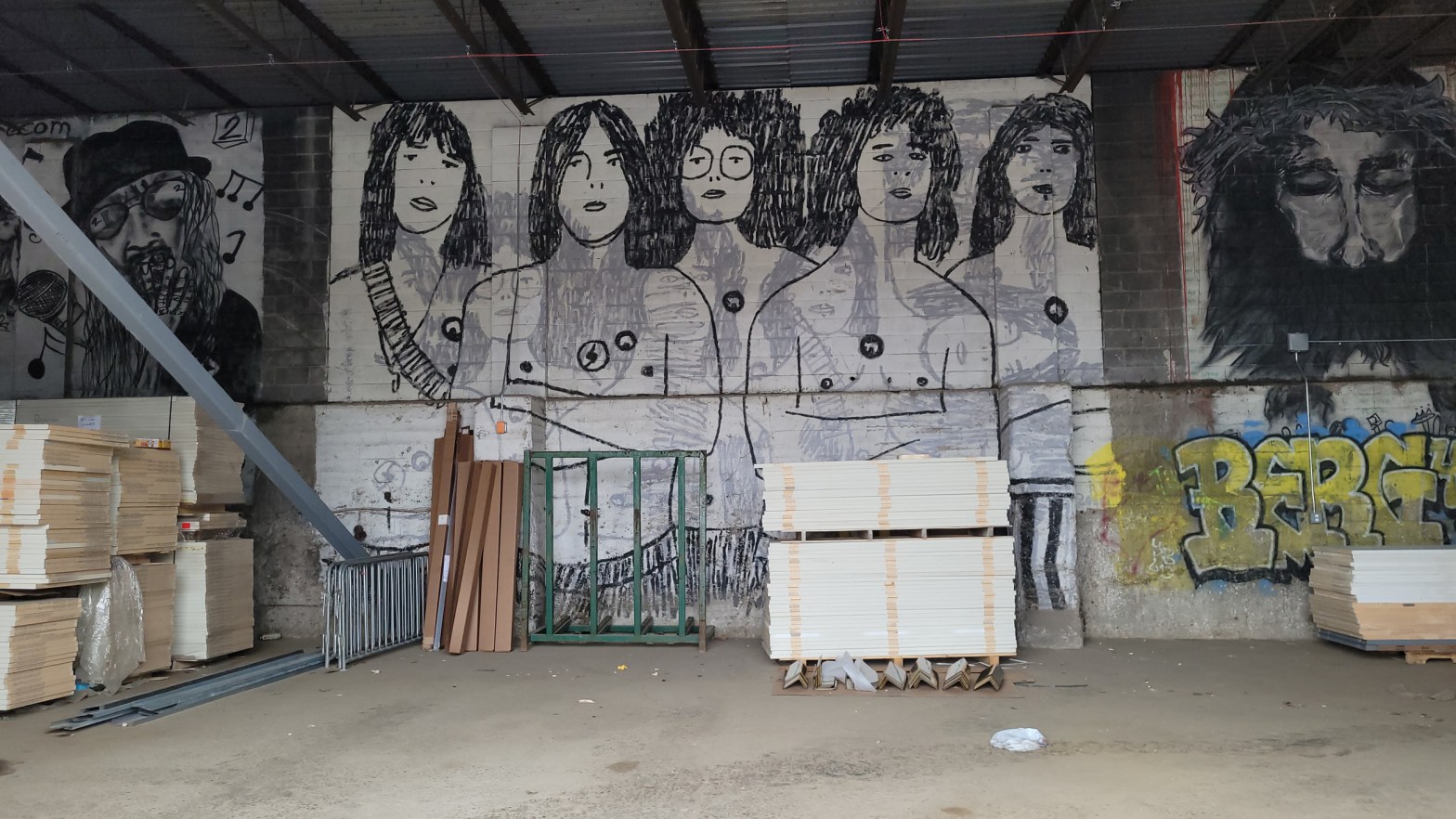
Photo: Sarah Rose Sharp/Hyperallergic.
The only public mural commemorating iconic Detroit band MC5 remains intact, as housing for artists is built around it.

When you base housing development on what people can pay to live there, good things may happen. If only the development of the artist community in Fort Point, Boston, had been based on that principle! City planners of the past and their favored developers have pretty much ruined Fort Point — and all of Seaport — and set the area up for drowning in a future hurricane.

Sarah Rose Sharp opines at Hyperallergic, “Artists are fundamentally problem solvers. They are generally understood to be solving problems of a personal-expressive nature, or perhaps ones related to community, and occasionally political or environmental problems. They are not often considered the front line for solving, say, problems of city infrastructure. But maybe they should be.

“[Ten years ago] if you’d asked Oren Goldenberg what he does, he might have said ‘filmmaker’ or ‘producer,’ or he might have narrowed his eyes and asked: ‘Who wants to know?’ These days, however, the answer is a little more complicated. At some point in the last decade, Goldenberg stopped making films as a document, and stepped through the frame to build the world-as-document. … Our School (2005-2009) is a feature-length documentary that seeks to reveal the experience of going to high school for one day, from dawn to nightfall, in his home city of Detroit.

“ ‘When I was doing Our School, I’m like, should I just go be a teacher? What’s going to really help with the education crisis? It’s gonna be a teacher, right?’ said Goldenberg during a walking interview with Hyperallergic across the site of his latest undertaking. Ten years ago, the grounds we are walking on would have been identified by in-the-know Detroiters as Recycle Here!, a community-grown waste management center piloted by Matthew Naimi in a city that had famously suspended trash pick-up for decades, to say nothing of recycling. A lot has changed in ten years, and for the last seven, Goldenberg has been right at the heart of it.

“Nowadays, Recycle Here! is a recognized part of city infrastructure, but the facilities that surround it have undergone a startling transformation. In place of the crumbling outbuilding that once belonged to the former Lincoln automotive factory (still indicated by the adjoining Lincoln Street and its eponymous art park, also developed by Naimi and his associates), a new complex is emerging. Once a free space and favorite haunt of street artists, that has tragically claimed at least one life, the complex is on the home stretch of work that has stabilized the structure and secured facilities. The project is expected to launch this year with communal gathering spaces, a fresh venue for longtime neighbor Marble Bar, and 81 live-work units calibrated to hold the community that occupied the former structure.

“ ‘In doing this project, I’ve learned that our presumptions around development and construction are just wrong,’ said Goldenberg. ‘When you think of high-end developments, they create a projection of who can we attract, as opposed to who is here, because they need something that could pay the cost to renovate a historic building. …

“ ‘You have to create different models of verification,’ Goldenberg continued.

‘When we first started getting money here, people asked: Why is your commercial rent so low? I replied: “Well, it’s for Recycle Here! They’re already here, this is all they can pay.” ‘

“This isn’t the first time Goldenberg has taken an interest in housing. Brewster Douglass, You’re My Brother (shot 2010-11, released 2012) is a documentary about the first public housing for low-income Americans, erected in Detroit. …

“In another past project, Goldenberg once more explored community-building in a historic space. Though he created the video Make it History: the Downtown Synagogue, Goldenberg’s more notable legacy with the organization is arguably the series of after-dark House music dance parties, which sought to bring in new energy and a wave of younger constituents to the Isaac Agree Downtown Synagogue, built in 1921 and currently the last remaining free-standing synagogue in Detroit. …

“ ‘I think a lot of directors consider films holy, and worth more than the humans who make them,’ said Goldenberg. ‘I push very hard against that. I just don’t think it’s true. No one should die making your movie, no one should be exhausted. [This new movie] is different. People are going to live here.’

“In Detroit, the shattering of infrastructure, regulation, and ownership opened a window, one that is now rapidly closing as entrepreneurial forces have seized upon the city as a development opportunity. But for a minute, and maybe even a minute longer, there are so many problems that artists have been able to get their hands on and start to solve in the way that artists do: A way that places a completely different valuation on what community means, what a recycling center means, what a building means. Filmmakers and producers already know how to imagine a world into being, through the sheer power of belief. Goldenberg is showing what happens when that belief becomes a home that others can occupy.”

More at Hyperallergic, here. No firewall. Subscriptions encouraged.

Photo: Nick St Oegger/The Guardian.
The Vjosa River near Qesarat, southern Albania. The river and its three main tributaries in the country have been declared a national park. 

In the 1980s, when I was active in the Esperanto movement, I managed the New England group’s post office box. One day I took out a letter on flimsy paper with a Tirana postmark. Tirana is the capital of Albania. The Berlin Wall had yet to fall, and Albania was still firmly behind the Iron Curtain. I felt like I had received a message from the other side of the moon.

Nowadays Albania is not so different from the rest of Europe, and today’s story is about its participation in European efforts to save wild rivers.

Karen McVeigh  writes at the Guardian, “One of the last wild rivers in Europe, home to more than 1,000 animal and plant species, has been declared a national park by the Albanian government, making the Vjosa the first of its kind on the continent.

“The Vjosa River flows 168 miles (270kms) from the Pindus mountains in Greece through narrow canyons, plains and forests in Albania to the Adriatic coast. Free from dams or other artificial barriers, it is rich in aquatic species and supports myriad wildlife, including otters, the endangered Egyptian vulture and the critically endangered Balkan lynx, of which only 15 are estimated to remain in Albania.

“For years, the Vjosa’s fragile ecosystem has been under threat: at one point as many as 45 hydropower plants were planned across the region.

“But [in March], after an almost decade-long campaign by environmental NGOs, Vjosa was declared the first wild river national park in Europe. Environmentalists described it as a historic decision that has placed the tiny Balkan nation at the forefront of river protection.

“Albania’s prime minister, Edi Rama … described the creation of the national park as a ‘truly historic moment’ for nature as well as social and economic development. ‘Today we protect once and for all the only wild river in Europe,’ he said. ‘This is about to change a mindset. Protecting an area does not mean that you enshrine it in isolation from the economy.’ …

Mirela Kumbaro Furxhi, Albania’s tourism and environment minister, said the creation of the park was part of the country’s evolution and continuing emancipation three decades on from communist rule. …

“She said, ‘Maybe Albania does not have the power to change the world, but it can create successful models of protecting biodiversity and natural assets, and we are proud to announce the creation of this first national park on one of the last wild rivers in Europe.’ …

“A collaboration between the Albanian government, international experts, NGOs from the Save the Blue Heart of Europe campaign to protect Balkan rivers, the International Union for Conservation of Nature (IUCN) and Patagonia, the outdoor clothing company and environmental organization, the 12,727 hectare (31,500 acre) park aims to ensure the Vjosa and its unique ecosystems are safeguarded. It has been given IUCN category II park status, a high level of protection similar to that of a wilderness. The categorisation covers ‘large-scale ecological processes,’ species and ecosystems, crucial to ensuring dams and gravel extraction are banned. It is expected to be operational in 2024.

“Boris Erg, director of the European office at IUCN, paid tribute to the government of Albania for its leadership and ambition. ‘Today marks a milestone for the people and biodiversity of Albania,’ he said. ‘We invite other governments in the region and beyond to show similar ambition and help reach the vital goal of protecting 30% of the planet by 2030.‘ …

“The Albanian government is starting a joint process with the Greek authorities to create the Aoos-Vjosa transboundary park, aiming to protect the entire river across both countries, who agreed in January to sign a memorandum of understanding specifying the next actions.

Europe has the most obstructed river landscape in the world, with barriers such as dams, weirs and fords, estimated to number more than a million, according to a 2020 EU study in 28 countries. Such fragmenting of rivers affects their ability to support life.

“Ulrich Eichelmann, a conservationist and founder of Riverwatch and part of the Save the Blue Heart of Europe campaign, said: ‘Most people in central Europe have never ever seen a wild, living river, free from the impacts of human interference, that isn’t diverted or dammed or built up with embankments and where biodiversity is low as a result. But here, you have a wild river, full of complexity and without interference.’ …

“Ryan Gellert, Patagonia’s CEO, said the collaboration proved the power of collective action. ‘We hope it will inspire others to come together to protect the wild places we have left, in a meaningful way,’ he said, adding that the park was proof that the ‘destruction of nature did not have to be the price of progress.’ “

Man, I love Patagonia. Did you know the company takes no Chinese cotton from Uighur slave labor? I bought the most luxurious cotton towels at Patagonia, guilt free.

More at the Guardian, here. No firewall.

Photo: Sydney Walsh for NPR.
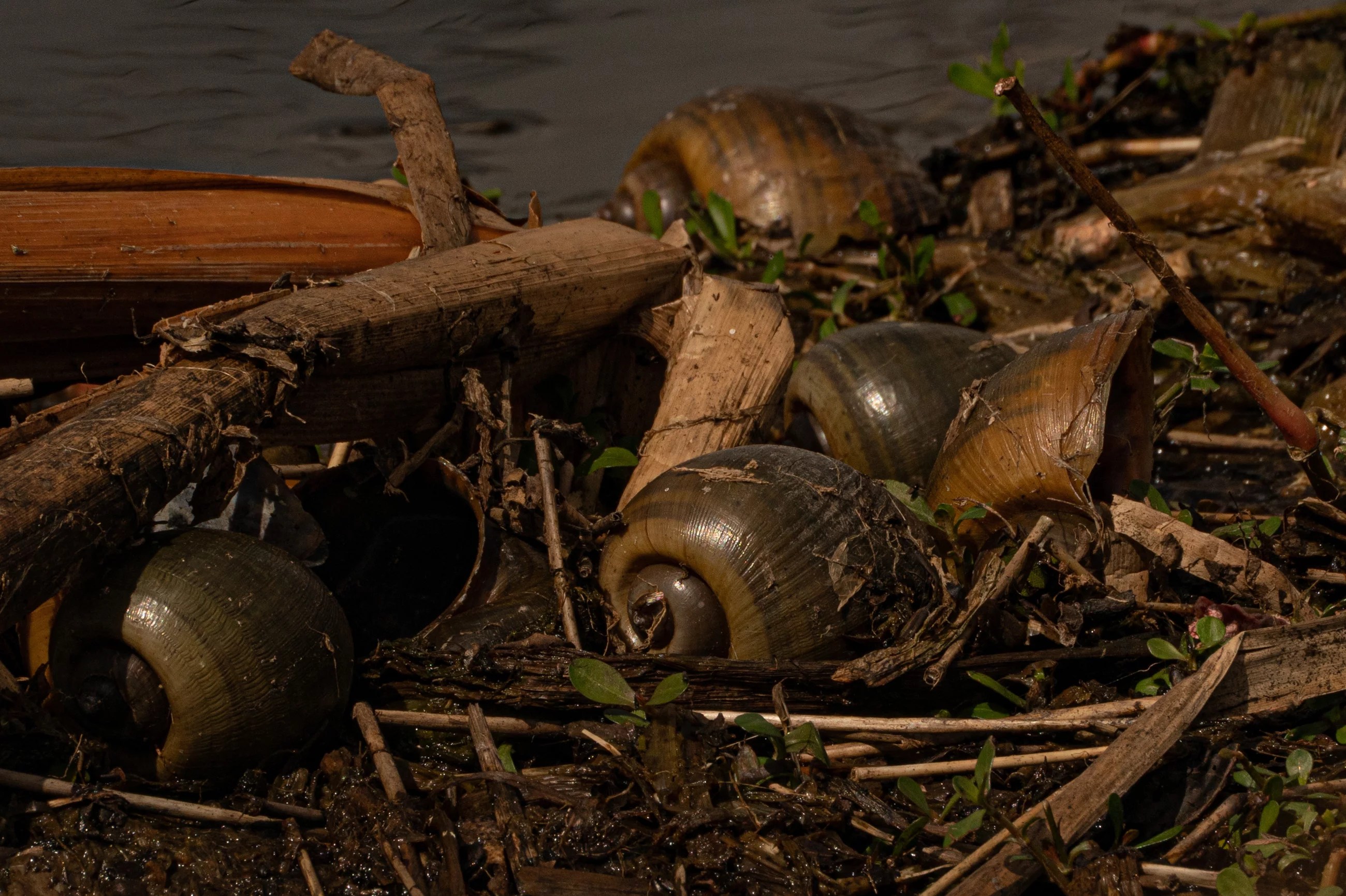
Apple Snail shells along the banks of Lake Okeechobee in Moore Haven, Fla. The snails are an invasive species, but they are helping an endangered bird stage a comeback.

“It’s an ill wind that blows nobody good.” We don’t like invasive species as a rule, but in today’s story, one kind is saving an endangered bird. Proving once again that life is complicated.

Greg Allen reports at NPR (National Public Radio), “In Florida’s Everglades, few species are more closely tied to the habitat’s health than an endangered bird, the snail kite. The Everglade snail kite is a raptor, similar to a hawk, that eats just one thing: snails.

“Over the last century, as much of the Everglades was drained, the bird’s population declined precipitously. But the kite has bounced back recently thanks to an exotic snail. It’s a rare case of an invasive species having a positive impact.

Robert Fletcher, a University of Florida professor who directs a snail kite monitoring program, says the invasive species was first spotted in 2004. Within a few years, it had expanded through much of the Everglades. ‘And it was around that time,’ he says, ‘that we started to see snail kite number increase.’

“Few people pay closer attention to the snail kite than Tyler Beck. He manages Florida’s the endangered bird’s population for Florida’s Fish and Wildlife Conservation Commission. On the western edge of Lake Okeechobee, Tyler Beck uses an airboat to motor through marshes looking for kites. … Overhead, [one] alarmed kite makes a rapid clicking call as it hovers and swoops over the airboat.

“University of Florida researcher Brian Jeffrey wades through thigh-deep water toward the area he thinks the nest might be. Jeffrey directs a field team that monitors Florida’s snail kite population. He finds the nest, but it’s 20 feet up, too high to count the eggs or see if any have hatched. Other members of his team will be back soon with a ladder to check on the nest.

“Jeffrey has three field teams that cover thousands of square miles counting and tracking Florida’s snail kites. The kites—and the field teams–range from Everglades National Park on the southern tip of Florida all the way up to Paynes Prairie Preserve State Park, near Gainesville. …

“Snail kites aren’t flashy. Males are a slate gray, females a splotchy brown. They get their name from their ability to seemingly float in the air. They were one of the last bird species discovered in the U.S. because of where they live, often hidden in the Everglades.

“Beck says the species is uniquely adapted to subsist almost entirely on a resource usually abundant in the freshwater marshes: apple snails. ‘They have these really long talons that hook around the shell and get a good grip on it to lift it out of the water and carry it away,’ he says. And, they have a long, hooked bill they use to pry the snails from their shells.

“Over the past century, as much of their habitat was drained and water stopped flowing through parts of the Everglades, the snail kite population plummeted. It was one of the first birds put on the endangered species list in the 1960’s. Droughts contributed to the snail kite’s decline and by 2007, there were fewer than 800 remaining. ‘Right shortly after that though, this invasive snail came in, and just started flourishing, getting into every wetland, having these big population booms,’ Beck says. …

“Beck eases the airboat up next to a willow tree where he’s spotted a nest. Standing in the boat, this one is at eye level. He says, ‘We’ve got two little nestling snail kites. These are probably about ten days old. The parents, you can hear them over us, they’re upset that we’re at their nest.’ Beck and Jeffrey mark the location, water levels, height of the nest and then motor away. The parents soon return, carrying snails.

“No one’s sure about how the exotic snails were introduced into the Everglades. They’re related to Florida’s apple snails and are commonly used in home aquariums. The invader, the Island apple snail, is found in similar habitat in South America and is larger than its Florida cousin. …

“Efforts to restore Florida’s Everglades have helped the snail kite, bringing back native vegetation and restoring the flow of water to once-parched marshes. It’s been in the works for more than 30 years with a cost of more than $20 billion. But progress is incremental and hard to measure. In the meantime, scientists say the invasive snail may have saved the snail kite.

“But University of Florida scientist Robert Fletcher is concerned about the potential impact the species will have on the Everglades over the long-term. He says, ‘What we should be thinking about is how do we restore native snails to get those benefits.’ “

More at NPR, here. Lots of pictures. No firewall.

Photo: Sarah Matusek/The Christian Science Monitor.
Jeff Dollente, a zanjero for the Imperial Irrigation District, greets the sunrise on his morning shift delivering water to farm fields in Imperial County, California, Feb. 15, 2023. The water originates from the Colorado River.

Suzanne’s friend Kevin was here last month. He had some interesting thoughts about floods in California, droughts other places, and how great it would be to move excess water from flooded places to drought-stricken ones.

Today’s story, by Sarah Matusek at the Christian Science Monitor, is a bit different, but it describes one way people are already moving water to where it’s needed.

“In the right light, Jeff Dollente seems to make the sun rise. Standing over a canal, he cranks a wheel as the sun ascends and the sky yawns off the dark. … He delivers Colorado River water – a vital resource at risk to farms that feed the rest of the United States.

“He’s a ‘zanjero,’ Spanish for ditch rider, for the Imperial Irrigation District, the area’s public-water and energy agency. California is entitled to the largest share of Colorado River water among seven basin states, and within that, the agency has the single largest entitlement, almost all of which goes to agriculture. Upping the ante: The river is the Imperial Irrigation District’s only water source. 

“The crisis on the Colorado River, strained by overuse and the effects of climate change, is unlikely to reverse due to recent heavy rain and snow, experts say. While critical lows along the river threaten water supplies and hydropower, California hasn’t agreed with other states this year on who should conserve how much – though the Imperial Valley is a controversial target of calls for cuts.

“As the federal government prepares to weigh in and high-level talks continue, so do zanjero daily duties on the ground. It takes focus and precision to safeguard each drop of liquid gold. …

“The Imperial Irrigation District is entitled to 3.1 million acre-feet of Colorado River water a year, though it uses less. (In 2021, for example, the district reports conserving 485,709 acre-feet.) The district also has among the most senior water rights on the river; junior water rights holders are generally expected to take cuts first. Imperial Valley growers – touting their efforts in farm-based conservation – are trying to hold on to a water-intensive farming tradition that’s more than a century old.

“Greening nearly half a million acres of farmland flanked by desert, the district gets its Colorado River water from the Imperial Dam on the California-Arizona border. The water nourishes alfalfa, winter vegetables, and other crops to the west – passing through some 3,000 miles of canals and drains – and then runs off into the Salton Sea. Robert Schettler, public information officer, calls it a daily miracle. …

“It’s a high-stakes relay race. From the Imperial Dam, water flows into the major All-American Canal, which feeds into three main canals, and then is directed into a series of lateral canals. Zanjeros – who oversee the lateral canals 24/7 – usher that water to delivery gates at the edge of farm fields, according to how much has been ordered. …

“Today on the Redwood Canal, he’s tasked with delivering water measured in cubic feet per second. At one stop, he raises a gate a mere inch higher to adjust the flow.

‘They’re the face of the district to the farmer,’ says Ralph Strahm, co-owner of Strahm Farms Inc. in Holtville. ‘They’re the ones that save the system from breaching if there’s a problem.’

“Some days are stressful for Mr. Dollente. But he’s never fallen in. He’ll often clean canals of trash – a tumbleweed today. One time he found a cow, another time a gun. 

The water district employs around 140 zanjeros, currently all male. … The term comes from the word zanja, or ditch, and describes part of the irrigation practices introduced by Spanish settlers in what would become California. Zanjeros have worked for the Imperial Irrigation District since it formed in 1911, once living in houses near the waterways they tended. …

“The role has also evolved alongside technology like cellphones. Mr. Strahm, the farmer, works closely with zanjeros and keeps their contacts in his phone. Still, he says he’d like to see the water district adopt more automation, which is widespread but most extensive along the larger canals, to support conservation.

“ ‘We need more accurate and timely delivery of water with recording devices to alert the zanjero when the water fluctuates,’ says the grower.

“Water-saving measures that he favors, like sprinkler or drip irrigation, don’t work when water fluctuates, he adds. ‘If there’s too little, the system shuts off. And if there’s too much, it can’t be used. It just goes to waste.’ ”

More at the Monitor, here. No firewall.

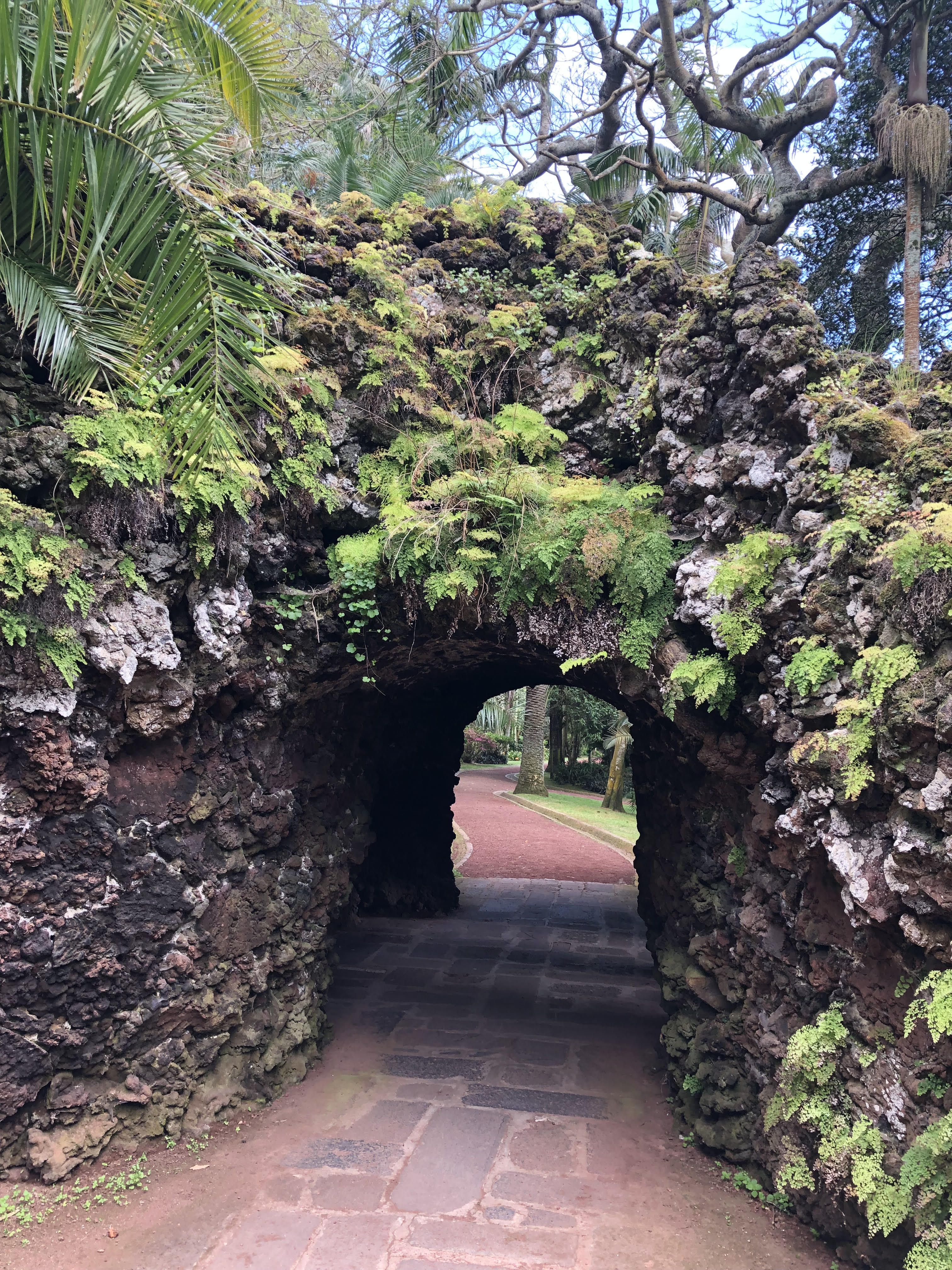
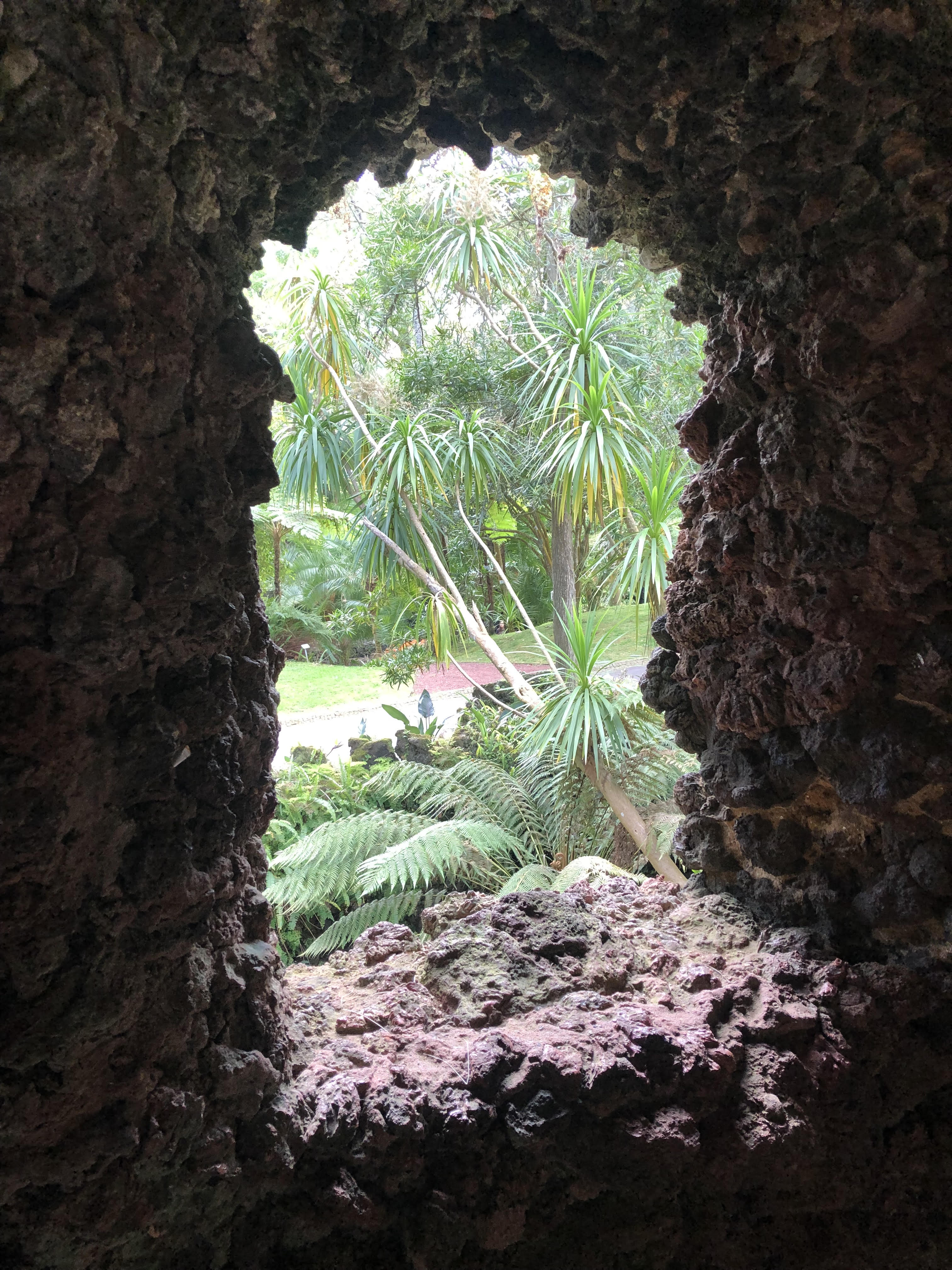
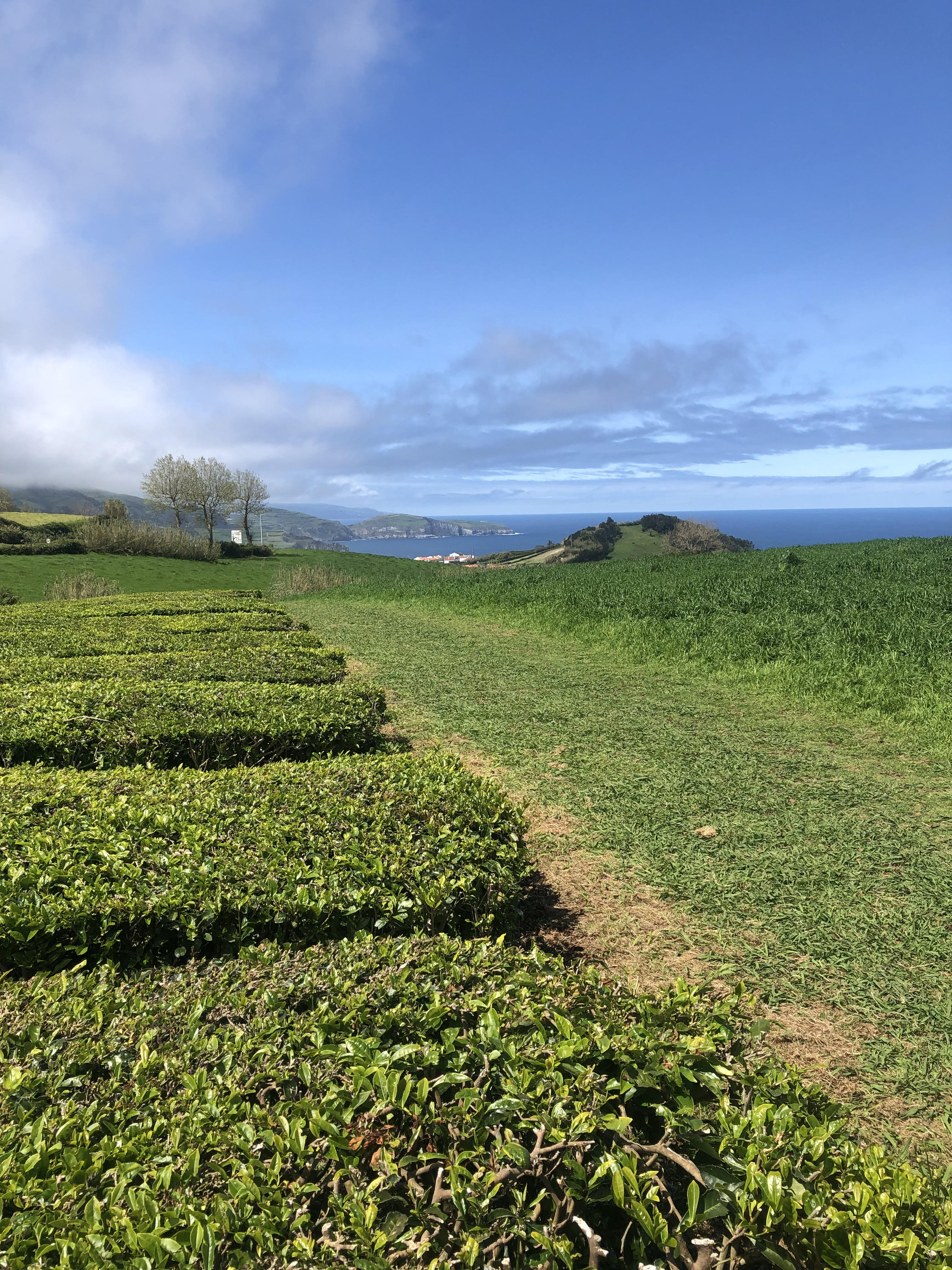
Azores Photos

New Zealand Christmas Tree, also called ironwood, according to my PictureThis app. The video shows only one very spread-out tree, our “magic tree.”

We spent last week in the Azores, courtesy of Suzanne’s organizational skills, Erik’s driving skills, and the kids’ school vacation.

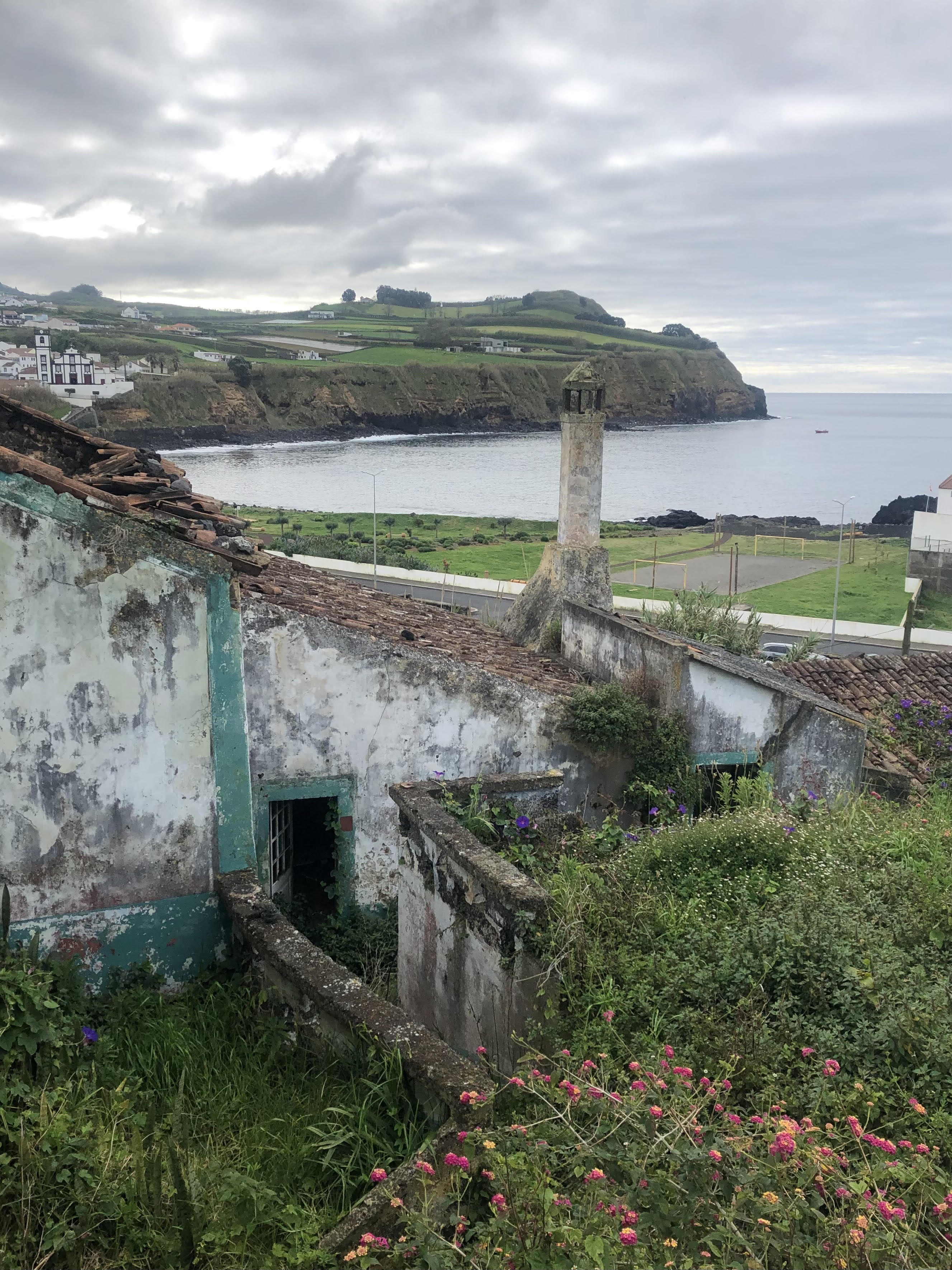
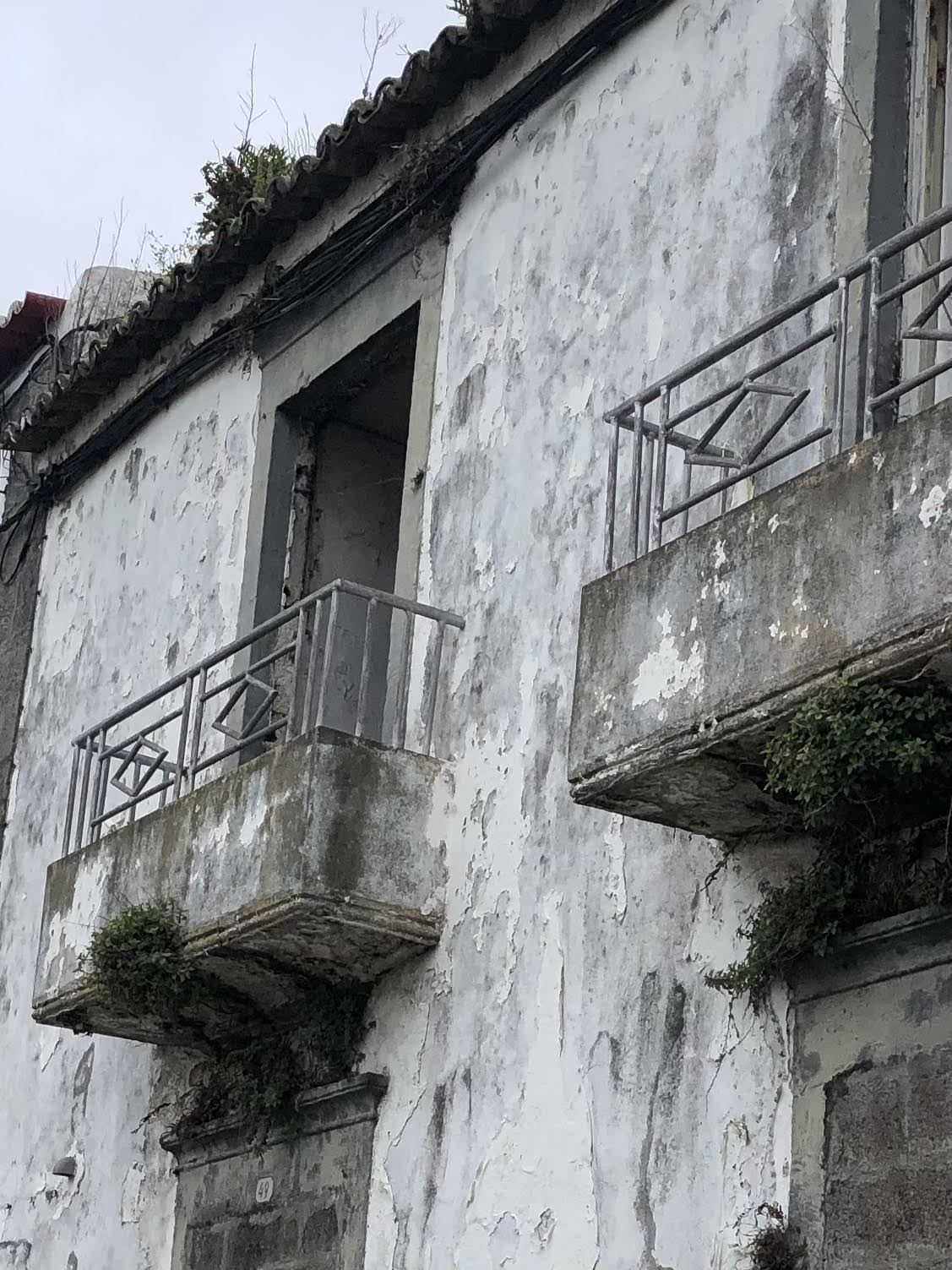
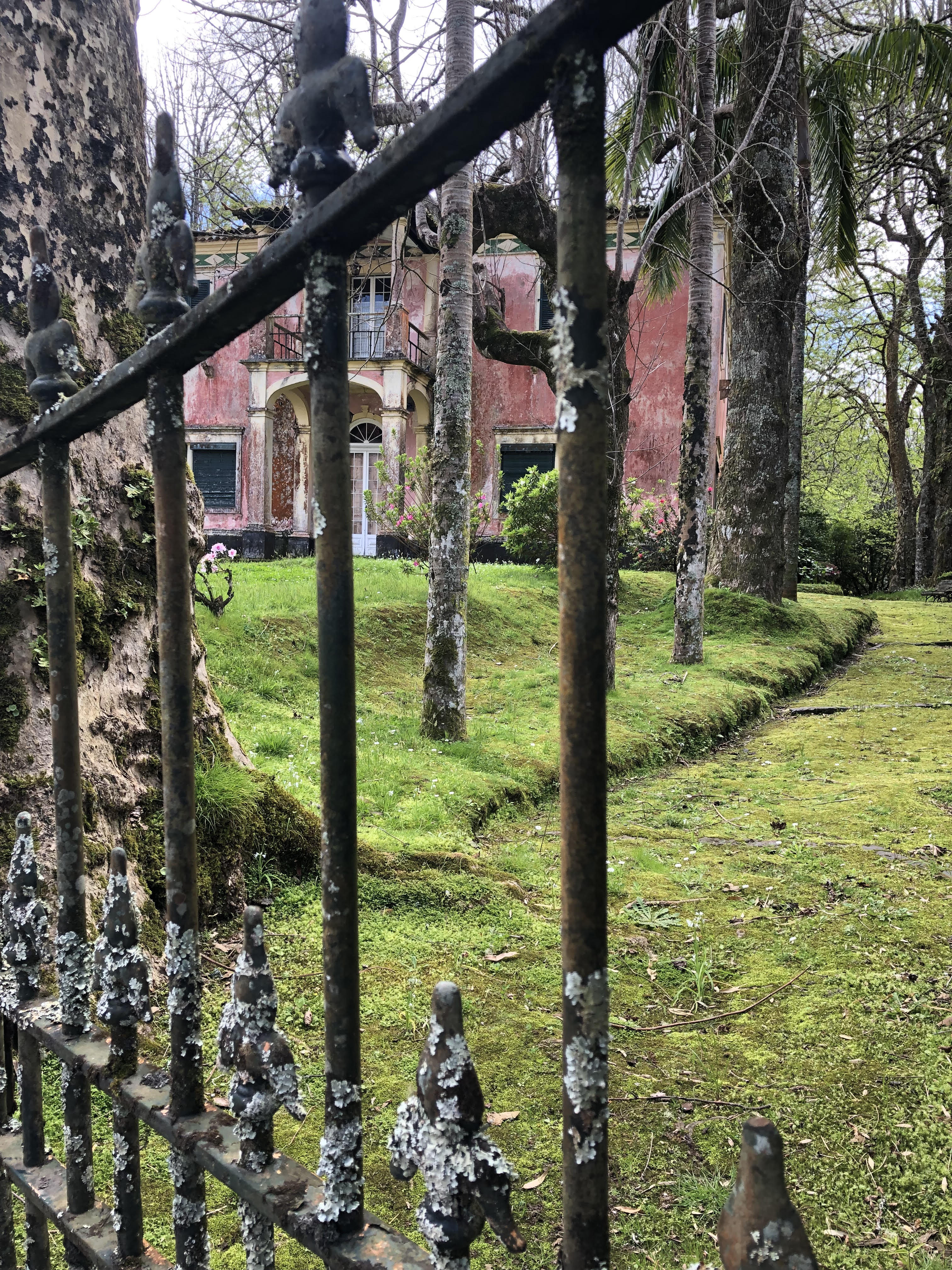
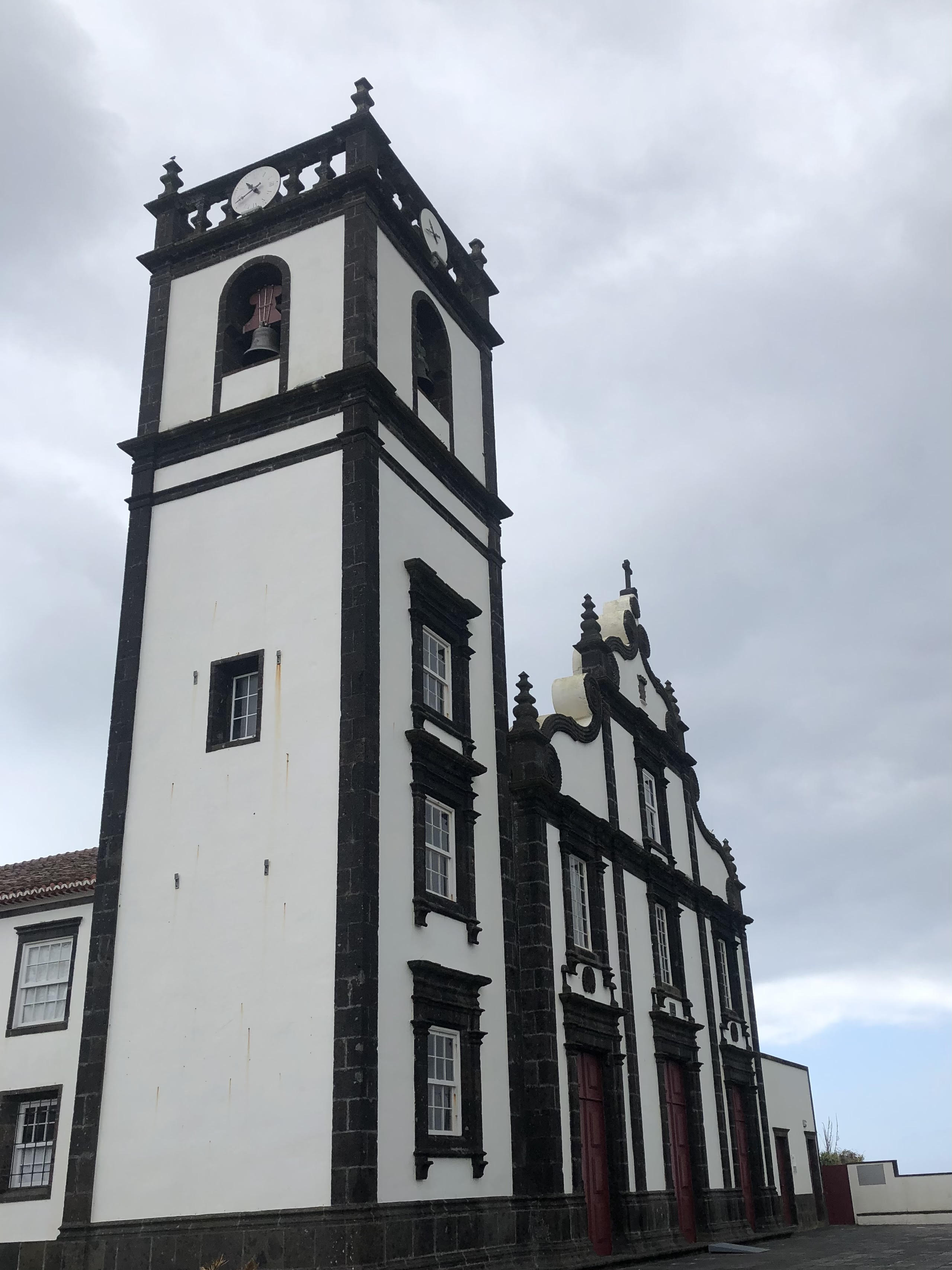
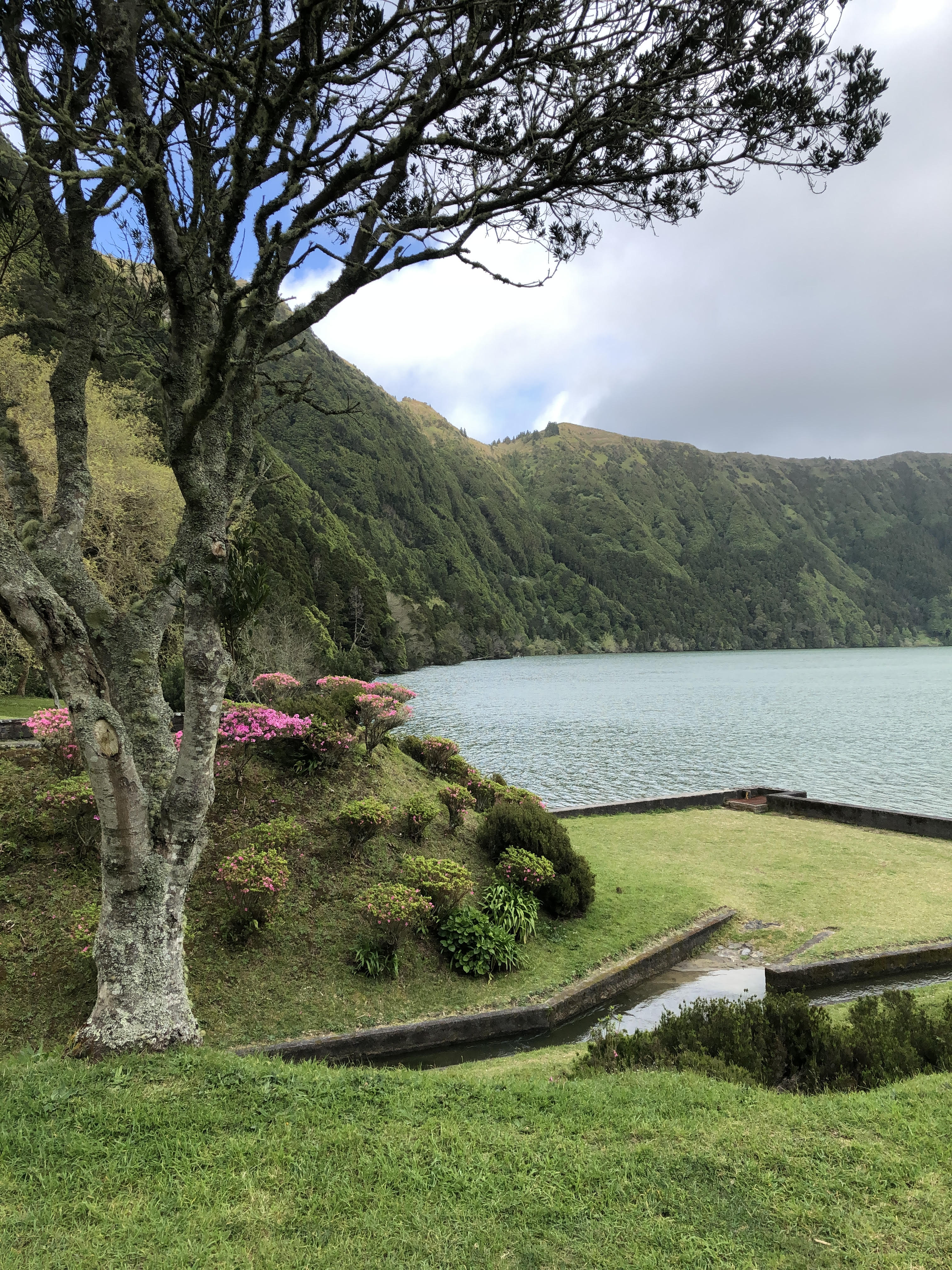
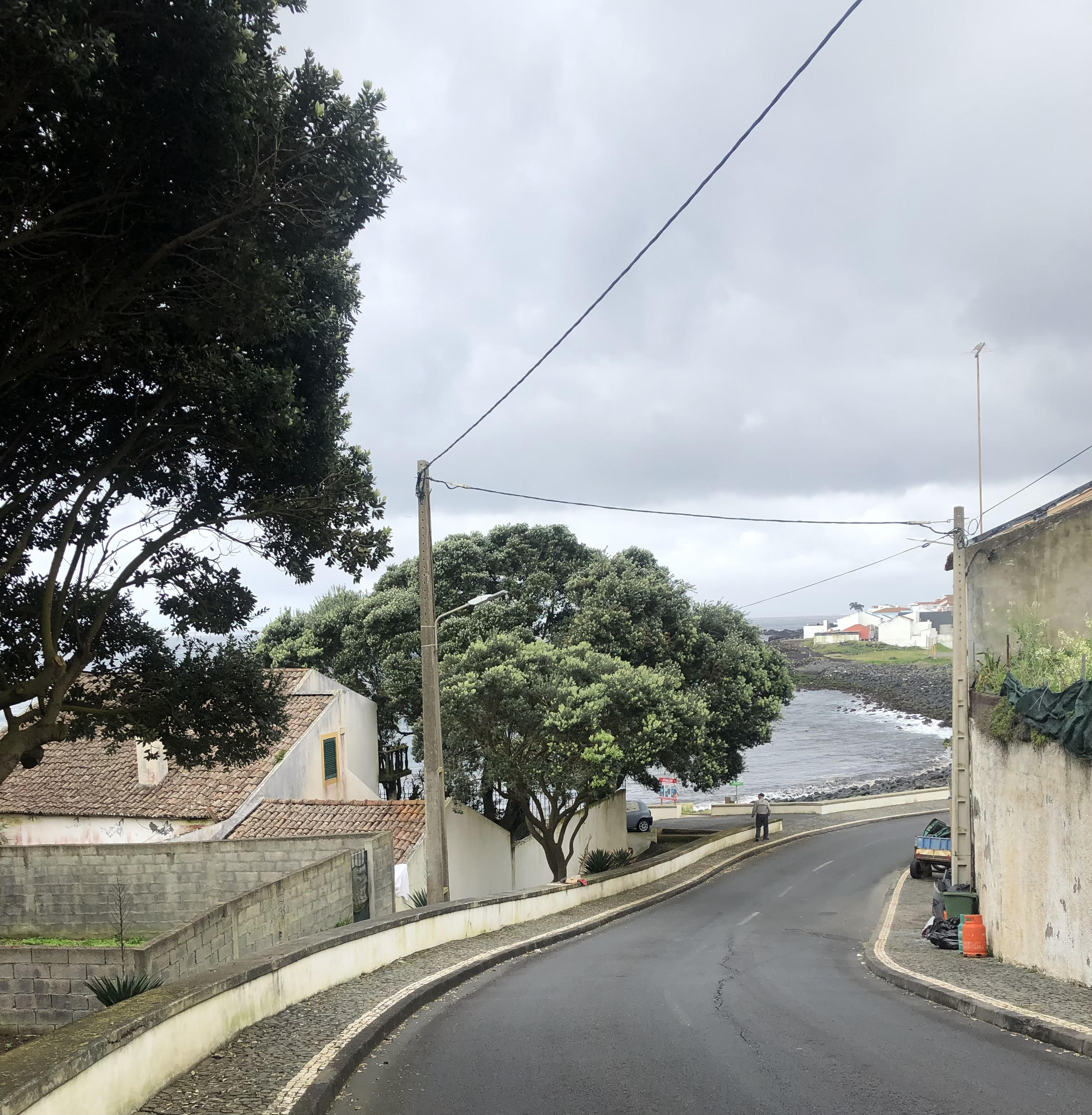
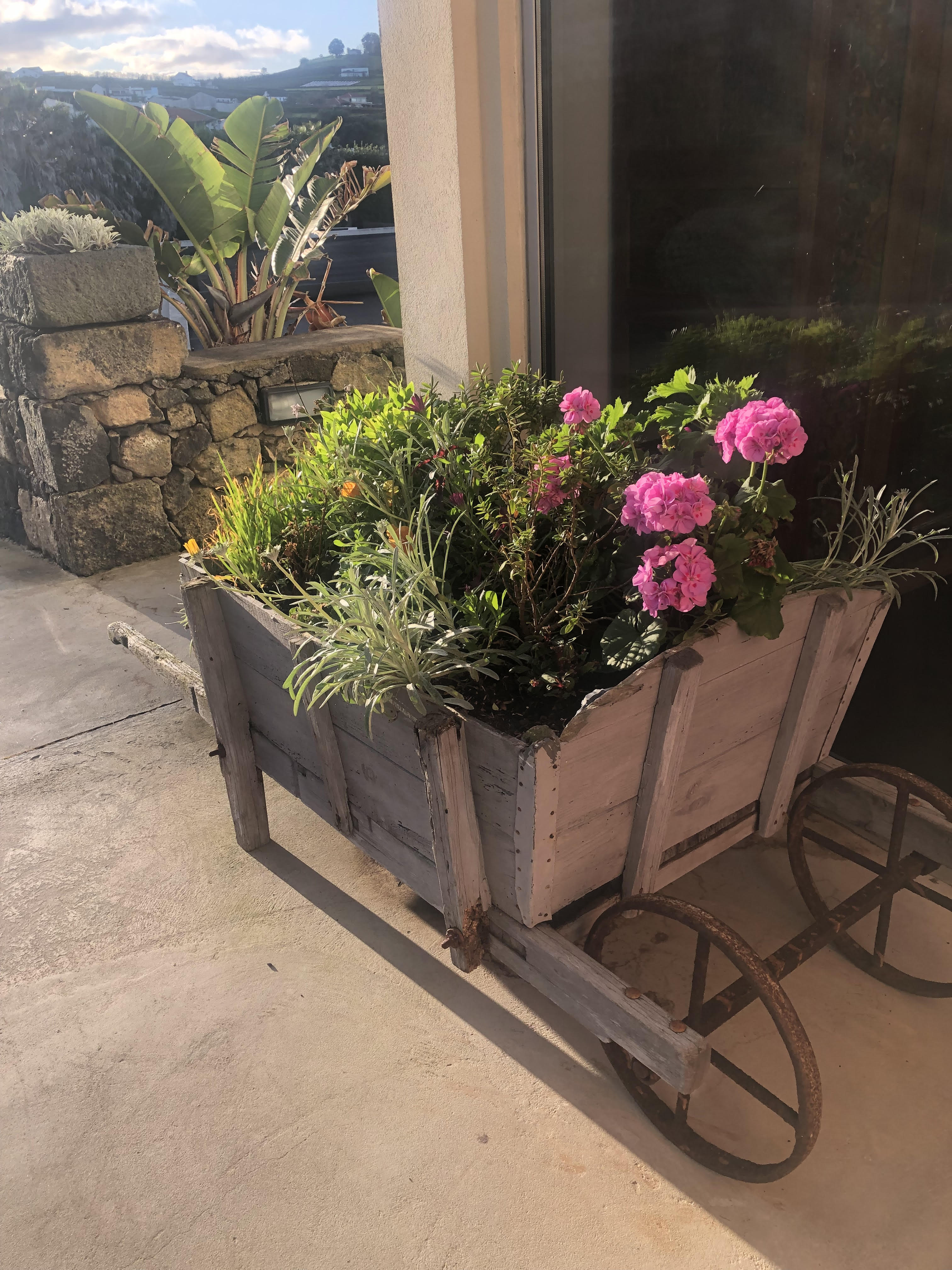
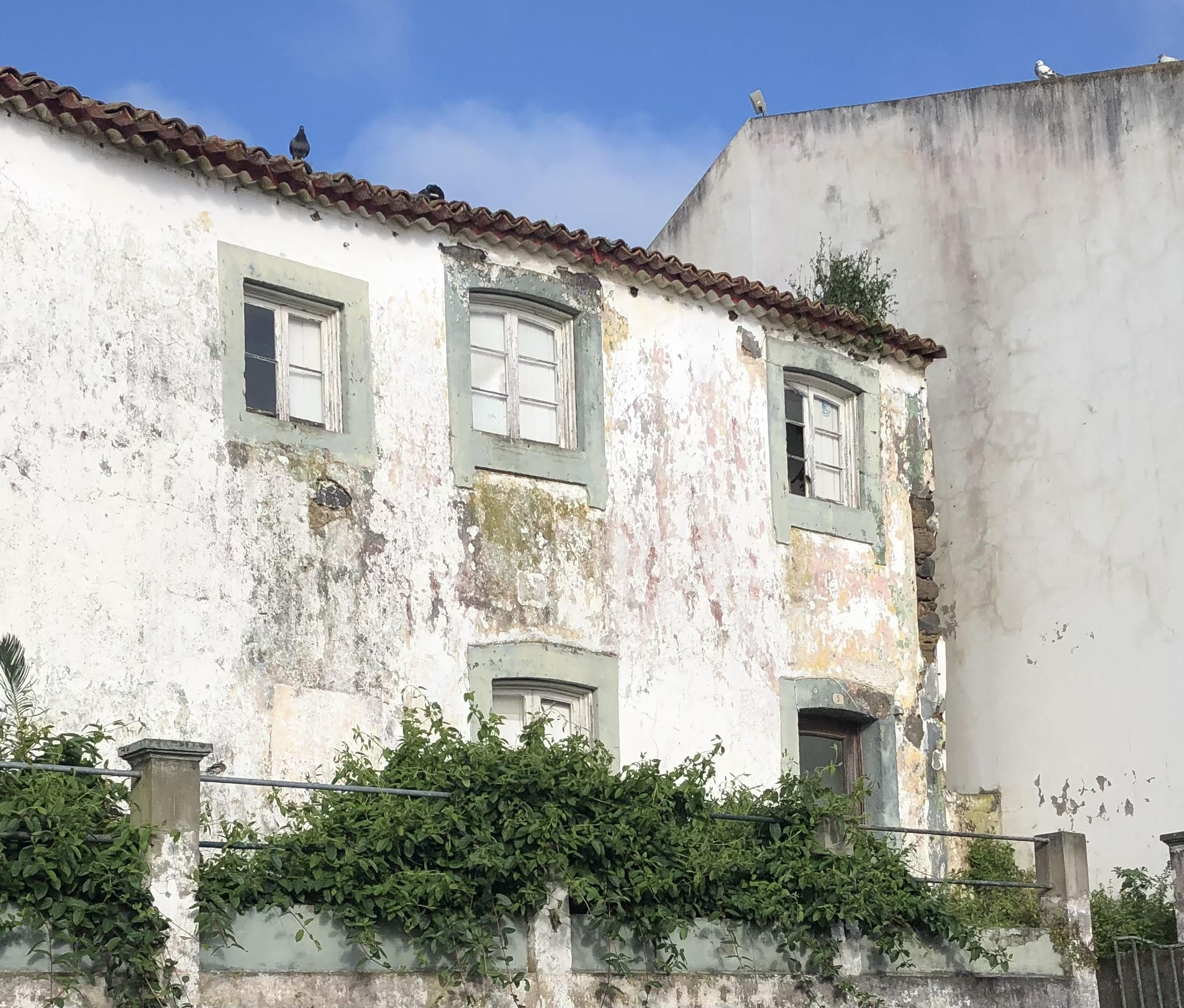
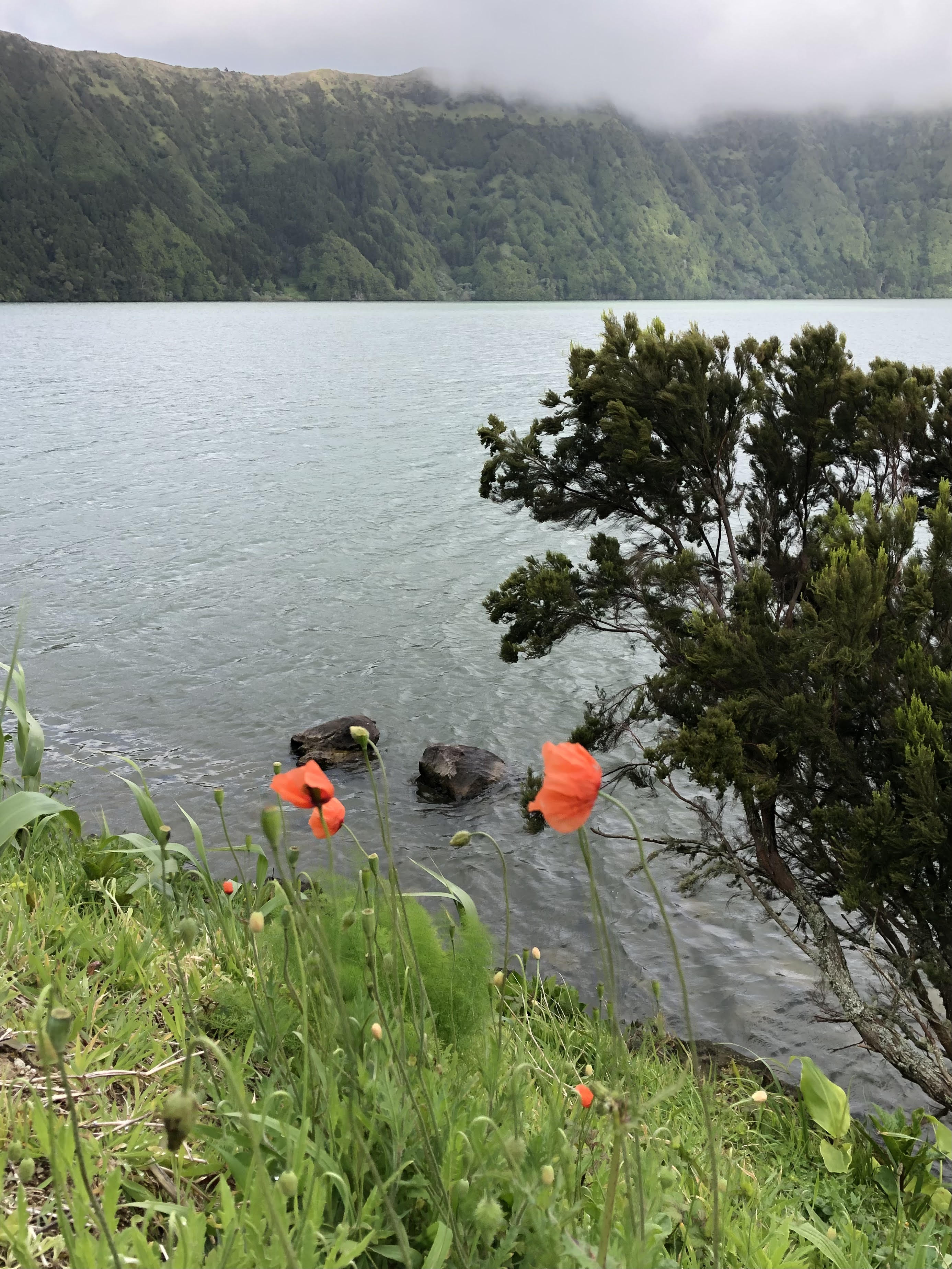
It was beautiful. The Azores are a group of nine volcanic islands in the North Atlantic. The temperature was 50s and 60s F. We were on Sao Miguel island only. I have a lot of pictures to show you, crossing my fingers that you like derelict buildings as much as I do. There were plenty of spiffy modern buildings — some probably vacation homes for people who can handle frequent air travel — but for me, the crumbling, mossy ones were more picturesque.

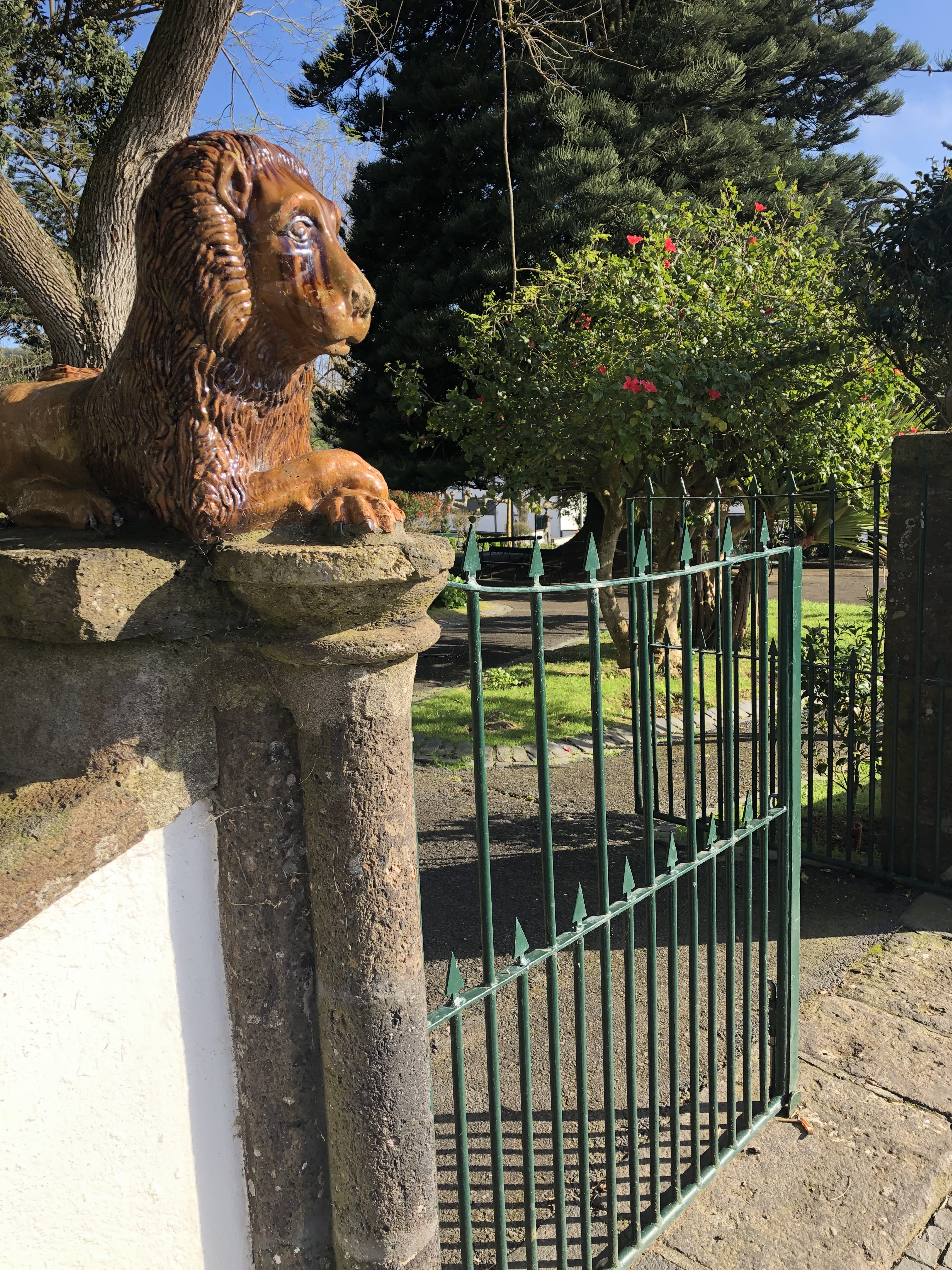
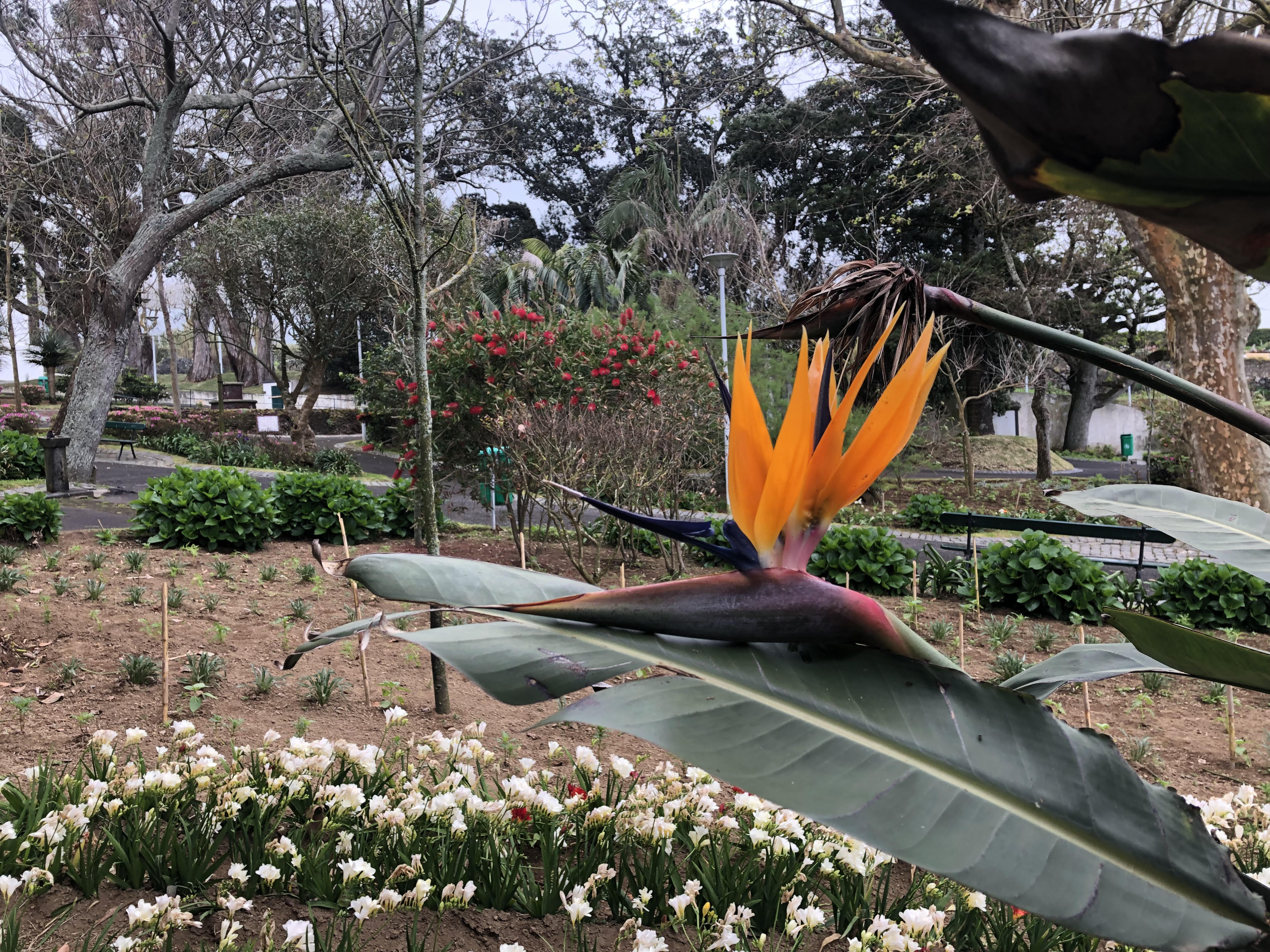
The entrance to the “magic tree” park features a lion gate. The lions are made in the local ceramics factory, where we bought tiles. The flower is bird-of-paradise.

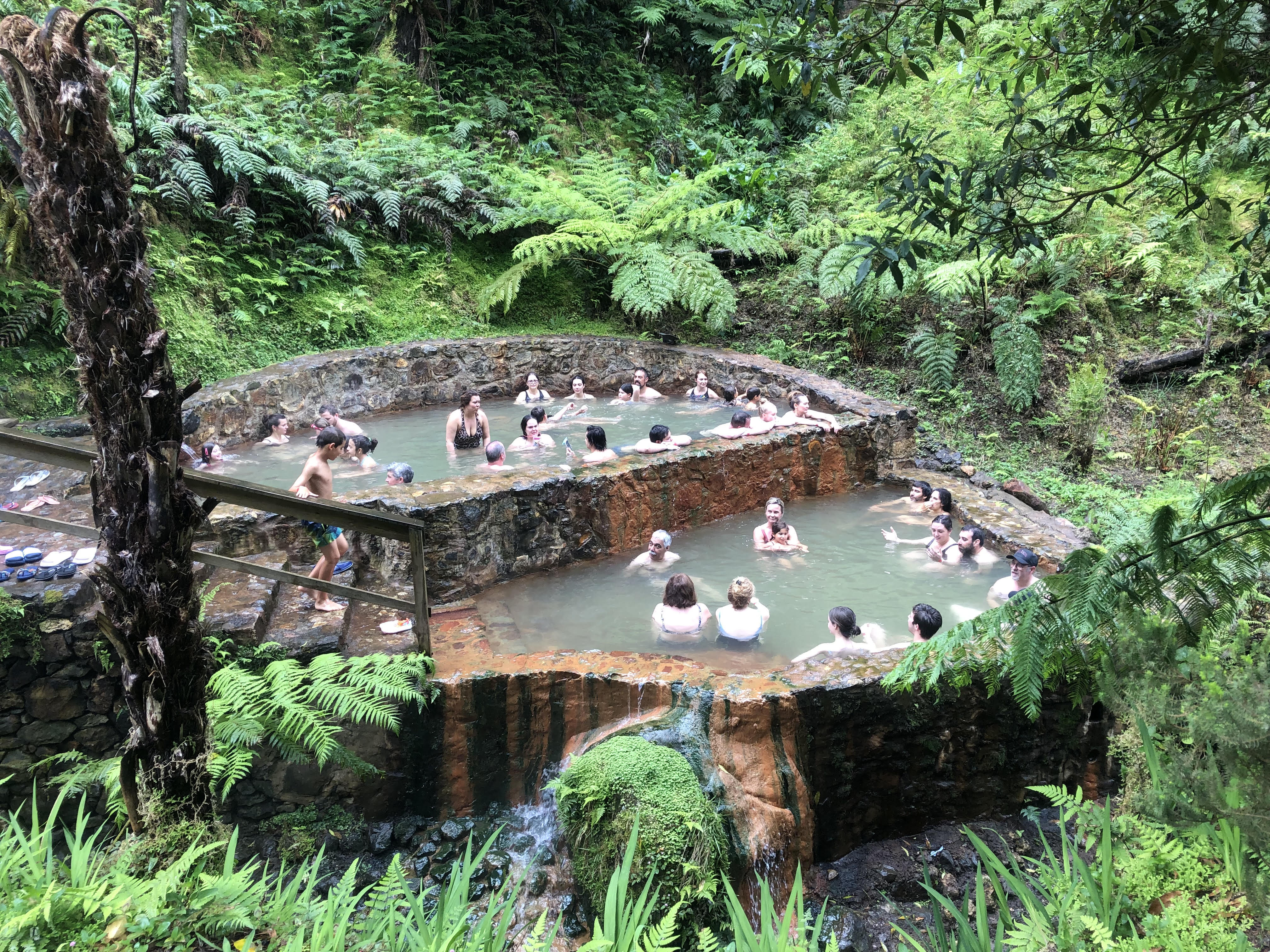
We loved the volcanic hot springs everywhere. Some family members went in a muddy one (muddy from iron in the water). It was about the temperature of a hot tub, 102 F. I joined them when they tried the clear hot springs. Fences protected visitors from the boiling ones.

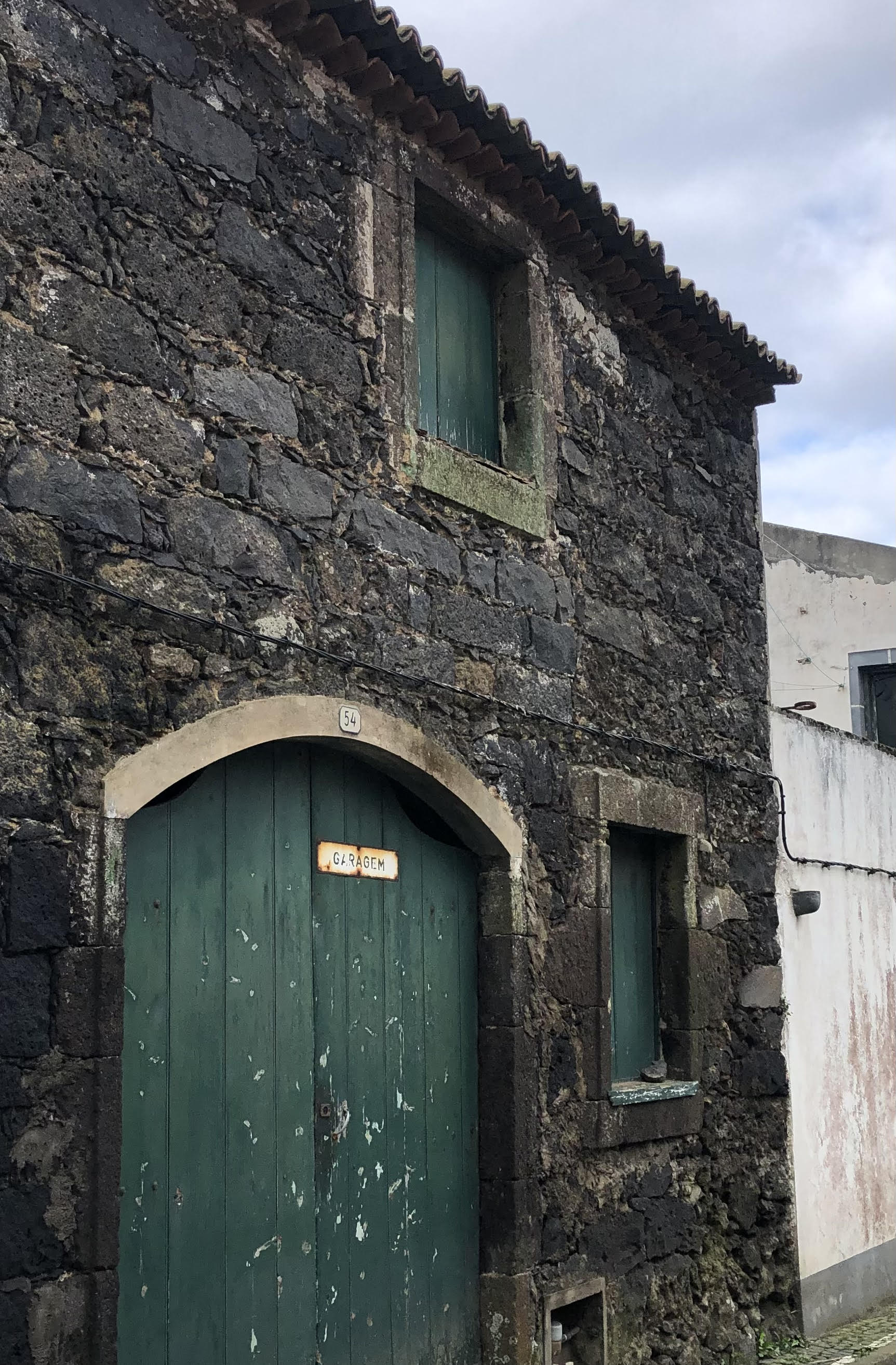
The streets are very narrow. I couldn’t imagine getting in an out of the green garage door below. The sidewalks are nearly nonexistent, and everything stops when the fish van with its loud horn gets stuck behind a grocer loading boxes.

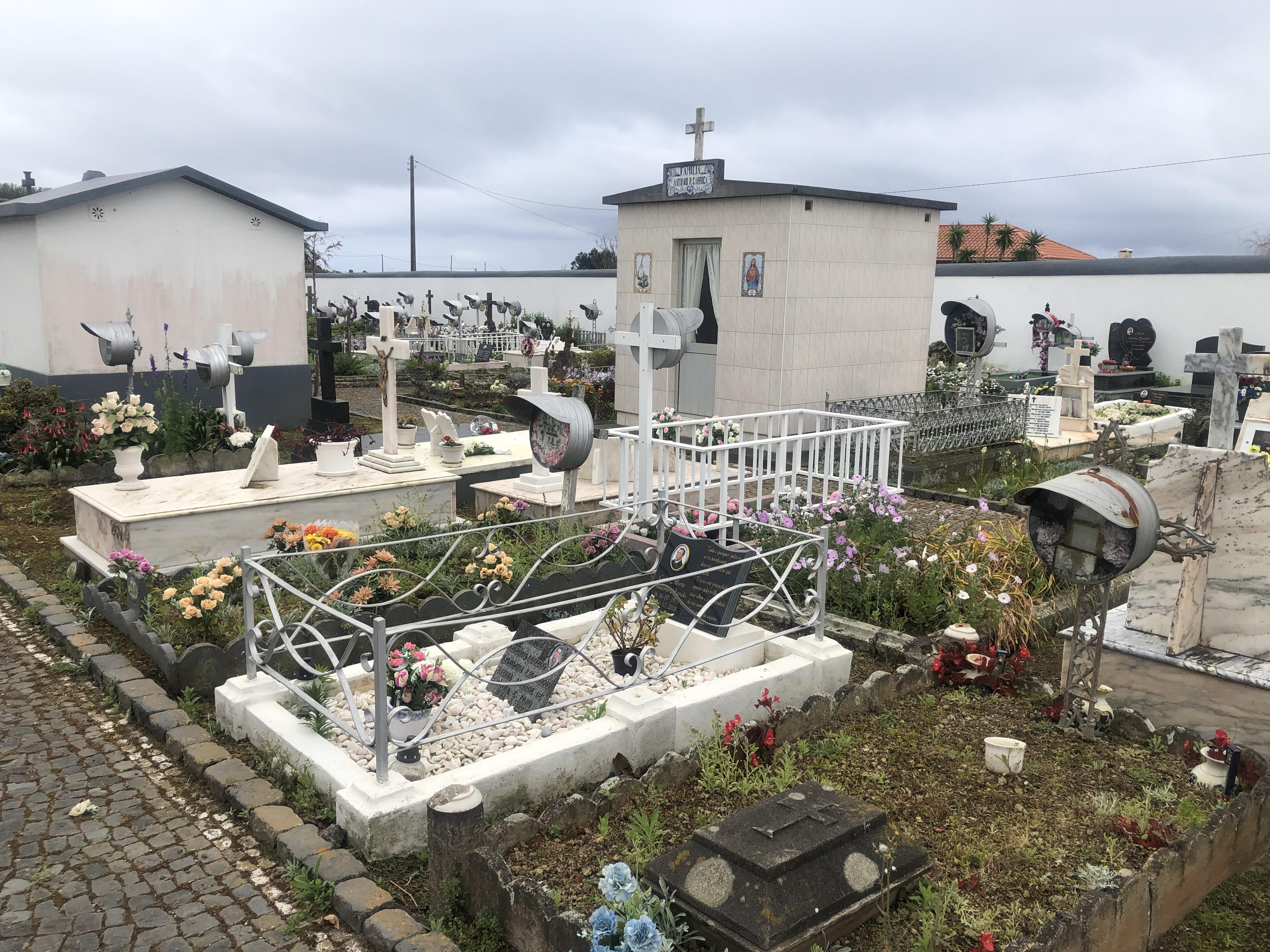
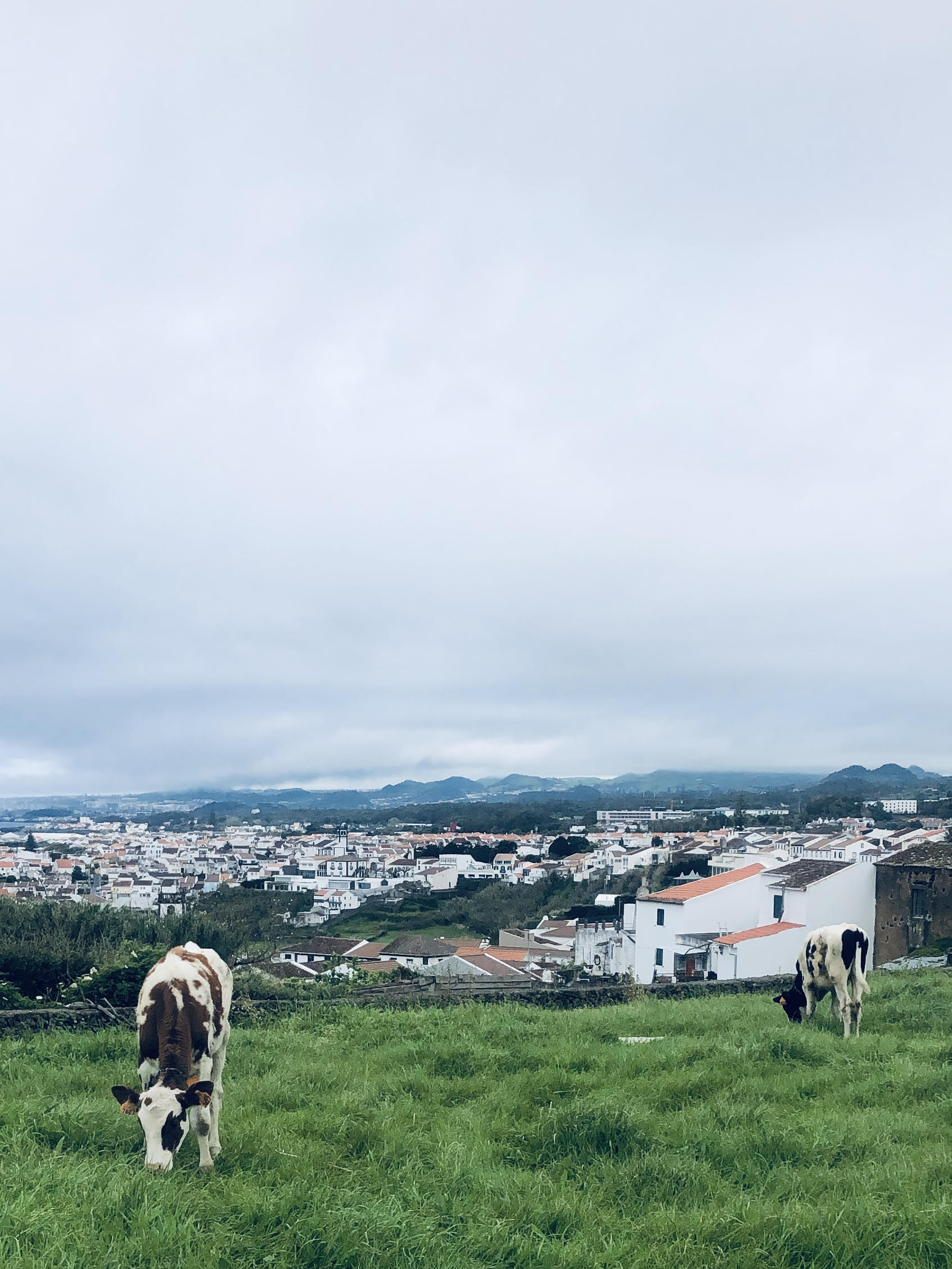
The cemetery was unlike any I have seen before. Nearby, I saw cows grazing. There are more cows than people in the Azores (125,000 as of 2020). Wonderful cheeses. I think I have identified the main dairy cows as Holstein Friesians.

The grotto is in Porta Delgada in one of the many botanical gardens (really the whole island was a botanical garden). Next is the tea plantation, the only one in Europe (Europe because the Azores are part of Portugal).

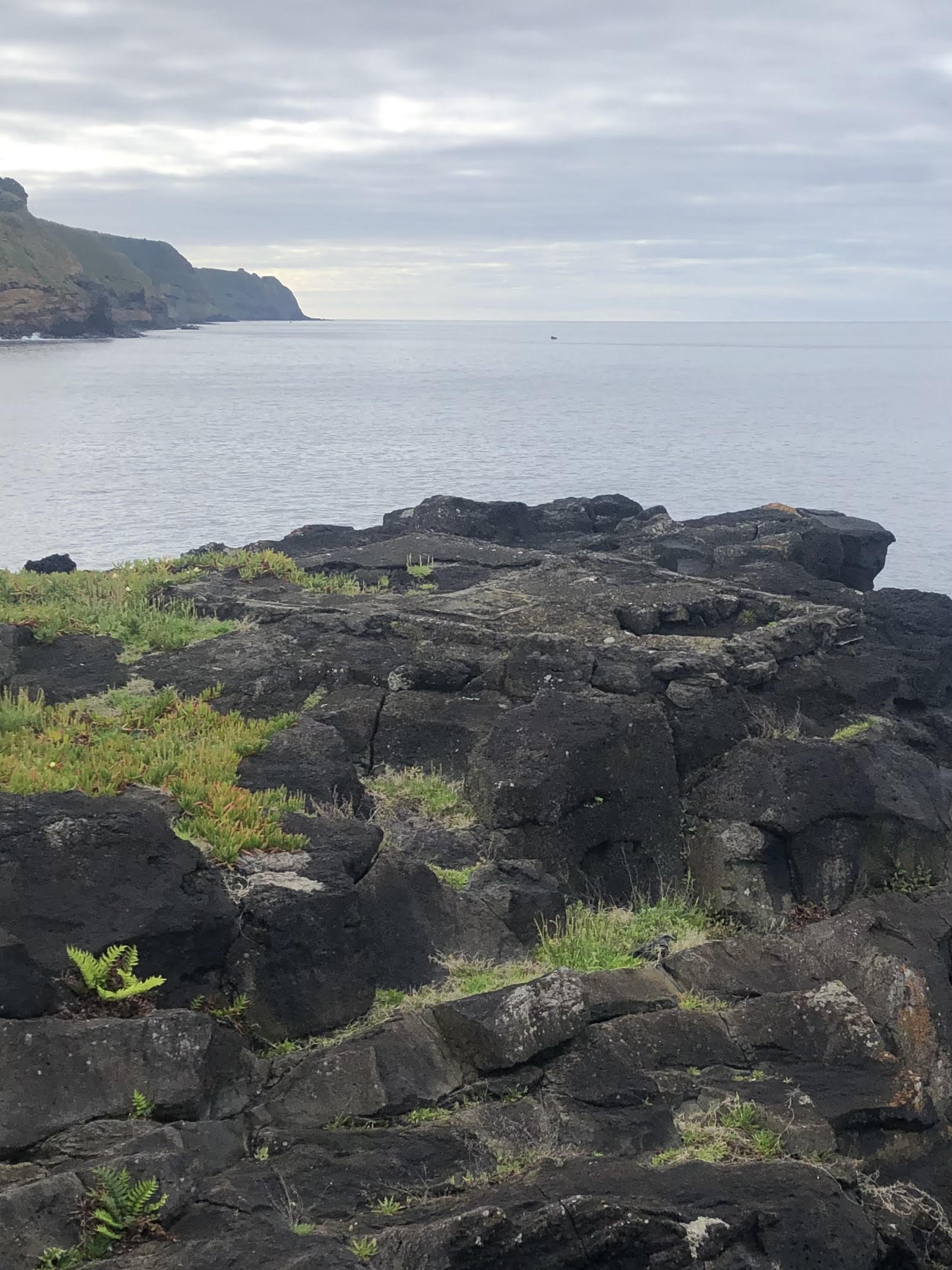
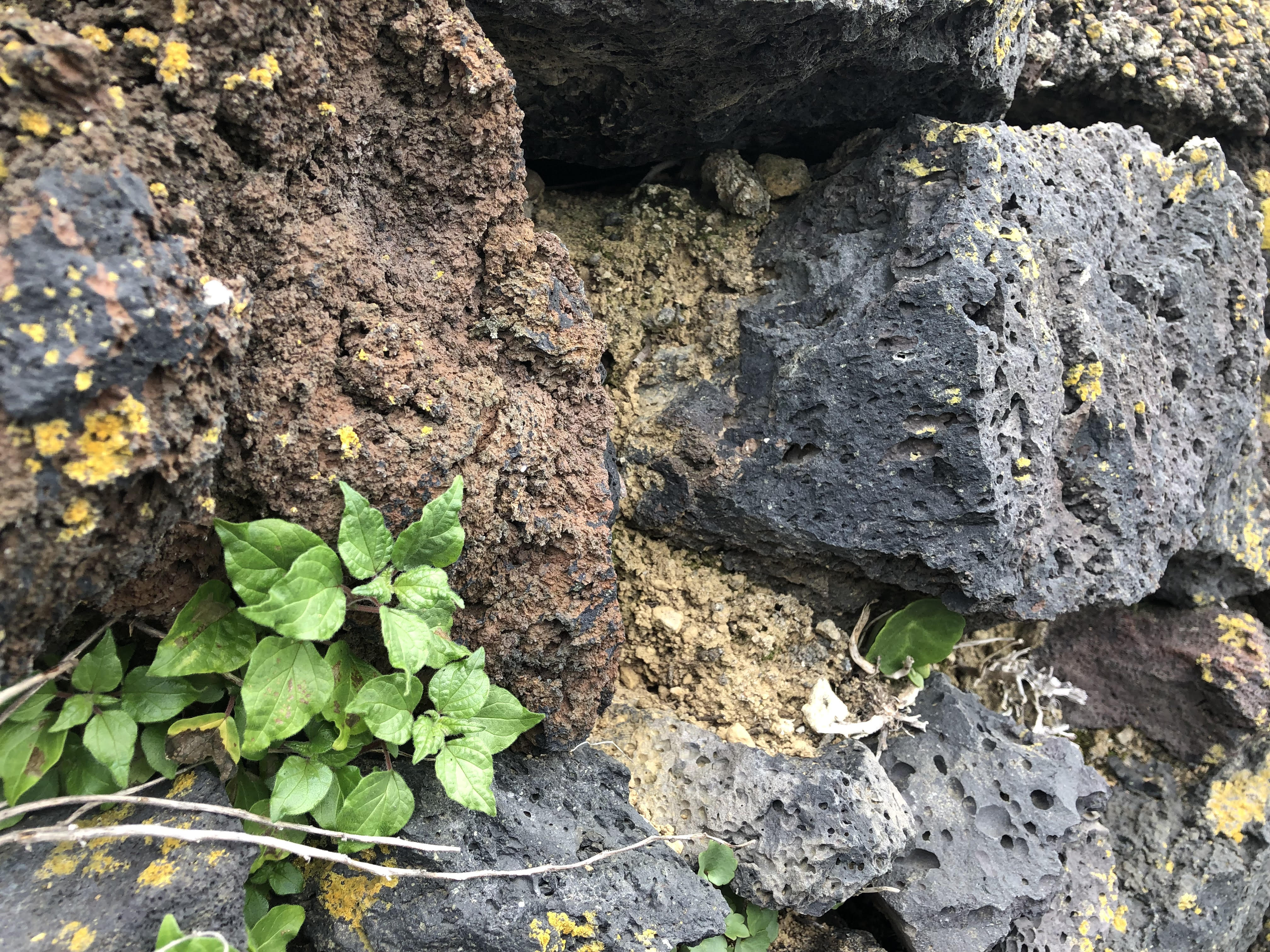
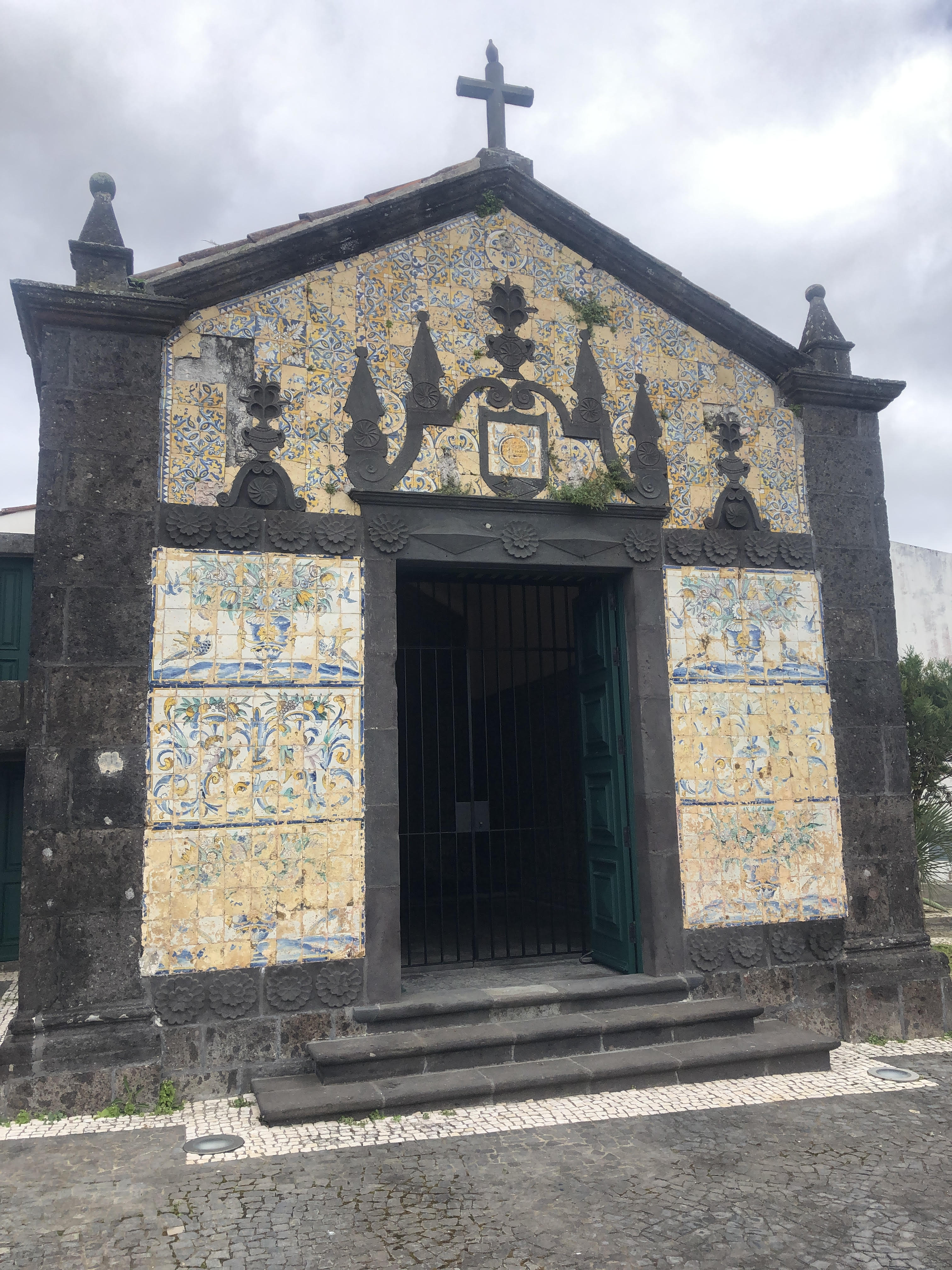
Check out the close-up of the ubiquitous volcanic rock, basalt, used for everything. Water and gases in lava formed the fossil bubbles. The black ornamentation on churches and chapels is “basaltic relief.”

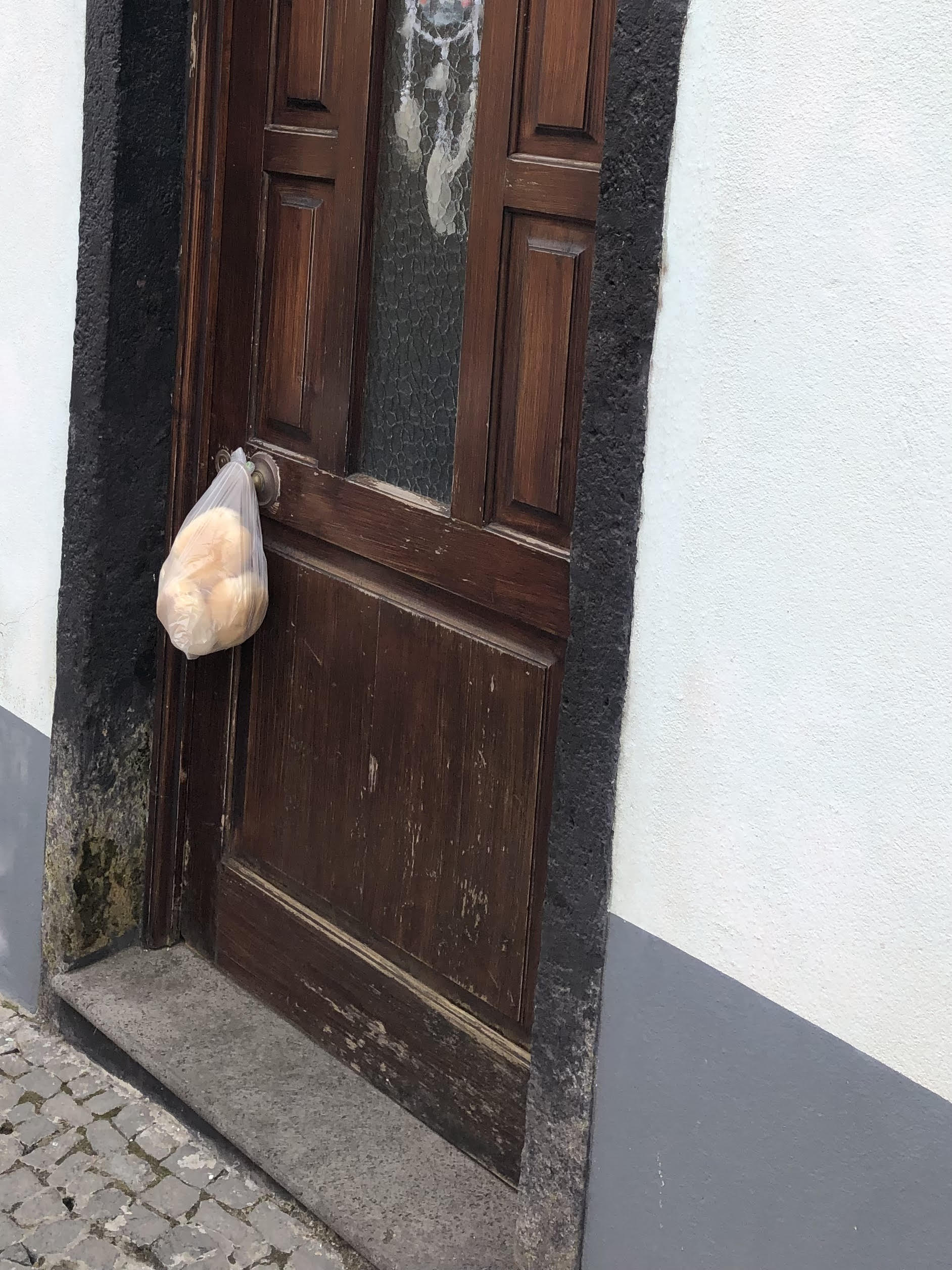
Many homes have early morning bread deliveries that get hung on doorknobs or left on the doorsill.

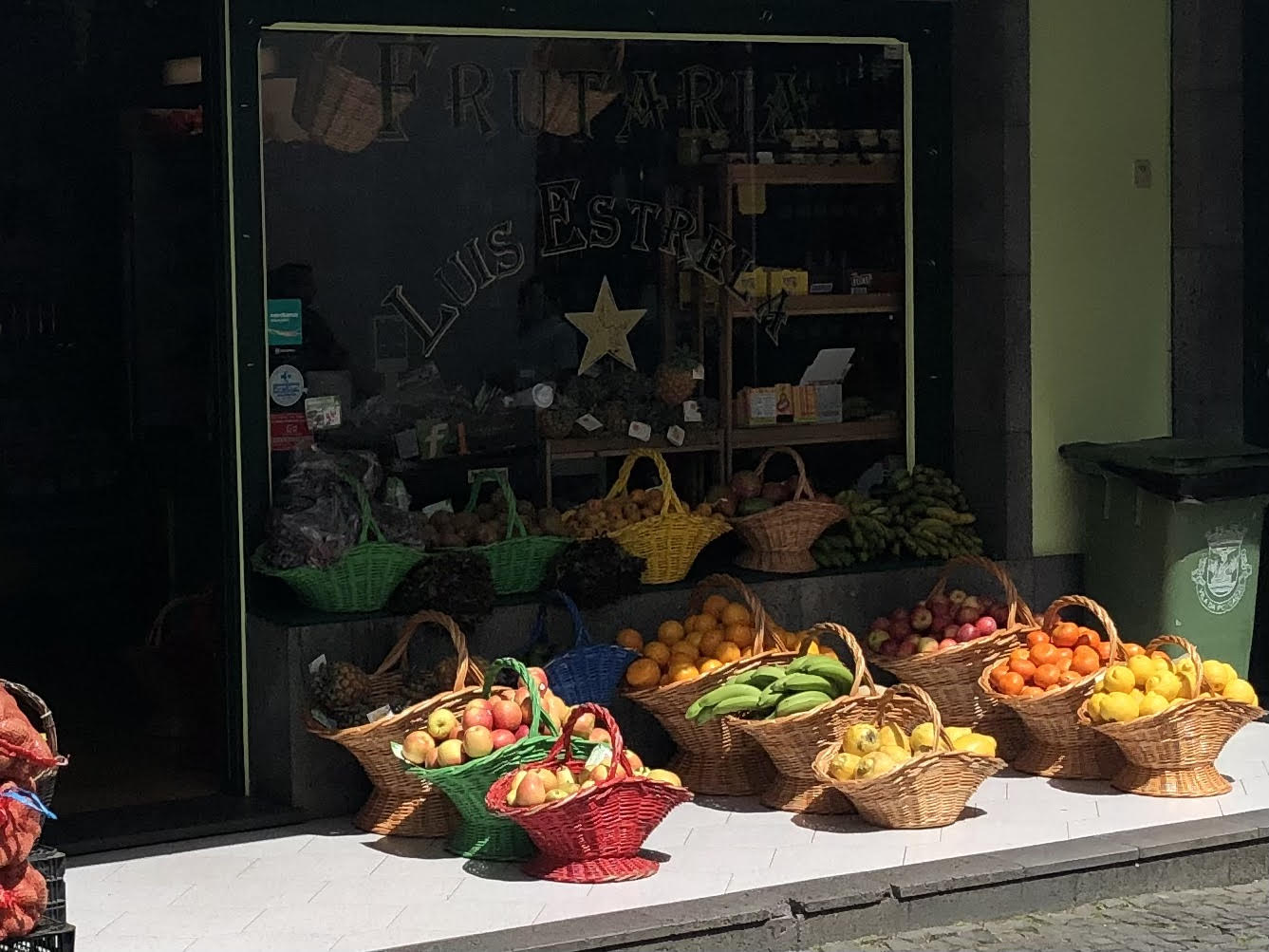
My granddaughter, 8, edited the photo of a market’s fruit baskets.

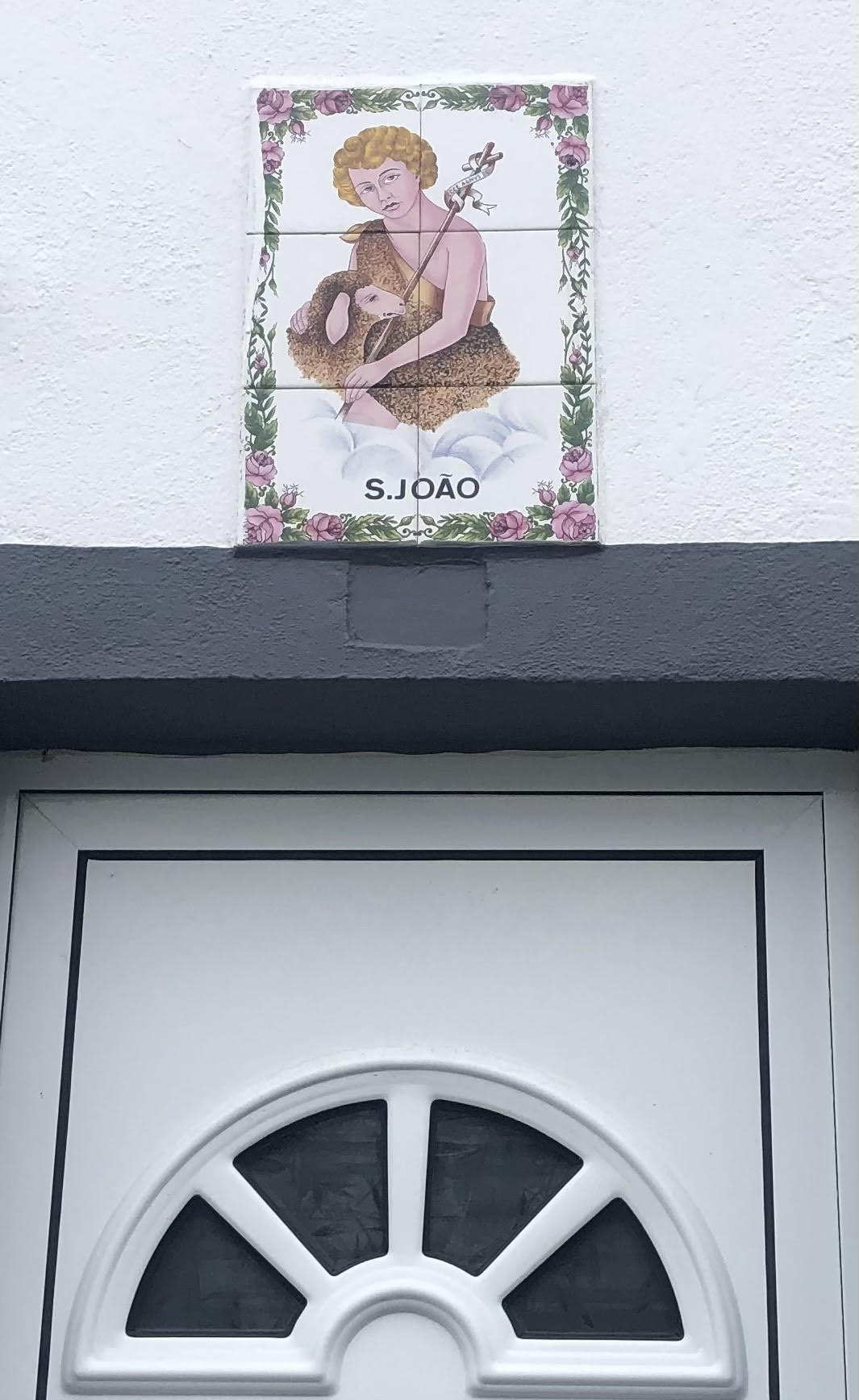
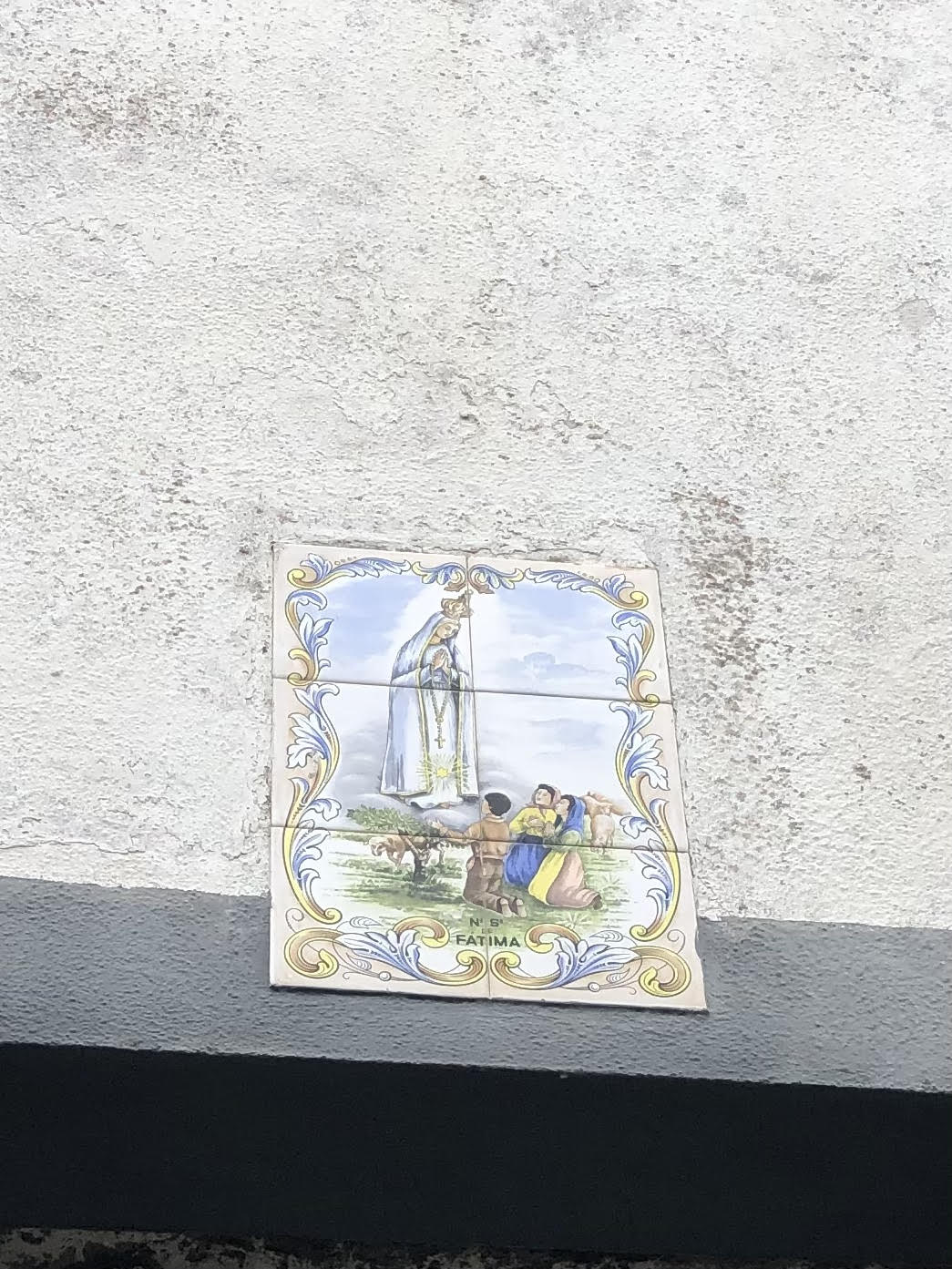
Nearly every home has some kind of saint watching over it, in the form of a ceramic plaque handmade in the factory on Sao Miguel.

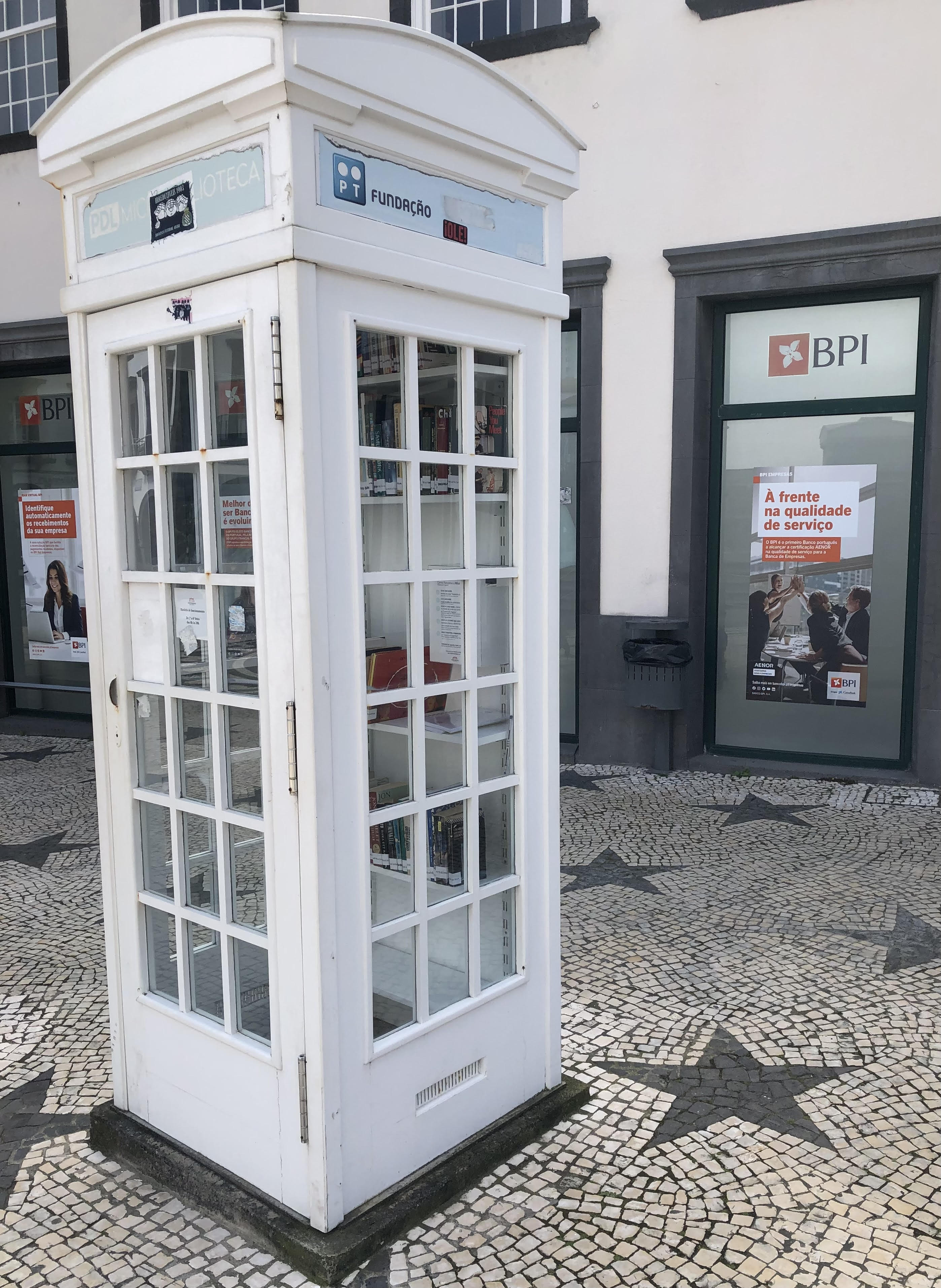
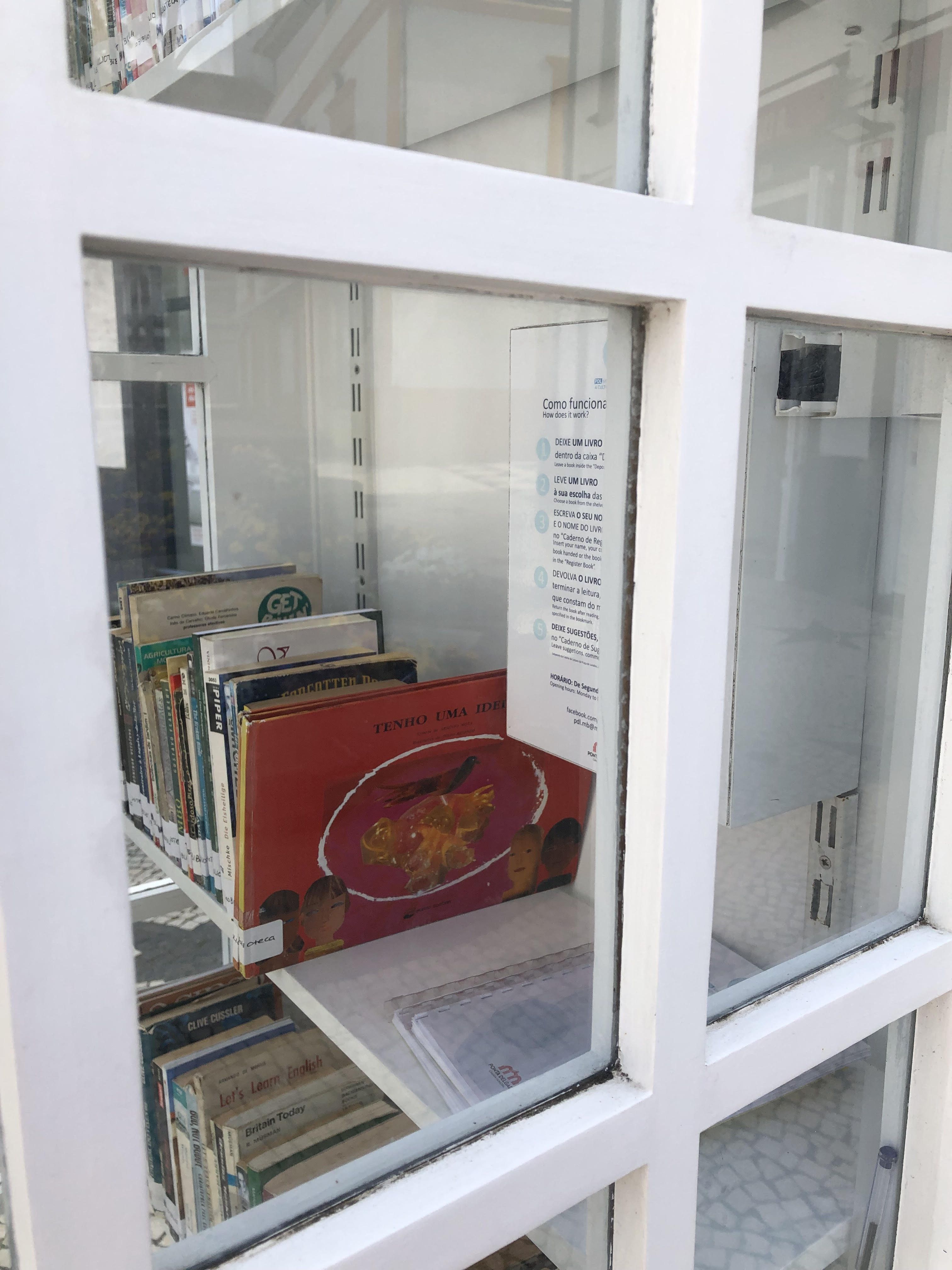
A phone booth had been turned into a little library in Porta Delgada.

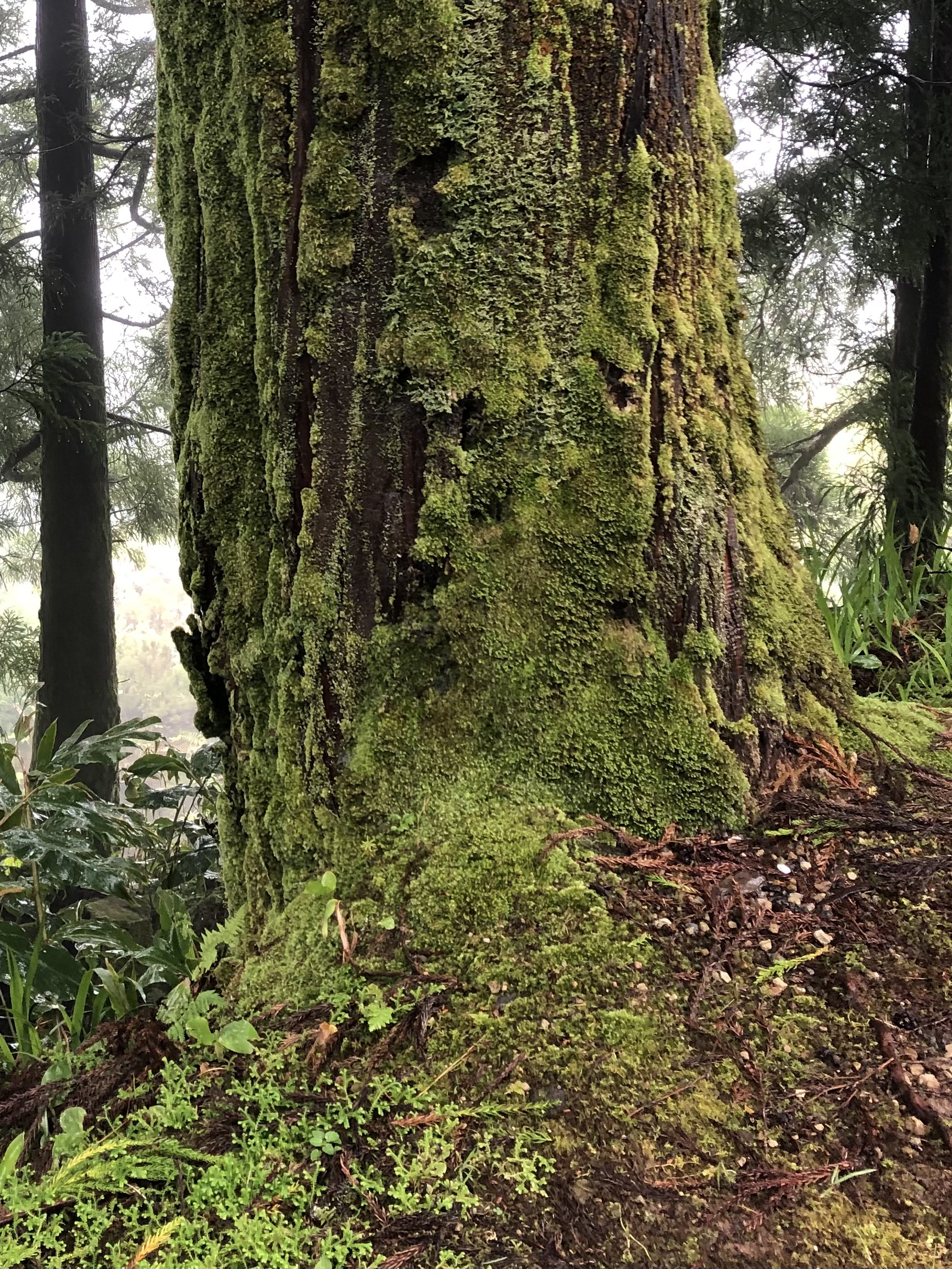
Nasturtiums, poppies, fresh-air laundry, moss. I worked hard at capturing one of each of these common sights.

Boiling volcanic spring.
The farm dog did not want me so near the goats.

Photo: Publishers Weekly.
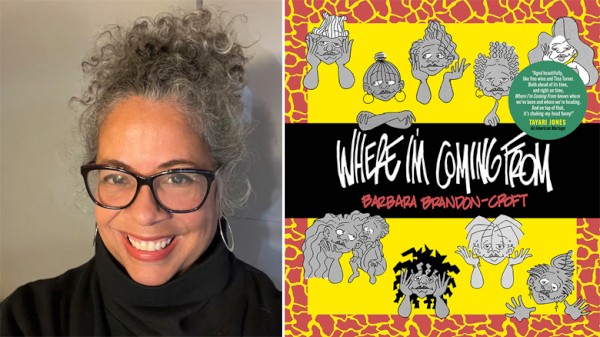
Groundbreaking cartoonist Barbara Brandon-Croft — and friends.

I enjoyed reading Michael Cavna’s interview with this cartoonist for many reasons, including the fact that she attended Syracuse University. That’s where I went to grad school and I feel a kind of kinship with people who went there — grad or undergrad.

Cavna starts the Washington Post article with the story of the artist’s first pitch to a publisher.

“Barbara Brandon-Croft wrote a pitch that, 34 years later, has lost none of its punch.

“ ‘Few Black Cartoonists have entered national syndication since the 1970s,’ began the boldfaced heading to her letter to newspaper syndicates. ‘None have been Black Women.’

“What Brandon-Croft was offering the gatekeepers of such mass distribution was not a shaming as much as a way to course-correct. They could overcome their lack of representation while also reaching new audiences. ‘We all gain from the Black experience,’ she wrote in the letter. ‘Moreover, everyone’s to gain from the Black female experience in particular.’

“Her precise verbal strike caught the eye of legendary Universal Press Syndicate editor Lee Salem. … He knew excellence when he saw it, replying to her: ‘It’s rare to have such a good ear for nuance and character.’ She was on her way.

“As the next decade dawned, she became the first African American woman ever to have a comic strip, ‘Where I’m Coming From,’ syndicated to the mainstream press.

“The trail Brandon-Croft blazed is being celebrated in a beautiful hardcover retrospective, Where I’m Coming From: Selected Strips, 1991-2005 [I’m giving you the Bookshop.org link because I avoid Amazon]. The overdue salute not only provides a nostalgic trip through the lives of Brandon-Croft’s nine central female characters; the book also includes essays and letters that spotlight just how unique her achievement was.

“ ‘I felt like I was pushing against history,’ the Queens-based Brandon-Croft says last month during a Zoom interview. Yet she was undaunted in her early 30s, a fledgling Detroit Free Press cartoonist who was full of ‘nerves and spunk.’ …

“The steps encapsulated the cartoonist’s job, according to her late Washington-born father, Brumsic Brandon Jr., whose comic ‘Luther,’ launched in 1968, is credited with being one of the first mainstream strips ever to have an African American lead character. …

“None of those ‘60s-born strips, though, was created by female writers or artists. And none of them centered on adult experience. In that era, ‘Out of the mouths of babes seemed the most palatable way to introduce Blacks to the funny pages,’ she wrote in her 1989 syndicate pitch letter. It was high time for a change.

“What she delivered in her strip was a circle of friends who have an uncanny way of drawing in the reader through casually conversational tones, sometimes breaking the fourth wall. The talk was eclectic, easily shifting from international politics to office politics — and including such topics as dating and parenthood, feminism and racism, even the obstacles to self-love and respect. …

“The strip’s nine women who so resonate with readers include Cheryl (‘an in-your-face kind of person who has her strong opinions,’ Brandon-Croft says); the spiritually Zen Alisha (‘she believes the world should get along’); Judy (‘a good friend when you need somebody to talk to’); Lekesia (‘fun and very socially conscious’); Nicole (‘kind of a full-of-herself airhead’); the fair-skinned Monica (‘she looks White but she’s very militant — she talks about the idea of colorism’). Brandon-Croft also created Lydia, through whom the cartoonist meditated on motherhood. …

“The strip also stood out because its characters were rendered mostly as talking heads and expressive hands. … For Brandon-Croft, the aesthetic of characters without bodies served a larger purpose.

“ ‘I’m tired of women being summed up by their body parts,’ she wrote in a 1992 article for the publication Cartoonist PROfiles, continuing: ‘I’m interested in giving my women a little more dignity. I want folks to understand that women — in addition to breasts — have ideas and opinions. Look us in the eye and hear what we’re saying, please!’ …

“Brandon-Croft would attend Syracuse University, where she drew for the school paper. She says there were few Black students in her visual arts program, where Brandon-Croft flourished and found her footing. She also reveled in some of her non-arts classes, in which she would ‘learn about human relationships,’ she says — which would serve her well as a keen social observer on the comics page.

“Once out of school, she had no plans to become a cartoonist, despite delighting in ‘Peanuts’ and Mad magazine as a child. She entertained the idea of being an artist, perhaps a fashion illustrator. She had worked as a writer for Essence for several years when an opportunity came along. An editor at the Detroit Free Press sought a new creator to help diversify the paper’s comics and contacted Brandon-Croft’s father. Could he recommend someone?

“He looked to his daughter. Here was her chance. She headed to his family basement studio and went to work creating ‘Where I’m Coming From,’ which in 1989 began appearing in the Free Press.”

More at the Post, here.

Photo: Nick Migwi/ CNN.
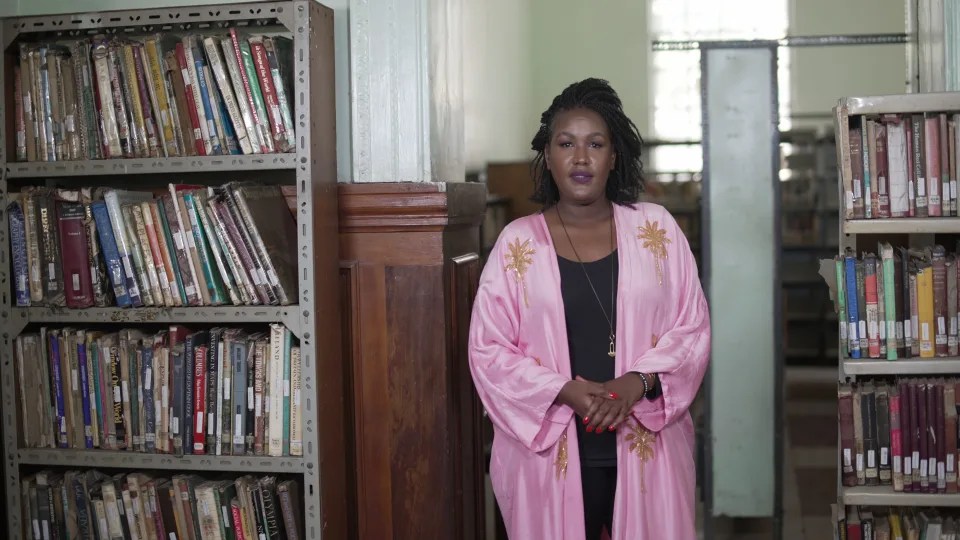
“I think that libraries are great equalizers,” says Book Bunk co-founder Angela Wachuka in Nairobi, Kenya.

Like many of you, I’m a big fan of reading books. In my family, I’ve always been known for gifts of books — books that I nearly always have read first so that I know they are right for the recipient. My aunt said she looked forward to the gifts no one else gave her on her birthday.

When I was a train commuter, I bought lightweight paperbacks to read while traveling, but after retirement, I became a devotee of the library, a place of magic, as blogger Laurie Graves knows more than most.

In recent years, Kenyan fans of libraries have been working to make them as accessible and lovely as possible.

Abdi Latif Dahir writes at the New York Times, “In 1931, the first library in Kenya’s capital, Nairobi, opened its doors — to white patrons only. Nearly a century later, Kenyans dressed in the slinky gowns, flapper headpieces and tweed suits of that era streamed into the now-dilapidated space in a celebration that was part fund-raiser for the remodel of the iconic building, part reclamation of the city’s public libraries as ‘palaces for the people.’

“ ‘Our public libraries can be glamorous spaces of storytelling,’ said Angela Wachuka, a Kenyan publisher. But, she added, ‘we are here to also reclaim history, to occupy its architecture and to subvert its intended use.’

“The restoration of the McMillan Memorial Library and others in the city was the brainchild of Wachuka and the novelist Wanjiru Koinange, who founded Book Bunk, a Kenyan nonprofit, in 2017 to restore and reclaim the city’s public libraries. The aim was to leave behind their excluding past and remake them into inclusive spaces. … Among their goals is to bring more books in African languages to the libraries, and incorporate services catering to those with visual, physical or reading disabilities. …

“As the guests streamed into the gala, in December, organizers urged them to think of themselves as ‘rebellious gate-crashers’ who, while dressed as those in the past, were about to embark on a radically different future in which libraries are an essential public good.

“Nairobi, a fast-growing city of over four million people, has very few bookstores or well-funded libraries. Book Bunk’s work comes amid heated conversations about urban design and about how corruption and colonial systems continue to shape the way public infrastructure and spaces are designed and who gets access to them.

“ ‘In the case of Nairobi, there’s almost an acceptance that certain social divisions should exist across social classes and different societal groups,’ said Constant Cap, an urban planner who has collaborated with Book Bunk in the past.

“Restoring public libraries, he said, could be an opportunity to break those barriers and bring together people from different socio-economic, ethnic, racial and religious backgrounds.

“For Wachuka and Koinange, the journey began a decade ago as they searched for a venue to host an event for the Kwani? [a literary magazine] literary festival. The two thought the McMillan library — built by Lady Lucy McMillan as a memorial to her American husband, Sir Northrup McMillan, and later bequeathed to the Nairobi City Council — would be an ideal venue given its centrality and connection to the city.

“But when they walked in, Wachuka said, they were surprised to see its crumbling state: Its interior neoclassical architecture was fading, its floors and walls were in ruinous condition and its collections were gathering dust.

“While they found another location for the event, the two immediately began researching the history and management structure of the McMillan library, and soon after, left their jobs to focus full time on its restoration.

“One of their earlier discoveries was that the McMillan library was the first of a series of other libraries built in the city. Only two were still open: the Makadara and Kaloleni libraries, in the city’s low-income eastern suburbs.

“After forming a partnership with the Nairobi city administration in 2018, Book Bunk first focused on restoring the two smaller libraries, prioritizing the needs of the communities there.

“The two branches have since reopened, with the Makadara library hosting storytelling sessions, film screenings, music performances and a literary festival. The Kaloleni branch is in a neighborhood built in the 1940s by Italian prisoners of war, and has become a hub for youngsters to do their homework and participate in workshops that help them, for example, learn how to make money using their creative talent.

“Joyce Nyairo, a Kenyan academic and cultural analyst, said that the restored libraries have the chance to be ‘great equalizers,’ particularly for people from disadvantaged backgrounds.”

More at the Times, here. I love the idea of asking Kenyans to envision themselves as “gate crashers” into spaces that should always have been theirs. Makes me think of One-Eyed Connelly, a famous gate crasher whose name my father borrowed for a pigeon that was always walking through our open doors.

Photo: Yoav Aziz/Unsplash.
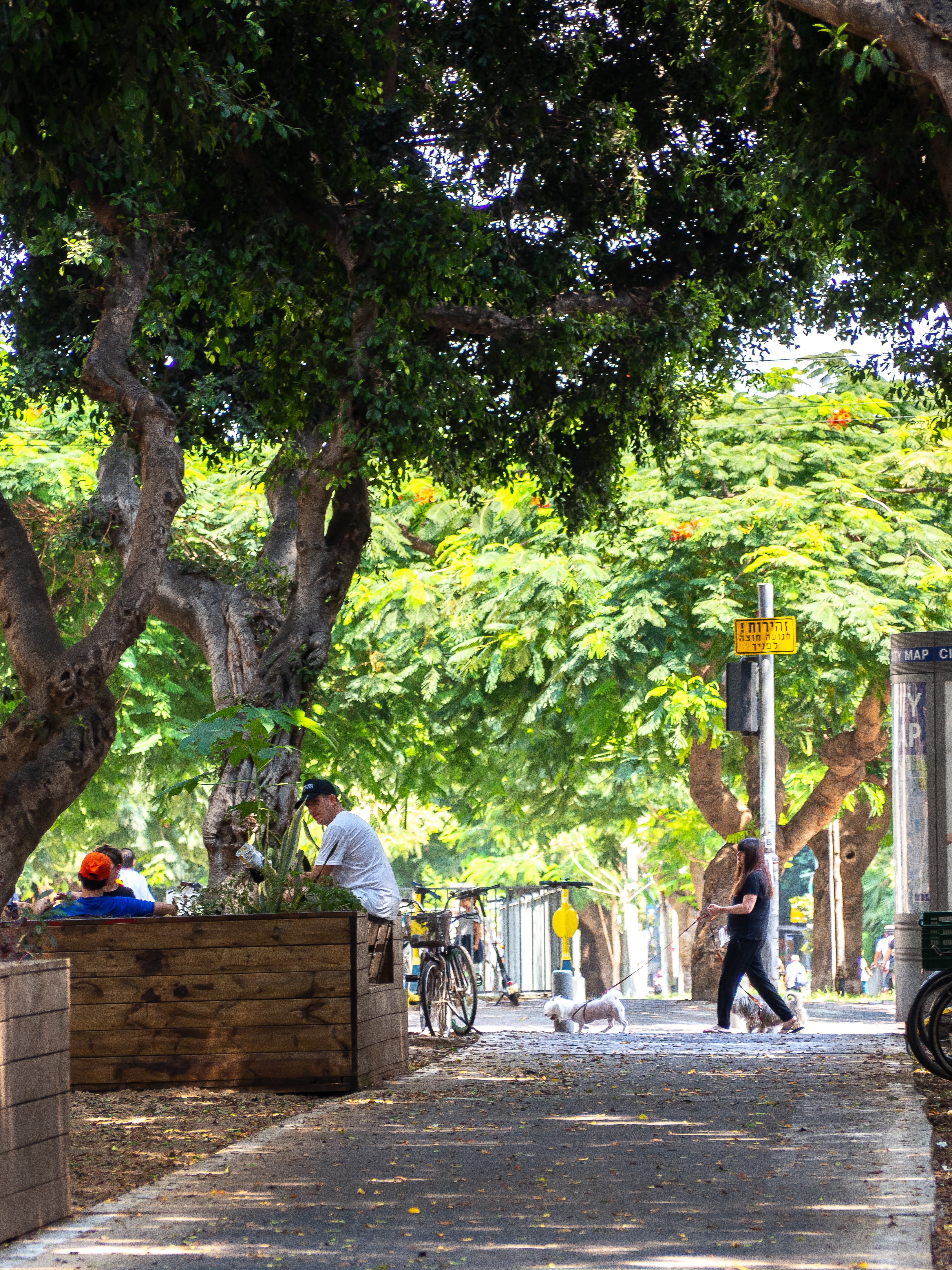
Urban trees on Rothschild Boulevard, Tel Aviv, Israel.

If you search this blog on “urban trees,” you will see many posts showing how trees in cities are beneficial both for the environment and human health. I never tire of new research on this topic. Today’s research comes from medical journal the Lancet via Forbes magazine.

Robert Hart reports, “Planting more trees in cities could cut the number of people dying from high temperatures in summer, according to a study published in the Lancet medical journal … a strategy that could help mitigate the effects of climate change as it continues to drive temperatures upwards.

“Cities experience much warmer temperatures than the rural areas surrounding them—a phenomenon known as the urban heat island effect—a result of vegetation and green spaces being replaced with structures like roads and buildings that absorb heat.

“The effect is particularly problematic in summer, when temperatures can soar to dangerous levels and more people die of heat-related causes, but can be tackled by planting more trees, researchers suggest.

“An analysis of mortality data from some 57 million people living in 93 European cities in the summer of 2015—the most recent year for which data is available — revealed that 6,700 deaths could be attributed to the hotter urban environment.

“The researchers estimated nearly 40% of these deaths could have been prevented if urban tree cover were increased up to 30% (the average was 15%).

“The researchers said their study … is the first to estimate the burden associated with urban heat islands and the first to estimate how increasing tree coverage, which helps reduce temperature, could combat this.

“Study co-author Mark Nieuwenhuijsen, director of urban planning, environment and health at the Barcelona Institute for Global Health, said the findings should encourage city planners and policymakers to include green spaces in their developments, particularly as we already know green spaces have other health benefits like ‘reducing cardiovascular disease, dementia and poor mental health’ and improve cognitive function.

“The research identifies a way for city planners to combat the impact of rising temperatures, wrote Kristie Ebi, a professor for health and the environment at the University of Washington, in a linked comment. Such action is especially important as climate change continues to drive temperatures upwards and it must be combined with other initiatives like modifying infrastructure to reduce heat, added Ebi, who was not involved in the research. …

“Heat has a profound impact on our health. Extreme heat is responsible for hundreds of thousands of deaths around the world every year, according to the World Health Organization, and is associated with an increased risk of conditions including heart diseasediabetes and obesity. Heat also exacerbates mental health conditions, hampers cognitive functioning and makes us more aggressive.

“Climate change, which experts say is indisputably linked to human use of fossil fuels, is set to drive temperatures higher and a slew of countries around the world have broken heat records over the last few years. This is expected to continue and extreme weather events, including flooding and major storms are set to increase in both severity and frequency as a result. Beyond the direct impact, this can help other diseases spread through water and expand the range of animals that carry them.” More at Forbes.

This 2017 post mentions John’s work with the Arlington Tree Committee to get sidewalk trees to homeowners. Another post, from 2018, says lack of trees increases depression. This 2019 post is on trees in Paris. I also wrote a 2020 entry about preserving the tree canopy in Baltimore, here.

And those are just a few angles I’ve covered. The other day on Mastodon, someone wrote that trees make her incredibly happy. I guess I am not the only one.

Second Chance Cars

Photo: Pat Greenhouse/ Globe staff.
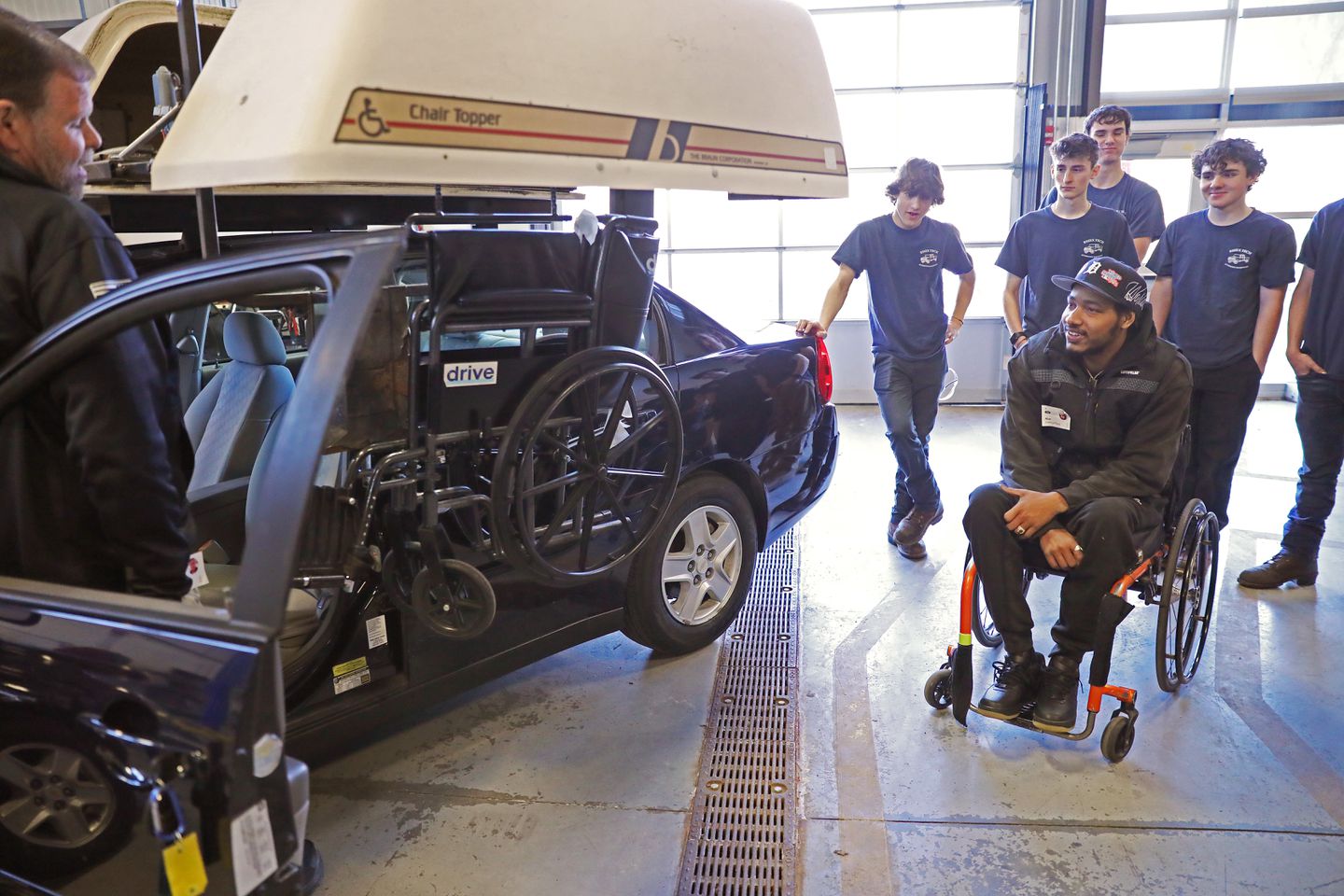
Donor Michael Solomon, left, demonstrates the use of the chair topper to store a folding wheelchair to car recipient Alan Mack of Quincy at Essex North Shore Agricultural & Technical School. It’s all in a day’s work for Second Chance Cars.

Dan Holin is a local nonprofit entrepreneur that I’ve worked with in connection with a couple different organizations. I met him in the early 2000s, when he was running the Jericho Road Project, and when he went to UTEC in Lowell, Mass., I wrote how he brought the joy of biking to teens who had been in trouble with the law, here.

Now the Boston Globe has caught up with Dan’s latest initiative, a longtime dream. He has really thought through all the pieces needed to make it work — the banks, the beneficiaries, the automotive high-school programs, the donors, etc.

Nancy Shohet West wrote, “Three years ago, Alan Mack was struggling to make ends meet as a laborer with the state Department of Recreation & Conservation when he was struck in the back by a bullet and left paralyzed. What followed was not only rigorous recuperation, but also a long stretch of being unemployed and homeless. …

“For a person in a wheelchair, the daily commute he had previously made by public transportation was nearly untenable: Typically an hour in duration and requiring several transfers from train to bus, not to mention relying on a system not known for its reliability even in the best of times.

“Fortunately, the social service organization that was helping Mack with his numerous challenges had one more idea for him: applying for a vehicle through Concord-based Second Chance Cars, which provides automobiles to low-income recipients who can demonstrate that owning a car would substantively help them to get a job, keep a current job, or advance within their field.

“Now Mack makes the 15-minute commute from home to work in his specially equipped car, which he said also will enable him to advance the music production business he recently started after entering an online bachelor’s degree program at Berklee College of Music. …

“Mack is one of about 70 beneficiaries to receive vehicles from Second Chance Cars, founded in 2019 by Concord resident Dan Holin. An Israeli-American citizen who served in the Israeli military and then pursued a career in nonprofit administration, Holin was motivated by several intersecting passions, including social outreach, cars, and entrepreneurship. He envisioned a nonprofit that would serve veterans and former prison inmates returning to society. His mission has since expanded to reach others, including legal immigrants and struggling families.

“Mentored by leaders of other nonprofits, Holin designed a business model whereby his organization provides donated cars to low-income workers for $900, paid for by the recipients in monthly installments of $75 over the course of a year.

“After talking with nearly 20 banks, Holin found two — City of Boston Credit Union and Metro Credit Union — willing to partner with Second Chance Cars by providing zero-interest loans along with free financial counseling to the recipients, with Holin serving as the guarantor. At the end of 12 months, the recipients have not only paid off the loans but also have improved their credit ratings.

“Stephanie Tetreault is the kind of person Holin envisioned helping. After battling a drug addiction and serving nearly 10 months in prison for larceny, she was determined to get her life back on track.

“Formerly living on the streets, by the fall of 2020 she had housing in Lowell and steady employment as a shift leader at Dunkin’, where she wanted to apply to be a manager. But that job required reliable transportation, and a car was something Tetreault had neither the cash nor the credit rating to obtain.

“Her case manager at Thrive Communities, which helps formerly incarcerated people transition back into society, told her about Holin’s organization.

” ‘I went through the application process and met with the board of directors of Second Chance Cars to tell them about my situation,’ recalled Tetreault, whose car was prepped at Greater Lawrence Technical School in Andover. ‘The whole process took just a few weeks, and then I had my car: a 2005 Toyota Prius. It’s been a blessing and a lifesaver.’

“Just as Tetreault hoped, Dunkin’ promoted her to a manager position, which she held for about 18 months. Empowered by her newfound independence, her ambitions grew.

“ ‘Because I had a car, I felt that I could pursue my larger goal of becoming an addiction counselor,’ Tetreault said. ‘I found a job in that field in May of 2022, and then enrolled in the addiction counseling certificate program at Middlesex Community College.’

“The benefits that Second Chance Cars provides reach more than just its recipients. The organization collaborates with five vocational high schools in Massachusetts — Essex Tech in Danvers, Greater Lawrence, Greater Lowell Technical in Tyngsborough, Minuteman High in Lexington, and Northeast Metropolitan Regional Vocational High in Wakefield — enlisting their automotive technology departments to fix any problems the donated cars might have before they are passed on to new owners.

“ ‘This is a great match for our program,’ said Jill Sawyer, director of Career, Technical and Agricultural Education at Essex Tech — more fully, Essex North Shore Agricultural & Technical School —whose automotive technology students worked on Mack’s car.

“ ‘Many of the cars our students work on belong to faculty members or people from the community who understandably need their vehicle repaired as quickly as possible.

‘With Second Chance Cars, we usually have a few weeks with a car, which gives the instructors more time to make it a learning experience.’

‘And then the students get to attend the reveal ceremony and learn about the person who is receiving the car, which is eye-opening for them.’

“ ‘It’s a win-win situation,’ agreed Donald Melanson, an auto tech instructor at Minuteman, whose students have worked on more than a dozen vehicles for Second Chance Cars. ‘A lot of the repairs the donated cars need are typical of those that the students will be doing once they get out in the trade. This is also giving them a chance to help the general public, and to see the kind of difference that they can make in someone’s life.’

“Josh Duquette found out about Second Chance Cars from a counselor at Veterans Inc., which provides services to veterans throughout New England. A divorced father of four living south of Boston, he couldn’t drive due to a combat-related disability after returning from a deployment in Kuwait and relied on a combination of ride-hailing services, public transportation, and favors from friends to get to his job as a special education paraprofessional in the North Attleborough school system.

“Once Duquette received medical clearance to begin driving again, Second Chance Cars found him a nine-year-old car with 115,000 miles on it. Students at Minuteman refurbished the interior, serviced the engine, and provided new parts. As a result of having his own transportation, Duquette was able to take a position teaching summer school in addition to his school year assignment.

“ ‘One of the biggest obstacles a lot of our veterans face in getting back to a meaningful lifestyle is transportation,’ said Bill Corcoran, a case manager with Veterans Inc. … ‘Second Chance Cars takes that barrier away, and it’s life-changing.’ ”

More at the Globe, here.
More on Naps

Image: Art Furnace/Shutterstock via Nautilus.

As a longtime proponent of naps, I try to share every new angle I read about them. Today’s article is on narcolepsy, which is not something you want, but it does show how creative work may go on when you’re asleep.

Kristen French writes at Nautilus, “George Church looks like he needs a nap. I’m talking to him on Zoom, and his eyelids have grown heavy, inclining toward slumber. Or maybe my mind is playing tricks on me. He assures me he is wide awake. But sleeping and waking life are often blurred for Church. One of the world’s most imaginative scientists, Church is a narcoleptic.

“A rare disorder, narcolepsy causes sudden attacks of sleep, and Church has fallen asleep in some unfortunate circumstances — at The World Economic Forum, just a few feet away from Microsoft founder Bill Gates, for instance. He also had to give up driving due to the risk that a bout of sleepiness will strike while he is behind the wheel. But Church, a Harvard geneticist known for his pathbreaking contributions to numerous fields — from genetics to astrobiology to biomedicine—says the benefits of his condition outweigh the inconveniences. Many of his wildest and most prescient ideas come from his narcoleptic naps.

“ ‘The fact is, I fall asleep several times a day, and so almost everything comes from there,’ Church says. His idea for a quick and simple way to ‘read’ DNA — which resulted in the first commercial genome sequence, of the human pathogen H. pylori — came from a narcoleptic nap.

“He also conceived of editing genomes with a method analogous to CRISPR, and building new genomes with off-the-shelf molecules, during narcoleptic naps. More recently, in December, a wild idea for a space probe that could reach distant stars within just 20 years, at one-fifth the speed of light, came to him after a narcoleptic nap. He proposed that these lightning-speed interstellar missions could be launched by microbes and powered by laser sails. The ideas that come to him are often the result of collisions of unexpected images in his head. ‘I try to turn science fiction into science fact,’ Church tells me.

“The relationship between sleep, dreaming, and creativity has been the subject of conjecture for hundreds of years. Reports of creative inspiration and discoveries made by artists, inventors, and scientists while dreaming suggest these states of mind are intimately bound together. The symbolist poet Saint-Pol-Roux was known to guard his sleep at night with a sign on his bedroom door that read ‘Do not disturb: Poet at work.’ Russian scientist Dimitri Mendeleev reportedly had a vision of the periodic table in a dream after three days of exhaustive effort (though it may have just been the perfection of an idea he had while awake). Stephen King claims he dreamt up his novel Misery during a somnolent transatlantic flight.

“Rather than leave such inspirations to chance, American inventor Thomas Edison designed a strategy for mining his dreams for material. He would doze off with a steel ball in each hand. Once his body went limp with sleep, the balls would drop to the floor with a clatter and wake him up. He could then recall details of his dreams and record any insights. …

“Scientific studies seem to validate these tales. Study participants asked to ‘incubate’ a problem in their dreams often come up with a useful solution, and both the frequency and complexity of one’s dream recall have been correlated with higher scores on creativity evaluations. 

“The stage of sleep most closely associated with creative inspiration is known as REM, short for rapid eye movement. REM sleep begins about 70 minutes after a person loses consciousness and is rich with dream life. Lucid dreams, in which the dreamer knows he or she is dreaming and can sometimes direct the dream, are thought to primarily occur in REM. Waking from REM sleep has been shown to improve study subjects’ ability to solve anagrams. …

“But researchers have recently identified another state of mind that lies in the transition between waking and sleeping and may be even more fertile for creative inspiration than REM. It is called N1 or sleep onset, and it is the first of three stages in pre-REM sleep.

People with narcolepsy frequently fall into and out of N1 during daytime naps, giving them much greater access to these borderland perceptual states than normal sleepers.

“N1 is a hybrid, or ‘semilucid’ state of mind, says French neuroscientist Celia Lacaux, when individuals are just beginning to detach from the waking environment. It is a mental twilight that allows one to ‘freely watch the mind wander while maintaining a logical ability to identify creative sparks,’ says Lacaux. This shadowy frontier between waking and dreaming, to which all sleepers have access, may be the source of many of humanity’s most novel ideas, inventions, and works of art. Psychologists call it ‘hypnagogia,’ after the Greek words for ‘sleep’ (hypnos) and ‘to lead’ (agogo). The French sometimes refer to it as ‘entre chien et loup,’ literally ‘between dog and wolf.’ …

“ ‘Hypnagogia happens to be a time period where you are much more subject to outside influence and where you’re doing much more auditory processing and where your dream recall rates are much higher,’ says Adam Haar, a dream researcher at MIT Media Lab. It is characterized by phenomenological unpredictability, distorted perception of space and time, and spontaneous, fluid idea association.

“A relationship between hypnagogia and creativity makes intuitive sense. One major theory of creativity posits that it results when our minds make connections between distantly related concepts stored in our memories. This is a process that is thought to occur naturally during sleeping and dreaming: New memories mingle in novel and abstract ways with older ones as a means of consolidating them, laying down tracks in our brains for later recollection. Neuroscientist Karl Friston, who studies consciousness, proposes that this mashing together of old and new is a process that helps to minimize redundancy and complexity in our memory system, and prepares us to navigate a fuller range of possible scenarios in our waking lives.”

More at Nautilus, here. No firewall.
I know that when I wrote theater reviews, they came out better for weekly papers than dailies because I had a chance to “sleep on it.”

And then there’s the famous story of Samuel Taylor Coleridge composing “Kubla Khan” in an opium-induced sleep. (Not recommending the opium part.)

Being Civil

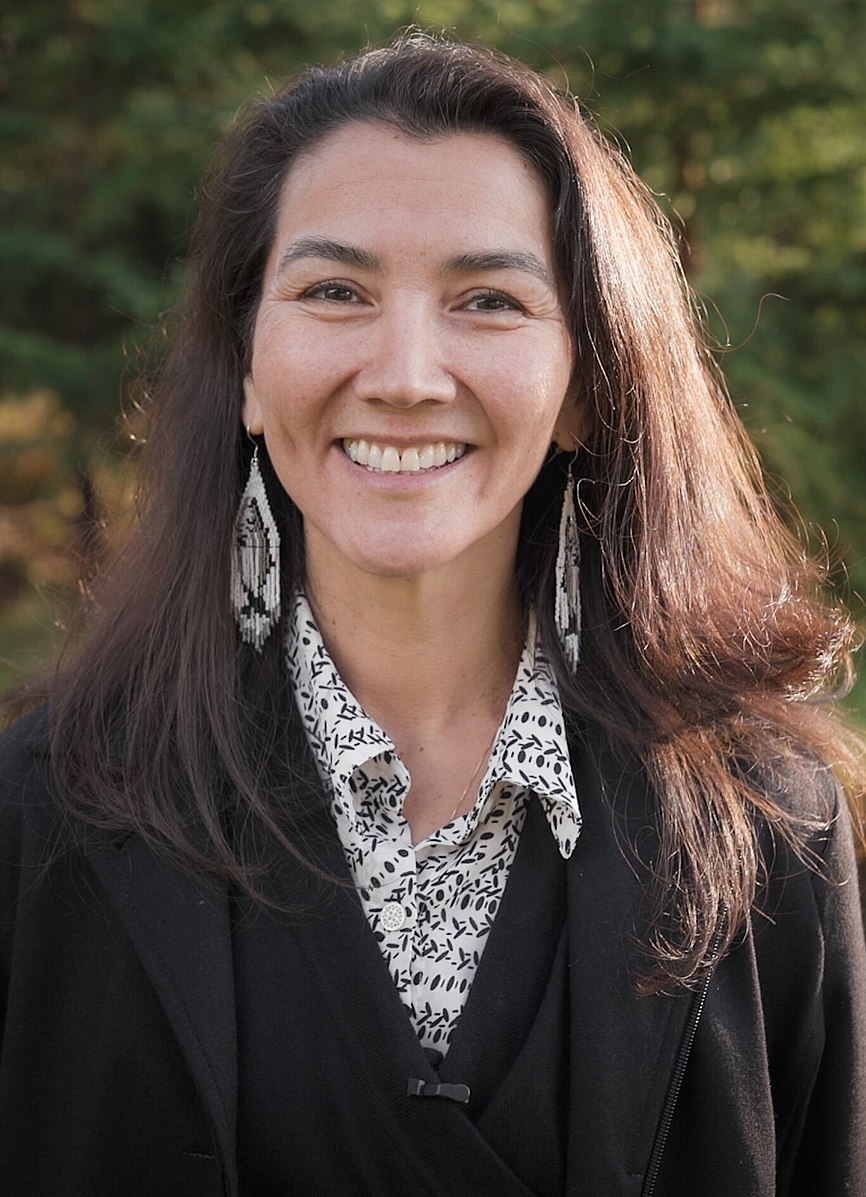
US Rep. Mary Peltola of Alaska.

Is there hope for Americans with different political views to get along? Well, why not? We used to get along. Now it seems that we have to teach ourselves that skill all over again.

Believe it or not, there’s actually a member of the House of Representatives who is showing people how it’s done.

Samantha Laine Perfas and Clayton Collins at the Christian Science Monitor created a podcast about her with West Coast bureau chief Francine Kiefer.

“A race for [Alaska’s] lone House seat had been won in a special election by Mary Peltola, an Alaska Native and a Democrat. … Representative Peltola had hired the chief of staff of her late Republican predecessor, and then hired two other Republican staffers.

“ ‘This just doesn’t happen in Washington,’ Francine says on the Monitor’s ‘Why We Wrote This’ podcast. ‘And I was curious about what kind of person it was that would make sort of a practical decision to hire folks who knew Alaska, who knew Washington, even though they’re not of your own political party.’ (Representative Peltola’s mother’s side of the family is Alaska Native and all Democrats; her father’s side is white Nebraska wheat farmers and all Republicans.)

“What Francine produced [is] a story about the ‘Alaska way’ at the root of such thinking. It’s about interdependence. And while there are many factors at play in Alaska politics – ranked choice voting among them – it’s really about something that might transfer beyond the 49th state. …

Samantha Laine Perfas
“Welcome to ‘Why We Wrote This.’ I’m today’s host, Samantha Laine Perfas. I’m joined by Francine Kiefer, a longtime, award-winning staff writer at the Monitor. … What was it that piqued your interest about Alaska? 

Francine Kiefer
“I have to admit that I’ve just been wanting to get back to Alaska for over 40 years. It was the scene of where I had my first job in journalism, at the Anchorage Daily News. I was just a pipsqueak intern, and I fell in love with the state and I’ve just always wanted to go back. And the political story was a fantastic reason. Here you have a red state. And it just elected two moderates to Congress.

“[Mary Peltola] was the first Alaska Native to be elected ever to Congress. And her whole persona is a bridge builder. One of the things that really got my attention was when I read that Mary Peltola had hired the chief of staff of her Republican predecessor, Don Young. She hired his Republican former chief of staff, his Republican scheduler, and she hired a Republican spokesperson from another office on the Hill. And I was curious about what kind of person it was that would make sort of a practical decision to hire folks who knew Alaska, who knew Washington, even though they’re not of your own political party. …

Laine Perfas
“What was it like talking to her for this story? 

Kiefer
“I’ve talked to many lawmakers over my journalistic career, and she sounded so authentic. She didn’t have her guard up. She wasn’t being measured about what she was saying. She is from an area in western Alaska that depends on fishing for survival. And she’s been fishing since she was six years old. She, as the Alaskans say, ‘She knows how to fill a freezer.’ And she also embraces the spirit of Alaska. It’s a large state. It’s a beautiful state, but it’s also a cold and a dangerous place. And people rely on each other. And there’s a real spirit of cooperation there where people help each other out in tough spots. … Having to help each other out, that is part of the ‘Alaska spirit.’ 

Laine Perfas
“I think it’s interesting to think about how this spirit of Alaska might be different than other parts of the US. How did you see that affecting the political arena? Did it affect the way that candidates interacted with their potential constituents? 

Kiefer
“It definitely did, because of the way that ranked-choice voting works. That allows voters to rank their choices in order of preference such that the one with the broadest appeal emerges from the system. When you’re out there on the campaign trail, you’re not only trying to get people to vote for you as their first choice, but you’re [also] trying to get people to vote for you as their second choice.

“I talked with a local candidate for the state Alaska Senate. And she said this time because of ranked-choice voting instead of knocking only on the doors of the Republican base, she knocked on over 6,000 doors, including many Democrats’, and they would open their door to her and say, ‘You don’t want to talk to me. I’m a Democrat.’ And her answer was, ‘Oh, yes, I do want to talk to you because you can put me as your No. 2 vote. And we may not agree on everything, but here is the stuff that we do agree on.’ And in the end, it was votes from Democrats who had ranked her second, who put her over the line into the majority. 

Laine Perfas
“In the beginning of the conversation, you referred to Peltola as a ‘bridge builder.’ What is the value of having someone like that in office? 

Kiefer
“I think it has two main impacts. One is it can help restore civility to a political dialogue and the other one is it can build understanding and mutual understanding among lawmakers, and hopefully lead to compromise.

“One of my sources for this story was a gentleman named Andrew Halcro. He’s a Republican. He talked to me about the time in which he served as a freshman legislator in the Alaska House at the state Capitol in Juneau. Right off the bat, within a few days of his arriving, he gave a speech where he said, you know, the way to solve Alaska’s fiscal problems is to cut the budget. Cut, cut, cut. And he pointed to rural Alaska, which is where most Alaska Natives live as the place [where the budget] needed to be cut.

“And this speech did not go over well. And within hours, he said, Mary Peltola, who of course, is from this region, knocked on his door and said, ‘You know, I know we’re both new here, but let me explain to you a little bit about what I know about rural Alaska and what their needs are.’ And he said that out of this discussion came a wonderful working relationship with her, as well as understanding and appreciation for the needs of a part of Alaska that he had never set foot in except for sport.

“So you get a sense there of the relationship building, of the understanding that can come about by having bridge builders in a legislature. At the same time, there are limits. And Mary Peltola also said to me, look, she can’t singlehandedly solve the political divide in the United States, but she can do her job of being a model in the way she communicates and the way she reaches out for other political leaders. 

Laine Perfas
“Do you think what we’re seeing in Alaska could be transferable to the rest of the country? 

Kiefer
“Well, definitely the voting system could be. Ranked choice voting has been practiced by Maine in a more limited sense since 2018. And in this very past election in November, Nevadans voted for a system very similar to what Alaska is practicing. So that part of it, I think, could be replicable. The other part of this that we’ve talked about is ‘the Alaska spirit,’ which is that cooperative spirit. I think that is rather specific to Alaska. And in fact, people told me that. But as Peltola said to me, it’s not exclusive to Alaskans, right? And she said, ‘You know, we have been civil before. If we’ve been civil before, we can do it again.’ ” 

Click the podcast arrow at the Christian Science Monitor, here.
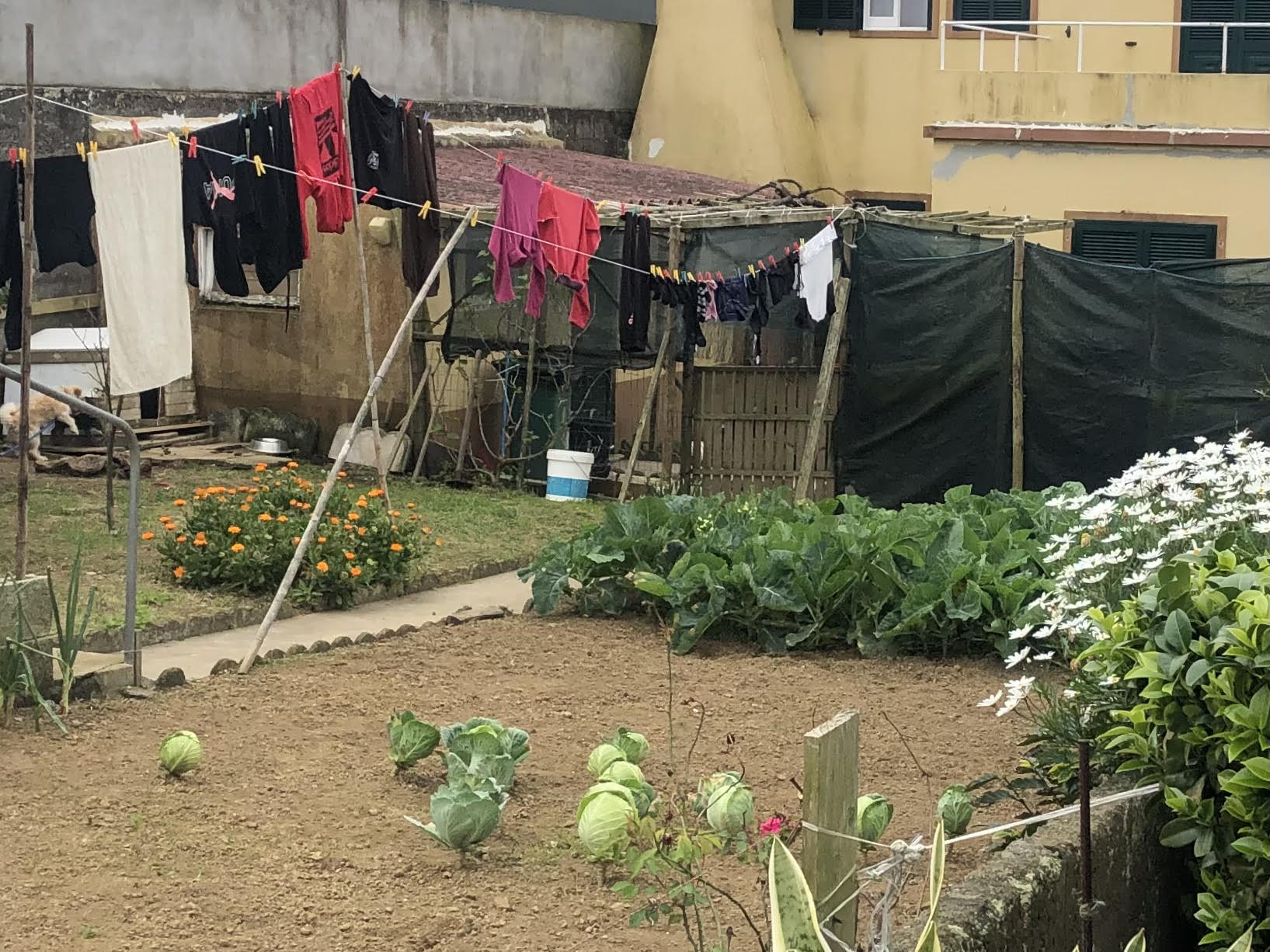
Photo: Hamada Elrasam.
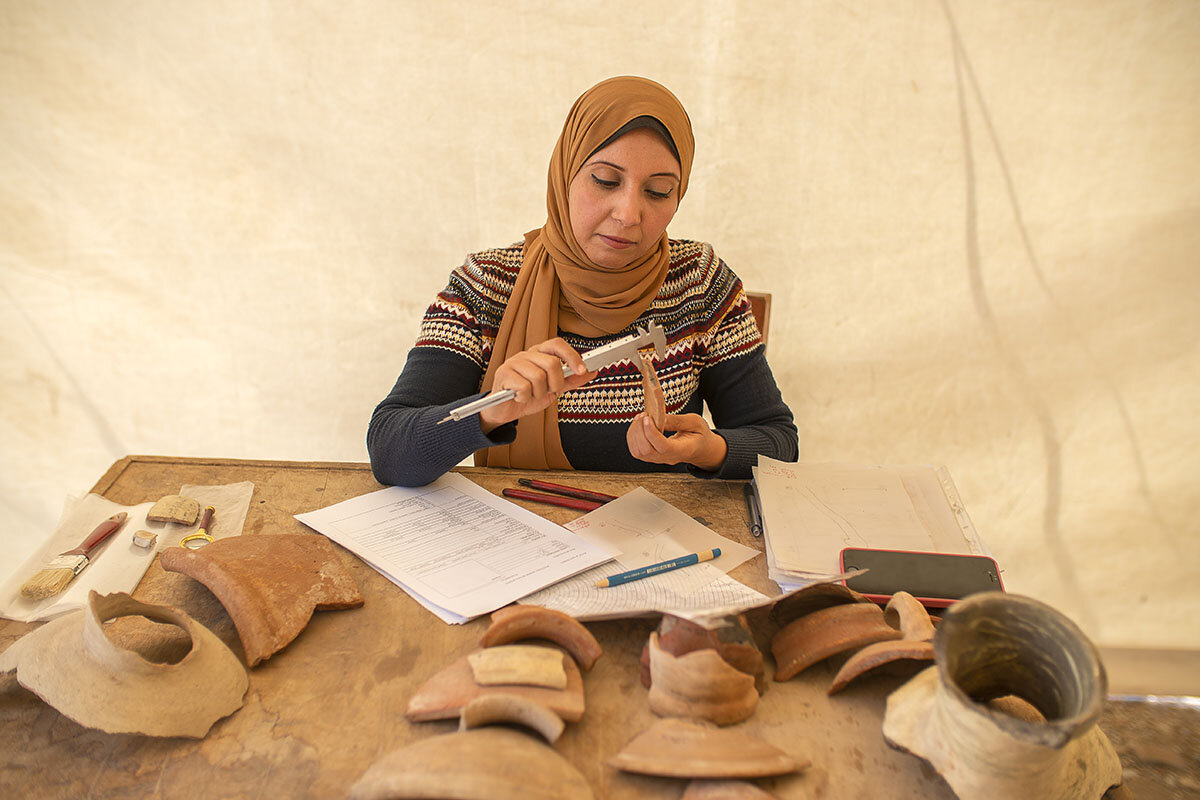
Dr. Asmaa Ebrahim measures a pottery shard at the archaeological excavation at Aten, a rediscovered city of ancient Thebes in Luxor, Egypt, Nov. 17, 2022.

You have probably read about the “curse” that targets anyone disturbing the tomb of a pharaoh. It’s a legend people love but, as one expert says, it’s “unadulterated claptrap.” Still, one could almost imagine that the pharaohs would want to punish non-Egyptians like Howard Carter, who excavated the tomb of King Tut. Perhaps their ghosts would be more tolerant of Egyptian archaeologists.

Taylor Luck wrote about a few at the Christian Science Monitor.

“On a mild, late November morning, almost completely hidden behind the 5-foot-high walls of a sprawling, yellow-gray mud-brick city rising from the ground, a dozen members of an archaeological team survey and brush away soil.

“In a nearby tent, carefully holding jagged pottery shards in one gloved hand under a lens, Asmaa Ebrahim painstakingly scribbles down notes on the 3,000th piece of pottery.

“Traditionally, in this valley, rich with ancient Egyptian history and the iconic archaeological sites to match, the role of ceramicist was filled by a foreign archaeologist with credentials from Cambridge or Princeton, not an Assiut University graduate from upper Egypt. …

“ ‘For once, Egyptians are the leading Egyptologists,’ Dr. Ebrahim smiles.

“As workers brush away dust and sand, a leather sandal pokes out from the ground, strap facing up, slightly sun-dried but looking as if it had fallen off the foot of its careless owner days – rather than 3,400 years – ago. …

“Today, in Aten, the recently discovered city at the foot of the Valley of the Kings, a new generation of Egyptian archaeologists and specialists is uncovering new details of daily life in ancient Egypt. …

“Aten, the so-called Golden City, was the residential, administrative, and industrial center of ancient Thebes, dating back to the 18th dynasty and the reign of Pharaoh Amenhotep III – the golden age of ancient Egypt. 

“Discovered by chance while this rare all-Egyptian team was searching for the mortuary temple of the boy king Tutankhamen in 2021, it is now providing an ever-widening window into the daily life of ancient Egyptians.

“Aten was abruptly abandoned by Amenhotep III’s son Akhenaten, when he transformed ancient Egypt’s religion and moved the capital 240 miles north of Thebes. That means much of the city was left intact as if life was suddenly frozen three millennia ago – Egypt’s own Pompeii.  

“Bread remains in clay ovens, precious stones are scattered in the jewelry workshop, and sun-dried bricks are neatly stacked in a tiny pyramid waiting to be carted off to build a temple or a palace.

“A wavy, zigzag serpentine wall that experts believed was designed to limit Nile floodwaters cuts through the north of the city; at its end in a tent, Dr. Ebrahim holds up a four-handle jug. …

“ ‘This [complete residential life depicted in Aten] is unique. You won’t find it at any site currently in Egypt.’

“Already the team has uncovered seven districts containing homes, a bakery, kitchens, a tailor, a weaver’s loom, a leather tannery, a metalsmith, a sandal cobbler, and a butchery complete with dried meats in jars inscribed with the butcher’s name, ‘Luwy.’ The team is also uncovering technical clues as to how ancient Egyptians built and furnished some of the wonders of the ancient world.

“Its discoveries have included preserved amulet molds, a jewelry workshop, a brick factory, and granite, basalt, and pottery workshops, all of which it believes were used to build and decorate Luxor’s lavish temples and palaces – and craft the ornate treasures that were buried in King Tut’s tomb.

“The discoveries are thanks to a new generation of Egyptian archaeologists trained and encouraged by Zahi Hawass, who is leading the dig at Aten. The colorful and bombastic former director of Egypt’s department of antiquities used his public persona as ‘godfather’ of Egyptian antiquities to help bring along 500 young specialists to staff all-Egyptian excavation teams.

“Dr. Ebrahim is one of dozens who studied archaeology and Egyptology in Egypt and then, at Dr. Hawass’ urging, went abroad in the 2010s to work and train to gain technical expertise that Egypt lacked – in restoration, conservation, pottery analysis, carbon dating, and surveying. …

“ ‘Our role as Egyptians cannot only be serving foreigners and bringing them coffee and tea while they write books and make films and we do nothing,’ Dr. Hawass says as he walks along Aten’s serpentine wall. …

“ ‘As a young man entering a bookstore, I never found a single book on Egyptology written by an Egyptian. All our work depended on foreigners, and they took all the credit,’ he says. ‘But now we are a complete scientific team.’

“Although recent years have seen more joint international-Egyptian teams, this excavation is one where every role – from extracting and sorting soil to analysis to conservation – is done by an Egyptian, with eight experts overseeing two dozen workers.

“One core team member is Siham El Bershawy, a Luxor native who grew up a few miles away from the Valley of the Kings and now preserves and restores everything from papyrus to mummies at Aten.

“ ‘That feeling when you take items out from the ground in your own site, in your own country, in your own community with your own two hands – you feel a sense of pride as an Egyptian,’ Ms. El Bershawy says. …

“The team has also uncovered a clue he believes may lead it to the lost tomb of Queen Nefertiti – a name.

“ ‘Smenkhkare,’ the name of a mysterious pharaoh who ruled briefly between Aten and King Tut, was found on multiple inscriptions in Aten. Egyptologists are divided on the figure; some believe Smenkhkare may have been a brother to Tutankhamen or a hitherto unknown co-regent with Akhenaten. Dr. Hawass is of the camp that believes Smenkhare was a name assumed by Nefertiti after her husband Akhenaten’s death as she ruled briefly as pharaoh.”

More at the Monitor, here.
The book Stone Maidens, by Lloyd Devereux Richards, was promoted on TikTok by his daughter.

Never turn down help from your kids. Today’s story is about the daughter of an unsuccessful author who decided to take on promotion of his book using social media the dad knew nothing about. After languishing ten years, the book suddenly caught fire.

Kyle Melnick reported at the Washington Post, “Marguerite Richards visited her family’s Vermont home for an Italian dinner when she brought up her father’s novel, Stone Maidens. Lloyd Devereux Richards’s crime thriller, which published in November 2012, still wasn’t making money. It was ranked 1,452nd among mystery, thriller and suspense novels on Amazon, he said.

“Hoping to provide the book some publicity, Marguerite asked her father whether she could record a TikTok video of him. Lloyd, 74, hadn’t heard of the social media platform.

“ ‘Well, what’s that going to do?’ Lloyd recalled asking.

“ ‘Believe me, Dad,’ responded Marguerite, 40, ‘just trust me.’

“Marguerite recorded Lloyd working in his attic office — a 16-second video she posted that night with a message: ‘I’d love for him to get some sales.’ The video went viral, and a few days later, Stone Maidens ascended to the top of Amazon’s bestsellers chart. …

“In the mid-1970s, Lloyd was attending Indiana University’s law school when he said he remembers several women went missing in forests around the Midwest. Those crimes would later inspire the premise of the book he dedicated years to writing.

“After he moved to Montpelier, Vt., in June 1984, Lloyd began working as a lawyer for a life insurance company. For two years, after finishing his workdays, he studied dialogue, structure and pacing with a local college professor. He read legal files about murders and studied books by his favorite authors, including Stephen King and Michael Connelly.

“Around 1998, Lloyd began writing Stone Maidens, a 300-plus-page book that follows an FBI forensic anthropologist investigating a serial killer strangling women and leaving their bodies in southern Indiana forests.

“Lloyd’s home office in his attic isn’t insulated, so he wore a hat and mittens in the winter and blew fans on himself and his computer in the summer as he worked on the novel. While practicing law and raising three children, he said he found a few hours to write at night and in the morning. He said he slept about four hours per night for more than a decade.

“After he finished a draft in fall 2009, Lloyd said, he was turned down by about 80 literary agents.

Lloyd said his mail carrier despised him, because his rejection letters weighed down his delivery bag. In May 2010,

“Lloyd thought he was being hoaxed when an agent finally agreed to work with him. But more disappointing news followed. By fall 2010, Lloyd said, not one editor had agreed to publish his book. …

“The next year, Lloyd enrolled in an online writing class. Then, in fall 2011, Thomas & Mercer, an Amazon subsidiary, agreed to be his publisher. … Although a few dozen people bought the book in the following two years, Lloyd said, sales soon fell off. He said he donated his books to his small town’s bookstore. He sold three copies online between this past December and January, Lloyd said.

“Marguerite had been plotting since the fall to promote her dad’s book on TikTok. Growing up, she witnessed her father’s long hours in his office, and she wanted to make a video that would honor his hard work. She figured a few people might learn about his novel. …

“ ‘My dad spent 14 years writing a book,’ she wrote on top of the video. ‘He worked full time and his kids came first. But made time for his book.’

“The next morning, Marguerite said, the video had received about a million views, which she thought was a glitch. Then she looked at Amazon’s book charts and saw Stone Maidens was one of the top-selling mystery, thriller and suspense novels.

“The following day, Marguerite invited her dad to her condo. … As he read the video’s comments and Marguerite told him about the sales, Lloyd cried. He celebrated with a chocolate milkshake.”

More at the Post, here. Now many struggling writers will now be hiring TikTok mavens to promote their books, I suppose. But I think that what came from a daughter’s heart is the thing that did the trick.