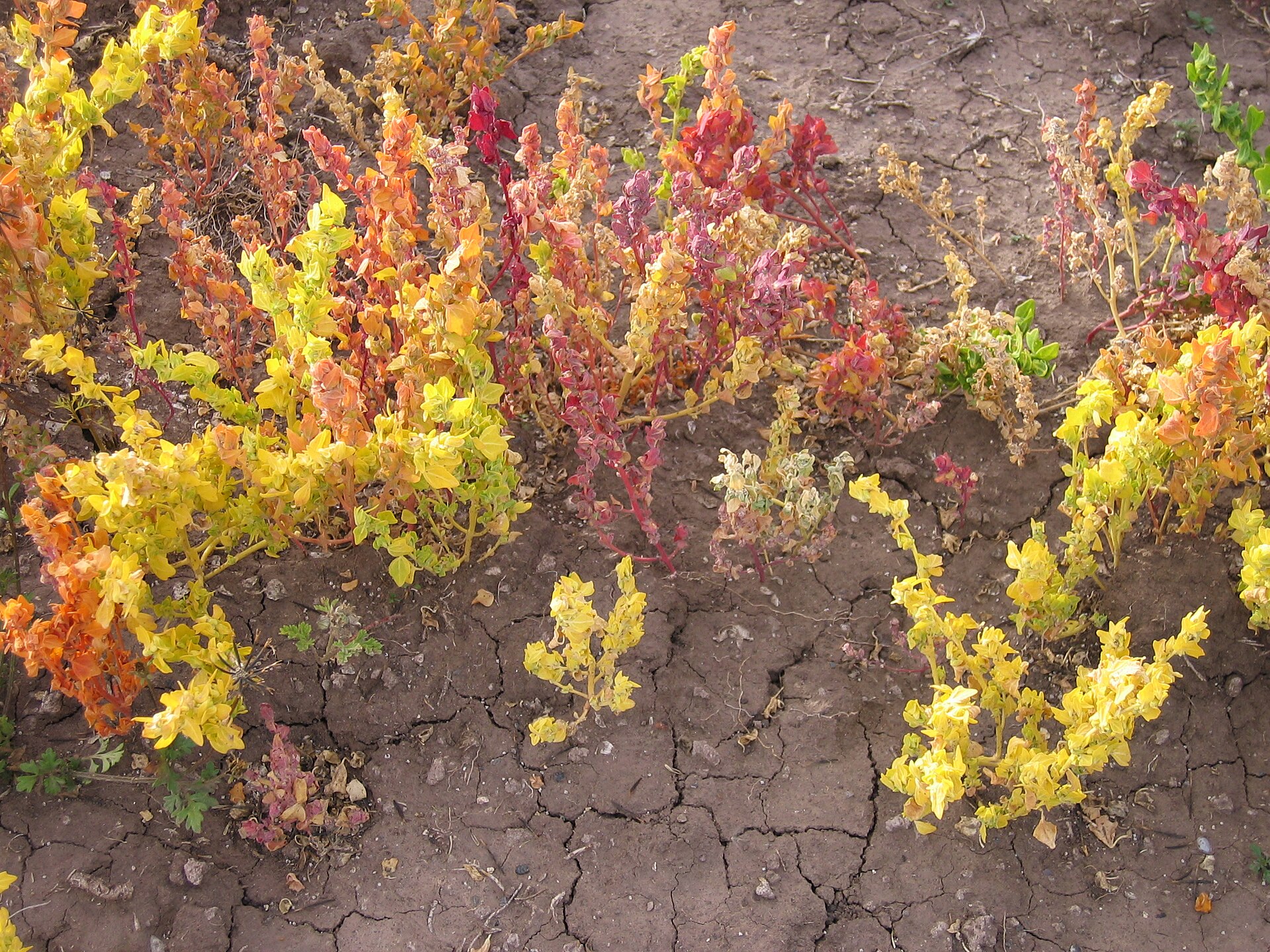
Photo: Crops for the Future via Wikimedia.
Cañihua, a native grain of the Andes of southern Peru and Bolivia, is supremely adapted to high altitudes, according to Crops for the Future.
We have yet to figure out how to feed the whole planet, but here and there, investigators are finding that little known sources of nutrition used by small populations may offer hope in a warming climate.
Tibisay Zea has an example at the Public Radio International (PRI) program The World.
“Trigidia Jiménez was born in an Indigenous village in the Andean mountains of Bolivia at 14,000 feet above sea level. She grew up in a family of farmers, and she loved working the land.
“But like many others in her town, she moved to the Bolivian capital in search of new opportunities and eventually became an agricultural engineer. She worked and got married, but after 15 years of being in the city, she realized she wanted to return to the mountains.
“ ‘I needed to be in touch with the sun, fresh air and work our land,’ Jiménez told The World over Zoom.
“Back in the Andes, she started thinking about an ancestral green that was almost extinct — cañahua. It’s similar to the quinoa plant and virtually unknown outside of Bolivia and Peru.
“ ‘That’s what our ancestors used to eat every day. A cup of cañahua for breakfast,’ Jiménez said. ‘We make it like oatmeal.’
“Cañahua is ‘nutritious, high in protein, amino acids and iron.’ It has also proven to be very adaptable to climate change, according to Jiménez. …
“Jiménez started small, with about an acre of land, producing enough grain for just one family. Two decades later, cañahua is being produced on approximately 5,000 acres.
“Bolivia’s government offers subsidies to low-income families to buy cañahua, and that’s helped build the market. …
“ ‘We realized that we’ve been reliant on too few food crops,’ Jeff Maughan, a professor of molecular genetics at Brigham Young University in Utah, told The World. …
“Twenty years ago, Maughan and other researchers at BYU got interested in quinoa as a higher protein crop for subsistence farmers in the Andean region. Today, quinoa is everywhere — from your favorite supermarket to fancy restaurants. Maughan and his team have successfully introduced the South American grain in Morocco, Rwanda and Saudi Arabia. …
“Trigidia Jiménez earned international recognition for helping to revive cañahua cultivation. ‘Cañahua made me a stronger woman,’ she said. ‘Powerful and happy.’
“It’s also helped sustain the local communities where it’s produced. Jiménez is now looking at ways to expand her business and export the ancient grain to the United States.” More at PRI, here.
Now, you may have heard as I did that the newfound popularity of quinoa has made it to expensive for the Peruvians it came from to afford it. I did an online search to see what I could find.
According to a study described at National Public Radio, poor Peruvians have actually benefitted from the demand for quinoa, especially farmers who grow it. The real concern is that “export demand has focused on very few of the 3,000 or so different varieties of quinoa, prompting farmers to abandon many of those varieties.
” ‘Those varieties, created by Andean farmers, are the future of quinoa, to adapt to things like climate change,’ says Stefano Padulosi, a [Bioversity International] specialist in underused crops. … He would like to see some sort of global mechanism to reward Andean farmers for their role in creating and maintaining quinoa diversity.’ ” More here.
That insight may be something for promoters of cañahua to think about, too.

 Suzanne's Mom's Blog