Feeds:
Posts
Comments

Posts Tagged ‘Austria’

Photo: AP Photo/Denes Erdos.
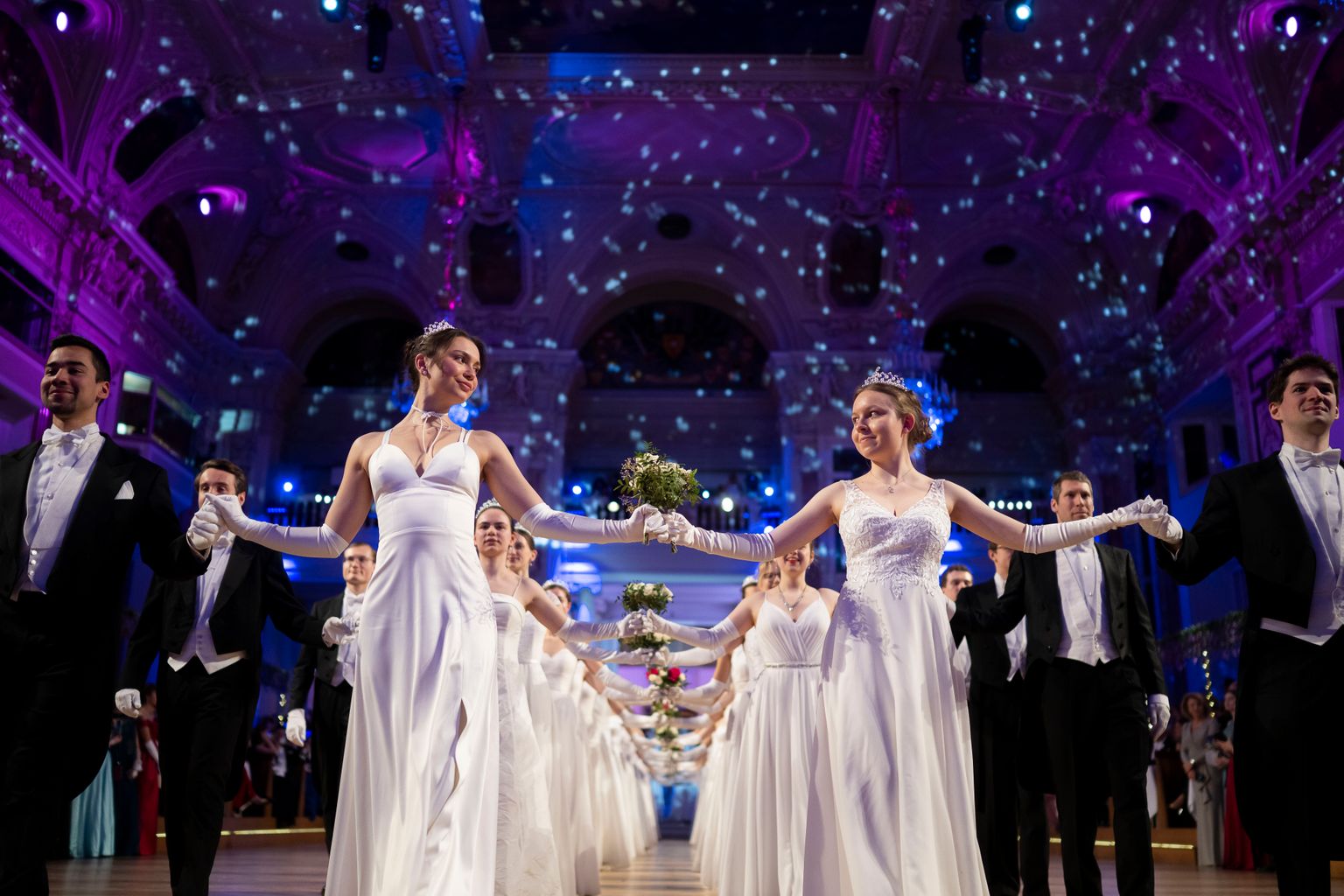
Young people participate in the opening ceremony of the Lawyers’ Ball in Vienna, Austria, March 1, 2025.

Recently, we had Vienna on our minds because Erik and classmates from his high school in Wales were running a marathon there. Erik is a frequent marathoner and managed the course in under three hours, personal best.

Marathons are a longtime tradition in Vienna, but not as long as the activity in today’s story. It’s about the tradition of elegant balls.

Denes Erdos (along with AP journalist Stefanie Dazio in Berlin) submitted a report to the Associated Press.

“The aristocrats of the Habsburg royal court who danced in the first of Vienna’s famed balls in the 18th century could never have imagined how the hallmark of the Austrian capital’s social and cultural scene would evolve. Today, teenagers learn to waltz by watching YouTube videos while ladies shed their elbow-length gloves to better swipe on smartphones.

“More than 450 balls occur annually in Vienna, starting Nov. 11. … Professional guilds throughout the city host their own events, like the Ball of the Viennese Chimney Sweeps that marks the opening of the season.

“The sparkling balls are deeply rooted in Viennese culture, blending history with modern glamour, and the waltz remains an essential part. While the average ticket costs 395 euros ($427) — though VIP boxes at the Opera Ball can go for 25,500 euros ($27,539) — other events have lowered their prices to 40 euros ($43) to attract a wider audience.

“ ‘To be a part of this for me, as an Austrian person, is like taking part in Viennese culture,’ Leander Selmani, 19, said. ‘I was watching all these ball openings on YouTube and I said, “I want to be part of that.” ‘

“Besides YouTube, teens must learn the carefully choreographed dances for each ball’s opening ceremony from places like the Elmayer Dance School, which has been training dancers since 1919. In order to participate in an opening ceremony, dancers must first qualify through a strict regimen. Then they attend multiple lessons at a dance school and receive a stamped certificate of completion after each session. …

“Only once ‘Alles Walzer!’ (‘Let the waltz begin!’) has been declared can the rest of the crowd join in the dancing. This year, many balls honored the 200th anniversary of the birth of Viennese composer and violinist Johann Strauss II, known as the ‘waltz king.’

“While the waltz, the quadrille and other traditional dances are the heart of the Viennese balls, modern events now offer a diverse range of music and entertainment. Most venues feature multiple halls where guests can dance to various styles, including disco and contemporary beats. …

“Dress codes, however, have remained strictly enforced for centuries: gentlemen are required to wear tailcoats or tuxedos, and ladies must don evening gowns. Many attendees rent their attire from Lambert Hofer, a renowned costume workshop founded in 1862 that rents out hundreds of gowns each year.” More at AP via the Seattle Times, here.

Meanwhile in the US, you can take up ballroom dancing, but be prepared: the competition in the championships is fierce. My friend Ronnie’s sister wins them, but after years of work. About the latest competition, Ronnie tells Facebook, “I was in NY recently for the Fred Astaire Cross Country Dance Championships. My sister competed and is now 2025 Fred Astaire National Champion in American Smooth (tango, waltz, fox trot, Viennese waltz) Senior Division.” She is in her 80s.

Read Full Post »

Photo: The Albertina.
Thousands of Taylor Swift fans flooded museums in Vienna in August after multiple institutions waived entry fees when security threats forced the cancellation of three concerts. Fans also traded bracelets with museum employees.

We’ve all seen the influence that singer Taylor Swift directly exercises over her fans. Indirectly, she has probably made some of them museum fans, too. That’s because museums in Vienna saw an opportunity when her concerts were cancelled.

Karen K. Ho reports at ArtNews, “Thousands of Taylor Swift fans flooded museums in Vienna [last August] after multiple institutions waived entry fees after three of the singer’s concerts were cancelled due to security threats.

“ ‘We weren’t really sure what to expect,’ Haus der Musik managing director Simon Posch told ARTnews.

‘The participating institutions were the Mozarthaus Vienna, House of Music, KunstHausWien and the Jewish Museum Vienna owned by the City of Vienna; MAK Vienna (Museum of Applied Arts) and MAK Geymüllerschlössel; the modern art museum Mumok, the art museum The Albertina, as well as the museum at the House of Strauss. The Museum quartier also offered Taylor Swift ticket holders free guided tours in English and German on August 10 and 11.

“The initiative was publicized through the Vienna Tourist Board and statements by the city’s mayor, Michael Ludwig, especially on social media.

“Several museum professionals in Vienna told ARTnews the slew of additional visitors were a pleasant surprise to their institutions. The demographics were mostly English-speaking young women, often between the ages of 18 to 25, traveling to the city from countries as far away as China, South Africa, Australia, Canada, and the United States. Many of them were also easily identifiable while wearing the singer’s concert merchandise, colorful outfits intended for the concert, and arms covered in friendship bracelets they intended to trade with other fans.

“The Albertina fully embraced the moment, waiving its [regular entrance fees] for more than 20,000 Swifties. … ‘On a normal and regular weekend, we would have, I would say 2,000 a day,’ spokesperson Nina Eisterer told ARTnews, noting that these types of visitor numbers are usually for blockbuster exhibitions like the one for Claude Monet in 2018.

“Eisterer said she and her colleagues in The Albertina’s marketing division were Swifties themselves, with several people planning to go to the concerts and personally devastated by the news of the cancellations. After the idea for waived entry fees was approved, the art museum’s security and ticketing teams were informed on August 6 that additional staff would be needed.

“The Albertina’s line for Swifties was so long that some fans stood outside in the sun and 91°F heat for approximately 20 minutes. ‘But there was no fuss about it,’ Eisterer said. ‘People were super nice.’

“The museum also switched the soundtracks playing its in 20 historical staterooms from classical music to Taylor Swift albums, prompting several large singalongs that went viral on TikTok.

“ ‘I love classical music, I love Mozart, I love Beethoven, I love all these classical artists, but it was really nice to have a Taylor Swift singalong more or less in the state rooms that normally stand for something else,’ Eisterer said. …

“Other institutions also saw an unexpected bump in activity. … Mozarthaus Vienna said they had 2,663 Swifties between August 9 and August 11, with additional staff called in on Saturday and Sunday. ‘Due to the large number of Swifties, guided tours in English were spontaneously added,’ spokesperson Jasmine Wolfram told ARTnews.

“Mumok’s head of press, Katharina Murschetz said 884 Taylor Swift fans stopped by. Eva Grundschober, the spokesperson for Capuchin’s Crypt said ‘exactly 500 Swifties’ used the option for the free ticket. And Josef Gaschnitz, the chief financial officer of the Jüdisches Museum der Stadt, said visitor numbers were ‘over 100% more’ compared to normal days. …

“Multiple people told ARTnews that social media played a major role in informing Swifties of the ‘super last-minute decision’ for the city’s offers and attracting them to the various museums. [Said] Posch, a self-professed Taylor Swift fan, ‘I think social media is the only way to reach this target group, because it didn’t help if the Austrian National Broadcasting System showed it in the evening news and they put it on their web page. None of these kids is going to visit the ORF home page.’ …

“ ‘We didn’t think about the money or the losing the money at all,’ Eisterer said, noting that its entry fees can be very expensive for young people. ‘It was, for us, important to set like a sign for this concert that had been canceled because of this horrible reason, and to give somehow a bit of hope and say to people, “Hey, we know it’s devastating. You can’t go to the concert, but hey, you can enjoy a bit of of art in Vienna, that’s what we can offer you.” ‘ …

“Some museums, like the Haus of Musik and The Albertina, also planned on extending the free entry offer to Swifties for one or two days beyond the weekend. ‘We will definitely still give them free access if they come with the Taylor Swift ticket,’ Posch said. ‘If they didn’t make it on the weekend and they’re still here, there’ll be no discussion, there’ll be our guests.’ “

More at ArtNews, here.

Read Full Post »

Photo: Library of Congress.
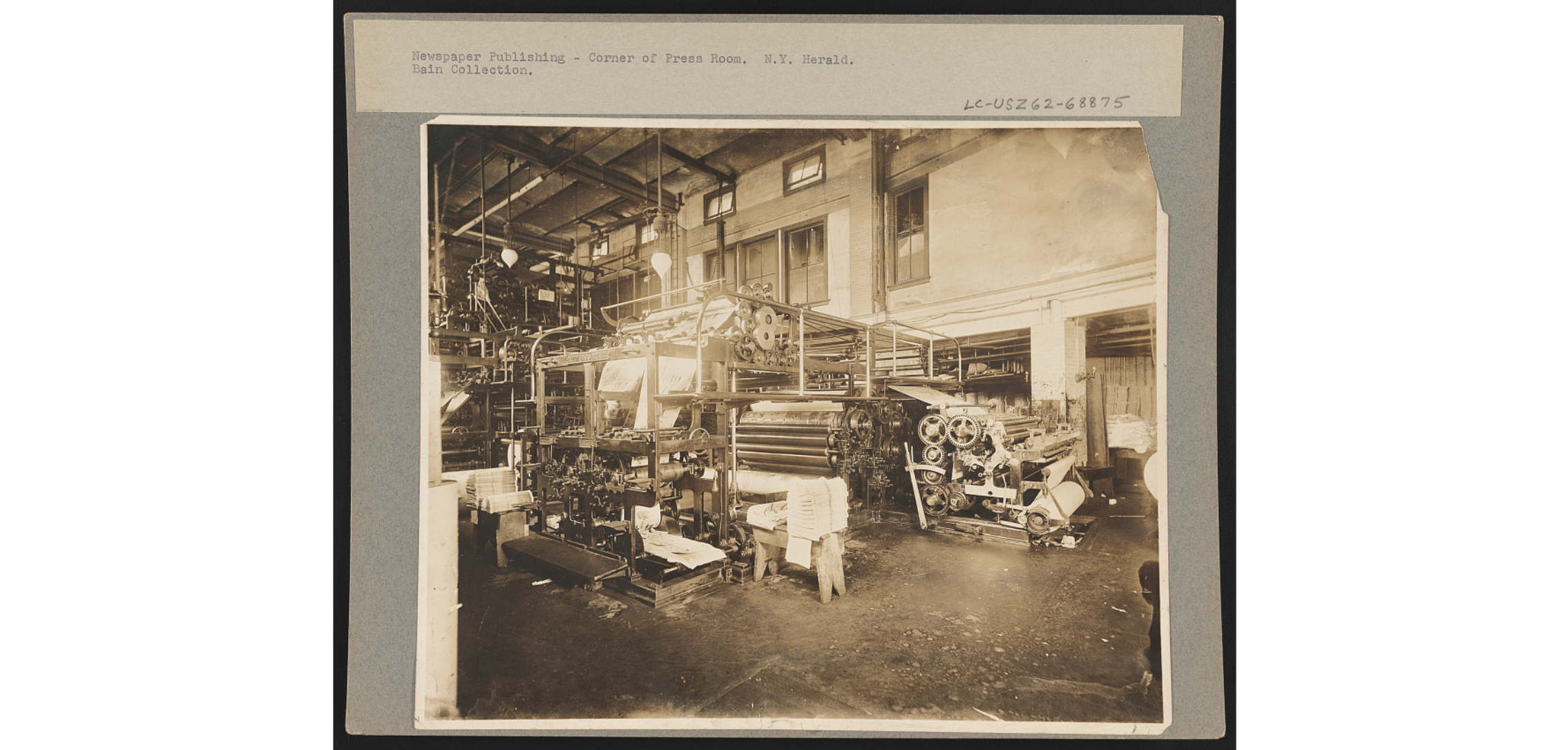
New York Herald press room back in the day. Times change.

To stay relevant, businesses need to keep moving forward. That’s what an Austrian journal with a long history decided recently. It has a few tips for other businesses thinking of modernizing.

Lucinda Jordaan writes at the World Association of News Publishers, “A government-owned national daily founded in 1703 in Vienna, Austria, Wiener Zeitung had faced the possibility of closure for most of this century. In October 2022, the threat was realized when a new law was adopted by the Austrian parliament that effectively cut off the main revenue stream of what was the official government gazette until 2020.

“Government job ads and companies’ annual financial results – required by law to be published in the paper – had largely funded WZ’s [annual] revenue. That would be stripped away by the end of 2022.

“This led to, arguably, the fastest, most radical transformation in newsroom history. ‘It was super quick; we had to do it in no time,’ acknowledges Editor-in-Chief Katharina Schmidt. ‘The law made us a publicly-funded news outlet in May 2022; we started the product development process in December 2022 and, by 1 July 2023, everything had changed.’

Wiener Zeitung is now WZ, an about-face from its roots in print and an aging audience. WZ has  a dedicated website, several newsletters, podcasts, and a growing following on TikTok and Instagram.

“Schmidt, the paper’s first female editor, shared the company’s challenges and learnings with a packed audience at WAN-IFRA’s recent World News Media Congress in Copenhagen. 

“In October 2022, Wiener Zeitung’s newspaper subscription totaled 8,000, within a population of about 9 million. ‘Most of our 8,000 subscribers were over 90 years old,’ [Schmidt says]. …

“Along with revenue loss, the newsroom faced multiple challenges in its reconstruction, as it fought for sustainability. They not only had to reduce staff by 60 percent (from 55 to 20) – and overcome internal resistance to this – but were also restricted by law in the topics they could cover.

“ ‘We really had to focus because, of course, there were so many ideas that we really wanted to put in practice, but we couldn’t. So we just focused on constructive journalism, and our target audience: the 20 to 29-year-olds. …

” ‘And of course, we checked out their needs. We had many focus groups and usability testing so that we could really focus on, on the needs of our audience.’

“The development process was also a reiterative process of testing and developing, then adapting to needs. ‘This is very important in this process; you cannot fixate on some framework,’ explains Schmidt. …

“Within weeks of the launch, they saw positive results: WZ had 750,000 unique monthly users, and Instagram figures increased by a third in the first three weeks. In September, they launched a newsletter dedicated to politics; subscription is at 12,000, with other topic-focused newsletters in planning.

“By November 2023, WZ’s relaunched and refreshed website has had up to 3 million users; their new TikTok channel had 11,500 followers, and Instagram followers went up by 46 percent from July to November 2023.

“Here’s how they did it. “1) Make friends in high places – get the publisher on your side; 2) Form a core group, comprising an interdisciplinary team – but don’t underestimate the number of editors you need; 3) Renew your news product following a development process – learn from other areas to adapt to your need ; 4) Focus your journalism: stay on track, and find your audiences.; 5) Involve the rest of the editorial team in the process. Over-prepare yourself. … Let the motivation of the core group carry your load; 6) Lead by example: say goodbye to hierarchical leadership, and find allies in-house, and externally, within the industry; 7)  Know that change takes time – this relates to new editorial direction, as well as mentally.” More here.

Read Full Post »

Photo: BBC.
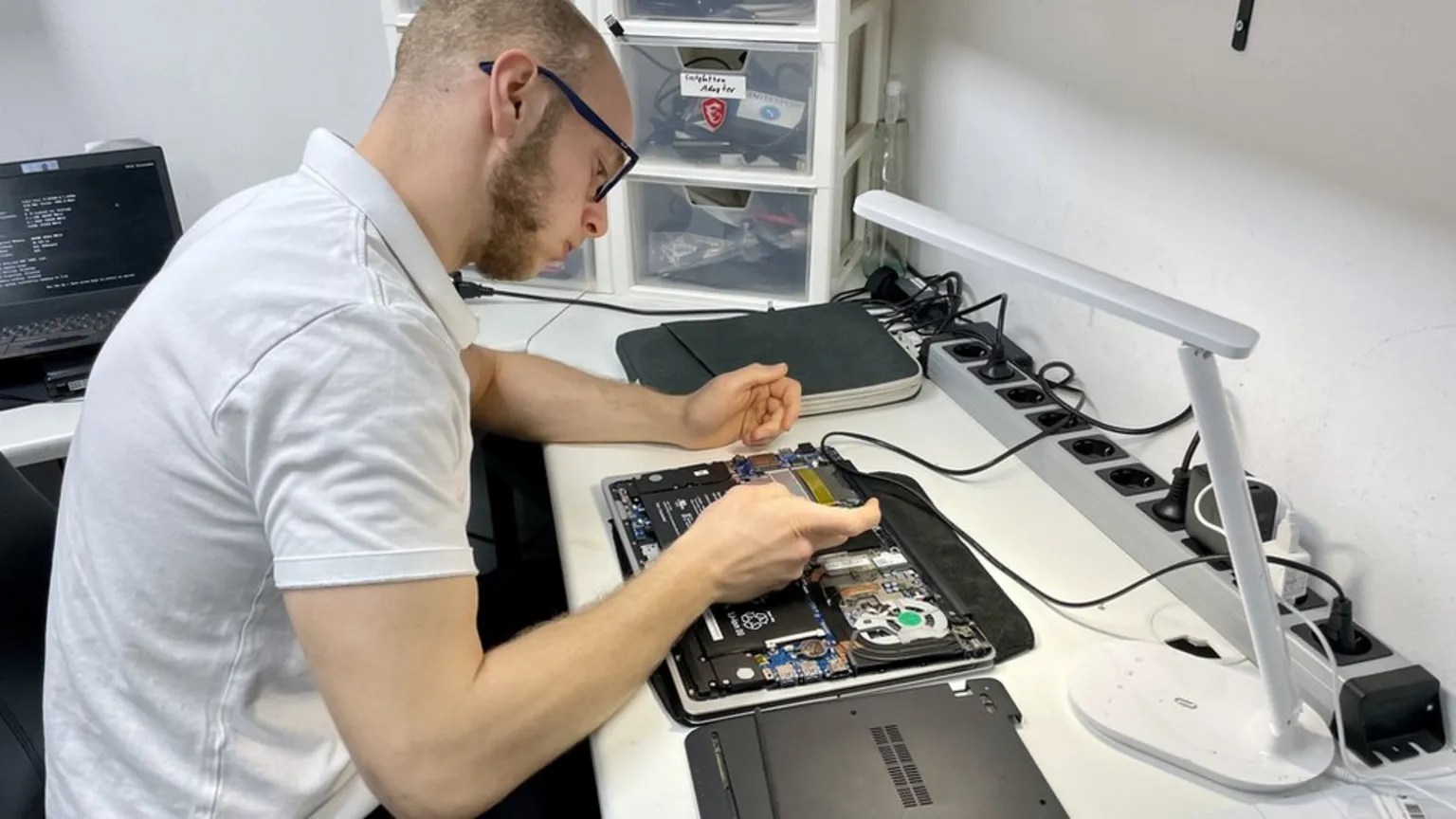
Under a government voucher plan, Austria will pay residents to repair broken machines instead of throwing things out.

A new plan in Austria could lead to the emergence of a whole class of tinkerers. There’s money to be made.

Bethany Bell writes at the BBC, “Has your washing machine broken down, or is your electric kettle, laptop or mobile phone refusing to work? Well, if you live in Austria, the government will pay up to €200 ($219) towards getting it repaired.

“The Repair Bonus voucher scheme is aimed at trying to get people to move away from throwing away old electrical appliances – and focusing on getting things mended.

“Erik’s laptop is broken, so he has come to Helferline, a computer and mobile phone repair workshop in Vienna. Because of Austria’s Repair Voucher scheme, he will only have to pay 50% of the repair costs to get it fixed. … Erik has already used the Repair Bonus to mend an old CD player, which is now working well. He says the scheme makes it easier to decide whether or not to throw something away. …

“Helferline’s chief executive, Clemens Schmidgruber, says the Repair Bonus scheme has been great for his business. ‘Our revenues have doubled since it was introduced. So we’re very happy about it,’ he said. …

” ‘Customers benefit because it helps them save a lot of money. Of course, it’s good for local businesses because they generate additional revenues. And the environment benefits, because there’s less electronic waste.’

“Mr Schmidgruber says customers have to download a voucher from a government website and then pay the repair shop upfront. ‘Then you get back half of the costs after three to four weeks.’ …

“The City of Vienna runs a separate scheme – which works in a similar way and helps people pay for repairs to old clothes, bicycles or furniture.

“Markus Piringer, the co-ordinator of the Repair Network in Vienna, says ‘if the costs of the repair are more than 20-30% of the cost of the new product, people tend to buy new. And as the Repair Bonus lowers those costs, it’s a big incentive to repair more. … [But] for many people, it’s still very positive to have always the newest product and to throw away your clothing after half a year or even less. And so this is also something where we need awareness raising.’

“And he warned that while the number of repairs was rising in Austria because of the voucher schemes, there were still too few technicians and craftspeople to do it. ‘We have a problem that we don’t have enough repairers. So we also need a system which is promoting repairs as a job.’ …

“At his bicycle shop in Vienna, Marc Warnaar and his team are fixing a bike, which has rusted brake and gear cables. ‘They don’t make spare parts for this gear system,’ he says, ‘Especially the gear cables, you cannot buy them anymore. So what we’ll do is exchange them with a newer model, so it will run again.’

“He says the Vienna Repair voucher has made a big difference to his business. ‘Normally we see a large decline in repairs, especially in winter. But now we see a lot of people coming because of this voucher and getting their bikes repaired also in winter.’ “

More at the BBC, here. And check out my 2012 post about Dutch repair cafés, here

Read Full Post »