Feeds:
Posts
Comments

Posts Tagged ‘champion’

Photo: Doug Mills/New York Times.
Champion figure skater Alysa Liu says, “I know every beat, I know every lyric. My body feels it.”

Imagine retiring at 16! That is what champion US figure skater Alysa Liu did, realizing the training had eaten up her childhood. Then she discovered there were things she had loved about it all and decided to compete again but speak up about changes that need to be made.

Gia Kourlas dance critic of the New York Times, interviewed her in Milan.

“Alysa Liu, the effervescent figure skater who won gold at the 2026 Olympic Games, moves like a dancer,” writes Kourlas. “She’s studied many forms of dance over the years — flamenco, tutting, ballroom, contemporary, modern contemporary, ballet and, her favorite, hip-hop, for which she still takes classes at an Oakland studio with her friends. ‘Hip-hop style doesn’t really go on the ice, funny enough.’ …

“But Liu’s full-body approach to skating, rooted in a plush, pliant plié, isn’t such a stretch from that expressive, highly rhythmic dance form. While many skaters glide on top of the music, she lives inside of it, showing — in her spontaneous, joyful way — a deeper sense of inner life.

“That much was clear during her performances at the Milan-Cortina Games. Liu, 20, who had retired at 16 before returning to the sport two years later, entered a flow state in her electrifying free skate set to the disco of Donna Summer; the audience was pin-drop silent during her soulfully quiet short program to Laufey’s pop-inflected jazz; and she leaned into the hyperpop of PinkPantheress and Zara Larsson in an exhibition performance. Liu becomes, for each, an extension of their voices.

“ ‘The music allows me to get there, which is why it’s so important I skate to music I like,’ she said. …

“She talked about her approach to performing, the role of music and modernizing the sport. Here are edited excerpts from the conversation.

Gia Kourlas
“What did you tell yourself before you started your free skate?

Alysa Liu
“I visualize my entire program multiple times before I do it, but I also visualize the patterns of my breathing. I practice my breath while envisioning the program. … We really value musicality. We’ll edit the music to match the jump sometimes. If I don’t have enough time to get from point A to point B — to land a jump on the crash or something, we will add in more music just so that I can. I think all my jumps have a timing for all of it. I don’t miss a step. For me, the music carries my body. It tells me what to do. Even though it’s all planned, it’s just so natural. Like I wouldn’t be moving any other way.

Kourlas
“Do you think of skating as dancing on the ice?

Liu
“Yeah. Although, I will say figure skating does not artistically satisfy me. I’m really big into photography because that does satisfy my creative. And then I have to keep dancing off ice because there’s some things on ice you can’t do when you’re wearing your skates. So it’s not enough for me, artistically. Athletically, it is enough. Like I can really push myself. Dance, I can do anything and everything. …

Kourlas
“Do you think about how you will influence skating?

Liu
“You know, it’s actually been a really deep struggle in whether I want skating to be big or not. … I’m glad for it. I wouldn’t change my childhood at all. But I feel like no child should go through that. Figure skating can be so hard and the parents that put their kids into skating — sometimes they get so into it. Sometimes it’s not toxic, but it usually is — especially at the top. Most skaters have had bad experiences.

Kourlas
“There’s so much discussion around body image in dance. How did you deal with yours as a skater?

Liu
“Took a long time, actually. Years. I got a sports psychologist. I had it bad from when I was a little kid until when I quit skating — not even. It took another year. I would say 17 or 18. … The work culture, the training culture. It was crazy. I had not a day off. I would not want any kid to not have a day off. … Things gotta change, 100 percent. I think the whole system’s got to scrap it and start over. The competition system and the setup just isn’t fit for consumption, honestly, because the competitions are too long, no one can sit through and watch all that. …

Kourlas
“You retired from skating at 16, and it was after a skiing trip — your first time — that you decided you wanted to return. Did you figure out that you missed the glide?

Liu
“That’s what it was! It’s the glide. You can’t get that anywhere. Roller coasters, you go fast and they’re smooth, but that’s not glide. I love gliding. Ah! … It’s because you’re on a blade that’s so thin. It feels so whimsical and ethereal. When I went skiing, I felt it. I glided for the first time since I quit, and I was like whoa. … I disliked a lot of things in my life, but that gave me clarity. I was grateful because I realized, well, I really don’t like [parts of skating]. I don’t like being away from my family for years. I hate feeling lonely, and I don’t like not being with my friends. [Nowadays] there are so many new ways I can express myself. …

“I really love the feeling of fight and I think for me, I don’t want life to be [flat]. I want ups and downs. I want to experience all the emotions, and sport is so intense. You can feel such extreme emotions, and I think that’s beautiful. It’s hard to find that in your life.”

More at the Times, here.
Read Full Post »

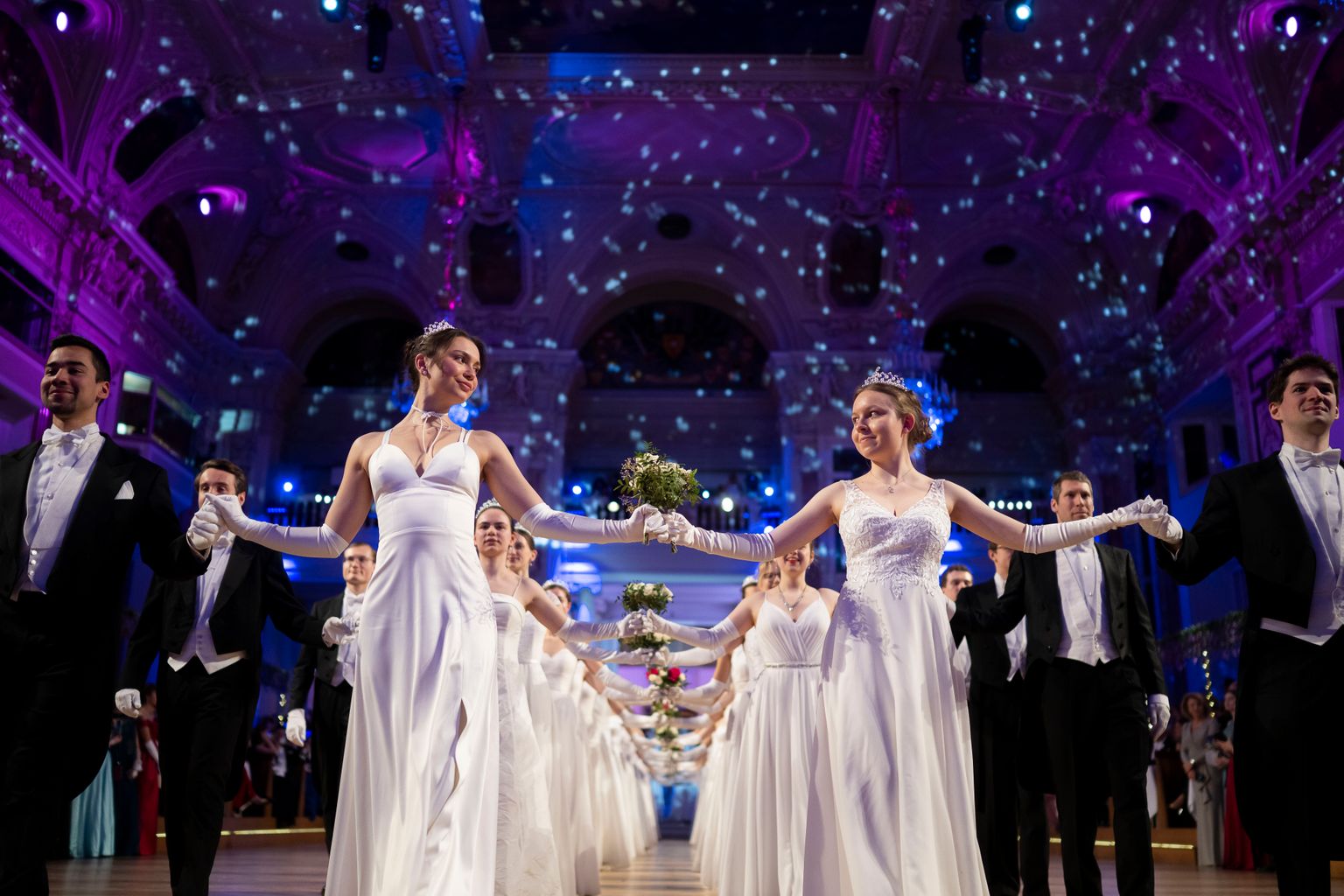
Photo: AP Photo/Denes Erdos.
Young people participate in the opening ceremony of the Lawyers’ Ball in Vienna, Austria, March 1, 2025.

Recently, we had Vienna on our minds because Erik and classmates from his high school in Wales were running a marathon there. Erik is a frequent marathoner and managed the course in under three hours, personal best.

Marathons are a longtime tradition in Vienna, but not as long as the activity in today’s story. It’s about the tradition of elegant balls.

Denes Erdos (along with AP journalist Stefanie Dazio in Berlin) submitted a report to the Associated Press.

“The aristocrats of the Habsburg royal court who danced in the first of Vienna’s famed balls in the 18th century could never have imagined how the hallmark of the Austrian capital’s social and cultural scene would evolve. Today, teenagers learn to waltz by watching YouTube videos while ladies shed their elbow-length gloves to better swipe on smartphones.

“More than 450 balls occur annually in Vienna, starting Nov. 11. … Professional guilds throughout the city host their own events, like the Ball of the Viennese Chimney Sweeps that marks the opening of the season.

“The sparkling balls are deeply rooted in Viennese culture, blending history with modern glamour, and the waltz remains an essential part. While the average ticket costs 395 euros ($427) — though VIP boxes at the Opera Ball can go for 25,500 euros ($27,539) — other events have lowered their prices to 40 euros ($43) to attract a wider audience.

“ ‘To be a part of this for me, as an Austrian person, is like taking part in Viennese culture,’ Leander Selmani, 19, said. ‘I was watching all these ball openings on YouTube and I said, “I want to be part of that.” ‘

“Besides YouTube, teens must learn the carefully choreographed dances for each ball’s opening ceremony from places like the Elmayer Dance School, which has been training dancers since 1919. In order to participate in an opening ceremony, dancers must first qualify through a strict regimen. Then they attend multiple lessons at a dance school and receive a stamped certificate of completion after each session. …

“Only once ‘Alles Walzer!’ (‘Let the waltz begin!’) has been declared can the rest of the crowd join in the dancing. This year, many balls honored the 200th anniversary of the birth of Viennese composer and violinist Johann Strauss II, known as the ‘waltz king.’

“While the waltz, the quadrille and other traditional dances are the heart of the Viennese balls, modern events now offer a diverse range of music and entertainment. Most venues feature multiple halls where guests can dance to various styles, including disco and contemporary beats. …

“Dress codes, however, have remained strictly enforced for centuries: gentlemen are required to wear tailcoats or tuxedos, and ladies must don evening gowns. Many attendees rent their attire from Lambert Hofer, a renowned costume workshop founded in 1862 that rents out hundreds of gowns each year.” More at AP via the Seattle Times, here.

Meanwhile in the US, you can take up ballroom dancing, but be prepared: the competition in the championships is fierce. My friend Ronnie’s sister wins them, but after years of work. About the latest competition, Ronnie tells Facebook, “I was in NY recently for the Fred Astaire Cross Country Dance Championships. My sister competed and is now 2025 Fred Astaire National Champion in American Smooth (tango, waltz, fox trot, Viennese waltz) Senior Division.” She is in her 80s.

Read Full Post »

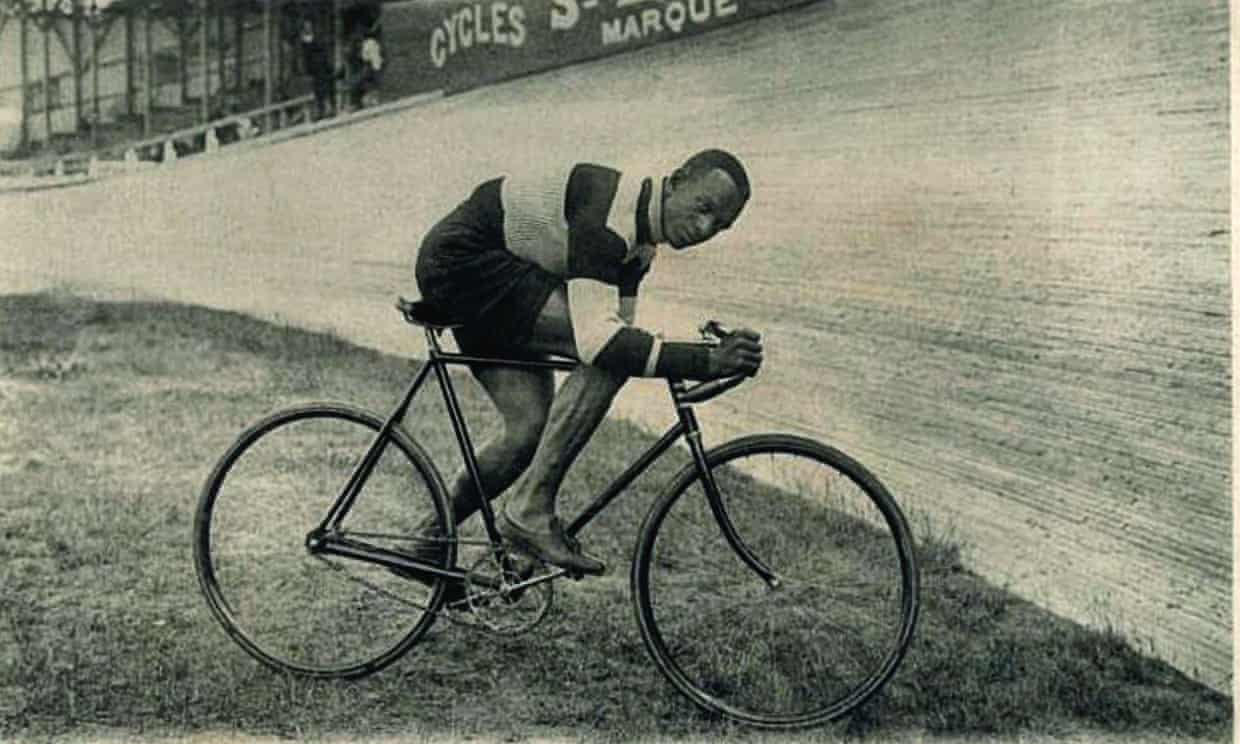
Photo: via Robert Turpin.
Woody Hedspeth was one of several Black American cyclists in the early 20th-century to move abroad to further his career. 

A country shoots itself in the foot when it pushes away talent. I’m thinking of asylum seekers who may have something to offer. I’m thinking of Black talent going to Europe to find a more welcoming and level playing field — writer James Baldwin, for example, singers Josephine Baker, Marian Anderson, and Paul Robeson.

Today I’m learning about Black bicycling champions turning to Europe in the early days of the competitive sport.

Rich Tenorio writes at the Guardian, “When cycling first took the US by storm in the late 19th and early 20th centuries, Black Americans joined in the new pastime. One Black cyclist, Marshall ‘Major’ Taylor, became a world champion in 1899. Yet American cycling installed a color line in professional racing. Opportunities became so limited that Black competitors had to take them wherever they could find them – including on the vaudeville stage and in Europe. Their story is documented in a new book, Black Cyclists: The Race for Inclusion, by Robert J Turpin, a professor of history at Lees-McRae College in North Carolina.

“ ‘We fall into the trap that history is linear,’ Turpin says. ‘With race relations, we think about the end of the Civil War: “Slavery ended, and things gradually got better and better for Black people.” My book shows what we already know: Things actually got worse for Black people in the US, especially from the 1880s through the 1920s … It got harder for Black cyclists to compete as professionals or even win prize money in general.’

“Turpin is a cyclist himself, and his college features a cycling studies minor, which he believes is the only such program in the US. His interest in the history of cycling extends to how it has been marketed over the decades – the subject of his previous book. …

“Turpin raises another issue: a lack of diversity in contemporary cycling. The book cites a 2020 USA Cycling survey of over 7,000 members in which just 3% reported they were Black or African American. Such underrepresentation extends to the [Olympics] and the Tour de France, where [in July] Biniam Girmay became the first Black African stage winner in the race’s 120-year history. Yet the book notes the increasing impact and influence of Black elite competitors such as 11-time national champion Justin Williams and the first Black female professional cyclist, Ayesha McGowan.

“Before attending graduate school at the University of Kentucky in 2009, Turpin learned about Taylor, whose exploits in cycling began as a teenager in Indianapolis, and crested with a world championship in the one-mile sprint in Montreal. In doing so, he became the first Black American world champion in any sport and his achievements were chronicled in an autobiography, The Fastest Bicycle Rider in the World. ‘He was an international superstar,’ Turpin says. …

“Several years later, Turpin returned to Taylor’s story. By that time, additional primary sources had been made publicly available through digitization. Turpin learned more about not only Taylor, but also his predecessors and peers. …

“Massachusetts became a venue for early Black success in cycling. David Drummond regularly won Fourth of July races in Boston. Taylor used his winnings to buy a home in Worcester – and the city’s first automobile. Katherine ‘Kittie’ Knox, a seamstress turned racing star, was famous for her self-designed outfits and her endurance. Knox illuminated challenges faced by cyclists who were both Black and female.

“ ‘If you were Black and a woman, those were two big strikes against you,’ Turpin says. …

“In 1894, a prominent nationwide cycling organization called the League of American Wheelmen, … barred all Black cyclists except Taylor from professional racing. The ban was not officially repealed until 1999 by the organization, which had been renamed the League of American Bicyclists.

“The book shows the ways in which Black cyclists responded. These included criticizing the decision in the Massachusetts state legislature and forming Black cycling leagues.

“ ‘I stress their agency,’ Turpin says. ‘I do not talk about them as victims. They were resourceful in figuring out alternative ways to still make a living and find social mobility.’ …

“Unlike Jim Crow America, international venues welcomed Black participation as professionals. Taylor left for France and Australia, and named his daughter Sydney after the city where he felt most welcome. Fellow racer Woody Hedspeth followed Taylor to France – and while Taylor returned to the US, Hedspeth remained in Paris.”

More at the Guardian, here. No firewall.

Read Full Post »