Photo: Classical-Music.com.
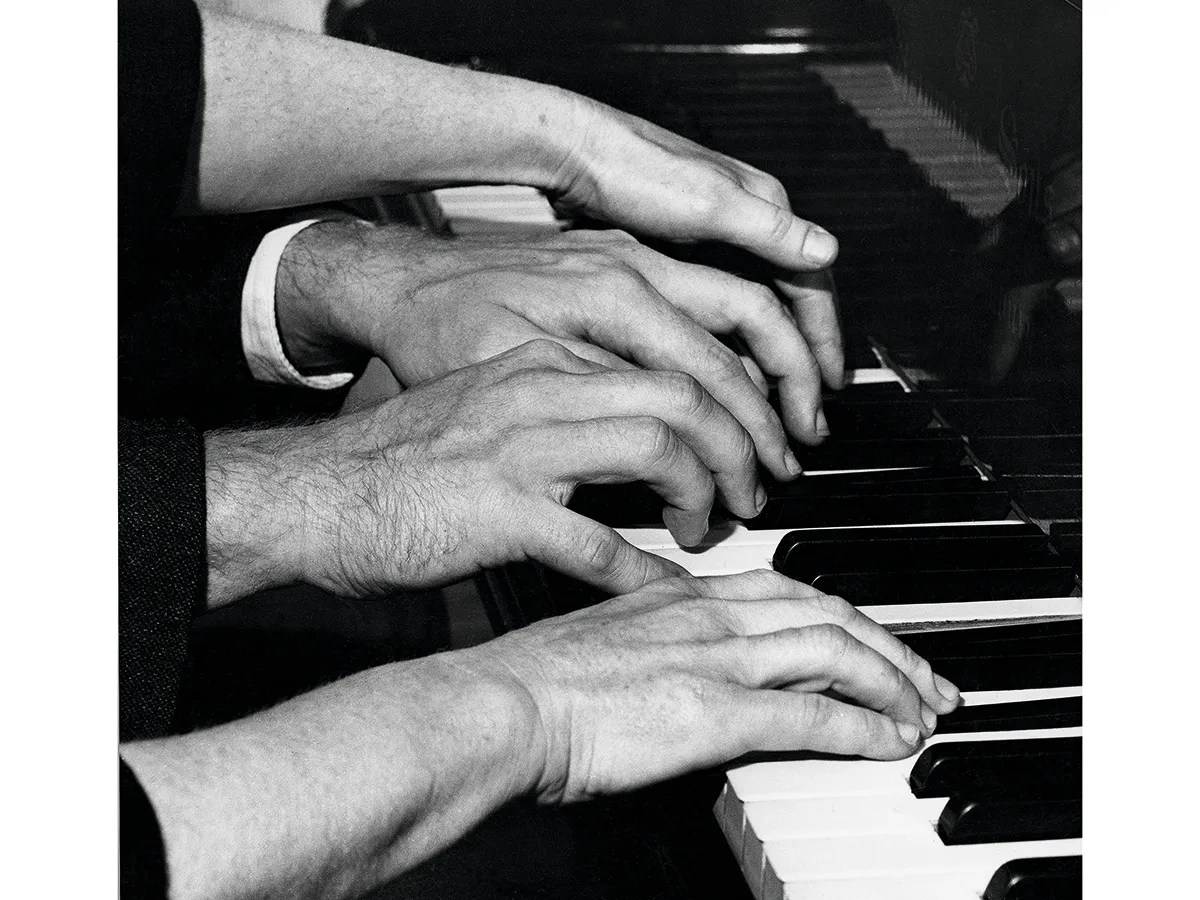
Playing piano four-hands.
Where I live now, we think a lot about brain health. We know that parts of our brains are not working as well as they used to. It takes longer to remember a word. Sometimes a memory is completely gone, and then we worry.
I like to think of a young man I know whose father helped him use other parts of his brain for daily functioning after he was born without a cerebral cortex. This young man now lives independently, has a job in the city to which he takes a train, and is the subject of study by amazed doctors. He’s my hero these days. Brains can learn new tricks.
BBC health reporter Aurelia Foster wrote recently about one way to teach your brain new tricks, and that’s through music.
She wrote, “Playing a musical instrument or singing could help keep the brain healthy in older age, UK researchers suggest. Practicing and reading music may help sustain good memory and the ability to solve complex tasks, their study says. In their report, published in the International Journal of Geriatric Psychiatry, they say music should be considered as part of a lifestyle approach to maintain the brain.
“More than 1,100 people aged over 40, with a mean age of 68, were studied. Scientists at the University of Exeter observed their brain function data as part of a wider study that has been finding out how brains age, and why people develop dementia.
“They looked at the effects of playing an instrument, singing, reading and listening to music, and musical ability.
“The researchers compared the cognitive data of those in the study who engaged in music in some way in their lives, with those who never had. Their results showed that people who played musical instruments benefitted the most, which may be because of the ‘multiple cognitive demands’ of the activity.
“Playing the piano or keyboard appeared to be particularly beneficial, while brass and woodwind instruments were good too. Simply listening to music did not appear to help cognitive health. The benefit seen with singing might be partly because of the known social aspects of being in a choir or group, the researchers say.
” ‘Because we have such sensitive brain tests for this study, we are able to look at individual aspects of the brain function, such as short-term memory, long-term memory, and problem-solving and how engaging music effects that,’ lead author Prof Anne Corbett told the BBC. …
” ‘Playing an instrument has a particularly big effect, and people who continue to play into an older age saw an additional benefit,’ she said. In the study, people who read music regularly had better numerical memory.
“Prof Corbett said: ‘Our brain is a muscle like anything else and it needs to be exercised, and learning to read music is a bit like learning a new language, it’s challenging.’
“Researchers did not test potential benefits of taking up a musical hobby for the first time later in life, but Prof Corbett said she believed, based on current evidence, it would be ‘very beneficial. …
” ‘The message is around how people can proactively reduce their risk of cognitive decline or dementia, and really thinking about engaging with music as a way of doing that.’ … However, she said: ‘It would be naïve to think taking up a musical instrument would mean you won’t develop dementia. It’s not as simple as that.’ “
More at the BBC, here.

 Suzanne's Mom's Blog