Feeds:
Posts
Comments

Posts Tagged ‘carbon’

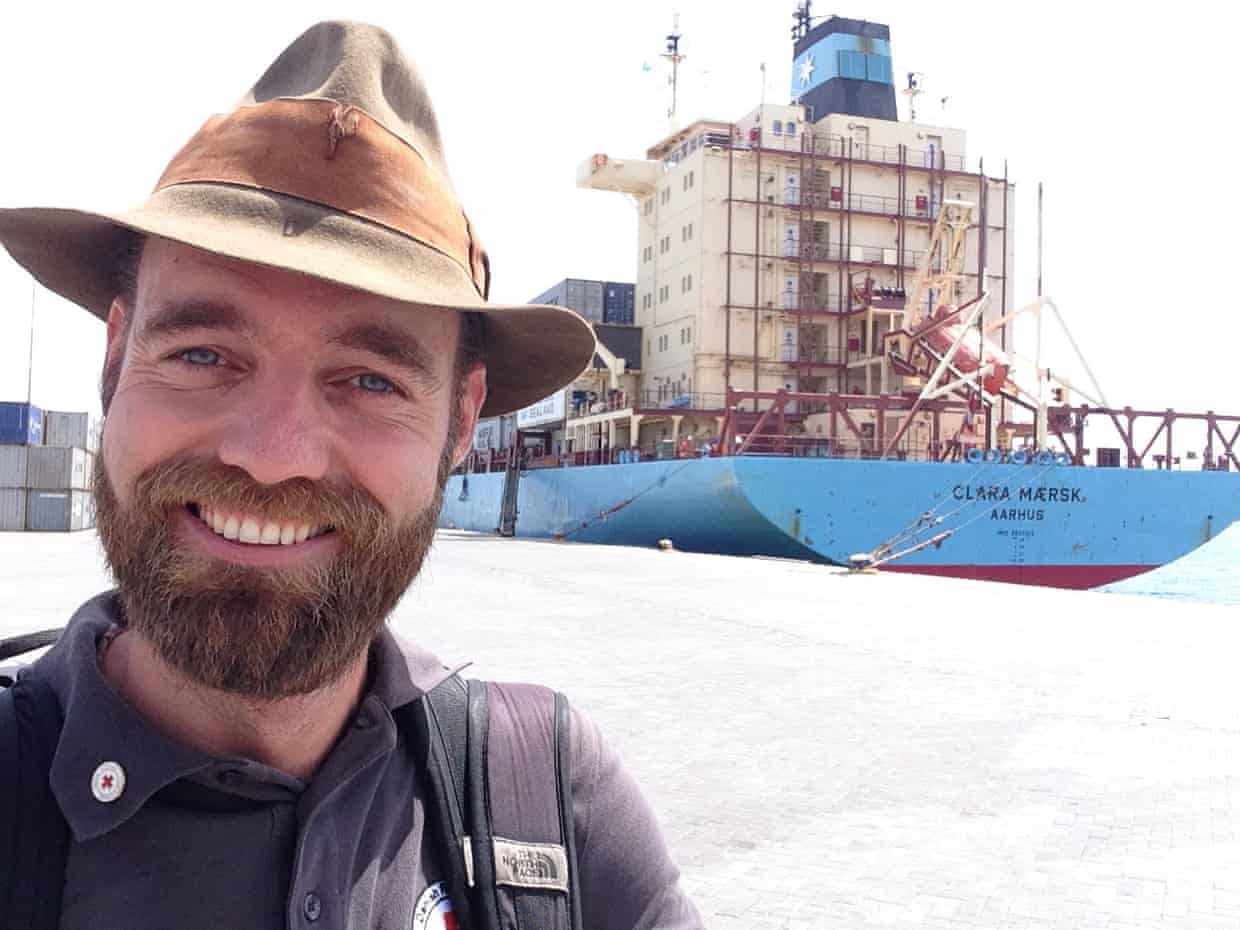
Photo: Thor Pedersen.
Thor Pedersen took a container ship from Praia, Cape Verde, to Guinea Bissau — one step in his quest to travel the world without flying. 

I recently met a couple who are unusually thoughtful about their footprint on Planet Earth, to the point of investigating how they could get to Europe without flying. There are ways to travel without flying, as we learn from today’s story in the Guardian, but they all have a cost in carbon emissions — ocean-going vessels especially. Unless you’re talking sailboats, which are not practical for most people.

Nevertheless, experiments in avoiding airplanes are consciousness raising — and often fun. Thor Pedersen reported on his own effort to travel everywhere without flying. It took him 10 years!

He writes, “Growing up, it seemed as if all the great adventures had happened before I was born. But in 2013 I discovered that – although it had been attempted – no one had made an unbroken journey through every country without flying. I had a shot at becoming the first to do it. …

“At 34, I set off – and didn’t return home until almost a decade later. These are the lessons I learned along the way.

“1. Human generosity can be astounding. It was a cold, dark night in December. A train had brought me to Suwałki, which people say is the coldest city in Poland. It was quiet. Snow was falling, but otherwise everything was still. I was carrying a piece of paper with a name, a phone number and an address for where I was supposed to be staying. But I had no sim card, so I began walking, looking for someone who could help me.

“Just as I was beginning to wonder if I would ever meet anyone, a woman opened her front door. I dashed over. Luckily, she spoke English and invited me in. She was happy to host me and convinced me there was no point in heading back out into the cold.

“I was quickly given a full plate of food and a spare bed. All this from a stranger. The next day, I was served breakfast and taken to the bus that would carry me to Lithuania.

“2. There are still some hidden and spectacular natural wonders. Lesotho was country No 106 on my very long journey. Its natural beauty was immediately apparent. … The mountains of Lesotho are horse country. Every now and again, riders draped in thick blankets would pass. Then I reached Maletsunyane Falls. The nearly 200-metre waterfall was glistening in the sun at the end of a canyon. And I had it all to myself.

“3. People’s resilience is powerful. In 2015, I travelled through western Africa. At the time, Guinea, Sierra Leone and Liberia were dealing with the world’s largest Ebola outbreak. A taxi driver in Guinea said to me: ‘Here we have everything, but we have nothing.’ These countries are rich in many ways – from natural resources to beautiful landscapes – yet most of the people are not.

“But after only an hour in Sierra Leone, I had been invited to a wedding: loads of music, lots of people in fancy clothes, an abundance of food and drink, small talk and dancing.  …

“4. Isolating yourself is a mistake. When you take public transport in Denmark, where I’m from, you always pick the seat farthest from everyone else. We value our privacy and respect the privacy of others. But in much of the world, the best seats are the ones next to other passengers. Where else will you find conversation?

“In west and central Africa, I found that everyone in a bus or a bush taxi would immediately form a unit, sharing food and stories and holding babies for one another. …

“5. What you want and what you need are not the same thing. … I hit a wall after about two years, but had to push through it to reach my goal. I learned the difference between what I want and what I need. I learned to live on a rock and how to engage in conversation with absolutely anyone. Once I returned home, I realized the only things that had kept their value were the relationships and conversations I had had. Everything else seemed perishable.

“6. You can form connections without sharing a language. I once had a 12-hour train journey from Belarus to Moscow during which no one else spoke anything but Russian. It didn’t seem to bother them that I didn’t know the language beyond nyet or da; they sat and spoke to me in Russian for several hours, while we shared food and vodka.”

To see more of Pedersen’s photos and his life lessons from this kind of travel, click at the Guardian, here. No paywall.

Read Full Post »

Photo: Jackson School.
A research team treks across a field in South Africa in search of carbon-sequestering termite mounds.

Termites in South Africa build mounds that sequester carbon in the soil, which unbeknownst to them, benefits a planet struggling with climate change. Can humans learn to extend those benefits?

Michele Francis, a researcher in the department of soil science at South Africa’s Stellenbosch University, shares some ideas at the Conversation.

“The landscape along the Buffels River in South Africa’s Namaqualand region is dotted with thousands of sandy mounds that occupy about 20% of the surface area. These heuweltjies, as the locals call them (the word means ‘little hills’ in Afrikaans), are termite mounds, inhabited by an underground network of tunnels and nests of the southern harvester termite, Microhodotermes viator.

“I’m part of a group of earth scientists who, in 2021, set out to study why the groundwater in the area, around 530km from Cape Town, is saline. The groundwater salinity seemed to be specifically related to the location of these heuweltjies. We used radiocarbon dating; dating the mounds, we reasoned, would allow us to see when minerals that were stored in the mounds were flushed to the groundwater.

“The tests revealed far more than we expected: Namaqualand’s heuweltjies, it turns out, are the world’s oldest inhabited termite mounds. … This is more than just an interesting scientific find or historical curiosity. It offers a window into what our planet looked like tens of thousands of years ago, providing a living archive of environmental conditions that shaped our world.

“It is also hugely important today: there is growing evidence that termites have a substantial, but still poorly understood, role in the carbon cycle. By studying these and other termite mounds, scientists can gain a better understanding of how to sequester (store) carbon. This process removes CO₂ from the atmosphere and is vital for mitigating climate change.

“Namaqualand is a global biodiversity hotspot renowned for its spring flowers, but it is a dry area. Surface water is in short supply and the groundwater is saline.

“Although most of Namaqualand receives very little rainfall, there are rare, high intensity rainfall events. When these do occur, the termite burrows on the mound surfaces serve as water flow paths that can harvest rain and channel water into the mound. This causes the salts that built up in the mounds over thousands of years to be flushed into the groundwater system via flow paths created by the tunneling action of the termites, pushing the dissolved minerals ever deeper. This process also pushes down the carbon that slowly built up in the center of the mounds when termites collected plant material and brought it into the mound. …

“The ability of these mounds to sequester carbon is linked to the termites’ unique behavior. The insects transport organic material [from] small woody plants – deep into the soil. This way, fresh stores of carbon are continuously added. …. Deep storage reduces the likelihood of organic carbon being released back into the atmosphere. So the mound acts as a long-term carbon sink.

“Not only do the termites take the organic carbon material deep underground into their nests, but their tunnels also allow dissolved inorganic carbon (known as soil calcite or calcium carbonate) in the mound soil to move into the groundwater along with other soluble minerals. So the termite mounds also offer a mechanism to sequester carbon dioxide through dissolution and leaching of soil carbonate-bicarbonate to groundwater. …

“These findings are further evidence that termites fully deserve their reputation as ecosystem engineers. They modify their soil surroundings to maintain ideal humidity and temperature conditions. …

“Termite mounds can help provide a more comprehensive understanding of global carbon dynamics. In Namaqualand, mounds occupy 27% of the total area but contribute 44 % of the total soil organic carbon stock. …

“Public awareness and policy integration are key, too. Termite mounds are often cleared for agriculture or termites are considered pests. Raising awareness about the ecological importance of termite mounds and integrating these findings into environmental policies can help promote practices that support natural carbon sinks.”

More at the Conversation, here. Listen to the story at The World, here.

Read Full Post »

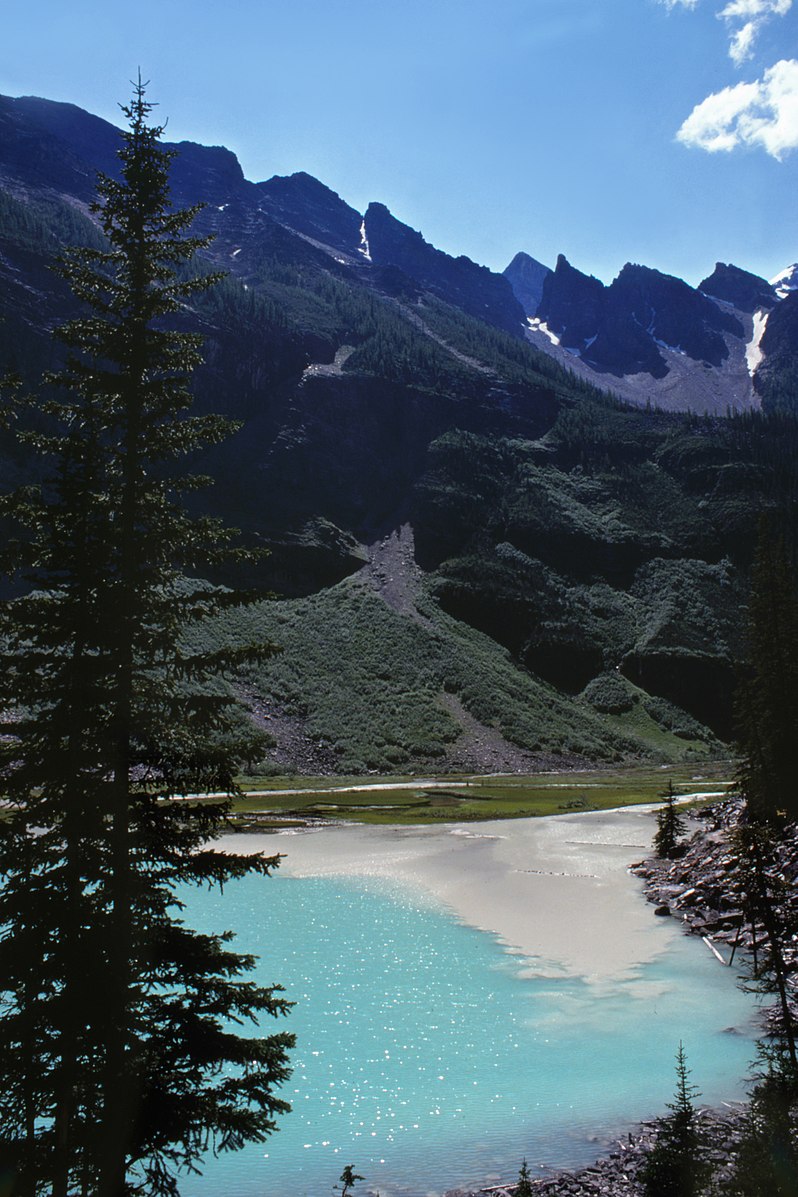
 Photo: WikiPedant/ Wikimedia.
An example of “glacial rock flour” pours into Lake Louise, Alberta, Canada. 

Here’s a new-to-me theory: a discharge from our melting glaciers may be able to soak up some of the unwanted carbon in the atmosphere.

Dino Grandoni writes at the Washington Post, “Minik Rosing grew up around the fine mud flowing from Greenland’s glaciers. It wasn’t until much later, when his own daughter had grown up and was in her mid-20s, that he realized how special it is.

“During a family vacation in rural Greenland, where there was no electricity, she was fishing ice out of a milky-blue fjord for a gin and tonic when that mud gripped her feet so tightly that she had to abandon one of her boots.

“As temperatures rise, meltwater is flushing out millions of tons of this stuff: ultrafine powder ground down by the island’s melting glaciers. Geologists have a culinary-sounding name for the microscopic particles: ‘rock flour.’

“The loss of his daughter’s boot got Rosing thinking. Maybe those tiny grains of rock could be used to trap something much bigger: the carbon emissions that are altering the frozen landscape and way of life on the island.

“ ‘Greenland has been seen as the example and the horror story of climate change, and never been portrayed as a part of the solution,’ said Rosing, a geology professor at the University of Copenhagen in Denmark who was born in Greenland.

“As global emissions continue to rocket, he is part of a growing group of scientists looking for ways to suck carbon right out of the sky, an example of a sometime contentious suite of technologies called geoengineering. …

“Give it enough time and most of the carbon dioxide that humanity is pumping into the air will be taken back by the planet. CO2 dissolves in rainwater and reacts with rocks to form carbon-containing compounds that lock the gas out of the atmosphere. That naturally occurring process, called ‘chemical weathering,’ literally petrifies the air.

“The problem — at least for us humans — is that chemical weathering takes millennia to work its carbon-absorbing magic. Humanity doesn’t have that kind of time: The U.N. Intergovernmental Panel on Climate Change says society needs to drastically reduce CO2 emissions by the end of the decade. The situation has gotten so bad that the panel of scientists says we need to develop ways of pulling carbon from the air to avert catastrophe.

“So what if we could speed things up? What if, Minik Rosing and other scientists wonder, we exposed more carbon-absorbing rocks to the carbon-laden air? They call that technique ‘enhanced weathering.’

“Most enhanced-weathering proposals involve pulverizing tons of basalt or other rocks and spreading them across the land. But all that crushing would consume an enormous amount of energy that might result in more greenhouse-gas emissions. That’s where rock flour comes in.

“Glaciers flow over the bedrock like a slow-moving river. Over centuries, the tremendous weight of the ice grinds the rock underneath into a fine powder only a few ten-thousandths of a centimeter, or microns, in diameter — finer than most sand found on a beach. …

“The fineness of the grains is the flour’s advantage. It gives the substance an enormous surface area to expose to the air, making it an attractive candidate for enhanced weathering. …

“To test how well rock flour stashes carbon, Rosing and [Christiana Dietzen, a soil scientist working with Rosing] hauled about 200 tons of the stuff from Greenland for experiments.

“The material packed a one-two punch, according to a pair of papers the researchers published last year: Not only did it suck up carbon when spread over farm fields in southern Denmark, but it also enriched the soil with nutrients and increased the yield of corn and potatoes in the first year of application.

“The researchers estimate that, given enough time, spreading rock flour on all agricultural land in Denmark would suck up a quantity of carbon approximately equal to the annual emissions of that country (or of Hong Kong or Syria). Preliminary results show longer-lasting crop yields in nutrient-poor soil in Ghana.”

More at the Post, here.

Read Full Post »

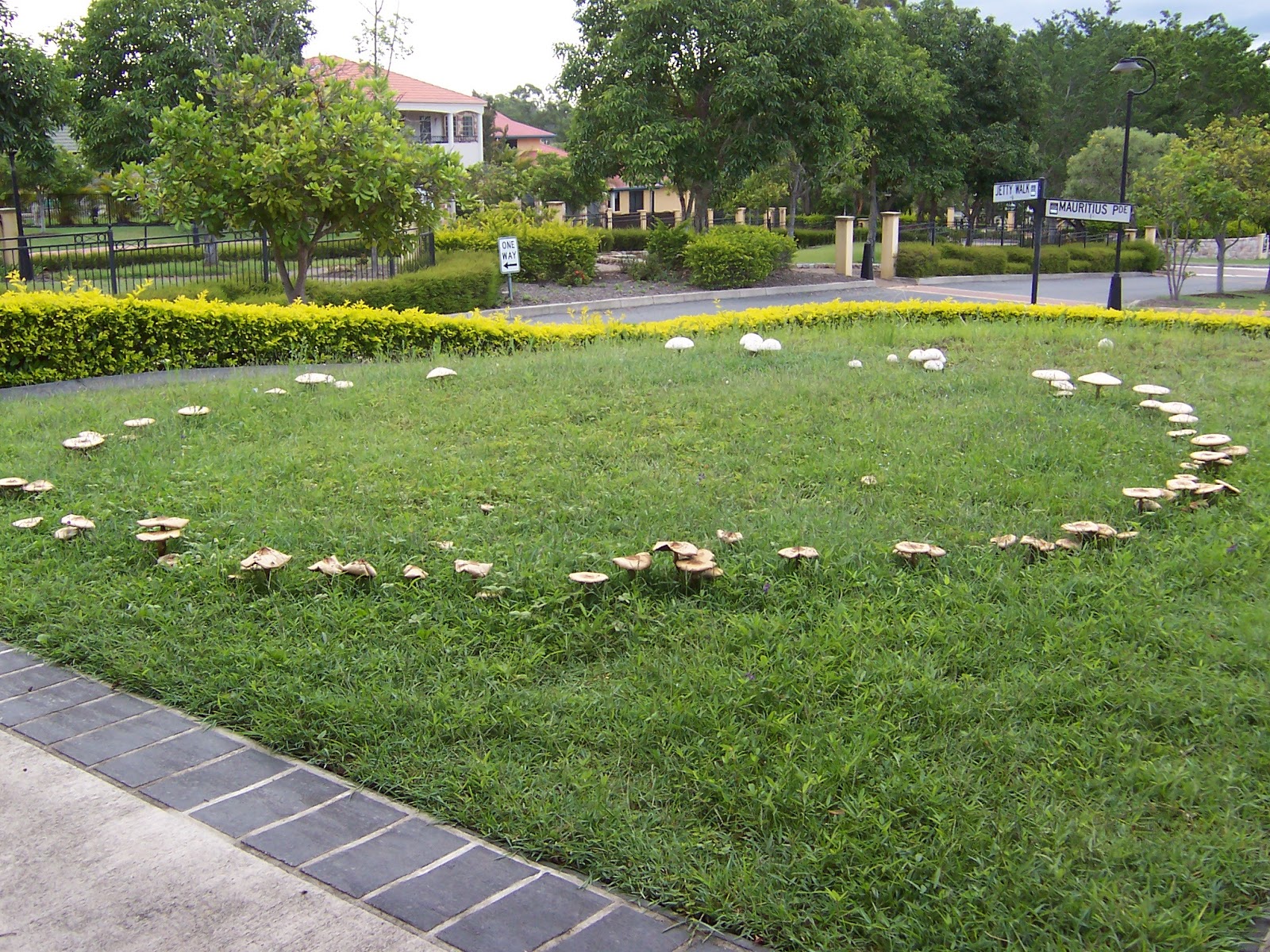
Sometimes called a Fairy Circle, fungi like these tell a story of what is going on underground.

I don’t know as much about about fungi as New Zealand blogger Spores, Moulds, and Fungi — who posts some amazing photos from time to time — but in recent years, I have gotten interested in mushrooms and more.

Part of the reason is that I am noticing that they are beautiful. But also, as Jonathan Moens reports at the Washington Post, a few bags of dirt with the right fungi “could make the planet more resilient to climate change.”

Moens begins his story in Kazakhstan.

“A team of scientists loaded into a gray minivan [earlier] this year and drove for hundreds of miles west through the Kazakh steppe — a vast region marked by endless open plains of grass, abandoned farms and flower-filled meadows.

“It’s a desolate, semiarid landscape, but just a few inches below the ground may lie one of the most diverse fungi ecosystems on Earth.

“Across much of the planet, thin, wildly interconnected filamentous structures — known as ‘mycelium’ — hold the earth together. When these underground fungi come together, they form sophisticated systems known as ‘mycorrhizal networks.’ The Kazakh steppe, which stretches from the north of the Caspian Sea to the Altai Mountains, is one of the largest dry steppes in the world and is predicted to have a wild diversity of mycorrhizal fungi. But as the region becomes increasingly desert-like, many of these fungi may disappear.

” ‘There’s a time limit, 100 percent,’ said Justin Stewart, an evolutionary ecologist who led the mapping expedition. ‘If we collect a sample when it’s already a desert, then we’ve already lost all that diversity.’

“The Kazakhstan mission is part of a worldwide project led by the Society for the Protection of Underground Networks, or SPUN, a scientific research organization dedicated to mapping out underground fungi. The goal is to sample soil in 10,000 biodiversity hot spots across the world to create a global picture of what species of fungi exist and where.

“The team identified these areas using a predictive map based on thousands of observations and environmental data. In it, the Kazakh steppe stood out because of its wide-ranging diversity of ecosystems.

Understanding which mycorrhizal fungi survive in the harsh temperatures there may help scientists determine how these fungal communities might adapt to the climate crisis as droughts, fires and desertification become more prevalent.

“The researchers chose three areas of the steppe, each with a different climate: They began in the southern deserts, then drove out west to an area dominated by vast grasslands, agricultural lands and meadows. They ended north, near the Russian border, where they entered a forest ecosystem.

“At each site they took tens of samples by mapping out a grid with measuring tape, pounding a tube into the ground to extract the soil and storing this soil in a plastic bag for mixing. These samples may help scientists unlock secrets that could one day help ecosystems capture more carbon dioxide and restore soil health — as well as the trees, plants and animal life that rely on it. …

“Mycorrhizal fungi often form mutually beneficial relationships with plants. They trade essential nutrients such as phosphorus and nitrogen in exchange for carbon, and act as an extended root system, allowing plants to access water they can’t reach.

“These networks may also prove to be invaluable for transporting carbon underground, a study published in June found. About 13 gigatons of carbon fixed by vegetation — equivalent to about one-third of all carbon dioxide emissions from fossil fuels in one year — flows through underground fungi, according to an analysis of nearly 200 data sets.

“In the steppe, these plant-fungal benefits may be short-lived, however. While deserts are a natural part of Kazakhstan’s ecosystem, more than half of the country’s vegetation and drylands is at risk of becoming desert as well. The main drivers are large-scale intensive agriculture and increasingly warm and dry temperatures brought by climate change. …

“As the minivan moves northwest toward Kostanay, a city about 100 miles away from Russia’s southern border, the clay-red, barren landscapes give way to endless fields of grass. Herds of horses reared for meat consumption trot along the wide expanse while eagles circle the skies in search of prey.

“For hundreds of years, the steppe was a region of nomadic herders. In the 1950s, under Soviet rule, the government mobilized thousands of young volunteers to produce as much grain as possible in order to alleviate food shortages, an initiative known as the virgin lands campaign.

“The fields were extensively plowed, which degraded the soil, and were later abandoned because they were not productive. ‘It had an impact on vegetation, on steppe species — it’s now very fragmented in the northern part,’ said Alyona Koshkina, a researcher at the Association for the Conservation of Biodiversity of Kazakhstan, a national conservation group.

“The farming damaged the fungi networks, too, by ripping them out of the ground and stripping the soil of nutrients. The researchers hope the samples here give them more information on what kinds of fungi are able to survive in such unfavorable conditions, and compare it to other sites, such as forests and meadows.

“Over the years, the fields have had time to slowly recover, but they face new threats. Since 2021, the Kazakh government has been working on a nine-year project to bolster the livestock sector in the steppe.

“While grazing of the grasslands can help these ecosystems thrive, overgrazing may lead to further desertification, Koshkina said. To restore the steppe would mean winding back the clock to its pre-Soviet era, when the region was largely undisturbed or ‘pristine,’ she said. …

“Conservationists agree that the health of aboveground vegetation is inextricably linked to that of below-ground biodiversity. As such, mycorrhizal fungi may play an important role in shaping the steppe’s future. …

“Studying the steppe’s fungi could help scientists figure out whether they could thrive in other, similar climates. One way to test this would be via inoculation. If, for instance, SPUN’s work revealed that pristine steppes had higher mycorrhizal diversity compared with more degraded land, those same fungi could be transferred elsewhere to test whether they improve soil quality.”

More at the Post, here. A good person to follow at X, formerly known as Twitter, is Sam Knowlton, @samdknowlton, who works with fungi to improve soil health in agriculture.

See also the Guardian, here, where Fiona Harvey has more about mapping the world’s fungi. She quotes Jane Goodall, adviser to the SPUN project: “An understanding of underground fungal networks is essential to our efforts to protect the soil, on which life depends, before it is too late.”

Read Full Post »

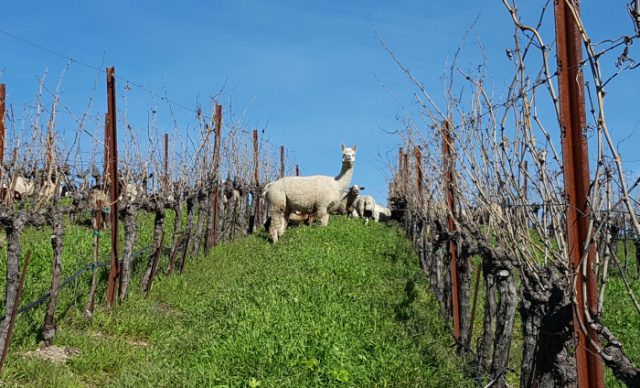
Photo: Tablas Creek.
Sheep and alpaca graze among dormant vines in the Tablas Creek vineyard, Paso Robles, California.

Contemporary consciousness has come to a supremely traditional way of life: winemaking.

Patrick Schmitt writes at the Drinks Business, “Moët Hennessy, Jackson Family Wines and Torres are adopting a ‘regenerative’ approach to viticulture – but what does it involve, and why are these famous producers making the move?

“[The] the main aim of regenerative viticulture is to increase the amount of carbon held in the ground, and to do this, farmers must ditch the tilling, because the best way to destroy carbon in the soil is to turn it.

“In short, disturbing the ground exposes it to UV light, which is an oxidizing force, and breaks down the organic matter in the soil. And a soil with less organic matter is less sponge-like, and less able to absorb and hold water and nutrients. … Tilling the soil also disrupts the soil microbiome, killing the good microbes and insects that help fight pests and diseases. …

“For Justin Howard-Sneyd MW, who, heads up courses on Sustainable and Regenerative Viticulture at the UK’s Dartington Trust, a regenerative approach is vital to reverse the damage done to agricultural soils, and make viticulture sustainable, without detrimental effects on grape quality.

“Speaking last month at the IMW Symposium in Wiesbaden, he told more than 500 attendees at the three-day event that the world has … ‘just 60 harvests left,’ should current rates of soil erosion continue.

“[He said] that the origin of the regenerative movement was the Dust Bowl of the 1930s in the US, where deep ploughing and drought saw the destruction of virgin topsoil in the Great Plains of central North America, forcing tens of thousands to abandon the land. …

“For Justin, a regenerative approach to viticulture carries additional advantages of being applicable to any farming philosophy, with no strict practices, while being ‘science-led.’

‘It is about trying as much as possible to create a complex, balanced, diverse ecosystem of life in the vineyard by working with natural forces.’ …

” ‘If you are organic but plough a lot and use a lot of copper, then you can actually have fairly unhealthy soil.’

“To promote the techniques and benefits of regenerative approaches to wine production, a little over 18 months ago the Regenerative Viticulture Foundation was established. …

“[Justin] mentioned at the symposium that Jackson Family Wines had committed to converting all its vineyards to regenerative techniques by 2030, while Torres was moving towards the approach on more than 500 hectares of organic vineyards, and Moët Hennessy was also adopting the philosophy, most notably at its Provençal property, Château Galoupet. … Concha y Toro is experimenting with regenerative approaches in Chile. …

“The approach can improve soil health, reduce the need for increasingly expensive inputs, be they organic or synthetic fertilizers, as well as create a vineyard that is more resistant to weather extremes – particularly periods of heat and drought. …

“Mimi Casteel [said] that permanent ground cover in her vineyards had kept her soils wetter and therefore cooler during a recent period of extreme heat in Oregon. … Antoine Lespès – who heads up R&D at [Domaine Lafage in Roussillon] – told the Drinks Business in December last year, ‘Because we have a low amount of rainfall, every drop that falls from the sky needs to be cultivated.’

“To ensure this, Lespès said that a permanent ground cover was key for increased infiltration, and a high-level of organic matter was important to retain the moisture. He also said that the ground cover, which can be rolled or mulched, prevents water loss by shading and protecting the soil.

“Other techniques are necessary too, however, from planting to follow the contours on sloping ground to prevent run-off during heavy rainfall, to the use of agroforestry for shade, along with biochar for increased water infiltration and retention, and, finally, a good combination of rootstock and grape variety. …

“But it was also an emphasis on applying regenerative viticulture to large-scale production that was stressed at the IMW Symposium, and particularly by Jamie Goode, who, as the author of Regenerative Viticulture, also spoke on the farming philosophy. …

“ ‘If this approach to farming is going to make big impact, then it’s not just something we want rich people to do on a small vineyard for wines selling for $100 a bottle – it’s also for big farms selling wine at €1 per litre.’ [And it’s] important that wine producers ‘say goodbye to herbicides. … Clear earth is a major problem, not so much the chemicals. It’s the same problem with organic herbicides: nothing is growing there.’

“However, should one leave a permanent ground cover, and ditch the tilling, the plants that sprout in the vineyard do need to be kept in check. … California’s Tablas Creek, which is a pioneer in regenerative viticulture, has a herd of 250 sheep that it successfully uses to keep weeds at bay in its vineyards.”

More at the Drinks Business, here. No paywall.

Read Full Post »

Photo: Kevin Krajick/Earth Institute.
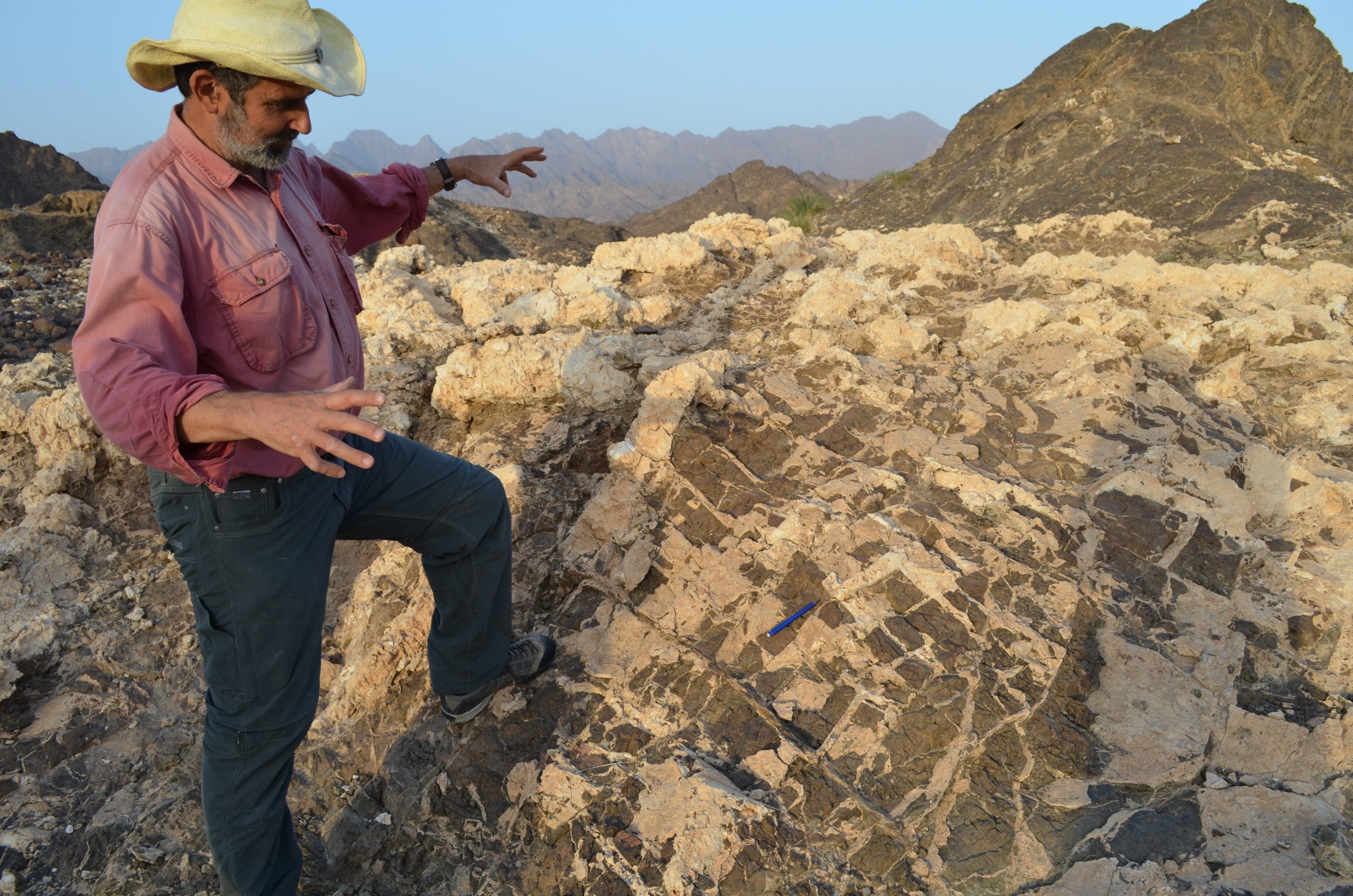
Geologist Peter Kelemen surveys an outcrop of exposed mantle rock in Oman. “The light material is a carbon-based mineral that has reacted with the rock to form a solid deposit,” reports Columbia University.

Scientists from many specialties are working on new angles for dealing with global warming and carbon in the atmosphere. Today’s story features geologists.

Kevin Krajick reports at Columbia Climate School’s State of the Planet, “Geologist Peter Kelemen has been working in the desert of Oman for more than 15 years to study natural chemical reactions within rare deep-earth rocks that pull carbon from the air and lock it into solid mineral form.

“His goal: harnessing and speeding up those reactions to remove carbon on an industrial scale. Based in large part on his research, Omani entrepreneurs recently formed 44.01, a company working to scale up and commercialize the processes. The company was just awarded a $1.2 million Earthshot Prize. … We spoke with Kelemen about the science behind the project, its current state, and its prospects for the future.

Tell me about the rocks in Oman, and what makes them special.
“The mountains of northern Oman and along the coast of the United Arab Emirates host a huge block of oceanic crust and upper mantle that was thrust onto the edge of the Arabian continent. … It is 350 kilometers long, up to 50 kilometers wide, and many kilometers thick. It is tilted, and exposes rocks that formed more than 20 kilometers below the sea floor. Surface exposures of the Earth’s mantle are quite rare, and this is the largest in the world. …

“Rocks like this react rapidly with CO2 in the atmosphere and surface water, and this forms solid carbonate minerals, for example limestone. The process is spontaneous. So we’ve been seeking to understand how it works, and then design methods that accelerate it in order to store significant amounts of CO2 on a human time scale. We are focusing on injecting CO2 dissolved in water underground. It might use a lot of water, and of course water is very valuable in the Middle East, so we look for areas near the coast. …

How did 44.01 start, and what is your involvement?
“I and my colleague Jürg Matter, who was formerly at Columbia, were first approached by on Omani entrepreneur, Talal Hasan, in about 2017, when he was working for Oman’s sovereign wealth fund. Talal hoped to persuade the government to invest in CO2 storage in the mantle rocks. But then he ended up leaving the fund, and he and a childhood friend founded 44.01. Jürg now works with them about half time. I plan to remain in more of an advisory role.

Where would the carbon come from?
“44.01 has obtained a solar-powered device that removes CO2 directly from air, from the Swiss company Climeworks. They’re operating it near Oman’s capital city, Muscat. For pilot studies, we could also use CO2 captured from smokestack sources, like the many gas-fired power plants, water desalination plants and other industrial operations in Oman and the UAE. …

“We’ve obtained government permits and run some small pilot projects at a former scientific drilling site. We are now planning two much larger pilot projects, both expected to take place in 2023. Ideally we would achieve substantial results before the COP28 meeting in the UAE, in 2023. Eventually, we hope, some government or group of governments would pay them to lock up the carbon, at a rate of maybe $30 a ton. Globally, such costs end up being a few percent of GDP, comparable to the current costs of solid waste management.

“The main concern is that the rocks are not very porous. That leads to two difficulties. One, it can be difficult to get fluids to circulate rapidly through the rocks, and two, the pore space might eventually clog up with newly formed carbonate minerals. However, we are inspired by the fact that in some places the rocks have naturally become fully carbonated. That is, every magnesium and calcium atom in them has combined with CO2 to create solid minerals. So we know this can happen, and we have ideas about how it works. We have done theoretical calculations, and conducted experiments at the laboratory scale. But in the end, only field scale experiments will allow us to refine methods to do this at a reasonable cost.

Are there other places with similar rocks?
“Yes, but Oman and the UAE are the best. The next largest outcrops are in New Caledonia and Papua New Guinea. They would be great places to take CO2 from the air, but I think we need to demonstrate that this process works on the Arabian peninsula before trying to get things going on islands in the southwest Pacific. There are other, smaller areas that could work, including parts of California and Oregon. However, those spots are water-limited, and I expect local stakeholders would be concerned about that. …

“In addition to forming solid carbonate minerals, the reaction of surface waters with mantle rocks can form free hydrogen gas. It is widely viewed as a potential replacement for fossil fuels, specifically natural gas and oil, for transportation and home heating. And if derived at low cost from natural sources, it could also be used to generate electricity. We are continuing academic research on the rate of hydrogen formation, and studying ways that could be accelerated.”

More at Columbia Climate School’s State of the Planet, here.

Read Full Post »

Photos: Suzanne and John’s Mom.
The movement to promote native species as protectors of the environment is gaining steam. Native species love your discarded leaves.

I haven’t had any luck yet persuading my own family and friends about the advantages of unraked yards, but after all, it took a few years for my friend Jean, the native-plant evangelist, to get through to me.

In recent years, a range of stories on the topic have appeared as the national media has caught on. I will list a few articles at the end. But perhaps the best explanation of the thinking behind unraked yards — and the best how-to — can be found at the Wild Seed Project.

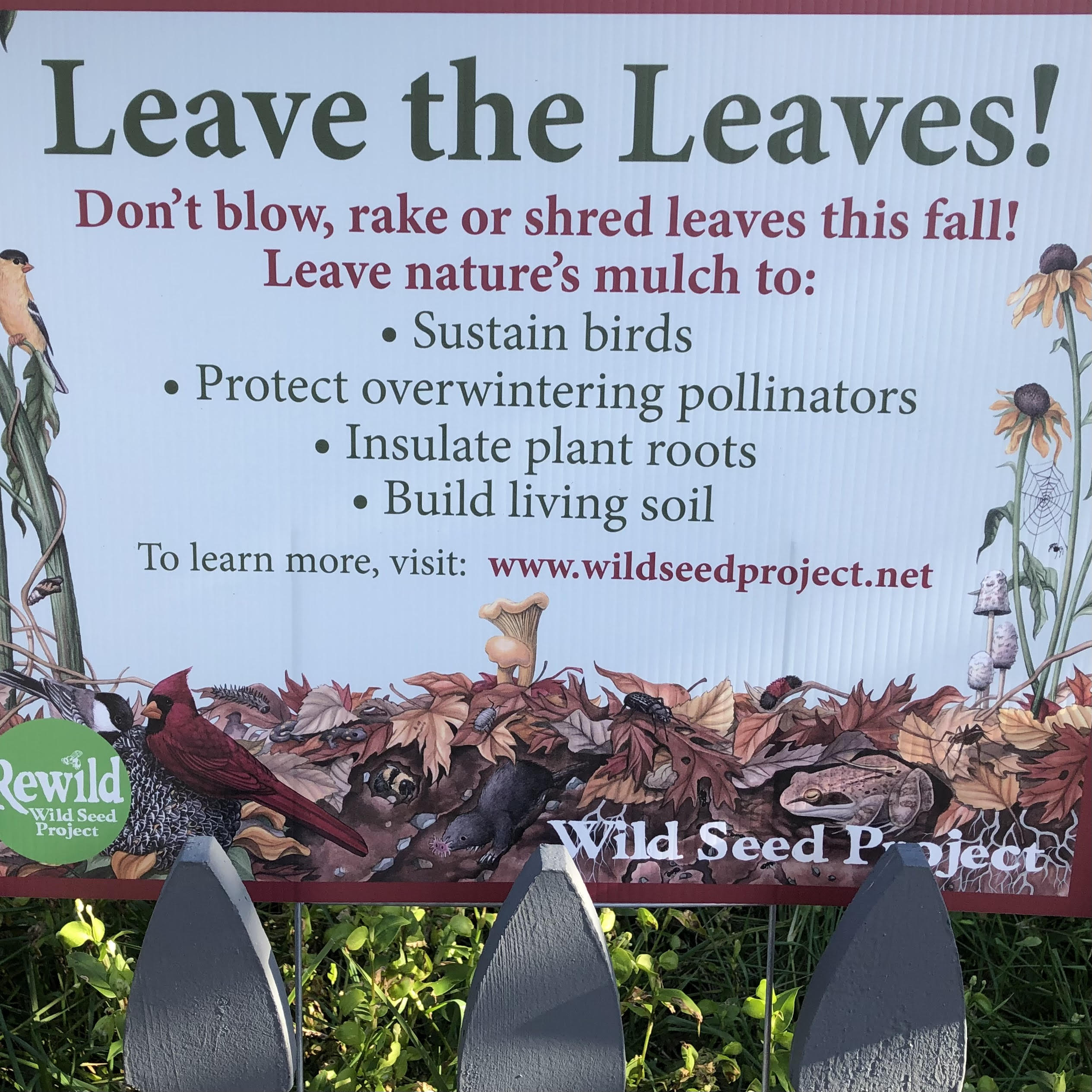
Anna Fialkoff talks about rethinking garden clean-up. “While planting native plants is an essential step toward creating habitat, how we manage our plantings will determine whether we can sustain and support the life-cycles and successful reproduction of many other organisms including birds, butterflies, moths, bees, salamanders, and frogs.

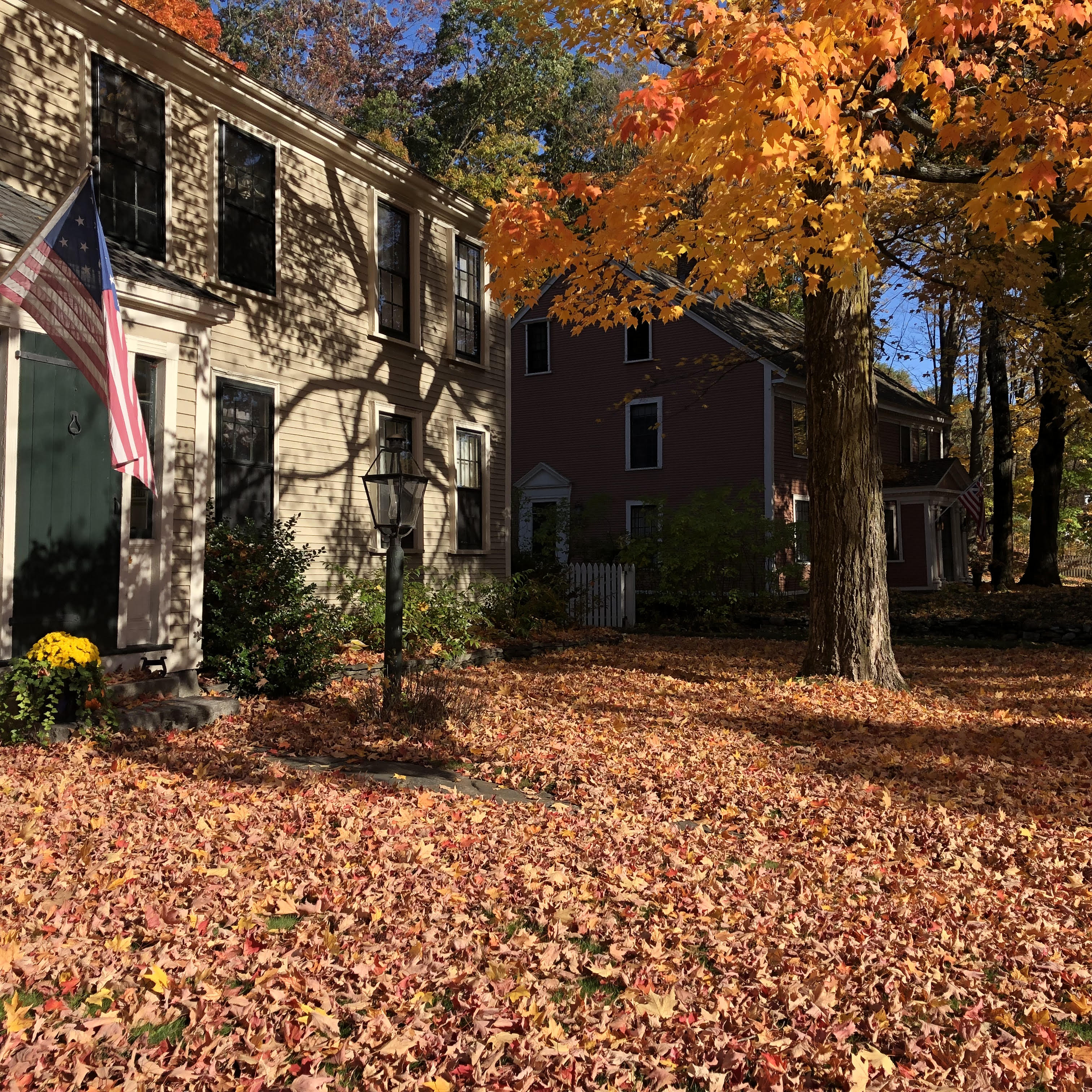
“Autumn is when many of us think to put our gardens to bed by removing leaves and cutting back perennials. Yet to truly support living creatures year round, it’s much better to leave fallen leaves, branches, stems, and seed heads where they are rather than raking, blowing, shredding, or cutting them away. Leaves and other organic matter insulate plant roots through the cold winter months and then decompose to build up living soil critical to healthy vegetation.

This organic matter also stores large amounts of carbon, which is crucial to supporting a climate-resilient planet. …

“Many species of butterflies and moths, including our beloved luna moth, pupate and overwinter in leaves before emerging as stunning winged adults the following spring. Raking away the leaves is very disruptive to that life in the leaf litter. Leaf blowers are even more damaging, and also create noise pollution and use large amounts of fossil fuels – please discontinue this practice.

“Undisturbed leaf litter is also essential to the Baltimore checkerspot butterfly, which requires two seasons to complete its life cycle. After a first season of foraging on its host plant (white turtlehead) the caterpillars crawl down and overwinter in the leaf litter. This once common butterfly is in decline due to loss of habitat and poor gardening practices. [See pictures here.]

“Other small creatures like the eastern newt, as well as many species of salamanders and frogs, spend the frigid winter months hibernating under the protection of leaves, rocks, and logs.

“For many, leaf management can feel like a never-ending burden in the fall. Even if we want to leave the leaves, we can’t let them accumulate everywhere or they will smother the grass, clog sewer heads, and leave a slippery layer to get mushed into the ground by cars, snowblowers and pedestrians.

The problem is not that deciduous trees shed ‘too many’ leaves, but that we have developed our landscapes and removed natural areas. Too much space is now taken up by driveways, streets, sidewalks, and lawn.

“Leaves are an exceptionally valuable resource! They contain nutrients and organic matter that we should keep on site, instead of raking or blowing them from off our lawns and driveways and into the woods, or stuffing them into leaf collection bags to be taken off site. We can find more places for the leaves to go by shrinking our lawns, creating more planting space, and consolidating the excess leaves that fall outside our planting beds.

“Using leaves as mulch for a planting bed is a free alternative to buying bark mulch or other expensive and harmful inputs such as fertilizers and dyed mulches. The space under a tree is an especially critical place to keep leaves since many butterfly and moth caterpillars drop down from trees into the leaf litter to pupate and overwinter. …

“Still too many leaves? Rake the leaves that fall outside the planting beds into a pile. Yes, in this case raking is okay (and leaf piles are necessary for jumping in!). Our goal is to not remove them from within our planting beds, which benefit from the organic matter and insulation for the cold winter months, limiting disturbance to the leaf litter and any overwintering creatures.

“Move your leaf pile somewhere it can compost in place over the next growing season. You will be surprised by how quickly it shrinks down. Or, make a leaf fence! Coil up chicken wire into columns and arrange them side by side. Fill them with leaves. You’ll find that you can’t use the leaves up fast enough since they break down so quickly. Before you know it you’ll be stealing the curbside leaf collection bags from your neighbors to keep your leaf fence full. Suddenly one person’s yard waste is another’s treasure. …

“Inevitably, leaves will blow around and pile up in various corners of the yard. Rather than repeatedly removing leaves from the same spots, pause and pay attention to where they tend to accumulate or blow away, and plant accordingly.

“Plant strong stemmed plants like ferns, baneberries and bugbanes, coneflowers, or milkweeds in the areas where leaves accumulate. Leaves often form a deeper layer in low, concave spaces of the landscape, like at the bottom of a slope or a valley.

“There are a few ground covers like sedges, creeping and rock phlox, pussytoes, bearberry, and groundsels, that can get smothered by leaves. Plant them in spots where the wind strips leaves away. Leaves don’t tend to stay put on elevated, convex landforms, so don’t fight it and work with what you have.

“Wait until spring, just as you begin to notice sprouting and emergence, to remove leaves that get stuck in the crevices between rocks, against fences, and within shrubs.

042118-trout-lily-brick-wal
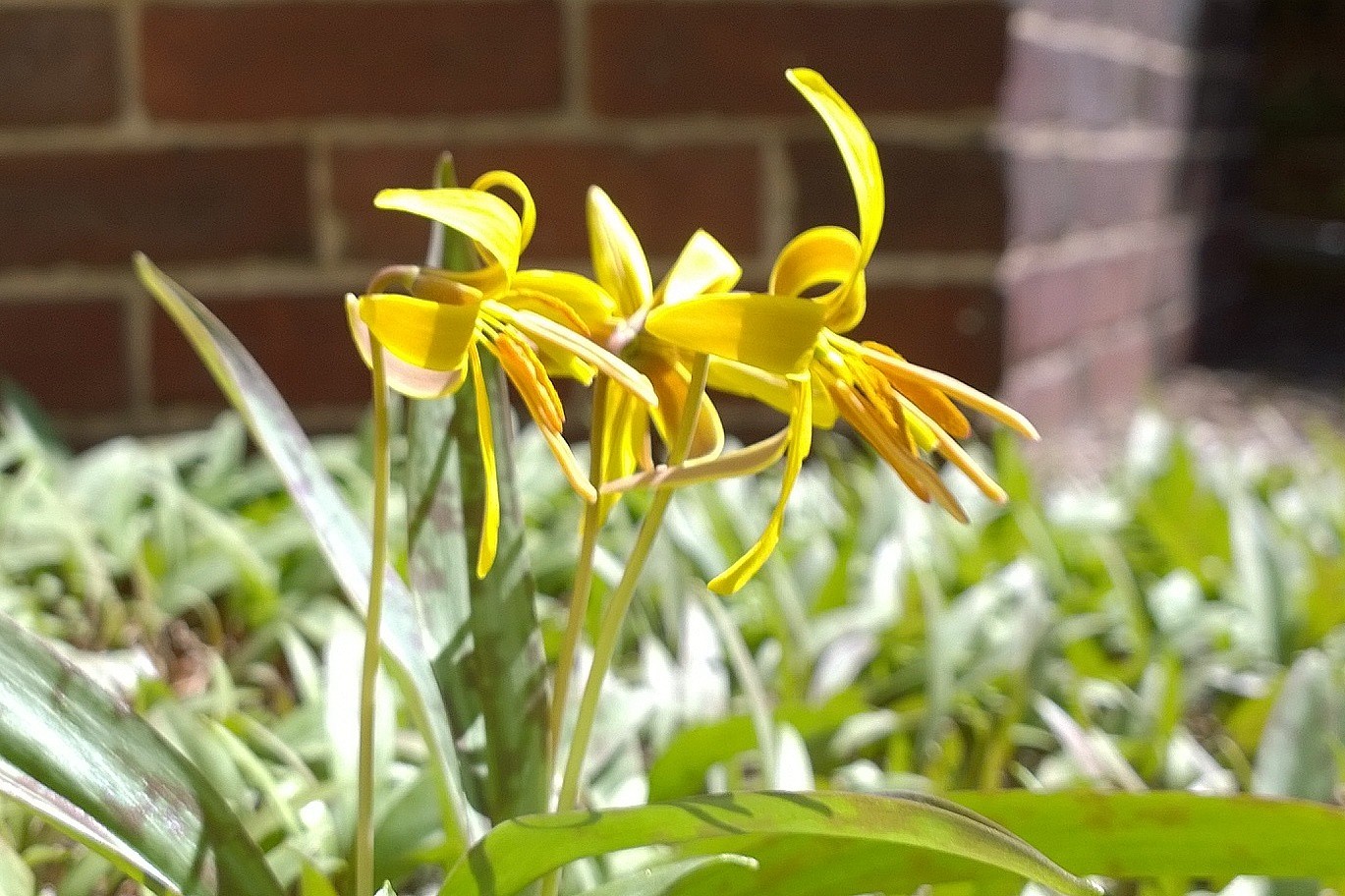
The native trout lily has no problem pushing through 2″ to 6″ of leaf litter.

“A common worry of gardeners is that plants cannot push through whole leaves or thick layers of leaves. Many woodland natives, even ephemerals like trout lily and squirrel corn, that are adapted to soils rich in organic matter created by decomposing leaves, have no trouble emerging through a good 2-6” of leaves.”

Fialkoff even gets into leaving the sticks and making outdoor art if you are so inclined, but I will stop now and let you read the rest at the Wild Seed Project, here. More at the Nature Conservancy, here, Audubon, here, and USA Today, here. No firewalls.

Read Full Post »

Photo: Kendal Blust/KJZZ via Fronteras.
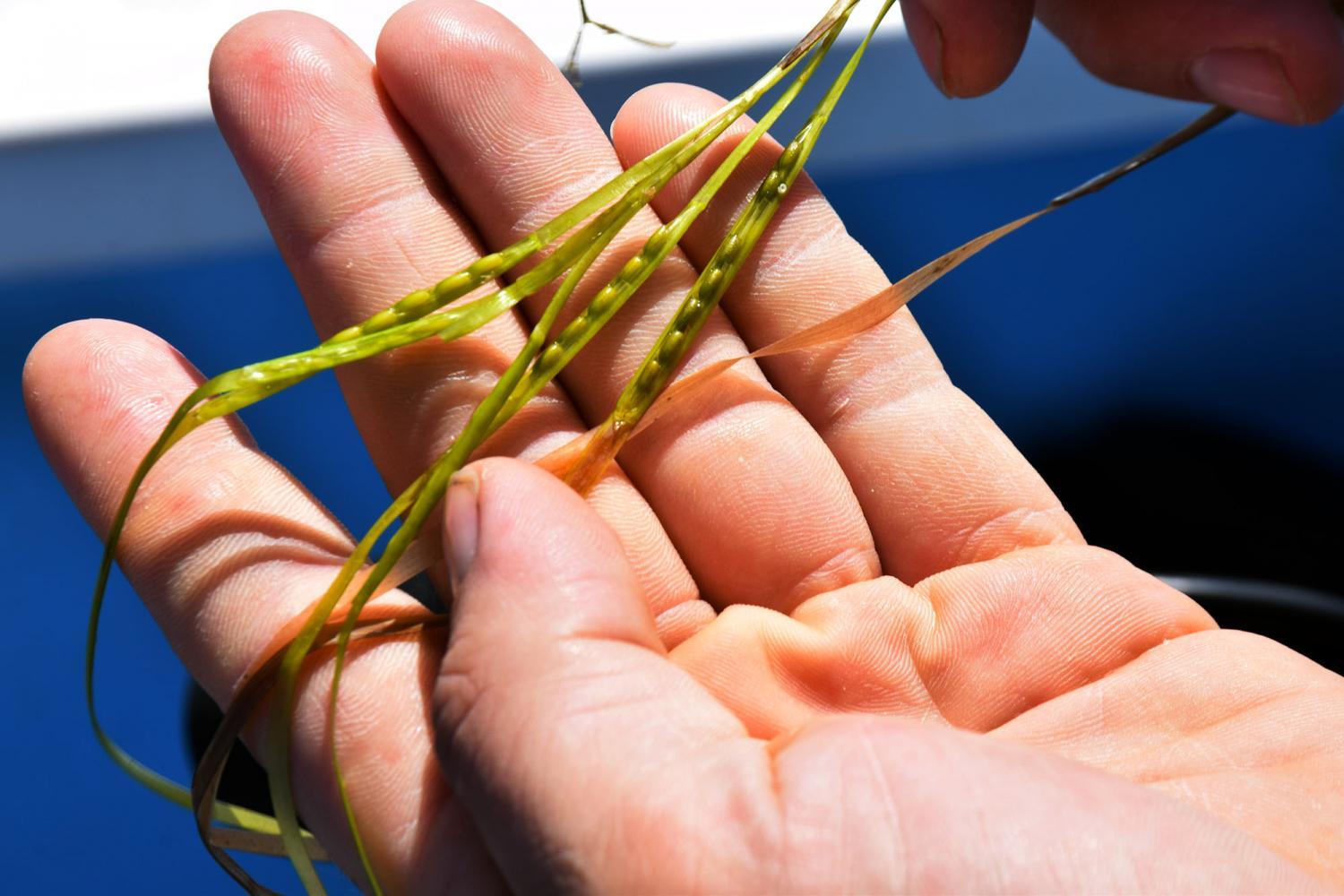
These eelgrass seeds are fresh from the sea.
Mexico’s indigenous Comcáac people have managed to protect 96% of the precious eelgrass that grows in their region.

I have long known about beach grass and how it can hold the dunes and protect the land in a hurricane. I know about how easily the roots die if you walk on beach grass and why, when “Keep Off the Dunes” signs aren’t obeyed, houses wash away.

But I’m learning there’s another fragile grass that helps the environment. This one lives in the sea and captures carbon.

Sam Schramski has the story at Public Radio International’s the World.

“At a two-day festival on the coast of northern Mexico [last] month, scientists, chefs and local residents gathered to celebrate eelgrass — a unique type of seagrass that grows in the Gulf of California. 

“Seagrass is on the decline in the world’s oceans, but the Indigenous Comcáac people who live in the region have managed to protect the eelgrass that grows in their waters. 

” ‘From my parents, I learned about medicinal plants and the songs of plants, as well as about traditional foods,’ said Laura Molina, who is Comcáac.

“She remembers how her mom made tortillas out of flour ground from eelgrass seeds known as xnois in Comcáac language, a mix between wild rice and nori seaweed. 

Seagrass is getting a lot of attention these days because of its capacity to store carbon, estimated to sequester up to half the so-called ‘blue carbon’ in the world’s oceans and coastal ecosystems — putting it on par with global forests.

“Ángel León, a Spanish chef and owner of Aponiente restaurant, has made it his personal mission to protect threatened seagrass beds off the Spanish coast. He’s interested not only in the plant’s environmental benefits but also its culinary potential in the kitchen as a nutrient-rich superfood. …

“Seagrass is down about 30% globally since the late 1800s. Through León’s restaurant and related nongovernmental organizations, he has heavily financed seagrass restoration projects.” More at the World, here. Listen to the audio version there.

Kendal Blust at Fronteras also wrote about the festival: “In the small Comcaac village of Punta Chueca, on the Sonoran coast of the Gulf of California, a group of women gathered around a white sheet piled high with dried zostera marina, or eelgrass.

“One woman sang an ancestral song dedicated to the plant, known as hataam, as others beat the dried eelgrass and rubbed it between their palms to remove its small, green seeds. Xnois, as the seeds are known in the Comcaac language, cmiique iitom, are an ancestral food.

“ ‘The Comcaac are the only people, the only Indigenous group, that consumes the seed,’ said Erika Barnett, a Punta Chueca resident who has been heavily involved in restoration efforts.

“Eelgrass seed has been a part of their culture for millennia, she said. Traditionally, the flour was used to make tortillas and a hot drink combined with honey and sea turtle oil. And because it’s quite filling, it used to be carried by Comcaac during sea journeys. …

“Barnett said her great-grandparents were probably the last members of her family to collect and eat the xnois seeds. Her father, now 76, last tasted it when he was just 7.

” ‘That’s was the last time he ate it,’ she said. ‘It’s very ancient, but it’s no longer eaten like it used to be, and most younger people have never tasted it. So this effort is really rescuing our culture.’ …

“Now, Barnett is part of a team working to bring the tradition back to their community — both because of the plant’s nutritional value and its ecological benefits. Eelgrass creates habitat for sea turtles and fish, protects the coastline and captures carbon.

“ ‘It’s important for us to revive these traditions so they can be passed on to future generations,’ she said. ‘But I think we need to show the community that it can be done, first. That it’s hard, but we can harvest the seeds.’

“So for weeks in April, a group of women and girls harvested eelgrass the way their ancestors would have. They waded into the sea to collect plants floating near the shore, then dried, thrashed and winnowed them. …

“ ‘One of the missions of Aponiente is to look to the sea with hunger,’ said Greg Martinez, a chef and biologist. … Martinez said the restaurant is committed to discovering the gastronomic potential in the ocean, both for our health and for the planet.

“And eelgrass has a lot of potential. For one thing, it captures and holds carbon below the water’s surface. Known as blue carbon, it can help mitigate climate change.

“ ‘But it doesn’t only sequester carbon,’ Martinez said. ‘It also protects coastlines. It serves as a habitat for thousands of different species that come to breed in their protection. It buffers waves so if you have a tsunami or another storm it protects the coastline in that way as well.’

“Despite the swath of ecosystem services seagrasses provide, however, seagrass beds currently are disappearing from the world’s oceans, he said. And that makes it especially important to protect the abundant meadows in the Canal del Infiernillo, a channel between the coast and the massive Tiburon Island that is entirely within Comcaac territory.”

More at Fronteras, here. Nice pictures. Both news sites are free of firewalls.

Read Full Post »

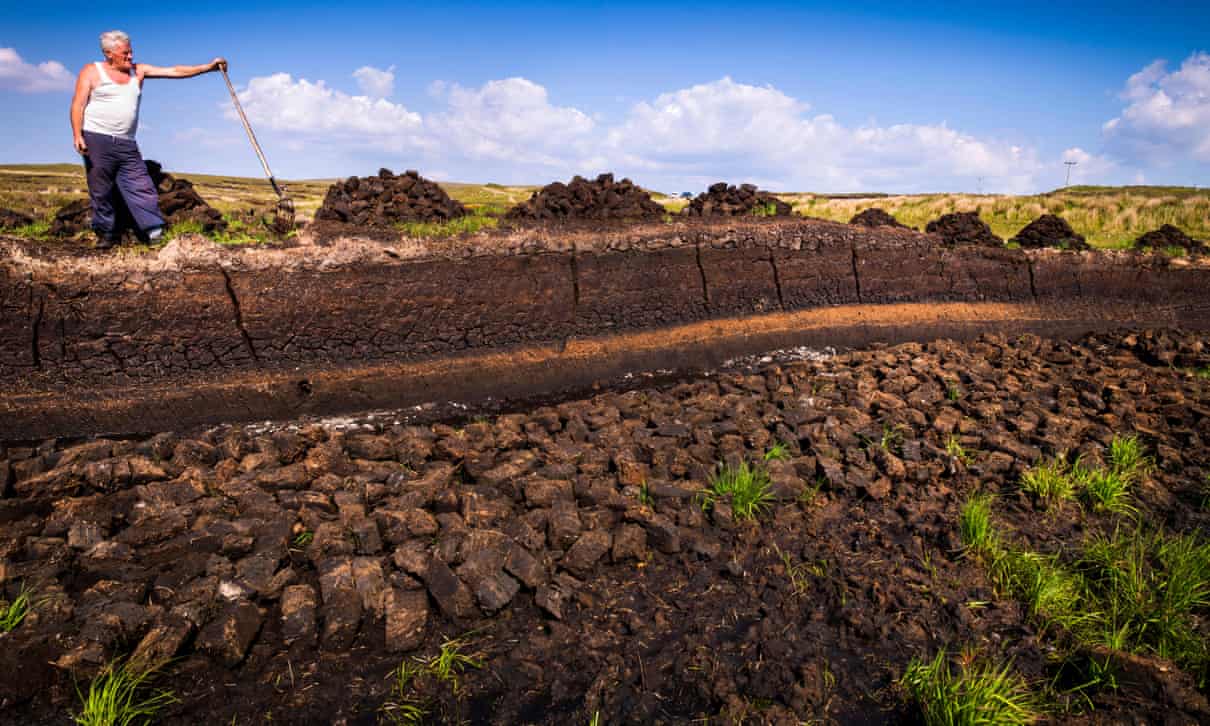
Photo: Photographic/Scenic Ireland/Alamy via the Guardian.
Burning peat increases global warming, which is why commercial operations are closing, but undisturbed bogs have always been great for keeping carbon
from the atmosphere.

My father-in-law was in the peat moss business back in the day. The Philadelphia company he worked for and later ran was called I.H. Nestor. It sold peat mostly for agriculture, but you may know that peat was also burned for heat, especially in Ireland. My friend, the late great James Hackett, and his family always heated their home with peat, with unfortunate consequences for their health.

Today’s story is about the historical value of peat bogs, an aspect that has been mostly unrecognized until now.

Chris Mooney writes at the Washington Post, “Long before the era of fossil fuels, humans may have triggered a massive but mysterious ‘carbon bomb’ lurking beneath the Earth’s surface, a new scientific study suggests. If the finding is correct, it would mean that we have been neglecting a major human contribution to global warming — one whose legacy continues.

“The researchers, from France’s Laboratory of Climate and Environmental Sciences and several other institutions across the globe, suggest that beginning well before the industrial era, the mass conversion of carbon-rich peatlands for agriculture could have added over 250 billion tons of carbon dioxide to the atmosphere. That’s the equivalent of more than seven years of current emissions from the burning of fossil fuels for energy.

“ ‘Globally [peatlands] are only 3 percent of the land surface but store about 30 percent of the global soil carbon,’ said Chunjing Qiu, a researcher at the laboratory, a joint institution supported by French government research bodies and the Versailles Saint-Quentin University, and the first author of the study published Friday in the journal Science Advances.

“The new finding of an ‘ignored historical land use emission’ suggests that even now, we lack a complete understanding of how the Earth’s land surfaces are driving and modulating the warming of the planet. … Scientists have long worried about the potential for massive amounts of carbon being released by northern permafrost, where ancient plant remains lie in a kind of suspended animation beneath the surface. But the peat threat is very similar; in fact, peatlands overlap considerably with permafrost regions.

“Peatlands are a particular type of wetland, one in which dead plant matter does not fully decay due to the watery conditions, and thus accumulates.

In its normal state, peat slowly pulls carbon out of the atmosphere — unless you disturb it.

“If a peatland is drained — as has occurred for many centuries to promote agriculture, especially the planting of crops — the ancient plant matter begins to decompose, and the carbon it contains joins with oxygen from the atmosphere. It is then emitted as carbon dioxide, the principal greenhouse warming gas. …

“To try to get around the problem of missing historical records, the new study simulates the Northern Hemisphere (outside of the tropics) over thousands of years to determine where peat would have likely developed. Over time, the computer model will begin to include growing agricultural activities. It can then be used to analyze different scenarios for how frequently such developments may have occurred on peatland.

“In a middle-of-the-road scenario, where humans would have regularly grown crops on peatlands, the study finds that some 70 billion tons of carbon (over 250 billion tons when converted to carbon dioxide) would have been lost from the soil.

“Importantly, the analysis does not cover all the peatlands across the globe: It only considers Northern Hemisphere peatlands from the year 850 CE onward. Massive losses of tropical peat are even now occurring in countries like Indonesia and Malaysia, for instance, so global losses will be higher. …

“The study is ‘a broad modeling approach with many assumptions, which can all be individually questioned and debated,’ added Hans Joosten, who leads a peat research group at the University of Greifswald in Germany. ‘But the overall message that remains is that drainage of only a small part turns the entire northern peatland resource into a net carbon source.

‘Though peatlands indeed are carbon sinks in their pristine state, they should also be seen as carbon bombs, which explode whenever they are damaged. Keep them wet!’ …

“The new work underscores that major gaps remain in how much we know about the human contribution to climate change, even as we are trying to halt it. With poor understanding about peat locations, and poor reporting about land conversion, experts say, many countries can’t fully account for peat emissions even now. That could raise questions about what has been happening in their land-use sector.”

More at the Post, here.

Read Full Post »

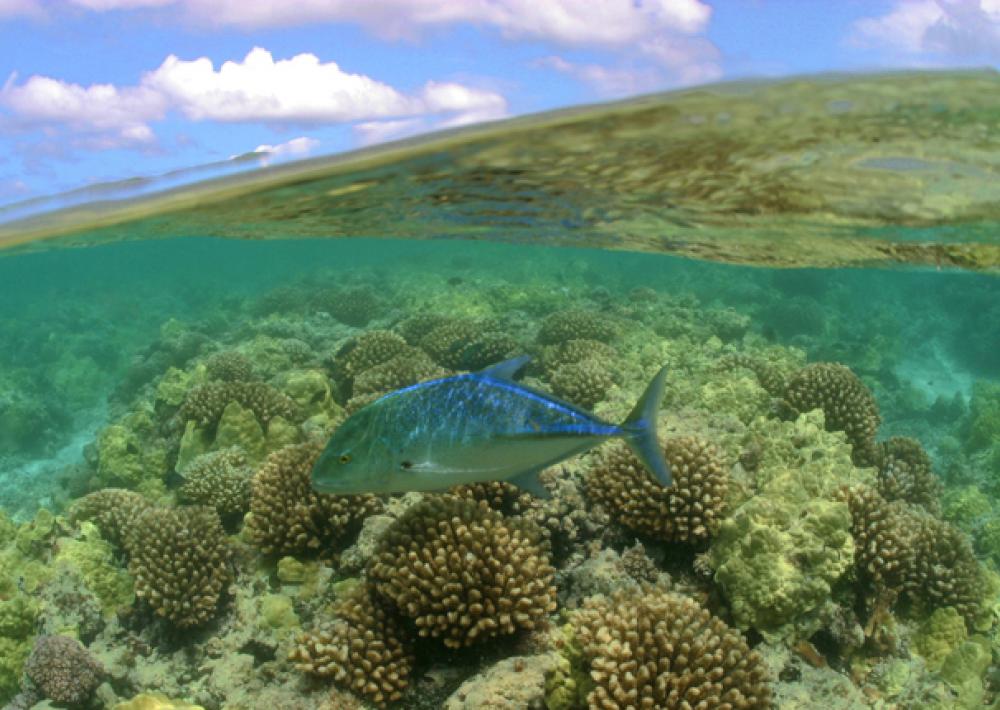
Photo: Jim Maragos, US Fish and Wildlife Service, CC BY-NC 2.0.
The Ocean Panel is a group of 14 countries looking to protect 100% of their ocean areas by 2025. Pictured: a coral reef in the Palmyra Atoll National Wildlife Refuge.

I don’t know which aspect of this story is more hopeful: that there is time to save oceans or that 14 countries have pledged to collaborate. On anything.

From the radio show Living on Earth: “The oceans are facing serious and growing threats, including climate change, overfishing, plastic pollution and more. But a group of 14 world leaders called the Ocean Panel is committing to transform the ocean from victim to solution, by sustainably managing 100% of their ocean areas by 2025. Jane Lubchenco is the Deputy Director for Climate and Environment for the White House Office of Science and Technology Policy, as well as a co-chair of the Ocean Panel Expert Group that helped ground this vision in research. She joins Host Aynsley O’Neill. …

“O’NEILL: Before she took her White House job, [Jane Lubchenco] spoke with us about the vision and work of the Ocean Panel. Jane, welcome back to Living on Earth!

“LUBCHENCO: Thanks, Aynsley, it’s a delight to be here.

“O’NEILL: Now, when we look at how we currently manage the oceans, why does the world need this total transformation in management? …

“LUBCHENCO: We’ve treated a lot of these problems issue by issue. And part of the message that the Ocean Panel leaders heard is the need for integrated solutions that consider the whole suite of human activities. The other major thing that I think they heard was that a smart future is not just doing more of the same. It’s actually doing things differently, being much smarter about how we fish, much smarter about how we produce energy, much smarter about how we transport goods around the world. And so much of what is in their new, exciting Ocean Action agenda is doing things smarter, more effectively, more efficiently, and also doing things more holistically. …

“In September of 2019, we had a new report that came out from the IPCC, the Intergovernmental Panel on Climate Change. There was a special report on the ocean and the cryosphere, and it painted in very depressing detail, all of the ways that the ocean has been massively affected by climate change and ocean acidification. … The same week, the Ocean Panel unveiled a report. … The report that the Ocean Panel commissioned, looked at a variety of ocean-based activities and asked simply, what is the potential for mitigating climate change? And they found enough data at the global scale to analyze five categories of activities. And when they added up how much they could get from each of those five, they came to the astounding conclusion that it might be as much as 1/5 of what we need, by way of carbon emission reductions to achieve the 1.5 degree centigrade target of the Paris Agreement by 2050.

So that’s huge. You know, a lot of those activities weren’t even on the table. And here, we find that they actually could play a very significant role in helping to turn things around in terms of climate change.

“O’NEILL: So Jane, you mentioned five ocean-based activities to help mitigate climate change. Could you go through those for us, please?

“LUBCHENCO: So the first one was increasing renewable energy from the ocean, and that’s a big one. Most of that is going to likely be wave energy, but it might also be tidal, it might be current, it might be thermal, depending on what part of the world you are in.

“The second category was making shipping less polluting. So 90% of the goods that are traded globally travel by ocean and currently, that’s pretty polluting. Its dirty fuels contribute significantly to greenhouse gases. But it is technologically possible to decarbonize shipping, and that could have a huge benefit.

“Number three is focusing on what we call blue carbon ecosystems. So these are coastal and ocean ecosystems, such as mangroves, salt marshes, or seagrass beds, that are little carbon engines that are just sucking carbon out of the atmosphere like crazy. Those habitats; mangroves, sea grasses, salt, marsh beds, can not only remove but then sequester as much as 10 times as much carbon as an equivalent area of forest, for example. And we’ve currently lost about half of them globally. So here is an opportunity to actually protect the remaining ones, but also to restore those that have already been degraded.

“The fourth area for ocean based activities to mitigate climate change comes from focusing on a little bit greater efficiency with aquaculture, mariculture operations, a little bit greater efficiency with fisheries. But the big one in this category is really shifting diets globally, away from animal protein on the land, and including animal protein from the sea, instead of that animal protein from the land.

“And then the fifth category was simply sequestering carbon on the seabed. And the panel who looked at these five categories, said that the first four, they felt completely comfortable recommending that they be pursued aggressively. Smartly, yes, but aggressively. This fifth one, carbon storage in the seabed has a lot of questions still about technical and environmental impacts. And so they recommended further study for those. …

“This is not really sacrifice. It’s being smarter about doing things. I think people are familiar with the concept of greater efficiency when we think about energy. You know, much of the focus for mitigating climate change has been focusing on how do we use energy more efficiently. And there have been tremendous advances in energy efficiency of our appliances, of our automobiles, of our transportation systems. That same concept of being more efficient, is what underlies a lot of the transformative actions that are in the ocean action agenda. So yes, this is an incredible opportunity. And it’s my belief that these 14 nations that have embarked on this journey of discovery and now journey of action will have such success with what they are proposing that others will say, oh my gosh, I want some of that too.”

More at Living on Earth, here.

Read Full Post »

Photo: Shahzad Qureshi
Shahzad Qureshi, founder of Urban Forest, in Karachi, Pakistan.

Today most people have come to realize the importance of trees for everything from reducing global warming to improving life in neighborhoods. The Amazon rain forest (currently in grave danger from Brazil’s government) is known to cool the planet by soaking up carbon in the atmosphere, and urban forests give city residents a chance to cool off — and calm down.

Sometimes it takes a tragedy, but around the world, more people are feeling they better do something themselves to protect trees.

Anna Kusmer reports at PRI’s The World, “Extreme heat often hovers over Karachi, Pakistan’s largest city, creating insufferable conditions for its 16 million inhabitants. But each time Karachi resident Shahzad Qureshi transforms a barren patch of land into a dense, urban forest, he helps his city adapt to extreme urban heat that has become inevitable under climate change. Over the last four years, Qureshi’s organization, Urban Forest, has planted 14 urban forests in parks, schools, people’s yards and outside of a mosque.

“Qureshi’s quest to plant urban forests started in 2015, when temperatures reached over 120 degrees Fahrenheit in Karachi. About 2,000 people in the region died from dehydration and heatstroke. It was devastating.

‘It was just too hot,’ Qureshi said. …’ And one of the things everybody was talking about is that there’s not enough green cover.’

“Around that time, Qureshi saw a TED Talk that changed his life. He listened to a man named Shubhendu Sharma sharing a method to quickly grow dense urban forests. Qureshi was amazed. …

“Qureshi decided to learn Sharma’s technique and bring it to Karachi, joining a growing global community of urban foresters who want to help their cities adapt to extreme urban heat events created by rapid climate change. …

“Sharma’s organization Afforestt has now helped plant 150 mini-forests in 13 countries.

“ ‘So, there is a quite strong global community right now,’ Sharma said. ‘I am very keen on taking this method to every single country of the world.’

“Sharma’s special technique is known as the Miyawaki method. It involves the close placement of a variety of trees with different growing speeds and light requirements to prevent competition for the same resources. The approach specifically uses native species, allowing trees to thrive in their original climates and environments while supporting native bird and insect populations.

“ ‘Most of the city is roads and buildings and built-up urban area,’ said Nadeem Mirbahar, an ecologist with the Swiss International Union for Conservation of Nature Commission (IUCN) on Ecosystem Management, based in Karachi. His organization did a survey and found that only 7% of Karachi had green cover.

“This contributes to an ‘urban heat island’ effect, Mirbahar said. The phenomenon causes cities to be significantly hotter than the surrounding countryside. He thinks Karachi should strive for at least 25% green cover to avoid catastrophic heat events in the future.

“Qureshi’s oldest urban forest is four years old and already has towering, 35-foot-tall Acacia trees full of big, thorny branches and birds’ nests.

“ ‘I have seen bird species in this park, which I have not seen in my life,’ he said. ‘It’s a habitat for them.’ …

“Policymakers in Pakistan have started to look at planting trees as a solution to the urban heat threat, said Umer Akhlaq Malik, a policy analyst at the United Nations Development Program (UNDP) in Pakistan.

“In 2016, the government launched a plan to plant hundreds of millions of trees as part of a project called ‘the Billion Tree Tsunami,’ in response to the fact that the country had fallen to a mere 2% forest cover.

“Malik said … ‘To take it to scale, you need more practitioners who invest their time and energy into this.’

“Malik said the biggest barriers are cost and space. Each forest can cost hundreds of thousands of dollars to establish.

“But Qureshi remains hopeful that the project can scale up. He is working with the UNDP to form a coalition that aims to bring urban forests to every park in the city. He thinks Karachi could look fundamentally different.”

More at PRI, here.

Read Full Post »

5760

Photo: Murdo MacLeod/Guardian 
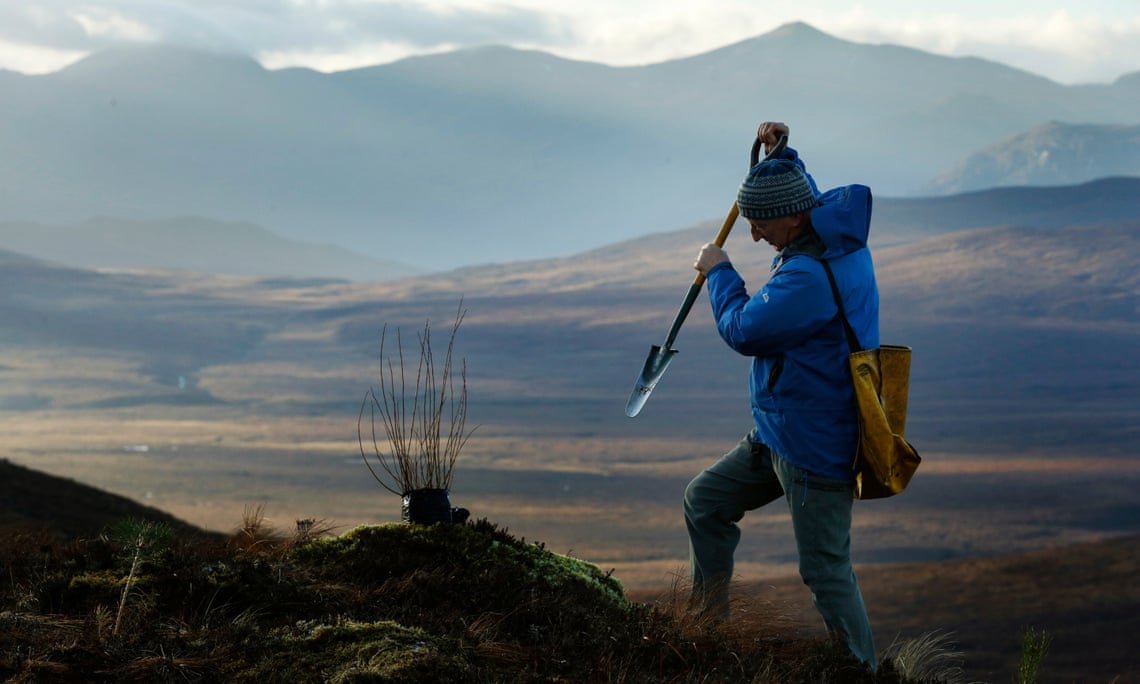
Helped by volunteers, Trees for Life planted nearly 2 million native trees on its Scottish projects.

Sometimes a tree has to be cut down because it’s rotting. But if it’s your tree, you can offset the loss for the planet by donating to an organization that plants lots of trees. Planting a lot of trees is important because it takes a long time before a bunch of little trees has the climate-saving benefits of one big tree.

I gave to the the Arbor Day Foundation last year after sadly saying good-bye to an old, old maple. Then the New York Times suggested Eden Reforestration Projects, which sounded excellent. The Times also provided names of organizations working on other climate-saving activities, including the Coalition for Rainforest Nations and a group providing fuel-efficient stoves in Kenya.

Patrick Barkham, reporting for the Guardian from Scotland, shows what can be done with a dedicated group of volunteers.

“The bracken-clad hills are marked ‘Dundreggan forest’ on the map but this Scottish glen is mostly stark Highland scenery: open, beautiful, and almost totally devoid of trees.

“On a steep-sided little gully, 40 years ago, a few baby silver birches escaped relentless browsing by red deer and grew tall. Now, the nearby path through the bracken is dusted with thousands of brown specks: birch seeds.

‘Each year, this “forest” produces trillions of birch seed,’ says Doug Gilbert, the operations manager for the charity Trees for Life at Dundreggan. ‘Until we reduce the deer pressure, not a single one has grown into a tree. Once we get the deer population right, this forest will absolutely take off. It’s starting to do that now.’

“The charity purchased the Dundreggan hunting estate 11 years ago. Slowly – ‘at tree speed,’ smiles Gilbert – it is rewilding 4,000 hectares (10,000 acres) of this degraded Highland landscape, restoring a diversity of native trees, scrub and associated life, from the dark bordered beauty moth to black grouse and, yes, red deer. …

“During the general election campaign, politicians desperately tried to outbid each other with tree-planting pledges. Who doesn’t love a tree? More trees can tackle the climate crisis – absorbing carbon dioxide – and the biodiversity crisis. But Trees for Life’s efforts reveal it is not quite so simple.

“Since Victorian times, when the sheep estates that followed the Highland clearances were replaced by more lucrative deer hunting estates, the landscape, and economic model, has been shaped by red deer. Around Dundreggan there are also non-native sika and roe deer. …

“The first step at Dundreggan has been to increase deer culling. Ecologists calculate that a red deer population of five per sq km in the wider landscape will allow natural regeneration; in many Highland regions it is 20. But culling deer is controversial because the value of stalking that estates base on deer numbers.

“Trees for Life has proceeded slowly with culling, seeking positive dialogue with neighbouring stalking estates. They’ve also tried non-lethal methods such as bagpipe-playing volunteers acting as nocturnal deer scarers. Trees and deer can coexist and Dundreggan’s deer population is now at a level where some young birches, pines, rowans and junipers will grow tall. …

“All the trees come from Scottish seeds – meaning they are suited to Highland climates and species, as well as being free of novel diseases. Half have been grown from seeds collected around Dundreggan. Its on-site nursery bristles with 94,000 saplings.

“Seed-collecting is not as simple as it sounds. Seed must come from a wide variety of individual trees to ensure genetic diversity. Cones from Scots pines have to be harvested before they drop to the ground, so specialist tree-climbers are employed. Trees for Life specialises in growing non-commercial high-mountain species such as woolly willow and dwarf birch. Surviving specimens are often only found on cliffs and crevices – with seeds or cuttings only retrievable by specialist climbers.

“Because of the deer grazing, every sapling is planted within a fenced enclosure (costing £10 [$12.79] per metre). Fencing is ‘a little bit of an admission of failure,’ says Gilbert. In the long term, when reducing deer numbers becomes less controversial, trees won’t need fences. Gilbert hopes the fences will last 30 years, when the well-established trees and scrub will survive browsing deer.” More.

(By the way, does anyone remember deer stalking in the children’s classic Wee Gillis?)

Read Full Post »

nwhi-full_1

Photo: Smithsonian
A surfeit of carbon in the oceans is destroying coral reefs, home to a wide variety of marine life. But a few reefs may offer lessons for survival.

Earlier this month, I posted about an improbably successful coral reef in the busy harbor of Cartagena in South America. Scientists were thinking that if they could figure out why the reef was doing well despite inimical conditions, they might be able to save other reefs.

Now comes a story about scientists finding hopeful reefs in the Pacific Ocean and elsewhere.

Josh Gabbatiss reports at the UK’s Independent, “Sections of coral in the Pacific and the Caribbean are fighting back against the global threats that have decimated reefs worldwide. While the discovery does not allow any room for complacency in the fight to save the world’s reefs from extinction, scientists are tentatively optimistic about what they can learn from these pockets of resistance.

“Climate change, hurricanes and human activities such as intensive fishing have destroyed vast swathes of the planet’s reefs, but in a new study scientists found this destruction was not uniform. …

” ‘There are a number of reasons why one coral reef might survive while its neighbour dies,’ said Dr James Guest, a coral reef researcher at Newcastle University who led the study. ‘It could be that the location is simply better for survival – deeper water that is outside the storm tracks, for example.’

“Coral reefs might also possess certain biological characteristics that make them able to resist damage, or characteristics of their environment may allow them to rebuild themselves effectively following damage. …

“These findings were laid out in a study published in the Journal of Applied Ecology that explored dozens of these cases from tropical regions around the world. …

“The study’s lead author, Professor Peter Edmunds from California State University, Northridge, [says], ‘There are kernels of hope in places where corals are doing better, or where they are doing less badly than elsewhere and these places provide us with a focus of attention that might be used to enhance coral conservation efforts.’ …

“Scientists have voiced the need for ‘radical interventions’ such as genetic modification of corals.”

OK, I’ll let you read the rest at the Independent while I ponder the metaphors here.

Since my sister’s surgery and her diagnosis of a serious kind of cancer, I feel like I’m living in metaphor, by which I mean a couple things. For example, I can’t read about certain reefs that heal themselves because they have unique characteristics (or about scientists racing the clock to figure out how to replicate that) without thinking about how every cancer and every patient’s response to cancer is different and how researchers and physicians are trying to understand all the ways that plays out (sometimes using genetics, like the coral researchers). I also mean that literary metaphor, especially poetry, is among the few things that can help me get my head around what is going on. When you can’t understand, metaphor can be calming and provide a sense that eventually there might be answers.

Read Full Post »

Image: Reuters/Denis Balibouse
The World Economic Forum touts research suggesting that “forest bathing,” the act of being among the trees, has health benefits.

We love trees. John, for example, serves on the Arlington tree committee and helps with the town’s efforts to inventory its trees, acquire more sidewalk plantings, and assist researchers studying the role of urban trees in carbon reduction.

A master landscaper I know is also into trees. He shared this story about the health benefits of something the Japanese call “forest bathing.”

Ephrat Livini wrote at the World Economic Forum, “Now there’s scientific evidence supporting eco-therapy. The Japanese practice of forest bathing is proven to lower heart rate and blood pressure, reduce stress hormone production, boost the immune system, and improve overall feelings of well-being.

“Forest bathing — basically just being in the presence of trees—became part of a national public health program in Japan in 1982 when the forestry ministry coined the phrase shinrin-yoku and promoted topiary as therapy. …

“Forest air doesn’t just feel fresher and better — inhaling phytoncide seems to actually improve immune system function. …

“From 2004 to 2012, Japanese officials spent about $4 million dollars studying the physiological and psychological effects of forest bathing, designating 48 therapy trails based on the results. Qing Li, a professor at Nippon Medical School in Tokyo, measured the activity of human natural killer (NK) cells in the immune system before and after exposure to the woods. These cells provide rapid responses to viral-infected cells and respond to tumor formation, and are associated with immune system health and cancer prevention. In a 2009 study Li’s subjects showed significant increases in NK cell activity in the week after a forest visit, and positive effects lasted a month following each weekend in the woods. …

“Experiments on forest bathing conducted by the Center for Environment, Health and Field Sciences in Japan’s Chiba University measured its physiological effects on 280 subjects in their early 20s. The team measured the subjects’ salivary cortisol (which increases with stress), blood pressure, pulse rate, and heart rate variability during a day in the city and compared those to the same biometrics taken during a day with a 30-minute forest visit. …

“Trees soothe the spirit too. A study on forest bathing’s psychological effects surveyed 498 healthy volunteers, twice in a forest and twice in control environments. The subjects showed significantly reduced hostility and depression scores, coupled with increased liveliness, after exposure to trees. …

“City dwellers can benefit from the effects of trees with just a visit to the park. Brief exposure to greenery in urban environments can relieve stress levels.”

More here. Be sure to watch the video.

Hat tip: Paul Kelly on Facebook.

Read Full Post »

My husband is from Philadelphia and remembers hearing popular lines from a motivational speech in that city, about finding “acres of diamonds” in your own backyard.

“Today, Russell Conwell is best remembered as the founder and first president of Temple University,” says Vimeo. “But in his lifetime, Conwell had a very different claim to fame — that of popular orator.” (A Vimeo video “explores the history of Conwell’s most famous speech, ‘Acres of Diamonds,’ an inspirational message he delivered, by his own estimate, 6,100 times.”)

“Acres of Diamonds” was the first thing I thought of when Kai posted on Facebook about an initiative to turn China’s out-of-control air pollution into diamonds.

Rachel Hallett at the World Economic Forum wrote, “Dutch artist Daan Roosegaarde has come up with an innovative plan to tackle Beijing’s air pollution problem – and in doing so, turn a health hazard into a thing of beauty.

“After a pilot in Rotterdam, the Smog Free Project is coming to China. The project consists of two parts. First, a 7m tall tower sucks up polluted air, and cleans it at a nano-level. Second, the carbon from smog particles is turned into diamonds. Yes, diamonds. …

“Roosegaarde explained … ‘We’ve created environments that none of us want,’ he said. ‘Where children have to stay inside, and where the air around us is a health hazard.’

“The towers suck up polluted air, and clean it, releasing it back into parks and playgrounds. And according to Roosegaarde, these areas are 70-75% cleaner than the rest of the city. …

“The other aspect of the project will see the captured smog transformed into diamonds. 32% of Beijing’s smog is carbon, which under 30 minutes of pressure can be turned into diamonds.”

Can such wonders be? Read more here.

Photo: AP
Smog in Beijing will be turned into diamonds.

Read Full Post »

Older Posts »