Feeds:
Posts
Comments

Posts Tagged ‘climate change’

Pius Sawa at AlertNet (and the Christian Science Monitor) writes, “Residents of Rusinga Island in Kenya [are experimenting] with renewable energy innovations, environmentally friendly farming, tree planting, and other efforts aimed at improving the island’s environment, creating jobs, and overcoming shortages of food and water.

“For the past 16 years, Ester Evelyn Odhiambo has dedicated herself to improving life on one small island. It’s no small task.

“Rusinga Island, in the northeast corner of Lake Victoria in Kenya, is about 16 km (10 miles) long and 5 km (3 miles) wide. About 30,000 people call it home. But the island over the years has become an increasingly inhospitable environment for them.

“ ‘If you plant something, it just dries out,’ says Ms. Odhiabmo, who runs an organization to help people widowed or orphaned by AIDS [Kisibom, or “come and learn”]. ‘You try to irrigate, and the water is too little because the sun comes and dries everything.’

“The changes have come because of poor management of resources – including forests and fishing grounds – and because of increasing climate impacts.

“But now residents are experimenting with renewable energy innovations, environmentally friendly farming, tree planting, and other efforts aimed at improving the island’s environment, building resilience, creating livelihoods, and overcoming shortages of food and water.”

More.

Photograph: Pius Sawa/AlertNet
Ester Evelyn Odhiambo opens a charcoal refrigerator on Rusinga Island, Kenya. It is lined with charcoal, into which water seeps through a hosepipe fed by a bucket. The wet charcoal absorbs heat and keeps the items inside the fridge cool without needing electricity.

 

Read Full Post »

When you take pretty much the same walk every day, camera in hand, you may have trouble finding new things to photograph. You may look in vain for something different, puzzling, or mysterious.

But there is something to be said for combing the same territory over and over, as scientists are finding from studying the detailed record keeping of Henry David Thoreau.

“ ‘As far as I know, there is more information about the effect of climate change in Concord than any other place in the United States,’ said Richard Primack, a Boston University biologist who calls Concord a living lab for his research. …

Primack, writes Kathleen Burge at the Boston Globe, “has researched how climate change has affected the flowering times of plants, comparing modern data with the information Thoreau collected between 1852 and 1860. Primack and his lab found that for every 1 degree Celsius increase in mean spring temperature, plants bloom about three days earlier. …

“Primack came to his work about a decade ago, when he decided to change the direction of his research. He had been studying the effects of climate change on plants and animals in southeast Asia and decided, instead, to focus on his home state.

“But when he began searching for older records of plant flowering times in the United States, he came up short. Finally, after six months, someone told him about Thoreau’s journals.

“This was kind of a gold mine of data,” Primack said. “As soon as we saw it, we knew it was amazing.” More from the Globe.

Keep an eye open for the upcoming Thoreau exhibit at the Concord Museum April 12 to September 15, described here.

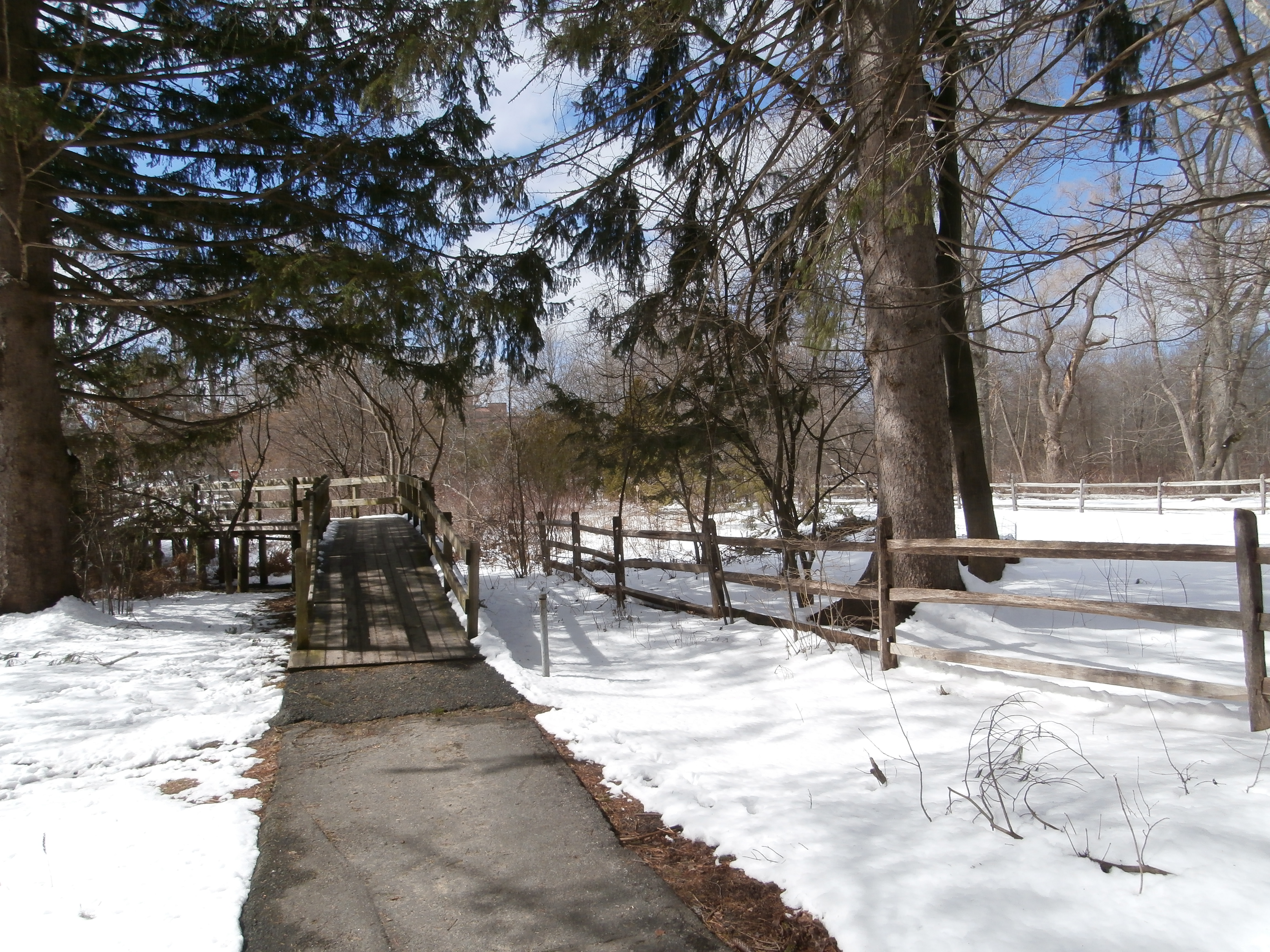
cross over the bridge

Read Full Post »

Happy President’s Day! Why are you working?

​According to Mother Jones, economist David Rosnick has “found that dialing back the amount of time the average person works by 0.5 percent per year would mean a significant reduction in greenhouse gas emissions. If you work 40 hours a week, that would mean shaving about 12 minutes off the average work week per year. Working one minute less per month seems pretty doable. Basically, we’re using a whole lot more of everything when we’re working – electricity, gasoline, heating, air conditioning, etc. Leisure requires less greenhouse-gas-producing activity.”

I forget were I found this story first, but you can read more at Mother Jones, here.

Photograph: http://yasmincolemanportraits.wordpress.com/
“Lazy Bones, sleeping in the shade. How you ‘spect to get your corn meal made?”
(Hoagy Carmichael)

Read Full Post »

Hurricane Sandy was terrible for many communities in its path, and the devastation has given urgency to climate concerns and innovative solutions.

Henry Fountain writes about one such solution in the NY Times, “With a few dull thuds, the one-ton bag of high-strength fabric tumbled from the wall of the mock subway tunnel and onto the floor. Then it began to grow. As air flowed into it through a hose, the bundle inflated until it was crammed tight inside the 16-foot-diameter tunnel, looking like the filling in a giant concrete-and-steel cannoli.

“The three-minute procedure, conducted on a chilly morning this month in an airport hangar not far from West Virginia University, was the latest test of a device that may someday help guard real tunnels during disasters — whether a terrorist strike or a storm like Hurricane Sandy, whose wind-driven surge of water overwhelmed New York City’s subway system, shutting it down for days.

“ ‘The goal is to provide flooding protection for transportation tunnels,’ said John Fortune, who is managing the project for the federal Department of Homeland Security’s Science and Technology Directorate.

“The idea is a simple one: rather than retrofitting tunnels with metal floodgates or other expensive structures, the project aims to use a relatively cheap inflatable plug to hold back floodwaters.

“In theory, it would be like blowing up a balloon inside a tube. But in practice, developing a plug that is strong, durable, quick to install and foolproof to deploy is a difficult engineering task, one made even more challenging because of the pliable, relatively lightweight materials required.”

More.

Photograph: NY Times

Read Full Post »

« Newer Posts