Feeds:
Posts
Comments

Posts Tagged ‘coal mine’

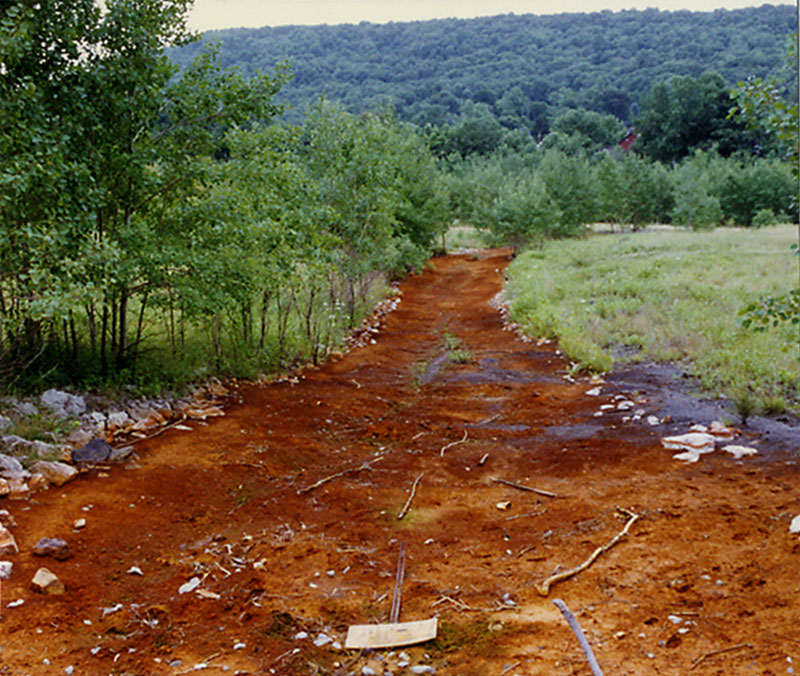
Photo: D.I.R.T. Studio.
Vintondale Reclamation Park, Vintondale, Pennsylvania. Landscape architect Julie Bargmann’s “work to revitalize toxic sites and reconnect them to their communities has earned her the nicknames ‘Toxic Avenger’ and ‘Queen of Slag,’ ” says the
Times.

Have you ever looked at a polluting site, maybe fire from a smokestack or rusting steam engines, and seen a kind of artistic beauty — that is, something that would be beautiful if the poisonous fangs were removed?

Today’s story is about a landscape architect with that way of seeing and the skills to reclaim what had been lost.

Tanya Mohn reports at the New York Times, “For more than 30 years, Julie Bargmann, a landscape architect and founder of D.I.R.T. Studio (Dump It Right There) in Charlottesville, Va., has focused on contaminated and forgotten urban and postindustrial sites, dedicating her practice to addressing social and environmental justice. …

Her projects include an abandoned pump house and reservoirs in Dallas transformed into an art-filled residential garden; the derelict parking lot of a 19th-century fire station in Detroit converted into an urban woodland; historic shipyards that became welcome centers and corporate campuses; and former coal mines, quarries and foundries recast as community parks and public spaces.

In an essay titled ‘Justice from the Ground Up,‘ Ms. Bargmann wrote that there is a disturbing overlap between maps showing where poor people and ethnic minorities live and where contaminated soils exist in the United States. …

“In October 2021 she was named the inaugural winner of the Cornelia Hahn Oberlander International Landscape Architecture Prize, created to celebrate prominent living landscape architects.

“ ‘Being a fierce public advocate is part of the practice of landscape architecture,’ said Charles A. Birnbaum, president and chief executive of the Cultural Landscape Foundation, the nonprofit that awarded the prize. … ‘Bargmann’s legacy is much bigger than the built work,’ Mr. Birnbaum said. ‘It’s valuing the landscape and the cultural life associated with it.’ This interview has been edited for clarity and length. …

“NYT: Did your early years impact your career focus?

“Julie Bargmann: My own little industrial history started riding in my family station wagon on the New Jersey Turnpike. I was living in a really nice postwar neighborhood with big old trees, but when we would see all of the refineries and factories I thought, ‘Wow.’ I remember looking beyond them at all the modest workers’ houses. I went to college in Pittsburgh, a city with those same working neighborhoods stacked up on the hillsides and those belching steel mills down in the valley. I loved the steel mills. They’re so raw, they’re so tough. Everybody sees the bridges, but in the mills you’re seeing and feeling the heat, your jaw drops at the faces blackened by smoke. …

“Three decades ago no landscape designer was looking at the vast manufacturing and mined landscapes, landfills and every type of degraded landscape. When I thought about the number of acres, it was astonishing. That set me off. Folks might think I’m a bit crazy, but I’m going to go find the landscapes that I want to work on, not more or less already perfect landscapes. …

Was there a turning point in your approach to landscape design?

“During my first teaching job, I got some funding, and I took off on the road and looked at mined landscapes around the country, including restricted areas. It was fascinating, but when I learned what environmental engineers were doing, it infuriated me. They were doing very quick fixes. They took no account of the social or cultural implications of the landscapes; environmentally, they were squeaking by to meet the regulations. That completely negates any of that human agency. They’re throwing meaning out, robbing it from the community. That’s really when I launched into a holistic approach to my work.

Do most prospective clients understand your approach?

“When I talk to a corporate leader or an E.P.A. representative who are skeptical, I don’t go on defending the sexy rust. I tell them stories. And I work really hard to pose alternatives. Degraded sites, toxic sites, a lot of times are not 100 percent contaminated. I always use the word ‘regenerate,’ to create anew. I became fascinated with biologically-based remediation technologies. That science has totally propelled what we can do.

How did you learn about those technologies?

“I go out into the field. I call up a scientist. The whole mining world was a total crash course on the different types of reclamation law.

I always tell my students, do your homework, and do it in the world. Engage real people with the design process.

Vintondale Reclamation Park, a 35-acre site in coal country near Pittsburgh, completed in 2002, was pivotal. Why?

“It was a perfect, multidisciplinary team of engineers, hydrogeologists, architects, artists, historians and landscape architects. We learned everything about acid mine drainage treatment to design a natural filtration system that addressed years of pollution from mine runoff. Excavators resculpted 19th-century beehive ovens used to convert coal to coke to make steel. We brought them out from behind those chain-link fences and made the science visible, beautiful. Now it’s a neighborhood park alongside a historic bike trail. I mean, boom. It all came together. People started paying attention. There really weren’t any models at that time in the U.S. From then on I could point to something in rural Pennsylvania and say, ‘This is totally possible.’ ”

More at the Times, here.
Read Full Post »

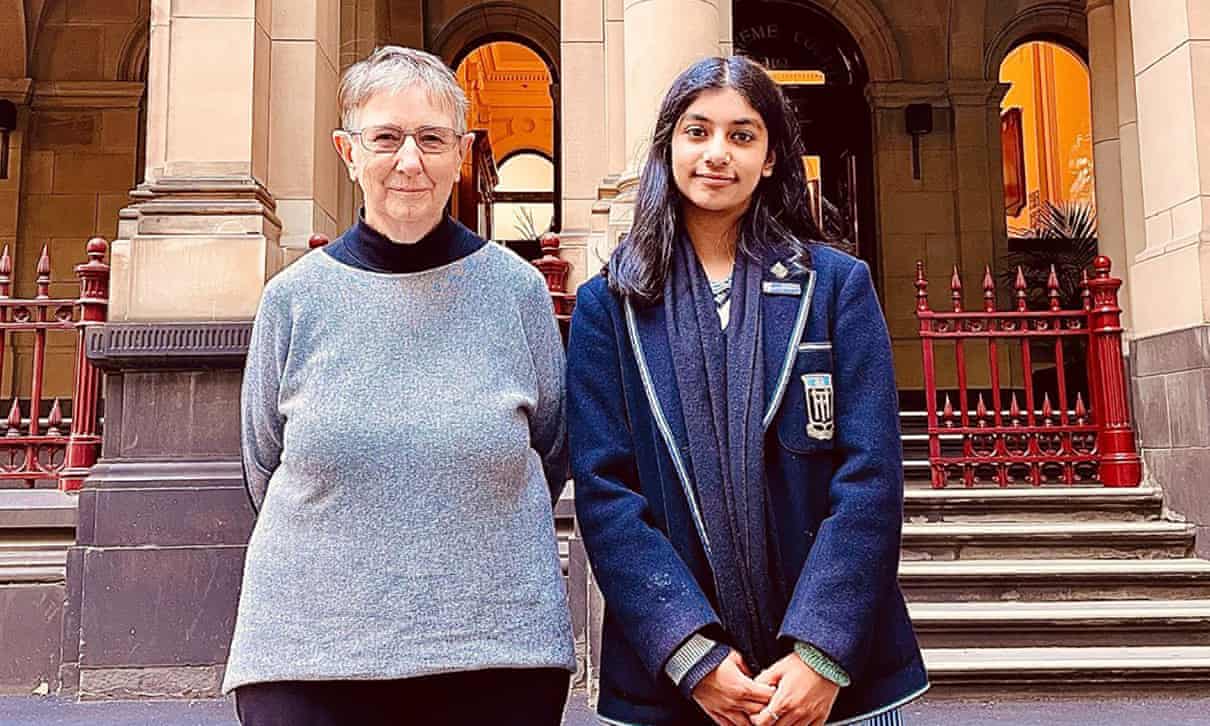
Photo: The Guardian.
Sister Brigid Arthur, 86, and Anj Sharma, 16, are among a group who secured a judgment from the Australian federal court that found the government has a duty to protect young people from climate change.

If you ever feel powerless to do anything about climate change, consider how an 86-year-old nun and eight Australian teenagers stopped a massive new coal mine in its tracks by persuading a court that the needs of youth need to be addressed first. Fingers crossed that the success is more than temporary.

Adam Morton writes at the Guardian, “The federal court of Australia has found the environment minister, Sussan Ley, has a duty of care to protect young people from the climate crisis in a judgment hailed by lawyers and teenagers who brought the case as a world first.

“Eight teenagers and an octogenarian nun had sought an injunction to prevent Ley approving a proposal by Whitehaven Coal to expand the Vickery coalmine in northern New South Wales, arguing the minister had a common law duty of care to protect younger people against future harm from climate change.

“Justice Mordecai Bromberg found the minister had a duty of care to not act in a way that would cause future harm to younger people. But he did not grant the injunction as he was not satisfied the minister would breach her duty of care.

“David Barnden, a lawyer representing the children, said it was a historic and ‘amazing decision’ with potentially significant consequences.

“ ‘The court has found that the minister owes a duty of care to younger children, to vulnerable people, and that duty says that the minister must not act in a way that causes harm – future harm – from climate change to younger people,’ he said outside court.

‘It is the first time in the world that such a duty of care has been recognized, especially in a common law country.’

“He said Bromberg had indicated he would now take submissions before making further declarations about what the minister’s duty of care may mean for whether the mine extension could go ahead.

“Whitehaven Coal had a different interpretation of the judgment. In a statement to the stock exchange, it did not mention the duty of care finding, and said it welcomed the court dismissing the teenagers’ attempt to block Ley from approving the mine extension. …

“Speaking for the children, 17-year-old Ava Princi said it was ‘thrilling and deeply relieving’ that the justice had recognized the minister had a duty of care. …

“She said though an injunction was not granted the case was ‘not over yet. … There will be further submissions on what the duty of care means for the minister’s decision and the mine.’ …

“The court heard the expansion of the mine could lead to an extra 100m tonnes of CO2 – about 20% of Australia’s annual climate footprint – being released into the atmosphere as the extracted coal is shipped overseas and burned to make steel and generate electricity.

“In his judgment, Bromberg said the evidence presented to the court showed the potential harm the children could face due to global heating ‘may fairly be described as catastrophic, particularly should global average surface temperatures rise to and exceed 3C beyond the pre-industrial level.’ ” More at the Guardian, here.

It may not be over, but a finding for children and their future is important, and when added to other recent judicial decisions described in the Guardian article, there’s some reason for hope.

Read Full Post »

This story has received coverage in a bunch of different venues, but I caught it on WNYC’s the Takeaway, with John Hockenberry, on my drive home from Providence today. Just had to share it.*

“General Electric’s CEO announced that all new hires, whether or not they’re working in tech, will now be required to know how to code. New York public schools are also introducing mandatory computer science classes into their curricula.

“These initiatives seem to indicate that coding is the key to getting hired and the panacea to all employment problems, and as the needs of the U.S. job market shifts, people are putting that theory to the test.

“Coal miners in particular have suffered the brunt of the changing job market. With 40 percent fewer jobs than in 2012, coal miners are seeking out second jobs to support their families, and many have turned to coding.

Amanda Laucher, co-founder of Mined Minds, a free computer coding training program in Waynesburg, Pennsylvania, is helping struggling coal miners in her area. Click on the ‘Listen’ button.”

I loved that Laucher told Hockenberry she and co-founder Jonathan Graham were “having a blast.” They didn’t feel like the free service they are self-funding was even a chore. She added that the support of the community made it all possible.

PBS had a bit more background, here:

“When tech consultant Amanda Laucher realized her brother in Greene County, Pennsylvania, the third largest coal-producing county in the country, was at risk of losing his job as a coal miner, she and her husband, Jonathan Graham, decided to help. They began driving about 500 miles from Chicago every weekend to teach him and others in the community how to code.

“Laucher and Graham said they saw an opportunity to wean Greene County off an economy that is heavily dependent on energy. They recently relocated to Waynesburg, Pennsylvania, and co-founded Mined Minds, a nonprofit that offers free coding classes to laid-off coal miners and other unemployed workers.” Oh, my. Bless their hearts!

*Update May 12, 2019: Uh-oh. Read about an unfortunate outcome, described at the New York Times, here. I still think it was a worthy effort.

Read Full Post »