Feeds:
Posts
Comments

Posts Tagged ‘commercial fishing’

Photos: Suzanne and John’s Mom.
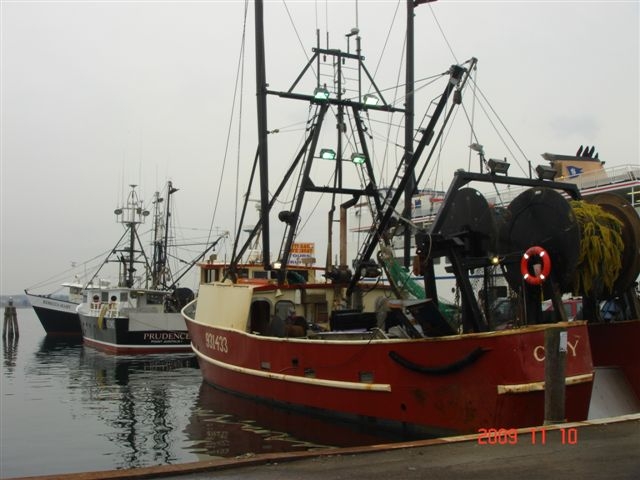
Commercial fishing is recognized as a high-stress job. Land & Sea Together offers a 24-hour help line and free counseling sessions with Coastline, a Rhode Island-based employee assistance program, for farming, fisheries, and forestry workers and their families.

Because I have never lived very far from the Atlantic, I have long known that the people who go out into deep water to catch the fish we buy are doing dangerous work. Fishermen may be injured handling boats in rough seas. Boats may be lost and the crew never seen again. The stress on families can be beyond belief.

That is why I was interested to read in this ecoRi News article that in Rhode Island, at least, help is available for workers in industries identified as especially stressful.

Bonnie Phillips writes, “Workers in Rhode Island’s farming, fisheries, and forestry [FFF] industries struggle with a number of stressors: the impacts of climate change; workforce issues; business and financial concerns; restrictive regulations, and more.

“Until recently, there were few ways workers in these industries — which have long working hours, often in isolation — could access support, whether financial, emotional, or physical. A new initiative, Land & Sea Together, is working to change that.

“ ‘Farmers and fishermen are among the professions most likely to commit suicide each year, and many more folks suffer silently as they tend their crops, equipment, and vessels,’ according to the organization’s website. Land & Sea aims to ‘reduce stress and build mental and financial resilience in the fisheries, forestry and farming communities’ by building a collaborative network of support services.

“The USDA-funded program, operated through the Rhode Island Department of Environmental Management and implemented by the Warwick-based Center for Collaboration and Mediation RI, was started in June 2022 with an initial $500,000 USDA grant. …

“To better understand the communities it wanted to help, Land & Sea put together a comprehensive needs assessment, released last December. For the 90-page report, L&ST studied existing data on the FFF industries in Rhode Island; surveyed individuals working in the industries about stressors; and convened a focus group of workers/owners in the industries. …

“Across the three industries, the main causes of stress were similar: financial management concerns; small-business operations; impacts of climate change; the inability to control the weather; labor shortages; succession planning; lack of access to resources; transportation barriers; housing challenges; longer working hours and increased workloads at peak times; and compliance with government regulations, according to the report. …

“Farmers, who often work where they live, said the lack of separation between work and home can blur the lines of family life, which often results in conflicts. And from spring to fall — the growing season — local farmers are under high amounts of stress, the report says, which can be exacerbated by the weather.

“Those in the fishing industry said heavy workloads, time pressure, lack of support due to isolated working conditions, and climate change were their main stressors. Employers in the fishing, aquaculture, and shellfishing industries reported difficulty hiring reliable workers, some of which they attributed to the lack of public transportation, especially in southern Rhode Island, and the difficulty of keeping employees during the winter. …

“A lack of mental health resources and a reluctance to seek help were identified as an issue across the FFF industries. Some employers, the report said, were unaware of available mental health resources they could offer their employees. Others said the nature of some of the jobs — lack of flexibility in the work schedule, uncompensated time off, and lack of insurance — prevented workers from seeking help. …

‘Most people in sea industries view themselves as a cross between Vikings and pirates, and they do not view themselves as people who need help,’ according to the report. …

“Employers interviewed for the report said they did not think their employees would seek help, and said they especially watch out for signs of concern in their younger employees. …

“Land & Sea offers a 24-hour help line and up to 12 free counseling sessions with Coastline EAP, a Rhode Island-based employee assistance program, for FFF workers and their families. Since the launch of the program in June 2022, [Laurel Witri, former director of the program] said, ’60 farming, fisheries, and forestry workers have called for assistance, receiving 286 hours of support with free outpatient services, financial counseling.’ …

The free, confidential help line with Coastline EAP is 1-800-445-1195, and support is available in English, Spanish, Portuguese, and Cape Verde Creole. The National Suicide and Crisis Hotline is 988, available by call or text.

More at ecoRI News, here. This nonprofit highlights environmental stories that often effect the whole country. It has no paywall, but please consider a donation.

Read Full Post »

04poets_600

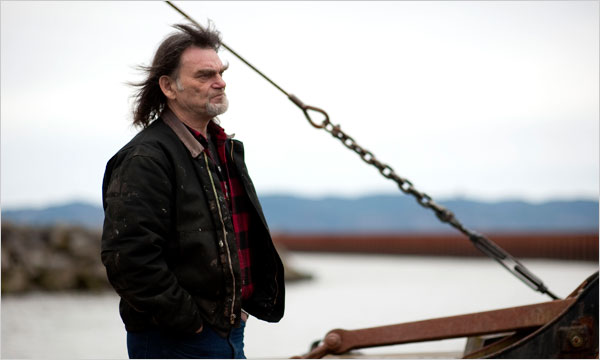
Photo: New York Times
Fisher poet Dave Densmore, on his boat, wrote his first poem as a joke in the 1970s. Now he studies writing.

Jobs like commercial fishing can provide a lot of of time to think, and it’s amazing how thinking often leads to poetry. That is also true of experiences that are so hard to capture they must be addressed obliquely.

Poetic storytelling is alive and well in the fishing community, it seems. Consider this transcript of a National Public Radio (NPR) report, in which Melanie Sevcenko describes an annual fisher poet event.

“MELANIE SEVCENKO: Moe Bowstern named herself after the front and back end of a ship. She calls herself a fishing woman. And for her, writing poetry comes with the job.

“MOE BOWSTERN: Well, I mean, have you ever been fishing? …  It’s unbelievably boring. And so you just have to think of something else to do.

“SEVCENKO: Now retired from commercial fishing, Bowstern is one of dozens of fisher poets who have been meeting for their annual gathering in a Astoria, Ore. During the last weekend of February, the far-flung fisher people interpret the commercial fishing industry in prose, poetry and song. …

“Bowstern started fishing in Kodiak, Alaska, in the mid-’80s when women on commercial boats were scarce. Her zine shares a name with a popular brand of deck boots, XTRATUF. This piece is called ‘Things That Will Be Difficult.’

“BOWSTERN: ‘It will be hard, if you are a man, to understand why your female crewmate, who started out so friendly, is so silent now when you are only trying to help. It will be hard if you are a woman to go’ …

“SEVCENKO: The poetry onstage at FisherPoets touches on what Bowstern calls an incredibly difficult life.

“BOWSTERN: Not just because of the rigors of the actual physical experience of the life, but it’s just, how can you be a fisherman at a time of climate change? And, like, where are you going to position yourself with resource extraction?

“SEVCENKO: That’s something John Copp has written about. For 20 years, he ran operations in Bristol Bay in the Bering Sea. Multinational corporations want to mine gold and copper from the area nearby and have been angling to do so for years. His poem ‘Tsunami’ is inspired by his opposition to the proposed Pebble Mine. … Many commercial fishermen have been against the Pebble Mine because of the damage it could do to the biggest salmon run on the planet. Copp is retired and lives in Oregon now. But he’s still inspired to write by the natural beauty of Alaska. …

“This weekend, once again, the fisher poets will do what they’ve done for more than two decades — gather on piers, in cafes and in theaters to perform their poetry for grateful audiences in this seaside town. Bowstern feels lucky that people who’ve never even been fishing want to hear their stories.

“BOWSTERN: We’re participating in two traditions that have been going on. Like, storytelling is probably only a little bit older than fishing, you know? So we get to tell stories in our special, weird language. And people just can’t get enough of it.”

The NPR transcript is here, and there’s another good article at the New York Times, here. If you know people who fish and also write poetry, have them check out the Fisher Poets website, here.

Read Full Post »

In case you just tuned in, this blog was started at the invitation of my daughter, who is the founder of the birthstone-jewelry company Luna & Stella. Sometimes I blog about the jewelry, but Suzanne told me to write about whatever interests me. Already a customer who was previously wary of online purchasing found the blog and wrote Suzanne that it helped her decide that Luna & Stella was good people.

The blog is currently housed at WordPress, which makes life easy for a neophyte like me. One thing that is fun at WordPress is clicking on posts from the other bloggers, posts that are on the Freshly Pressed page or found by clicking on a key word at the Tags page.

Today I got quite interested in an entry from a WordPress blogger in northern England who calls herself Heather Uphillanddowndale. She shows her photographs of a lovely Scottish island and talks about its fight against a major commercial fish farm.

I used to think fish farms made a lot of sense, but lately I have read about possible environmental damage and overcrowding that can spread disease to wild fish.

Heather quotes from a statement by island residents: “Highland Council has recently received an initial application to site a fish farm off the east coast of Eigg, north of Kildonan. The site identified covers an area extending to 20ha (this equates to 28 football pitches) & would consist of 14 x 30m diameter cages which would be serviced by a 10m x 10m permanently sited barge (powered by diesel generator).

“The community has considered this proposal at length. The outcome of the resulting ballot which had an 86% turnout was 97% against the development.

“Eigg lies within the Small Isles National Scenic Area. A large fish farm would have a considerable negative impact on the approach to the island and could also impact negatively on the peace and quiet that visitors seek when they come to the island, as well as on the quality of life of nearby residents.” Read more at Uphilldowndale.

Read Full Post »