Feeds:
Posts
Comments

Posts Tagged ‘connection’

Photo: Tom Pumford/Unsplash.

New research has come out to support something you probably always knew. Sad music can make you feel great.

Oliver Whang says at the New York Times, “This is the paradox of sad music: We generally don’t enjoy being sad in real life, but we do enjoy art that makes us feel that way. Countless scholars since Aristotle have tried to account for it. …

“[Joshua Knobe is] an experimental philosopher and psychologist at Yale University. … In a new study, published in the Journal of Aesthetic Education, he and some colleagues sought to tackle this paradox by asking what sad music is all about.

“Over the years, Dr. Knobe’s research has found that people often form two conceptions of the same thing, one concrete and one abstract. For example, people could be considered artists if they display a concrete set of features, like being technically gifted with a brush. But if they do not exhibit certain abstract values — if, say, they lack creativity, curiosity or passion and simply recreate old masterpieces for quick profit — one could say that, in another sense, they are not artists. Maybe sad songs have a similarly dual nature, thought Dr. Knobe and his former student, Tara Venkatesan, a cognitive scientist and operatic soprano.

“Certainly, research has found that our emotional response to music is multidimensional; you’re not just happy when you listen to a beautiful song, nor simply made sad by a sad one. In 2016, a survey of 363 listeners found that emotional responses to sad songs fell roughly into three categories: grief, including powerful negative feelings like anger, terror and despair; melancholia, a gentle sadness, longing or self-pity; and sweet sorrow, a pleasant pang of consolation or appreciation. Many respondents described a mix of the three. (The researchers called their study ‘Fifty Shades of Blue.’) …

“Some psychologists have examined how certain aspects of music — mode, tempo, rhythm, timbre — relate to the emotions listeners feel. Studies have found that certain forms of song serve nearly universal functions: Across countries and cultures, for instance, lullabies tend to share similar acoustic features that imbue infants and adults alike with a sense of safety.

“ ‘All our lives we’ve learned to map the relationships between our emotions and what we sound like,’ said Tuomas Eerola, a musicologist at Durham University in England and a researcher on the ‘Fifty Shades’ study. …

“Other scientists, including Patrik Juslin, a music psychologist at Uppsala University in Sweden, argue that such findings clarify little about the value of sad music. He wrote in a paper, ‘They simply move the burden of explanation from one level, “Why does the second movement of Beethoven’s Eroica symphony arouse sadness?” to another level, “Why does a slow tempo arouse sadness?” ‘

“Instead, Dr. Juslin and others have proposed that there are cognitive mechanisms through which sadness can be induced in listeners. Unconscious reflexes in the brain stem; the synchronization of rhythm to some internal cadence, such as a heartbeat; conditioned responses to particular sounds; triggered memories; emotional contagion; a reflective evaluation of the music — all seem to play some role. Maybe, because sadness is such an intense emotion, its presence can prompt a positive empathic reaction: Feeling someone’s sadness can move you in some prosocial way.

‘You’re feeling just alone, you feel isolated,’ Dr. Knobe said. ‘And then there’s this experience where you listen to some music, or you pick up a book, and you feel like you’re not so alone.’

“To test that hypothesis, he, Dr. Venkatesan and George Newman, a psychologist at the Rotman School of Management, set up a two-part experiment. In the first part, they gave one of four song descriptions to more than 400 subjects. One description was of a song that ‘conveys deep and complex emotions’ but was also ‘technically very flawed.’ Another described a ‘technically flawless’ song that ‘does not convey deep or complex emotions.’ The third song was described as deeply emotional and technically flawless, and the fourth as technically flawed and unemotional.

“The subjects were asked to indicate, on a seven-point scale, whether their song ’embodies what music is all about.’ … On the whole, subjects reported that deeply emotional but technically flawed songs best reflected the essence of music; emotional expression was a more salient value than technical proficiency.

” ‘In the second part of the experiment, involving 450 new subjects, the researchers gave each participant 72 descriptions of emotional songs, which expressed feelings including ‘contempt,’ ‘narcissism,’ ‘inspiration’ and ‘lustfulness.’ For comparison, they also gave participants prompts that described a conversational interaction in which someone expressed their feelings. (For example: ‘An acquaintance is talking to you about their week and expresses feelings of wistfulness.’) On the whole, the emotions that subjects felt were deeply rooted to ‘what music is all about’ were also those that made people feel more connected to one another in conversation: love, joy, loneliness, sadness, ecstasy, calmness, sorrow.

“Mario Attie-Picker, a philosopher at Loyola University Chicago who helped lead the research, found the results compelling. After considering the data, he proposed a relatively simple idea: Maybe we listen to music not for an emotional reaction — many subjects reported that sad music, albeit artistic, was not particularly enjoyable — but for the sense of connection to others. Applied to the paradox of sad music: Our love of the music is not a direct appreciation of sadness, it’s an appreciation of connection.”

More at the Times, here.
Read Full Post »

Rx: Nature

Photo: Jim Wileman/The Guardian.
Seven of the UK’s National Health Service care groups received [$6.9 million, combined] in government funding for projects harnessing nature to improve mental health.

I’d be the last person to tell any person who badly needed therapy to take a walk in the woods. But as today’s article indicates, nature does have healing properties. If you’re feeling down, you could try it. Like chicken soup, “It wouldn’t hurt”!

Reporter Damian Carrington at the Guardian has been talking to patients.

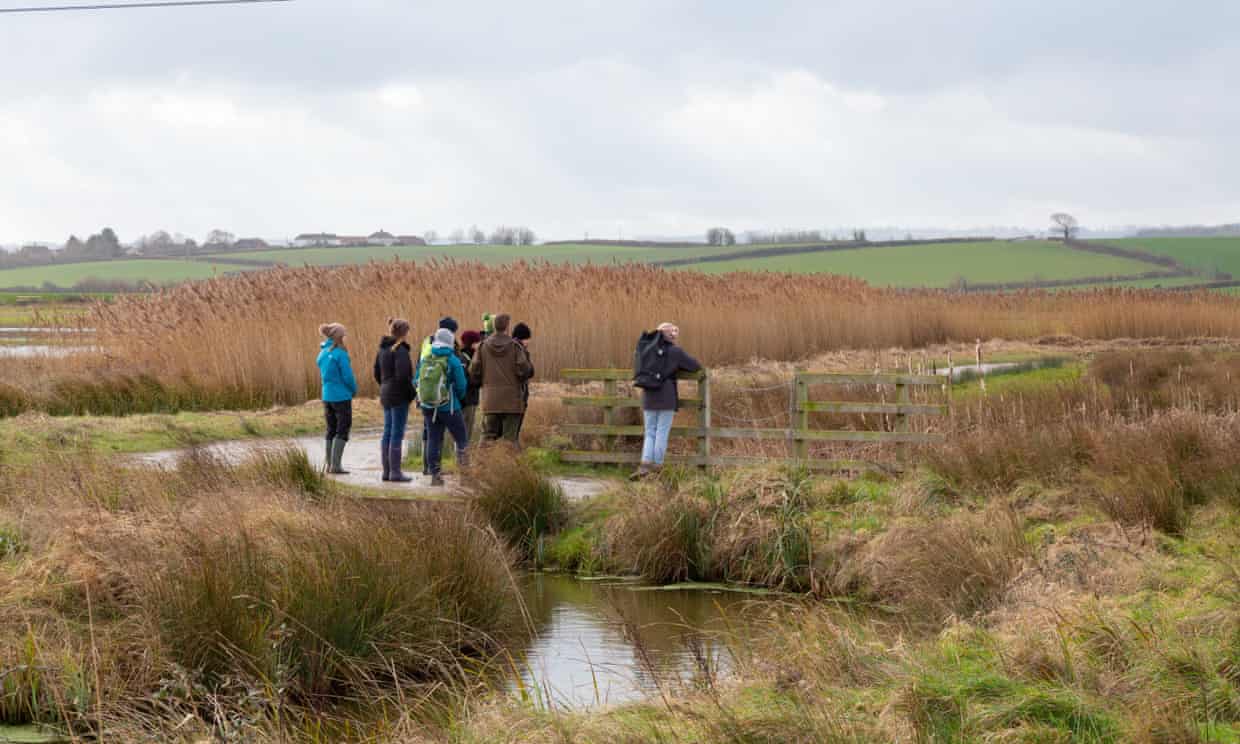
” ‘It sounds dramatic, but this place saved my life,’ says Wendy Turner, looking out over the Steart salt marshes in Somerset. ‘I am really loving the colours of all the marsh grasses at the moment, and the flocks of dunlin and plover. The light is just so beautiful.’

“Turner was once a high-flying international project manager. ‘But the Covid pandemic resulted in me losing everything – my business and my home – and I had years of abuse in a marriage.’ In July 2020, she attempted suicide and woke up in [the emergency room].

“But then she discovered the Steart nature reserve. …

“Turner is one of the fast-growing number of people using nature to improve their health and wellbeing and she is now helping to boost the rise of ‘green social prescribing,’ where health and community services refer people to nature projects. She has helped co-create a mental health and nature course with the Wildfowl & Wetlands Trust (WWT), which manages the Steart reserve, and the Mental Health Foundation.

“There is already good evidence of nature’s efficacy, such as a 2019 study showing that a two-hour ‘dose’ of nature a week significantly improved health and wellbeing. The missing link has been connecting health services and nature activities.

“ ‘These activities have being going for years, it’s just that they often have not had that connection into the health systems to enable them to receive the people who need the benefits the most, and to deliver precisely what they need,’ says Dave Solly, at the National Academy for Social Prescribing (NASP), which was launched in 2019 with funding from the Department of Health.

“But things are changing. Seven NHS care groups from the Humber to Surrey received a combined £5m in government funding in December for projects harnessing nature to improve mental health, including tree planting and growing food. There are also now more than 1,000 social prescribing link workers working in GP surgeries and health clinics, helping doctors link patients to nature activities, as well as arts, heritage and exercise groups. A million people could be referred to social prescribing in the next few years.

Among the projects championed by NASP are Wild Being in Reading, an open-water swimming group in Portsmouth, Dorset Nature Buddies, the Green Happy cafe in Northampton, and a Moving in Nature project in Chingford, Essex.

“Back in Steart marshes, NHS rehabilitation physiotherapist Ralph Hammond is setting off on the weekly 30-minute health walk he leads. He started the walk as a volunteer in 2017, having found there was no suitable walking group for recovering patients.

“The flat landscape and good paths on the reserve, which hosts otters and samphire beds, are important, he says: ‘We are trying to break down barriers – the people I am after are not walking at all.’ The group have been following the fortunes of a pair of white swans and their cygnets. …

“Suzanne Duffus tackles the walk enthusiastically with a sturdy wheeled walking frame. She started coming to Steart after her husband died and is now a volunteer, giving support and encouragement to newcomers. …

“Increasing access to such activities requires staff dedicated to connecting nature groups to the health service. The WWT’s Will Freeman is doing this at Steart and says: ‘For a lot of people, it is very exciting, but it can also be difficult as the cultures of organisations may not match.

“A lot of nature reserves have not been that well connected with their communities.’ … The social side is key too, he says: ‘We sometimes miss the simple human side – just having a chat and asking how you are. Nature is an asset that adds to all that.’ …

“Helen Stokes-Lampard, chair of NASP and of the Academy of Medical Royal Colleges, says: ‘[During the pandemic] we have all become increasingly reliant on our local outdoor space as other activity was restricted. From allotments and parks to walks in the country, being outdoors has been a lifeline for many of us.

“ ‘However, all too often those who would benefit more from time “closer to nature” simply cannot access it. … Social inequalities mean that those in the most deprived areas spend less time outdoors. As a practising GP myself, it is so heartening to see so many projects flourish right across the country, making the most of this approach to health provision.’

“Solly, who is on secondment to NASP from Natural England, hopes that green social prescribing will become routinely offered to those who would benefit: ‘Instead of a prescription for further medicine, your prescription is to go to an activity, with a suggestion of a few options that work for you.’ ”

More at the Guardian, here.

Read Full Post »

idea_sized-cod-newsroom-38012019442_148f3964b4_oPhoto: CoD Newsroom/Flickr
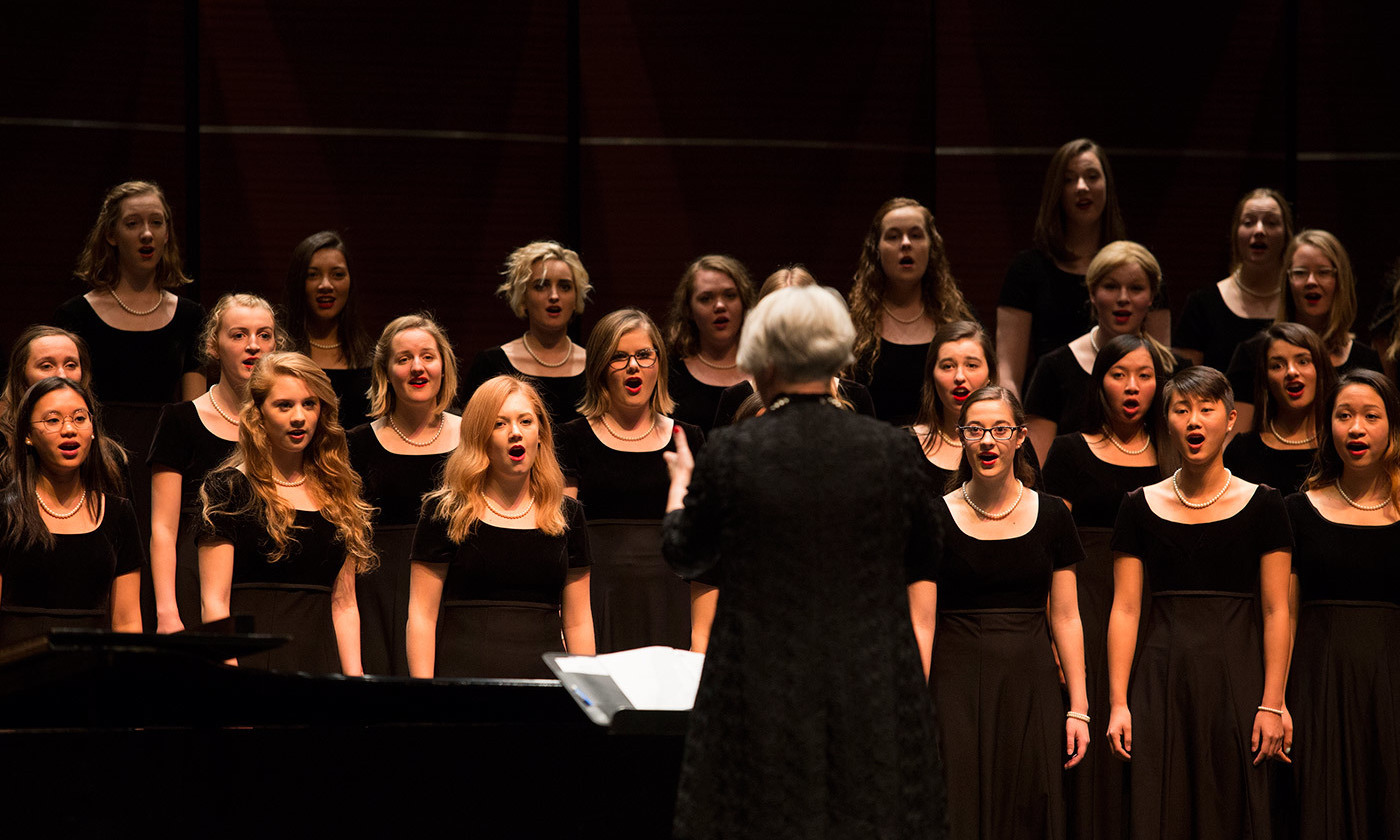
Singers at the Illinois American Choral Directors Association conference. Research explores how people bond through singing together.

Sometimes when the grandkids were small and fighting, I would break out in a song they liked — “Mister Moon,” say, or “Baby Beluga” — and they would join in enthusiastically and forget to fight.

The bonding aspect of singing together is something that many other people have discovered on their own. Now researchers want to learn more.

Eiluned Pearce, a postdoc research associate in experimental psychology at the University of Oxford, writes at Aeon, “Singing is universal. It is found in all cultures and, despite protestations of tone deafness, the vast majority of people can sing. Singing also often occurs in collective contexts: think about sports stadiums, religious services and birthday celebrations. Given these two characteristics, my colleagues and I wondered whether singing is a behaviour that evolved to bond groups together.

“Being part of a group is essential to human survival. In our hunter-gatherer past, having supportive social relationships would have enabled people to get the resources they needed to defend them against outsiders, to benefit from collective childrearing, and to share and develop cultural knowledge about their environment and about useful technological inventions. We now also know that feeling sufficiently socially connected guards against physical and mental illness, and increases longevity. …

“Whereas monkeys and apes create social bonds through one-to-one grooming sessions, human groups are too large to be able to do that and still have enough time to eat and sleep. We needed a more efficient mechanism of creating social cohesion, a way to bond larger numbers of individuals together simultaneously.

“To find out whether singing might fill this role, we needed to find out if this activity was capable of making large groups of individuals feel closer to each other. To help us answer this question, we teamed up with Popchoir, a British organisation that runs local choirs across London and beyond. What is great about Popchoir is that these different local choirs of a few dozen members periodically come together to create a unified ‘Megachoir’ of several hundred members.

“Our research team went along to some rehearsals to collect data before and after they sang together, either in their local choir or in the amalgamated Megachoir. … On average, people showed a significantly bigger increase in how close they felt to the Megachoir over the course of singing with them, compared with when they were singing with their local choir. …

“So singing can create cohesion in large groups of several hundred individuals, supporting the idea that this behaviour might have evolved to create community cohesion in humans.

“What we still didn’t know, however, was whether singing itself is special, or whether any activity that provided opportunities for social engagement could have similar bonding effects. To tackle this issue, we collaborated with the Workers’ Educational Association (WEA), a national adult-education charity in the UK. We predicted that singing classes would become more closely bonded than other types of classes (either creative writing or crafts). We were wrong: at the end of the seven-month courses, all the classes were equally bonded.

“But as we looked more closely at the data, we saw something that surprised us. Singing seemed to bond the newly formed groups much more quickly than the comparison activities. It was the most effective. So singing is special: it has an ice-breaker effect.”

More at Aeon, here. Even when groups of singers are competing, the researchers found, bonding occurs among opposing groups.

Read Full Post »