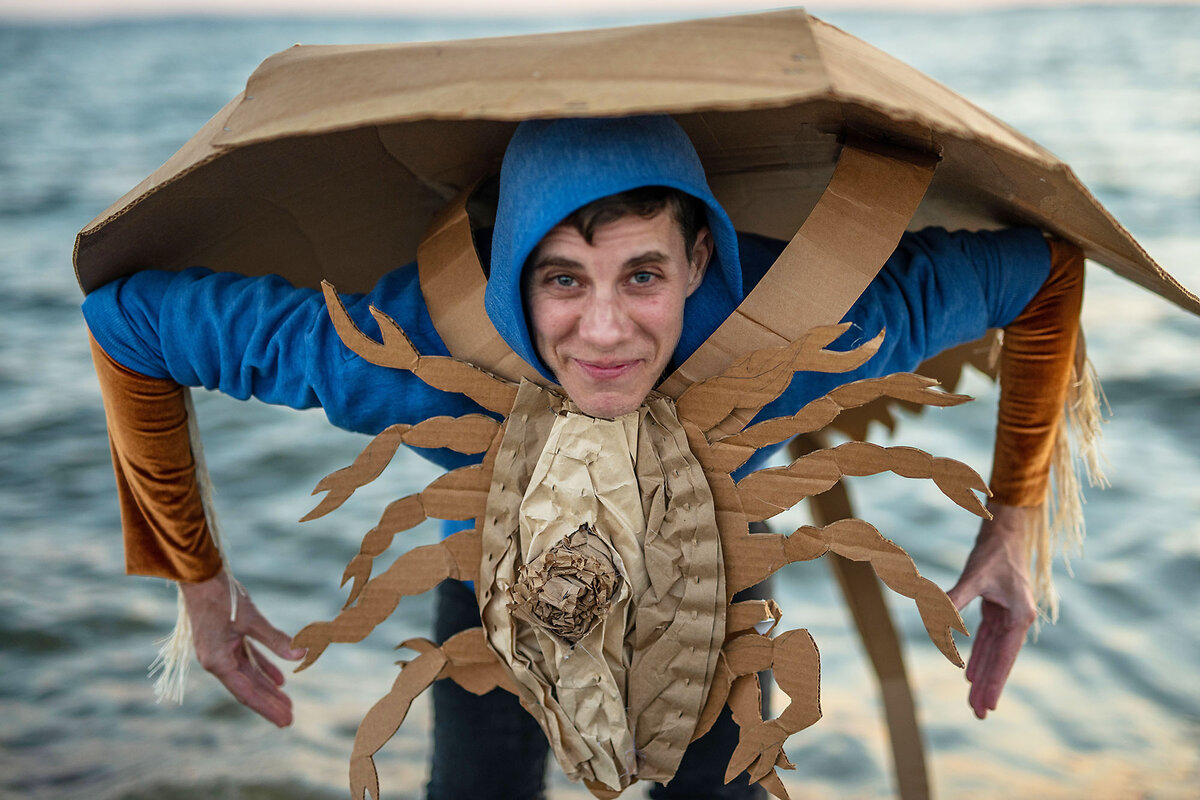
Photo: Epli Photography via Eli Nixon.
Multidisciplinary artist Eli Nixon poses in a homemade cardboard horseshoe crab costume at Barrington Beach in Barrington, Rhode Island.
There is an ancient form of life that lives in the waters along our shores — the horseshoe crab. The horseshoe crab is in danger from big pharma, which harvests them because their blood can reveal toxins in chemicals. Fortunately, people of all backgrounds are learning about this treasure and hope to save it.
Oli Turner writes at the Christian Science Monitor, “With its dome shape and spiky tail, the horseshoe crab might at first look like a fearsome visitor from another planet. But for artists like Heidi Mayo, the ancient creature is an approachable muse.
“A collection of 13 brightly painted horseshoe crab shells hangs along her back fence here. On her kitchen table sits a novel she wrote, inspired by encounters with the living fossil. Upstairs, in the top-floor studio where she teaches art classes, two spiny molt serve as figure-drawing models. [Crabs molt shells.] …
“A few miles away, at the Plymouth Center for the Arts, the public can see more of her work – and that of other artists, similarly inspired – at a new exhibit, ‘The Horseshoe Crab: Against All Odds.‘
“The exhibition, featuring representations in watercolor, metal, and textiles, is part of a broader effort to save and conserve the once-misunderstood sea animal, which is now facing new threats.
“ ‘The essence of this show [is] that horseshoe crabs are in trouble,’ says Joan Pierce, one of the curators, her silver horseshoe crab earrings swaying as she speaks. …
Pharmaceutical companies use their unusual blue blood to test products for toxins.
“The Atlantic States Marine Fisheries Commission reports that the Northeast horseshoe crab population is currently in a ‘neutral,’ or stable, state. But the population remains vulnerable, according to advocates. On March 19, the Massachusetts Marine Fisheries Advisory Commission approved protections preventing the harvest of horseshoe crabs during their spring spawning season. …
“The horseshoe crab isn’t actually a crab, despite its name. More closely related to ticks and spiders, it walks on 10 spindly legs in the coastal shallows, feeding on worms, algae, and other inhabitants of the ocean floor. The long, pointed tail protruding from its hardened exoskeleton is often mistaken for a stinger. At times, the public has seen them only as a nuisance … not understanding that their eggs, which migratory shorebirds eat, help the coastal ecosystem.
“But the tide is turning. The curators of ‘Against All Odds’ felt an urgency to raise awareness about the crabs’ plight. They issued invitations to artists to highlight ‘the beauty of these ancient creatures, their ecological importance, and the threats they face.’ They hoped for 35 submissions. Then more than 160 offerings rolled in from more than 70 artists. Of those submitted, 74 works made it into the final show. …
“ ‘This is not just pretty pictures on the wall,’ Ms. Pierce says. ‘This is about education and advocacy. … We want to see stricter regulations.’ …
“Elsewhere in New England, other artists are also trying to raise awareness. In Rhode Island, another horseshoe crab hub, multidisciplinary artist Eli Nixon hopes that learning about the animal can create a new culture of compassion and responsibility. [Nixon offers a] 2021 illustrated manual and field guide Bloodtide: A New Holiday in Homage to Horseshoe Crabs [and] often wears a homemade cardboard horseshoe crab costume to parades. …
“Back in Massachusetts, Mark Rea remembers in his youth, before tourism swept the shores of Nantucket, when horseshoe crabs drifted along the seafloor undisturbed. …
“For the past 18 years, Mr. Rea has made ceramic casts of the exoskeletons of horseshoe crabs when he finds their remains on Cape Cod beaches. He fires the lifelike molds, glazing them with vibrant, glossy colors. While most of his creations look peaceful, several of them depict the toll the bait and pharmaceutical industries have had. Creating the ceramic horseshoe crabs is now his full-time job – he makes 600 a year and sells his work online and in local galleries.”
More at the Monitor, here (no firewall; subscriptions reasonable). Use the Search box on this blog to find more horseshoe crab info.



 Suzanne's Mom's Blog