Feeds:
Posts
Comments

Posts Tagged ‘birdcall’

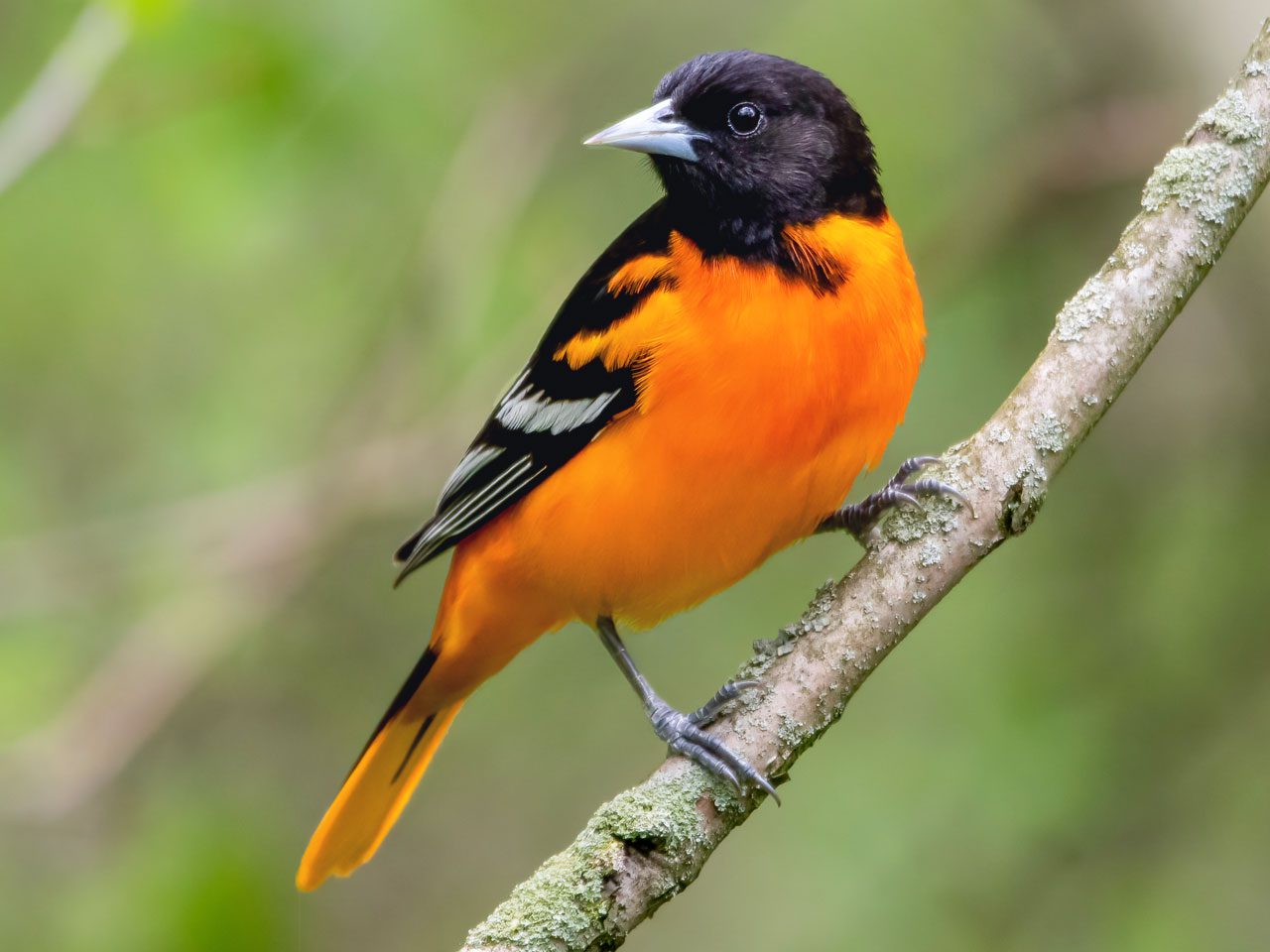
Photo: Matthew Plante / Macaulay Library.
The Baltimore Oriole is a bird I can never get enough of. I found this picture at birds.cornell.edu. The last Baltimore Oriole I saw was thanks to the Merlin app telling me it was somewhere near.

Have you used the free Merlin app to identify birds? I really love it. Among other things, it has helped me recognize some birdcalls by myself. The red-bellied woodpecker, for example, which I would describe as a squawk and a gargle.

Sandra Laville writes at the Guardian, “The Merlin bird ID app will allow users to feed real-time bird identifications into one of the world’s biggest citizen-science biodiversity projects in an update it is hoped will aid conservation of at-risk birds.

“Since 2021, the free Merlin app, created by the Cornell Lab for Ornithology, has used machine learning to provide an almost instantaneous sound-identification service for birdsong, along with an image for each bird identified. In future, the detections of bird species recorded by people will be automatically collected on the global online database eBird, which contains more than 2bn bird observation records.

“In the UK, the total bird population has fallen by more than 70 million in the last 50 years, according to the British Trust for Ornithology. The Guardian has created an audio soundscape that recreates the abundance of birdsong the public would have heard in 1976, compared with today. …

“Cornell also runs the eBird platform, which was created in 2002 to gather information from citizen scientists of their millions of bird observations, building one of the world’s biggest environmental science platforms.

“Jessie Barry, one of the leaders of the Merlin project, said: ‘The eBird mobile app will soon have the ability to upload recordings, which can be recorded in Merlin. Upcoming feature developments will make an even better link to the eBird systems so that we can use the data from what users “hear” with Merlin to monitor bird populations. …

“At present, the app can identify 2,066 bird species, including most birds in the US, Canada and Europe, and the more common and widespread species in India and across Central and South America. …

“The Merlin app is cited by some as an opportunity to connect more people to nature and help enhance conservation work. But there are some concerns that the app can misidentify birds, and the European Bird Census Council recommends not using Merlin in official breeding bird surveys. The EBCC has set up a monitoring group to coordinate, align and integrate acoustic bird monitoring across Europe.

“Moira Forsyth, a Merlin user who lives in the Muir of Ord in Scotland, said she used the app along with other forms of identification. ‘We have been astonished to discover we had a much wider range of birds here than we thought,’ she said. ‘Armed with the app, the RSPB book of Scottish birds, my trusty old copy of Collins Complete British Wildlife and the binoculars we keep on the kitchen windowsill, we are getting a bit better at this.’

“Prof Richard Gregory, of the RSPB, said: ‘It is super-positive that it is increasing in popularity and use, and especially to a new, wider and different group of people.’ …

“Gregory warned, however, that the app still made mistakes in identification and had identified his dachshund as a mallard. ‘If you aren’t an expert, you wouldn’t necessarily know there was an error,’ he said. ‘It is interesting to hear that Cornell is making changes which mean that recordings from Merlin will go to eBird more easily, so that’s great if the species recognition is correct [but] a problem for conservation when it is not.’

“Barry said research teams who regularly used these types of data sources would address challenges with the data quality. ‘Our ability to understand changes in bird populations will be better served with more data to work with than if we don’t collect it at all.’ ”

More at the Guardian, here.”
Read Full Post »

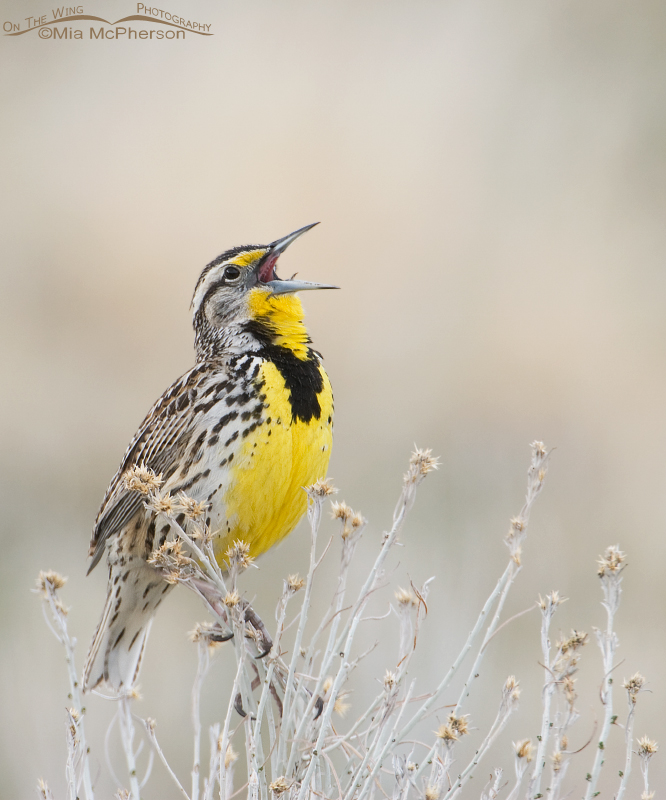
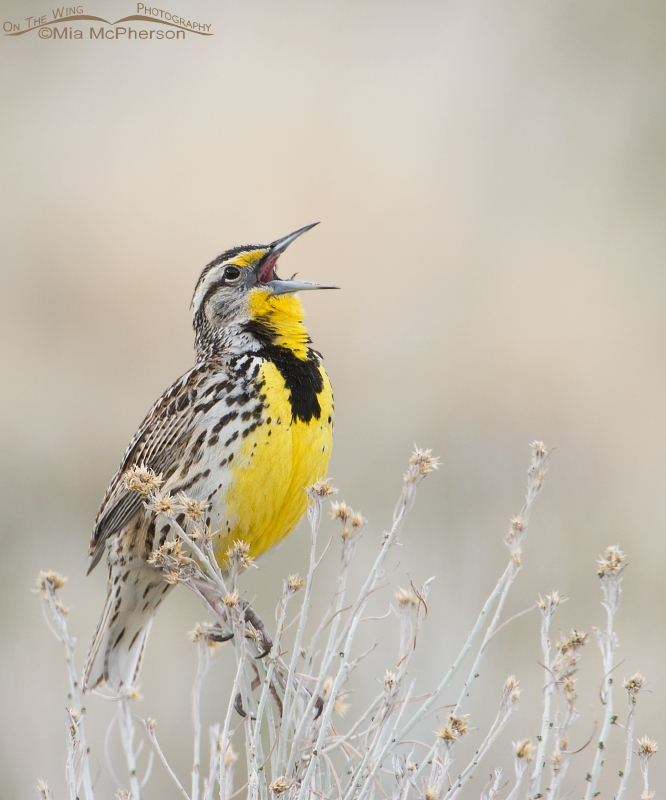
Photo: Mia McPherson/ On the Wing Photography.
Western Meadowlark singing.

Doctors are starting to recommend meditation to lower blood pressure in older people. When meditation was first suggested to me, I scoffed in my usual know-it-all way (what my husband used to call my “stranglehold on the truth”), but as I researched different kinds of meditation on the web, I gradually became a believer.

One of the ways meditation experts get you to focus on the here and now is to have you pay attention to each of your five senses in sequence, as in one five-minute meditation from the Washington Post. Others add that listening specifically to birdcalls can be therapeutic.

At the Post, Richard Sima says, “Looking to improve your mental health? Pay attention to birds. Two studies published last year in Scientific Reports said that seeing or hearing birds could be good for our mental well-being. …

“Research has consistently shown that more contact and interaction with nature are associated with better body and brain health.

“Birds appear to be a specific source of these healing benefits. They are almost everywhere and provide a way to connect us to nature. And even if they are hidden in trees or in the underbrush, we can still revel in their songs.

” ‘The special thing about birdsongs is that even if people live in very urban environments and do not have a lot of contact with nature, they link the songs of birds to vital and intact natural environments,’ said Emil Stobbe, an environmental neuroscience graduate student at the Max Planck Institute for Human Development and author of one of the studies.

“Recent research also suggests that listening to recordings of their songs, even through headphones, can alleviate negative emotions. …

“In one study, researchers asked about 1,300 participants to collect information about their environment and well-being three times a day using a smartphone app called Urban Mind.

“The participants were not explicitly told that the researchers were looking at birds — the app was also collecting data about other vitals such as sleep quality, subjective assessment of air quality, and location details. But the 26,856 assessments offered a rich data set of what is associated with mental well-being in real time in the real world.

“By analyzing the data, the researchers found a significant positive association between seeing or hearing birds and improved mental well-being, even when accounting for other possible explanations such as education, occupation, or the presence of greenery and water, which have themselves been associated with positive mental health.

“The benefits persisted well beyond the bird encounter. If a participant reported seeing or hearing birds at one point, their mental well-being was higher, on average, hours later even if they did not encounter birds at the next check-in.

Ryan Hammoud, a PhD candidate at the Institute of Psychiatry, Psychology & Neuroscience at King’s College London and an author of the study, called it a ‘time-lasting link.’

“Intriguingly, the birds benefit both healthy participants and those who have been diagnosed with depression. …

“A second study found that listening to short — just six-minute — audio clips of birdsong could reduce feelings of anxiety, depression and paranoia in healthy participants.

“ ‘Listening to birdsong through headphones was able to hit the same pathways that might be beneficial toward mental well-being,’ said Hammoud, who was not involved in the second study. …

“Researchers asked 295 online participants to self-assess their emotional states and to take a cognitive memory test. Then they randomly assigned the participants to listen to birdsongs or traffic noise, of more or less diversity. The researchers then had the subjects remeasure their emotional and cognitive states.

“Participants who listened to more diverse birdsongs (featuring the acoustic acrobatics of eight species) reported a decrease in depressive symptoms in addition to significant decreases in feelings of anxiety and paranoia. And those who listened to less diverse birdsongs (two bird species) also reported a significant decrease in feelings of anxiety and paranoia. …

“By contrast, listening to more or less diverse traffic noise worsened symptoms of depressive states.

“The research shows the ‘healing aspects of nature, or also the not-so-positive effects of urban surroundings,’ said Stobbe, an author of the second study. …

“Birds help us feel more connected with nature and its health effects, Stobbe said, and the more connected we are to nature, the more we can benefit from those effects.

“One hypothesis on nature’s salubrious effects, known as the attention restoration theory, posits that being in nature is good for improving concentration and decreasing the mental fatigue associated with living in stressful urban environments. Natural stimuli, such as birdsong, may allow us to engage in ‘soft fascination,’ which holds our attention but also allows it to replenish.

Nature — and birdsong — also reduce stress. Previous research has found that time spent in green outdoor spaces can lower blood pressure and cortisol levels, Hammoud said.

“It is not yet understood how birdsong affects our brains, but neuroimaging studies have found brain responses of stress reduction to other forms of nature exposure.”

More at the Post, here.

Read Full Post »

10019115c

Photo: BGR

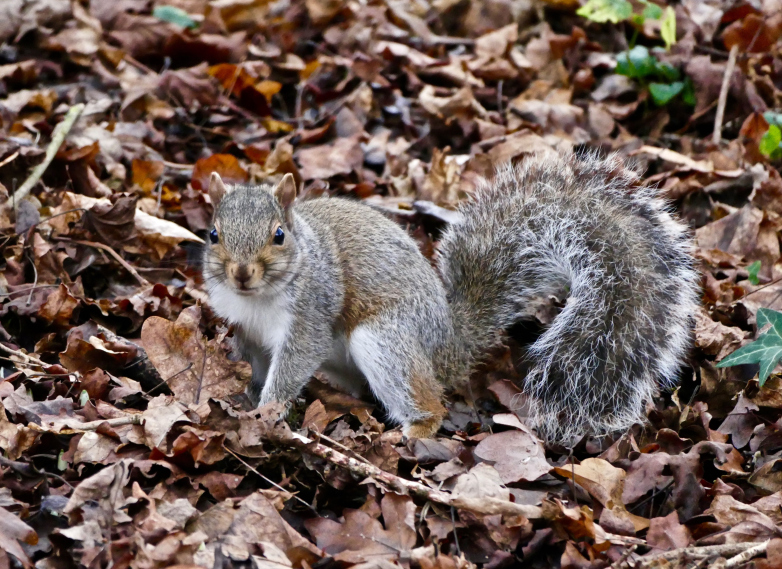
My son-in-law is no fan of grey squirrels. The squirrels in Sweden are apparently more polite. Too many times when the children were small and sleeping outside for some fresh air, an aggressive grey squirrel would crash around on the grape arbor above and shower leaves and twigs onto the stroller, ending the nap.

More recently, great pains have been taken to prevent Mr. Squirrel from getting into the bird feeder. And it’s been a revelation how many companies, observing a huge market demand, are trying to produce squirrel-proof bird stations.

But squirrels are interesting if you’re in the right frame of mind. Consider how clever they are in absorbing warnings from birds when there’s danger.

Mike Wehner writes at BGR, “A new study highlights just how important it can be for certain animals to glean information from the communication of entirely different species. The research, published in PLOS One, reveals that squirrels can sense danger simply by spying on some unwitting feathered friends.

“Squirrels, it turns out, are very good at listening to bird chatter, and have a knack for translating those chirps and tweets (or lack thereof) to sense when predators are nearby.

“For the study, researchers hunted down grey squirrels and tested their reactions to certain bird noises. Using the threatening call of a hawk to strike fear in the furry mammals, the scientists recorded the changes in their behavior when the cheerful calls of songbirds were played at various intervals. …

“The researchers write, ‘Squirrels responded to the hawk call playbacks by significantly increasing the proportion of time they spent engaged in vigilance behaviors and the number of times they looked up during otherwise non-vigilance behaviors, indicating that they perceived elevated predation threat prior to the playbacks of chatter or ambient noise.’

“The squirrels, sensing immediate danger from above, were careful in their movements and did their best to avoid making themselves an easy meal. When silence followed the recorded hawk calls, the squirrels remained in that state, but when friendly bird chatter returned the squirrels took it as a sign that the skies were clear of threats.

“ ‘We knew that squirrels eavesdropped on the alarm calls of some bird species, but we were excited to find that they also eavesdrop on non-alarm sounds that indicate the birds feel relatively safe,’ the scientists say. ‘Perhaps in some circumstances, cues of safety could be as important as cues of danger.’ ”

Read more.

Read Full Post »

A charming feature on the radio show Studio 360 this spring was about a young beat boxer who turns birdcalls into music. (Wikipedia says beatboxing is “is a form of vocal percussion primarily involving the art of producing drum beats, rhythm, and musical sounds using one’s mouth, lips, tongue, and voice.”)

According to Studio 360, “Ben Mirin is a Boston area birdwatcher turned New York City beat boxer who decided to combine his two passions. ‘As a mimic, I was able to imitate certain bird calls,’ Mirin explains, ‘the American Bittern, the Common Eider.’ Mirin mines birdcalls and layers them with his own beats to construct compositions that fall somewhere between a musical mashup and an ornithologist’s field recordings.

“When he performed at the American Beatbox Festival last year, Mirin improvised a set where he combined spoken word, beatboxing, and bird calls to take the audience on a forest bird tour. ‘It was totally off the cuff,’ Mirin remembers, ‘and people went nuts.’

“Mirin has traveled the world as a field ornithologist. Combining beatboxing and birdcalls isn’t just about new music: ‘My craft is about using beatbox to build a bridge to the natural world.” ”

Listen to the music Mirin makes using real birdcalls, here.

Photo: Nick Mirin
Ben Mirin photographing birds in New Zealand’s Fiordland

Read Full Post »