Feeds:
Posts
Comments

Posts Tagged ‘deforestation’

Photo: César Rodríguez.
The New York Times says, “Illegal deforestation for avocado crops points to a blood-soaked trade with the United States involving threats, abductions and killings.

Today’s story about Mexico’s environment-destroying avocado production and thoughtless US demand was concerning. If anyone knows where I can get sustainably grown avocados, please let me know.

Meanwhile, here is the New York Times story. The authors were Simon Romero and Emiliano Rodríguez Mega.

“First the trucks arrived, carrying armed men toward the mist-shrouded mountaintop. Then the flames appeared, sweeping across a forest of towering pines and oaks.

“After the fire laid waste to the forest last year, the trucks returned. This time, they carried the avocado plants taking root in the orchards scattered across the once tree-covered summit where townspeople used to forage for mushrooms.

“ ‘We never witnessed a blaze on this scale before,’ said Maricela Baca Yépez, 46, a municipal official and lifelong resident of Patuán, a town nestled in the volcanic plateaus where Mexico’s Purépecha people have lived for centuries.

“In western Mexico forests are being razed at a breakneck pace and while deforestation in places like the Amazon rainforest or Borneo is driven by cattle ranchinggold mining and palm oil farms, in this hot spot, it is fueled by the voracious appetite in the United States for avocados.

“A combination of interests, including criminal gangs, landowners, corrupt local officials and community leaders, are involved in clearing forests for avocado orchards, in some cases illegally seizing privately owned land. Virtually all the deforestation for avocados in the last two decades may have violated Mexican law, which prohibits ‘land-use change’ without government authorization.

“Since the United States started importing avocados from Mexico less than 40 years ago, consumption has skyrocketed, bolstered by marketing campaigns promoting the fruit as a heart-healthy food and year-round demand for dishes like avocado toast and California rolls. Americans eat three times as many avocados as they did two decades ago.

“South of the border, satisfying the demand has come at a high cost, human rights and environmental activists say: the loss of forests, the depletion of aquifers to provide water for thirsty avocado trees and a spike in violence fueled by criminal gangs muscling in on the profitable business.

“And while the United States and Mexico both signed a 2021 United Nations agreement to ‘halt and reverse’ deforestation by 2030, the $2.7 billion annual avocado trade between the two countries casts doubts over those climate pledges.

“Mexican environmental officials have called on the United States to stop avocados grown on deforested lands from entering the American market, yet U.S. officials have taken no action, according to documents obtained by Climate Rights International, a nonprofit focused on how human rights violations contribute to climate change.

“In a new report, the group identified dozens of examples of how orchards on deforested lands supply avocados to American food distributors, which in turn sell them to major American supermarket chains.

“Fresh Del Monte, one of the largest American avocado distributors, said the industry supported reforestation projects in Mexico. But, in a statement, the company also said that ‘Fresh Del Monte does not own farms in Mexico,’ and relied on ‘industry collaboration’ to ensure growers abided by local laws.

“In western Mexico, interviews by the Times with farmers, government officials and Indigenous leaders showed how local people fighting deforestation and water theft have become targets of intimidation, abductions and shootings.

“Like deforestation elsewhere, the leveling of Mexico’s pine-oak and oyamel fir forests reduces carbon storage and releases climate-warming gases. But clear-cutting for avocados, which require vast amounts of water, has ignited another crisis by draining aquifers that are a lifeline for many farmers.

“One mature avocado tree uses about as much water as 14 mature pine trees, said Jeff Miller, the author of a global history of the avocado.

“ ‘You’re putting in deciduous forests of a very water hungry tree and tearing out conifer forests of not so very water hungry trees,’ Mr. Miller said. ‘It’s just wrecking the environment.’

“In parts of Mexico already on edge over turf wars among drug cartels, forest loss is fueling new conflicts and raising concerns that Mexican authorities are largely allowing illegal timber harvesters and avocado growers to act with impunity.”

Bad as things are in Mexico, you know they would not be happening if there was no demand. That’s on us. Read more at the Times, here.

Because I still hope to have an avocado from time to time, I went looking for advice. The Eco Experts in the UK say, “Although avocados aren’t the worst food for the environment, growing them on a mass scale isn’t sustainable. This is because of the large amount of water they need to grow, and the fact that they can’t be grown locally in countries like the UK, where they are in high demand. The solution isn’t to cut avocados out of our diets altogether, but to reduce the amount that we consume.” More from the experts, here.
Read Full Post »

Photo: Suzanne and John’s Mom.
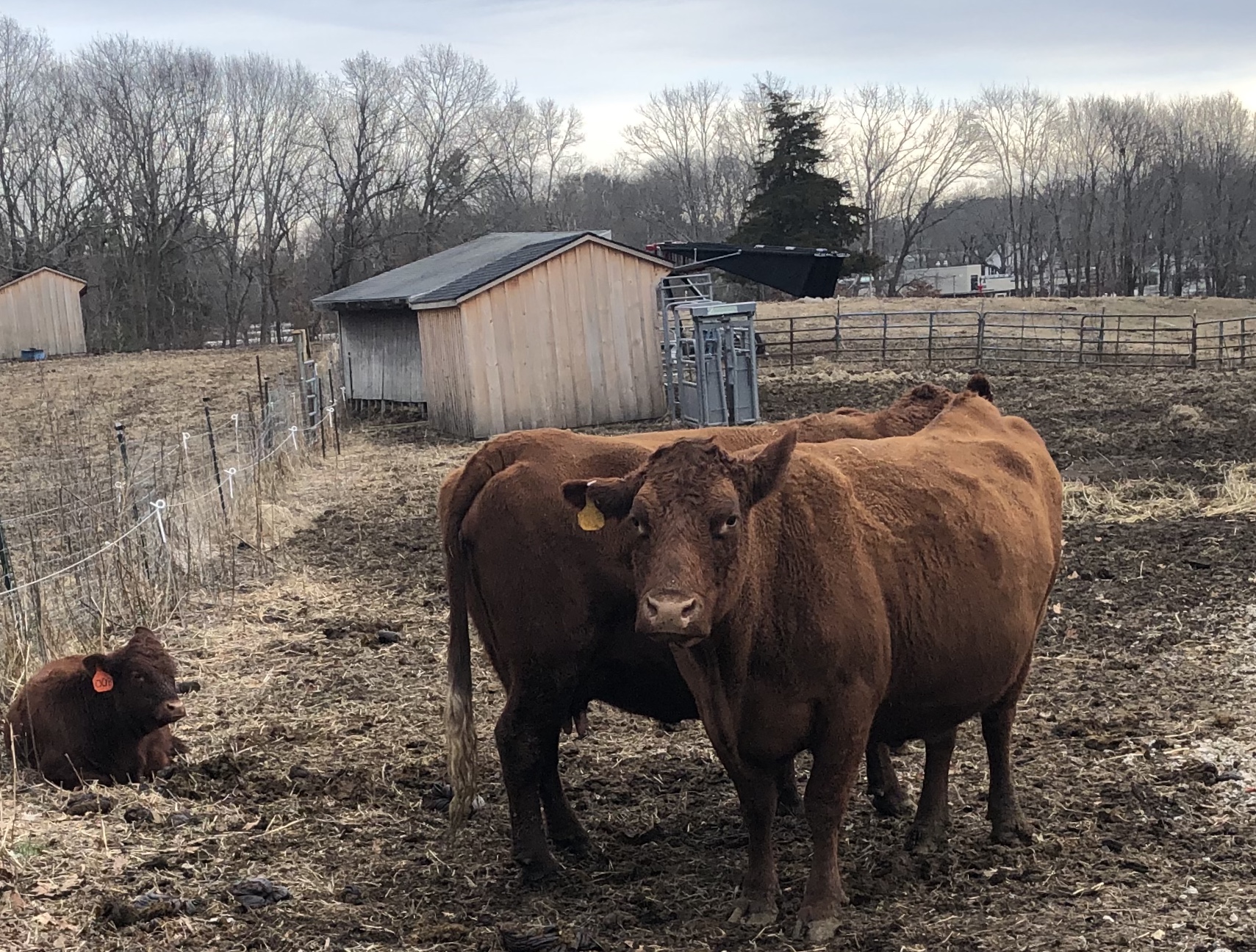
Cattle at Codman Farms, Lincoln, Mass. “Cows are often described as climate change criminals,” says Grist, “because of how much planet-warming methane they burp.” But, Grist adds, raising ruminants can also lead to deforestation, making alternatives to meat doubly important.

The other day at dinner, my husband regaled Sally and me with the latest on Europe’s use of mealworms as alternative proteins. The idea of eating mealworms — straight, no chaser — was not appealing to me even though I know they often sneak into the packaged nut and grain products we buy at the store. Which is why I freeze those products for 24 hours. I suppose I eat frozen mealworms that way, but it’s inevitable.

Grist magazine reported recently on the damage that livestock agribusinesses do to the planet when they cut down trees to graze more animals.

Max Graham says, “To feed the world’s growing appetite for meat, corporations and ranchers are chopping down more forests and trampling more carbon-sequestering grasslands to make room for pastures and fields of hay. … The greenhouse gases unleashed by this deforestation and land degradation mean food systems account for one-third of the world’s human-generated climate pollution.”

At Nature magazine I learned that alternative proteins are gaining traction in France, of all unlikely places. The focus is not on eating insects straight.

Rachael Pells writes at Nature about “the world’s largest vertical insect farm — home to at least 3 trillion mealworm beetles (Tenebrio molitor). The company’s chief executive and co-founder, Antoine Hubert, says that the beetles have a good life, as far as being an insect goes. Each of their stacked plastic trays is kept at an optimal 60% humidity and a balmy 25–27 °C. Nutrition, growth and moisture levels are all recorded for analysis, and human visitors are allowed to inspect the trays only from a distance — to prevent contamination of this prized ecosystem.

“The beetles are raised in this way from larvae to adult, at which point they meet a quick death in steam before being harvested into oil, protein and fertilizer.

“Insects have come under the spotlight over the past few years, as scientists seek alternative sources of protein to feed the rapidly expanding global population. A direct nutritional comparison shows that edible insect species have greater protein potential than do conventional meat products — 100 grams of mealworm larvae produces 25 g of protein, whereas 100 g of beef contains 20 g of protein. Insects also have a high food-conversion ratio when compared with livestock.

“To produce the same amount of protein, for example, crickets require around six times less feed than do cattle, four times less than sheep, and half that of pigs and chickens. But various attempts by companies to market insects as a mainstream food source in Europe and North America have fallen flat and largely been dismissed as a fad. And some researchers have concerns about the effects on the environment, ranging from whether escaped insects might disrupt local ecosystems to the impact of insect ‘factories.’ So why farm insects at all?

” ‘The world is facing a huge food sustainability crisis,’ explains Huber, an environmental engineer. ‘Insect protein is one very realistic and obvious solution to mitigating some of those challenges,’ he says.

“With the global population expected to reach almost 10 billion by 2050, United Nations forecasters have warned that food production will also need to increase by as much as 70%.

“However, because mealworm burgers are, at the moment, unlikely to sell out in your local supermarket, Ÿnsect grows insects for animal feed. This is given to fish, pigs and poultry, taking the pressure off conventional agricultural land use.

“The use of vertical farming has grown rapidly over the past few years, spurred on, in part, by advances in LED lighting, the cost of which fell by 94% between 2008 and 2015. Several start-ups (including Infarm in Berlin and Aerofarms in Newark, New Jersey) use the system to produce vegetables such as lettuce for human consumption. And the global market of the vertical-farming industry is expected to grow from US$3.7 billion in 2021 to $10.5 billion in 2026.

“Meanwhile, sales of plant-based alternatives to meat that are designed to reduce the demand for cattle farming — an industry responsible for 65% of all livestock emissions — seem to be stalling. When meat-substitute company Beyond Meat in El Segundo, California, went public on the stock market in 2019, its share price rose by 163%. But after the initial excitement, sales slowed, and they have remained about the same since 2020.”

As with most innovations, there are caveats. Get the details at Nature, here. And for a report on livestock and deforestation, check out Grist, here. No paywalls for either one.

Read Full Post »

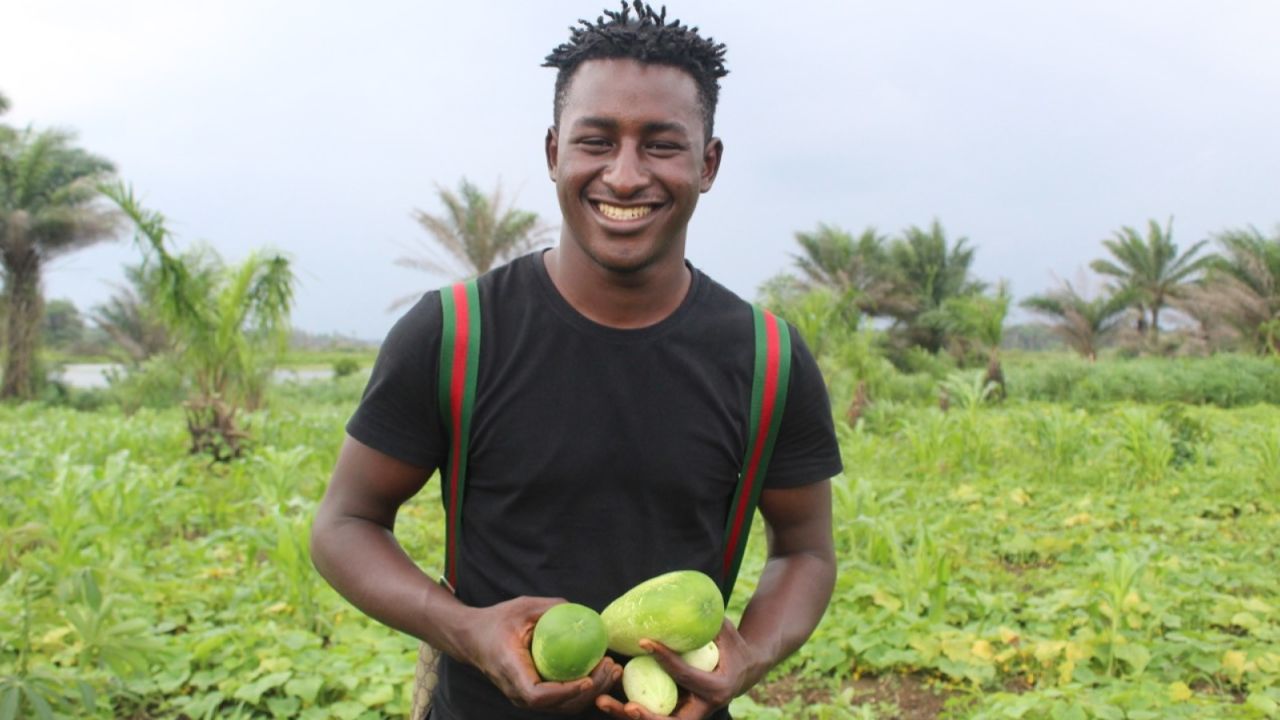
Photo: Alhaji Siraj Bah via CNN.
Alhaji Siraj Bah makes eco-friendly products in Sierra Leone.

In many parts of the world, when people have no way to heat their homes or cook, they cut down trees to make charcoal, leading to a whole series of other problems. In Sierra Leone, Alhaji Siraj Bah learned that lesson as a kid, and never forgot it.

Danielle Paquette writes at the Washington Post, “Their house was gone. They weren’t at the hospital or the morgue. Even as he searched the news for their faces, the teenager knew: His adopted family — the people who’d given him a bed when he was sleeping under a bridge — didn’t survive the mudslide.

“Three days of downpours, heavy for Sierra Leone’s rainy season, had given way to reddish brown muck streaming down the residential slopes of Sugarloaf mountain. Sinkholes opened. People in this hilly capital reported hearing a crack— like thunder, or a bomb — before the earth collapsed.

“Alhaji Siraj Bah, now 22, might have been there that August morning in 2017 if his boss had not put him on the night shift. He might have been sharing a bedroom with his best friend, Abdul, who he called ‘brother.’

“Instead he was sweeping the floor of a drinking water plant when 1,141 people died or went missing, including Abdul’s family.

“ ‘All I felt was helpless,’ he said, ‘so I put my attention into finding ways to help.’

“Four years later, Bah runs his own business with nearly three dozen employees and an ambitious goal: Reduce the felling of Sierra Leone’s trees — a loss that scientists say amplifies the mudslide risk — by encouraging his neighbors to swap wood-based charcoal for a substitute made from coconut scraps. Heaps of shells and husks discarded by juice sellers around Freetown provide an energy source that requires no chopping.

“His enterprise, Rugsal Trading, has now produced roughly 100 tons of coconut briquettes, which, studies show, burn longer for families who do most of their cooking on small outdoor stoves. One report in the Philippines found that a ton of charcoal look-alikes fashioned from natural waste was equivalent to sparing up to 88 trees with 10-centimeter trunks.

“ ‘My motivation is: The bigger we grow, the more we can save our trees,’ Bah said on a steamy afternoon in the capital, chatting between coconut waste collection stops. ‘The hardest part is getting the word out about this alternative. Everyone loves charcoal.’

“Researchers weren’t sure what triggered the worst natural disaster in the West African country’s history, but some pointed to Sugarloaf mountain’s vanishing greenery. Deforestation not only releases more carbon dioxide into the atmosphere — it weakens slopes. Canopies are critical for soaking up rain and taming floods. Roots anchor the soil together. …

“ ‘After [the flood], he was always on YouTube,’ said Foday Conteh, 23, who met Bah when they were both living on the street. ‘He became obsessed with looking for ways to stop deforestation.’

“Bah, 17 at this point, saw a video of a man in Indonesia who crafted charcoal replacements from coconut shells. Others were doing something similar in Ghana and Kenya: Collecting coconut scraps, drying them out in the sun, grinding them down, charring them in steel drums.

“He watched the makers mix the blackened powder with binders like cassava flour and then feed the dough into a machine that spits out matte loaves. Next came slicing the loaves into cubes. You could grill with them the same way — except a coconut aroma fills the air.

“ ‘It looked like a great business idea,’ Bah said. ‘I could make fuel with stuff we find on the street.’ …

“He kept researching the concept on his boss’s computer. The [briquette] machine cost about $3,000, so Bah asked for more hours and a raise. … The wages alone weren’t enough, spurring him to follow the blueprint of another young entrepreneur he’d read about in Uganda who’d started a recycled bag business with $18. Bah saved up for scissors and glue. He visited shops around town, offering to sell bags fashioned from discarded paper for customers who would pay half up front.

“One hotel manager agreed, and Bah suddenly had the capital to make a thousand bags. The order took five days to complete and netted him $100. More clients emerged. Within a few months, he bought the machine he needed to churn out the coconut briquettes. …

“ ‘I was a homeless boy,’ Bah [says today], ‘and now, on a good month, we do $11,000 in revenue.’ …

“Deforestation still worries him. Charcoal remains king in Africa — the continent accounts for 65 percent of global charcoal production — and people haven’t stopped hacking down trees on Sugarloaf mountain. Sierra Leone’s president was among the 100 world leaders who vowed to halt deforestation by 2030 at this year’s United Nations climate summit in Glasgow, and Bah hopes he sticks to his word.

“ ‘We have a lot more to do.’ “

Although I would love to see more solar stoves and less burning of any kind of material, I have to admire this young man’s ecological awareness and his determination to improve the world. Read about the challenges he had to overcome at the Post, here.

Read Full Post »

Photo: Kate Evans, CIFOR, Flickr, CC BY-NC-ND 2.0.
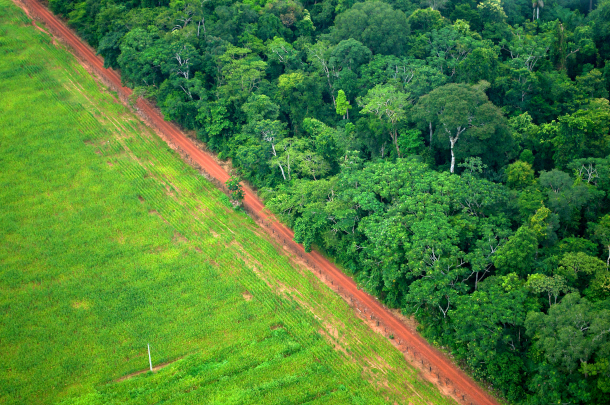
Note the contrast between forest and agricultural landscapes near Rio Branco in Brazil. Learn how you can have the products you love without damaging the environment.

We all love chocolate, but it’s important to be mindful in our interconnected world to think about the potential consequences of producing the foods we love. I have written before about how you can avoid buying chocolate that relies on child labor (click here). Today we turn to the environmental radio show Living on Earth to learn about saving the rain forest and other critical ecosystems from the wrong kind of cultivation.

Host Steve Curwood talks to Anke Schulmeister of the World Wildlife Fund about the European Union’s decision to stop importing a half-dozen agricultural products from newly deforested areas.

“STEVE CURWOOD: When someone takes a bite of a hamburger or tofu or has a cup of coffee or chocolate bar, it’s hard to know if those foods added to the destruction of tropical forests that are so key for biodiversity and climate stability. …

The EU is moving to ban the importation of certain agricultural products from any newly deforested areas. And they are starting with soy, beef, palm oil, wood, cocoa and coffee.

“The EU laws would compel purveyors to prove their products didn’t come from any newly deforested land. The proposed laws are projected to reduce greenhouse gas emissions by some 32 million tons a year and help the EU meet its goal of net zero emissions by 2050. It requires final approval by the European Parliament as well as each of the 27 EU member states. … How will people be able to understand that the cocoa that was used to make [chocolate] came, in fact, from a place that’s not being deforested, at least in contravention of this proposed set of regulations? …

“ANKE SCHULMEISTER: What this law is trying to do is that there is no choice for a consumer on whether the product is made with deforestation or not; it’s just simply you’re making sure that no matter which chocolate you buy, it is going to be free from deforestation. And to achieve that, there are measures in this legislation proposed that will ask a company to check down the whole supply chain. [No] environmental impact … neither human rights violation taking place. …

“For example, in Brazil, deforestation is still legal in certain aspects. … What the EU at the moment is proposing is to say, even if the Brazilian law allows that, we in the EU do not want to buy this. …

“CURWOOD: So beef is part of this, which of course, at the end of the day means leather. So let’s say an American shoemaker, who has a contract with somebody in China is now selling that label in the European Union, once this rule goes into effect, what kind of challenge would they would they face?

“SCHULMEISTER: This is a very good question, because that goes really much into the depth of it. So normally, what the commission has proposed is that you would need to know where it was produced no matter whether it came by China, or else. So if this American shoemaker would like to actually sell in Europe, he would need to get from his Chinese supplier information that tells him where he actually bought the leather. And then in the end where the cow was fed that produced that leather.

“CURWOOD: Sounds very complicated.

“SCHULMEISTER: Yes and no. Because let’s put it like this: we’re asking something rather simple in stating, is there still land where there’s forest or has this forest been converted to something else? And for this, there’s a lot of satellite data these days available. So you know, it’s very clear, very regularly updated. What is making it a bit more complicated is that there is a need for more transparency about your supply chains. …

“CURWOOD: What are the numbers? What kind of reductions in emissions, carbon emissions, do you think these rules, this legislation, will create? …

“SCHULMEISTER: If there’s no law, there will still be about 248,000 hectares a year of deforestation, and about 110 million tons of C02 emitted until 2030 per year. … We think that European Commission is on the right track. But you know, what our plea would be now to the European member states and the parliament is that, you know, to close some of the gaps which we see. One is that for example, other ecosystems — savannas or grasslands — are not included from the beginning.

“We [call] savannas ‘the inverted forests,’ meaning that their roots store nearly as much carbon as actually forests do, you know. On the landscape that they are they have such a dense root system, you know, that they really store a lot of carbon in there and that is then if it’s converted to agricultural land lost. [Also] it is not very strong on human rights violations or actually ensuring that there are no human rights violations. [Further] it is not addressing the finance sector. …

“And what for us is important is that this law applies the same to all companies so that we do not make a differentiation between sourcing from a high-risk region–so where there’s a high risk of deforestation–or a so-called low risk region. … And even if a company is sourcing from a high-risk region, there can be companies who have a good traceability and a good transparency.”

More at Living on Earth, here.

Read Full Post »

Photo: Earthshot.
Costa Rica won a Earthshot prize for its success reversing damage to tropical forests by incentivizing landowners to leave unused land alone.

I really liked this story about an effort in Costa Rica that is helping restore tropical forests. A study says that although “it’s not a license to kill” forests, they can come back eventually if humans just leave them alone to heal.

Tik Root writes at the Washington Post, “Deforestation is a global and accelerating threat. But new research shows that tropical forests can recover naturally and remarkably quickly on abandoned lands.

“The study, published [in] the journal Science, found that under low-intensity use, soil on previously deforested land can recover its fertility in less than a decade. Characteristics such as the layering of plants and trees in a forest, as well as species diversity, came back in about 25 to 60 years.

“ ‘I was totally surprised how quickly it went,’ said Lourens Poorter, an ecologist at Wageningen University in the Netherlands and lead author on the paper.

‘These forests can recover very fast and they can do it by themselves.’

“Burgeoning secondary forests are good for the climate as well. They are able to sequester more carbon dioxide from the atmosphere than established forests; like the voracious food intake of a sprouting teen compared to that of an older adult.

“ ‘It does provide a glimmer of hope for this process of tropical reforestation,’ said Meg Lowman, a conservation biologist and author of The Arbornaut: A Life Discovering the Eighth Continent in the Trees Above. ‘My only caution is that I don’t think it’s ever a substitute for the importance of saving big trees and old growth forests.’

“Older forests ultimately store more carbon dioxide than young forests, and deforestation releases those stockpiles, which helps drive climate change. The study found that it took more than a century for the overall biomass of tropical forests — and thus their carbon storage ability — to return fully. The recovery of a forest’s species makeup lasted a similar period.

“The longer time frame for the revival of these key benefits is among the reasons that Poorter says maintaining current forest cover is crucial. ‘First, stop deforestation and conserve old growth forests,’ he emphasized. The fact that deforested land can recover ‘is not a license to kill.’

“A 2019 study estimated that some 5.5 million hectares of tropical forest — an area more than twice the size of Belize — is lost each year to expanding commercial cropland, pastures and tree plantations. But cleared land is often abandoned as cultivation shifts, said Poorter, and researchers wanted to know, ‘Can it recover?’

“The answer is yes. … The subsurface soil, for example, often remains relatively vibrant after deforestation, which enables a faster recovery. The warmth and humidity of the tropics also allow trees to grow extremely fast, with some species climbing more than a dozen feet per year.

“And this all happens largely without human intervention, Poorter said. Seeds, roots and stumps embedded in the soil, or the spread of plants from adjacent forests, kick-start the recovery process. … ‘The conditions are that there has to be nearby forests, and the soil can’t be too degraded.’ “

The Post article continues with Daniel Nepstad, a tropical ecologist and president of the San Francisco-based Earth Innovation Institute, who says, ” ‘The research bolsters the policy argument for a nature-based approach to forest restoration. The cheapest way to get forest back on the land is to let nature do the work.’

“He would encourage governments to incentivize farmers and landowners to protect secondary forests and promote regrowth.

“Organizations such as the Natural Capital Project advocate for similar approaches to ecosystem services restoration. Costa Rica recently won Prince William’s Earthshot Prize for a program that helps reverse deforestation by paying farmers to protect and reforest their land. …

“This paper drew on 77 sites in three continents, comprising 2,275 plots and 226,343 stems.”

More at the Post, here.

Read Full Post »

woman_in_tree-1_custom-b0cb07002611909bcf892cd2ef07bc4242501c46-s700-c85
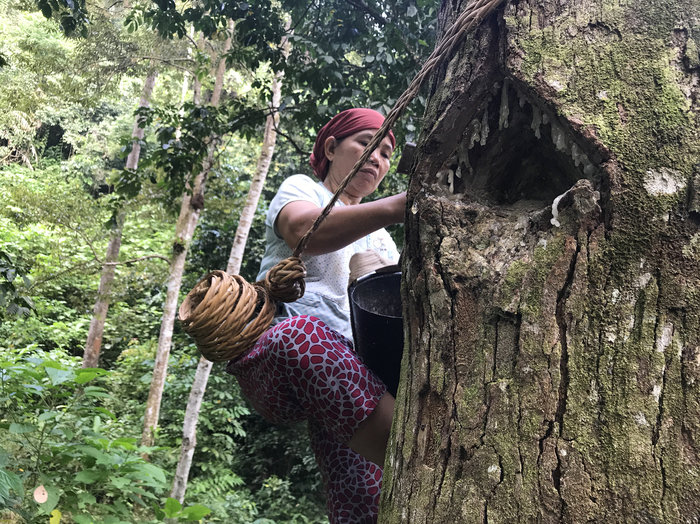
Near the southern Sumatran village of Krui, 48-year-old Marhana climbs up the trees to harvest damar, a resin used in paints and varnishes. The trees are part of an “agroforest” that experts believe will help prevent deforestation in Indonesia.

Recent floods in Indonesia have been overshadowed by infernos in Australia, but both disasters are part of the same issue: what careless human stewardship of nature has wrought. The following article from National Public Radio (NPR) talks about an effort to help Indonesian farmers produce something more sustainable than the palm oil that causes flood-increasing deforestation and even threatens orangutan survival.

Julia Simon writes at NPR, “A few times a month, Marhana leaves the village of Krui in southern Sumatra and journeys deep into the woods. Then she finds a tree, lined with triangular holes, each hole dripping with crystalized sap. …

” ‘This is the damar,’ she says in Indonesian, as she looks at the golden droppings.

“Marhana may see damar as her way to make a living, but agriculture experts see this rare commodity as something bigger. They see damar as a sort of anti-palm oil — a model to combat deforestation and climate change. …

“In the 1800s, Dutch colonists used the sap to bind their wood boats for sea journeys. Today damar is used in varnishes, paints, and cosmetics. According to the UN, Indonesia exports tens of thousands of tons of damar and other resins each year.

“But … according to the Indonesian Palm Oil Organization, or GAPKI, Indonesia exports about 2 to 3 million tons of palm oil per month. And those palm oil exports come at a cost: large-scale deforestation of Indonesian forest, which in turn releases large amounts of climate change gases and destroys habitats for animals like endangered rhinos and orangutans. Last year, the Indonesian government stopped issuing licenses for new palm oil plantations and the European Union is now considering an import ban.

“But there’s an issue. [In September] Thomas Hertel, a professor of agricultural economics at Purdue University, co-authored a paper in the Proceedings of the National Academy of Sciences. He argued that even if the EU ban comes to pass, and even if it successfully reduces the trade of palm oil, local farmers aren’t just going to automatically keep the forests in place. …

“Hertel says that farmers might stop planting palm oil, but they might keep cutting down forests to plant other commodities, like soy or rice. ..

“That’s where damar comes in. Back in Krui, farmer Kamas Usman says he grows damar in something called an agroforest. It may look like a regular forest, but it’s actually an intricately planned farm.

” ‘In this agroforest there are lots of varieties of trees. Durian, jengkol, lots of them,’ Usman says. The farmers plant food crops below — Southeast Asian fruits like durian and jengkol, as well as avocados or coffee. Above in the canopy are the damar trees — also called Shorea javanica — which produce the golden sap. …

“David Gilbert, a researcher at the University of California, Berkeley, says the agroforestry model adds value that’s key to the forest’s survival. First there’s the water benefits: Having your farm in the middle of a forest with natural watersheds and rain cycles is a win for crops’ health.

“And then there’s the business side — all these crops growing together means forest farmers like Usman and harvesters like Marhana have lots of economic incentives not to cut down their trees. …

“With damar agroforests, farmers aren’t reliant on a single product. ‘If the damar price is too low, they can concentrate on selling their coffee or their avocados, for example,’ Gilbert says, ‘So it insulates them from the shocks of these global commodity markets in a way that producing just one crop can’t provide.’ …

In the 1990s, when the palm oil industry came in and tried to persuade locals to cut down their damar trees, it didn’t work. The majority of farmers stuck with damar. Around this time, Indonesia’s forestry minister decided to formally grant the community ownership of several thousand hectares of woods.

“Now the Indonesian government is in the middle of a plan to increase Indonesia’s community-owned forest lands to 12.7 million hectares. And the Indonesian Ministry of Social Forestry is also working on community agroforestry projects on other islands besides Sumatra, including Java, Kalimantan and Sulawesi.”

You may read the full article or listen to the radio story at NPR, here.

Read Full Post »

At Moth Radio Hour, people who can tell stories well are recorded telling theirs before an audience, without notes or prompts. I was driving home one day when I heard a story by Jensi Sartin, who showed fishermen in Bali how to save their livelihoods by “banking” some fish.

A bit of background on Sartin comes from the Aspen Ideas blog: “Jensi Sartin is the director of the Reef Check Foundation Indonesia in Bali, where he devises community-based strategies to protect the coral reefs in Indonesia. [In] his story ‘The Fish Bank,’ [he talks] about how he tried to bring the fish back to Bali.

‘This is not just about 75 percent of the world’s coral reef going extinct, it’s not just about the fish that will just disappear. This is about people, because there are lots of people that depend on this coral reef. There are a lot of people that depend on the fish and this healthy coral to feed their family.’

“Sartin says that his experience growing up in the rainforests of Borneo – where deforestation was already under way – prepared him for his professional career as an advocate for the world’s oceans. ‘All of these things are connected,’says Sartin. … ‘Protected areas are not about managing resources, they are about managing people.’

“Sartin says community-based conservation forms a crucial part of sustainable development, especially in regions of the world that are environmentally stressed.” Here is the Aspen link.

If you missed my review of the climate-change movie Revolution, which shows how coral reefs are sending us a warning, check it out here.

And you can listen to Sartin’s inspiring storytelling at Moth.

Photo: Caroline Lacey
On the Moth Radio Hour, Jensi Sartin talks about creating a fish bank.

Read Full Post »