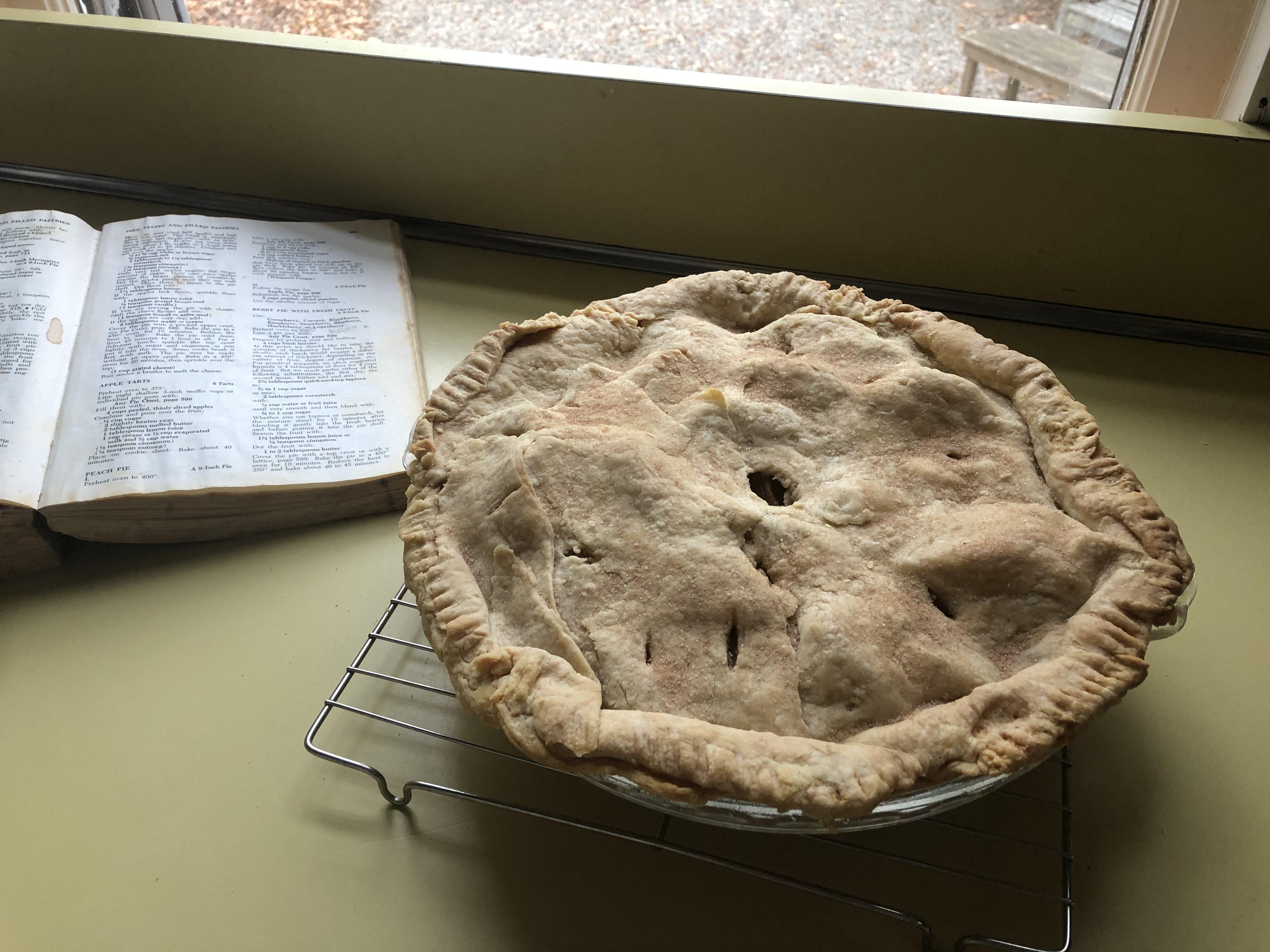
My husband and I are on our own for the first time at Thanksgiving. We ordered turkey takeout, but I did make the apple pie.
I want to avoid perpetuating any Thanksgiving mythology but at the same time write about the enduring appeal of a universal idea — people with differences breaking bread together.
We now know that our traditional Thanksgiving story is both inaccurate and hurtful to descendants of the indigenous people who first encountered the Pilgrims. As you can read at the Christian Science Monitor, here, the New York Times, here, and the Smithsonian, the story of colonial contact is considerably more heartbreaking than uplifting.
This knowledge has been discussed widely for quite a few years now, and yet there are still schools where children make feather headdresses and Facebook friends who post Pilgrims and Wampanoag chiefs holding hands. So what is the appeal, apart from the spin and wishful thinking of conquerors?
Pretty sure it’s the breaking-bread-together part.
I remember my sense of gratitude and privilege (the good kind of privilege) when I was invited to my friends’ Passover seder. How I loved hearing about the words that are said over all the traditional dishes and the history associated with them. I loved learning that I shouldn’t quiz my friend’s father on his WW II experience because “we focus on peaceful topics at Passover.” How else would a person raised Episcopalian gain this interesting knowledge about cultural differences?
Even at non-Covid Thanksgiving meals, you know, we often break bread among differences. Friends regularly say they hope they can keep distant relatives off religion and politics and just focus on things everyone enjoys in common. Because among differences, there are always commonalities.
All of which is my roundabout way of sharing my delight in some unusual combinations of dishes ESL students I know are preparing for Thanksgiving. It’s a merging of cultures.
“For Thanksgiving, I’m going to cook baked pork in sweet and sour pineapple and orange sauce, turkey, Russian salad, and Italian pasta.”
“For Thanksgiving, I plan to cook baked pork with pineapple, cranberry, and ginger sauce. Mashed potatoes and fruit salad.”
“I plan on cooking turkey, rice, pork, and Salut bacalao [Puerto Rican fish stew]. The drink will be Coquito [coconut eggnog].”
“I plan on cooking turkey, potato salad, chicken lasagna, and fruit.”
“I plan to cook turkey, rice, salad, and lasagna. For dessert we will make a brownie and three-milk cake.”
“Our plan for Thanksgiving is to cook a turkey, chicken, rice. And we are going to make a salad.”
Another student told me she usually makes the same things I think of as traditional Thanksgiving dishes but adds corn fritters. This year, she writes, she’s alone and isn’t sure what she’ll make, adding, “The smallest number of people in the home will be best for avoiding Covid-19. I think I’m in the smallest group by myself.”


 Suzanne's Mom's Blog