Feeds:
Posts
Comments

Posts Tagged ‘drawing’

Art: Norman Rockwell.
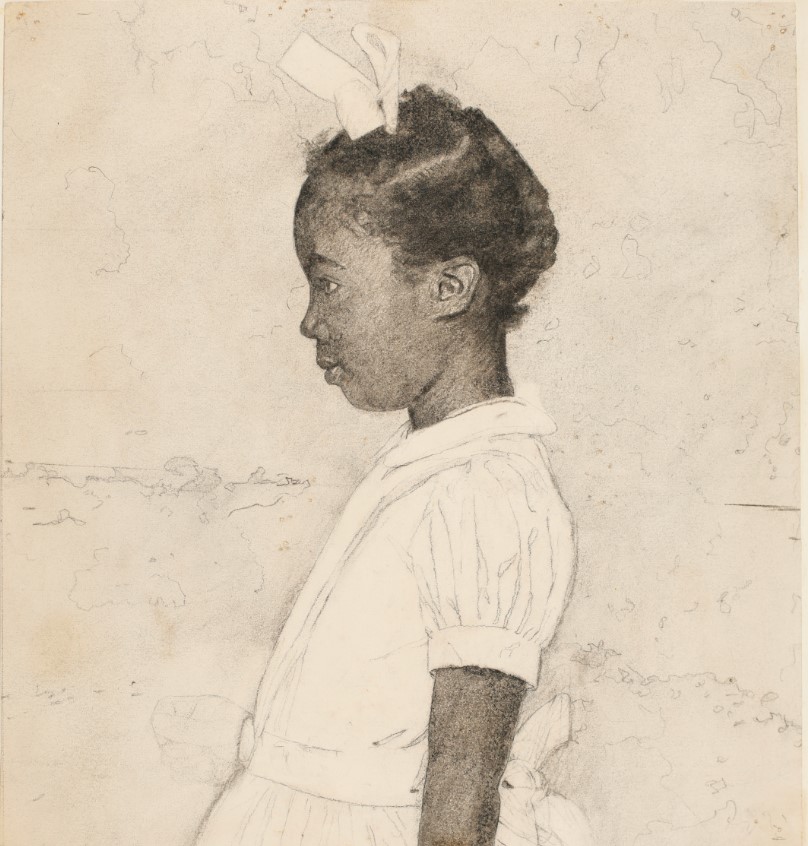
Study for “The Problem We All Live With” (1963), Wolff pencil and charcoal on paper, Norman Rockwell Museum Collection, from Lynda Gunn, Norman Rockwell model for “The Problem We All Live With,” a tribute to a brave little American, Ruby Bridges.

When I was growing up, Norman Rockwell art was everywhere, not just on the covers of the Saturday Evening Post. I think that, partly because it was so available, it was undervalued by art snobs. Abstract Expressionism was the only thing for serious artists, supposedly. But the public at large loved Rockwell’s storytelling, and in recent years the snobs have begun to notice the skill underlying those stories.

Lauren Moya Ford writes at Hyperallergic that the new Norman Rockwell: Drawings, 1911–1976 is the first book dedicated to the artist’s prolific but largely private drawing practice.

“Norman Rockwell produced nearly 3,000 images for publication over his six-decade-long career, but he made many more drawings and sketches that have never been seen,” she reports. “For the artist and illustrator known for depicting charming views of daily American life, putting pencil or charcoal to paper was more than just a quick, problem solving process.

‘Drawing is a complete expression of my idea in line and tone,’ he wrote in 1948, adding that ‘sometimes I feel that making this sketch is the most creative part of making a picture.’

Norman Rockwell: Drawings, 1911–1976 (Abbeville Press, 2022) by Stephanie Haboush Plunkett and Jesse M. Kowalski … sheds light on the artist’s personal and professional drawings, including his preparatory sketches for advertisements, books, and magazine covers, as well as his illustrated letters, travel sketchbooks, cartoons, and caricatures. Rockwell has long been celebrated for his technical expertise, light humor, and meticulous attention to detail, traits that come through perhaps most strongly in his drawings. …

“Born in New York City in 1894, Rockwell grew up watching his father and maternal grandfather draw and paint in their free time. At age 16, he left high school to study art, first at New York’s National Academy School, and later at the Art Students League, where he excelled in figure drawing. At only 19 years old, he was appointed Art Director at Boys Life magazine, and in 1916, he began his 47-year tenure at the Saturday Evening Post, where he produced more than 300 magazine covers that reached — and delighted — millions of Americans.

“Despite ongoing project deadlines, Rockwell remained a methodical craftsman. Each finished piece could take as many as 15 steps and countless sketches to complete, and his preparatory drawings are often so impressively executed that they could easily be finished works, though they were never shown publicly. The book explains that Rockwell’s fastidiousness owes itself at least in part to his love of the Old Master, and he referenced and sometimes imitated Raphael, Leonardo, Dürer, Vermeer, and others in his work. For example, Rockwell’s ‘Rosie the Riveter’ (1943) takes the same pose as Michelangelo’s ‘Prophet Isaiah’ (c. 1511) from the Sistine Chapel, and in ‘The Art Critic’ (1955), his son poses as a young gallery-goer admiring a Rubens-esque portrait, modeled by the artist’s wife.

“Rockwell used live models and real props to create his work during the first decades of his career. Later he incorporated photography, though this didn’t necessarily make his process any less elaborate. Ever the perfectionist, Rockwell sometimes took more than 100 shots of the individual models and elements he planned to draw at different angles and positions. But the rapid technology allowed Rockwell to use more animated poses and expressions, and to incorporate people, places, and things from outside of his studio. …

“One of Rockwell’s most famous pieces is ‘The Problem We All Live With’ (1963), his tribute to the bravery of Ruby Bridges. It was the artist’s first image for Look magazine, a publication that Rockwell began working for after being frustrated by the Post’s policy against depicting people of color, except in subservient roles. Rockwell was a life member of the NAACP. At Look, ‘his hands were no longer tied, and he felt free to create artwork that underscored his personal beliefs and called attention to the civil rights issues of the day,’ Louis Henry Mitchell writes in his foreword.

“The image was so timely and powerful that one Look reader wrote, ‘The truth is pretty hard to take until we get it from a Norman Rockwell.’ Although Rockwell has sometimes been criticized for his whimsical, even idealized portrayals of American life, this book reveals him to be a tireless worker whose drawings carried much more skill, substance, and conviction than previously recognized.”

More at Hyperallergic, here. No firewall. Terrific pictures.

For a treat, try to get to the Norman Rockwell Museum (“The Home for American Illustration”) in Stockbridge, Massachusetts. Right now they have a special exhibit on Hilary Knight, featuring Eloise, among other works. And of course, there are guided tours of the museum’s extensive Rockwell collection.


Read Full Post »

Photo: Marc Domage/© Private collection.
A detail from one of Picasso’s sketchbooks for his daughter. 

I have read things about Picasso over the years that have made me think that he might not have been a person I would enjoy knowing. Then he goes and does something like this, and I have to remind myself that people are complicated: almost everyone weaves the good with the not good.

Dalya Alberge has a charming story about Picasso at the Guardian.

“They are the ultimate ‘how to draw’ books for a young child,” Alberge writes, “created by a doting dad who just happened to be one of the greatest artists of the 20th century. The granddaughter of Pablo Picasso has discovered an extraordinary collection of sketchbooks used by the artist to teach his eldest daughter to draw and color.

“Picasso filled the pages with playful scenes – animals, birds, clowns, acrobats, horses and doves. … He created them for Maya Ruiz-Picasso when she was aged between five and seven. On some pages, the little girl made impressive attempts to imitate the master. She also graded her father’s work, scribbling the number ’10’ on a circus scene, to show her approval.

“He drew two charming images of a fox longing for grapes – inspired by the 17th-century fabulist Jean de La Fontaine’s sour grapes fable, The Fox and the Grapes – and Maya colored in one of them. He also drew simple but beautiful eagles in a single movement, without raising the pencil from the paper, conveying his love of form and pure line to her.

“The previously unseen collection includes exquisite origami sculptures of birds that he brought to life for Maya from exhibition invitation cards.

“His granddaughter, Diana Widmaier-Ruiz-Picasso, found the works by chance while looking through family material in storage. Intrigued, she showed them to her mother, now 86, for whom memories came flooding back.

“Widmaier-Ruiz-Picasso told the Observer: ‘She said, “Of course, those are my sketchbooks when I was little.” ‘ …

“Picasso, who died in 1973, had been taught to draw by his father, a professor of drawing, ‘so that was something natural for him to do’ with Maya, his granddaughter said: ‘There’s a beautiful page where he’s drawing a bowl and she’s drawing a bowl.

“ ‘Sometimes she’s making an image and he’s doing another, showing her the right way to do it. Sometimes they would depict different scenes. Other times, he would draw a dog or a hat. Sometimes he’s using the whole page to draw one particular thing. Other times, he’s depicting certain scenes, scenes of the circus.’ …

“Maya particularly remembers that, during the second world war, color pencils and notebooks were in short supply: ‘That’s probably why my father wrote in my exercise books and colored with my pencils. I still have fond memories of those moments when we met up in the kitchen to draw together. It was the only place in the apartment where it was warm.’

“Widmaier-Ruiz-Picasso is an art historian, curator and jewelry designer, who has just published her latest book, Picasso Sorcier, exploring his superstitions and belief in magic.

“She described the discovery of the sketchbooks as ‘fortuitous’ because she was co-curating a major exhibition for the Musée Picasso-Paris on his close bond with his first daughter. … The exhibition, Maya Ruiz-Picasso, daughter of Pablo, runs until 31 December and includes his many portraits of Maya, personal possessions and photographs, along with the sketchbooks and origami sculptures, which are being shown for the first time. …

“In the exhibition’s accompanying book, [his granddaughter] writes: ‘Who has never heard it said when looking at a canvas by Picasso, “A child could have done that!” Many of the artistic revolutions of the 20th century were greeted with mockery and scandal, it is true, but in Picasso’s case there is a hint of truth in that judgment. As Maya, his first daughter, recalls, “the mystery of life, and therefore of childhood, always filled that father of mine with interest.” …

” ‘Picasso borrowed extensively from the unruly lines of children’s drawings. Where Van Gogh, Gauguin and Matisse concentrated on the graphic and pictorial naivety with which children draw, Picasso emphasized more the elements that upset figurative traditions, that is to say, distortion and deformity.’ ”

More at the Guardian, here.

Read Full Post »

You know this blog is connected to my daughter’s birthstone-jewelry company Luna & Stella, right?

Well, today I am passing along a Luna & Stella promotion in case you would like to follow Suzanne’s company on Instagram and get a chance at a $50 gift card. As a Luna & Stella Instagram follower, you’ll also get $10 off your first order with Suzanne (use the code INSTA10).

If you are not already on Instagram, you can sign up here, https://instagram.com/.

I liked this day-in-the-life small business story that Suzanne put on Facebook today:

“A customer in Qatar who had special ordered our 14K gold Constellation Stacking Birthstone Rings for his wife to celebrate the arrival of baby due in November, emailed us on the way to the hospital last night: ‘The baby is coming now! Can we change the birthstone?’

“No problem, we said, we are always happy to make adjustments for babies who don’t arrive on schedule.

“In celebration of ‪#‎octoberbabies‬ everywhere, we are doing an ‪#‎IGgiveway‬. You can win a $50 credit to our store.

“To enter:
“1. Follow us on Instagram
“2. Tag a friend
“3. For an extra entry, tell us who is your moon & stars, and what piece you’d buy to represent them!

“That’s it! Giveaway will end on Tuesday 11/4 /15 at 6 p.m. Eastern Standard Time.”

Photo shows the angel wing charm. See all the jewelry at Luna & Stella, here.

For angels only. Birthstone jewelry by Lunaandstella

Read Full Post »

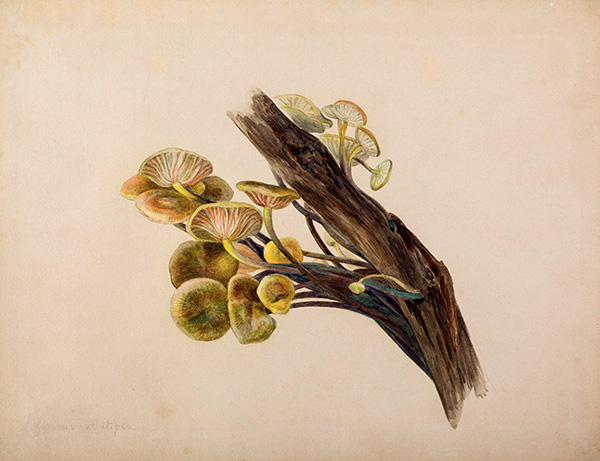
There was more to Beatrix Potter than Flopsy, Mopsy, and Cottontail. Her meticulous drawings of flora and fauna made serious contributions to the science of the day.

Maria Popova at Brain Pickings shares Potter’s mushroom drawings and more.

“At a time when women had no right to vote and virtually no access to higher education, very rarely owned property and were themselves considered the property of their husbands, Potter became a commercially successful writer and artist, using the royalties from her books to purchase her famed Hill Top Farm, where she lived simply and with great love for the land for the remaining four decades of her life. …

“Linda Lear’s altogether magnificent Beatrix Potter: A Life in Nature (public library) — [is] by far the best book on Potter and one of the finest biographies ever written, Lear’s prose itself a supreme work of art.

“A formal scientific education was virtually inaccessible to women, except for the rare Ada Lovelace or Maria Mitchell, and membership in scientific societies was strictly reserved for men. But Potter’s scientific work was exceptional in that she deliberately tried to penetrate the very institutions that dismissed women’s scientific labor solely on the basis of gender. …

“By her early twenties, Potter had developed a keen interest in mycology and began producing incredibly beautiful drawings of fungi, collecting mushroom specimens herself and mounting them for careful observation under the microscope. … Lear writes:

Beatrix’s interest in drawing and painting mushrooms, or fungi, began as a passion for painting beautiful specimens wherever she found them. She never saw art and science as mutually exclusive activities, but recorded what she saw in nature primarily to evoke an aesthetic response. She was drawn to fungi first by their ephemeral fairy qualities and then by the variety of their shape and colour and the challenge they posed to watercolour techniques. Unlike insects or shells or even fossils, fungi also guaranteed an autumn foray into fields and forests, where she could go in her pony cart without being encumbered by family or heavy equipment.

More here.

Art: Beatrix Potter
Flammulina velutipes (Armitt Museum and Library)

Read Full Post »

Facebook can be annoying, but I guess it does sometimes pay to be on it.

After “liking” a number of my cousin Sally Frank’s nature photos and art over the years, I finally figured out via Facebook that much of her work is on a WordPress blog — and she has had the blog longer than I have had this one.

Trees are a specialty. Often she will start with a photograph like the one below for inspiration. She then turns to printmaking, which you can learn about at her blog.

“Ms. Frank uses centuries-old printmaking techniques like etching and aquatint on copper plates, as well as innovative methods like solarplate intaglio. She says that although her work is grounded in drawing, she finds the unpredictable nature of printmaking inspirational and exciting.” More.

This photo reminds me of the strangler fig that I saw years ago in Costa Rica, a tree that wraps itself around a host and literally loves it to death. The host tree crumbles, and only the strangler is left — with an empty space inside.

Sally’s photo probably has a happier story — perhaps a nymph turned into a tree to escape danger.

Photo called “bound”: Sally Frank

Read Full Post »

She doesn’t do only trees, but she knows trees inside and out.

Katherine Pacchiana has a nice update in the Daily Voice, a newspaper in North Salem, New York.

Sally Frank was in the middle of the Maine woods as she talked, via cell phone, about her collection of tree art, now on display at the Ruth Keeler Library.

“ ‘Most of what I do is make prints,’ she explained. ‘Unfortunately, I have a day job, but I like to do monotypes which are spontaneous and don’t take a long period of time.’ Monotypes are a form of prints, dating back to the 17th century. Each is made individually.

“Frank has been drawing all her life and has trained in many places, including Simon’s Rock in Great Barrington, Mass., and Long Island University, where she earned a master’s in fine arts. At the age of 19, she was apprenticed to Tom Bostelle, the American painter and sculptor who was a colleague of Andrew Wyeth.

“ ‘I’ve always drawn trees and the natural landscape. I went from focusing on the architecture of a tree – its sturdy trunk and the strong presence it has on the landscape – to what is left when a tree dies away and leaves forms behind.

“ ‘I’m fascinated by the texture and light that trees create, the  patterns – a tree’s essence.’ ” Read more.

Today I happened to be in Great Barrington for a work conference on affordable housing in rural areas. It was my first visit since Sally’s parents’ wedding, which I remember as being in a Unitarian church. I was hoping to get a picture I could post, but I saw only St. Peter’s and the Congregational church.

The Red Lion Inn in Stockbridge looked vaguely familiar, and I wondered if that was where we were staying when my father, as best man, realized he’d forgotten the wedding ring and raced back to fetch it while Uncle Jim paced anxiously, muttering words I recall as, “He always does this”!

Read Full Post »