Feeds:
Posts
Comments

Posts Tagged ‘mycology’

Photo: Maria Pinto.
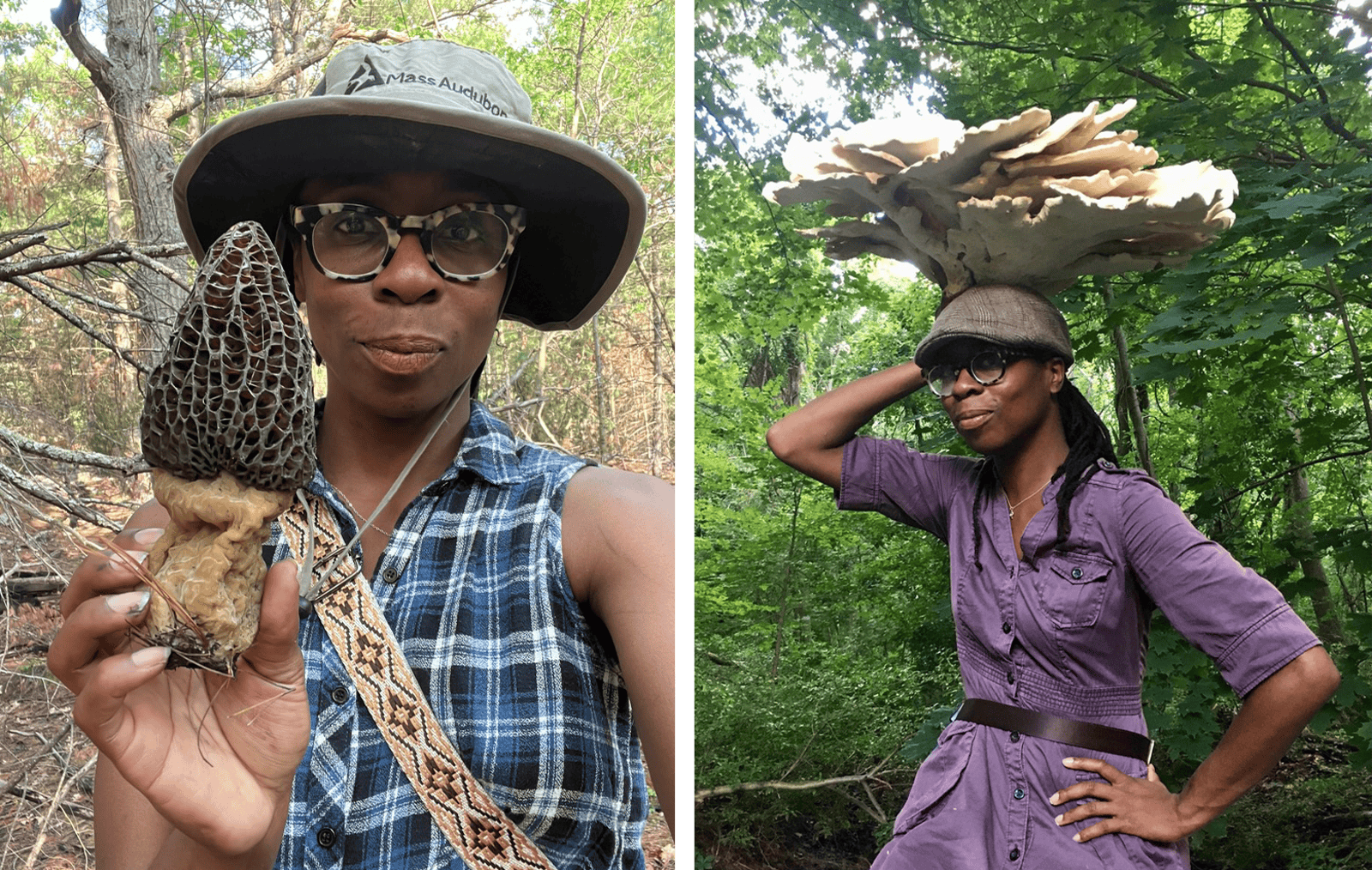
Maria Pinto with a burn morel mushroom, on Boston’s North Shore; right, Pinto with a Berkeley’s polypore mushroom in Weston, Massachusetts. 

Last fall, when my second cousin stopped by with his mycologist friend, they inspired in me a new interest in wild mushrooms. I don’t feel motivated enough to find and eat them, but I am definitely paying more attention to what pops up after a rainstorm.

Melissa Hellmann wrote recently at the Guardian about some serious mushroom hunters.

“On her typical walk in the woods in Newton, Massachusetts, something stopped Maria Pinto in her tracks. She spotted what appeared to be a glowing yellow figure with a metallic sheen among the pine needles on the ground. It was the first time Pinto was enthralled by a mushroom – the American yellow fly agarica poisonous fungus. …

“ ‘It forced me down on my knees to examine it further, because it didn’t look real,’ Pinto, a naturalist and writer, said. … More than a decade later, Pinto has dedicated much of her life to mycology, the burgeoning study of fungi.

“As a Jamaican American woman, Pinto stands apart in the mostly white hobby through her pursuit of exploring the African diaspora’s connection to mushrooms. In her recent book, Fearless, Sleepless, Deathless: What Fungi Taught Me about Nourishment, Poison, Ecology, Hidden Histories, Zombies, and Black SurvivalPinto interviewed Black people who are growing and documenting mushrooms throughout the Americas. …

“Pinto, Elan Hagens in Oregon and William Padilla-Brown in central Pennsylvania are a few Black mushroom enthusiasts contributing to the understanding of fungi and humans’ connection to them. …

“Fungi are essential to ecology. They act as decomposers, and without them, the earth would be filled with dead trees and animals. Mycorrhizal fungi, which grow in the soil, supply plants with additional nutrients and water. The organisms also have a storied role in African diasporic history and culture. Prior to the outlawing of slavery in the US, Africans who were escaping enslavement would consume an underground fungus to sustain themselves. …

“Pinto became interested in mushrooms by accident. As a self-identified ‘swamp rat; a little feral child,’ growing up in Jamaica and south Florida, she loved to pick fresh food from the ground and off of trees. A few years after her run-in with the yellow mushroom in 2013, there was a mushroom boom in the north-east US [that] reminded Pinto about her love for foraging wild food. …

“A friend of Pinto’s who grew up foraging for mushrooms in Poland taught her the basics of identifying and cataloging fungi. Pinto’s social media posts were soon filled with pictures of mushrooms she’d foraged, leading the University of North Carolina Press to approach her to write a book about fungi. …

“In her book, Pinto wrote about self-emancipated formerly enslaved people who consumed Wolfiporia, a fungus that produces an underground source of nutrients that resemble a small coconut. The organism uses the ball of nutrients to sustain itself during drought and cold seasons. Native Americans would help the formerly enslaved people find and dig up the underground food source.

“ ‘In these moments of being on the run and not wanting to make smoke or any indication that you’re hiding away,’ Pinto said, ‘this nutrient store underground, especially in the wintertime, was probably an incredible food.’ The fungi is still used in traditional Chinese medicine to promote calmness and to enhance digestion. …

“Hagens’ interest in mushrooms began when she was a young child growing up in the Portland [Oregon] area, where she attended environmental and nature-based classes starting in elementary school. Her love for fungi grew when she became a dog trainer in her mid-20s, after she participated in a CBS reality television show called Greatest American Dog in 2008. Though she didn’t win the $250,000 promised for the owner of the best-trained dog, Hagens learned during her time on the show that dogs could be trained to locate the odoriferous underground fungi, truffles. ‘This whole boom of truffles in Oregon and the United States was at its infancy,’ Hagens, 41, said.

“In 2011, she created her company, Temptress Truffles, to sell truffles found by her dogs and other foragers. … In her decades of foraging for mushrooms, one spring day in 2020 stands out the most.

“While walking her dog alongside a river in the Portland metropolitan area, she spotted a large oyster mushroom twice the size of her face. The fan-shaped fungi with sprawling gills rested high up on a tree several meters away. ‘People were walking and jogging in front of me, and nobody is seeing this mushroom,’ Hagens said. ‘It’s like the biggest thing I’ve ever seen in my life. I’m flipping out.’ It began raining, so Hagens returned in the evening to remove the mushroom with a knife fastened to a long stick. She cut out the parts infested with worms and made the rest into potstickers that she ate for days.”

Lots more at the Guardian, here. The Guardian is free, but please consider donating. They are doing an amazing job.
Read Full Post »

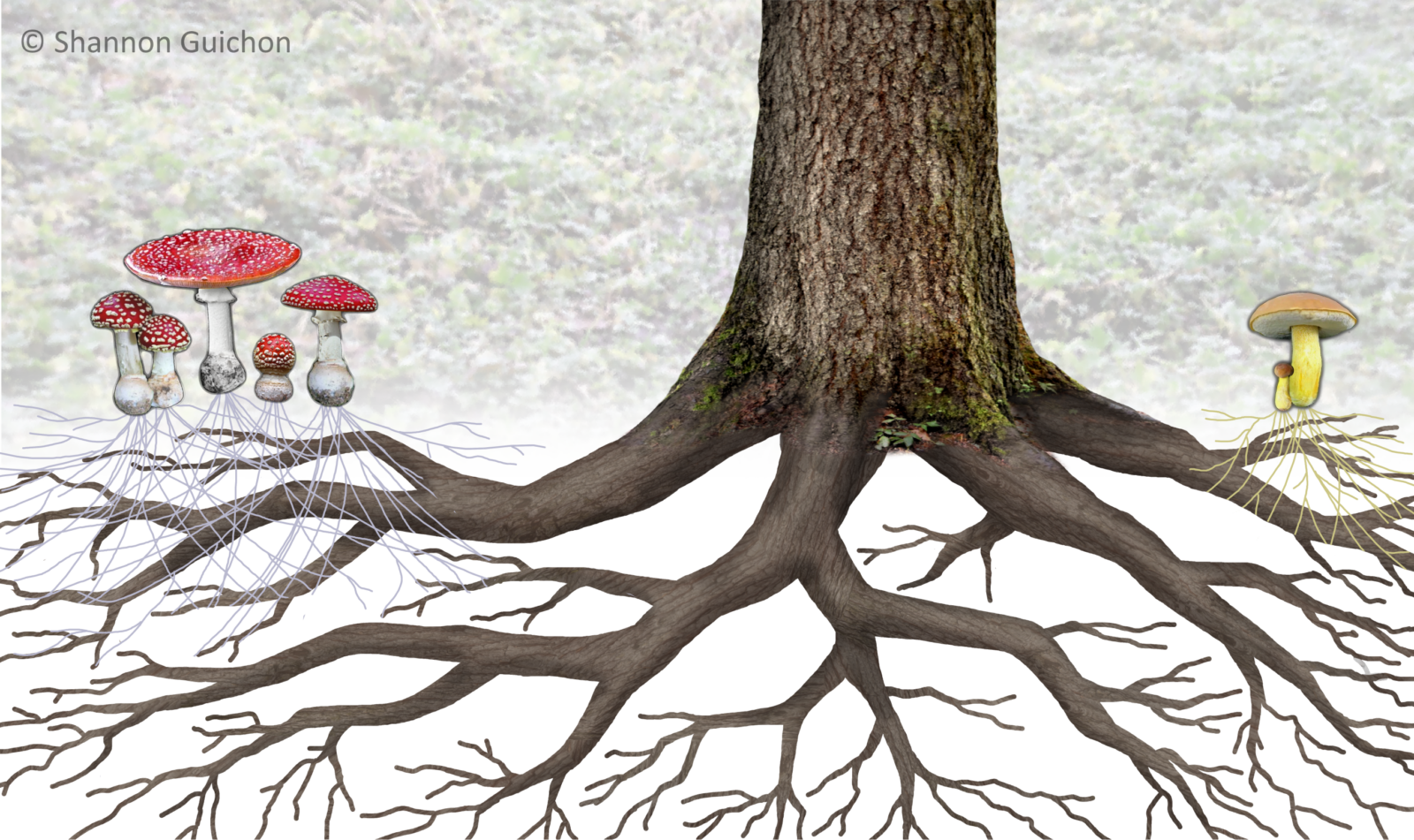
Photo: Dr. Shannon Guichon/National Forest Foundation.
Do you know about the “Wood Wide Web” (mycorrhizal network)? Fungus not only produces mushrooms (above) but connects trees and plants through tiny threads called mycelium.

Years ago, during one of our country’s endless wars over boundaries, I thought about earthworms and how they don’t recognize boundaries. I said to myself the world needed a kind of diplomacy that recognized what connects us instead of what separates us, Earthworm Diplomacy. After reading today’s feature, I’m thinking I should have focused on fungi.

In January “the Tyler Prize for Environmental Achievement, sometimes described as the ‘green Nobel Prize,’ was awarded to Toby Kiers, an evolutionary biologist at Vrije University Amsterdam who has spent the past three decades studying the workings and significance of the soil’s circulatory system.

Alan Burdick reported at the New York Times that “last year, Dr. Kiers won a MacArthur ‘genius’ award, as well as the Climate Breakthrough Award, sharing it with Giuliana Furci, a fungi conservationist, and Merlin Sheldrake, a mycologist at the University of Oxford.

“The fungal kingdom, which stands apart from plants and animals, contains anywhere from two million to five million species, including yeasts, mildew, lichens and mushrooms. Dr. Kiers studies mycorrhizal fungi, microbes that form vast, underground networks with carbon drawn from the roots of plants and trees, providing vital nutrients in exchange.

“Dr. Kiers and her colleagues have calculated that these microbial filaments, laid end to end, would span half the galaxy and that they sequester 13 billion tons of atmospheric carbon dioxide — one-third of the world’s fossil-fuel emissions — in the soil each year.

“These brainless, distributed organisms are also astonishingly strategic in their business dealings, her team has shown, imposing tariffs and inflating prices. In 2021, Dr. Kiers founded the Society for the Protection of Underground Networks, or SPUN, a global network of researchers and ‘underground explorers’ that works to identify and protect hot spots of fungal diversity. Last year they unveiled the first ever global underground atlas. And a new initiative called Underground Advocates, developed with the More-Than-Human Life program at the New York University School of Law, helps train scientists in legal and policy skills.

“In a recent video call, Dr. Kiers … said, ‘Fungi are usually the underdogs. The awards feel like an award for the invisible, the parts of the world that are challenging to understand, and a celebration of decentralized ways of thinking and operating that fungi have mastered.’ …

New York Times
Why fungi?

Toby Kiers
These underground ecosystems play a crucial role in regulating the climate. Soils store about 75 percent of Earth’s terrestrial carbon and contain close to 60 percent of Earth’s biodiversity.

Mycorrhizal fungi form the basis of food chains for those aboveground organisms, which together generate more soil and nutrients. They draw carbon from plants and get it to stick to minerals underground, where it’s hard to release back into the atmosphere.

The vast majority of crops form partnerships with mycorrhizal fungi and rely on them for their nutrients. Some beautiful experiments have shown that when plants interact with mycorrhizal fungi, they make bigger, sweeter flowers, which attract more pollinators.

These fungi also hold soil together; their bodies are woven into the aggregate and produce sticky chemicals that are hard to break down. Take away that scaffolding and soils would erode and disappear.

People think they know what soil and dirt is. With high-resolution imaging, we’re starting to make it visible and show that it’s alive. These are ecosystems, with as much complexity as what’s happening aboveground. I think 2026 is really going to be the year where people start talking about fungal restoration. It’s not enough to just add native plants to restore ecosystems; it has to be native plants together with native fungi. …

Times
How did you and fungi meet?

Kiers
When I was 19, I became so enchanted by the idea of being a field biologist that I left college, not knowing if I’d come back, and spent a year at the Smithsonian Tropical Research Institute, a research station on an island in the middle of the Panama Canal.

I needed a niche. At the time, mycorrhizal fungi were pretty unknown there. The older scientists were studying everything aboveground — trees, bats, primates. I started wondering what generated all that diversity. So I did an experiment with researchers where we took soil from underneath the trees of one species and used it to inoculate other tree seedlings to see if it would affect their growth.

We stained the roots with a dye, and you could see this intricate weave of fungi inside the cells — they penetrate it — called an arbuscule; it looks like a mini tree. That’s where nutrient exchange happens. And I could see that happening in the roots with my own eyes. …

Studies were starting to show that plants actually get huge benefits from fungi.

Later, I realized that they’re powerful actors in their own right. My Ph.D. thesis explored whether noncognitive organisms can discriminate between good and bad partners. For instance, from experiments, we know that plants will digest one of those arbuscules if they’re not getting enough phosphorus from the fungus; they can abort the interaction.

But the fungi make choices as well. We found that a fungus can avoid trading with plants in the shade, which have less carbon to trade. They trade differently depending on how many other fungal competitors are present. They can hoard resources in their network and artificially inflate the price. …

We’ve been studying fungal trade as an underground market and developing techniques to track, in real time, when and where important exchange deals take place, how fungi navigate space, how they decide when and how much carbon to send down each pathway, how they build their road systems and how they optimize that supply-chain design.

Are fungi capitalists? No. They’ve developed a system that is much more sophisticated than the economic system humans use. But it has allowed us to use economics as a mathematical framework to analyze these trade strategies, to make predictions and to see if the fungi follow them. The frontier is linking what we’re seeing on the micron scale to the global data to understand the role of fungi in the carbon cycle.

Times
Meanwhile, in SPUN, you’ve built a worldwide network of investigators to map the global distribution of networked microorganisms.

Kiers
We wanted to turn the traditional approach on its head. SPUN has become a rambunctious, decentralized community of people working together to study and protect underground fungi. We’re slightly outside academia while still adhering to rigorous science and publishing in top journals.

In 2022, we set up the Underground Explorers Program. It’s a network of researchers who are dedicated to mapping fungal biodiversity in their local ecosystems. We’ve given away 137 grants across 58 countries, 80 percent of them to researchers in the global south and more than half led by women. It’s a fungi-without-borders approach. For these scientists, climate change is not an option to care or not care about; it’s their survival, their livelihoods, with consequences that their children will inherit.

There’s a researcher in Mongolia who is trying to map and protect fungal communities that are threatened by desertification — fungi that hold the grass down and enable nomadic herders to continue grazing their animals. In Nigeria, a scientist named Bolaji Thanni is studying the effects of textile effluents on soil health to help advocate for stricter waste disposal regulations and the use of eco-friendly dyes. In Mexico, there’s a professional climber who is mapping mycorrhizal fungi along cliffs — which is just so unknown, right?

We’re a really scrappy organization. We’re super lean and mean; we don’t even have an office. We are everywhere and nowhere. That really helps us. In an academic setting, you almost have to know what you’re going to find before you’re funded to find it.

I use the term ‘punk science.’ We’re trying to cross boundaries and disciplines and not accept the state of the world as a given, while celebrating science that is rooted in creativity.

More at the Times, here.

Read Full Post »

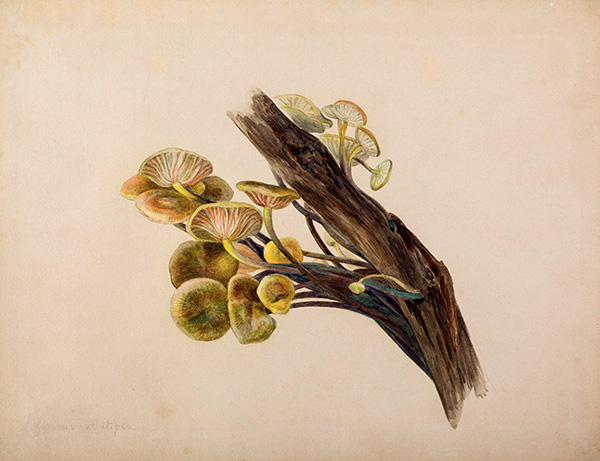
There was more to Beatrix Potter than Flopsy, Mopsy, and Cottontail. Her meticulous drawings of flora and fauna made serious contributions to the science of the day.

Maria Popova at Brain Pickings shares Potter’s mushroom drawings and more.

“At a time when women had no right to vote and virtually no access to higher education, very rarely owned property and were themselves considered the property of their husbands, Potter became a commercially successful writer and artist, using the royalties from her books to purchase her famed Hill Top Farm, where she lived simply and with great love for the land for the remaining four decades of her life. …

“Linda Lear’s altogether magnificent Beatrix Potter: A Life in Nature (public library) — [is] by far the best book on Potter and one of the finest biographies ever written, Lear’s prose itself a supreme work of art.

“A formal scientific education was virtually inaccessible to women, except for the rare Ada Lovelace or Maria Mitchell, and membership in scientific societies was strictly reserved for men. But Potter’s scientific work was exceptional in that she deliberately tried to penetrate the very institutions that dismissed women’s scientific labor solely on the basis of gender. …

“By her early twenties, Potter had developed a keen interest in mycology and began producing incredibly beautiful drawings of fungi, collecting mushroom specimens herself and mounting them for careful observation under the microscope. … Lear writes:

Beatrix’s interest in drawing and painting mushrooms, or fungi, began as a passion for painting beautiful specimens wherever she found them. She never saw art and science as mutually exclusive activities, but recorded what she saw in nature primarily to evoke an aesthetic response. She was drawn to fungi first by their ephemeral fairy qualities and then by the variety of their shape and colour and the challenge they posed to watercolour techniques. Unlike insects or shells or even fossils, fungi also guaranteed an autumn foray into fields and forests, where she could go in her pony cart without being encumbered by family or heavy equipment.

More here.

Art: Beatrix Potter
Flammulina velutipes (Armitt Museum and Library)

Read Full Post »