Feeds:
Posts
Comments

Posts Tagged ‘elders’

Photo: Time magazine.
Time has named Tejasvi Manoj, a 17-year-old at Lebanon Trail High School in Frisco, Texas, Kid of the Year.

Gone are the good old days when cybercriminals used dead giveaways like terrible English! Today they are more and more plausible, laying new traps for anyone not internet savvy, especially old folks like those in my retirement community. I hear the stories.

Jeffrey Kluger reports at Time magazine about teenager Tejasvi Manoj, who wanted to do something about that.

“The unnamed cybercriminals trying to scam seniors out of their money got more than they bargained for when they targeted Tejasvi Manoj’s grandfather back in February 2024.

“Tejasvi, then a 16-year-old junior at Lebanon Trail High School in Frisco, Texas, was driving home from Scouting America camp with her father when he suddenly noticed five missed calls on his phone — all from his 85-year-old father. He called back, and the older man reported that he had received an urgent email from another relative, Tejasvi’s uncle, asking for $2,000 to settle an unexpected debt. Given the apparent emergency, Tejasvi’s grandfather was prepared to transfer the funds — but her father urged him not to and the grandfather, at the suggestion of his wife, then called the uncle to see if the request was legitimate.

“ ‘I never asked you for money,’ came the response. ‘Please don’t send anything until I can look into what’s going on.’

“It was a near miss for the unsuspecting senior. The fact that criminals would seek to take advantage of an old man’s lack of sophistication about the workings of the internet galled Tejasvi. When she got home she went to her room and immediately began researching how common such scams are. Very common, it turns out. …

“Seniors represent a target-rich cohort for the bad guys. They’re typically retired, sitting on pensions and 401(k)s, and may be naive to the techniques favored by con artists. … . According to the Federal Trade Commission, the number of older adults who lost more than $10,000 to online scams increased fourfold from 2020 to 2024. For those who lost $100,000 or more, the increase was seven-fold, for a total of $445 million in 2024 alone. …

“Older Americans clearly need protection, and Tejasvi was determined to provide it. Within the year she had built and launched Shield Seniors, a website designed to educate the 60-plus demographic about what online scams look like, analyze suspicious emails and messages users upload, and, if the communications prove fraudulent, provide links to report them. The site is currently available in a private preview mode only, pending more R&D and fundraising, but is already — like its creator — making itself known. Tejasvi was recognized with an honorable mention in the 2024 Congressional App Challenge; delivered a 2025 TEDx talk in Plano, Texas, about the need to build ‘digital bridges’ to all demographics; and makes occasional appearances at local assisted-living facilities, demonstrating her website and teaching seminars about cybercrime.

“ ‘I remember going to my first seminar and I was super nervous,’ says Tejasvi, whose work has earned her recognition as TIME’s Kid of the Year for 2025. …

“Shield Seniors didn’t come easy. For one thing, Tejasvi had a lot of other activities to attend to. She is active in Scouting America — recently receiving her Eagle Scout rank — and plays violin in her school orchestra. She tutors Bhutanese refugees online in math and English through an organization called Vibha, a nonprofit involved in workforce and scholastic development in India. She also does volunteer work — serving on the leadership board of the North Texas Food Bank Young Advocates Council and packing meals, with the social-enterprise company TangoTab, for families facing food insecurity.

“ ‘I started volunteering in sixth grade,’ she says. ‘I think it’s really important; if you’re lucky yourself, you want to make sure other people feel loved and lucky too.’

“Shield Seniors presented another way to do that, and Tejasvi was well prepared to do the coding that would make the project possible. … Tejasvi began coding in eighth grade, taking cybersecurity classes and attending summer programs sponsored by the nonprofit Girls Who Code. She has also gotten involved in Cyber-Patriot, a joint Air Force and Space Force program to spark interest in cybersecurity and STEM disciplines among young people. …

“In February, after an early version of the site was ready, a story about Shield Seniors and Tejasvi appeared in the Dallas Observer, bringing her to the attention of the people at AARP. ‘They set up a meeting where I walked them through the website, and they were very impressed,’ Tejasvi said. …

“The website that has resulted from all of this work is equal parts intuitive, smart, and artful. Shield Seniors is divided into four principal sections. The first is labeled ‘Learn,’ and helps users master the basics of internet security, such as the importance of creating strong passwords, understanding privacy settings, knowing what information to share and what not to share, and, most important, recognizing what a scam looks like. … ‘Be careful with unexpected messages, especially those that rush you or seem too good to be true.’

“The second section, labeled ‘Ask,’ takes users to a chatbot that answers questions. Interacting with a population that was already approaching middle age when the internet appeared, Tejasvi’s bot keeps its answers simple—holding them to two sentences or even less. …

“The third section, labeled ‘Analyze,’ is where the true brains of the site live. When users click this tab they’re directed to a page that allows them to upload a suspicious text or email, which an AI system will then analyze with what Tejasvi says is 95% accuracy at determining what’s a scam and what’s not a scam. Then, it goes beyond just providing a digital thumbs-up or down.

“ ‘It will also explain why,’ she says, ‘because our goal for Shield Seniors is to make sure older adults are independent and know what to look for.’ …

“Finally, the site includes a ‘Report’ section that allows users to rat the fraudsters out. The site provides links to 14 private and government groups that accept and act on complaints, including the FBI, the Better Business Bureau, the Social Security Administration, AARP, the SEC, and the Consumer Financial Protection Bureau. Just which group is the right one to contact depends on just which kind of fraud was committed. The FBI, for example, is a sort of one-stop-shopping site for all manner of cybercrime, including identity theft, computer intrusions, investment fraud, phishing, and ransomware. The Consumer Financial Protection Bureau responds to complaints involving financial products and services including bank accounts, credit reports, and payments made or requested.”

More at Time, here.
Read Full Post »

Photo: Mi Casa.
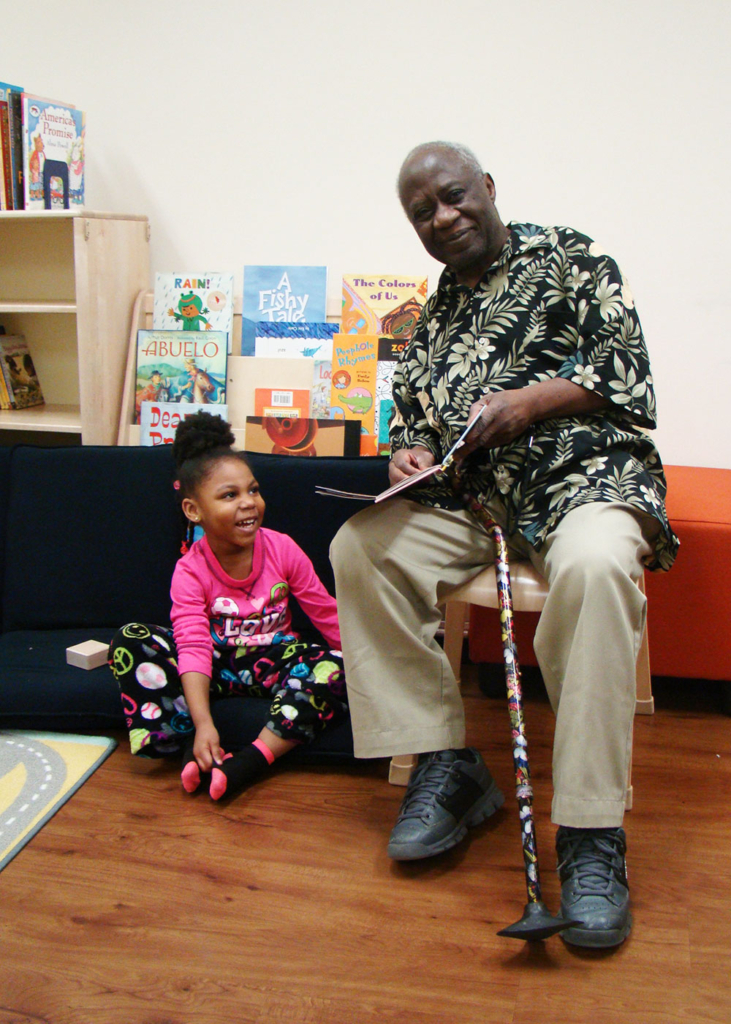
At Genesis , an intergenerational community in Washington, DC, older adults provide care and social support to individuals and families facing vulnerabilities, who in turn, promote the well-being of the elders as they age.

Because we don’t know the future, we need to make a plan. Catch-22: we can’t make a plan because we don’t know the future.

If we will always be able to handle the usual things that grown-ups handle, we may want to stay in our homes. For couples, if only one of us needs extra care, we may want to be where two lifestyles are possible. If we want to take interesting walks, we need to be where there are interesting walks. If we can’t walk or operate a wheelchair, a walkable neighborhood may not be as important as, say, being around good conversationalists or having easy access to books.

And what about being able to interact with people of other generations?

As Matt Fuchs reported at the Washington Post in September, “Research has shown that older and younger adults need one another: Mixed-age interactions make seniors feel more purposeful, and young people benefit from their elders’ guidance and problem-solving skills. ‘They fit together like pieces of a jigsaw puzzle,’ said Marc Freedman, chief executive of encore.org, a nonprofit group dedicated to uniting the generations.

“But in practice, such closeness can be hard to come by. Many young adults flock to cities, while older people often isolate within the walls of 55-and-over communities. Parts of the country are as segregated by age as race, fewer people are having children, and people live by themselves in record numbers, including 27 percent of adults over 60. …

“One solution is establishing residential communities that are designed to nurture these bonds.

“ ‘There’s a trend toward intergenerational living,’ said Elin Zurbrigg, deputy director of Mi Casa, a D.C. nonprofit that provides mixed-age housing through its Genesis program, in collaboration with city officials. Demand may be rising because of the pandemic, which has exposed loneliness as a serious health issue and has prompted many Americans to move for fresh starts. …

“[Here are some ways] mixed-age communities benefit their residents.

“[First] they cultivate purpose. A shared purpose with neighbors is what Estelle Winicki, a 78-year-old retiree, always envisioned for herself, but finding that wasn’t easy. In Boulder, Colo., she rarely crossed paths with neighbors. … Her therapist suggested Bridge Meadows, which operates two complexes of townhouses in Oregon that bring together seniors, former foster-care children and their adoptive parents. Residents are encouraged to spend time with their age opposites.

“Winicki, who lives at Bridge Meadows in Portland, doesn’t need persuasion. She starts many of her days helping her neighbors’ children get ready for school. ‘It gives me such pleasure to see these kids grow with a strong foundation,’ she said. ‘They know they can rely on me, and I like helping.’

“[Second] they provide mental health support. ‘The first thing you see among all the generations [at Bridge Meadows] is the sense of “I belong” and “I matter,” ’ said Derenda Schubert, Bridge Meadows’ founder and a clinical psychologist. Such an environment allows mixed-age communities such as Bridge Meadows to provide safety nets that protect residents’ mental health. …

“[Third] they offer professional advantages. In other communities, the generational glue is professional. PacArts, a mixed-age building in the San Pedro area of Los Angeles, provides affordable housing to artists. Luis Sanchez, a 53-year-old painter, said he can count on his neighbors whether he’s having a rough patch with health — he’s had two kidney transplants — or his work. An older neighbor has hired him repeatedly to assist with large painting projects. ‘I’ve learned a tremendous amount,’ Sanchez said. ‘She knows techniques and materials I would’ve never used.’

“Eva Kochikyan is a musicologist and teacher residing at Ace 121, a similar building in Los Angeles County. … She grew up in Armenia, where residents socialized regardless of age, but after relocating to Los Angeles, she barely saw her neighbors. In moving to Ace 121, the 41-year-old re-created the experience of a big extended family. …

“Kochikyan recalled her 4-year-old wandering into the building’s communal art studio, sitting right next to an accomplished painter in his 70s and picking up a brush. ‘No lecturing, just working together,’ she said. ‘These connections happen naturally.’

“[Fourth] they may keep older people active. Seniors may get more movement when inspired by the vigor of youth. … Kochikyan thought of a neighbor as an ‘old grandma’ after watching her frown during a solo workout. Since then, though, the baby boomer has befriended a group of children who enjoy kicking her yoga ball with her. During these sessions, her intensity picks up and her face lights up, Kochikyan said, ‘like she drops 20 years off her age.’ ”

Read about other potential benefits and check the most recent research at the Post, here.

Read Full Post »

Photo: NPY Women’s Council.
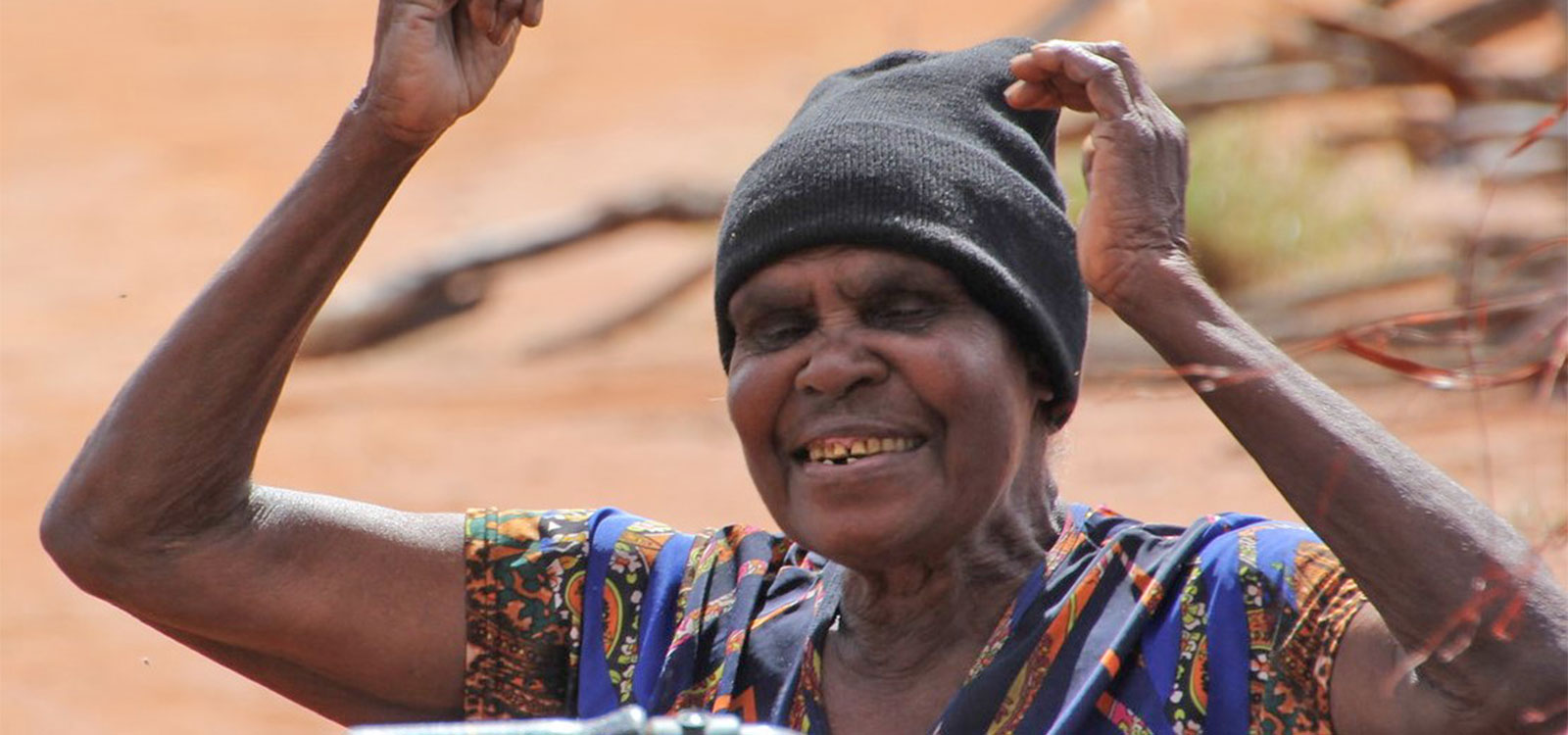
To combat coronavirus in Australia, “For the first time, Aboriginal health workers were given contact-tracing powers usually reserved for state health authorities.”

Recognizing that plagues of the past had wiped out whole indigenous communities, Australian authorities took action to get ahead of the coronavirus plague — with a particular focus on protecting elders.

At the Washington Post, Rachel Pannett reported on where their results stood in early April.

“From Alaska to the Amazon, Indigenous people are more likely to get sick with or die of covid-19, as the pandemic magnifies deep-rooted health and socioeconomic inequities. That is not the case in Australia.

“Not only have Indigenous Australians recorded far fewer infections per capita than their global counterparts, they are six times less likely than the wider Australian population to contract the coronavirus, government data shows.

“There have been no cases in remote communities, and not a single Aboriginal elder has died. Of the 149 cases involving Indigenous people since the start of the pandemic nationwide, few were serious enough to require hospitalization. …

“The vaccine rollout is also proceeding more smoothly in many Indigenous communities than elsewhere in Australia, where some clinics are complaining of empty vaccine fridges. Aboriginal people and Torres Strait Islanders are being prioritized for vaccinations because of their higher risk of developing serious illness if infected.

“On the first day of the vaccine rollout in Sydney, one Aboriginal clinic booked all of its appointments in an hour, according to Aboriginal health officials. In the remote Australian-controlled islands of the Torres Strait — near Papua New Guinea, which is battling an outbreak — over 80 percent of adults have been vaccinated, officials said.

‘This is a most amazing response to the pandemic from a community that is so marginalized,’ said Fiona Stanley, an Australian epidemiologist specializing in public health. ‘This is probably the best evidence we have that if you put Aboriginal people in charge, then you get better outcomes.’

“First-nation people globally have a painful legacy of disease and its impact on elders, those most responsible for the survival of Indigenous culture. Europeans introduced smallpox and other diseases to the New World starting from around 1500, wiping out much of the Indigenous population. The 1918 flu pandemic destroyed entire villages. …

“The first case of the coronavirus in Australia, in January 2020 — a man from Wuhan, China, who arrived in Melbourne — was a wake-up call for the country, but especially for Australia’s Indigenous leaders. The new virus was striking older people, particularly those with chronic conditions. And being highly contagious, it was likely to spread like wildfire through remote Indigenous communities where overcrowding is common. …

“Pat Turner, chief executive of the National Aboriginal Community Controlled Health Organization, wrote to state and federal leaders in March 2020, asking them to use their powers to order the closure of remote communities to stop visitors from entering. Accordingly, the communities were sealed off.

“Lawyer Teela Reid kicked off efforts to protect elders in Gilgandra, a rural town 270 miles northwest of Sydney. ‘I could clearly see how catastrophic it could get in the country, if we got one case in our town of 3,000, because we don’t have the health resources,’ Reid said.

“The local municipality compiled a list of elders and made sure they did not need to leave their homes for food or medicines. Reid’s grandmother Stella, the town matriarch who presides over traditional ceremonies, went against her natural instincts and padlocked her gate.

” ‘It was hard for us,’ Reid said. ‘Our grandparents are often the people who raise children. But they also hold our story lines. They’re passed down orally. If you lose that, it’s gone.’ She added, ‘The ways in which many communities acted was through the natural instinct to be a survivor and to protect elders.’

“Before the pandemic, Aboriginal health organizations had been talking with government officials about plans to address a syphilis outbreak using local Indigenous health services. Australia’s chief medical officer at the time, Brendan Murphy, supported the approach, an endorsement that [Dawn Casey, who co-chairs a government task force established to develop a virus plan for Indigenous communities], says helped smooth the way for a community-led approach to the coronavirus.

“On Facebook, TikTok and Vimeo, Aboriginal health agencies launched coronavirus messages — including instructions on cough etiquette and hand hygiene — and interviews with trusted health officials, translated into local languages.”

More here.

Read Full Post »