Feeds:
Posts
Comments

Posts Tagged ‘error’

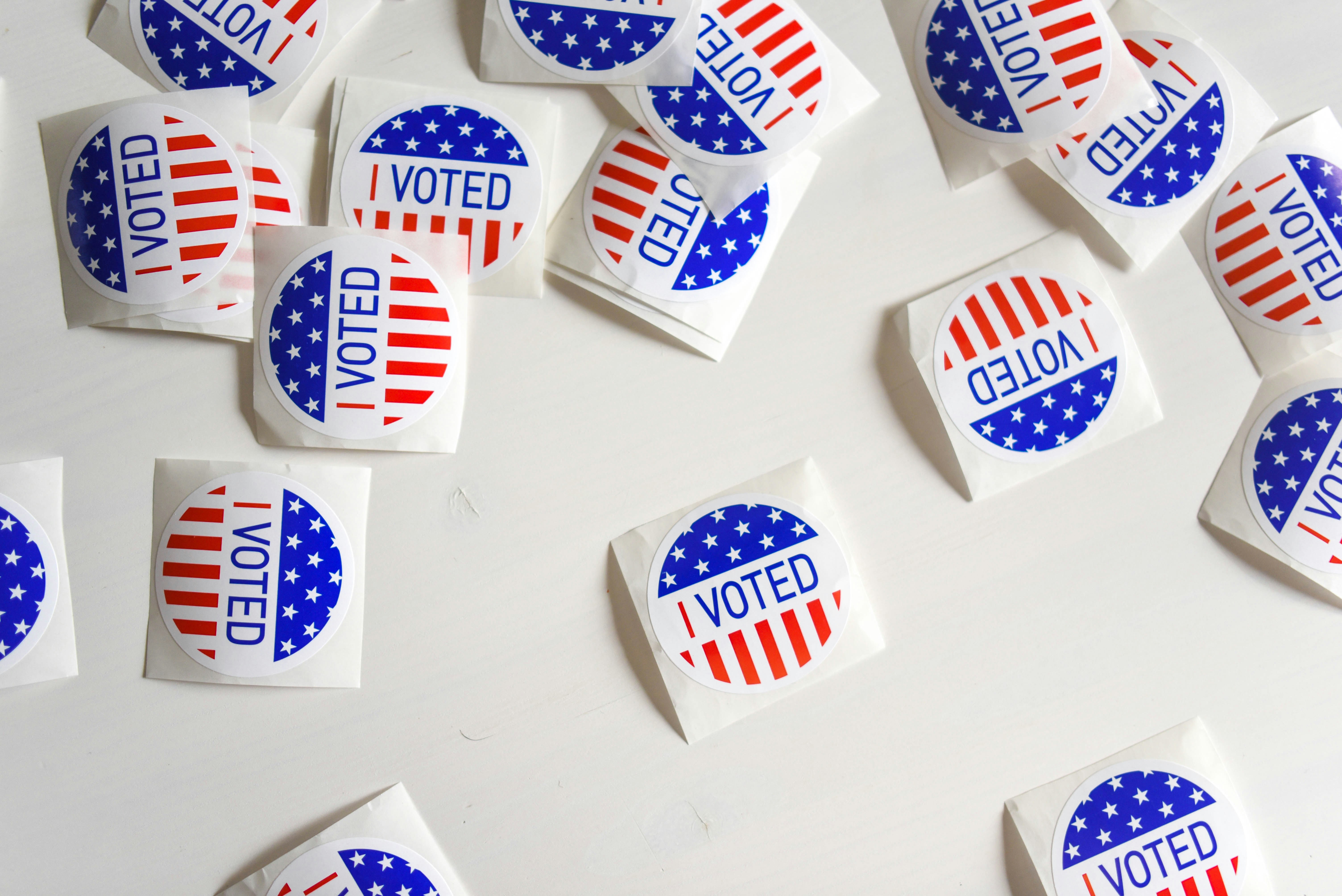
Photo: Elements5 via Unsplash.

Do you always sign things exactly the same way? I myself have a couple different signatures and I know that using the right one in certain situations is vital. On the tax forms, for example. My signature for tax purposes is actually different from the one I use to vote. Long story.

In the ballot booth, the wrong signature can mean your ballot will not be counted.

On Tuesday I will be trying my hand at “ballot curing” to help voters who have made some small mistake according to their state’s laws.

What is ballot curing? VoteAmerica says: “Ballot curing is the process of fixing any problems with your absentee or mail ballot to ensure that your vote is counted. You will have very little time to fix issues with your ballot, so act quickly.

“If your ballot was rejected and it’s after Election Day, you will need to act quickly. In most cases you will need to appear in person at your local election office with photo ID within 2-3 days of Election Day.

“Use your state’s online ballot tracking tool to check whether your ballot has been received and counted. If your state does not have an online tool, call your local election office and ask.

“If your absentee ballot was rejected and it’s before Election Day, you can probably still vote in person on Election Day at your polling place. Your local election office can provide more information about the rules around voting in person after your ballot was rejected.”

Now, to give you an example of a state’s particular rules, here’s what VoteAmerica says about Michigan’s rules:

“Your ballot will be rejected if you forget to sign it or if your signature does not match the one on file for you. You must make corrections by 5:00 pm on the third day after Election Day for your vote to count.

“Michigan laws says, ‘The clerk must notify the elector by telephone, email, or text message, if available.’

“Michigan law says, ‘The elector must be permitted an opportunity to cure the deficiency as provided under section 766a until 5 p.m. on the third day following the election.’ “

I have signed up with my candidate’s campaign for four hours of ballot curing, with a break in the middle.

For the first half hour, I will receive training and be assigned to a state. Then I will get contact information for people who have expressed a concern that they made a mistake, and I will refer them to the right people to help them fix it as allowed by their state.

I hate doing “phone banking” as a rule, but I think this is something people will actually be grateful for.

Check your state’s rules at VoteAmerica, here, and share the site with friends who need it. And may the best human win!
Read Full Post »

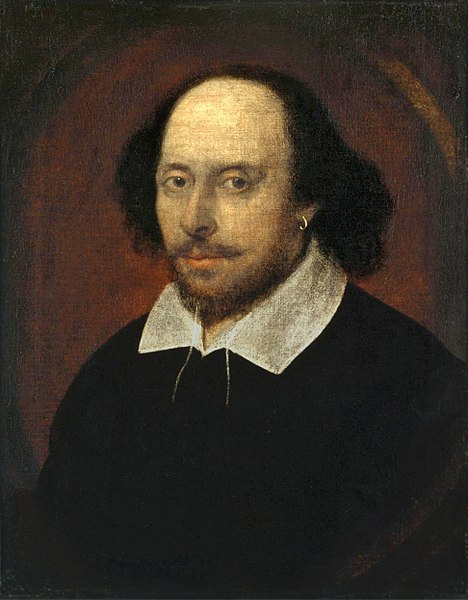
William Shakespeare.
Even the Bard made mistakes.

Blogger Asakiyume and I met in the 1990s when we were both copyediting at a management magazine where a witchy person taught us the nitty gritty of the trade. There was another person who would argue with our capitalization, wording, or punctuation decisions by saying she had a PhD in English. As if that had anything at all to do with the work-a-day craft! Those of you who value good copyediting may get a kick out of today’s article from a site called the Millions.

Ed Simon writes that the work of print setter is the old days was “laborious, and for smaller fonts, such as those used in a Bible, the pieces could be just a millimeter across. Long hours and fatigue, repetitive motion and sprained wrists, dim light and strained eyes — mistakes were inevitable.

“The King James Version of the Bible has exactly 783,137 words, but unfortunately for the London print shop of Robert Barker and Martin Lucas, official purveyors to King Charles I, their 1631 edition left out three crucial letters, one crucial word — ‘not.’ As such, their version of Exodus 20:14 read, ‘Thou shalt commit adultery.’ …

“Literature’s history is a history of mistakes, errors, misapprehensions, simple typos. It’s the shadow narrative of expression — how we fail because of sloppiness, or ignorance, or simple tiredness. Blessed are the copyeditors. …

“A 1562 printing of the sternly doctrinaire translation the Geneva Bible prints Matthew 5:9 as ‘Blessed are the placemakers’ rather than ‘peacemakers’; an 1823 version of the King James replaced ‘damsels’ in Genesis 24:61 with ‘camels,’ and as late as 1944 a printing of that same translation rendered the ‘holy women, who trusted God … being in subjection to their own husbands’ in 1 Peter 3:5 as referring to those pious ladies listening to their ‘owl husbands.’

“But not all errors seemed as innocent. … A 1653 printing stated that it was the unrighteous who would inherit the earth, a 1716 edition records Jeremiah 31:34 as telling us to ‘sin on more,’ and a 1763 volume replaces the penultimate word ‘no’ with ‘a,’ so that Psalm 14:1 reads ‘the fool hath said in his heart there is a God.’ … In a 1612 errata … Psalm 119:161 had the first word of the line ‘Princes’ replaced, so that it now read, ‘Printers have persecuted me without cause.’ …

“Depending on whether ambiguity is a mistake or a strength, the law often codifies uncertainty. The U.S. Constitution isn’t particularly long — only a few pages — and yet it’s filled with grammatical and spelling errors, as well as confusing syntax that bedevils contemporary citizens. … Significant are the idiosyncrasies in punctuation: commas are placed between nouns and verbs, errant commas in the Second Amendment makes it unclear as to whether the right to bear arms is reserved for individuals or only ‘well regulated militias,’ and a semicolon in Article VI seems to invalidate the Constitution itself. ‘The Constitution, and the Laws of the United States which shall be made in Pursuance thereof; and all Treaties made, or which shall be made, under the Authority of the United States, shall be the supreme Law of the Land.’ Strictly speaking, the end stop of that semicolon implies that ‘all Treaties made,’ and not the Constitution, shall be the supreme law of the land, and yet we’ve always just assumed it’s an obvious typo. …

“Theodor Dreiser‘s An American Tragedy describes a pair of lovers as being ‘like two small chips being tossed about on a rough but friendly sea,’ while Daniel Defoe tells us that Robinson Crusoe stripped naked, swam out to his sinking ship and retrieved supplies, which he then stored in his pockets on the returning laps. …

“For all his genius, the Bard was often uninformed or lazy, author of a veritable comedy of errors. The Winter’s Tale references landlocked Bohemia as having a coast. In Julius Caesar, Cassius uses a clock some 14 centuries before they were invented, and in The Two Gentlemen of Verona they sail from that titular city to Milan, a geographic impossibility. …

“In his 1816 poem, John Keats famously compares the experience of his first reading George Chapman‘s Homeric translations to being ‘like stout Cortez when with eagle eyes/He stared at the Pacific,’ except the first European to see the western coast of that ocean was actually Vasco Núñez de Balboa. Did Keats just not know this, or was this intentional? Does the purposefulness or not of the inaccuracy matter to how we read the lyric? …   

” ‘A slip of the tongue can be amusing,’ notes Sigmund Freud in The Psychopathology of Everyday Life. … While campaigning for Mitt Romney in 2012, Senator John McCain said, ‘I am confident with the leadership … President Obama will turn this country around,’ inadvertently endorsing the governor’s opponent.”

Some of this is too funny! Read it all here, at the Millions. It’s a long article. No firewall.

Read Full Post »