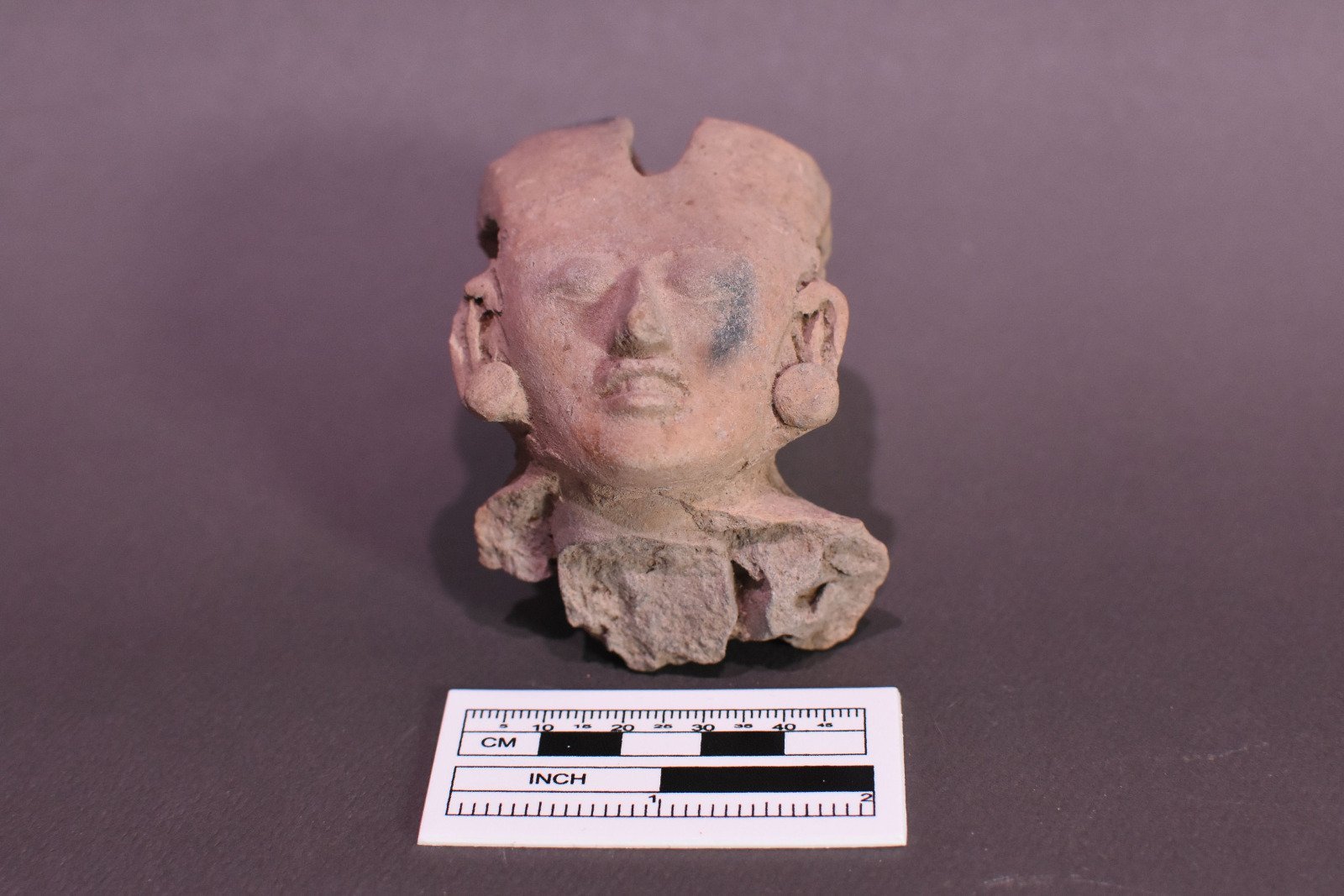
Photo: Mexico Solidarity Media.
In August 2026, the Consulate General of Mexico in Boston, Massachusetts, received the voluntary restitution of 1,132 archaeological objects belonging to Mexico’s cultural heritage. High school students were involved.
What an amazing opportunity for high school students in Farmington, Connecticut!
As Christopher Harland-Dunaway, Mallory Yu, and Juana Summers reported at National Public Radio, students were able to do real archaeology cleaning up valuable Mexican artifacts found in a dumpster.
Juana Summers
“It isn’t every day that a person finds archaeological artifacts lying around, let alone in a dumpster. Well, that is exactly what happened with more than 1,000 objects dating back to Mexico before Spanish conquests. Luckily, the artifacts also found their way to high school archaeology teacher Jeremy Pilver, who’s also a professional archaeologist. And now those artifacts are being returned to Mexico, where they came from. And Jeremy Pilver is with us now to talk all about this. … Can you tell us what some of these artifacts are? …
Jeremy Pilver
“They’re largely ceramics and ceramic shards with a variety of different iconographic patterns, designs and colors. There was a very small bird pendant for a necklace. There was what I believe to be a small plug earring that would have been worn in somebody’s ear. …
“About 2.5 years ago, my wife’s uncle, Matthew [Pioggia], was in Western Massachusetts, and they were clearing out an old house, and, you know, there were all kinds of things thrown in the dumpster. And as he’s looking at the dumpster of these discarded materials, he’s just seeing things that he’s never seen before. He knows I’m an archaeologist. …
“I received this series of images, and my jaw nearly hit the floor. I didn’t know the culture, and I didn’t know the exact dates of their origin, but I knew they were real, and I knew I immediately had a responsibility to rescue these materials. So I frantically called him and said, can you get them out of the dumpster? He crawled into the dumpster and spent the next four hours digging out. …
Summers
“What was it like seeing all of these things in person for the first time after this kind of wild story?
Pilver
“It was unbelievable. But I also saw the state of the materials. You know, the boxes and the materials were covered in debris and dust, and, you know, there had been mice and all kinds of things. So I knew this was not going to be a small task. This was going to have to involve a pretty significant mobilization of labor.
Summers
“It took nearly two years to go through everything — classify, clean, catalog and document all these objects, and you ended up getting help from your high school archaeology students. Tell me about their involvement. …
Pilver
“They were amazed. You know, you hear a lot about challenges in the classroom and difficulties motivating students and getting off their phones or whatever it may be. Well, just present them with a real-world challenge, and you will see them demonstrate, you know, the utmost excellence.” More at NPR, here.
I first read this story at a website called Mexico Solidarity, which posted an article from the August 17, 2026 edition of La Jornada.
“The Consulate General of Mexico in Boston, Massachusetts, United States, received the voluntary restitution of 1,132 archaeological objects belonging to Mexico’s cultural heritage, the National Institute of Anthropology and History (INAH) reported. The handover represents one of the largest archaeological sets received by that consular representation in recent years and constitutes an example of academic, ethical, and professional cooperation and of cultural diplomacy for the protection of heritage. …
“The documentation delivered to the consulate by Jeremy Pilver, a teacher and archaeologist at Farmington High School, regarding their provenance, will be used to establish datings and obtain other data useful for research.
“For nearly two years, more than 40 high school students participated in the classification, surface cleaning, cataloging, preparation of an inventory and a digital database, photographic record, documentation, and professional packing of the collection for its restitution.”
More at Mexico Solidarity, here,.


