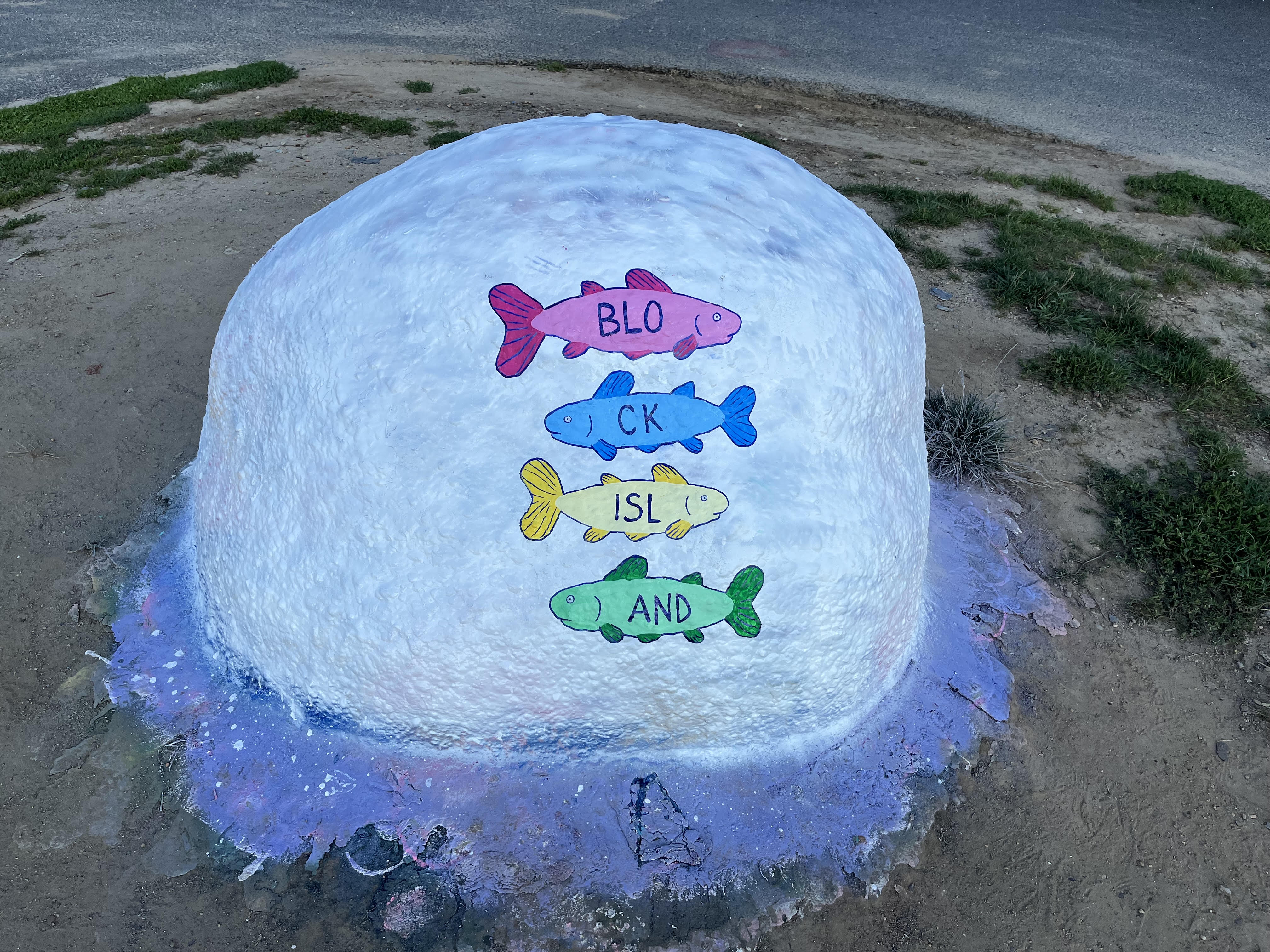
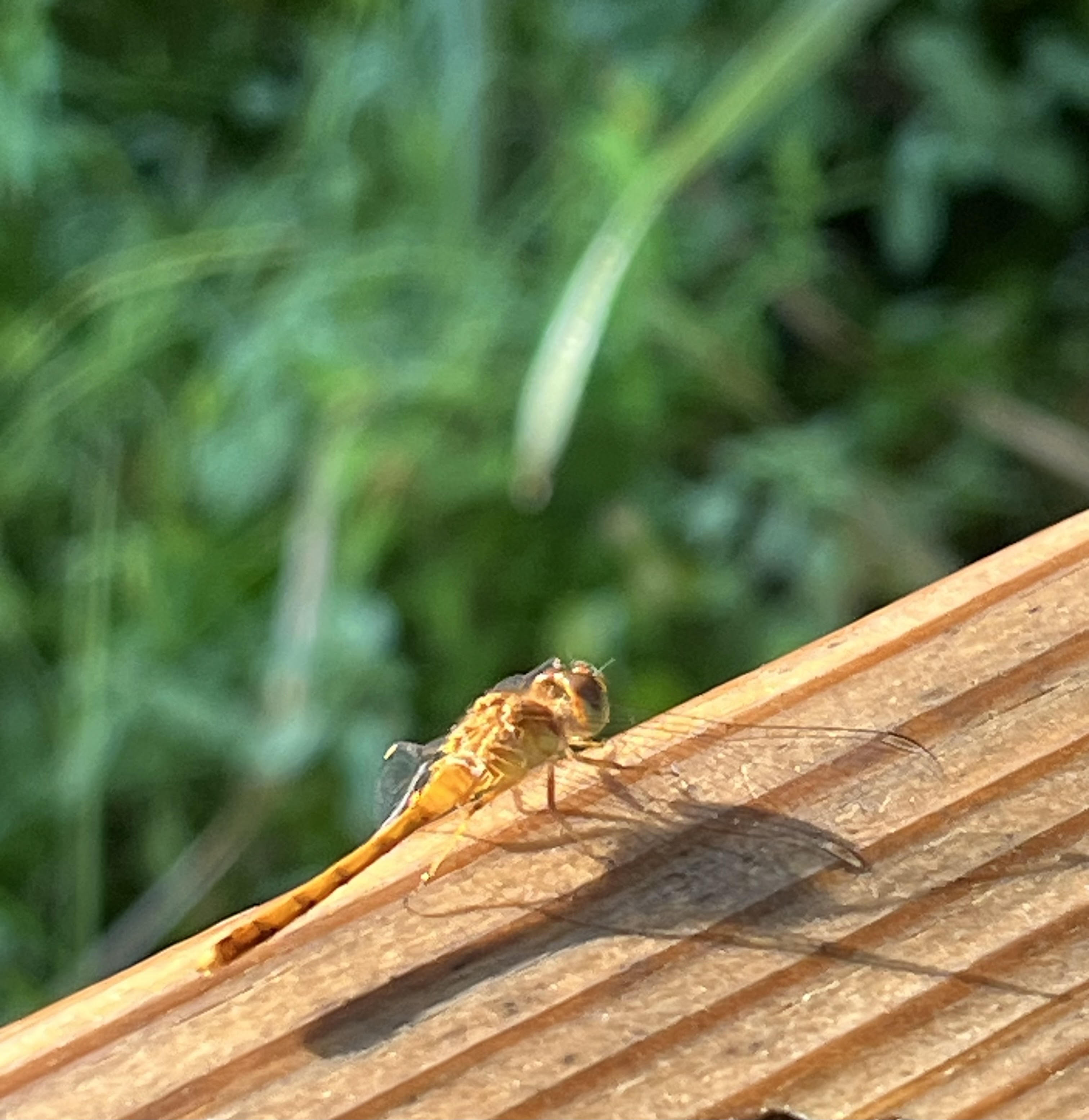
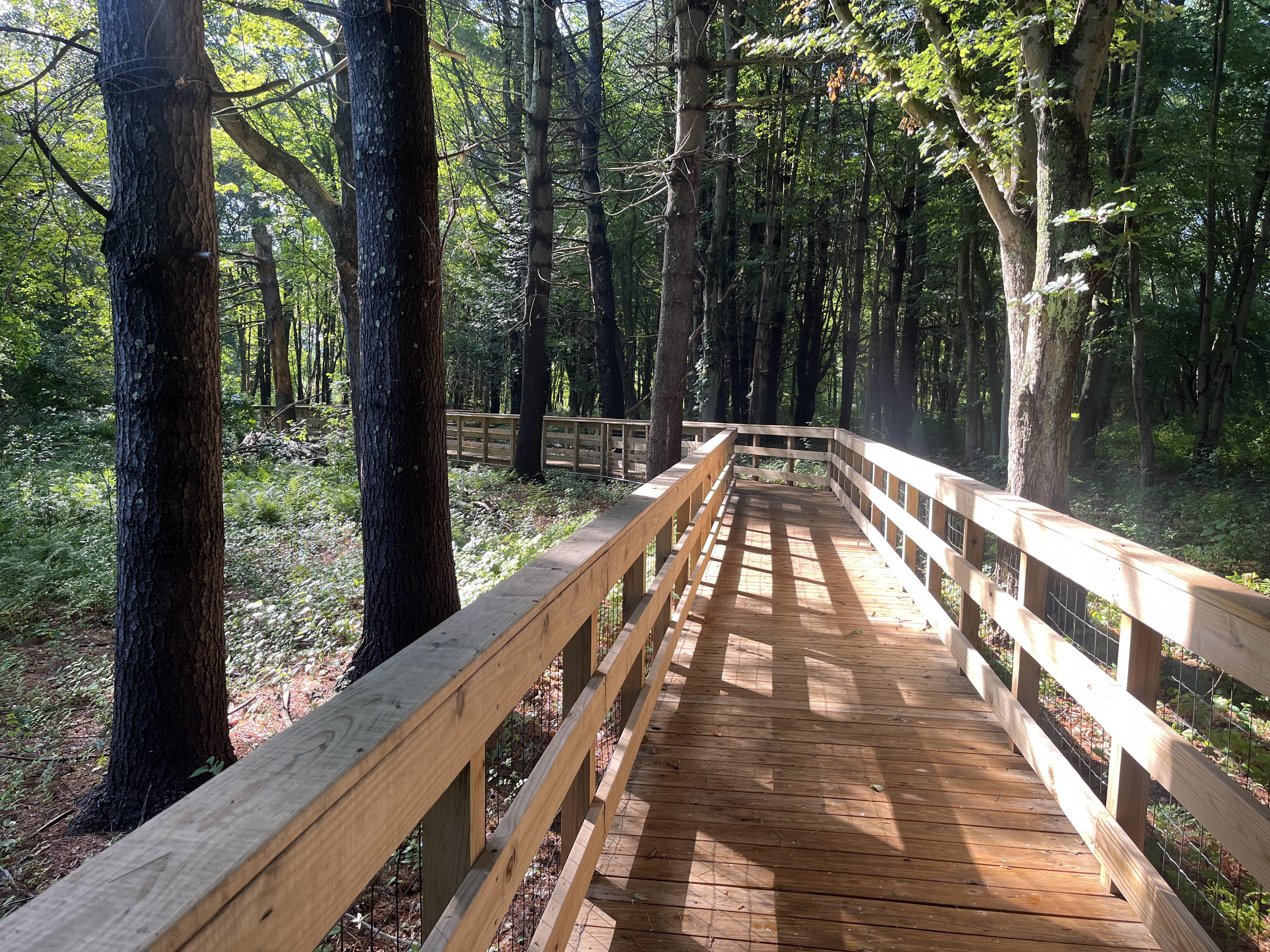
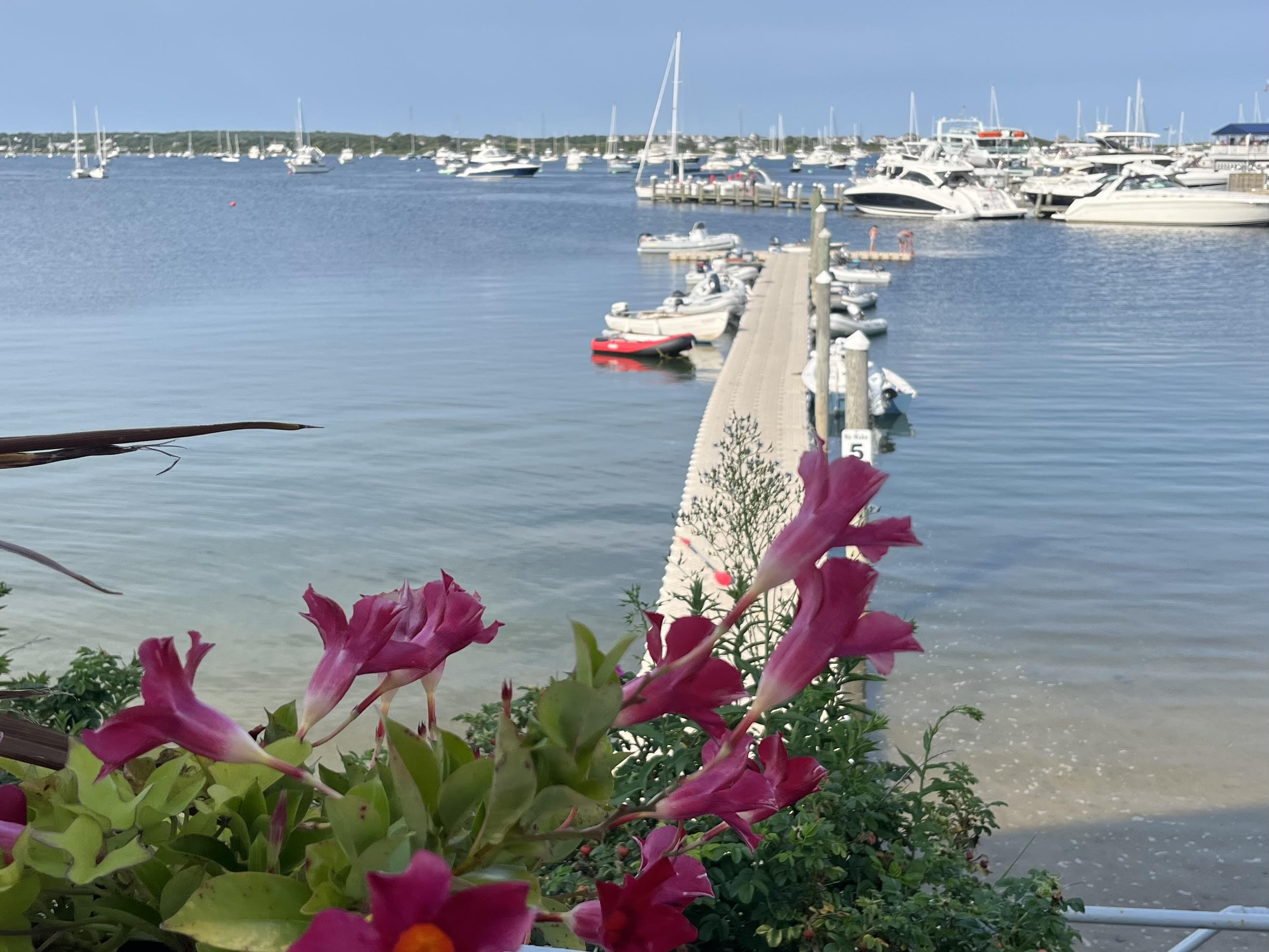
I begin this collection of summer photos with my only 2026 example of New Shoreham’s Painted Rock showing its artistic side. Lately, most people have used the rock for messy graffiti honoring friends’ birthdays, weddings, family gatherings. I am still trying to puzzle out why so many people have have turned inward like that to their own tribes. In the past, there was more art for art’s sake.
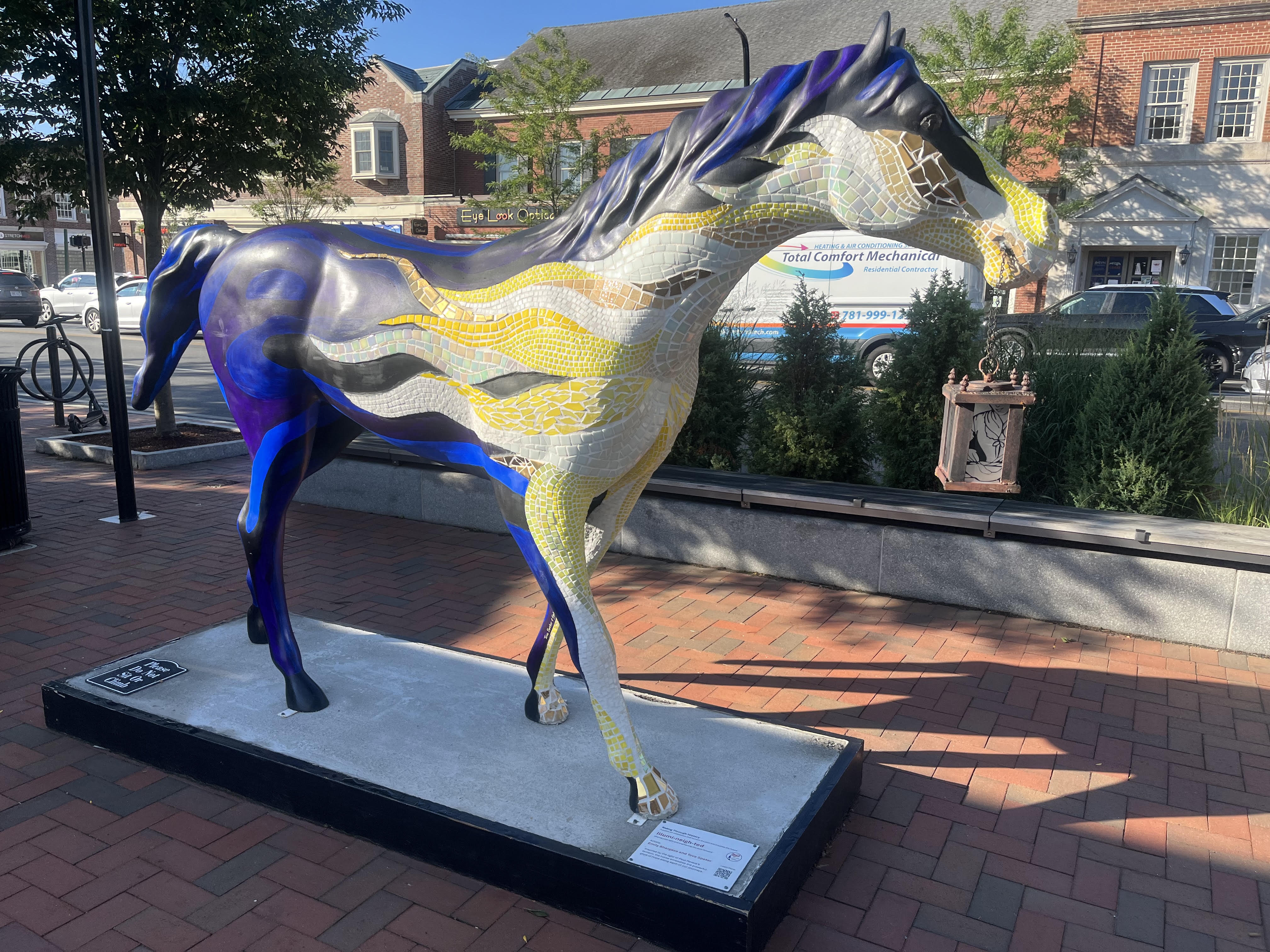
Below, Emily Bhargava and Tova Speter’s contribution to Lexington’s 250th Riding through History exhibit of decorated horses. “Illumi-neigh-ted” was inspired by Paul Revere’s lantern.
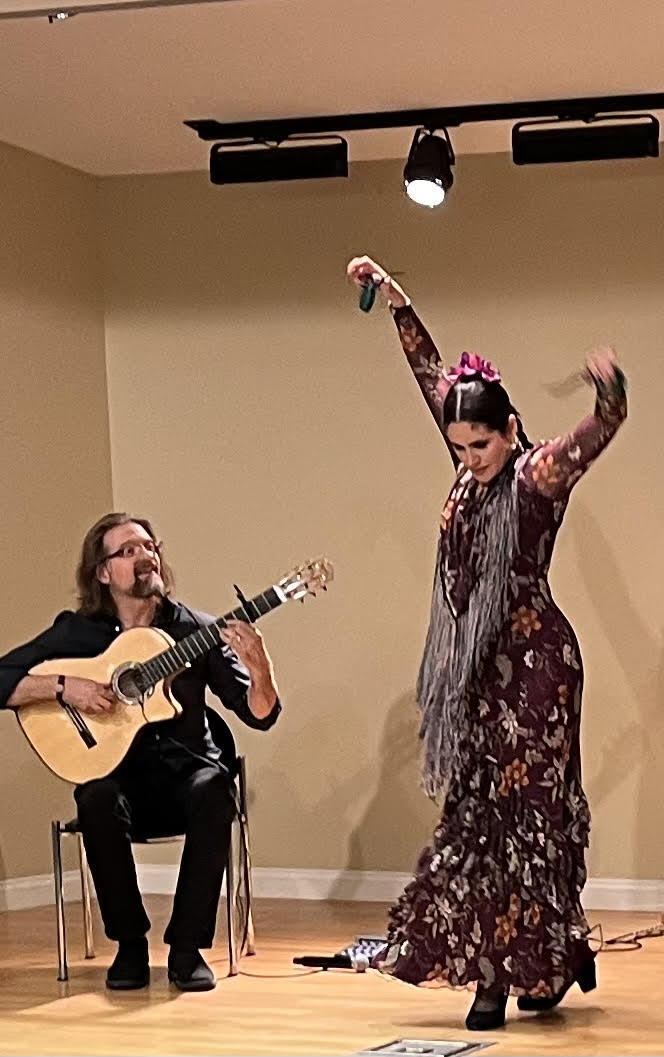
Next, Susana Rodrigues performs flamenco at our retirement place.
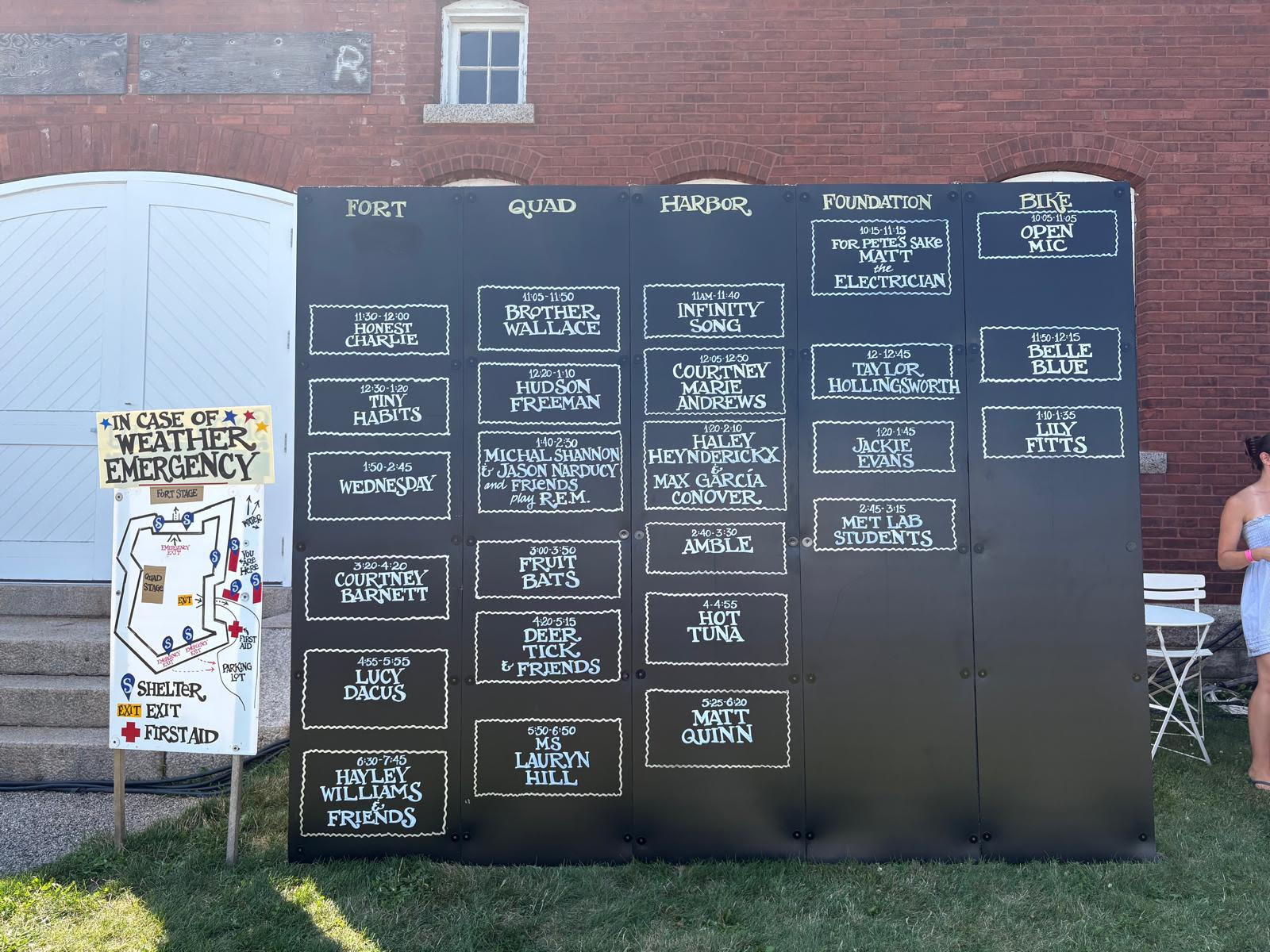
The photo below is by Suzanne from a trip to the 2026 Newport Folk Festival.
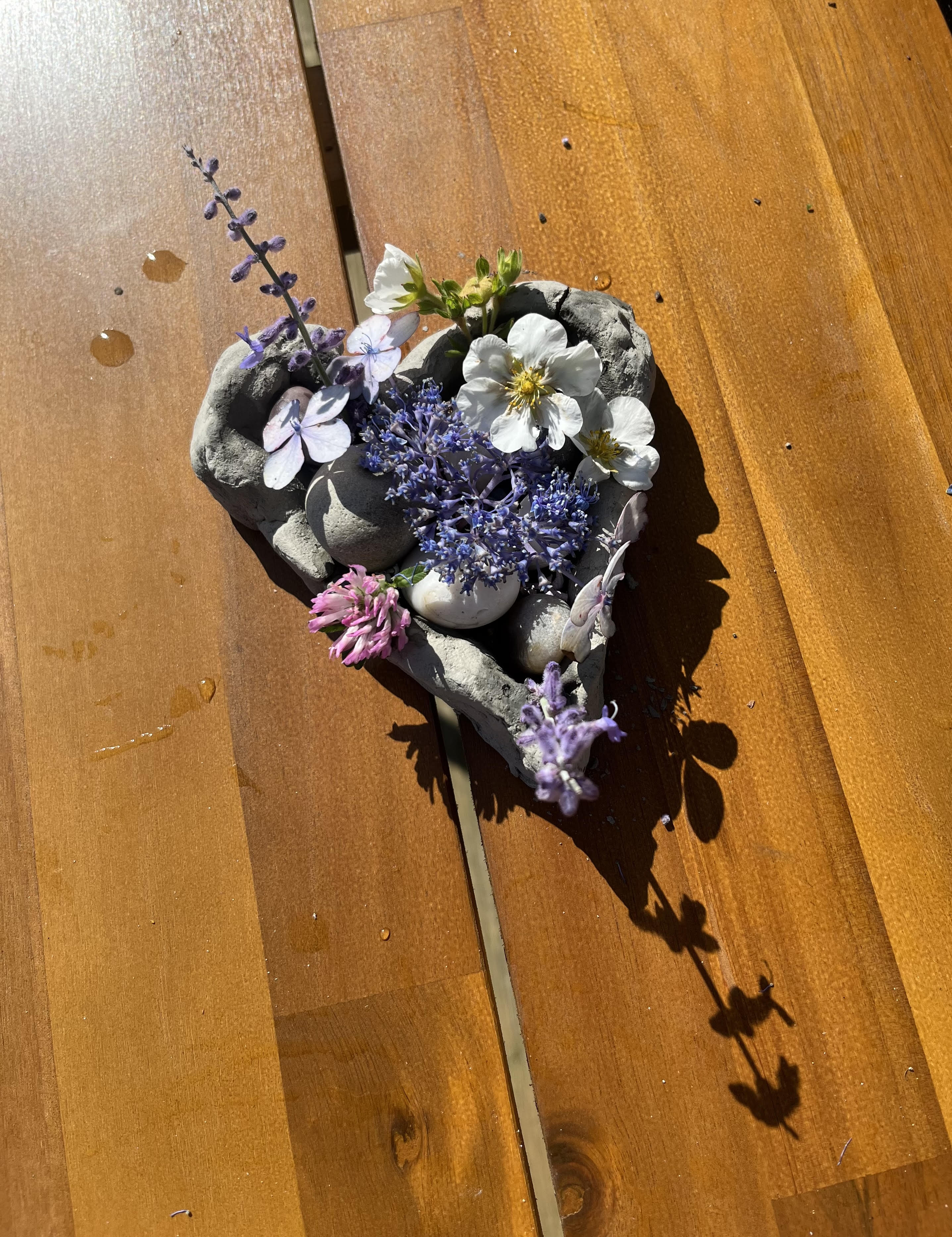
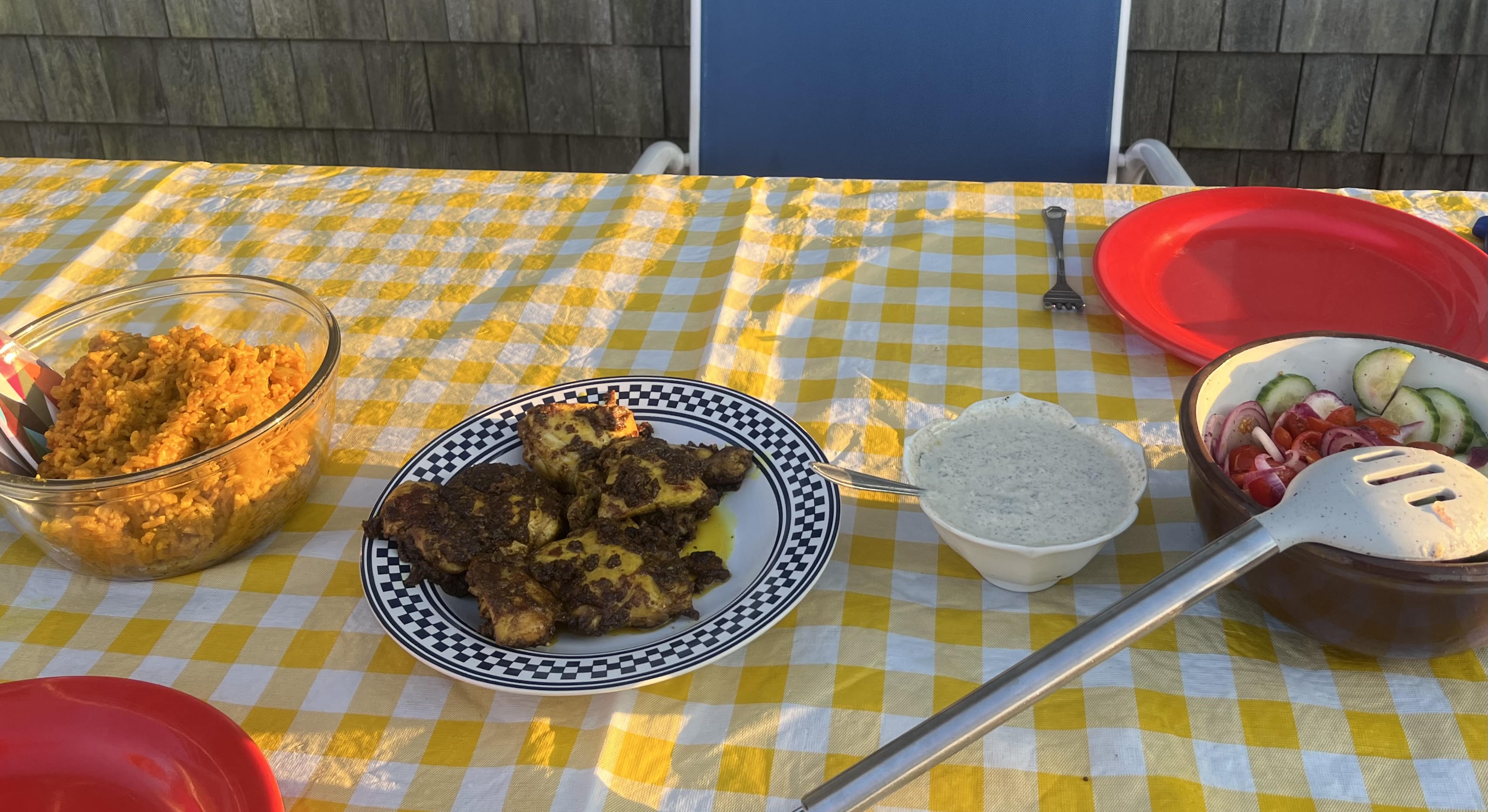
Next, an artistic creation by my older granddaughter. It was made from the clay of New Shoreham bluffs. She also cooked a magnificent dinner during her time on the island.
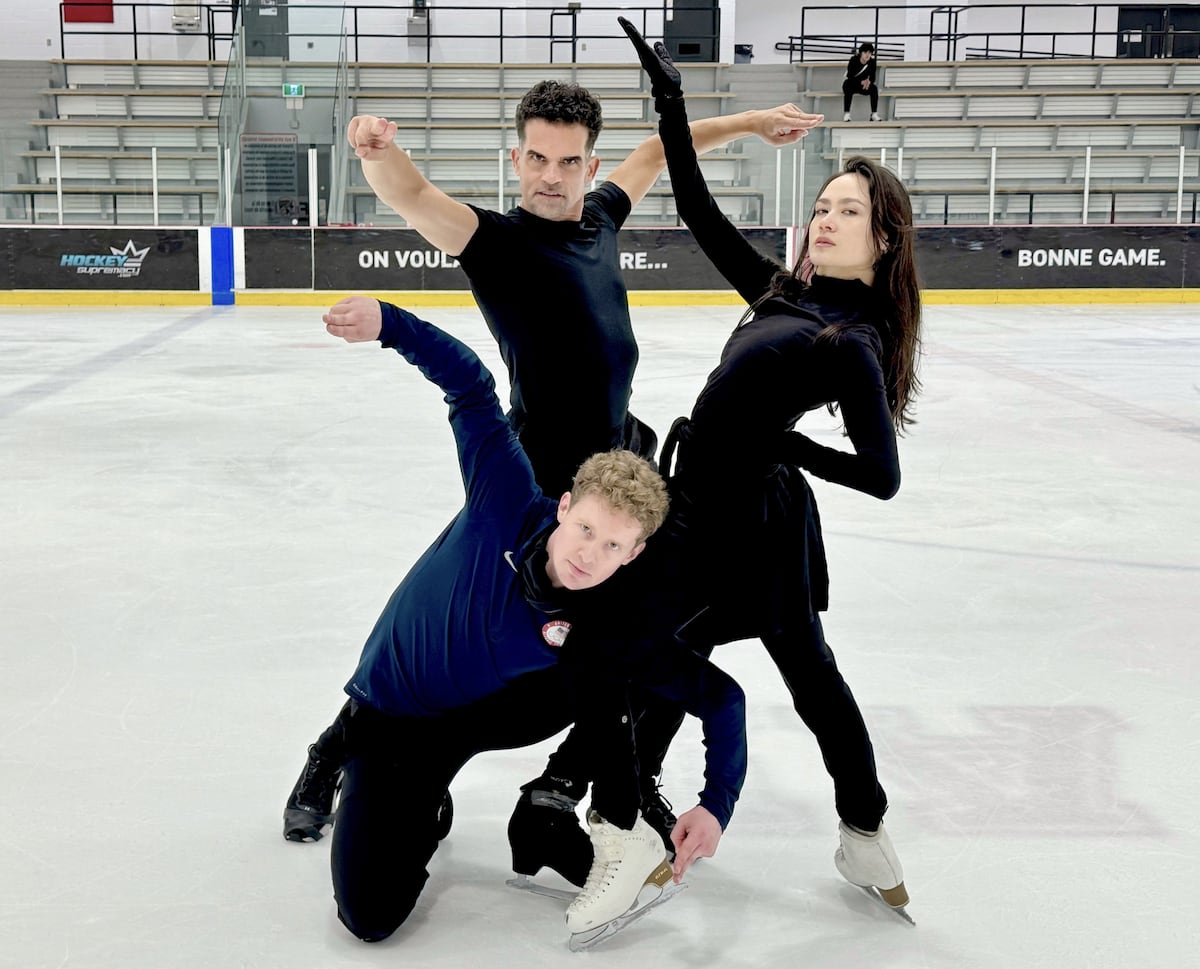
Photo: Compañía Antonio Najarro. Choreographer Antonio Najarro, center, poses with Madison Chock and Evan Bates during training in Montreal last January. Najarro teaches flamenco for ice dancers.
Today’s article is about an artist of the dance world, a choreographer, who has expanded the boundaries of Spanish dance into areas like ice dancing and water ballet.
“When he was a child, Antonio Najarro, 50, would skate from his home to the Conservatory. His calling was dance, and he pursued it until becoming a leading figure in Spanish dance and flamenco, eventually directing the National Ballet of Spain from 2011 to 2019.
“He had no idea back then that skating would become another way of shaping and spreading dance. He didn’t even fully grasp it in 2002, when he received his first request to create a choreography for the French Olympic skaters Marina Anissina and Gwendal Peizerat, who had spent some time in Andalusia working with other flamenco creators — apparently without much success. ‘It seemed very difficult to me. Flamenco is so rooted in the earth that doing it on ice felt almost crazy. But curiosity got the better of me,’ he says over the phone to El País. ‘They saw my work and noticed that I had also choreographed for fashion and film, and I imagine that openness to taking dance beyond the stage was what interested them.’
“Drawn in by this adventure on ice, Najarro packed his bags and moved to Lyon, where he spent long stretches working with them. Two years later, the pair won the gold medal at the Salt Lake City Winter Olympics. Their winning program, ‘Malagueña,’ brought new shades and possibilities to figure skating — and opened new paths for Najarro to expand flamenco and his own creative work.
“The most recent piece is titled ‘The Matador and the Bull,’ and this Saturday it will compete at the Milan–Cortina Winter Olympics, performed by U.S. skaters Madison Chock and Evan Bates, seven‑time national champions and three‑time world champions. [They won a silver medal in individual ice dance and a team gold.]
“ ‘I’m not interested in bullfighting, but they had a very clear idea of what they wanted. … Spanish dance draws heavily on bullfighting gestures — positions, movements — and they’ve captured them beautifully.’ …
“Since he began choreographing for ice skating, Antonio Najarro’s work has won seven Olympic gold medals, earned through his contribution that emphasizes the most artistic side of the sport.
“ ‘Even Paloma del Río [the Spanish journalist and legendary voice of TVE’s broadcasts] has praised on several occasions this quality of choreography that goes a little further,’ Najarro says. ‘After that “Malagueña” I choreographed, dance creators began appearing more regularly in skating. Before that, it was the coaches themselves who put the programs together,’ explains Najarro, who has worked with skaters from different countries and says he sets aside political or national considerations when deciding whether to take on a project.
“What does he look for when deciding to work with certain artists? ‘That they’re not afraid and that they like to take risks,’ the choreographer says. ‘That they’re open to exploring different paths, even if they feel uncomfortable at first because they’re unfamiliar. I’ve also been lucky enough to work with the best, technically speaking,’ he adds.
“Spanish skater Javier Fernández is one of them. A seven‑time European champion and Olympic medalist, he also collaborated with Najarro beyond the world of competition. That was with the show Flamenco on Ice (2019), right after retiring and after winning his seventh consecutive European gold in Minsk.
“When Najarro took charge of this flamenco‑on‑ice production with Fernández, he was directing the National Ballet of Spain, where he also left his mark with the kind of open, permeable Spanish dance he champions — one that breathes beyond rigid compartments, connects with other disciplines, and becomes more visible.
“Synchronized swimming is one example, a sport in which the choreographer has also contributed his creations. ‘My goal is to project Spanish dance and flamenco into every possible context.’ …
“Coming back the other way, from skating to dance, he says he has learned several things he later applied to his own company. ‘For instance, the fact that there isn’t a single focal point or front for the audience. This concept of creating in 360 degrees has helped me broaden my staging vision.’
“Najarro stresses the importance of understanding the different skating disciplines when approaching a choreography. He focuses on ice dance, a freer category in which acrobatics are not the main element. ‘There are many rules; in fact, the first thing I do when I start creating is include them, so I know what can and cannot be done.’ A clear sequence of choreographic steps, spins, and a diagonal are required; lifts that raise the female skater above the male skater’s shoulders are not. ‘Only lifts around the body are allowed.’
“Meanwhile, the choreographer continues working with his dance company, which has three productions on national and international tours that will take them to France, Russia, and China in the coming months.”
Photo: Thais Coy/American Flamenco Repertory Company. Yjastros, the American Flamenco Repertory Company, performing in Albuquerque, New Mexico.
Nowadays people don’t seem to talk much about catharsis in theater: the idea that in suffering along with the actors, the audience can feel a kind of cleansing or relief.
That is what you also get experiencing the controlled rage and sorrow of music like Edith Piaf’s, Portuguese fado, or Spanish flamenco.
Today, as I’m reading about flamenco flourishing in part of the US, I’m thinking what a gift it is to be able to convert rage and sorrow into something like peace.
John Burnett reports at National Public Radio (NPR) that the state of New Mexico is “a global center of flamenco — the passionate dance, song and music of the Roma people of southern Spain.
“The epicenter is Albuquerque. New Mexico’s largest city boasts a world-famous flamenco festival. … The University of New Mexico is the only American university that offers graduate and undergraduate Dance degrees with an emphasis in flamenco. The National Institute of Flamenco is home to a world-class repertory company, and a conservatory that teaches students as young as three, to young adults who want to be professional dancers.
“The popularity of flamenco has exploded in the last four decades. You can find its distinctive percussive footwork from Tokyo to Israel to Toronto. … But what’s different about flamenco in Nuevo Mexico is that it’s homegrown. New Mexico traces its deeply Hispanic identity to the arrival of Spanish settlers 400-plus years ago.
” ‘Here in New Mexico it’s got to sound like us,’ says Vicente Griego, a celebrated singer from northern New Mexico who specializes in cante jondo, the deep song of flamenco. ‘There’s other people who want to do flamenco exactly the way it’s been done in Spain. But what makes us really special here and what keeps us honest, is that we have our own history. We’ve had our own resistance, our own celebration, our own liberation.’
“Says Marisol Encinias, executive director of the National Institute of Flamenco: ‘I like to think that there’s something in our DNA that ties us to the antecedents of flamenco from way back.’ …
“Eva Encinias, Marisol’s mother, learned dance from her mother, Clarita, and is considered the grande dame of flamenco in Albuquerque.
” ‘Even though we present all of this very, very high-end flamenco, the rationale behind that is to inspire and cultivate young people,’ says Eva, sitting in the costume room of the National Institute of Flamenco that she founded 43 years ago. She’s surrounded by racks of extravagantly ruffled dresses. ‘We all started as children and we know the impact that flamenco had on us as young people.’
“Outreach is a huge part of their mission. Between Eva and her children, Marisol and Joaquin, they’ve taught thousands of flamenco students at the Institute and at UNM. …
” ‘We’re gonna clap along to the music, in 4/4 time, which means that we count 1-2-3-4,’ intones Sarah Ward, a Canadian who became enthralled with flamenco and now teaches. She’s leading a class of fourth-graders at the Taos Integrated School of the Arts. Fifteen kids happily stomp their sneakers to the count. …
“One of her bright-eyed students is 10-year-old Cypress Musialowski. ‘I feel an opportunity to let out anger,’ she says. ‘I really like stomping my feet. But I also feel like I can just flow and be me.’ …
Flamenco has been called performed aggression—the pounding wooden heels, the feral singing, the baroque guitarwork.
“The Spanish poet Federico Garcia Lorca defined duende, the spirit of flamenco, as ‘tragedy-inspired ecstasy.’ …
“And it’s really hard to learn, says Marisol Encinias, who is also an assistant professor of flamenco dance at UNM. ‘It’s a really, really challenging artform,’ she says. ‘I had a guitarist friend who said you spend your whole life trying to be mediocre.’
“Evelyn Mendoza, the 27-year-old education manager at the Institute, says, ‘I mean, you sweat your heart, soul, tears, blood and everything into any dance form that you do. … But flamenco is so different because it’s fierce.’ “
Read more at NPR, here. (Consider supporting this great public resource, here.)
Photo: Ensemble Español Spanish Dance Theater
Ensemble Español Spanish Dance Theater, based in Chicago, is among a growing number of American flamenco companies.
I had no idea that there is a vibrant branch of flamenco dance culture evolving right here in the United States, but a recent article in Dance Magazine set me straight. Alice Blumenfeld begins by noting a Dance Magazine interview with Cuban Flamenco star Irene Rodriguez.
The interview, she says, ‘mentions only a few of the many flamenco companies in the U.S. and claims a lack of innovation in American flamenco. [It] brings to the forefront a deeper problem surrounding flamenco in the United States.
“Why are so many flamenco dance companies and dancers in the U.S. — especially those pushing the form forward — overlooked and undervalued? Why do we constantly have to defend our work?
“When I toured the U.S. with Flamenco Vivo, my first two tours I wore the iconic red bata de cola. I’d run onstage and hit a pose in the middle of the first piece — and almost without fail, the audience would cheer. I’d hold my pose, chest and chin lifted, castanets drawn and ready. But in my head, I was thinking: Why are they clapping? I’ve done nothing worthy of applause — entering the stage and making a pose is not such a special feat. Presumably, it was the appearance of the red dress and the dramatic change in lighting.
“Why is the audience trained to clap at that moment? I could start with Franco, who used the image of the flamenco dancer to attract tourists to Spain. The woman in the red dress is even an emoji. …
“Pursuing flamenco outside the norms is not so easy. … Sometimes, flamenco is sidelined because it isn’t fully understood. (One MFA program called and asked me why I wanted an MFA, since I was a flamenco dancer. Only upon including in my answer that I also study contemporary dance and had a foundation in ballet did it seem to make sense to them.)
“I am ever-grateful to my experiences dancing with several of companies Rodriguez admires … But only as I started to branch out did I realize there are many people breaking boundaries in flamenco in the U.S. in incredible ways that could only be possible in the melting pot that is America. … Many cities in the U.S. champion vibrant flamenco scenes with outstanding dancers and musicians, and some, like Pittsburgh and Austin, have burgeoning scenes. Building a flamenco community takes decades of tireless work, and many of us creating today are standing on the shoulders of often unrecognized artists.
“As foreigners, we have to prove five times over we know the rules before we can break them. … I want aspiring flamenco dancers to know it’s okay to not wear a red dress and polka dots, to branch out, and to explore one’s own style, story and self through flamenco. And I want audiences to know flamenco is more than passionate and fiery footwork. …
“I want people to understand there is an ever-expanding horizon in flamenco, that flamenco has a specific (and fascinating!) political and cultural history. … Flamenco can be for anyone willing to put in the time to study it — the technique, structures, history, music — and then deepen that knowledge with their own interpretation.”
What a weekend for entertainment! On one day, we saw the musical The Wild Party (LaChiusa version) at Moonbox Productions in Boston. (Very good.) On another, we attended a flamenco concert in a church.
The flamenco headliner, guitarist Juanito Pascual, was joined by flamenco percussionist and singer José Moreno and singer and dancer Bárbara Martinez. Such exuberant and mournful fun! It reminded us of fado concerts we’ve attended, although that happy-sad tradition is Portuguese and flamenco is Spanish.
The music included pieces that go back centuries plus Pascual’s own compositions, which are a fascinating blend of old and new. Challenging at times, but pretty intriguing. One was dedicated to the person back home in Minnesota “who persuaded my mother to let me take guitar lessons.”
An article in the Concord Journal notes that Pascual, who is just beginning a 15-city tour to promote his latest CD, “skillfully weaves such influences as Jimi Hendrix, the Grateful Dead, Bach and many others into his original compositions.” The Journal also quotes Boston Globe critic Steve Morse, who admires how Pascual “combines vivid colors, rich imagination and a yearning, never satisfied mastery of his art.”
Even in pieces without Moreno’s percussion support, Pascual’s virtuoso performance sounded like he was simultaneously playing two guitars and a set of bongos (flamenco involves slapping the wood as well has playing the strings). Very dramatic.
More at the Concord Journal, here. And you can hear samples of the music at all three artists’ websites.