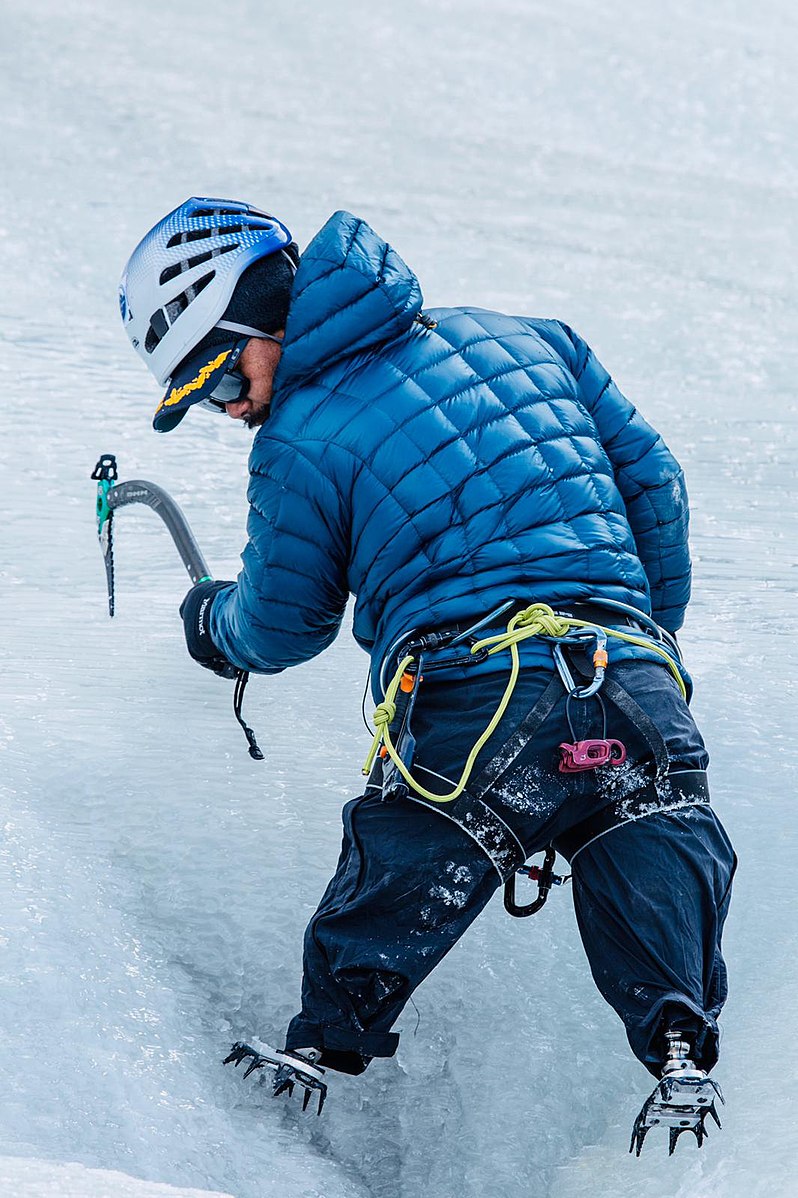
Photo: Shanta Nepali.
He lost his legs in Afghanistan, went on to summit Everest.
Today’s story reminds me that people can overcome almost anything if it’s important to them — and if they believe they can.
Bryan Pietsch has the story at the Washington Post.
“Hari Budha Magar was born in the foothills of the Himalayas. Growing up in Nepal, surrounded by the mountains and seeing Mount Everest constantly in textbooks and local media, he thought about climbing it someday.
“But school kept him busy, and then at 19, he left his country to join a Gurkha unit in the British army. He saw and skied through mountain ranges around the world on his missions and travels, but he was still ‘thinking about Everest all the time,’ he said in an interview.
“Those bucket-list plans to climb the world’s tallest peak were complicated by an explosion in Afghanistan in 2010 that left Budha Magar with above-the-knee amputations on both of his legs. But after years of preparation — and delays due to the coronavirus pandemic and a rule that sought to keep people with certain physical disabilities off the mountain — Budha Magar made history [in May] by becoming the first above-the-knee double amputee to summit the 29,000-foot peak. …
“Budha Magar was part of a 12-person team led by Krishna Thapa, another Gurkha veteran. The pair served together in the army for three years and were reunited in 2016 as Thapa was planning an Everest expedition.
“ ‘What do you think? I’ve got no legs,’ Thapa recalled Budha Magar asking him. ‘Do you think it is possible I could climb Everest?’
“ ‘We can only try,’ Thapa replied.
“After acclimating to the elevation and the snowy, windy environment at base camp, the team intended to start the journey to the summit on April 17 — exactly 13 years after the explosion in Afghanistan that took Budha Magar’s legs — but poor weather delayed them for weeks. This year’s conditions were especially difficult, Thapa said. …
“Unpredictable wind — despite access to three separate weather forecasting tools — and conditions such as slushy snow [proved] challenging. ‘The snow was soft,’ Budha Magar said, ‘and I didn’t have knees to lift up.’
“Budha Magar said there were times when he wanted to give up, and Thapa said there were a couple of moments when he thought they wouldn’t be able to move forward. But they persisted.
“ ‘Hari kept surprising me,’ Thapa said.
“They summited about 3:10 p.m. [May 19], spending only a few minutes at the peak due to harsh conditions. At the summit, Budha Magar said his tears — happy ones — froze on his cheek. Some on the team had to fetch more oxygen on the descent, and Budha Magar was so exhausted that he slid down on his rear end for part of it. …
“Budha Magar, who lives in Canterbury, England, said his 10-year-old son was especially worried about him attempting the climb. ‘I promised myself, “I’ll come back for you. I’m not going to go die up there,” ‘ he said. …
“Many Nepalese believe that people with disabilities were sinners in their past lives, Budha Magar said.
“ ‘I wanted to show that disabled people can have a happy, successful and meaningful life,’ he said. ‘Our disability might be our weakness, but we can do many other things.’ ”
More at the Post, here.


 Suzanne's Mom's Blog
