Feeds:
Posts
Comments

Posts Tagged ‘hair’

Wigmaking for Theater

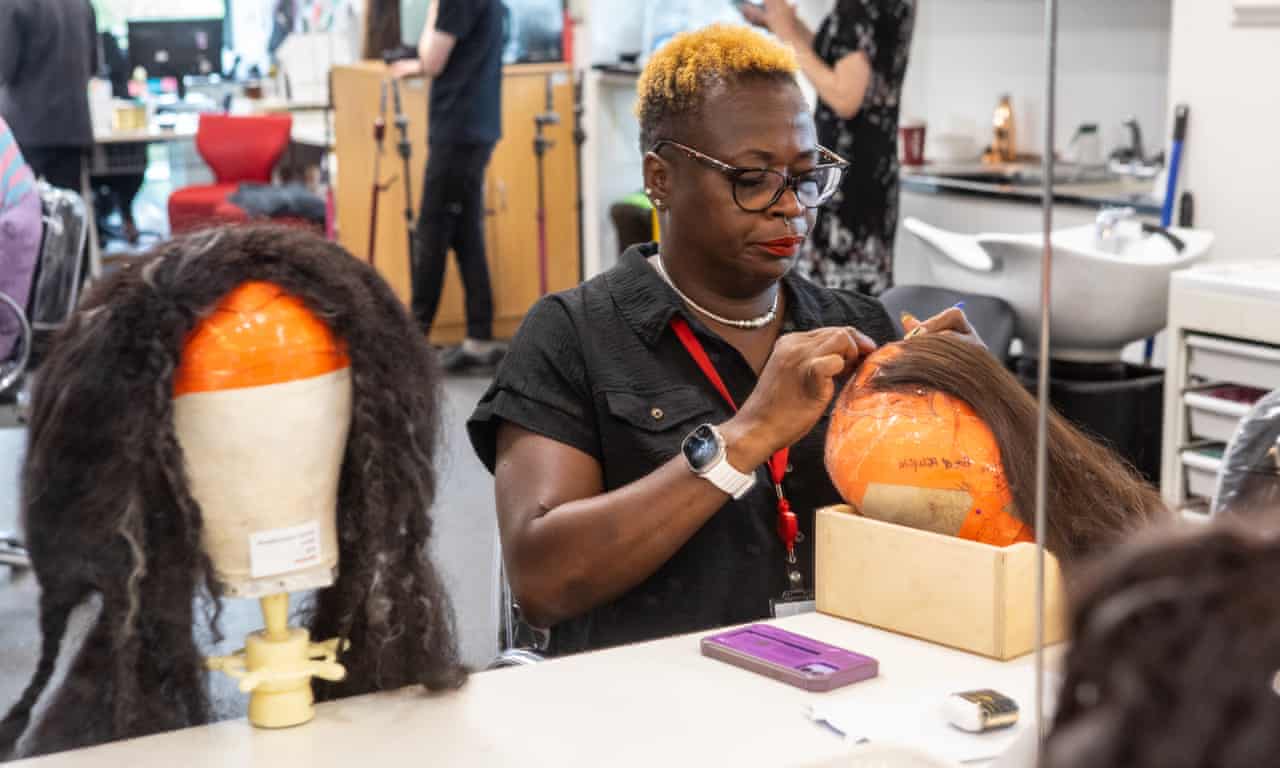
Photo: Antonio Olmos/The Observer.
Skilled wigmaker Violet Barrie at England’s RSC [Royal Shakespeare Company].

Although I was in many theatrical productions as a kid, the first time I learned anything about wigs was when I had chemo. I lost my hair and wasn’t brave enough to go to work without any. (John told Suzanne, who was living in Switzerland then, “Mom looks like a little, bald mouse.”) But Dana Farber was known for nice wigs, and I got one there that I liked a lot.

Today’s story from the Guardian is all about wigs for the theater. Which can get complicated.

David Jays writes, “It’s a sunny afternoon in Stratford upon Avon and I’m watching actors become witches. In Georgia McGuinness’s design for Macbeth, the witches seem to be mostly hair. Amber Sylvia Edwards and Dylan Read peer out from mountains of furry locks, each looking as if a yeti has fallen asleep on their shoulders. The tumble of tresses is so heavy, it needs a harness for support. Welcome to the wild world of wigs.

“Some hairpieces are bobby-dazzlers: towers of Restoration foppery, ravishingly long Rapunzels. Others slink by unnoticed, disguised in realism. Who makes them? Who pins them on night after night? To find out, I meet two wig mavens. Sandra Smith is head of wigs at the RSC [Royal Shakespeare Company], and has warmly invited me to spend the day with her team in Stratford. Chris Smyth, meanwhile, only recently began his wig journey: he designed a memorable crimson creation for Jane Asher in The Circle at the Orange Tree in London. …

“The RSC storeroom’s wooden doors conceal mop after mop of blondes, browns and russets. A separate cupboard holds periwigs and judges’ rugs, like a bevy of poodles. This hoard reflects a practice built on sustainability and thrift. Mounds of witchy hair were foraged from the stores, saving thousands of pounds. ‘Nothing goes to waste, even the ratty bits,’ Smith says.

“Wigs, like actors, never retire. ‘We keep them till they die,’ her colleague Lavinia Blackwell says matter-of-factly. … ‘Wigs is an area of theatre that has been drastically cut back,’ designer Tom Piper says. ‘People have disappeared and budgets have gone down. I’m so grateful for somewhere like the RSC, who’ve got the team and a lot of stock.’ …

“Only when I see the foundations for all the team’s creations do I appreciate the challenge of our lumpy, bumpy human variety. Some heads are footballs, some shaped for rugby. The wigs team wrap actors’ heads in clingfilm and wind round sellotape to map the cranium, marking the hairline. …

“Theatrical wigs take quite a bruising, and the hair may be reused, which helps explain why the V&A [Victoria & Albert] collection holds few early wigs – the oldest come from Diaghilev’s Ballets Russes in the early 20th century. Even so, key artifacts indicate their role in nailing character. When Vivien Leigh played Blanche DuBois in the film of A Streetcar Named Desire in 1951, ‘the wig fundamentally made her appear less glamorous,’ [says Simon Sladen, V&A senior curator of theatre and performance] says. Leading theatrical wig-maker Stanley Hall created ‘impoverished, rather thin hair … to point out her highly nervous, worn-out character.’ …

“It’s painstaking work. ‘You tie each hair with a tiny little hook,’ Smyth tells me. How did he acquire the skills? ‘I do drag and I make my own costumes,’ he says. ‘I did a couple of days’ training in wigs and just fell in love, because it’s so difficult. It’s like the dark arts. I will never know everything. Everybody does it differently; it’s a rabbit hole that keeps deepening and deepening.’ …

“Everyone’s route into wig world is different. Smith was studying hairdressing and beauty therapy in Pontypridd when a friend took a job at the RSC, and she visited for work experience. ‘I had a lovely two weeks and I haven’t left since. I’ve been with the RSC for 38 years.’

“I crouch beside Violet Barrie, who ran a salon in Leamington Spa until Covid struck. Hairdressing was a family trade in her Jamaican childhood, so the fascination began early – just as it did when Smith grew up in Wales, watching friends and neighbors who came to get their hair done by her aunt on a Thursday evening. No wonder the wig room feels like a hug. …

“ ‘We invade somebody’s space from the first moment,’ Smith asserts. ‘We’ve got to be really skilled, but equally sophisticated in personal care: 90% of our job is reacting to somebody’s needs.’ The team intuit who is comfortable, who hates to be touched. …

“In the wings, Thérèse Bradley, playing Duncan, rushes up with a huge beam and a hug for Smith. ‘These women!’ she says. However careworn you may be when you sit in the wig room chair, she says, you leave ready for anything. ‘They perform miracles!’ ”

More at the Guardian, here. No firewall. Donations solicited. Check out the wild wigs for the Macbeth witches.
Read Full Post »

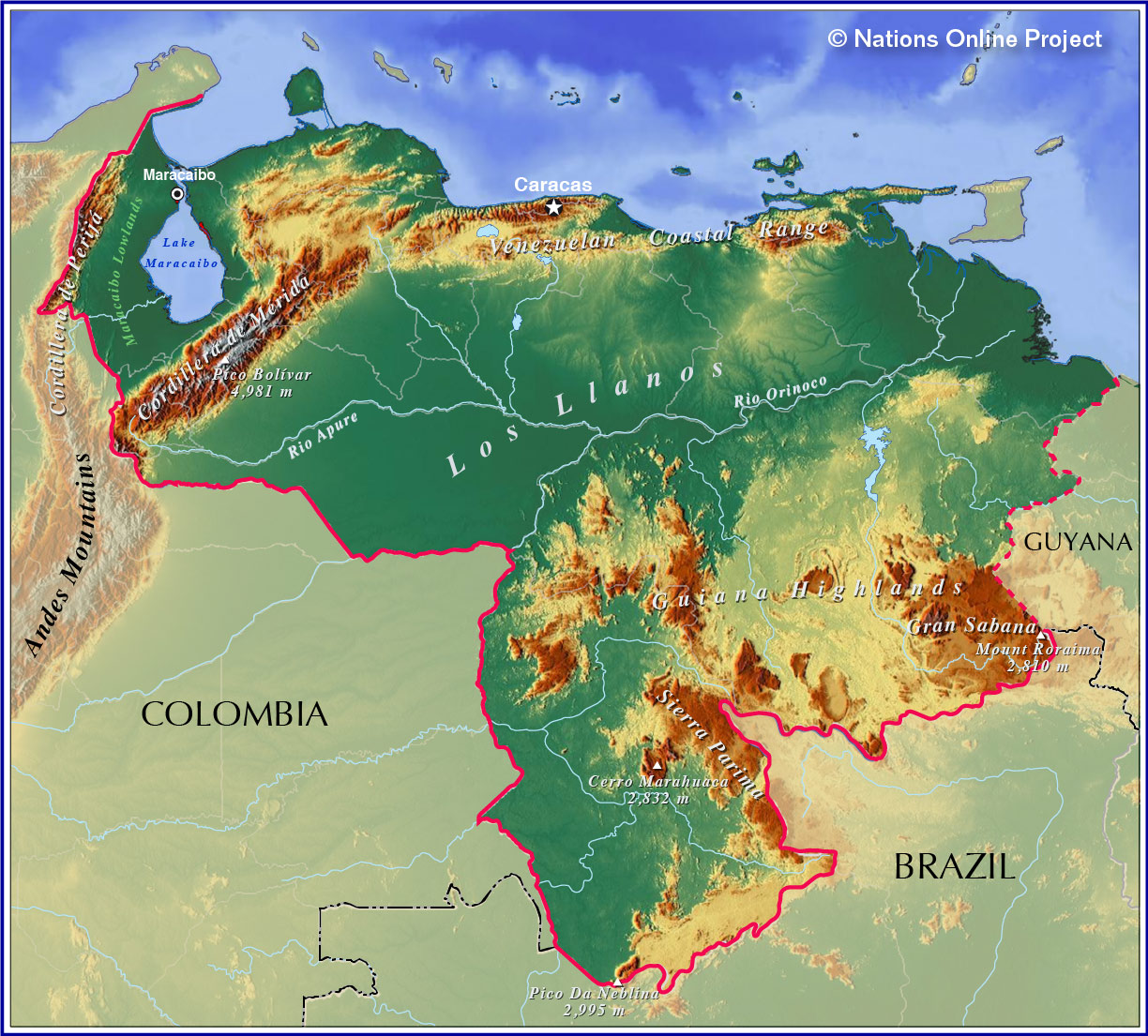
Photo: Nations Online.
Lake Maracaibo in Venezuela (upper left) is subject to oil spills that thousands of volunteers have agreed to treat with their hair.

We all know that to solve big problems we need to get to root causes. But what to do in the meantime? A woman in Venezuela had an idea about a temporary fix for a lake’s constant oil leaks.

At the Washington Post, María Luisa Paúl writes, “For years, Selene Estrach has seen how Venezuela’s crumbling oil industry has taken a toll on Lake Maracaibo, one of the world’s largest and oldest lakes. Once a symbol of the country’s oil wealth, its waters are now coated with iridescent slicks and swirls of neon green algae blooms that can be seen from space.

“The pollution is the product of decaying machinery and ruptures in a network of nearly 16,000 miles of underwater pipelines. Though oil slicks are common in Lake Maracaibo, which contains one of one of the planet’s largest known oil and gas reserves, experts and environmental groups have warned that years of mismanagement and a crippled oil industry have left a constant stream of crude oil oozing into the water.

“Yet little has been done to clean up the lake, which is home to endangered species such as pink river dolphins and manatees. In recent years, officials have downplayed the pollution as ‘a visual matter‘ or ‘not a big deal.’

“That’s why Estrach, a 28-year-old environmental activist, was determined to find a way to help. She founded Proyecto Sirena, a national network of activists dedicated to saving the lake using an unorthodox, yet bountiful, material.

“Hair.

“She got the idea in July while scouring the internet for easy, cost-effective and sustainable solutions for the pollution marring Lake Maracaibo. She saw that Matter of Trust, a San Francisco-based nonprofit, had used human locks 22 years ago to help soak up a spill off the coast of the Galápagos Islands. …

“Estrach told the Washington Post. ‘I thought, “If they’re doing this in … other parts of the world, why can’t we do it in Venezuela?” It’s easy and cheap. Plus, all the hair that’s left over in the salons is going to waste. Why not put it to good use?’

“Since founding Proyecto Sirena — a play on the Spanish words for mermaid and emergency siren, Estrach said her car is constantly filled with bags of donated human and pet hair. Across Venezuela, more volunteers are holding haircut drives that have brought in thousands of people.

“In 1989, Philip McCrory, a hairstylist in Alabama, first designed a hair-filled net to be used after oil spills, which NASA later tested and found effective. Researchers from the University of Technology Sydney found in 2018 that hair is ‘significantly better at absorbing oil than other materials, including cellulose and cotton. …

“Hair was not only used in Ecuador in 2001, but to clean the 2007 Cosco Busan oil spill in California, the 2010 Gulf of Mexico oil spill and, most recently, in this year’s spill in the Philippines.

“Estrach has spent weeks huddled inside a lab at the University of Zulia, where she is a student, trying to replicate how the Matter of Trust nonprofit used hair after past oil spills. The results are promising, she said, with her tests indicating that about two pounds of hair can soak up between 11 and 17 pounds of oil. …

“Estrach’s team is also researching ways to safely discard the oil the devices soak up so they can be reused. ‘It will be our contribution to a growing field of research about this technique,’ she said.

“The first step, however, was getting the hair to make the items. Estrach turned to salons for help. … By October, 600 had signed up to help, which will allow her to collect about seven tons of hair every three months.

“Michele Giurdanella, 46, the CEO of Salvador Hairdressing … ended a 20-year hiatus of not cutting hair to personally help out during a donation drive. Next month, he and about 30 other stylists will give free cuts at Salvador Hairdressing’s headquarters. All the locks from the event will go toward the lake cleanup. …

“Giurdanella said, ‘[The drive] also helps out with our low-income community members who might otherwise not be able to afford getting a haircut. Everyone wins with this.’

“The effort has expanded well beyond Maracaibo. In Caracas, students from the Central University of Venezuela organized another haircut drive this month. They expected 200 people — nearly 1,500 showed up, said Rafael Chavero, a 26-year-old medical student and social activist.

“ ‘We had to promise some that we’d do another drive because we just didn’t have enough volunteer stylists to keep up with the demand,’ he said.

“That day, Chavero said people traveled up to an hour ‘to literally just give us a baggie of hair they collected.’ Others even brought their dogs for a shave and donated the fur.”

When in doubt about the state of humanity, remember that.

More at the Post, here. No firewall at Hindustan Times, here.

Read Full Post »

Image: India Marshall; iStock; Lily illustration
She woke up from a surgery with her hair perfectly braided. Her black male doctor braids his daughters’ hair; the surprise he gave his patient touched her heart.

The Washington Post has a newsletter called the Optimist that I’m really enjoying. This story about a surgeon who understood what a patient’s hair might mean to her is something the newsletter shared recently. Some folks might find the doctor’s act uncomfortably personal, but the point is his patient didn’t.

Soo Youn writes at the Lily, “For the past couple of years, India Marshall has been contemplating getting another surgery to have bone growths in her head removed. She had already undergone one operation when she was about 20 years old.

“Now 29, and working as a manager in a primary care clinic, Marshall was experiencing more growth from her osteomas. While not dangerous, they can be painful. Several had started to grow on her forehead and between her eyes, making it uncomfortable and annoying when she wore her glasses. She met with a few surgeons about getting them removed. …

“Jewel Greywoode, an ear, nose and throat physician who specializes in cosmetic and functional facial plastic surgery [was] the only surgeon who mentioned going though Marshall’s nose so she wouldn’t be left with scars on her face. The other doctors told her she would need an ear-to-ear incision on her head, and hair might not grow back over the scar. Marshall underwent a successful surgery on June 9. …

“For the first couple days after the surgery, she went in and out of consciousness, her head wrapped. But when her mother and husband took off the bandages to clean the incisions, Marshall noticed that she had more braids in her hair. She went in with two loose braids, but woke up with four or five smaller ones.

‘I remember waking up and there were two black nurses helping me get myself together, helping me get my clothes on to go and I just assumed they did it. I was like, “Who else would have known how to braid?” …

” ‘I loved that whoever did it had thought of it because it was very easy to get to the incisions and clean. My hair wasn’t matted or in the way, and it was just easier for the recovery process,’ Marshall said. …

“On Wednesday, she went in for her last post-op appointment. As Greywoode removed her staples, Marshall says he noticed that she had redone her hair with smaller braids and commented, ‘Oh your braids are better than mine. I hope I didn’t do too bad,’ she recounted. …

“Greywoode told her he has two little girls and he braids and twists their hair. That he participates in the maintenance required for his daughters’ natural hair really moved Marshall.

“ ‘Natural hair is a lot of work,’ she said. … ‘To be honest there are not a lot of dads that [can] help with hair. … It was a very nice gesture and it just spoke to my bigger point of having black doctors and them being able to identify with patients.’

“Greywoode also told Marshall that he chose to staple the opening over suturing, because when you remove stitches, you often have to cut the surrounding hair. … ‘That was another part that showed me that he gets it.’ ”

What Marshall wrote on Twitter @IndiaDionna: “thinking about this black man braiding my hair to prepare to cut my head open is hilarious and endearing at the same time. also the fact that he’s that active in helping his wife with their girls, I love it. moral of the story: find black doctors.”

More here.

Read Full Post »

John’s web surfing has been turning up topics he knows I’d like, too, and he takes the time to send a link. An article he sent from Modern Farmer describes why scientists are studying cows’ hairstyles.

Anne O’Brien writes, “While a bovine couldn’t care less about a hair whorl gone awry, it may be prudent for the farmer to take note. Turns out there is some serious science behind hair whorl behavior and brain development.”

Hair whorls on cows’ foreheads, O’Brien reports, “may be more than an aesthetic quirk. About two decades ago, animal behaviorists began to notice a connection between crazy hair whorls and crazy animals.

“Dr. Temple Grandin, professor of animal science at Colorado State University and author of the best-selling book Animals in Translation, first noticed a connection between the location of a bull’s hair whorl and whether the animal was excitable when handled by humans. Studies showed that location — meaning above, between, or below the eyes — as well as shape of the whorl could be, to some extent, a predictor of excitable behavior in cattle. …

“How, then, are hair growth patterns and temperament related? It all has to do with brain development, says Dr. Amar Klar, head of the Developmental Genetics Section within the National Cancer Institute in Frederick, Maryland.

“ ‘Our skin and the nervous system come from the same layer of cells in embryonic development, the ectoderm,’ Klar says.

“As embryonic cells migrate to form a developing fetus, skin and brain cells are closely intertwined, particularly at the scalp. …

” ‘When we were looking at brain laterality and the location of internal organs, hair whorls also came up,’ Klar says. His research has shown that within the human population, the majority is right-handed and demonstrates a clockwise hair whorl.

“Livestock seem to mimic this handedness. A study from the University of Limerick in Ireland in 2008 demonstrated that horses with clockwise hair whorls were significantly more likely to move toward the right, or begin a gait with the right-sided hooves — in essence, these horses were right-handed.” More here.

Photo: Temple Grandin
Scientists have been exploring the connection between the cow’s hair whorl and its behavior.

Read Full Post »