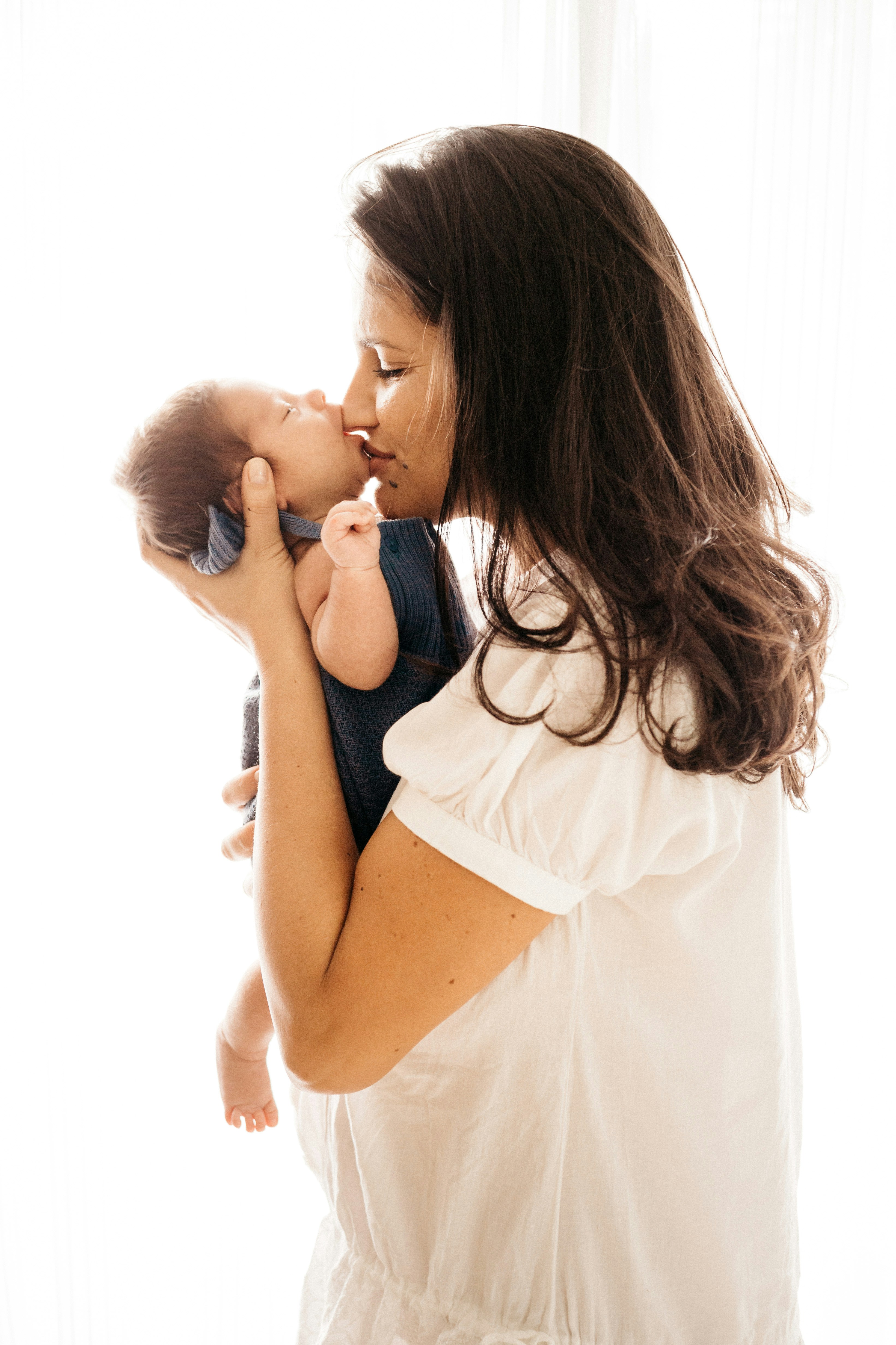
Photo: Jonathan Borba/Unsplash.
Tragedies in the news in recent years have highlighted how strung out some mothers get after giving birth and going home. Most women don’t reach crisis levels, but medical professionals have long recommended support for everyone to ease the transition. Now the states doing that are seeing the benefits.
Adria R Walker writes at the Guardian that a New Orleans nonprofit called Family Connects “provides crucial postpartum support to mothers through home-based nurse visits.
“About three months ago,” she says, “Amber Leduff, gave birth to her daughter, Autumn. … Anyone who gives birth at Ochsner Baptist or Touro hospital in New Orleans and is an Orleans Parish resident – regardless of insurance status or income – is eligible for Family Connects New Orleans (FCNO). The best part about the program? The visits are free.
“Four weeks after Autumn was born, Leduff scheduled their first visit. The nurse assigned to her arrived with her own weight table – a relief to Leduff who wanted to ensure, between pediatric visits, that Autumn was gaining enough weight.
“ ‘She checked on the baby, talked to me and my husband about our specific needs and how I’m actually doing,’ Leduff told the Guardian. … ‘She was very engaging in conversation with us, making sure that we were OK and had all the necessities that we needed.’
“Family Connects is a national program that offers a glimpse into how state and local governments can support families in meaningful ways during the difficult, and potentially dangerous, postpartum period. In 2021, 43.3% of pregnancy-related deaths occurred in the six weeks following delivery – this program, designed to be universal, works to fill in the gap period between birth and the first postnatal appointment through home-based nurse visits. …
“Leduff’s nurse also informed her about additional services provided by the city that she didn’t realize existed. That had a positive cascading effect: Leduff was able to pass the information along to cousins and friends who had also recently had babies.
“The visit provided security and reassurance that, as first-time parents, was needed for both Leduff and her husband. ‘The benefit of it is giving moms, whether you’re first time or not, whether it’s your second or third child – you always get that peace of mind when someone comes and just answers any questions you have,’ she said. ‘Every question I had, she took with ease and answered thoroughly.’
“While Louisiana has made strides in clinically treating conditions that can kill mothers, such as hypertension and hemorrhage, the highest risk is in the early postpartum period.
“ ‘You go, you have your delivery, you’re in the hospital and everything is there. You go home, there’s a bit of a honeymoon period, and then, for many women, you fall off a cliff,’ said Jennifer Avegno, deputy mayor of health and human services. …
“While programs such as WIC or Healthy Start help with young children and nutrition, there was nothing for the critical period shortly after birth. FCNO fills that void. Avengo noted that most developed countries have multiple postpartum home visits and significantly better birth outcomes.
“The nurses not only provide clinical evaluations of the mother and baby – things that can be particularly important for hypertensive moms and low birth weight babies – but also provide comprehensive social service evaluations of the entire home. For some families, such as those without insurance, the visits may be the only health services they receive.
“Additionally, the nurses can screen for postpartum depression, provide breastfeeding support, help with other aspects of adjusting to a newborn and also connect families with resources in the community. FCNO is also now offering maternal support groups once a month, during which moms can commiserate and build relationships during a period that can feel isolating.
” ‘If grandma lives in the home, what’s going on with grandma? If there’s a three-year-old in the home, what do they need? It is a very active, warm handoff and confirmation that you’re getting the help you need,’ Avegno said. … ‘This is not long-term; we’re not going to be with you forever. But it is to get you through that hump.’
“Before FCNO, families would attend the prenatal appointments and ‘they would be good patients,’ Meshawn Siddiq, director of family health and wellbeing, said. ‘They wouldn’t tell the provider that they couldn’t afford the medications, so you have very sick patients going to their prenatal appointment and not getting the support that they need.’ …
“Nurses are able to encourage patients to still take the medications they have been prescribed even if they are currently feeling fine. But they can also connect families to resources – social workers, counselors, psychiatrists and psychologists – that they don’t realize they need. Many mothers, program evaluations have found, don’t realize they need the support, or that their ‘postpartum blues’ are actually at a level that necessitates treatment. …
“ ‘We know that maternal mental health is a major risk factor for maternal morbidity and mortality, in the postpartum period, specifically,’ [Melissa Goldin Evans, an assistant professor at Tulane’s School of Public Health told the Guardian.] ‘Having someone ease those early days worries just can go a really long way for someone’s mental and behavioral wellbeing.’ ”
More at the Guardian, here.


