Feeds:
Posts
Comments

Posts Tagged ‘horticulture’

Photo: Frank Carini/ecoRI News.
These Growing Futures RI staff members help trainees get landscaping experience through park maintenance.

In a win-win reminiscent of the Great Depression’s Civilian Conservation Corps, trainees are gaining valuable work experience while benefiting Rhode Island parks.

Frank Carini at ecoRI News has the story.

“The infamous hurricane of 1938 built the Tefft Hill Trail. Well, that’s not entirely accurate. One of the most powerful hurricanes in recorded history did the no-bid prep work. The FDR-era Civilian Conservation Corps, while conducting search and salvage operations and helping with the cleanup, built the Tefft and many other hiking trails in the area that would become known as Arcadia.

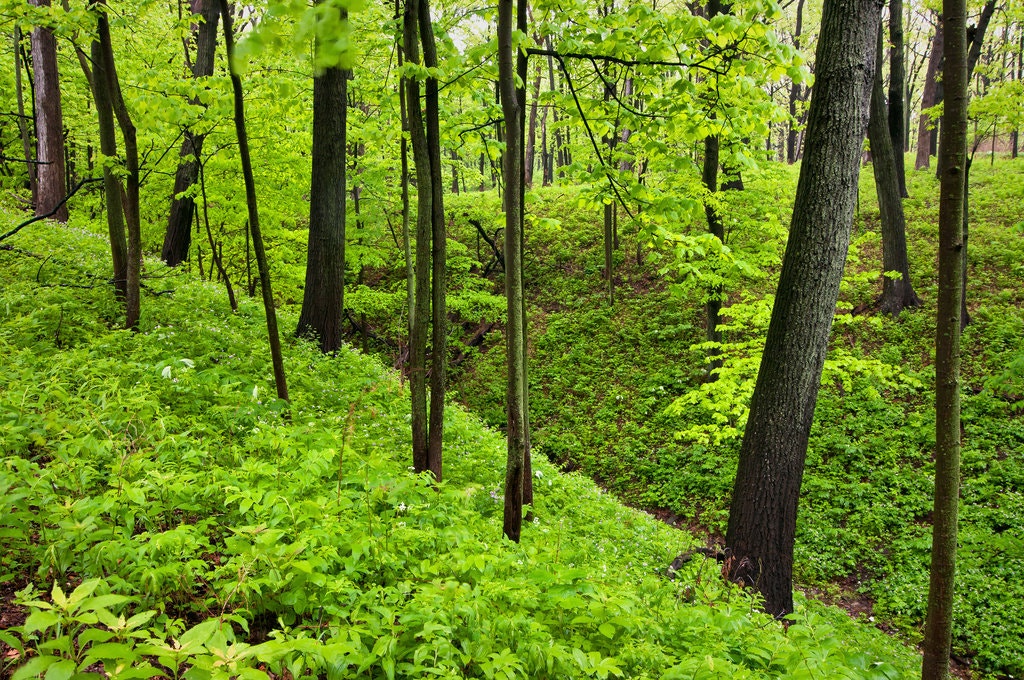
“The Rhode Island Department of Agriculture and Conservation — now the Department of Environmental Management — acquired the 14,000-acre Arcadia Management Area a few years before the 1938 hurricane struck. Today, Arcadia features a wide range of natural landscapes, including hardwood and pine forests, hills and valleys, ledges, fields, and lakes, ponds, and streams of various sizes. It also boasts miles and miles of trail.

“DEM doesn’t have the staff necessary to maintain all of Arcadia’s recreation aspects, so a 21st-century version of the Corps lends a hand — many hands, in fact. … The trails in Rhode Island’s largest management area are maintained and tended to under the direction of Jordan Miller, director of education and training for the Rhode Island Nursery & Landscape Association and the leader of RINLA’s Growing Futures RI initiative. …

“For the past three winters, Miller and the program’s two other staffers — Christie Milligan, director of workforce programs, and Mason Billings, program associate and resources coordinator — shepherd 30-40 workers into the Arcadia Management Area to maintain trails, clear overgrown vegetation, repair wooden walkways, and remove invasives. …

“Throughout Arcadia during its destination heyday, there were picnic tables and other amenities, offices in the woods, and a house for the caretaker and his family. In the decades since DEM changed its management strategy for state-owned land, the picnic tables and structures that once decorated Arcadia have faded into the landscape. The baseball field swallowed by vegetation. …

“After the campground closed, the state maintained the beach and recreation area until the mid-1990s, which is around the same time that the universal access boardwalk was built and the Tefft Hill Trail was being transformed into an area more accessible to those living with mobility issues.

“Funded by a federal grant, the boardwalk and bridge were built in three phases over 10 years. DEM’s Division of Forestry did the work using no mechanized equipment to avoid disturbing the sensitive environment,’ according to Michael Healey, the agency’s chief public affairs officer. …

“Miller, who has worked in the horticulture industry in a variety of roles since 2004, was hired in 2020 to run RINLA’s new initiative. The purpose of Growing Futures is to ‘cultivate, train, and educate the next generation of natural resource professionals who will be charged with stewarding, protecting, and responding to a changing environment and feeding our community.’ …

“Every January and February for the past three winters, the 30-40 workforce trainees, under the guidance of the Growing Futures trio, prepare Arcadia trails for a new season of hiking and nature watching. Trainees are hired for a week or five, and crew leaders from RINLA’s 250 member businesses are loaned to the program to ‘help run things in small groups,’ according to Miller.

“ ‘One of the main reasons for that is timing of when our industry starts up for the year and hires people, which is typically in March,’ he said. ‘So we’ll do the training so that people graduate and then they go straight into job interviews and are able to get jobs for the season. The other part of it is because that’s a winter layoff time, we can actually get crew leader staff who were laid off from their landscaping jobs to be able to help us out.’ “

More at ecoRI News, here. No paywall. Nice pictures.
Read Full Post »

04garden1-jumbo

Photo: Mark Baldwin
A dense carpet of woodland perennials. Thomas Rainer, a landscape architect, calls plants “social creatures” that thrive in particular networks.

Today we understand that trees and other plants are the lungs of the planet and that we are losing too many every year, so it behooves us to understand them better and do what we can to help the remainder thrive. Even in our yards.

At the New York Times, Margaret Roach offers some tips from a landscape architect.

“Thomas Rainer and I have both been doing the botanical thing for decades,” she writes. “We know, and use, many of the same plants — and even much of the same horticultural vocabulary. But what he and I see when we look at a butterfly weed or a coneflower, or what we mean when we say familiar words like ‘layering’ or ‘ground cover,’ is surprisingly not synonymous.

“It turns out I’ve been missing what the plants were trying to tell me, failing to read botanical body language and behavior that could help me put plants together in combinations that would solve challenges that many of us have: beds that aren’t quite working visually, and garden areas that don’t function without lots of maintenance. … I asked Mr. Rainer, a landscape architect based in Washington, D.C., to lend us his 3-D vision.

“Roach: You visit a lot of gardens, and probably hear from gardeners like me with beds that just aren’t working. What’s the most common cause?

“Rainier: First, we have to understand that plants are social creatures. Our garden plants evolved as members of diverse social networks. Take a butterfly weed (Asclepias tuberosa, named this year’s Perennial Plant of the Year by the industry group the Perennial Plant Association), for example. The height of its flower is exactly the height of the grasses it grows among. Its narrow leaves hug its stems to efficiently emerge through a crowded mix. It has a taproot that drills through the fibrous roots of grasses. Everything about that plant is a reaction to its social network. And it is these social networks that make plantings so resilient.

“So if we think about the way plants grow in the wild, it helps us understand how different our gardens are. In the wild, every square inch of soil is covered with a mosaic of interlocking plants, but in our gardens, we arrange plants as individual objects in a sea of mulch. We place them in solitary confinement.

“So if you want to add butterfly weed to your garden, you might drift it in beds several feet apart and tuck some low grasses in as companions, like prairie dropseed, blue grama grass or buffalo grass.

“Start by looking for bare soil. It is everywhere in our gardens and landscapes. Even in beds with shrubs in them, there are often large expanses of bare soil underneath. It’s incredibly high-maintenance. It requires multiple applications of bark mulch a year, pre-emergent herbicides and lots and lots of weeding.

“The alternative to mulch is green mulch — that is, plants. This includes a wide range of herbaceous plants that cover soil, like clump-forming sedges, rhizomatous strawberries or golden groundsel, and self-seeding columbine or woodland poppies.

“Roach: If I want to try to do it more as nature does, what am I aiming for? Where do I take my cues?

“Rainier: The big shift in horticulture in the next decade will be a shift from thinking about plants as individual objects to communities of interrelated species. We think it’s possible to create designed plant communities: stylized versions of naturally occurring ones, adapted to work in our gardens and landscapes. This is not ecological restoration, it’s a hybrid of ecology and horticulture. We take inspiration from the layered structure in the wild, but combine it with the legibility and design of horticulture. It is the best of both worlds: the functionality and biodiversity of an ecological approach, but also the focus on beauty, order and color that horticulture has given us. It’s possible to balance diversity with legibility, ecology with aesthetics.

“And it is a shift in how we take care of our gardens: a focus on management, not maintenance. When you plant in communities, you manage the entire plantings, not each individual plant. This is a pretty radical shift. It’s O.K. if a plant self-seeds around a bit, or if one plant becomes more dominant. As long as it fits the aesthetic and functional goals. We can do much less and get more.” More here.

What do you think? I’m not a gardener, but I have a little yard, and I take Rainier’s point about how every patch of bare soil creates problems. I wonder what the Meadowscaping folks might have to say about combining horticulture and ecology in this way.

Read Full Post »

My husband’s spring visit to the Arnold Arboretum and a guided tour by Andrew Gapinski, manager of horticulture, got us looking up information on witch hazel.

Steve Kemper at Yankee Magazine had this to say: “Witch hazel grows from southern Canada to Florida and from Minnesota to Texas, but it flourishes most densely in the eastern half of Connecticut. Not quite a tree but more than a shrub, witch hazel has speckled gray bark, a slim trunk typically just a few inches in diameter, and a bushy top that ends well shy of 20 feet. For three seasons of the year, it’s inconspicuous in the understory.

“But after all the leaves have fallen and the last aster has succumbed to frost, witch hazel displays its exuberant eccentricity, bursting into festive yellow blossoms that Thoreau compared to ‘furies’ hair, or small ribbon streamers.’ At the same time, the previous year’s blossoms have ripened into hard fruits, which now explode, propelling the small seeds up to 30 feet. …

“The Native Americans called this strange plant ‘winterbloom’ and ascribed special powers to it. They used it as a cure-all, steeping the bark and branches to make a tea … which they put on cuts, bruises, insect bites, pinkeye, hemorrhoids, and sore muscles — maladies for which witch hazel is still used. “

At the Boston Globe, David Filipov adds, “Native Americans used witch hazel as a cure-all. So did the early European settlers. … Because of that, Dickinson Brands Inc., the world’s largest producer of witch hazel, has quietly prospered here, in what is arguably the witch hazel capital of the world.

“Owners and employees say they have avoided the layoffs, furloughs, and pay cuts that have benighted so many companies. And in this season of shrinking sales and mounting losses, the privately owned company says it has experienced double-digit growth. …

“Sometimes the product’s rich history as an all-round remedy intrudes upon the company’s attempt to place the Witch Hazel brand as a gentle skin-care product for the modern woman.

“ ‘Back in the day, they used to use it a lot on the animals’ who had cuts and scrapes,’’ [an employer] recalled. ‘As a matter of fact, most of the race horses of today use it. After they work out, they wipe the horses with it. Yep, cools the horses down.’ ”

Read all about this built-to-last Connecticut industry at Yankee Magazine and the Boston Globe.

(Witch Hazel was a character in the Little Lulu comics of my childhood. Different witch.)

Image: Franz Eugen Köhler

Read Full Post »