Feeds:
Posts
Comments

Posts Tagged ‘iceland’

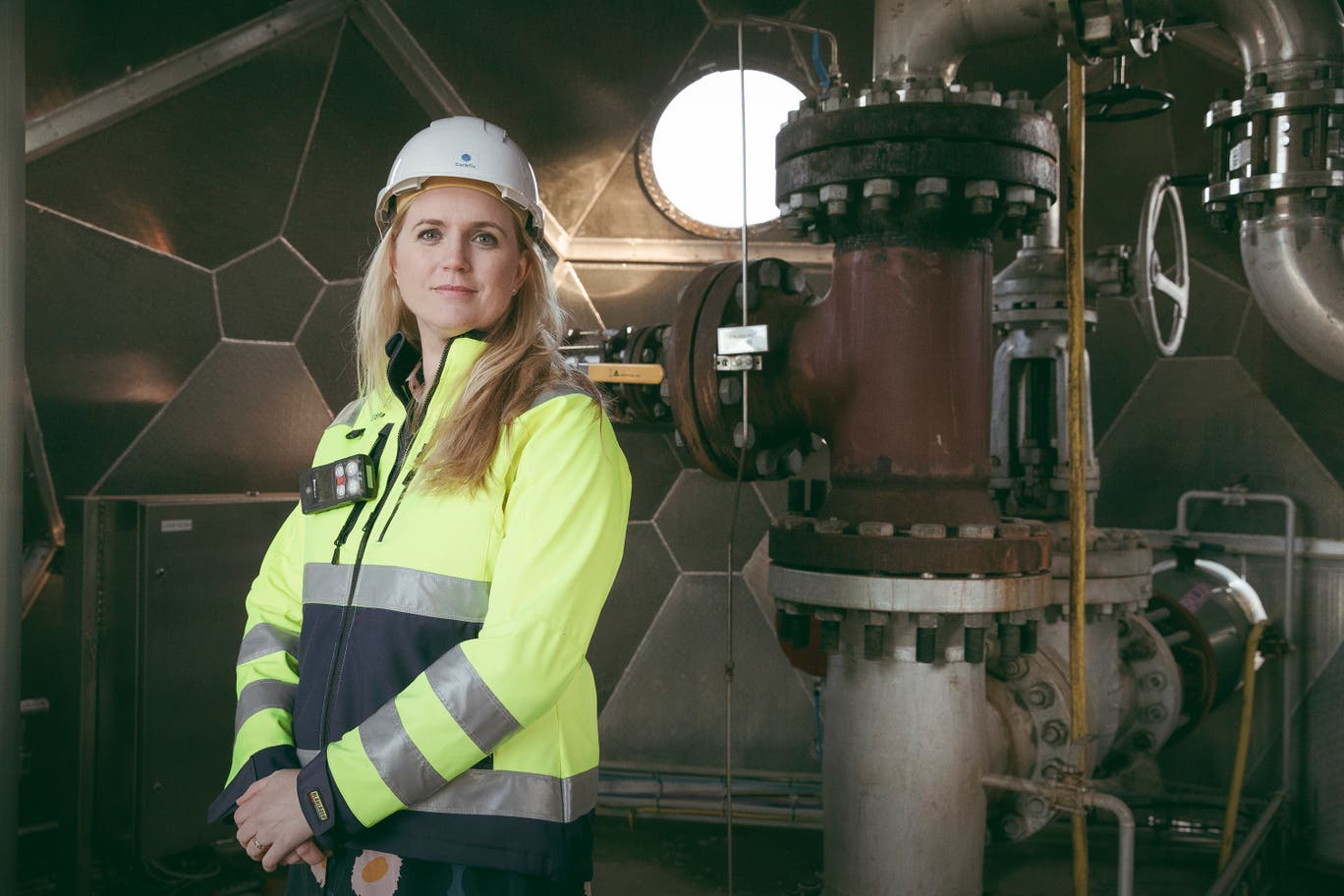
Photo: Heida Helgadottir for the Washington Post via the Independent.
Edda Aradottir is the chief executive of Carbfix, a company that captures CO2 byproduct from the largest geothermal plant in Iceland. Many Icelandic start-ups are tackling climate change.

File this one under Hope. And maybe book a trip to the innovation hub called Iceland.

Hannah Hall has a report at the Washington Post on Icelandic companies that are taking on global environmental challenges.

“The electric red and green glow of the production facility resembles the Icelandic aurora borealis. Algae in their growth stage flow through hundreds of glass tubes that travel from floor to ceiling, all part of a multistep process yielding nutrients for health supplements. Soon, all parts of each alga will be used.

“The facility, operated by Icelandic manufacturer Algalif, is a space of inspiration for Julie Encausse, a 34-year-old bioplastic entrepreneur. During a July summer storm, Svavar Halldorsson, an Algalif executive, was guiding her through a tour of the company’s newest facility on the Reykjanes Peninsula.

“By the end of 2023, this new facility aims to triple its production. After Algalif dries the microalgae and extracts oleoresin, a third of this output then goes toward health supplements. Algalif has traditionally used the rest as a fertilizer. Now Encausse, founder and chief executive of the bioplastic start-up Marea, hopes to use that leftover biomass to create a microalgae spray that can reduce the world’s reliance on plastic packaging.

“Her newest partnership with Algalif is part of a start-up network in Iceland that focuses on inventive and creative technologies to address the climate and sustainability crisis. The Sjavarklasinn (‘Iceland Ocean Cluster’) network includes environmental entrepreneurs working across several industries.

“Thor Sigfusson founded the network in 2012 after conducting research on how partnerships between companies in Iceland’s technology sector helped expand that industry. At the time, he found that the fishing industry was not experiencing the same collaboration or growth.

“ ‘Even though companies were in the same building together, fishing from the same quotas and facing similar challenges, they were closed off,’ said Alexandra Leeper, the Iceland Ocean Cluster’s head of research and innovation.

“Three cod hanging on the wall of the second-floor entryway are the first thing to greet any visitor to the Iceland Ocean Cluster. Lightbulbs shine from their centers, and the dried scales filter the light to fill the space with an amber glow. The precise design is one that underlines the group’s belief that using 100 percent of a fish or natural resource can give rise to innovative technologies. …

“Encausse and Marea co-founder Edda Bjork Bolladottir have partnered with the cluster for 2½ years. Encausse says that involvement was core to their company’s inception.

“ ‘There is a collaborative mind-set when being on an island,’ she said. ‘We need to work together to survive, and this was passed from generation to generation.’

“In a country about the size of Kentucky, the people of Iceland have had to learn how to guard their resources. Encausse has discovered that often means using 100 percent of any material — a lesson she’s now implementing in her work with Algalif. She created a food coating from Algalif’s leftover biomass, a product she’s named Iceborea — in a nod to theaurora borealis.

“ ‘We are repurposing it and making something with value that gives it another life to avoid using more plastic,’ Encausse said. Once Algalif’s factory expands over the next year, it will have 66 tons of microalgae leftovers that Encausse’s company can tap each year.

“When sprayed onto fresh produce, Iceborea becomes a natural thin film and a semipermeable barrier that can protect against microorganisms. Iceborea can either be eaten with produce or washed off, reducing the need for plastic packaging.

“[Edda Aradottir] is the chief executive of Carbfix, a company capturing CO2 byproduct from the largest geothermal plant in Iceland, Hellisheidi, and injecting it into stone to be buried underground.

“Carbfix’s successful trials have marked a global milestone for carbon sequestration. It also has received international recognition — and Aradottir’s leadership has already served as a model for growing start-ups and other founders in the cluster trying to tackle extensive environmental concerns. …

“Another Icelandic company, GeoSilica, harvests silica buildup from the Hellisheidi waste stream to make health supplements.GeoSilica reaches the Icelandic and European markets, and its chief executive, Fida Abu Libdeh, is also working with the Philippines to pilot her silica-removal technology to create similar sustainable factory processes.

“A Palestinian from Jerusalem, Abu Libdeh moved to Iceland in 1995 at age 16, a transition she described as difficult because of the language barrier and the country’s small immigrant population. In 2012, she graduated from the University of Iceland after studying sustainable energy engineering and researching the health benefits of silica. That same year, she and Burkni Palsson co-founded GeoSilica.

“Ever since moving to Iceland, she was impressed with how the country produced electricity through geothermal sources. …

“GeoSilica is not formally part of the Iceland Ocean Cluster, but the network it has fostered reflects the same collaborative approach. Abu Libdeh has worked with cluster companies and held investor meetings at its headquarters. It’s a place that founders want to be, she said, where they want to learn from each other even if they are competitors in their fields.

“While there has been progress over the years, Abu Libdeh said, it’s still a challenge for women to enter this entrepreneurial space. In 2020, less than 1 percent of investment went to women-founded start-ups, according to a recent European Women in Venture Capital report. …

“What began as a dozen start-ups in 2012 has now grown to more than 70 members and associated firms connected to the Iceland Ocean Cluster. … There are now four sister clusters in the United States, as well as one in Denmark and one in the Faroe Islands.

“The Alaska Ocean Cluster, which was the first to follow the Icelandic model, has already accelerated policy change in the United States. Sen. Lisa Murkowski (R-Alaska) proposed legislation last year to create ‘Ocean Innovation Clusters in major U.S. port cities, which would provide grants along the U.S. coastline and the Great Lakes.

“ ‘I’ve learned a great deal from our friends in Iceland who created a roadmap of innovation and public/private partnership when they established the first Oceans Cluster in Reykjavik,’ Murkowski said in an email.”

More at the Post, here.

Read Full Post »

Photo: PenguinRandomHouse.
In Iceland, Christmas Eve signals the long-awaited “book flood,” Jólabókaflóð. Icelanders love to read. And the prime minister writes books herself.

Up at a Vermont ski lodge as Christmas approached, Suzanne’s family experienced the power outage from the latest winter storm. What is there to do in darkness but read a book by candlelight — or at least by headlamp? They did.

In Iceland, where winters are especially dark, Icelanders love to read.

David Mouriquand reports, “Euronews Culture was recently in Reykjavík for the European Film Awards, and while in the city, we sat down with Iceland’s Prime Minister Katrín Jakobsdóttir, one of only eight women in power in Europe. 

“She made her mark on the global cultural map this year when she published her first thriller novel, entitled Reykjavík, which she co-wrote with best-selling author of the ‘Dark Iceland’ series Ragnar Jónasson.

“Jakobsdóttir, former minister of education, science and culture, is the chairperson of the Left-Green movement and has been serving as the prime minister since 2017. …

I’d be remiss not to mention the fact that you published a novel this year, a crime novel. It’s not the first time that this has happened in Iceland, as one of your predecessors, Davíð Oddsson, published a novel when he was in office. What is it about writing and the crime / noir genre that appeals to you?

“I used to study crime fiction. I studied Icelandic literature and crime fiction was my main topic, so I have always enjoyed crime. In fiction, not in reality! And I actually was writing my master’s thesis when the Icelandic crime novel was flourishing and becoming rather big. It has become even bigger in the last decade or so. And it has been a longstanding dream to write a novel of my own, but I definitely would not have done it if I didn’t have this co-author (Ragnar Jónasson), who pushed me and said: ‘We have to do this together!’

“I must admit that I really enjoyed writing it, and I think that even us politicians can be creative. I think it’s very good for us, because sometimes we are not very creative in our politics! And it’s because the writing time was during the time of the pandemic, when I was totally absorbed in the virus and was getting, let’s say, obsessed with the virus and its effects and what we were doing.

“So having this kind of pet project to think about sometimes late in the evening or when I had an hour or two actually saved my mental health during the pandemic.

The more I thought about you writing your novel, the more I thought: Wouldn’t the world be a better place if world leaders took the time to embrace a creative outlet? So, tap dancing for Biden, or oil painting for Macron… Terrible ideas, granted, but as you say, it’s very good for politicians to get creative…

“I definitely think that the world would be a better place! Not just politicians, but all of us. I don’t think we all do major works of art, but I think it’s a very healthy thing to really grow and nurture that creative strength that I think we all have. I don’t think we do enough of it. So, yes definitely, the world would be a better place.” More at EuroNewsCulture, here.

Sara Miller Llana at the Christian Science Monitor stresses that Iceland as a whole is a book-loving country: “Hördur Gudmundsson spends the better part of his day with a book in his hands – but only in winter.

“As the skies darken, he will spend full mornings at his favorite bookstore, IÐA Zimsen, near the Icelandic capital’s harbor. After supper he’ll turn to his hobby: bookbinding. He’s already bound all the works of Iceland’s most famous author, Nobel laureate Halldór Laxness, and now is deep into the works of Gunnar Gunnarsson.

“By Icelandic standards, this doesn’t make him a fringe book buff. Iceland is known as one of the world’s most literary countries, when it comes to the love of both reading and writing. 

‘It must be in our mother’s milk,’ says Mr. Gudmundsson, a retired trades teacher.

“Books in Reykjavík, the first nonnative English-speaking city to be designated a UNESCO City of Literature, are everywhere. At one breakfast spot, the counter serves as a giant bookshelf. Tomes are piled onto the sills of steamed-up cafe windows.

“The streets of Reykjavík are an ode to the characters of the medieval sagas. Written in the 13th and 14th centuries, the Icelandic sagas retell the exploits of Norse settlers beginning in the ninth century. The works are a source of pride and a pillar of Iceland’s literary sensibilities. Tours in Iceland’s only city take visitors to the birthplaces of authors like Mr. Laxness and the scenes of plot twists in Nordic noir, a booming genre.” More here.

The WordPress site Jólabókaflóð.org posted the “founding story,” here.

And if you search on the word “Jólabókaflóð,” you will find lots of other fun articles.

Read Full Post »

Photo: Chris Linder.
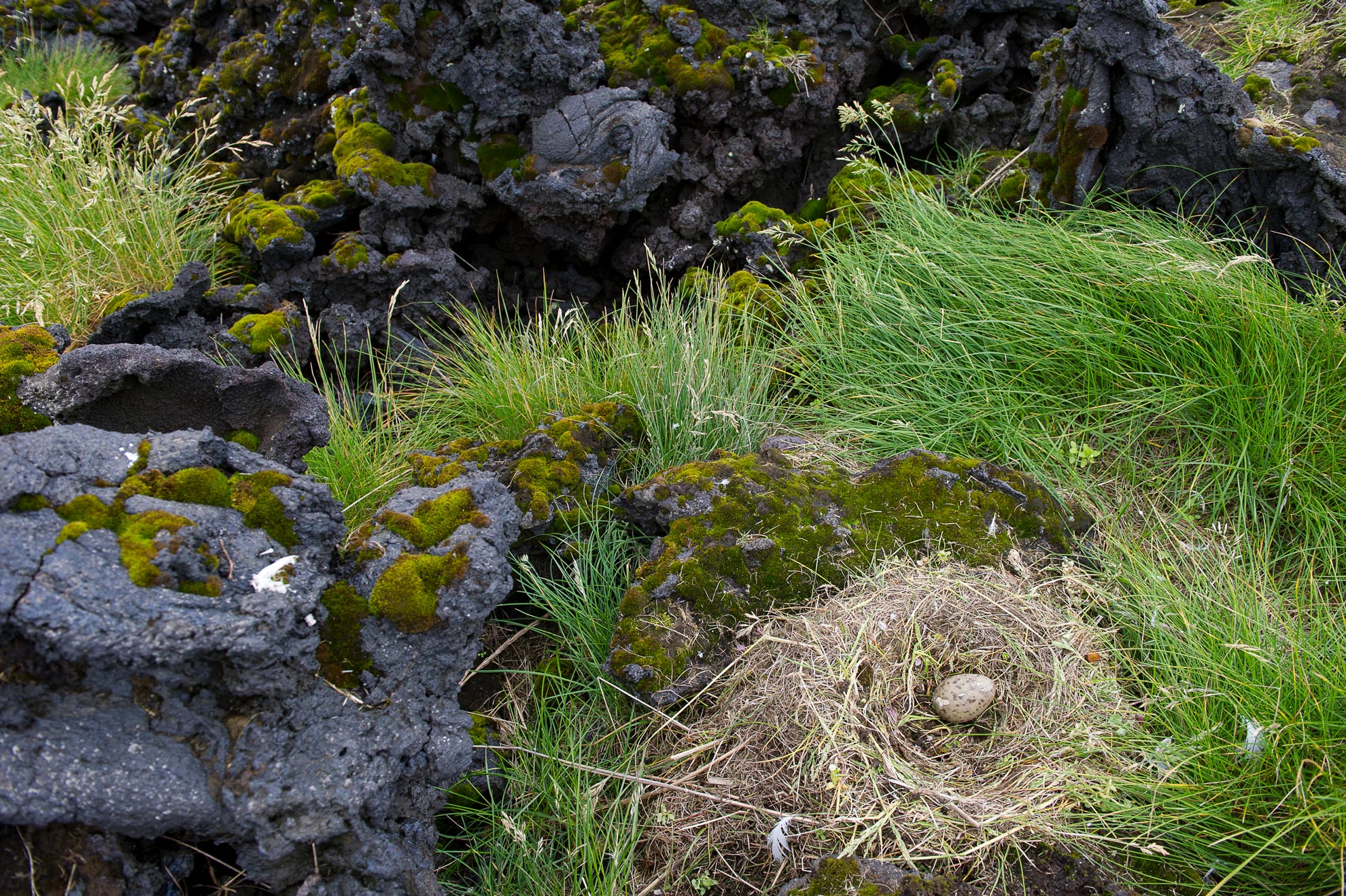
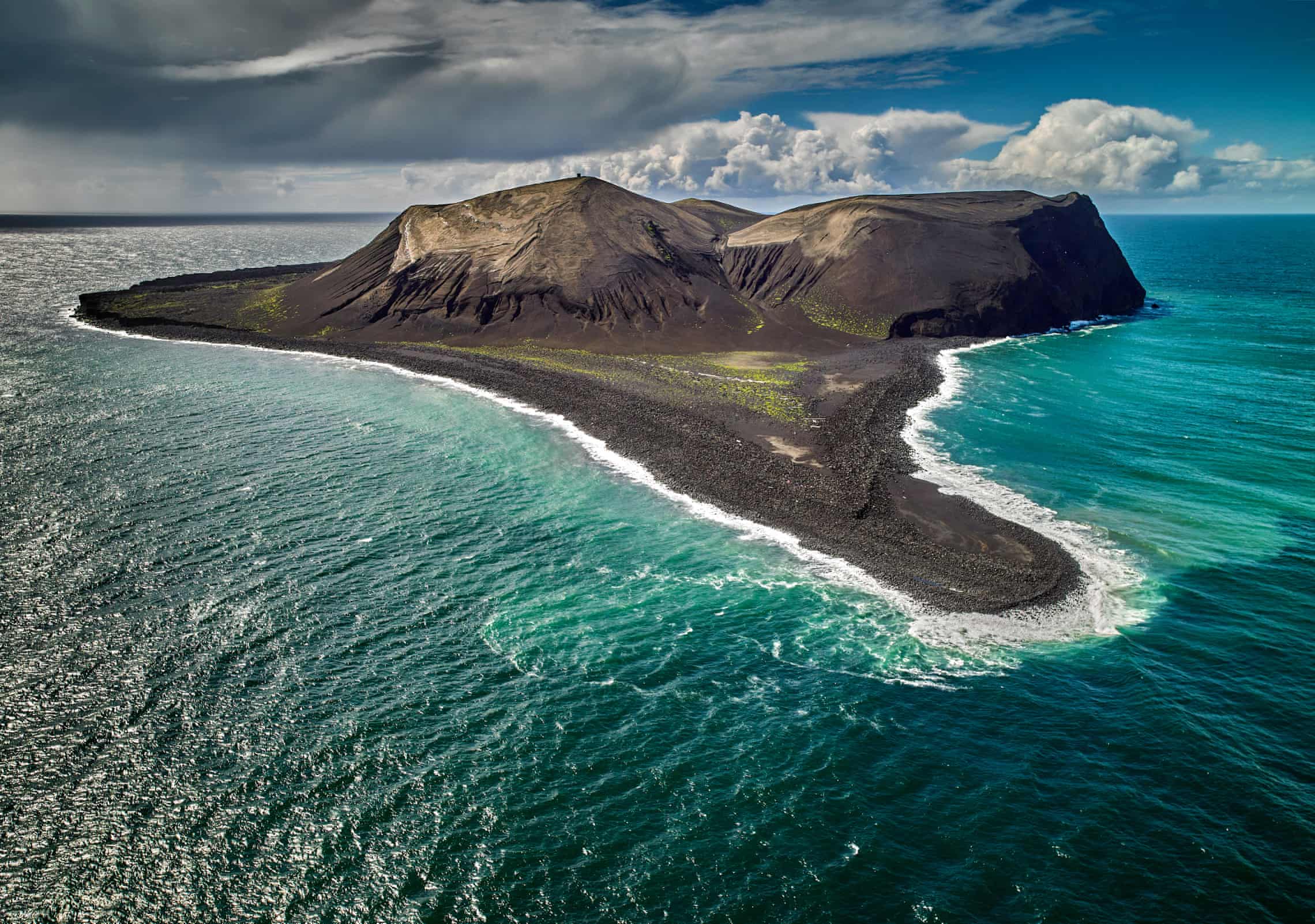
“Though most of [volcanic Surtsey] island is barren,” writes Hugh Powell at Living Bird, “a heart-shaped patch of green in the southwest corner supports lush growth and hundreds of bird nests.”

Anyone who has tried to combat weeds by putting black plastic under paving stones knows how futile that is. The life force has a mind of its own. Weed seeds will blow onto the plastic and colonize it within weeks.

Similarly, a brand-new island of volcanic rock that formed in the North Atlantic is in the process of creating a complex world of its own.

Hugh Powell reports at Living Bird. “Now just shy of 60 years old, the new island of Surtsey, off Iceland, holds clues to a fundamental mystery: What did the Earth look like when it was just born? How does life colonize bare rock?

“In 1963, a volcano erupted underneath the cold waters of the North Atlantic, 10 miles off Iceland’s southwest coast. The eruption lasted for four years. Eventually, the lava and ash cooled into a black-and-tan island named Surtsey, and the first fragile seeds of life started to wash ashore.

“Every year since the island came into being, scientists have visited Surtsey to track its ecological development. Visits to Surtsey require a permit — casual sightseeing stops are strictly prohibited — in order to preserve the island’s ecological integrity. Even today, a researchers’ red-roofed hut and an abandoned lighthouse foundation are the only buildings on Surtsey. …

“The scientists’ annual visits have generated a fascinating timeline of the pace of colonization by plant, bird, and even insect species.

“The first plant to arrive, a sea rocket (Cakile maritima), washed ashore in 1965, while the island was still erupting. By 1970, Black Guillemots had begun to nest, using the black volcanic cliffs as a foothold while getting their food from the sea.

“Over the next two decades, about 20 other plant species arrived, some by wind and some on the feet or in the stomachs of seabirds. A few additional birds set up nests as well, including Northern Fulmars and Black-legged Kittiwakes. But it wasn’t until 1985 that both plant and animal diversity started to shift into a higher gear, thanks to the arrival of an unexpected hero: the humble seagull. …

“Plant diversity had plateaued by the 1970s with fewer than 20 species established, and it didn’t take off again until a gull colony developed in 1986. The gulls — mostly Lesser Black-backed along with Great Black-backed, Herring, and Glaucous — carried with them not just new kinds of seeds, but also fertilizer in the form of nitrogen-rich guano.

“At first the gulls nested on bare black rock, but soon a lush green meadow encircled the colony, fed by gull droppings. By 2013 the meadow spread across 12 hectares (about 30 acres), supporting twice as much plant diversity and five times more biomass than the rest of the island. The number of plant species soared to 64 by 2007. …

“A more complex food web started to develop. Graylag Geese first arrived in 2001 and fed on the thick grasses. As insects like springtails, moths, and beetles began to thrive among the plant growth, insect-eating birds began to appear as well, such as Snow Buntings, White Wagtails, and Meadow Pipits. In 2008 the first ravens arrived, feeding in part on stolen seabird eggs.

“At almost 60 years old, Surtsey is still a geologic infant — its sister islands in Iceland’s Westman archipelago are about 40,000 years old. Researchers think much of the island will erode away. …

“The hard crater walls will become steep-sided seacliffs where murres and Razorbills will nest alongside the fulmars and kittiwakes already present. Atop the island, a thick turf will develop, dominated by just a few grass species. In perhaps a century or two, Atlantic Puffins will nest in the deep soil that develops.

“For now, researchers describe Surtsey as living in something of a golden age. Plant diversity has peaked at 64 species, but it’s beginning to decline as ecological competition starts to squeeze out some of the initial colonists. As the plant community develops, birds continue to find footholds. Some 17 species have nested here so far, with nearly 100 species recorded overall — including tired or off-course migrants for which jagged Surtsey is a welcome piece of terra firma in the North Atlantic.”

More at Living Bird, here. No firewall.

Read Full Post »

Photo: Francis Pakes
The view from the Icelandic prison that a criminology researcher asked to stay in.

Abusing people who commit crimes is no longer considered effective for keeping them on the straight and narrow after they serve their time. For a different approach, consider Iceland, where two of the five prisons actually have no locks.

Francis Pakes, a professor of criminology at the UK’s University of Portsmouth, took a firsthand look and wrote about his experience for the Conversation.

“Iceland is a small country tucked away on the edge of Europe. It has a population of only about 340,000 people. Iceland’s prisons are small too. There are only five, altogether housing fewer than 200 prisoners. Of these five, two are open prisons. …

“When I asked the prison authorities in Iceland if I could spend a week in each of the two open prisons they were surprisingly receptive. I got the impression that they quite liked the idea: a foreign academic who wanted to get under the skin of these places by assuming the role of a prisoner. They promised to keep a room free for me. I was grateful and excited. I was going to experience both prisons from the inside. …

“The absence of security features was striking. The first prison I stayed in, Kvíabryggja prison in the west of the country, had little in the way of perimeter security. There is, however, a sign instructing passers by to keep out – mainly aimed at tourists. I could simply drive up to the small, mostly single-storey building and park up. I then walked in (yes, the doors were open) and said hello. …

“It was clear from the outset that prisoners and staff do things together. Food is important in prisons and in Kvíabryggja the communal dining room is a central space. It is where prisoners have breakfast, lunch and dinner together with staff. Prisoners cook the food, and with an officer they do the weekly food shop in a nearby village. Food was plentiful and tasty. It is considered bad form not to thank the prisoner chefs for their efforts. And you have to clean up after yourself. …

“Prisoners have their own room keys but they leave their doors unlocked, pretty much at all times. This is a potent symbol: life in Kvíabryggja is all about trust. I found that difficult at first, knowing that my passport, rental car keys and research notes were all in my room. In the end I did what prisoners do and even slept with the door unlocked. I slept like a baby. …

“It was the informality of the interactions that struck me most. We watched football together. … I got teased a bit of course, as all prison researchers do. But prisoners also shared gossip and many prisoners and staff alike shared very personal, even intimate feelings and stories with me. When Pétur gained his freedom and his dad arrived to pick him up, he hugged many prisoners and staff goodbye, including me. We all got a bit emotional.

“Kvíabryggja is of course still a prison. Many prisoners feel frustrated, angry, anxious, struggle with their health and worry about the future. But the environment is safe and the food a delight. There is contact with the outside world, generous visiting arrangements, and there is always a listening ear. As prisons go, this means a lot.

“This remote prison and with no more than 20 prisoners, and around three staff around at most at any time, is a tiny community. Prisoners and staff smoke together in the cramped but ever busy smoking room. They need to get on.

“Life is defined by these informal interactions. This is not necessarily easy. This prison population is highly mixed. There are female prisoners, foreign nationals and prisoners of pensionable age or with a disability all mixed in together. …

“The importance of getting on is a take away message. This is far harder to achieve in large busy prisons where new prisoners arrive and leave every day. But just like community policing works best if most public interactions are friendly, a prison is a more positive place if most interactions are friendly and benign too.”

More at the Conversation, here.

Read Full Post »

Photo: Melanie Stetson Freeman/Christian Science Monitor
Iceland has cut teen alcohol and drug use with fun after-school activities and a 10 pm curfew (age 18 and under).

Sometimes it takes a huge, intractable problem to motivate people to find serious solutions. That’s what Iceland discovered after it was overwhelmed by an epidemic of teen substance abuse.

Sara Miller Llana writes at the Christian Science Monitor, “In the late 1980s, when Björgvin Ívar Guðbrandsson was a teenager, alcohol and school dances went hand-in-hand. While he was later to drinking than his peers – more interested in playing soccer and guitar – when he did start around age 16, he would smuggle alcohol in his guitar case into school events.

“ ‘I think the adults just turned a blind eye,’ says Mr. Guðbrandsson. ‘The culture was, I think, “they’re just kids. As long as they aren’t fighting, it’s okay.” ‘

“Today, as a teacher at Langholt school in Reykjavik where he once studied, he says that if a student were to show up drunk to a dance, it would  be such a scandal that the school principal would likely call child protective services.

“In reality, that rarely happens because substance abuse on a wide scale has essentially become a ‘non-issue,’ says Guðbrandsson. Alcohol and school dances, in other words, don’t go together in Iceland today.

“This school is hardly alone. Teen drinking – as well as teen smoking, marijuana use, and abuse of other drugs – has plummeted across Iceland in the past two decades as academics, policy makers, and parents joined forces to clamp down. …

“Beyond adolescent alcohol and drug use, Iceland has shifted thinking on youth culture itself, making it by many accounts more innocent and carefree. It has expanded parents’ notions of childhood and the importance of family time, while reinforcing the maxim that it ‘takes a village’ to raise a child, says Hrefna Sigurjónsdóttir, director of the national umbrella for parental organizations in schools, Home and School, one of the key players in the federal-state government program now known as Youth in Iceland.

“She calls it an ‘awakening’ that has taken place at home, school, and beyond. ‘I think people are not confused anymore about, “is this kid an adult or not.” ‘ ”

Just-say-no substance-abuse prevention programs didn’t work.

“Substance use kept going up, says Inga Dora Sigfúsdóttir, cofounder of the Icelandic Center for Social Research and Analysis (ICSRA), which is the data hub for Youth in Iceland. ‘A group of people came together, sat down and said, “we need to find a different approach. This is obviously not working.” ‘

“One of the problems was an ambiguous view of the line between child and adulthood, she says.

“One of the most absolute rules to take effect was legal curfews: Kids ages 12 and younger must be home at 8 p.m. in the winter and 10 p.m. in the summer. Thirteen to 16-year-olds must be home at 10 p.m. in the winter and by midnight in the summer, even when the sun is still blazing. …

“Parents began to sign agreements, through schools and parental organizations, with various pledges such as not allowing unsupervised parties in their homes or spending at least an hour a day with their children. …

“Municipalities funded and expanded after-school activities, from sports to gymnastics, to music, art, and ballet. The basic idea is to keep kids busy – and out of trouble – and help them find meaning in their lives that dissuades them from seeking alcohol or drugs in the first place.

“At its heart, it takes the onus off the teens themselves – the opposite of the D.A.R.E. approach – and places it on the community. …

“ ‘It does not concern teaching individual children about responsible choices, or even about making them responsible for their own behavior,’ says Álfgeir Kristjánsson, a former data analyst at ICSRA who is now an assistant professor of public health at West Virginia University. ‘The Icelandic approach … is to strengthen the societal and protective factors and drive down risk factors.’ ”

Makes such sense. When I was a teacher decades ago, I really didn’t buy into the idea that students who got in trouble were always making “choices.” If there was trouble at home, for example, kids were often tumbling into risky behaviors because of depression or other psychological stressors. The Icelandic approach seems to have opened the eyes of more adults to the complexity of the issue.

More here.

Read Full Post »

Ingenuity can make a business out of almost anything. That’s what you may conclude after reading how a small Maine company is making something useful from lobster shells.

Tom Bell has the story at the Associated Press: “A startup company in Maine is developing a children’s bandage coated with a substance extracted from crushed lobster shells that would promote blood-clotting and is resistant to bacterial infection.

“The company, Lobster Tough LLC, shipped Maine lobster shells to a processor in Iceland for testing, and so far, the results are promising, said Thor Sigfusson, an Icelandic investor in the company. …

“ ‘My dream will be to use the massive amounts of lobster shells that are being thrown into dumpsters,’ he said. …

“The lobster shells must be dehydrated to remove weight and lower shipping costs. Lobster Tough this winter is shipping a portable dehydration machine from Iceland to Maine. The company eventually plans to build a $2 million dehydration plant somewhere on the Maine coast, said Patrick Arnold, an investor who lives in South Portland. …

“The bandages would be the first commercial product developed through the New England Ocean Cluster, a new business incubator in Portland.”

More here.

Photo: Tasty Island

Read Full Post »

What I liked about this story on rescuers in Iceland was how the volunteer tradition started when “women banded together and organized a rescue crew to curtail the loss of their men at sea.” The part that wasn’t so great was about tourists endangering everyone with harebrained feats for their bucket list.

Nick Paumgarten writes at the New Yorker, “Iceland, with a population of little more than three hundred thousand, is the only NATO country with no standing Army. It has police, and a coast guard, but these, like the citizens they are paid to protect, are spread thin, so come accident or disaster, disappearance or storm, the citizens, for the most part, have always had to fend for themselves.

“[Slysavarnafélagið Landsbjörg, or, in English, the Icelandic Association for Search and Rescue] has evolved into a regimented volunteer system that serves as a peerless kind of national-emergency militia. It is not a government program, and so represents a tithing of manpower. There are close to ten thousand members in all, with four thousand of them on ‘callout’ duty, on ninety-seven teams. … They are well trained and well equipped, self-funded and self-organizing, and enjoy a near-mythical reputation among their countrymen, who, though often agnostic regarding the existence of elves and gnomes, are generally not inclined toward reverence or exaggeration. …

“Landsbjörg traces its roots back to the formation, in 1918, of a rescue team in the Westman Islands, an archipelago just off the southern coast. The women on shore banded together and organized a rescue crew to curtail the loss of their men at sea, and in time other fishing communities established similar groups and protocols. Eventually, the fishing industry, as it grew, supported these efforts with donations. On land, farmers, left to their own devices, looked after each other, as they will.” More at the New Yorker, here.

You may get a kick out of the fundraising based on selling fireworks. Setting them off is legal in Iceland once a year. “Last year, Icelanders blew up five hundred tons of fireworks.”

Photo: Benjamin Lowy / Getty Images for The New Yorker
“People think of the rescue teams as the Guardians of the Galaxy,” a mountain guide said. “They forget these are normal people.”

Read Full Post »

In 2007, conceptual artist Yoko Ono established the John Lennon Peace Tower in Iceland, a beam of multiple, heaven-directed lights that is intended to appear every year from John Lennon’s birthday, Oct. 9, to Dec. 8. It was most recently relit in 2014.

Wikipedia says, “The Imagine Peace Tower (Icelandic: Friðarsúlan, meaning ‘the peace column’) is a memorial to John Lennon from his widow, Yoko Ono, located on Viðey Island in Kollafjörður Bay near Reykjavík, Iceland.

“It consists of a tall tower of light, projected from a white stone monument that has the words ‘Imagine Peace’ carved into it in 24 languages. These words, and the name of the tower, are a reference to Lennon’s peace anthem ‘Imagine.’

“The Tower consists of 15 searchlights with prisms that act as mirrors, reflecting the column of light vertically into the sky from a 10-metre wide wishing well. … The power for the lights is provided by Iceland’s unique geothermal energy grid. It uses approximately 75 killowatts of power.

“Buried underneath the light tower are over 1 million written wishes that Ono gathered over the years in another project, called Wish Trees. … Iceland was selected for the project because of its beauty and its ecofriendly use of geothermal energy.” More at Wikipedia.

Says the Peace Tower website: “One of the mesmerising features of the Imagine Peace  Tower is that the strength, intensity and brilliance of its light continually changes with the prevailing weather and atmospheric conditions unique to Iceland – creating a clear pillar of light on a cloudless night, beams irridescing with rainbow refractions in rain or snowfall, and brilliantly reflecting off and through any moving layers of cloud.” More.

Photo: McKay Savage
“Imagine Peace” Tower

Read Full Post »

Jordan Teicher at National Public Radio reports that Icelanders really love their books.

“Iceland publishes more books per capita than any other country in the world,” writes Teicher, “with five titles published for every 1,000 Icelanders. But what’s really unusual is the timing: Historically, a majority of books in Iceland are sold from late September to early November. It’s a national tradition, and it has a name: Jolabokaflod, or the ‘Christmas Book Flood.’ …

“Iceland has a long literary history dating to medieval times. Landmarks of world literature, including the Sagas of the Icelanders and the Poetic Edda, are still widely read and translated there, according to the United Nations Educational, Scientific, and Cultural Organization. …

” ‘Generally fiction and biographies would be the mainstays, although it varies a lot,’ [book researcher Baldur] Bjarnason says. Two years ago one of the surprise best-sellers was a pictorial overview of the history of tractors in Iceland.’ …

“The Book Flood tradition, according to The Reykjavik Grapevine‘s Hildur Knutsdottir, dates to World War II, when strict currency restrictions limited the amount of imported giftware in Iceland.

” ‘The restrictions on imported paper were more lenient than on other products, so the book emerged as the Christmas present of choice. And Icelanders have honored the tradition ever since,’ Knutsdottir writes. …

“The book in Iceland is such an enormous gift, you give a physical book. You don’t give e-books here,” [Bryndís Loftsdottir of the book chain Penninn-Eymundsson] says.”

More at NPR, here.

Turning briefly to the UK, here’s a columnist who believes in books. She aims to solve any personal problem you send her by recommending a book.

My own advice? Reread another Dickens.

Photo: Bryndís Loftsdottir
Browsing at an Icelandic book chain.

Read Full Post »

As usual, John has a pretty good idea of the kind of story that really floats my boat. Mysterious green balls washing up on the beaches of Australia, Anyone?

The Science Alert website reports that on the weekend of September 20, “thousands of peculiar green balls appeared on Dee Why Beach near Sydney in Australia. About 6 centimetres in diameter, these squishy little spheres are living organisms – seaweed balls known as ‘marimo’.

” ‘They’re actually a really unusual growth form of seaweed, because seaweeds mostly grow on the rocks but occasionally they get knocked off and rolled around in the ocean forming these beautiful little balls,’ Alistair Poore from the University of New South Wales explained to 7News.’It’s quite an unusual phenomenon, it’s only been seen a handful of times around the world.’

“First discovered in the 1820s by Austrian botanist Anton Eleutherius Sauter, and named by Japanese botanist Tatsuhiko Kawakami in 1898 (‘marimo’ roughly means ‘bouncy play ball’ in Japanese), colonies of these little balls have only been seen off the coast of Iceland, Scotland, Japan, Estonia and now Australia.”

See videos at Science Alert, here.

More on the green balls at Wikipedia and at Smithsonian.

Read Full Post »

Yesterday my husband, my cousin Dennie, and I went to the Institute of Contemporary Art (ICA) to see a video installation of Icelandic musicians performing together but in separate rooms of a crumbling mansion on the Hudson River.

Museumgoers entered a large dark gallery at any point in the performance and fixed their eyes on whichever of the nine big screens caught their attention. We happened first upon the guitarist Ragnar Kjartansson in the bathtub singing at the loudest point in the cycle. We turned to each other with our mouths and eyes wide in a huge grin, it was so incredibly crazy and far out.

Here’s what the ICA says about the installation: “A celebration of creativity, community, and friendship, The Visitors (2012) documents a 64-minute durational performance Kjartansson staged with some of his closest friends at the romantically dilapidated Rokeby Farm in upstate New York. Each of the nine channels shows a musician or group of musicians, including some of Iceland’s most renowned as well as members of the family that owns Rokeby Farm, performing in a separate space in the storied house and grounds; each wears headphones to hear the others. …

“The piece itself sets lyrics from a poem [“My Feminine Ways”] by artist Ásdís Sif Gunnarsdóttir, Ragnar´s ex-wife, to a musical arrangement by the artist and Icelandic musician Davíð Þór Jónsson; the title comes from a 1981 album from Swedish pop band ABBA, meant to be its last.” More.

From “My Feminine Ways,” by Ásdís Sif Gunnarsdóttir,
“A pink rose
“In the glittery frost
“A diamond heart
“And the orange red fire
“Once again I fall into
“My feminine ways.”

I wrote about the crumbling Hudson River estate before, here.

My husband said Rokeby would have been a great setting for the Antiques Roadshow. Dennie, who is related to the owners of Rokeby, says her friends will never believe that she, a person who always disparages far-out art, was drawn in and ended up really liking “The Visitors.” We watched it twice. I’m still singing the most-repeated line,”Once again I fall into/My feminine ways.”

Read Full Post »

Jenna Gottlieb of the Associated Press has a great story about elves.

“In this land of fire and ice,” she writes, “where the fog-shrouded lava fields offer a spooky landscape in which anything might lurk, stories abound of the ‘hidden folk’ – thousands of elves, making their homes in Iceland’s wilderness.

“So perhaps it was only a matter of time before 21st-century elves got political representation.

“Elf advocates have joined forces with environmentalists to urge the Icelandic Road and Coastal Commission and local authorities to abandon a highway project building a direct route from to the tip of the Alftanes peninsula, where the president has a home, to the Reykjavik suburb of Gardabaer. They fear disturbing elf habitat and claim the area is particularly important because it contains an elf church. …

“It’s not the first time issues about ‘Huldufolk,’ Icelandic for “hidden folk,” have affected planning decisions. They occur so often that the road and coastal administration has come up with a stock media response for elf inquiries, which states in part that ‘issues have been settled by delaying the construction project at a certain point while the elves living there have supposedly moved on.’ …

“Terry Gunnell, a folklore professor at the University of Iceland, said he was not surprised by the wide acceptance of the possibility of elves.

” ‘This is a land where your house can be destroyed by something you can’t see (earthquakes), where the wind can knock you off your feet, where the smell of sulfur from your taps tells you there is invisible fire not far below your feet, where the northern lights make the sky the biggest television screen in the world, and where hot springs and glaciers “talk,” ‘ Gunnell said.

” ‘In short, everyone is aware that the land is alive, and one can say that the stories of hidden people and the need to work carefully with them reflects an understanding that the land demands respect.’ ”

More.

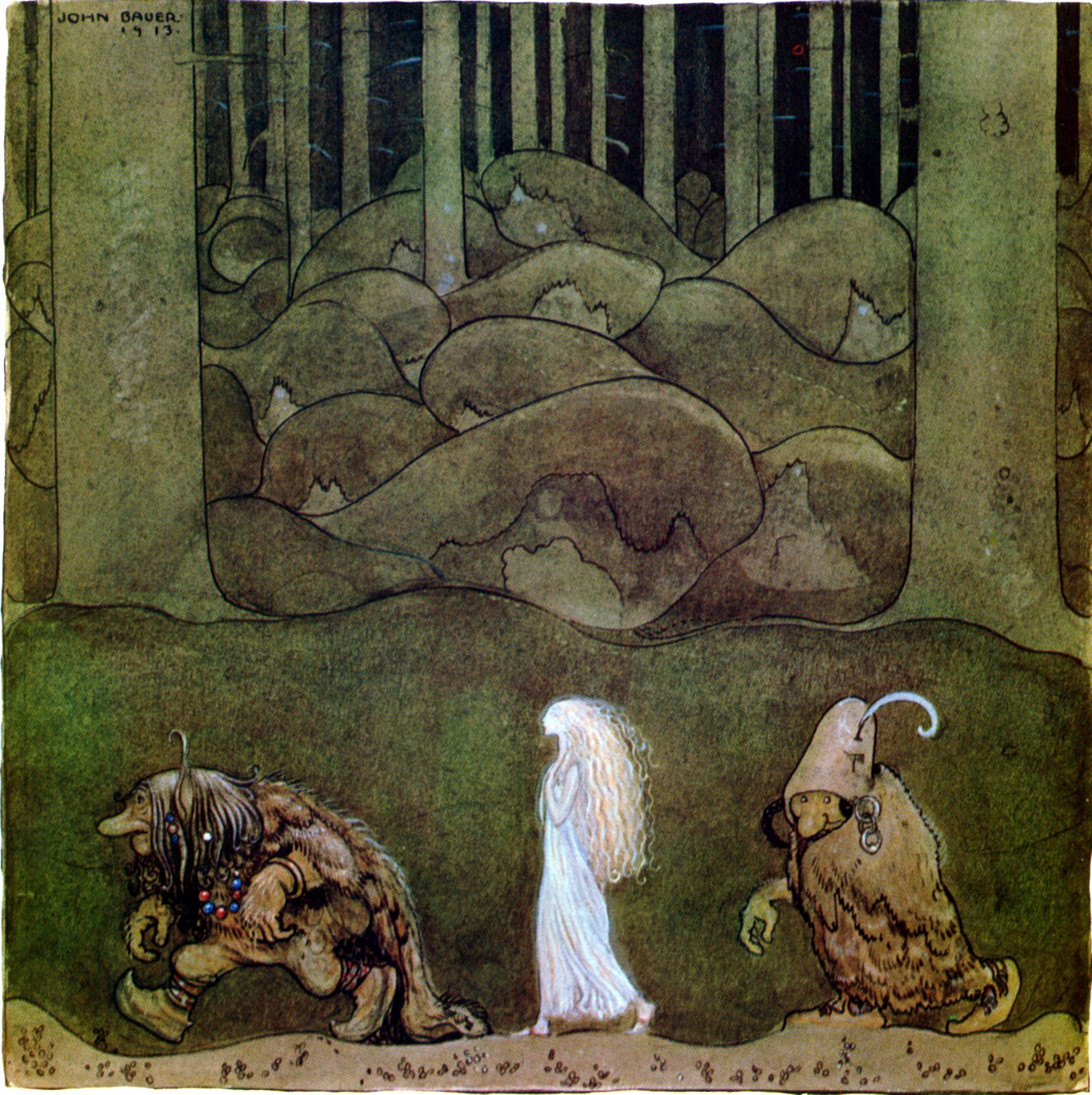
John Bauer 1913 illustration found at nordicculturespot.blogspot.com

Read Full Post »

If you’re a country called Ireland and your soccer team doesn’t make it into the 2014 World Cup competition in Brazil, what do you do?

Change the “r” in your name to “c” and adopt another team.

I like David Trifunov’s headline at the Global Post, where you can read the background: “Iceland closes in on World Cup bid. Wait … Iceland has a soccer team?”

He continues, “Iceland is now one game away from becoming the smallest nation ever to advance to a World Cup. … It started in 2008 when the national economy, under the weight of an inflated currency, tanked.

“The modest Iceland soccer league cut ties with nearly all its more expensive foreign players, leaving the door wide open for homegrown talent. They took advantage, getting the experience they needed. …

“Ireland is one frustrated World Cup nation that has taken notice. At least the fans have. Eoin Conlon and friends were lamenting their country’s failed attempt to reach Brazil when he realized there’s only one nation that deserves their support now.

“ ‘And we kind of laughed, saying: “Well, that’s as close as Ireland’s going to get to Brazil. It’s only a letter difference. A ‘c’ for an ‘r.’ We might as well be brothers,” Conlon told Public Radio International.

“So they struck up a website and Twitter profile to encourage Irish football fans to back tiny Iceland.

“ ‘There are only about 320,000 people in Iceland,’ Conlon told PRI. ‘So if they were a county in Ireland — I’m calling them the 33rd county — it would [be] only the fifth-largest county in Ireland.’ ”

More here.

Photo: (AFP/AFP/Getty Images)
Iceland’s striker Kolbeinn Sigthorsson, right, and Croatian defender Vedran Corluka vie for the ball during their World Cup playoff in Reykjavik on November 15, 2013. 

Read Full Post »

Rosie Goldsmith writes at BBC News that in Iceland, one in 10 people will publish a book.

“It is hard to avoid writers in Reykjavik. There is a phrase in Icelandic, ‘ad ganga med bok I maganum,’ everyone gives birth to a book. Literally, everyone ‘has a book in their stomach.’ One in 10 Icelanders will publish one. …

“Special saga tours – saga as in story, that is, not over-50s holidays – show us story-plaques on public buildings. Dating from the 13th Century, Icelandic sagas tell the stories of the country’s Norse settlers, who began to arrive on the island in the late 9th Century.

“Sagas are written on napkins and coffee cups. Each geyser and waterfall we visit has a tale of ancient heroes and heroines attached. Our guide stands up mid-tour to recite his own poetry – our taxi driver’s father and grandfather write biographies.

“Public benches have barcodes so you listen to a story on your smartphone as you sit. …

“Solvi Bjorn Siggurdsson, a tall, Icelandic-sweater-clad novelist, says writers owe a lot to the past. …

“Siggurdsson pays homage to Iceland’s Nobel Literature Laureate, Halldor Laxness, whose books are sold in petrol stations and tourist centres across the island. Locals name their cats after Laxness …

“Everyone receives books as Christmas presents – hardback and shrink-wrapped.

” ‘Even now, when I go the hairdressers,’ Kristin Vidarsdottir, manager of the Unesco City of Literature project, says, ‘they do not want celebrity gossip from me but recommendations for Christmas books.’ ” More.

I like the idea that everyone “has a book in their stomach.” The saying reminds me of the late, great Rev. Dana Greeley who used to say all people have one sermon in them.

Photo: Corbis

Read Full Post »