Feeds:
Posts
Comments

Posts Tagged ‘injury’

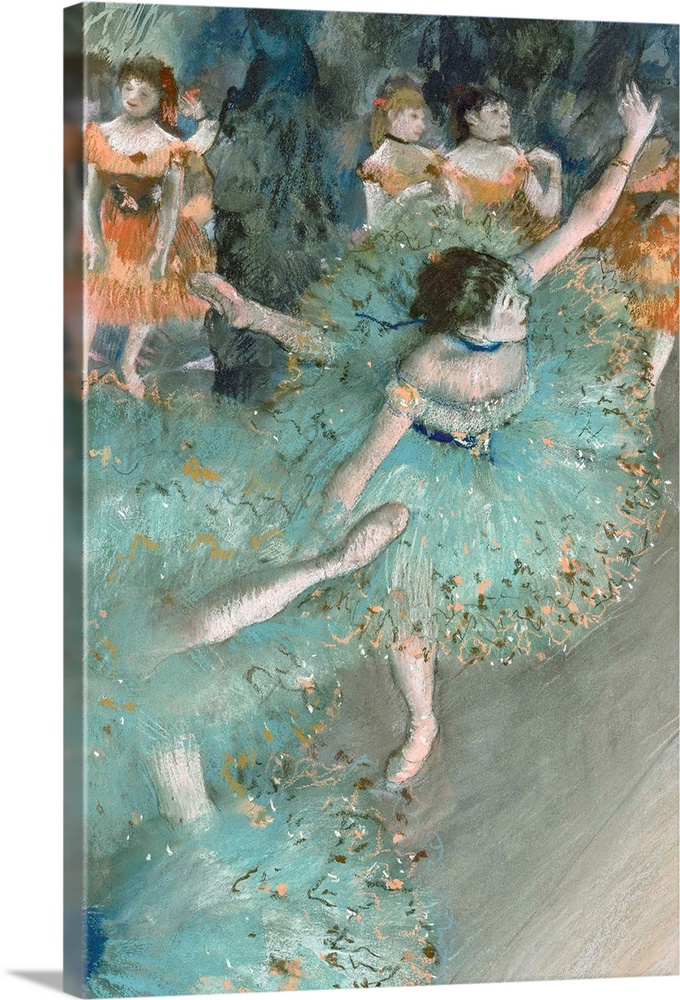
Art: Renoir.

When I was a child, I went through a period of wanting to be a ballet dancer. It was a thrill to have a small role in the Elysian Fields of Gluck’s Orpheus alongside grown-up ballerinas and opera singers. But as ballet lessons waned, other interests took their place.

Later, as a worrywort adult, when a dancer I knew kept getting injuries, I began to think of ballet as a dangerous sport. Today’s post celebrates a revolution in addressing ballet injuries.

From Nick Miller at the Age: “Is injury common among ballet dancers? Yes. But perhaps not for the reasons you might think. A study in Britain in 2014 found that professional dancers were far more likely to suffer injuries than rugby players: 80 per cent of dancers incur at least one injury a year that affects their ability to perform, compared to 20 per cent for rugby or football players.

“Muscles and joints were the most common sites for injury, according to the British Fit to Dance 2014 survey. Other studies found that over-use was the most common cause of injuries for female dancers while men were more susceptible to sudden, traumatic injuries. And they found that younger dancers were more likely to be injured than older ones. …

“[Matthew Wyon, professor of dance science at the University of Wolverhampton and one of dance science’s leading experts] believes it’s because of the way dancers train.

“ ‘None of their training causes them to get either stronger or fitter until right up close to a performance. Ballet dancers are technically unbelievable. They’ve got an economy of movement we never see in sport. But it means the dance no longer puts a stress on the body. They don’t have that physical adaptation. So, in fact, the better your dancer is, the less fit they are. Because dance doesn’t stress them any more.’

“On the face of it, the lifts and jumps that dancers perform seem to require extraordinary strength. But, behind the scenes, a lot is accomplished by perfect balance; by aligning bones and locking joints so that, rather than relying on muscles to hold your partner aloft, the weight transfers through your frame to the floor. …

“Evidence of their reliance on technique can also be found in dancers’ almost freakish ability to ignore fatigue when it matters.

“In one experiment, Wyon’s team made a dancer exercise until they were ‘absolutely dead on their feet’ and then perform a double pirouette on to arabesque (which is where they stand en pointe with one leg in the air behind). ‘And they could pull it off, even when they were having trouble doing the fatiguing dance in between. As soon as they were being watched, or having the data collected, they could pull it out. This is just a phenomenon and we’re trying to explain it – and it could be how they’re trained.’

“Technique, it seems, honed over hours of practice each day and since an early age, hides a multitude of flaws. Wyon has seen a male dancer ‘built like a stick insect’ who could lift any of the women in the company – purely through ability. ‘His technique was so good for doing it, beautifully. Once. But if you asked him to do it three times, he couldn’t. … They’re always training and dancing at close to their maximum.’ …

“The Australian Ballet is one of a group of pioneering dance companies around the world that have beefed up their in-house medical expertise and are leading the way in the search for better treatment, rehabilitation and – most importantly – injury prevention.

“Dr Sue Mayes is the director of artistic health at the ballet, where she’s worked since 1997 – at first in the littlest room in the building as the company’s first full-time touring physio, now leading a high-tech medical and physiotherapy operation. …

“ ‘We’re [always] going to see if we can do it non-surgically,’ says Mayes, ‘because a dancer loves that swan neck, that hyper-extended shape. If you lose even five degrees of that, it’s going to be obvious to the eye and harder to function with. So, we avoid surgery at any cost – we’ve done very few operations in the last 10 years.’

“For a year, [Benedicte Bemme, an injured dancer] had to run through a simple, repetitive exercise routine involving the movement method Pilates, little jumps, or jogging up and down a stairwell, designed to restore strength and function to her foot.

“It may sound simple, but in ballet it is a revolution. Rather than rushing dancers to hospital, they are experimenting with techniques to painstakingly rebuild the dancer from the inside out. Research published by Mayes and her team looks at each joint and each injury, and assesses what particular types, frequency and power of exercise are best to get a dancer back to the stage.”

Read more at the Age, here.
Read Full Post »

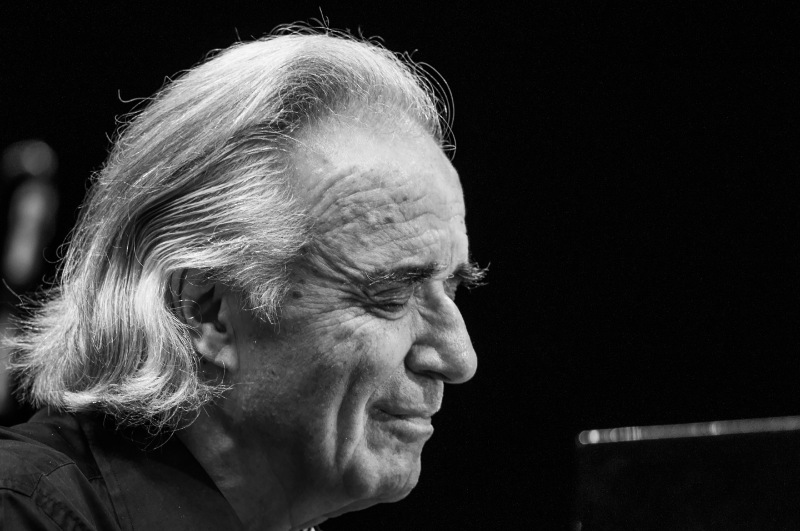
Photo: Marcio De Assis via GoodNewsNetwork.
Brazilian piano maestro João Carlos Martins was deeply moved when new bionic hands enabled him to return to the keyboard.

Well, here’s some uplift for a November Monday. It concerns a Brazilian pianist who had to switch to conducting when disease and injury crippled his hands. Twenty years later, a designer tried to get in touch with the famed musician “on various platforms.” If you’ve ever tried to reach a famous person that way, you’ll appreciate the designer’s persistence.

Gabriella Paiella at GQ wrote, “Over the years, fate seemed to do all that it could to stop João Carlos Martins from playing the piano.

“It started in the 1950s, when he was 18. Something called focal dystonia. … The brain misfires and causes involuntary muscle spasms, which was mighty inconvenient for a young Brazilian piano prodigy on the precipice of world fame.

“He managed to get it under control and, by his early 20s, landed in New York City. Martins had it made back then: a tony apartment across the street from the Met, celebrated performances at Carnegie Hall and virtually every other major theater around the globe. They even had a nickname for him, the Mailman, because he always delivered. To relax, Martins would take leisurely strolls around Central Park, where sometimes he’d see his neighbor Jackie Kennedy. He played pickup soccer in the park too.

“Then one day, while chasing after the ball, he tripped.

“In the seconds between losing his footing and hitting the ground, there hung countless permutations for how skin and bone could collide with earth and inflict damage. The outcome: right elbow, sharp rock, a sliced ulnar nerve. Martins knew he was in trouble when the blood started spurting out. He knew he was really in trouble when, in the coming months, his fingers started to atrophy. And when his fingers started to atrophy, he thought about killing himself.

“Martins kept going, though his skills as a pianist were diminished. He even embarked on a decades-long quest to record the complete works of Johann Sebastian Bach. In 1995, at the age of 54, he traveled 6,000 miles from his then home in Brazil to tape in this one theater in Sofia, Bulgaria, with great acoustics. He was walking back to his hotel late at night when two muggers ambushed him with a metal pipe, and — thwack! — they took off with his passport and wallet and left him for dead. When Martins woke up in the hospital, he couldn’t feel the right side of his body.

“There had been other pain and misfortune along the way. A recurring repetitive-motion injury from practicing that was so agonizing he compares it to kidney stones. A pulmonary embolism. A coma because of that pulmonary embolism, during which Death, or at least an apparition of it, paid him a personal visit.

‘I recall an image of a carriage passing by with beautiful black horses,’ Martins says. ‘It was a beautiful carriage. The coachman asked me to get in the carriage, and I said, “No, I’m not going to get in.” That image is something I’ve never forgotten. The image is like a sign that I had a mission I had to fulfill with music.’

“In 2000, a failed surgery originally intended to restore functionality did his right hand in for good. Soon after, doctors found a tumor in his left. They removed it, along with any remaining hope of his fingers gliding over his beloved keyboard ever again. …

“At the age of 63 … Martins resigned himself to saying his most permanent goodbye to the piano yet: He chose to retire and become a conductor. He would now make music communally, after decades of being entwined in personal relationship with his instrument.

“Then along came these bionic gloves, created by an industrial designer named Ubiratan Bizarro Costa, who became familiar with Martins’s problems after he saw the maestro on a Brazilian television show in 2019. There is nothing high-tech about the gloves Costa invented, which is how he prefers it. … ‘I use minimalist design,’ Costa says. ‘The fewest number of pieces and the fewest number of expensive parts for the maximum result.’

“The gloves are both deceptively complicated looking and incredibly precise. The hand slips into a neoprene sleeve outfitted with a 3D-printed frame and stainless steel bars on the fingers. … Without the gloves, when Martins’s fingers hit a key, they stay depressed; the steel bars pop them back up.

“After seeing Martins on TV, Costa made a prototype and tried to get in touch with him on various platforms, but never heard back. The gloves lay dormant on a shelf in his office, until Costa saw that Martins and his orchestra were passing through Sumaré. …

“He went to the show, flagged down a musician, and explained his predicament. The guy thought Costa was kind of a weirdo but agreed to grab Martins. Eventually, Martins came out and Costa presented him with his invention.

“ ‘I thought he was an endearing mad scientist,’ Martins says, remembering his first encounter with Costa. [But] a few days after the concert, Martins invited Costa over for lunch. He told the designer what worked and what didn’t. Costa went home and fiddled with his model. …

“By Christmas 2019, Martins was able to place all 10 fingers on the keyboard for the first time in over two decades. Costa was pleased to see Martins playing in person, but it wasn’t until he saw the video that the gravity of the moment fully dawned on him.

“It’s like designing a paintbrush for Pablo Picasso, he thought.”

More at GQ, here. If you are on Instagram, you will be moved by this video of him playing properly for the first time in 20 years, thanks to the bionic gloves.

Read Full Post »