Feeds:
Posts
Comments

Posts Tagged ‘invent’

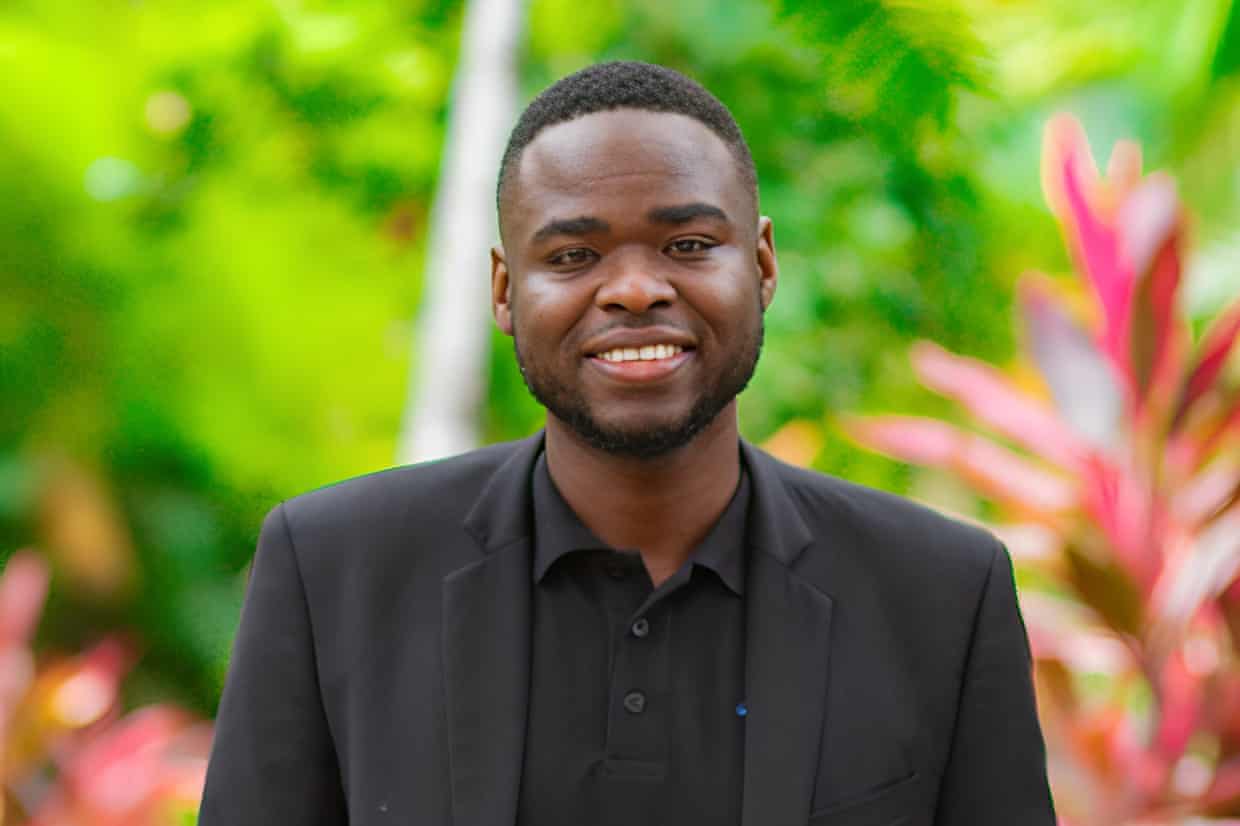
Photo: Rayvon Stewart.
Rayvon Stewart invented a workable model for a door handle that could disinfect itself after every touch. 

Ever since seventh grade, when my health teacher showed an educational animation about how disease could spread by touching things with germs on them, I’ve been wary of doorknobs. I even answered the question on an intelligence or psychological assessment truthfully, knowing it would trigger alarm bells. Test: “Are you afraid of doorknobs?” My brain: “Well, yes. Everyone should be afraid of doorknobs!”

Natricia Duncan writes at the Guardian about someone else who thought doorknobs were a problem.

“When the Jamaican university student Rayvon Stewart invented a workable model for a door handle that could disinfect itself after every touch, it was hailed as a potential gamechanger for hospitals, hotels and other businesses, with promising implications for controlling the spread of disease, particularly during pandemics like Covid-19.

“Speaking at a recent product launch, Alison Drayton, assistant secretary-general of the Caribbean Community (Caricom), a 15-member bloc of Caribbean countries, described the invention as a ‘meaningful solution’ for the region and a ‘life-saving design that fits our reality.’

“Stewart, now 30, was just 23 and a student at Jamaica’s University of Technology when he conceptualized the pioneering ultraviolet self-sanitizing door-handle model he calls Xermosol, which he says can kill 99.9% of pathogens but is safe for people and animals. Since then he has been working to bring the product, which benefits from a provisional patent protection under the patent cooperation treaty, to market, winning Jamaica’s Prime Minister’s National Youth Award and the Commonwealth Health Innovations Awards in the process. …

“Stewart grew up in a poor household with his grandmother, in the rural farming community of Mount Prospect. ‘Even though times were tough, we never really thought about that. We knew that we had something to do as a family,’ he said. The software engineer and his cousin were the first in their family to go to university.

“There, he discovered his love of inventing and entered a competition with his first idea: 3D modeling software that would allow people to virtually fit clothes before purchasing online. When he started volunteering in a hospital, his passion for innovation became about solving a problem.

” ‘I saw how patients were suffering, the assistance that they needed, and how difficult it was for the nurses,’ he said. This, he added was the inspiration for Xermosol.

“Dr Camille-Ann Thoms-Rodriguez, a University of the West Indies consultant microbiologist, said that, while the invention did not replace the need for World Health Organisation cleaning guidelines in hospitals, Stewart’s smart self-sanitizing door handle was an innovative tool that can be used alongside others, for infection control. …

“She said, ‘A lot of the innovation that we see in healthcare is often from a first-world country where there are more resources … but it doesn’t mean that we don’t have good ideas here.’ …

“Kirk-Anthony Hamilton, co-founder of Tech-Beach Retreat, a Caribbean-based tech platform that connects innovators, entrepreneurs and investors through summits, programs and investment, said there was a growing desire in the region to tackle ambitious tech projects.

“ ‘Young people in the Caribbean are seeing what opportunities they’re missing out on, and they want to be a part of it. They’re reading stories about a guy in a garage coming up with a concept, and two years in, the company is making $50m a year,’ he said. …

“In the broader field of digital technology, businesses such as the software development company BairesDev, which has a global workforce of more than 4,000, said it saw a 400% increase in applications from developers in the Caribbean between 2020 and 2024.

“One possible explanation for this, the company’s director of talent acquisition, Felipe Turra, said, was the increased demand for software engineers during the Covid pandemic as lockdowns drove innovation. ‘Companies started saying, hey … I need to develop new applications, because people can’t leave home,’ he said, adding that the Caribbean being largely aligned to the US, both in terms of language and culture, made it a good fit for its US-based clients.

“For Stewart, the shift in innovations and increasing digital talent is ‘challenging the myth that there isn’t awesome, life-changing technology in the Caribbean.’ “

More at the Guardian, here. (The Guardian relies on donations to continue delivering factual news.)
Read Full Post »

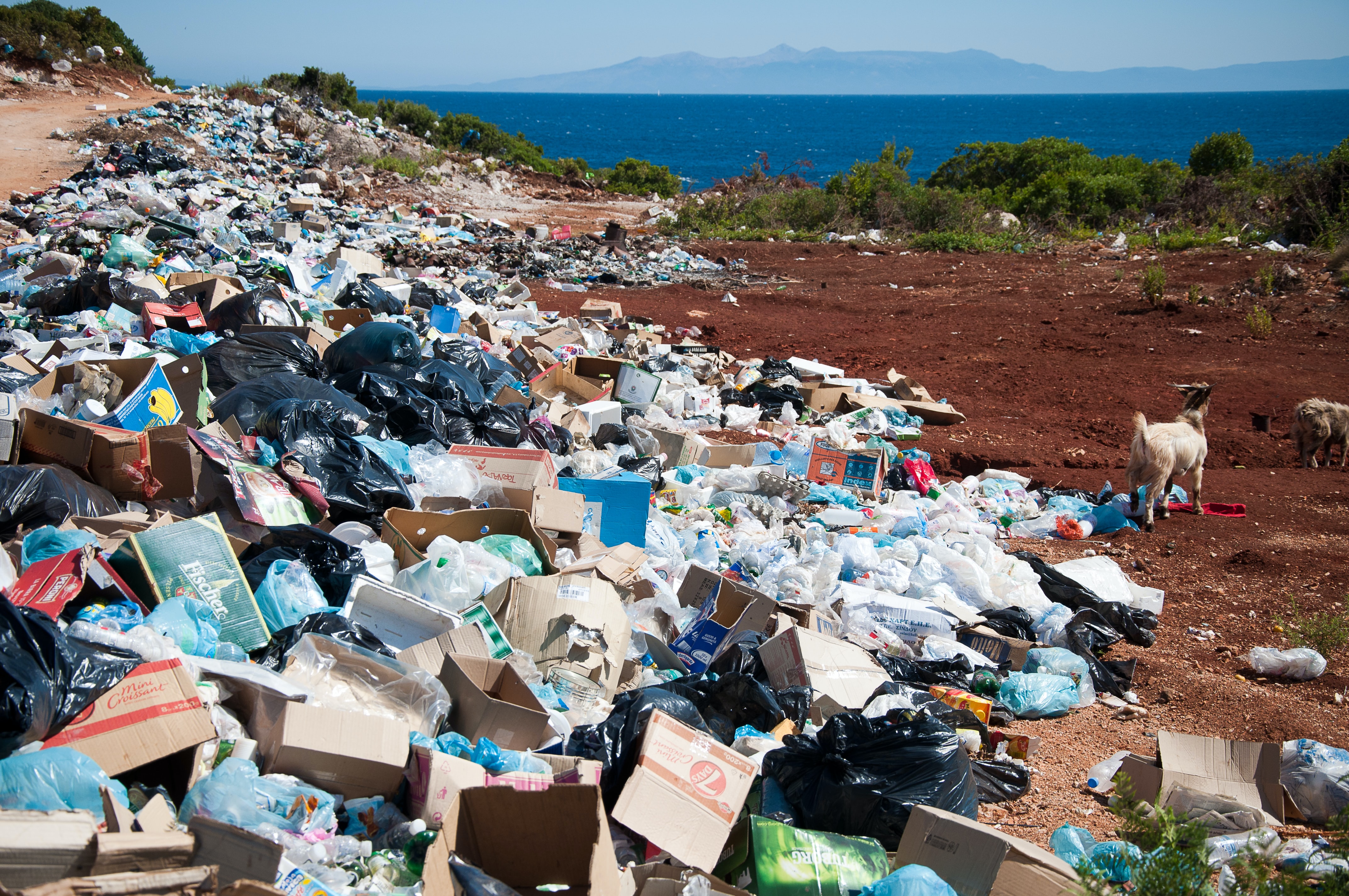
Photo: Antoine Giret via Unsplash.
Are you ready to do something more about plastic?

Not quite sure what to make of the inventions described in today’s post. Another energy-using appliance, this time for dealing with plastics? I’m keeping an open mind.

Chris Velazco writes at the Washington Post that “a new wave of home tech could keep plastics out of landfills. …

“For a pair of start-ups we first met at CES [Consumer Electronics Show] no kitchen would be complete without a new kind of home appliance: one that makes recycling a little easier.

Lasso Loop relocated from the United Kingdom to California to work on its product, a hefty home appliance machine that automatically sorts and breaks down the recyclables you toss inside it. And ClearDrop, founded by a Texas businessman named Ivan Arbouzov, aims to handle single-use plastic bags, one of the most odious artifacts of modern life. …

“And while it might sound a little easier to keep a couple of dedicated recycling bins around, both companies are, in their own way, tackling a flaw in our waste management systems that many people probably aren’t aware of.

As it turns out, much of the material we toss into our recycling bins doesn’t actually ever get recycled.

“That’s for a whole host of reasons: improperly cleaned materials can contaminate others that would have been recyclable otherwise, and some of the items people might just assume are recyclable — say, plastic cutlery — usually aren’t. …

“In 2018 — the last time it published these figures — the Environmental Protection Agency reported that glass accounted for a little over 4 percent (or 12.3 million tons) of our total municipal solid waste. About a quarter of it was recycled. But of the more than 35 million tons of plastics that entered the country’s waste management systems that same year, just 9 percent was recycled or composted.

“Perhaps the only surefire way to reduce plastic waste is for companies to produce less of it in the first place. In the meantime, start-ups like Lasso Loop and ClearDrop hope to make people more mindful of what happens to the materials they don’t need anymore.

“For Lasso Loop, that means removing as much of the guesswork as possible. In its current form, the company’s Lasso machine is bigger than a dishwasher but smaller than a fridge, though the team hopes to be able to squeeze the final model under your countertops.

“What’s more interesting is the stuff inside: Lasso growth manager Dominique Leonard said the machine uses a smattering of sensors, cameras and AI to determine whether the stuff you’ve put inside it can be recycled. (Anything that doesn’t pass muster, like certain kinds of plastic, are summarily rejected.) From there, the remaining plastic, glass and metal products are steam cleaned, broken apart — seriously — and stored separately in a series of bins based on type to prevent contamination. …

“That sophistication will come at a cost, especially at first. The Lasso team plans to sell its machine for $5,000 — or $3,500 with a prelaunch discount — to start, though it hopes incentives from local governments will help lighten the load on potential customers.

“ClearDrop’s Minimizer, a trash can-sized plastics compactor, is much less complicated by comparison. You’re meant to feed all of your soft plastics into a slot onto the top of the machine, and once it has had enough — Arbouzov said that usually takes around a month — the Minimizer heats and compresses the bags to form a slightly squishy brick. If your municipality is one of the rare ones that accepts soft plastics, you should be able to toss those bricks into your recycling bin. …

“Important questions still linger. Leonard and Arbouzov both claim that an important chunk of their future business will require them to partner up with manufacturers and recycling facilities that are equipped to turn those materials back into actual products. … For now, those key partnerships have yet to solidify. It’s also unclear how energy-efficient these appliances are, though Lasso Loop claims that its machine requires roughly the ‘amount of power required for a hot water washing machine cycle’ to function.

“These start-ups face another considerable hurdle: How will they handle all the stuff their machines create, especially if they plan to resell it?

“The Lasso team will find out when it launches a pilot program with customers in the San Francisco Bay area next year. Once those first Lasso machines are live and full of precious glass and plastic bits, their owners are meant to schedule pickups from a smartphone app. But when people come to haul away those materials, they won’t be working from their local municipal recycling crew, but a team of people working on behalf of Lasso itself.

“That means, beyond just building the machines to help people recycle, it must also manage a fleet of people who fetch those recyclables and make sure they go where they’re supposed to. …

“ClearDrop has similar issues to sort out. … For now though, [Arbouzov] seems slightly more concerned with another goal of his: to be able to produce his Minimizers within six months, and sell them for just $150. Whether that’s a realistic forecast or start-up founder bluster is difficult to say, but to Arbouzov, what mostly matters is getting people to think more closely about where their old stuff goes.”

Gotta love inventors — whether they succeed or not. Their thought processes are inspiring. More at the Post, here.

Read Full Post »