Feeds:
Posts
Comments

Posts Tagged ‘investment’

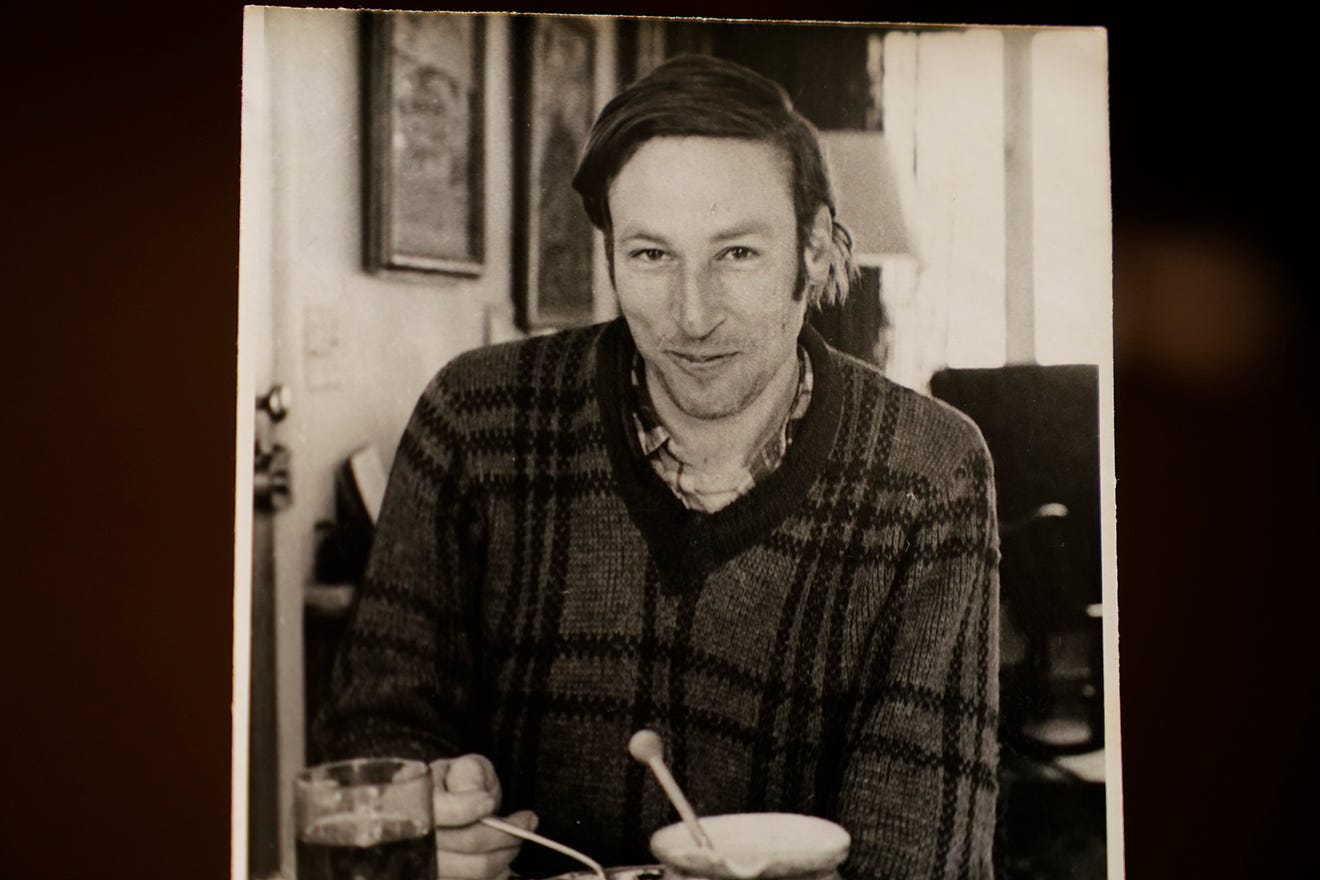
Photo: AP via Ed Smith and family of Geoffrey Holt.
Almost no one knew this unassuming man was investing — until his small New Hampshire town got a large bequest.

In today’s story, a quiet man, known locally as a groundskeeper for a trailer park, rises to prominence in a way that would have totally embarrassed him.

Saleen Martin has the story at USA Today. “Community members knew the late Geoffrey Holt to be a reserved man who liked simple things.  What most people didn’t know is that he was sitting on a $3.8 million fortune. Holt died on June 6, leaving millions to his beloved town of Hinsdale, New Hampshire. ..

“Hinsdale Town Administrator Kathryn Lynch said Edwin ‘Smokey’ Smith is Holt’s estate executor. He told town administrators about Holt’s generous donation a few months ago. …

“ ‘The town and other community committees can apply annually for a grant of $150,000 to be used for health, education, culture or recreation,’ she told USA TODAY in an email. … The town is considering using the money for electronic ballot machines since Holt was ‘an avid voter.’ …

“The main thing, she said, is that they want to honor how frugal Holt was and find ways to help people in Hinsdale save money through the town budget.

“Smokey Smith [and Holt] met when Smith ran an insurance company. … ‘He was very reserved,’ Smith said. ‘He liked to be at the back of a group rather than in the front. He got along well with people, but he didn’t want to be the one leading the conversation. If he knew what was going on today with this story … he would be all sorts of embarrassed.’ …

“Holt worked for Agway Corporation in the 1970s. According to his obituary, he was a production manager with the company. When they closed in the 1980s, he received a cash settlement that he chose to invest.

“He also did odd jobs around town when Agway closed. Smith eventually hired him to do some work on his land. … Smith said Holt eventually moved into an apartment he owned and then, a mobile home that he shared with a woman named Thelma Parker. … She died in 2017.

“ ‘She was good for him and he was good for her,’ Smith said. … ‘She helped him be a little more social. They were a good fit. She was the inspiration he needed to keep moving and she had somebody around to help her.’ …

“He had a car when he worked at Agway but sold it. … What Holt seemed to really love was his lawn mower. He’d ride around Smith’s property with his bad leg elevated on the hood of the vehicle, his friend recalled. … ‘He had several places where he trimmed back the brush so that he could sit down there and read magazines, newspapers, just put his foot up and enjoy the brook and nature.’ …

“Holt spent many years in preparatory school when he was younger. … ‘That’s where he learned that if you stay in the background, you stay out of trouble,’ Smith said. … In 1963, he graduated with a bachelor’s degree from Marlboro College in Vermont and then served in the United States Navy, his obituary reads. 

“He later earned a master’s degree from American International College in Massachusetts in 1968 and then taught social studies and drivers’ education at Thayer High School in Winchester, New Hampshire.

“Smith recalls the day Holt told him about his fortune. It was about 13 years ago. He said his investments had done better than he expected.”

More at USA Today, here.

Read Full Post »

More and more nonprofits are creating investment opportunities for well-wishers who want to support the charity’s mission while also receiving a modest return on their money.

New Hampshire Community Loan Fund is one I know about. “Investments in the New Hampshire Community Loan Fund are stable, pay interest to the investor and create opportunity many times over in New Hampshire’s communities,” says their website. “The money that people and institutions invest in us, combined with our own capital, creates the pool of funds from which we lend to create opportunity for decent housing, child care and jobs for families with low or moderate incomes.

“Our borrowers are people and nonprofit organizations that won’t qualify for a bank loan, but that are responsible and motivated to achieve their goals, including repayment. We connect them with the specialized training and support they need to be successful.”

The website also notes that the Community Loan Fund “received the highest honor in our field: the NEXT Award for Opportunity Finance. We were selected from among the country’s top community development financial institutions for providing fair, fixed-rate mortgage loans to help people in New Hampshire’s resident-owned communities build value in their home.” (Resident-owned communities are parks for manufactured housing at which the residents own not just the home but also share ownership of the land. They are a specialty of the Loan Fund.)

At The Chronicle of Philanthropy, Holly Hall writes about how the Nature Conservancy is using the concept of an investment vehicle for supporters.

Hall writes, “Project manager Jeff DeQuatro walks on a protective reef built by the Nature Conservancy off Coffee Island, Alabama. The environmental group has started Conservation Note, an investment program that returns the principal and interest of up to 2 percent to the charity’s supporters.

“Since April 2012, the Nature Conservancy has secured more than $16 million with the Conservation Note, a new investment program that will return an interest rate of up to 2 percent to the charity’s supporters. Under the arrangement, supporters who provide at least $25,000 to the Nature Conservancy to invest for a term of one, three, or five years will earn 0 to 2 percent in interest and get all their money back. The Conservation Note has been given a double-A rating by Moody’s.

“The Nature Conservancy will use the money from supporters to help it shoulder the costs involved in transferring a protected piece of land.

“For instance, the Nature Conservancy recently purchased a Colorado ranch on sensitive land and obtained a conservation easement that prohibits the land from being developed, thereby lowering its value. The lower price made it possible for five families with adjacent ranches each to buy a portion of the property back from the Nature Conservancy. The buyers all agreed not to develop the land.

“Money from the Conservation Notes helped the charity make up the costs involved in selling the land and getting the easement.

“ ‘What is so exciting is that it opens up a whole new avenue of supporting conservation with resources aside from philanthropy,’ says Charlotte Kaiser, who manages the program.” More on how it works.

Photograph: Brian Snyder/Reuters/File
Project manager Jeff DeQuatro walks on a protective reef built by the Nature Conservancy off Coffee Island, Alabama. The environmental group has started Conservation Note, an investment program that returns the principal and interest of up to 2 percent to the charity’s supporters.

Read Full Post »

Suzanne and Erik went to grad school with David O’Halloran, whose consulting company was recently cited in The Irish Times for its focus on sustainable business ventures in Africa.

“For Irish entrepreneur David O’Halloran, adhering to a sustainable business model that helps develop and protect local communities and their environment is the key to enjoying long-term success in Africa’s emerging markets. In late 2006, the Galway man, along with three former colleagues, rejuvenated a business development consultancy called BusinessMinds by turning it into an incubator company that develops, finances and operates sustainable commercial ventures in Africa.

“The idea behind the enterprise is to offer investors a socially responsible approach to doing business on the continent, while also making a profit. ‘Historically, many investors in Africa have used a more short-term, exploitative business model, one which has existed since the days of colonialism,’ O’Halloran says. ‘Unfortunately, for some investors this remains the modus operandi even today. As in, they take what resources they can and then get out without giving much back to the local economies.’

“However, O’Halloran says he believes people are starting to realise that such an approach is inherently unstable and increases risk.” His organization is called BusinessMinds, Africa.

Bill Corcoran wrote the Irish Times article. Read more here.

Read Full Post »