Feeds:
Posts
Comments

Posts Tagged ‘logging’

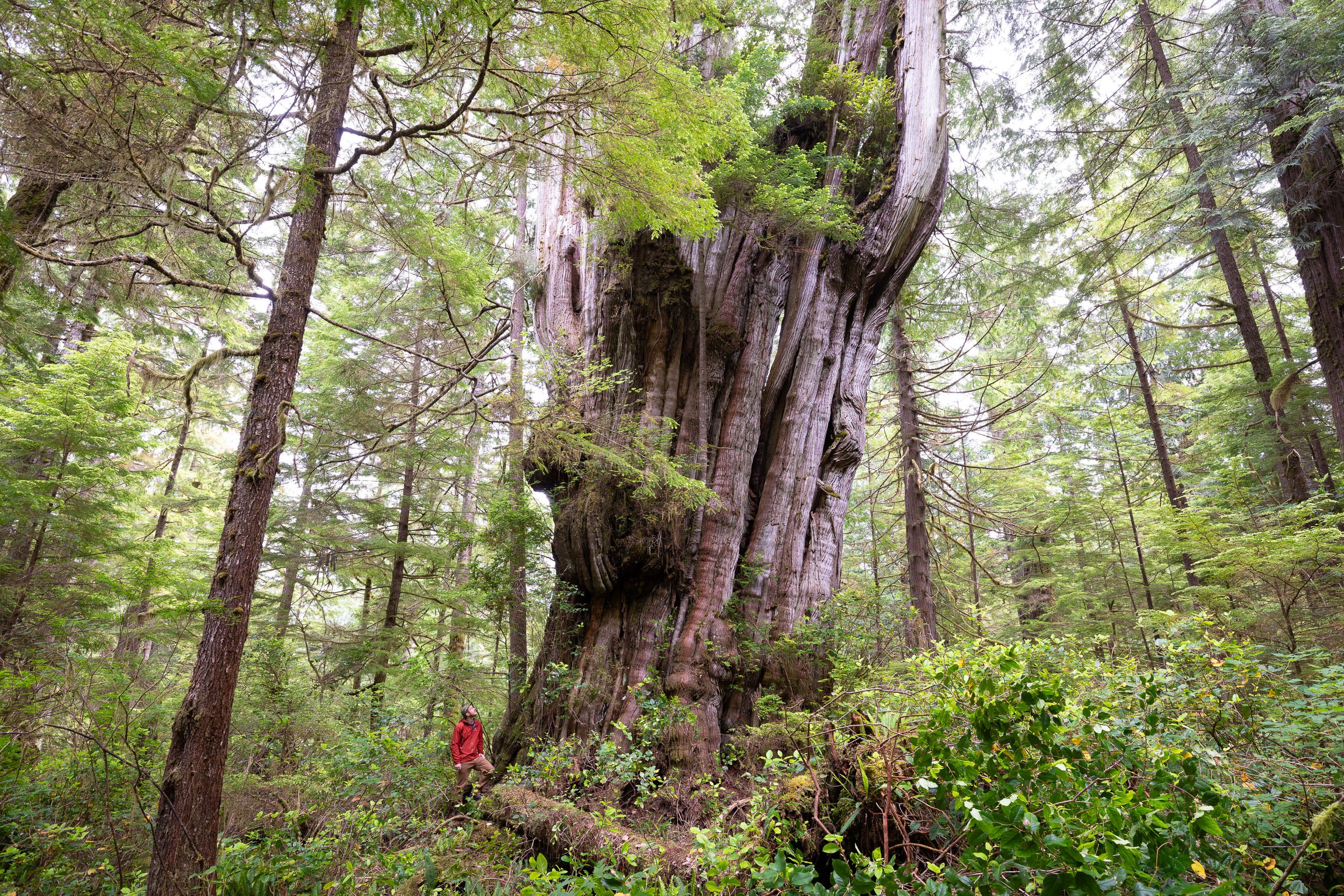
Photo: TJ Watt/Ancient Forest Alliance.
Ancient Forest Alliance photographer TJ Watt and an ancient Western red cedar. The tree is estimated to be 46 metres high [150 feet]. It is located on Flores Island, in Clayoquot Sound off Vancouver Island in the territory of Canada’s Ahousaht tribe. 

I love reading about unusual careers and pursuits people have devoted their lives to. There’s so much to learn!

Chad Pawson reports at Canadian Broadcasting (CBC) about a guy at the Ancient Forest Alliance in Canada who hunts down big, old trees. Although the local indigenous people probably always knew about the tree he calls “The Wall,” it can’t hurt to teach others about why it needs protection.

“For 20 years, Victoria’s TJ Watt, 39, has trekked through the province’s vast and verdant landscape seeking out giant, old trees to document them and make a case for their conservation. Now, at a time when exceptionally large trees have dwindled due to logging, he’s recorded what he calls the tree of his lifetime.

” ‘No tree has blown me away more than this one,’ he said. ‘It literally is a wall of wood.’

“Watt photographed the tree, a Western red cedar, in 2022 on Flores Island in fabled Clayoquot Sound on Ahousaht First Nations territory while on a field trip as a National Geographic and Royal Canadian Geographical Society explorer. (The species is also spelled redcedar because it’s not deemed to be a true cedar.)

“It’s estimated to be 46 metres tall [151 feet] and five metres wide at its base. The old-growth tree, part of forests that store carbon and support many species of plants and animals, is estimated to be at least 1,000 years old, according to Watt.

“Its dimensions put it at the very top of the biggest and oldest trees in the province and across Canada.

” ‘Unlike most other trees, it actually gets wider as it goes up,’ said Watt. …

“Watt and the Ahousaht First Nation have now revealed images and details of the tree to the public — although keeping its location secret — to show it as an example of the importance of the province meeting commitments to overhaul forestry to balance harvesting with ecological values.

” ‘It’s representative of a healthy, intact, coastal, temperate ecosystem,’ said Tyson Atleo, 36, a hereditary representative of the Ahousaht First Nation. ‘We don’t see a lot of trees that size anymore.’

“The tree has been nicknamed ‘The Wall or [a word meaning] ‘big redcedar’ in the Nuu-chah-nulth language. It’s in a type of forest that’s in danger of disappearing from B.C.’s landscape due to a history of intense logging. …

“The tree is not currently in danger of being logged as it’s in an area where old-growth logging is being deferred as part of work between First Nations and the province to protect old-growth forests at risk of permanent biodiversity loss.

“The Ahousaht First Nation, whose territory spans Clayoquot Sound, a globally recognized biosphere reserve, is at the forefront of work to keep significant trees in biodiverse forests standing while finding other ways, such as tourism, to replace lost revenues. …

“Ahous Adventures, an Ahousaht-owned and operated eco-cultural tour company in Tofino, won’t be taking visitors to the tree in order to keep the area protected but does other tours to show off the region’s other impressive trees.

“Nations like the Ahousaht are hoping for more conservation funding from the province to be able to develop [alternatives to logging]. …

“In order to raise funds on its own, the Ahousaht has established a voluntary stewardship fee for its territories, much like B.C. Parks’ day-use passes.

“Meanwhile, others also making careers of trying to locate and document massive old-growth trees that still exist, say coming across trees like The Wall is akin to a religious experience.

” ‘You feel so small, and you realize it is so incredibly important what these things are. They represent so much more than just a tree. It’s an ecosystem unto itself,’ said Colin Spratt, a conservation photographer who takes people on tours of Vancouver’s Stanley Park to show off old-growth trees there.”

More at the CBC, here. Other details at the Washington Post, here.
Read Full Post »

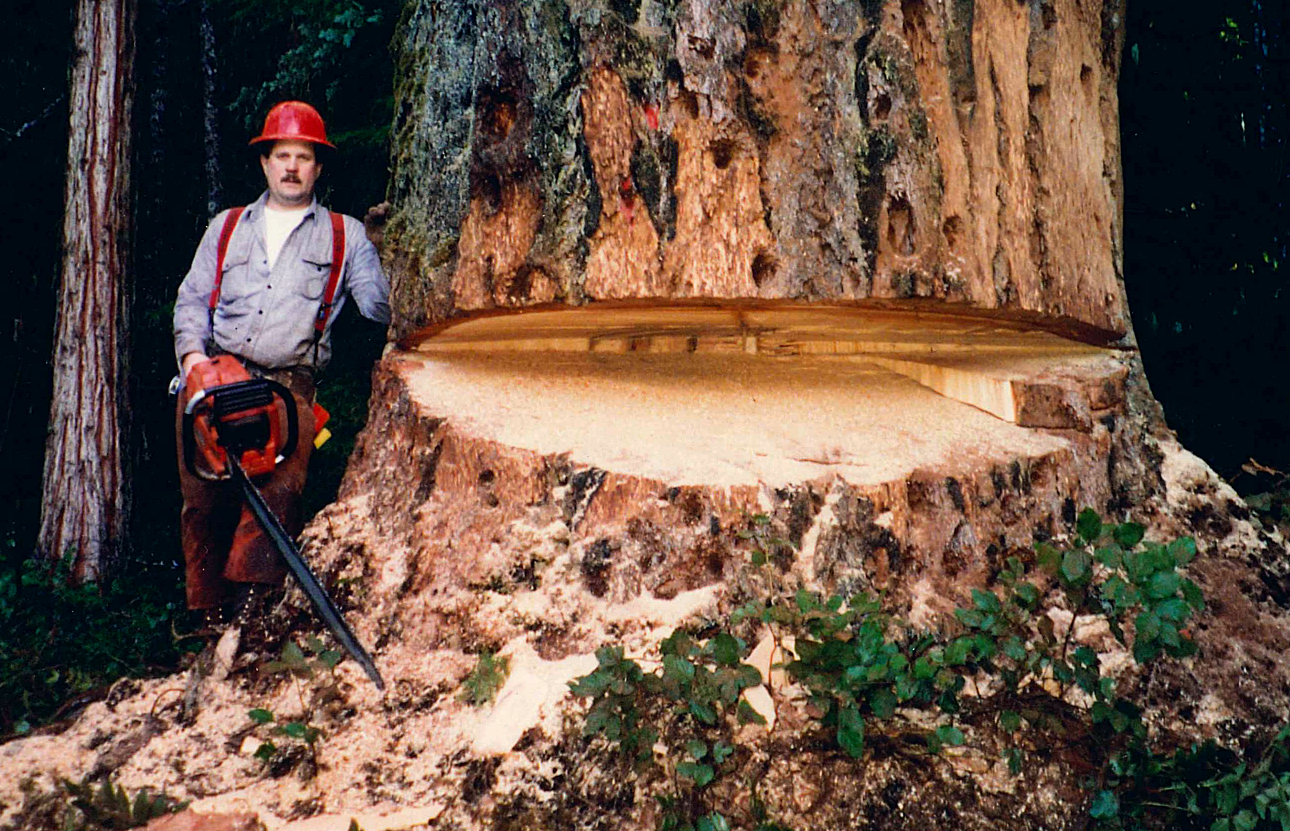
Photo: TimberWars podcast.
When the environment wins, logging families and their communities suffer. We need to find ways to meet the needs of both.

Until I heard a report from the investigative radio show Reveal, I didn’t understand the full import of the 1980s fight to save the northern spotted owl, a fight that pitted logging livelihoods against a bird.

Apparently, it was never really about the owl — or at least not primarily about the owl. It was about old-growth forests and the habitats they provide for an array of species.

Activists at the time were concerned that there were no laws protecting ancient trees. But there were laws protecting birds and animals. Getting the northern spotted owl listed as threatened or endangered, activists thought, could save a whole ecosystem.

The TimberWars podcast, here, offers “the behind-the-scenes story of how a small group of activists and scientists turned the fight over ancient trees and the spotted owl into one of the biggest environmental conflicts of the 20th century.”

From Reveal: “In the 1980s and ’90s, loggers and environmental activists faced off over the future of old-growth forests in the Pacific Northwest. In this episode, Reveal partners with the podcast series Timber Wars from Oregon Public Broadcasting. Reporter Aaron Scott explores that definitive moment in the history of the land – and the consequences that reverberate today. 

“We begin with an event that became known as the Easter Massacre, in which a stand of old-growth trees in Oregon’s Willamette National Forest was cut down despite protests that attracted national media attention. 

“The Easter Massacre helped galvanize the environmental movement. Protests intensified in the forests, but environmentalists kept losing in the courtroom because there aren’t many laws to protect ecosystems. There are, however, laws to protect animals. 

“We explore how a small team bet it all on the northern spotted owl in a high-stakes strategy that involved the science of fruit flies and secret meetings at lobster shacks. While environmentalists ultimately succeeded in locking down millions of acres of forests, that success turned what had been bipartisan environmental laws, like the Endangered Species Act, into cultural wedges. 

“We end with how this conflict affected one timber town and how this fight that started decades ago continues to rage on. With the rise of climate change and the threat of intensifying wildfires, battles over the role of forests take on even greater significance.”

The Oregonian, here, published an update in March of this year. “Environmental groups have filed a lawsuit seeking to preserve protections for 3.4 million acres of northern spotted owl habitat from the US-Canada border to northern California, the latest salvo in a legal battle over logging in federal old-growth forests that are key nesting grounds for the imperiled species.

“The U.S. Fish and Wildlife Service cut the amount of protected federal old-growth forest by one-third in the final days of [the last] administration. … President Joe Biden’s administration has since temporarily delayed putting those new rules into effect in order to review the decision. …

“ ‘We didn’t want to leave any room for error,’ said Susan Jane Brown of the Western Environmental Law Center, a plaintiff in the lawsuit filed Tuesday in Portland, Oregon. Brown estimated there are fewer than 2,000 breeding pairs of the owls left in the wild, but no one is sure. …

“Timber interests, including the American Forest Resource Council, filed a lawsuit earlier this month challenging the delay in implementing the new, reduced habitat protections and say the forest in question isn’t used by the northern spotted owls.

“The existing protections on logging in federal old-growth forests in the US West have cost Pacific Northwest communities that rely on the timber industry over $1 billion and devastated rural communities by eliminating hundreds of jobs, the group says. …

“The Fish and Wildlife Service agreed in a settlement with the timber industry to reevaluate the spotted owls’ protected territory following a 2018 U.S. Supreme Court decision involving a different federally protected species. …

“For decades, the federal government has been trying to save the northern spotted owl, a native bird that sparked an intense battle over logging across Washington, Oregon and California. Old-growth Douglas firs, many 100 to 200 years old, that are preferred by the owl are also of great value to loggers.

“After the owl was listed under the Endangered Species Act, earning it a Time magazine cover, U.S. officials halted logging on millions of acres of old-growth forests on federal lands to protect the bird’s habitat. But the population kept declining, and it faces other threats from competition from the barred owl and climate change.”

Read more at the Oregonian, here.

Read Full Post »

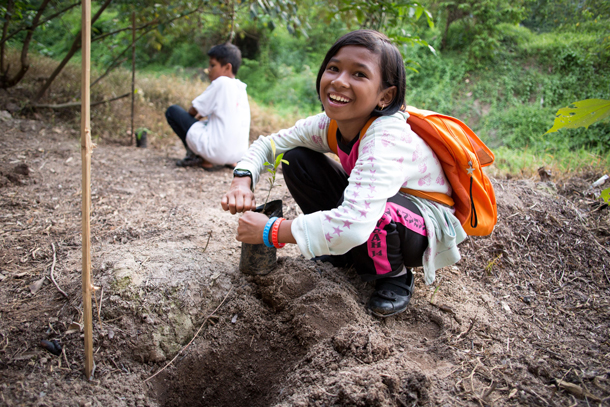
webb-young-girl-plants-seedling
Photo: Chelsea Call
A young girl plants a seedling at the ASRI clinic in Gunung Palung National Park in Borneo, where a nonprofit enables patients to pay for medical care without resorting to illegal logging.

The radio show “Living on Earth,’ Public Radio International’s environmental news magazine, is a great source of stories about nature, climate change, and ecological initiatives worldwide. In this episode, we learn that medical costs in Borneo were the main reason that communities were illegally cutting down trees. And we see how one visionary addressed the danger to the rainforest by first asking the local community what needed to be done.

“Gunung Palung National Park on the island of Borneo is home to diverse species found nowhere else, and beloved by the people who live on the Indonesian island. But like many people who live near tropical forests, they have at times had to resort to illegal logging to pay for healthcare. Now the nonprofit Health in Harmony is providing healthcare that patients can pay for with a simple trade of labor, seedlings or manure, so that no one ever has to log to pay cash for essential health services. Founder Kinari Webb and Host Bobby Bascomb discuss the importance of listening to what forest communities say they need in order to stop logging.

“BASCOMB: The rainforests of Borneo are some of the oldest tropical forests in world, roughly 130,000 years old. And because they evolved on an isolated island the forests are teeming with endemic species found nowhere else on earth. From highly endangered orangutans, tigers, and rhinos to pygmy elephants just five feet tall.

“Borneo’s Gunung Palung National Park is a critical habitat for many of the island’s endangered species and a huge carbon sink – crucial in our fight against climate change. The rainforest was also being deforested at an alarming rate when Kinari Webb first visited in the early 90’s. Kinari was a student at the time, but she was so alarmed by the deforestation she saw that she went on to found the nonprofit Health in Harmony, which aims to keep the forest healthy by keeping people healthy. …

“WEBB: I first went to Borneo when I was an undergraduate. I took a year off and spent a year deep in the rainforest studying orangutans. And Gunung Palung National Park is considered the jewel in the crown of all the Indonesian national parks. … There’s a lot of people who live right around the park, about 60,000 people. They love the forest as well. …

“They want it to be there for future generations. But the logging was rampant, it was completely out of control. … I was just so angry at these people. But then I realized, and I talked to many of them, and what they told me was, you know, if my child is sick, or my family member is sick, I have no choice and it’s one of the only ways to get cash. … One medical emergency can cost an entire year’s income. …

“That just broke my heart. How can that be? And how can we be allowing that to be? So I ended up going to medical school and returning to Indonesia so that I could try to work on this intersection between human and environmental health.

“BASCOMB: You call it radical listening, the way that you discovered what these people need and how to help them. Can you tell me more? …

WEBB: We actually do what people say. And that is wildly unusual in the way that development is done and conservation is done. … We ask them, what would you all need as a thank you from the world community so that you could actually protect this precious forest that you all are guardians of?

“And it was amazing because every single community and everywhere we’ve been, it’s been the same, that every community will independently come to a solution that is the same in a given region. So around Gunung Palung, it was we need access to healthcare, and we need training and organic farming. And if we have those things, we can stop logging. Now, I just, in the beginning, I just trusted on faith that they truly knew what the solutions were.

“But 10 years later, we had incredible data that showed a 90% drop in logging households; a stabilization of the loss of primary forest, which had been shrinking like crazy. We had a re-growth, actually, of 52,000 acres of forest, and we had a 67% drop in infant mortality. …

“BASCOMB: A lot of NGOs [nongovernmental organizations] will go to a community and say, Oh, you need a school, or you need a road. But if you actually stop and ask people, they might say, we need water. We need sanitation. …

“WEBB: We ended up providing a kind of simultaneous to the government healthcare system, when the government was struggling to get a system that was quite functional. And since then [2007] they have done a much, much better job. And we coordinate with them all the time, and I think that together, we have really made a great difference in these communities. And one of the heads of the Department of Health at one point said to me, he said, ‘You know, I didn’t even know it was possible to provide high quality health care in a remote area. It wasn’t even trying until I saw your clinic.’ ”

More at the Living on Earth radio show, here.

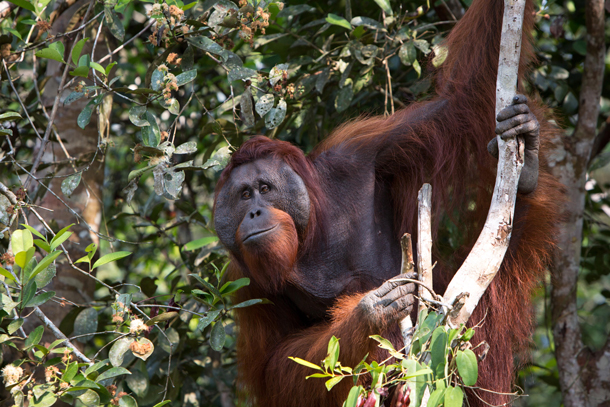
Photo: Chelsea Call
An orangutan in Indonesian Borneo. “Kinari Webb was studying orangutans in Borneo in the early 1990s when she found out that much of the logging there was done so locals could cover healthcare costs,” says
Living on Earth.

webb-orangutan

Read Full Post »

Photos: Greg Davis/OPB
Oregon State University doctoral student Hankyu Kim sets up a decoy of a hermit warbler. Songbird populations have been declining, and rising temperatures are one reason.

Nearly all birds are “canaries in the coal mine,” in the sense that when they’re in trouble from habitat destruction, rising temperatures, pollutants, and so on, they’re heralding trouble for all species, including the human one. For that reason, among many others, I love to hear of efforts to protect even one kind of bird.

Consider this story by reporter Jes Burns at National Public Radio (NPR).

“Each spring, songbirds migrate thousands of miles to breed in Oregon’s Cascade Mountains. Deep in a forest, Oregon State University researcher Hankyu Kim feels he has gotten inside the head of one species, the hermit warbler.

” ‘These birds are territorial in the breeding ground, they set up their territories, and they fight with each other to defend it,’ he says.

“Armed with this knowledge, a nearly invisible net strung between two repurposed fishing poles, a lifelike plastic warbler decoy and a looped recording of birdcalls, Kim’s trap is set. …

” ‘We have these long-term population monitoring routes across the Northwest. And a surprising number of species are declining,’ says Oregon State professor Matt Betts. ‘Actually, more than about half of the species that live in a forest like this are in decline.’

“Rising temperatures can shrink where some birds can live and where they can find food. For the hermit warbler, those declines are up to 4 percent each year.

“Research by Oregon State’s Betts and Sarah Frey found warblers declined in areas with young forests, including those replanted after clear-cut logging. But hermit warblers are doing better in other areas.

” ‘In landscapes that had more older forest, their population declines were lowered, or even reversed, even though the climate has been warming,’ Frey says.

“The Pacific Northwest has had a decades-long push to preserve its old-growth forests, and the warblers thrived in them. That suggests these forests somehow shielded them from the ill effects of rising temperatures. The question is why, and that is where this new study comes in.

“Kim and fellow Oregon State researcher Adam Hadley move the trapped hermit warbler’s feathers aside and attach a tiny radio tag to its back using nontoxic glue (the kind used for fake eyelashes). Then they release the bird, and it flies away. …

“They walk down a drainage though a 50-year-old tree plantation, a remnant of the logging past at the H.J. Andrews Experimental Forest. Then they cross into a grove of much older trees, some close to 300 years old.

“Hadley explains that the temperatures can be different at various heights of a tree. ‘It’s possible that when it’s warmer, [songbirds] may be only using the bottom and more shady parts of the trees,’ he says. He guesses they may move up higher when it becomes cooler.

“He says the complex layers and sheer biomass of old-growth keeps the temperature in these forests up to 5 degrees lower. But the researchers can’t fully understand what’s going on without knowing more about how the birds use the forests. …

“Hadley waves the antenna through the air trying to pinpoint the warbler’s location. … He and the others will compare the hermit warblers’ movements with temperature data they’ve also been gathering. They hope to get another step closer to understanding how this native songbird species might cope with the warming climate.”

More. This seems like an extra reason to protect old-growth forests, not just replant after logging. But how long will five degrees cooler be enough?

Kim, do you know about this? And are you seeing these warblers at your banding station?

Oregon State scientists are tagging and tracking hermit warblers in hopes of learning why their numbers have stabilized in places with old-growth forests, despite declines in other areas.

Read Full Post »

The radio show Living on Earth recently reported how negotiations among environmental activists, the timber industry, indigenous people, and the British Columbia government protected 85 percent of a huge Canadian forest.

“Eighty-five percent of the Great Bear Rainforest in British Columbia is now protected … Steve Curwood discusses [the compromise] with reporter Andrew MacLeod of the magazine The Tyee, who explains what’s been protected and what’s open for logging.

MACLEOD: “It’s an area of 6.5 million hectares between the top end of Vancouver Island and the Alaska Panhandle. So it’s an area, about the size of Ireland, and it’s quite remote. There are only about 1,400 people who live there. So much of it has never been logged. This is usually described as the largest intact temperate rainforest in the world, a very lush, mossy, moist year-round ecosystem. … We’re talking trees that five or six people put their arms around. Some of these cedars can be in 20 feet in diameter …

CURWOOD: “Tell me what is the [forest’s] Spirit bear?

MCLEOD: “They are a subspecies of black bear. They are a genetic variant that comes out white, so it’s a white black bear. There are also Grizzly bears there, there are whales, wolves, and just a relatively pristine ecosystem up there.

CURWOOD: “And who calls them Spirit bears? …

MACLEOD: “My understanding is that it goes back through the First Nations, there have always been these genetic variant bears there and they’re seen as special.”

When Curwood asks why the timber industry agreed to the negotiation, MacLeod explains that the campaign to protect the forest helped to avoid extended confrontation.

“Lots of First Nations people will tell you they’ve been on the land for thousands and thousands and thousands of years and it’s been sustainable, it’s been healthy, that it’s really only last 150 years of colonialism where you’ve seen clear-cuts and destruction and species driven to extinction. On the other hand, there are lots of people from First Nations who are working in the logging industry today as well. Over time, First Nations have sort of reestablished their rights. There have been some precedent-setting cases just in the last few years that have recognized aboriginal title does exist.” More here.

Of possible interest: Read how Wabanaki diplomacy smoothed a similar negotiation process in Maine, here.

Photo:  Elsen Poulsen/Animals Asia, Flickr CC BY-NC 2.0
A white Spirit bear fishing

Read Full Post »