Feeds:
Posts
Comments

Posts Tagged ‘memory’

Even when I take my walk in the house on a bad day in winter, I find that walking helps me think. My pace indoors or out is not very energetic, but I like that all sorts of ideas and memories pop into my head as I walk.

At the NY Times blog called “Well,” Gretchen Reynolds describes new research that ties walking to creativity.

“A brief stroll, even around your office, can significantly increase creativity, according to a handy new study. Most of us have heard by now that exercise, including walking, generally improves thinking skills, both immediately and in the longer term. …

“Similarly, exercise has long been linked anecdotally to creativity. For millenniums, writers and artists have said that they develop their best ideas during a walk …

“Researchers at Stanford University recently decided to test that possibility, inspired, in part, by their own strolls. ‘My adviser and I would go for walks’ to discuss thesis topics, said Marily Oppezzo, at the time a graduate student at Stanford. ‘And one day I thought: “Well, what about this? What about walking and whether it really has an effect on creativity?” ‘

“With the enthusiastic support of her adviser, Daniel Schwartz, a professor in the Stanford Graduate School of Education, Dr. Oppezzo [gathered] her volunteers in a deliberately dull, unadorned room equipped with only a desk and (somewhat unusually) a treadmill, Dr. Oppezzo asked the students to sit and complete tests of creativity … Then the participants walked on the treadmill, at an easy, self-selected pace that felt comfortable. The treadmill faced a blank wall. While walking, each student repeated the creativity tests, which required about eight minutes.

“For almost every student, creativity increased substantially when they walked.”

The study was published this month in the Journal of Experimental Psychology: Learning, Memory, and Cognition.

 More here, where Reynolds notes that there was no difference when the volunteers walked outdoors instead of on a treadmill.

Embed from Getty Images

Read Full Post »

OLYMPUS DIGITAL CAMERAYou never know what you’ll find at Andrew Sullivan’s blog.

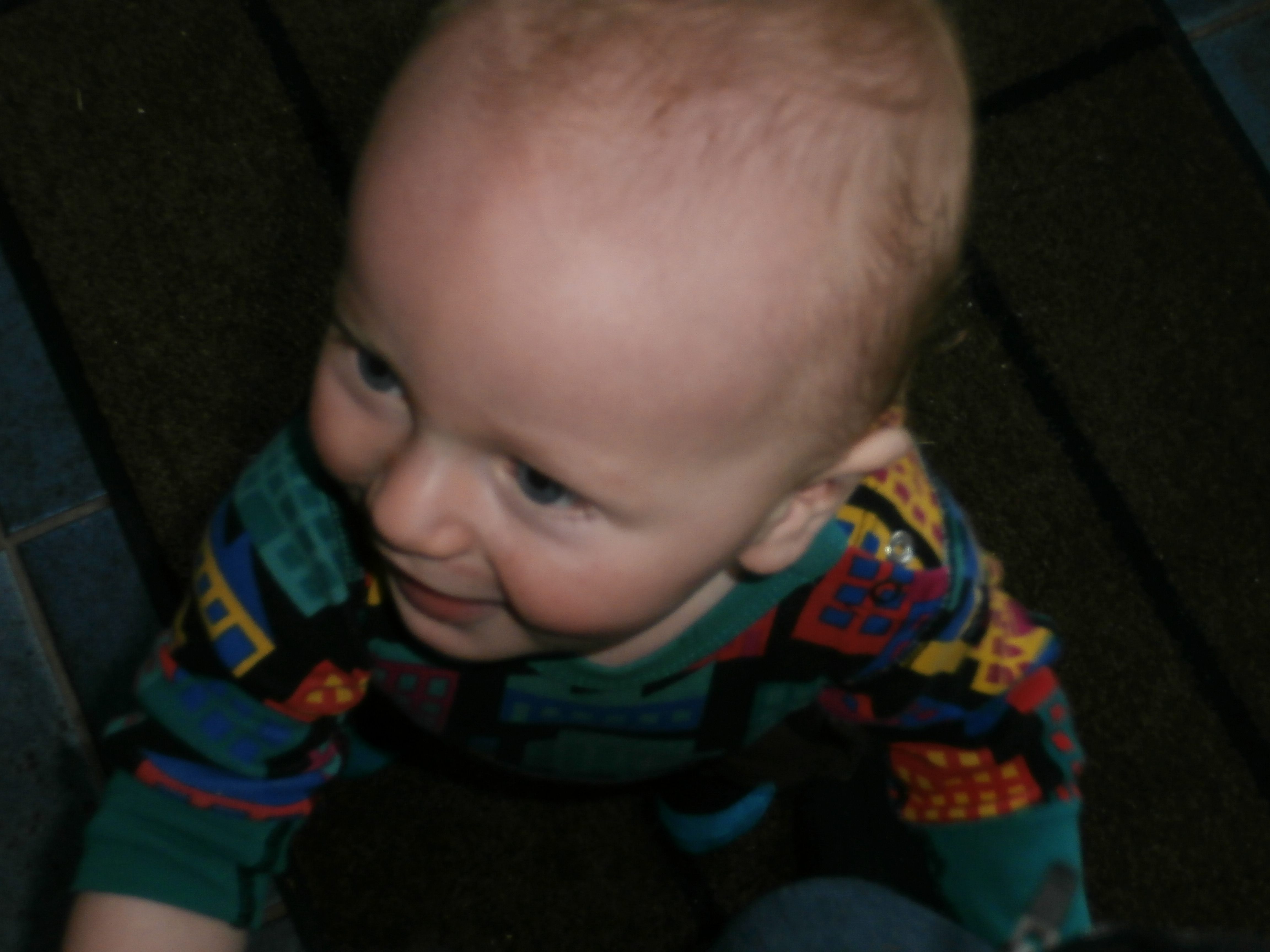
Today he notes research on the memory of toddlers. A new study has demonstrated that three-year-olds have memories of  seeing someone once, back when they were one.

Danish researcher Osman “Kingo and his team first renewed contact with parents and their children who’d taken part in an earlier study when the children were age one. That earlier research involved the infant children interacting with one of two researchers for 45 minutes – either a Scandinavian-Caucasian man or a Scandinavian-African man.

“Now two years on, 50 of these parents and children – the latter now aged three – were invited back to the exact same lab (hopefully cueing their earlier memories). Here the children were shown two simultaneous 45-second videos side by side. One video was a recording of the researcher – either the Scandinavian-Caucasian or Scandinavian-African man – interacting with them two years earlier; the other video showed the other researcher (the one they hadn’t met) interacting with a different child in the exact same way. …

“The children spent significantly more time looking at the video that featured the researcher they’d never met. … This result provides strong evidence that the children had some recognition of the researcher they’d met, and were drawn more strongly to look at the unfamiliar researcher.”

More at Andrew Sullivan, here, and at Research Digest at the British Psychological Society, here.

I am especially delighted that there’s a bit of proof for what I have long insisted was true. (No one ever believes that I remember taking my first steps.)

Read Full Post »

I grew up with stories about elephant memories and how elephants held grudges. “If you give an elephant a stone instead of a peanut when you are little, he’ll get even next time he sees you, even years later.”

Now Megan Garber at The Atlantic says dolphins’ memories top all other animals’.

“Dolphins, it turns out, have the longest social memories of any species besides humans. And we’re learning more and more about how lengthy those memories can actually be.

“The researcher Jason Bruck, a biologist at the University of Chicago, wanted to test whether bottlenose dolphins in particular can, indeed, remember each other after a long stretch of separation. So he took advantage of something else about dolphins: the fact that they seem to have something like names. Sometime between their first 4 months and their first year of life, dolphins will develop a distinct whistle — one that will remain the same for the rest of its life. According to research published last month in the Proceedings of the National Academy of Sciences, dolphins use these whistles in pretty much the same way we humans use names: as ways both to identify themselves and to call each other. …

“While it’s unclear what his findings might mean about dolphins’ memories overall — he was testing name recognition, not circumstantial or emotional memories — there’s some reason to think that dolphins’ memories stretch beyond rote recognition itself.

“In tests that broadcast the signature whistles of ‘extremely dominant males,’ for example, Bruck found that females responded with ‘exceptional interest.’

” ‘There was also a lot of posturing from the males,’ Bruck noted. And ‘some young ones would just go ballistic.’

“In other words, dolphins may well have the capacity for relatively complex memories — memories that associate individuals with actions.”

Read all about it here.

Photo: eZeePics Studio/Shutterstock

Read Full Post »

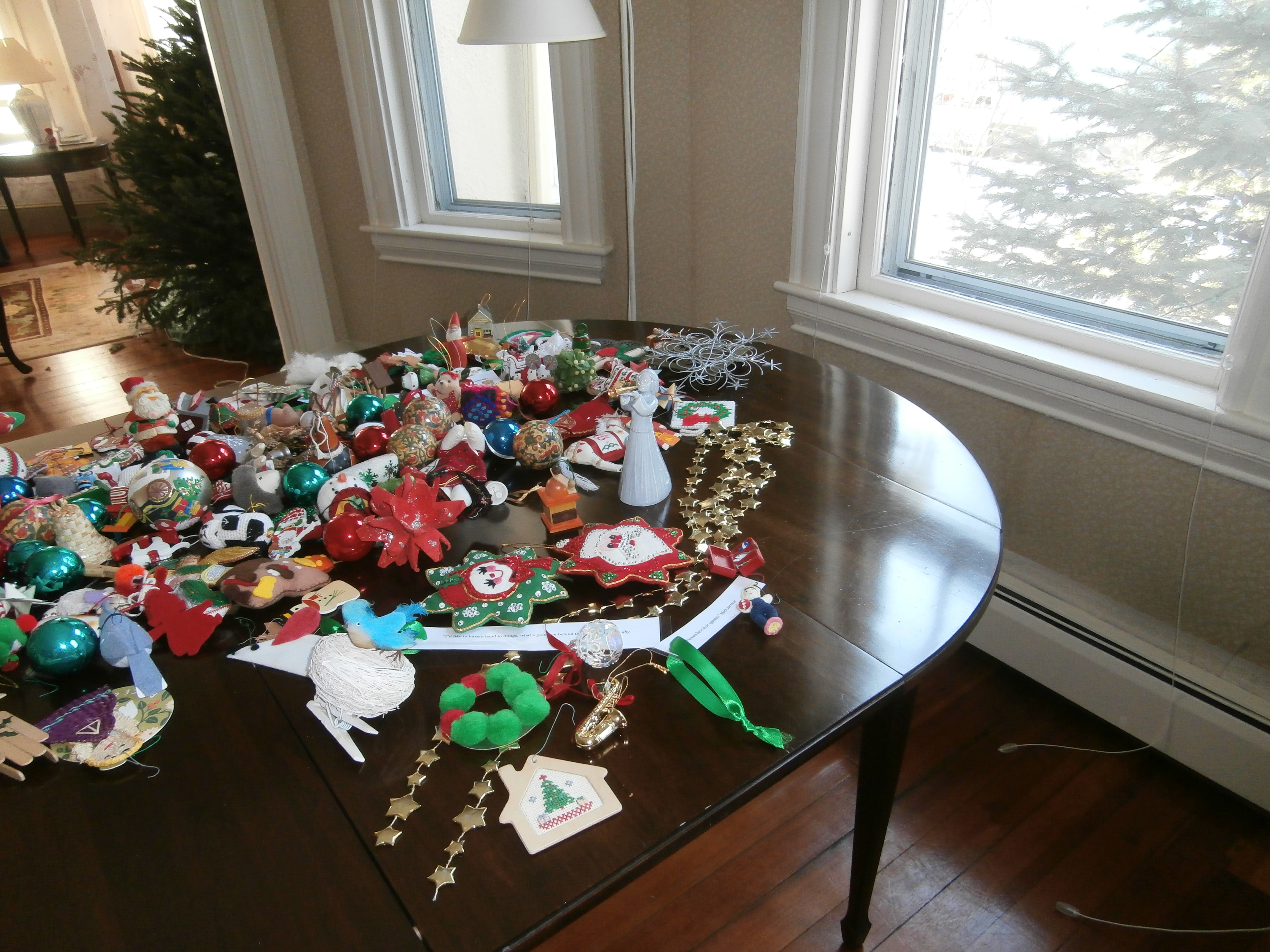
When I take down the tree, I like to allow myself time.

Time to unroll the strings of lights and re-roll them in tissue paper. Time to lift off the sparkly cobwebs of tinsel and store them in a basket for another day.

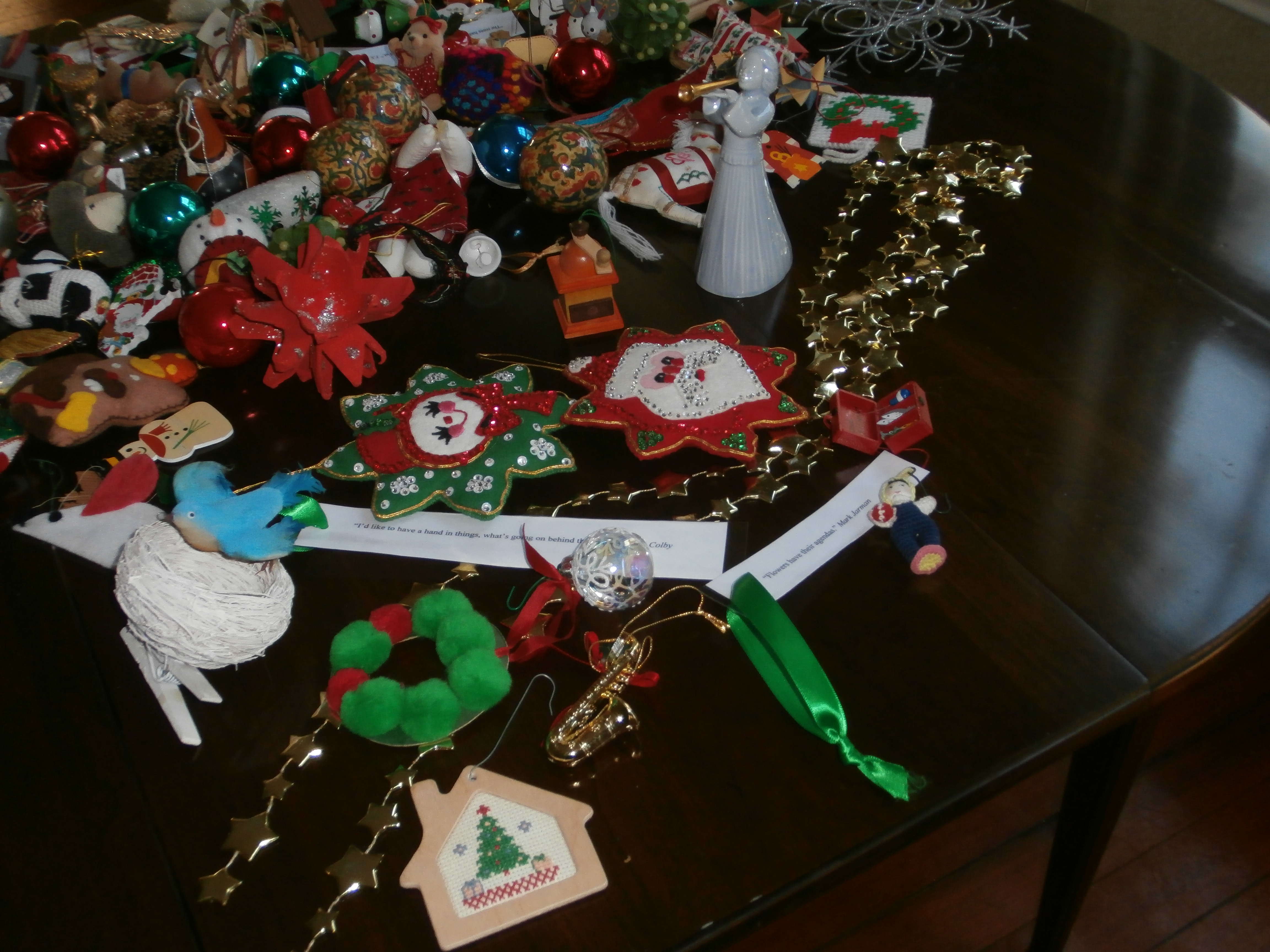
Time for the ornaments, nearly every one eliciting a memory of something.

The small wreath of green and red puff balls that Suzanne made in the First Parish craft workshop (attended by nearly every kid in town, regardless of religion). The cross-stitch embroidery John made with hardly any help at age 3 or 4. The fishing tackle box and the saxophone representing past interests. The smiley felt-and-sequin jobs that 90-something Aunt Mae kept secret until Christmas. The coffee grinder for my husband. The goofy red ornament that I made from egg cartons when I was first married. The bird-in-a-nest that is supposed to bring good luck. The Chinese doll I got at Niagara-on-the-Lake the year we took turns babysitting the kids in order to see shows at the G.B. Shaw festival. The frosty ball from DeAnna’s winter wedding. And my new “tradition,” quotations hung on a ribbon.

I am the only person who remembers the things I remember exactly the way I remember them; you are the only person who remembers the things you remember exactly the way you remember them.

taking the tree down

ornaments

Read Full Post »

I tend to think that our creativity comes from our memories, because no one who has ever been or ever will be has exactly the same collection of memories bouncing off one another in exactly the same way.

A recent NY Times science story on a successful artist who got viral encephalitis — and suffered damage to the part of the brain where memories form — doesn’t exactly contradict that view, but it sure raises a lot of questions.

“She is still able to make art, though it is simpler and more childlike than her professional work. Her case is rare, experts say, because few accomplished artists continue to create after sustaining severe brain damage.

“Now scientists at Johns Hopkins University hope Ms. Johnson can help them answer longstanding questions: What parts of the brain are needed for creativity? With little access to one’s life experience, how does an artist create?

“And as Michael McCloskey, a professor of cognitive science at Hopkins, put it, Ms. Johnson’s case ‘raises interesting questions about identity: Here you’ve lost an awful lot of what makes you who you are — what’s left for art?’ ” Read about her.

Although the artist doesn’t seem sad, I think it’s sad to lose memories. I want to keep mine — the bad with the good.

Enjoy this amazing Moray McLaren video about memory, called with irony “We Got Time.”

“Time is a memory
“And memories can make you sad
“With time still in front of me
“Oh we can get it back”

Read Full Post »

« Newer Posts