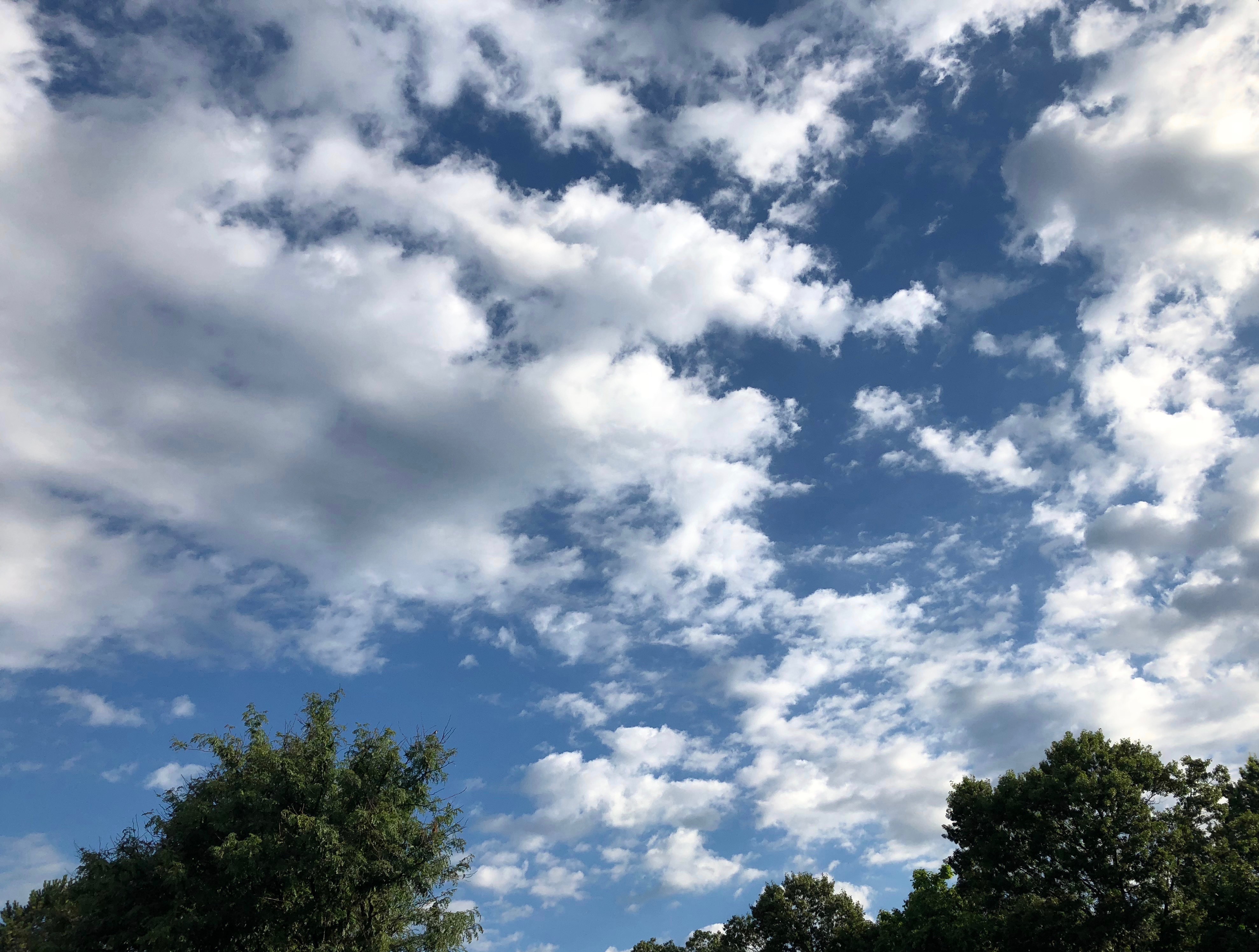
Photo: John and Suzanne’s Mom.
As everyone knows, it’s hard to avoid plastic. The other day I found on the floor tiny pieces of one of those mesh bags that oranges often come in. I may be overthinking everything, but I was stumped about how to dispose of it. If I flush it, it goes into our water system. If I put it out for the landfill, the result is ultimately the same. And now we’re hearing that plastic particles are even getting into the clouds.
Nicola Jones writes at YaleEnvironment360, “Plastic has become an obvious pollutant over recent decades, choking turtles and seabirds, clogging up our landfills and waterways. But in just the past few years, a less-obvious problem has emerged. Researchers are starting to get concerned about how tiny bits of plastic in the air, lofted into the skies from seafoam bubbles or spinning tires on the highway, might potentially change our future climate.
“ ‘Here’s something that people just didn’t think about — another aspect of plastic pollution,’ says environmental analytical chemist Denise Mitrano of ETH Zürich University, in Switzerland, who co-wrote an article last November highlighting what researchers know — and don’t yet know — about how plastics can change clouds, potentially altering temperature and rainfall patterns.
“Clouds form when water or ice condenses on ‘seeds’ in the air: usually tiny particles of dust, salt, sand, soot, or other material thrown up by burning fossil fuels, forest fires, cooking, or volcanoes. There are plenty of these fine particles, or aerosols, in the skies. …
“Until recently, when chemists thought of the gunk in our air, plastics did not leap to mind. Concentrations were low, they thought, and plastic is often designed to be water repellent for applications like bags or clothing, which presumably made them unlikely to seed cloud droplets. But in recent years, studies have confirmed not only that microscopic pieces of plastic can seed clouds — sometimes powerfully — but they also travel thousands of miles from their source. And there are a lot more particles in the air than scientists originally thought. …
“ ‘The people who invented plastics all those decades ago, who were very proud of inventions that transformed society in many ways — I doubt they envisaged that plastics were going to end up floating around in the atmosphere and potentially influencing the global climate system,’ says Laura Revell, an atmospheric scientist at the University of Canterbury in New Zealand. …
“Global annual production of plastics has skyrocketed from 2 million tons in 1950 to more than 450 million tons today. And despite growing concerns about this waste accumulating in the environment, production is ramping up rather than slowing down — some oil companies are building up their plastic production capacity as the demand for fossil fuel declines. To date, more than 9 billion tons of plastic has been produced, and about half of it has gone to landfills or been otherwise discarded. Some project that by 2025, 11 billion tons of plastic will have accumulated in the environment. …
“In recent years, several studies have suggested that microplastics (pieces less than 5 millimeters in length) and nanoplastics (smaller than approximately 1,000 nanometers) were being transported long distances through the air. In 2019, for example, researchers found microplastics in the Pyrenees that had arrived via rain or snowfall. In 2020, Janice Brahney of Utah State University and four coauthors published a high-profile Science paper revealing high amounts of plastic in federally protected areas of the United States. …
“Brahney’s extensive U.S. dataset also opened the door for modelers to figure out where, exactly, all this plastic was coming from. ‘It’s a really beautiful data set,’ says Cornell University’s Natalie Mahowald, who did the modeling work.
“Mahowald took the plastic concentrations Brahney had cataloged and mapped them against atmospheric patterns and known sources of plastics, including roads, agricultural dust, and oceans. On roadways, tires and brakes hurl microplastics into the air. Plastic winds up in agricultural dust, notes Mahowald, in part from plastics used on farm fields and in part because people toss fleece clothing into washing machines: the wastewater flows to treatment plants that separate solids from liquids, and about half the resulting biosolids get sent to farms for use as fertilizer. As for the ocean, Mahowald says, big globs of plastic in places like the Pacific Gyre degrade into microscopic pieces, which then float to the surface and are whipped up into the air by chopping waters and bursting air bubbles. …
“Exactly how aerosols affect climate has been a critical sticking point in climate models, and many of the details are still unknown. Different aerosols can change the climate by either reflecting or absorbing sunlight, which can depend, in part, on their color. Black soot, for example, tends to have a warming effect, while salt reflects and cools. Aerosols can land on the ground and change the albedo, or reflectivity, of ice and snow.
“Aerosols also affect cloud formation: different bits and pieces can seed more and smaller droplets of water or ice, making for different types of clouds at different elevations that last for different amounts of time. High-altitude, thin, icy clouds tend to warm the Earth’s surface like a blanket, while low-altitude, bright and fluffy clouds tend to reflect sunlight and cool the Earth.”
More at YaleEnvironment360, here. Rebecca of Fake Flamenco was speculating not long ago about clouds and whether they have started looking different. Do 20th century cloud photos from your region look different from those taken recently?

 Suzanne's Mom's Blog