Feeds:
Posts
Comments

Posts Tagged ‘monitor’

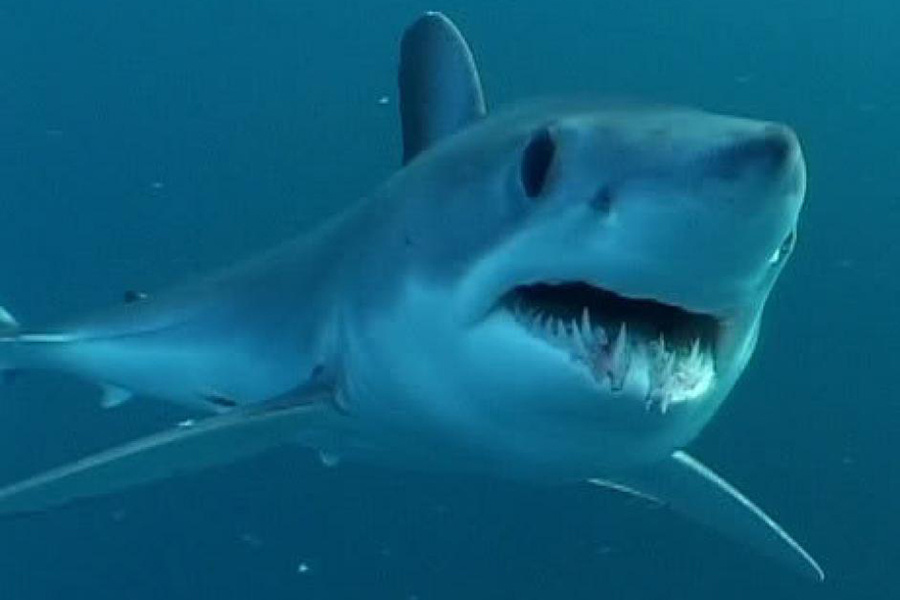
Photo: NOAA Fisheries.
Mako sharks are part of a study involving acoustic tags.

You have to move fast to get a tag on a shark, and you have to throw the shark back, even if you’re not done, if it starts showing any sign of weakness. Frank Carini has the story at ecoRI News.

“A South Kingstown-based nonprofit co-founded by a lifelong Rhode Islander [attaches tags to sharks].

Jon Dodd, the Atlantic Shark Institute’s executive director, said getting an acoustic tag, or any tag, for that matter, onto a shark works like a ‘NASCAR pit stop.’ A crew of four, sometimes six, has a maximum of 12 minutes to get a tag attached and take a blood sample and measurements. If a sharks begins to look lethargic, Dodd said the animal is immediately placed back in the sea, even if all the data hasn’t been collected or the tag fastened.

“A hose is put in the shark’s mouth to flush salt water through its gills, and a towel is often placed over the eyes to keep the animal calm.

“The Atlantic Shark Institute, an all-volunteer nonprofit, partners with other shark scientists and researchers, which allows collaboration to play a critical role in the research, management, and conservation of large predatory sharks in the northwest Atlantic Ocean, according to Dodd.

“ ‘We have to spend wisely to advance science,’ he said. The institute’s budget gets a helping hand from 20 local boat captains who provide their vessels and fuel free of charge for tagging research.

“Dodd noted tagging allows researchers and scientists to track where sharks go and when. … Given the vulnerability of most of the shark species they are tagging, studying, and tracking, Dodd said, they abide by strict protocols regarding the way the sharks are handled when they are being caught, tagged, and measured. He noted that traditional J hooks, which can fatally puncture an organ, have been replaced by circle hooks, which are more likely to lodge in the corner of a shark’s jaw, making removal easier. Fishery regulations also require hooks to be composed of corrodible metals which, unlike stainless steel, degrade faster and increase the chance of a shark’s survival if a hook can’t be removed.

“The type of tag used is determined by the species caught and the study being conducted, according to Dodd.

“The least expensive are national fisheries tags — an index card in a plastic tube attached to the base of the dorsal fin. These cards are provided by NOAA Fisheries for free. A shark swims around and ‘if somebody caught it someday, they say please unscrew the cap and the card rolls out and it says please call the National Fishery Service and tell us where you caught this shark, what size it was, et cetera.’ …

“Acoustic tags, which cost $425 and last about a decade, track a shark’s movement via signals picked up by acoustic receivers, which cost $2,500 each, that have been placed up and down the East Coast. Both the Atlantic Shark Institute and the Rhode Island Department of Environmental Management have placed receivers in local waters.

“Pop-up satellite archival tags — each with a price tag of up to $4,000 — provide even more detailed data beyond location, such as water depth and temperature. They last about two years before the battery dies and the tag corrodes and falls off the shark. …

“The Atlantic Shark Institute’s … mission, and that of its science partners, is ‘to do the highest quality shark research to help manage and conserve these magnificent animals.’ …

“During a recent conversation with ecoRI News, Dodd often used the words ‘beautiful’ or ‘awesome’ to describe a shark species — well, maybe not spiny dogfish.

“Dodd has spent much of the past 45 years, even while working full-time in a totally different field, thinking about, learning about, and studying sharks. He has caught, released, and tagged some 1,000 sharks for various research projects during the past four-plus decades. …

“ ‘When I saw my first shark, I was fascinated, and it just kept rolling,’ Dodd said. ‘But it quickly went from fascination to concern. It was just this realization that Man will take a lot of things out of an ecosystem, and it didn’t feel right.’

“His concern about the species grew during the 1980s and ’90s, especially as he watched the popularity of shark tournaments grow, the number massacred for their fins increase, and the amount killed in bycatch rise.

“ ‘We take over 100 million out of the ocean every year. It’s just too many,’ said the 62-year-old Dodd. ‘And the big problem is that a lot of these sharks are very slow growing and slow maturing. I’ll give you a perfect example. … It takes the female great white 33 years before she’s sexually mature. So we’re talking right now and it’s March 21, 2024, so if a white shark is born while we’re chatting that shark will finally reproduce when I’m 95 years old.

“ ‘For the first time she can finally replace herself, but what’s the chance that her pup [litter sizes range from 4-12 individuals] survives? A lot of things can eat you, you can bite the wrong hook, you can sit on a longline and die because you’ll basically suffocate. You can get dragged up somewhere. You can get caught by a recreational guy that poses with it too long and kills it. What’s the chance that you survived 33 years so you can reproduce?’ …

“Since 1975 the world’s shark populations have declined by 71%, according to the Save Our Seas Foundation. It’s a disturbing trend that Dodd said has major implications beyond the marine environment.

“He likes to tell people, ‘Shark health is ocean health and ocean health is our health. Sharks are the apex predator, and they regulate everything underneath them.’ “

More at ecoRI News, here. No firewall.
Read Full Post »

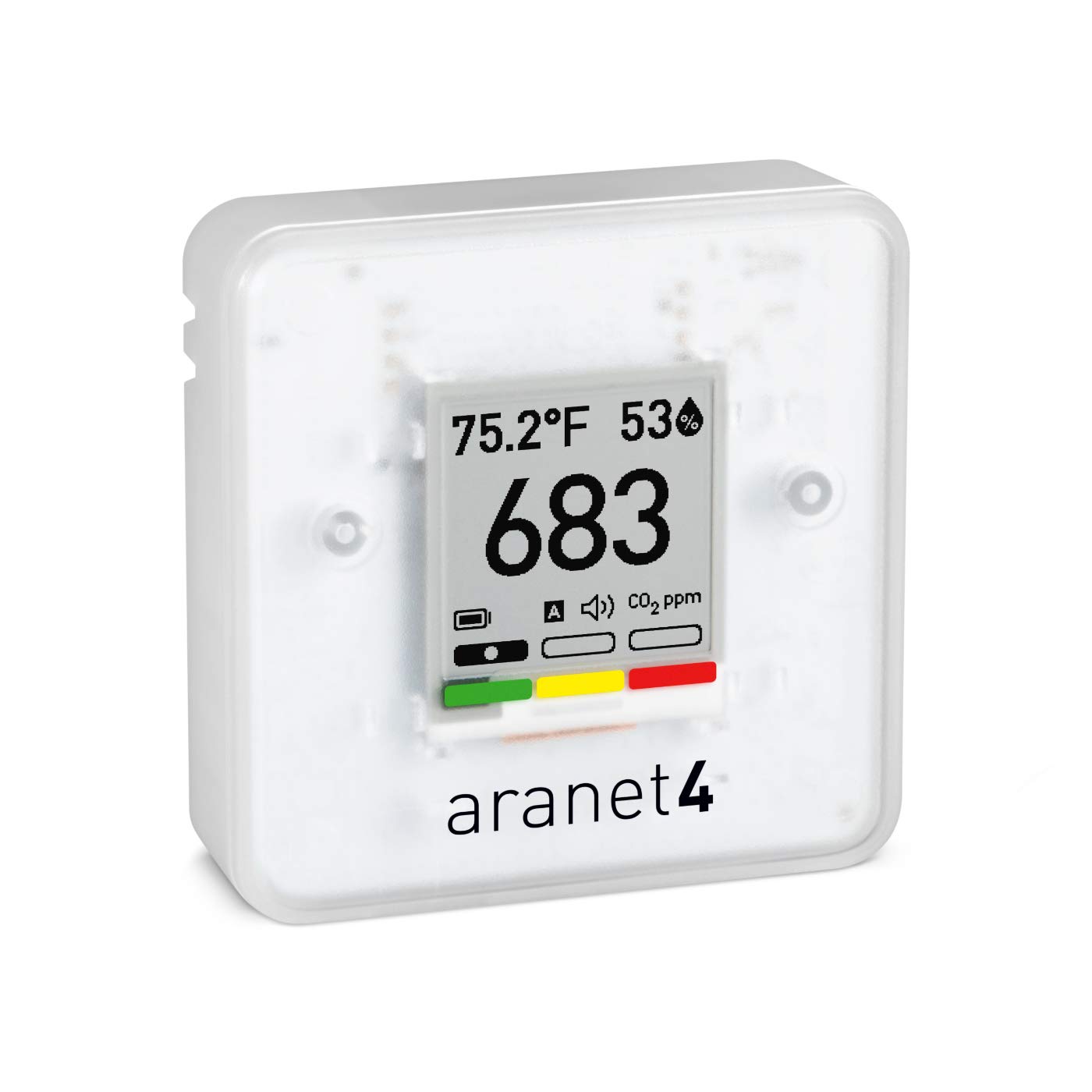
Ad from a gadget company: SAF Aranet4 Home: Wireless Indoor Air Quality Monitor for Home, Office or School [CO2, Temperature, Humidity and More] Portable, Battery Powered.”

Trust anxious parents to come up with an extra level of protection for their school-age children! Something different is going in lunch boxes now.

Emily Anthes reports at the New York Times, “When Lizzie Rothwell, an architect in Philadelphia, sent her son to third grade this fall, she stocked his blue L.L. Bean backpack with pencils, wide-ruled paper — and a portable carbon dioxide monitor.

“The device gave her a quick way to assess how much fresh air was flowing through the school. Low levels of CO2 would indicate that it was well-ventilated, reducing her son’s odds of catching the coronavirus.

“But she quickly discovered that during lunch, CO2 levels in the cafeteria rose to nearly double those recommended by Centers for Disease Control and Prevention. She shared what she’d learned with the principal and asked if students could eat outside instead.

“ ‘He expressed surprise that I had any data at all,’ she said.

“Ms. Rothwell is one of a growing number of parents who are sneaking CO2 monitors into schools in a clandestine effort to make sure their children’s classrooms are safe. Aranet, which makes a monitor popular with parents, says orders have doubled since the new school year began.

“Some school systems have made the monitors part of their official pandemic precautions. New York City has distributed the devices to every public school, and the British government has announced plans to do likewise.

“But elsewhere, parents are taking matters into their own hands, sneaking in the monitors — which can cost a hundred dollars or more — in their children’s backpacks or pants pockets.

“Although the devices, which can be set to take readings every few minutes, work best when exposed to the open air, they can generate informative data as long as they are not completely sealed away, said Dr. Alex Huffman, an aerosol scientist [who] has sent the monitors to school with his children. …

“Some school officials have frowned upon these guerrilla air-monitoring efforts, but parents say the devices have armed them with data to advocate for their children. …

“The coronavirus spreads through tiny, airborne droplets known as aerosols. Improving indoor ventilation reduces the concentration of these aerosols and the risk of infection in an indoor space, but there is no easy way for members of the public to measure the ventilation rate — let alone the accumulation of viral aerosols — in shared spaces.

“ ‘Ideally there’d be some machine that cost $100 and it starts beeping if the virus is in the air,’ said Jose-Luis Jimenez, an aerosol scientist at the University of Colorado Boulder, who is sending a carbon dioxide monitor to school with his son. But in the absence of such a device, he said, ‘CO2 is something that provides an affordable and very meaningful shortcut.’

Every time we exhale, we expel not just aerosols but also carbon dioxide; the worse the ventilation, the more carbon dioxide builds up in an occupied room. …

“Jeanne Norris, who lives in the St. Louis area, said that she bought her monitor after losing confidence in officials in her son’s school district.

“ ‘They just hadn’t been very transparent about their ventilation,’ she said. ‘They say that it’s fine and that they did their own testing but then they wouldn’t share that data with me.’

“Ms. Norris and her husband are both science teachers, and so far their data suggest that the ventilation is excellent in both of their classrooms. But CO2 levels in her son’s classroom sometimes surpass 1300 parts per million. The C.D.C. recommends that indoor carbon dioxide levels remain below 800 p.p.m. After she collects more data, she plans to take her findings to school officials and ask them to improve the ventilation. …

“Some parents have gotten results. When Jeremy Chrysler, of Conway, Ark., sent a monitor in with his 13-year-old daughter, this fall, the CO2 readings were a sky-high 4,000 p.p.m.

“He brought his findings to district officials, who discovered that two components of the school’s HVAC system were not working properly. After the units were fixed, CO2 levels plummeted.

“ ‘What my measurements showed was, hey, measuring CO2 can identify problems and sometimes those problems are easy to fix,’ he said.”

More at the Times, here.

Wish I had one of these monitors the other day when I was worried enough about air quality to risk asking someone if she was vaccinated!

Read Full Post »

061817-new-shoreham-bluffs


On the principle that “one and one and 50 make a million,” a better world relies on everybody pitching in. Ordinary people can help scientists and other leaders of worthy initiatives.

Lisa Mullins and Lynn Jolicoeur report at WBUR on one example.

“It’s a cloudy, cool July morning, and we’ve come to the docks at Fairhaven Shipyard, near New Bedford, to meet Chris Parks. She’s a tall, elegant, retired Boston banker in jeans and a sweatshirt.

“Parks is a volunteer with the Buzzards Bay Coalition. Residents formed the group 30 years ago to help the struggling bay.

“She’s got a plastic bottle attached to a long metal pole. She submerges it and fills it with sea water. Then she pulls out her tool box full of vials and chemicals. She mixes and measures.

“Parks determines the water is pretty cool on this day — 67 degrees. … In addition to temperature and clarity, Parks tests the water for how much salt and oxygen are in it. She’s been coming to this dock, fastidiously, one or two mornings a week for 17 years.

” ‘I’m doing it because it’s one of the few things that I can do that is a tangible task towards helping the environment,’ Parks says. ‘It’s a little bit of science that helps tell us what’s going on in Buzzards Bay.’

“What’s going on is that the water is warming — and that may be contributing to long-lasting pollution problems in the bay.”

Buzzards Bay Coalition science director Rachel Jakuba says, ” ‘If you have too much algae in the water, that’s when you get cloudy, murky water, loss of eel grass, low oxygen levels that make it hard for fish and shellfish to survive … Bay scallops are very rare now because part of their life cycle depends on eel grass blades.’

“The Buzzards Bay Coalition is attacking that pollution aggressively. It’s working with homeowners to upgrade their septic systems with technology that reduces nitrogen. …

“Jakuba says as researchers figure out how global warming fits into the bay pollution picture, citizen scientists will be key.

“Mark Sweitzer, 68, is a citizen scientist and lobsterman based at Point Judith in Galilee, Rhode Island. …

“Six times a month while he’s catching lobster, Sweitzer lowers a device to the bottom of the ocean — about 200 feet. It tracks the temperature and other characteristics of the water at every depth, and it syncs the data to an iPad on board. …

” ‘I’m just happy to do it, because I feel like I’m providing some information — even though it might not have immediate effect on my boat, but in long-term trends in the fishery and how it might influence policy or regulations,’ Sweitzer says. …’

” The settlers — the tiny little ones that are four days old that have reached the bottom — there is a temperature at which they will not survive … and there are temperatures at which we have an influx of fish. Black sea bass used to be primarily a mid-Atlantic fish. And now … the black sea bass are down there gobbling up these little lobsters that don’t have much of a chance to make it in the first place.’ ”

Read how other fishermen are noticing ocean changes before scientists do and reporting back, here.

We have a friend who sets lobster pots off New Shoreham, Rhode Island. His catch has gone down steadily over the past few years, so I know there is a problem.

Photo: Mark Degon/WBUR
Lobsterman Mark Sweitzer works out of Point Judith, Rhode Island.

Read Full Post »