Feeds:
Posts
Comments

Posts Tagged ‘museums’

Photo: The Albertina.
Thousands of Taylor Swift fans flooded museums in Vienna in August after multiple institutions waived entry fees when security threats forced the cancellation of three concerts. Fans also traded bracelets with museum employees.

We’ve all seen the influence that singer Taylor Swift directly exercises over her fans. Indirectly, she has probably made some of them museum fans, too. That’s because museums in Vienna saw an opportunity when her concerts were cancelled.

Karen K. Ho reports at ArtNews, “Thousands of Taylor Swift fans flooded museums in Vienna [last August] after multiple institutions waived entry fees after three of the singer’s concerts were cancelled due to security threats.

“ ‘We weren’t really sure what to expect,’ Haus der Musik managing director Simon Posch told ARTnews.

‘The participating institutions were the Mozarthaus Vienna, House of Music, KunstHausWien and the Jewish Museum Vienna owned by the City of Vienna; MAK Vienna (Museum of Applied Arts) and MAK Geymüllerschlössel; the modern art museum Mumok, the art museum The Albertina, as well as the museum at the House of Strauss. The Museum quartier also offered Taylor Swift ticket holders free guided tours in English and German on August 10 and 11.

“The initiative was publicized through the Vienna Tourist Board and statements by the city’s mayor, Michael Ludwig, especially on social media.

“Several museum professionals in Vienna told ARTnews the slew of additional visitors were a pleasant surprise to their institutions. The demographics were mostly English-speaking young women, often between the ages of 18 to 25, traveling to the city from countries as far away as China, South Africa, Australia, Canada, and the United States. Many of them were also easily identifiable while wearing the singer’s concert merchandise, colorful outfits intended for the concert, and arms covered in friendship bracelets they intended to trade with other fans.

“The Albertina fully embraced the moment, waiving its [regular entrance fees] for more than 20,000 Swifties. … ‘On a normal and regular weekend, we would have, I would say 2,000 a day,’ spokesperson Nina Eisterer told ARTnews, noting that these types of visitor numbers are usually for blockbuster exhibitions like the one for Claude Monet in 2018.

“Eisterer said she and her colleagues in The Albertina’s marketing division were Swifties themselves, with several people planning to go to the concerts and personally devastated by the news of the cancellations. After the idea for waived entry fees was approved, the art museum’s security and ticketing teams were informed on August 6 that additional staff would be needed.

“The Albertina’s line for Swifties was so long that some fans stood outside in the sun and 91°F heat for approximately 20 minutes. ‘But there was no fuss about it,’ Eisterer said. ‘People were super nice.’

“The museum also switched the soundtracks playing its in 20 historical staterooms from classical music to Taylor Swift albums, prompting several large singalongs that went viral on TikTok.

“ ‘I love classical music, I love Mozart, I love Beethoven, I love all these classical artists, but it was really nice to have a Taylor Swift singalong more or less in the state rooms that normally stand for something else,’ Eisterer said. …

“Other institutions also saw an unexpected bump in activity. … Mozarthaus Vienna said they had 2,663 Swifties between August 9 and August 11, with additional staff called in on Saturday and Sunday. ‘Due to the large number of Swifties, guided tours in English were spontaneously added,’ spokesperson Jasmine Wolfram told ARTnews.

“Mumok’s head of press, Katharina Murschetz said 884 Taylor Swift fans stopped by. Eva Grundschober, the spokesperson for Capuchin’s Crypt said ‘exactly 500 Swifties’ used the option for the free ticket. And Josef Gaschnitz, the chief financial officer of the Jüdisches Museum der Stadt, said visitor numbers were ‘over 100% more’ compared to normal days. …

“Multiple people told ARTnews that social media played a major role in informing Swifties of the ‘super last-minute decision’ for the city’s offers and attracting them to the various museums. [Said] Posch, a self-professed Taylor Swift fan, ‘I think social media is the only way to reach this target group, because it didn’t help if the Austrian National Broadcasting System showed it in the evening news and they put it on their web page. None of these kids is going to visit the ORF home page.’ …

“ ‘We didn’t think about the money or the losing the money at all,’ Eisterer said, noting that its entry fees can be very expensive for young people. ‘It was, for us, important to set like a sign for this concert that had been canceled because of this horrible reason, and to give somehow a bit of hope and say to people, “Hey, we know it’s devastating. You can’t go to the concert, but hey, you can enjoy a bit of of art in Vienna, that’s what we can offer you.” ‘ …

“Some museums, like the Haus of Musik and The Albertina, also planned on extending the free entry offer to Swifties for one or two days beyond the weekend. ‘We will definitely still give them free access if they come with the Taylor Swift ticket,’ Posch said. ‘If they didn’t make it on the weekend and they’re still here, there’ll be no discussion, there’ll be our guests.’ “

More at ArtNews, here.

Read Full Post »

Photo: Julia Kochetova/The Guardian.
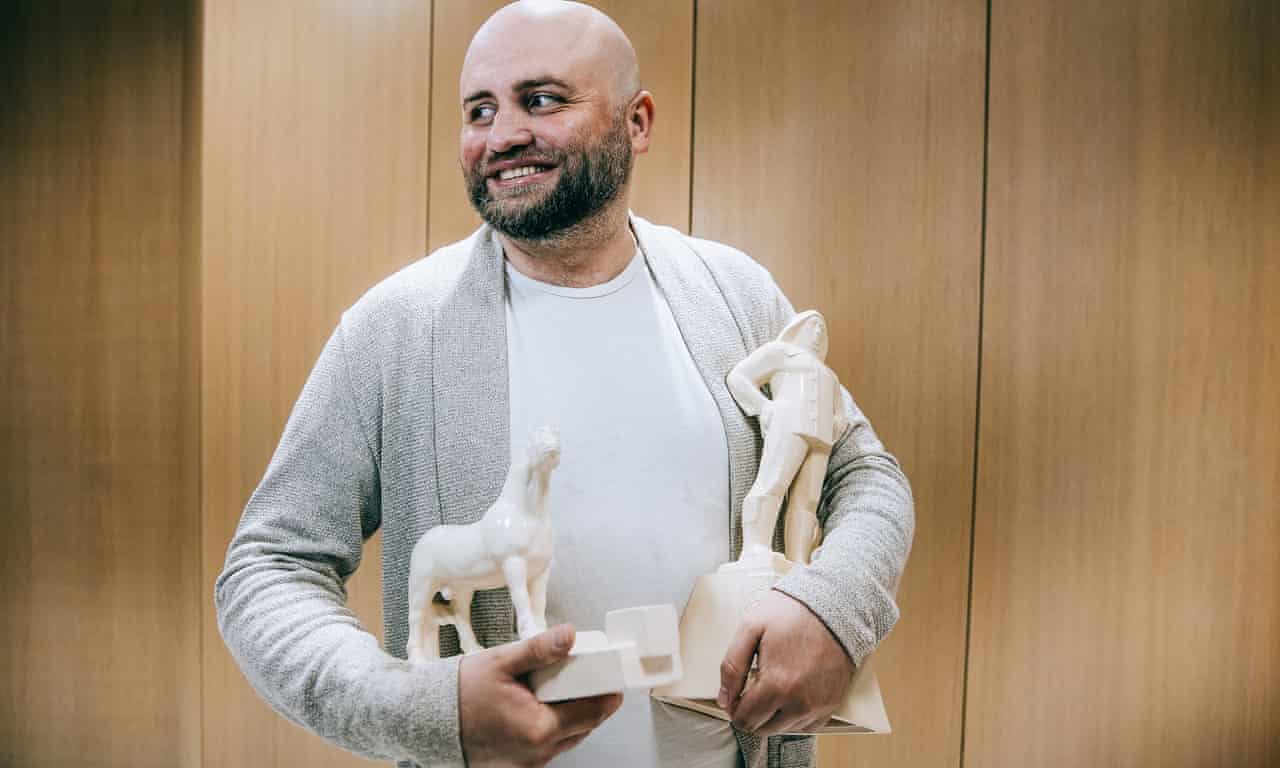
Leonid Marushchak with artworks from his private collection. He launched a death-defying rescue plan to help museums save Ukraine’s art from the invaders.  

You may know about the Monuments Men, charged by President Roosevelt with protecting cultural heritage during World War II. In Ukraine, after the Russian invasion, private individuals took on a similar task. One man especially.

At the Guardian, Charlotte Higgins has a fascinating piece about what historian Leonid Marushchak and his cohorts have accomplished.

“In early March 2022, when his country seemed in danger of falling to the Russians, it occurred to Leonid Marushchak, a historian by training, to call the director of a museum in eastern Ukraine to check that a collection of 20th-century studio pottery was safe.

“He had loved the modernist works by artist Natalya Maksymchenko since he had encountered them almost a decade earlier. There were vessels covered with bold abstract glazes in purple, scarlet and yellow; exuberant figurines of musicians and dancers with swirling skirts; dishes painted with birds in flight. The collection was the radiant highlight of the local history museum in Sloviansk, the ceramicist’s home town.

“It was remarkable that they were in this small museum at all. Though she was born in Ukraine in 1914 and studied in Kharkiv, Maksymchenko had lived the rest of her life in Russia. But, after her death in 1978, her family, fulfilling her wishes, oversaw the transfer of about 400 works from her studio in Moscow to the city of her birth. … Maksymchenko’s final gift to her home town and country seemed like a statement of defiance.

“Now, as the Russian army inched nearer and nearer to the museum, Marushchak worried that these works in delicate porcelain could be destroyed by a missile in a moment – or, if Sloviansk were occupied, taken by the invaders back to Moscow. Had the ceramics been prioritized for the first round of evacuations, Marushchak asked the museum director on the phone.

“ ‘Lyonya, what round?’ came the reply. ‘We still haven’t got the order to evacuate!’

“Marushchak phoned his friend Kateryna Chuyeva, who was then Ukraine’s deputy minister for culture. ‘Katya,’ he asked her, ‘why have you still not given the order for the Sloviansk museum?’ She explained that she couldn’t just authorize it herself – the regional authorities needed to request it first. So he called the region’s culture department. They said that to issue an order, they would first need a full list of items to be evacuated.

“Marushchak was furious. The situation was urgent; there was no time for that kind of paperwork. ‘Let’s just say I have sometimes had to take my time and breathe slowly,’ said Chuyeva, in the face of her friend’s sometimes volcanic passion. She found a way to break the bureaucratic impasse. Before the official order had even arrived, Maruschak was on his way to Sloviansk.

“Marushchak cannot drive. … Without his own means of getting to Sloviansk, Marushchak had his brother-in-law drive him from Kyiv 300 miles east to the city of Dnipro. From there, friends took him a further 50 miles, to the city of Pavlohrad. Then he walked to the last checkpoint in town and hitched a lift for the last 120 miles – this time, on a Soviet-era armored personnel carrier.

“In Sloviansk, artillery boomed alarmingly close; the opposing armies were fighting over a town only 18 miles away. When Marushchak reached the museum, staff were finally packing up the exhibits – though, to his annoyance, the official instructions on what should be prioritized dated from 1970, and stated that what he referred to as ‘an old bucket of medals’ from the second world war should be rescued first. Aside from the Maksymchenko ceramics and the medals, there was also a natural history collection to deal with – AKA, stuffed animals, which, just to add another layer of danger to the enterprise, had probably been preserved with highly toxic arsenic. …

“Since those early days of the war, with the help of a motley group of intrepid friends, Marushchak has achieved something quite extraordinary. He has organized the evacuation of dozens of museums across Ukraine’s frontline – packing, recording, logging and counting each item and sending them to secret, secure locations away from the combat zone. Among the many tens of thousands of artifacts he has rescued are individual drawings and letters in artists’ archives, collections of ancient icons and antique furniture, precious textiles, and even 180 haunting, larger-than-life medieval sculptures known as babas, carved by the Turkic nomads of the steppe.

“ ‘At times,’ said Chuyeva, ‘he has been doing almost unbelievable things’ – putting himself into extreme personal danger for the sake of often humble-seeming regional museum collections on Ukraine’s frontline.

“A nation’s understanding of itself is built on intangible things: stories and music, poems and language, habits and traditions. But it is also held in its artworks and artifacts, fragile objects that human hands have made and treasured. Once lost or destroyed, they are gone for ever, along with the stores of knowledge they contain, and potential knowledge that future generations might harvest from them. For Marushchak, his country’s culture, no less than its territory, is at stake in this war: a culture that Vladimir Putin has repeatedly claimed has no distinct existence, except as an adjunct to Russia’s.

“On that day in Sloviansk, something became clear to him: there was no point relying on official evacuation efforts. If he wanted to see the job done, he was going to have to do it himself. ‘He had to do it with his own hands,’ his friend, the artist Zhanna Kadyrova told me. ‘There was no one else.’

This is a long article. Read it at the Guardian, here. No paywall, but contributions are solicited.

Read Full Post »

Photo: IPP [India Pride Project].
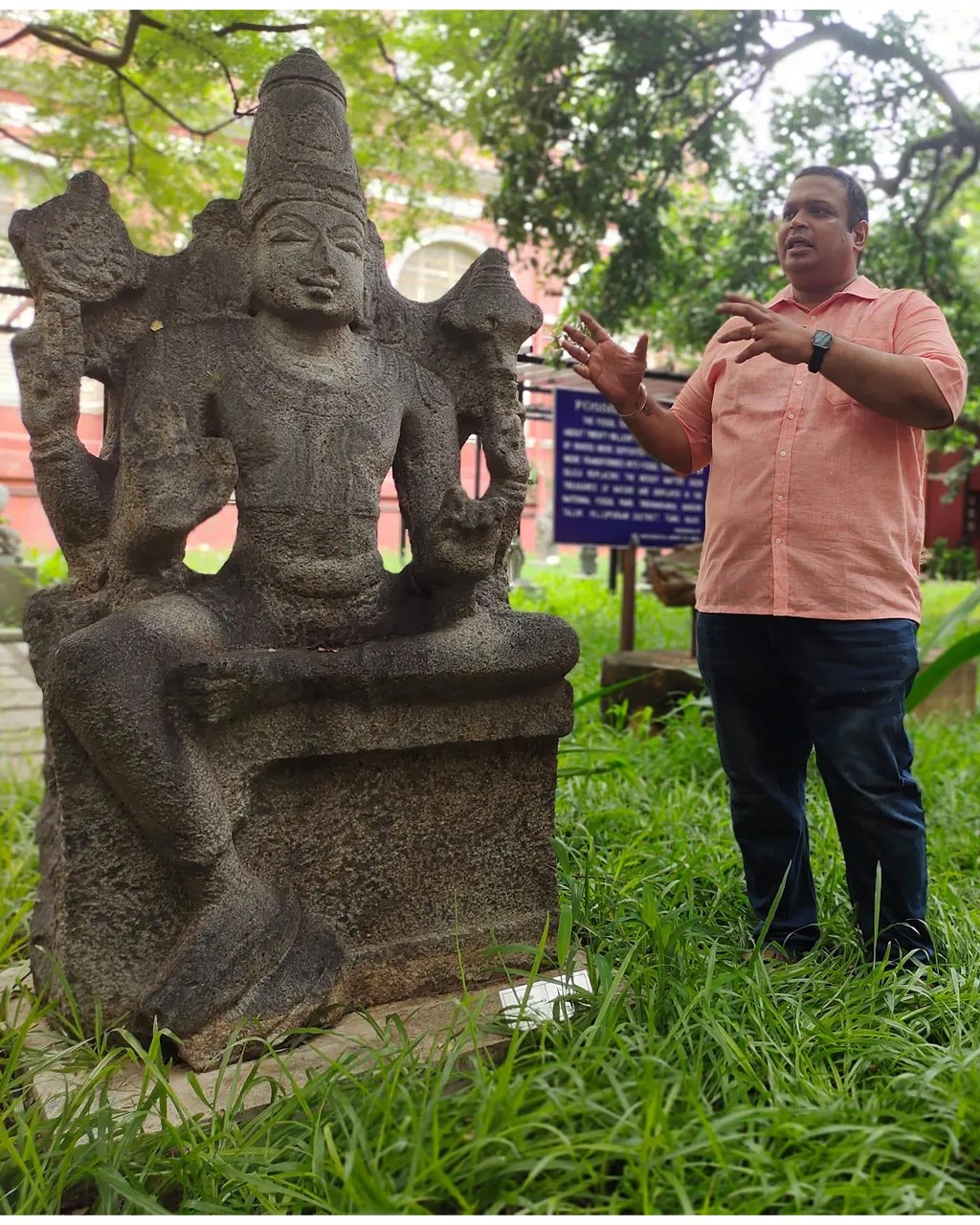
S Vijay Kumar, above, “travels through India, documenting artifacts and investigating the trail of missing objects online,” says the BBC.

For how many millenia have travelers thought it was perfectly fine to pick up local art objects and take them home, perhaps eventually donating them to museums? Today the looted countries are saying, “Wait a minute–that’s mine.”

Charukesi Ramadurai writes at BBC “Culture” that volunteers in India have started doing something about these thefts.

The story starts with recent speculation concerning the coronation of King Charles III, when many eyes in India were turned toward the Queen Consort and the “the contentious Koh-i-Noor diamond.” Would she wear it? She did not.

“While the palace has not made any official statement about the reason,” Ramadurai reports, “there were worries about it causing diplomatic issues with India, if it had been used, given the country’s claims to be its rightful owner. …

“The Koh-i-Noor, first found in written records in 1628, has long been the subject of acrimony between India and its former colonizer, with a persistent demand by the Indian government and its citizens for its return. As this piece in India’s Mint newspaper explains bluntly, ‘The main controversy around the diamond is that the British give an impression to its younger generation that the Koh-i-Noor was a gift from India and make no official mention of the violent history behind acquiring it.’

“The renewed uproar about the Koh-i-Noor has also led to intensifying questioning of all the other resources – not just the sparkly stones –  taken away from the Global South by western powers over centuries of trading and ruling. ‘Wear the diamond, give back the rest,’ suggests this op-ed piece in The Indian Express.

“Among the ‘rest’ are priceless cultural artifacts – and this is what the India Pride Project concerns itself with. This citizen movement for the restitution of stolen and smuggled antiques (particularly statues) from public museums and private collectors across the world was started in 2013 by shipping executive S Vijay Kumar and public policy expert Anuraag Saxena from Singapore. …

“These sleuths, with the help of a small, anonymous global team of volunteers from various fields – who communicate mostly online – have brought back to India several millions worth of antiquities from countries like Australia, Singapore, Germany, UK and the US.

“Most recently, they made the news when their efforts aided the investigation that prompted the National Gallery of Australia to return antiques worth $2.2 million – stolen by art smuggler Subash Kapoor – to the Indian government. Their targets include both artifacts taken forcibly out of India during the British colonial era, and those more recently stolen and smuggled from temples and public collections.

“Kumar, who is now based in Chennai in south India, and Saxena, who remains in Singapore, talk with ease about field trips to document missing idols and sting operations with auction houses. … This is not to suggest they are some kind of gung-ho art vigilante group, given the amount of plodding through paperwork and complex negotiation work they do. Their work involves advocacy, activism and coordinating between governments and law enforcement agencies such as Customs, Europol and Homeland Security within India and outside. Kumar says, ‘In the past when they reached out to India, nobody replied, so now we are doing that job.’

India Pride project is more of a network than an organization – we have no money, no employees and no authority,’ admits Saxena candidly, even a tad proudly.

“Art expert and former Egyptologist at the British Museum, Lewis McNaught, who now runs Returning Heritage, an online resource about cultural restitution, thinks the IPP model of citizen activism is intriguing. ‘They go out and actively source information using a social network of supporters. And only when they are able to confirm that the object has been stolen, do they approach the government, which in turn applies pressure on the museum or other governments where the object is being held.’

“There has been an established pattern of theft and trafficking of valuable art and artifacts from poorer countries in Asia and Africa to richer nations in the West – either directly by colonizing forces or in more recent times, through a sophisticated network of smugglers.

“In his book The Anarchy: The East India Company, Corporate Violence, and the Pillage of an Empire (and in various other places), writer and historian William Dalrymple has called out the looting of thousands of priceless objects from India to Britain by the employees of the trading East India Company. …

“Long after the colonizers have retired, there still remains a flourishing multi-billion-dollar black market in stolen antiquities. Serendipitous discovery is rare, such as this story from the 2018 Met Gala when Kim Kardashian took a photo in her sparkling gold gown twinning with a resplendent golden mummy. The photo drew attention to, well, the mummy, which was then detected to have been smuggled out of Egypt unnoticed in the chaos of the 2011 Arab Spring, making its way into New York’s august Metropolitan Museum of Art. The ensuing media outcry forced the Met – which had paid $4 million for fake documents – to return said mummy to Egypt.

“And before anyone feels too sorry for this museum’s loss, it is important to know that despite the 1970 Unesco Convention aimed at ending the illicit trade of antiquities, museums including big ones like the Met and The British Museum (the largest receiver of stolen goods, some say) have continued to buy from art thieves such as the now-convicted Subhash Kapoor. Kumar, who has written about his long pursuit of Kapoor in his book The Idol Thief, says this is simply because of the standard market economics of supply and demand. In a 2020 piece for the New Indian Express entitled: ‘When the buying by museums stops, the looting stops,’ Kumar called out museums for turning a blind eye to the origins of coveted antiquities.”

More at the BBC, here. No firewall.

Read Full Post »

Photo: Asortymenta Kimnata.
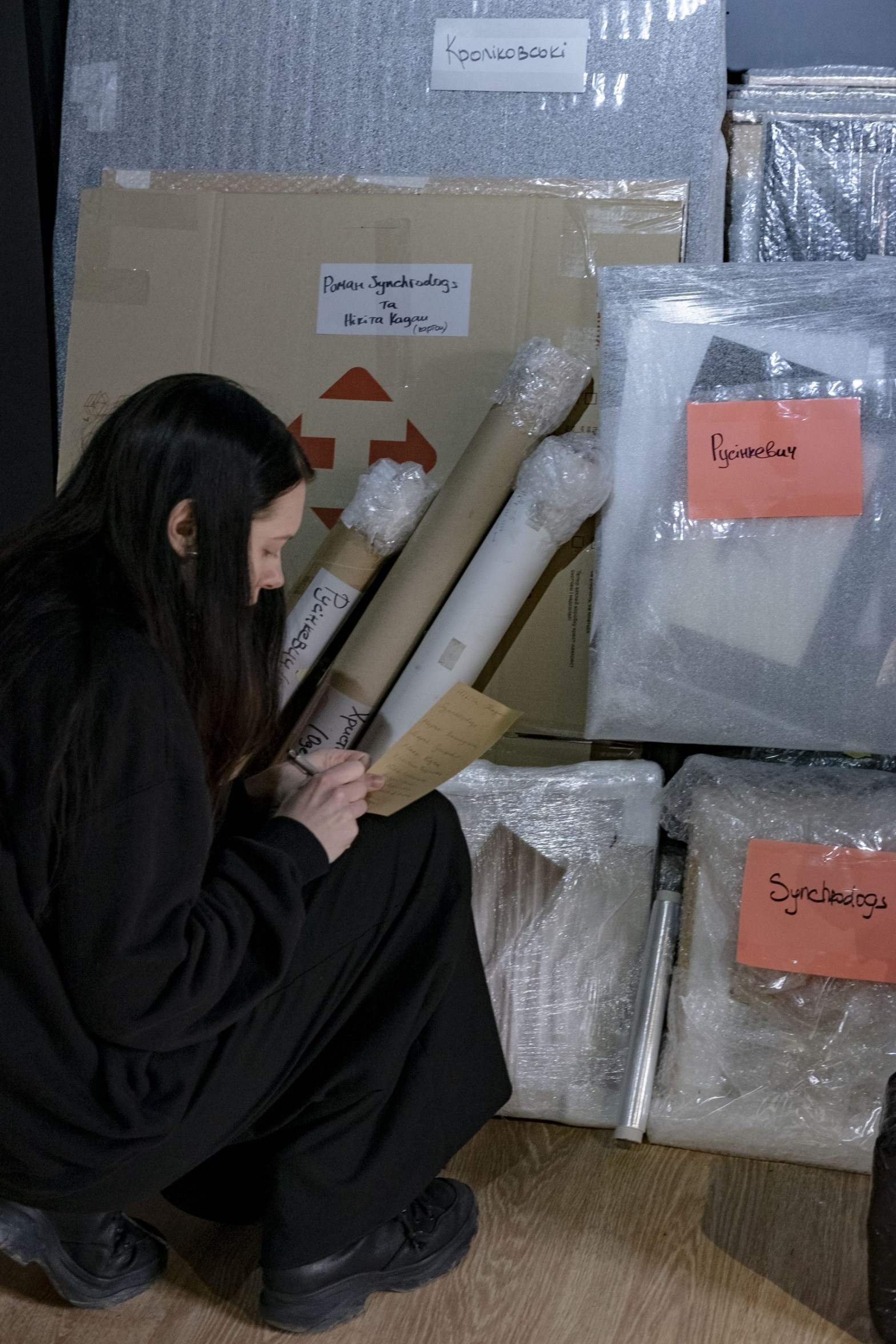
People are working ’round the clock to save Ukraine’s museum collections.

Everyone is doing their part. You have probably read about groups working to transfer zoo animals from Ukraine to a safer country. In today’s story, we learn what Ukraine’s museum workers are doing.

Lisa Korneichuk at Hyperallergic interviews the founders of Museum Crisis Center on their work to safeguard museum staff and save Ukraine’s cultural heritage.

“Many art and cultural monuments in Ukraine fall victim to Russia’s full-scale invasion along with civilians. [Russian] troops have damaged libraries, churches, and a mosque, and shelled local historical museums in Chernihiv, Okhtyrka, Ivankiv, an art museum, architectural monuments in Kharkiv, and many more. As of this writing, they dropped a 500-kilo bomb on the Donetsk Regional Drama Theatre in Mariupol, where over a thousand people were hiding from the shelling. 

While the Ukrainian governmental institutions are focused on saving the national art collections, local heritage and contemporary art remain vulnerable to the war threat.

“Moreover, museum teams in the region often risk their lives staying in the war zones to guard exhibits. To save overlooked Ukrainian heritage from vanishing, local citizens, cultural workers, and NGOs organize independent initiatives and evacuate art that has fewer chances to survive the war. 

“On March 3, Olha Honchar, director of Lviv museum ‘The Territory of Terror‘ asked on Facebook if there were any funds supporting Ukrainian artists and museums in wartime. She later updated her post: ‘Meanwhile, we start making such a fund ourselves.’ In partnership with the team of the NGO Insha Osvita, Olha launched Museum Crisis Center, a grassroots initiative aimed at helping museum workers in the emergency regions and evacuating artworks. …

“The main task of the center was the rapid financial and organizational support of museum workers, many of whom found themselves face to face with the war and without a means to support themselves. The center has to look for ways to get around long bureaucratic processes to aid those who need it immediately.

Hyperallergic spoke to the Museum Crisis Center co-founders Olha Honchar and Alyona Karavai over Zoom about the balance between legal requirements and efficiency in times of war and their critical stances on international humanitarian institutions. This interview has been edited for length and clarity.

Hyperallergic: Tell us exactly what your organization is doing?

Olha Honchar: We have offices in Ivano-Frankivsk and Lviv [cities in the west of Ukraine]. We joined our efforts and found more people to launch the Museum Crisis Center, or the Museum Emergency. I coordinate quick support for museum workers in war-torn areas that are under attack. We provide donations for basic things, like food, water, medicine. Many museum workers haven’t received salaries, their expenses increased. Our goal is to ensure that these people can survive the war. …

“We are developing an efficient algorithm for our work because within the bureaucratic Ukrainian system, it’s quite difficult to respond to people’s needs quickly. Everything is designed for a long bureaucracy. But in many regions we are working with there are no accountants, the treasury is bombed, or the culture department is not operating. Therefore, the only way to help is to send money directly on a personal card. Our task is to make it transparent and convince donors that help is received by those who need it.

“The next step will be the reconstruction of museums and infrastructure, but these are large-scale things. At the moment it is crucial to support teams and people so that there is someone to do the reconstruction later.

H: You are also involved in the evacuation of works, focusing on grassroots initiatives and art projects that will be the last to come to the attention of government agencies for cultural heritage.

Alyona Karavai: Or won’t come at all. The other day we met with the Minister of Culture and they said that they were focused on objects that are defined as being ‘of cultural value’ under Ukrainian law, i.e. objects that are 50 years old and older. Their primary mission is to save large national collections. Thus, they are unable to help even the small state museums which they have under their control. Grassroots initiatives and contemporary art are generally beyond their sphere of influence. We [NGO ‘Insha Osvita’] evacuate works from artists’ studios, private collections, and art centers. 

H: How often are you asked for help and do you carry out any selection of works?

AK: There is no selection. We help everyone we can. We’ve received 17 requests for assistance, so far we’ve fulfilled six. One request was from Mariupol, but it was clear that we could no longer help there. There are areas where we are powerless. …

OH: We help museums that we have personal contacts with. Our monitoring team includes museum workers [and] directors of centers, who call each other and gather information about needs. It is very important for us to do this through proven contacts because now there are many suspicious situations, fake news.

“People are afraid to say what they have in museum collections because it is unclear for what purpose this information can be gathered. That’s why we rely on the trusted network and work through the close contacts I have made during my career, including as the director of the ‘Territory of Terror.’ …

H: How do you evacuate artworks?

AK: We have a few volunteers on the ground. There are some people in Kyiv, in Odessa who help to evacuate artworks by buses. We’ve been looking for trucks. It takes a while to find any, we are not a transport company, we have never done that before. There were moments when we found a car and then it dropped [out] at the last minute. The situation on the roads is changing fast. So if we were able to use a route yesterday, it does not mean that we can go there tomorrow.”

More at Hyperallergic, here. No firewall.

Read Full Post »

Photo: MFA Boston
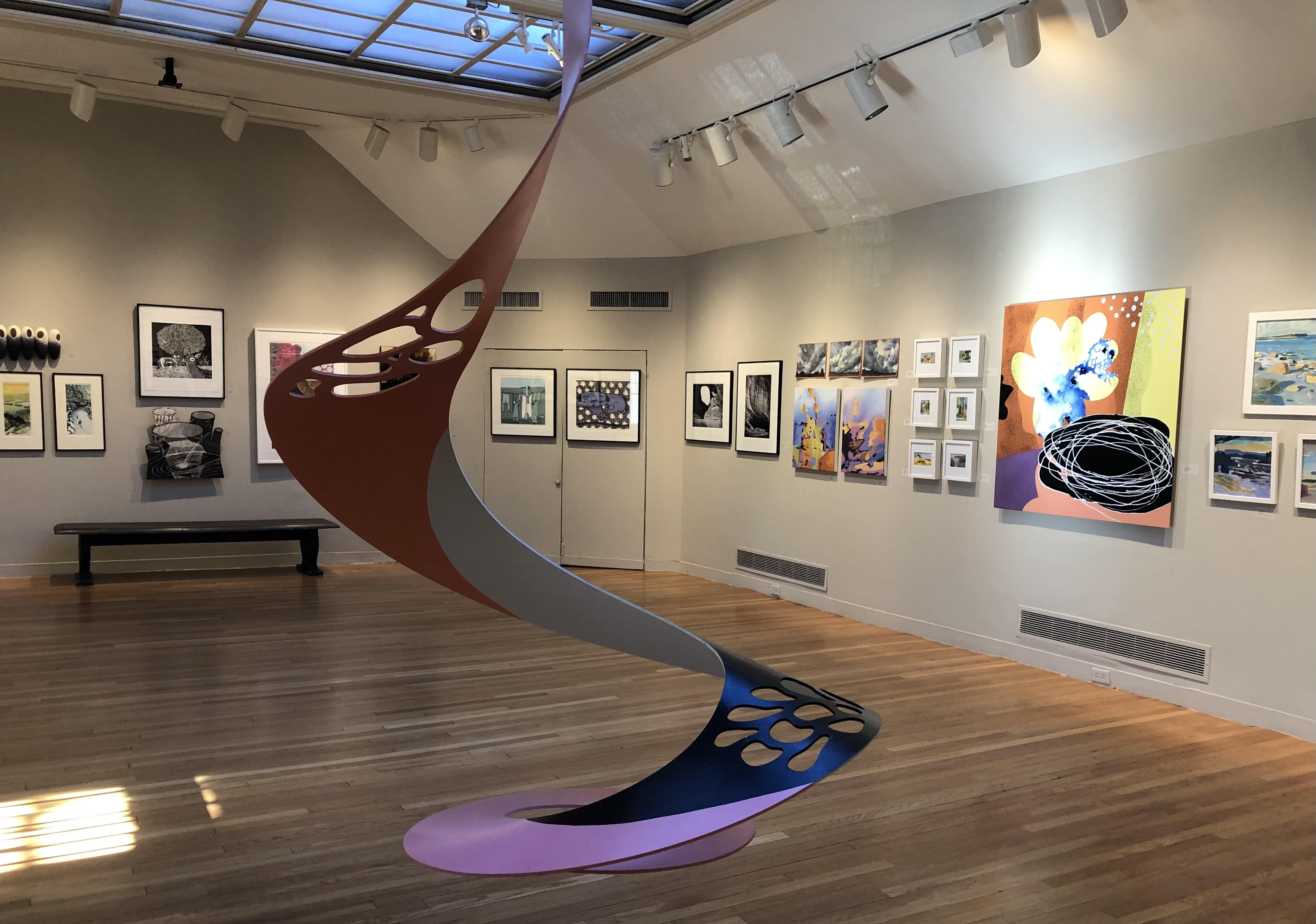
The results of a study on school field trips surprised the Brookings Institution researchers.

One of the messages I take from this Brookings report on student field trips is the importance of conducting research with both an open mind and a willingness to follow up on unexpected results. Another takeaway: researchers prefer to study things for which there are a lot of data available; worthwhile questions that don’t have a lot of data to work with often don’t get studied.

Jay P. Greene writes, “Most education research focuses on math and reading outcomes or educational attainment because those are the measures that the state collects and are readily available to us. Less is known about how students are doing in other subjects and whether their progress in those areas has important benefits for them and society. …

“A new experiment … examines long-term effects of students receiving multiple field trips to the Woodruff Arts Center in Atlanta. The Woodruff Arts Center houses the High Art Museum, Alliance Theater, and Atlanta Symphony, all on one campus.

“We randomly assigned 4th and 5th grade school groups to get three field trips per year – one to each of Woodruff’s arts organizations – or to a control condition in which students received a single field trip. …

“The surprising result is that students who received multiple field trips experienced significantly greater gains on their standardized test scores after the first year than did the control students. …

“The reason these results are so surprising is that previous research had suggested that arts instruction tended not to ‘transfer’ into gains in other subjects. …

“When we conducted the analysis on the effects of treatment on test scores, we expected to find no statistically significant effects, just like almost all previous rigorous research. …

“We still do not believe that arts instruction and experiences have a direct effect on math or ELA ability. We think this because the bulk of prior research tells us so, and because it is simply implausible that two extra field trips to an arts organization conveyed a significant amount of math and ELA knowledge.

“Our best guess is that test scores may have risen because the extra arts activities increased student interest and engagement in school. … Maybe arts-focused field trips do not teach math or reading, but they do make students more interested in their school that does teach math and reading. But this is just a guess. …

“The odd thing about trying to write a paper with these results to present at conferences and submit to a journal is that there is strong pressure for us to pretend like we expected our findings all along. Discussants and reviewers generally don’t want to hear that you found something you didn’t expect and don’t really know why. They want to hear a clean story about how your results make sense and follow from your theory and literature review. In short, social science favors the false appearance of confidence.”

Ah, yes. When I was at the Fed, I often wondered about such things, but as a non-economist, I knew I was out of my depth.

Read about how the researchers intend to unpack the meaning of their unexpected results with future studies, here.

Read Full Post »