Feeds:
Posts
Comments

Posts Tagged ‘music school’

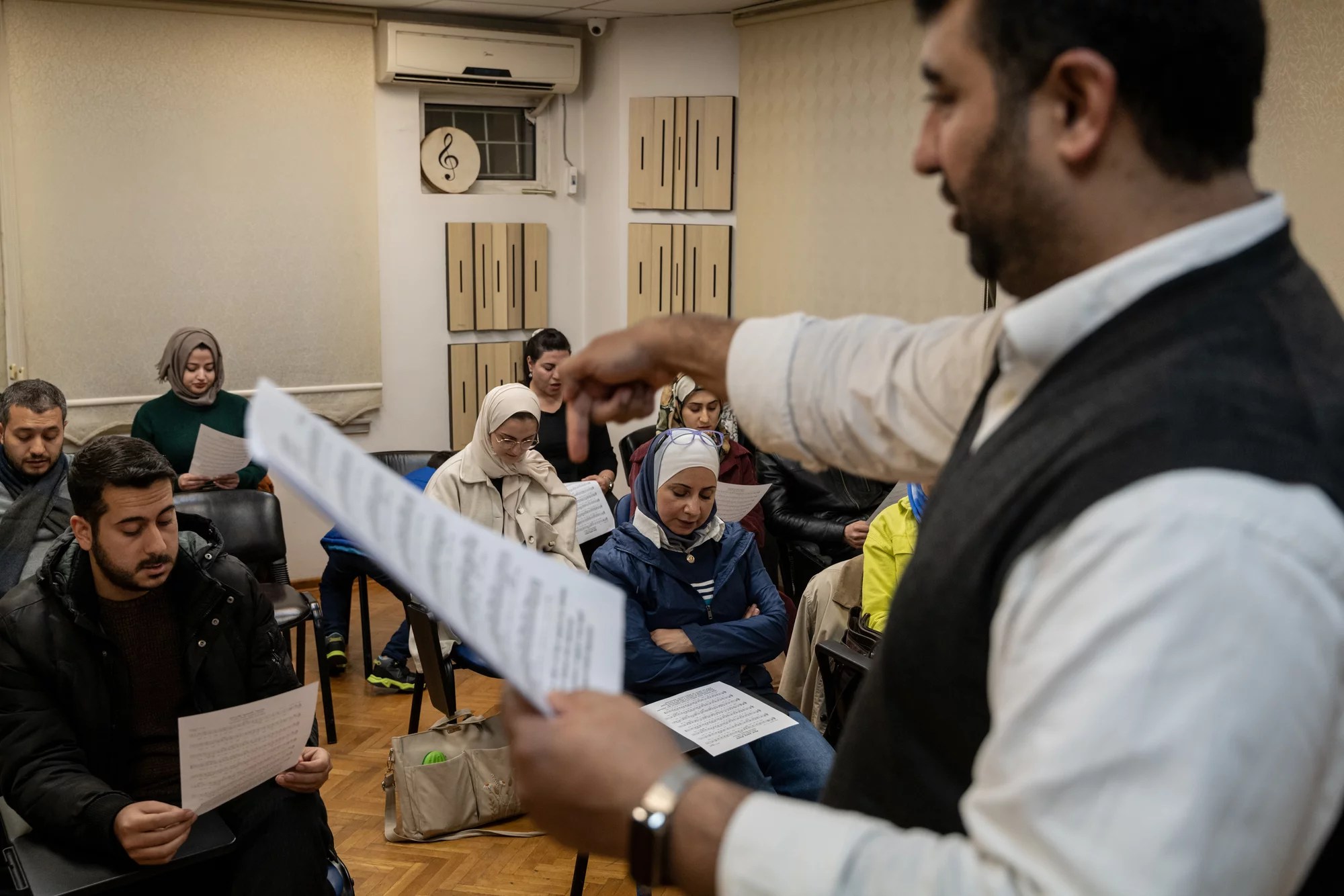
Photo: Nicole Tung for NPR.
Ibrahim Muslimani, 30, speaks to a class about a piece of music blending different eras and languages at the Nefes Foundation for Arts and Culture, which he cofounded in 2016, in Gaziantep, Turkey.

Today’s story is about how the arts can help victims of disasters get their bearings again.

As Fatma Tanis reported recently at National Public Radio (NPR), “When the powerful earthquake rocked her home in early February, 18-year-old Sidra Mohammed Ali woke up and thought of one thing: her music school — was it OK?

“The next day, as survivors all over southern Turkey were taking stock of the destruction and checking on loved ones, Mohammed Ali rushed to the school, the Nefes Foundation for Arts and Culture, and took a deep breath of relief when she saw it was still standing, only having sustained some minor damage.

‘This school is my sanctuary from the stress of life as a Syrian refugee in Turkey,’ she said. ‘I couldn’t bear the thought of something happening to it.’

“The Nefes Foundation was created by Syrian and Turkish musicians in the city of Gaziantep in 2016. They have group classes where they try to revive forgotten Syrian classics and integrate Turkish and Syrian cultures with music that the two have shared for centuries.

“The school also offers private music lessons on the piano and Middle Eastern instruments like the oud (a pear-shaped string instrument), the kanun (a plucked zither) and the ney (an end-blown flute).

“But more than six weeks after the Feb. 6 disaster, life in the earthquake zone is far from back to normal. The magnitude 7.8 earthquake killed more than 55,000 people in Turkey and neighboring Syria. It damaged or destroyed hundreds of thousands of buildings and left 1.5 million people without a home in Turkey alone, according to the United Nations.

“The school had not been able to resume classes until [March 2023], when only three students, out of many dozens, showed up to sing and play.

“Before the earthquake, the school would be packed on weekday evenings, with students ranging from ages 6 to 50, mostly Syrian, but some Turks attended as well.

“The classes are bilingual — in Turkish and Arabic. And that was especially important, according to Ibrahim Muslimani, a Syrian classical musician from Aleppo, who is the brains behind the organization.

” ‘Because some of the young Syrian kids have spent most of their lives here in Turkey and are more fluent in Turkish,’ he told NPR in November 2022. ‘We’re trying to preserve our Syrian cultural identity but also getting to know the Turkish identity through art.’

“Turkey hosts 4 million refugees, the largest number of any country, according to the U.N. refugee agency. The vast majority are Syrians who fled the civil war.

“In the early years of the Syrian civil war, which started in 2011, Turkey had a generous open-door policy toward Syrian refugees. But without broad integration initiatives by the Turkish government, life for many of the refugees has been difficult.

“More recently, politicians in Turkey who oppose President Recep Tayyip Erdogan have scapegoated refugees for the country’s economic problems, leading to a rise in discrimination and hateful attacks. …

“Mohammed Ali, who studies medicine at university and the kanun at the music school, said last weekend the school has been a lifeline for her. She has a bleak outlook on her future, and doesn’t believe that the people in Turkey will ever accept her existence in the country.

” ‘But anytime I have an upsetting encounter, my Turkish teachers and friends here comfort me,’ she said. …

“Rafeef Saffaf Oflazoglu fled Aleppo in 2013 after a near-death encounter. She comes from a family that’s passionate about classical Arabic music. To be able to continue exploring her love of music in Gaziantep was priceless, she said.

“The school also introduced her to centuries-old Turkish songs from the Ottoman archives, and old tunes that traveled from Istanbul to Aleppo. Studying those shared melodies made her feel closer to the culture in her new home.

“Having to go without classes after the earthquake was harder than she expected. ‘After maybe 10 days, I just figured out, like the thing I miss most is art,’ she said, even though she was living in her car at the time. ‘People under trauma react in different ways. It’s not just about singing, you know? It’s spiritual.’

“For Muslimani, the earthquake was a triggering reminder of how he had lost everything a decade ago in Aleppo. … The civil war in Syria destroyed much of the country’s cultural output, along with the lives of millions of Syrians. Muslimani has a mission to keep Aleppo’s traditional form of music, al-Qudud al-Halabiya, alive from Gaziantep.

“He and other Syrian artists also record music at Nefes. ‘I promised my teacher that I would immortalize those precious pieces in the best form possible,’ he said. ‘With the proper orchestra and the glory that they deserve.’ …

“The Nefes Foundation, which survived on donations and fees for private lessons, is now at serious risk of closing down, said Muslimani. They don’t have the funds to pay for next month’s rent. …

” ‘The mere thought of losing this place… it’s unbearable.’ “

More at NPR, here.

Read Full Post »

Photo: Jessica Lustig.
Jessica Lustig, left, and Lesley Friedman Rosenthal, part-time Berkshires residents, went to Portugal to greet students, faculty and family from the Afghanistan National Institute of Music. Thanks in part to their efforts, the school was rescued and is resettling in Portugal, along with its founder and director, Dr. Ahmad Sarmast, center.

There are still small community newspapers that are doing actual reporting. Not where I live, where the the “local” paper mostly republishes content from a chain headed up by USA Today. It’s been so bad for so long, a group of community leaders is raising money for a nonprofit local newspaper such as we’ve begun to see around the country.

But I digress. Today’s Berkshire Eagle article is not a local story but I am not sure it would have happened if the reporter had not taken the time to interview local people.

Felix Carroll wrote that from a home in Otis, Massachusetts, “a daring, dangerous, complicated and ultimately successful rescue effort was coordinated beginning last August. …

“The denouement came on Dec. 13, when a community of school children from the Afghanistan National Institute of Music (ANIM) landed in Lisbon, Portugal — to safety, freedom and a future far afield from one that would have demanded their silence.

“Lesley Friedman Rosenthal, a part-time resident of Otis, was in Portugal to greet them. So was Jessica Lustig, a part-time resident of Great Barrington.

“ ‘It was remarkable to watch the young music students, their faculty and families come off the plane,’ said Rosenthal, president of the United States-based Friends of ANIM. ‘These 273 individuals, whose names, birth dates and national ID numbers I had helped work through so many lists for government agencies, and about whose lives and safety I had been so concerned in the past four months, suddenly appeared before us, with a look on their faces I can only describe as hopefulness.’

“Rosenthal and Lustig make up two-thirds of the board members of Friends of ANIM, the charitable group that, beginning in 2016, has supported the school, the first and only music academy in Afghanistan’s capital, Kabul.

“The school, which was inaugurated in 2010, had gained international fame for teaching Afghan and Western music to a co-ed student body against the backdrop of threats from the Taliban, the militant Islamist regime that had prohibited nonreligious music outright when it led Afghanistan from 1996 to 2001.

“The third member of Friends of ANIM is the school’s founder and director, Dr. Ahmad Naser Sarmast, who still suffers the physical effects following a Taliban attack on his school in 2014.

“The philanthropic efforts of Friends of ANIM took a dramatic turn in August upon the withdrawal of U.S. military troops in the country and the ensuing consolidation of control by the Taliban.

“Rosenthal, who serves as chief operating officer of The Juilliard School, the performing arts conservatory in New York City, and Lustig, the founder of a New York City-based publicity, advocacy and consulting business, engaged in round-the-clock efforts to assist Dr. Sarmast in rescuing the school.

“They reached out and received the support of political leaders, military veterans, academics, and artists, including local musicians Yo Yo Ma and Emanuel Ax.

‘It became clear, just in a matter of days, that the only way to salvage the school was to actually do a mass evacuation and airlift of the entire school community,’ Rosenthal said.

“In the meantime, videos began surfacing of Taliban members making a public show of destroying musical instruments. The Taliban had taken over the school campus. …

“News reports from Kabul told of how seven busloads of people associated with the school were left waiting at the airport for 17 hours, unable to board their plane amid fears of a terrorist attack. With that in mind, the evacuation efforts became less conspicuous; the efforts moved more slowly and comprised waves of smaller groups.

“In the end, the evacuation consisted of five airlift flights of 273 school members (including students, staff and immediate family) over a six-week period from Oct. 2 through late November.

“The first stop was Doha, in Qatar, whose government provided shelter and helped negotiate with the Taliban to ensure safe passage. Then, the school community flew on Dec. 13 to Portugal, where they have been offered asylum.

“ ‘Friends of ANIM is now working to reestablish the school in Portugal so that Afghan music and music education can continue for the girls and boys of the ANIM community,’ said Rosenthal.

“Rosenthal and Lustig had never imagined that their charitable efforts to support a school 7,000 miles away would ever come to this — essentially to establishing a war room in the Berkshires in the year 2021. …

“In December 2014, [a] suicide bomb attack at a student concert [in Kabul killed] an audience member and injured many others. Sarmast had to be airlifted to Australia for treatment. His hearing has been permanently damaged.

“ ‘The needs were clear,’ said Lustig. ‘He had threats to his life and threats to his school.’

“With the formation of Friends of ANIM in 2016, Sarmast and his staff and students would come to know that the world has his back.”

More at the Berkshire Eagle, here.

Read Full Post »

ysm20stock20201920220019

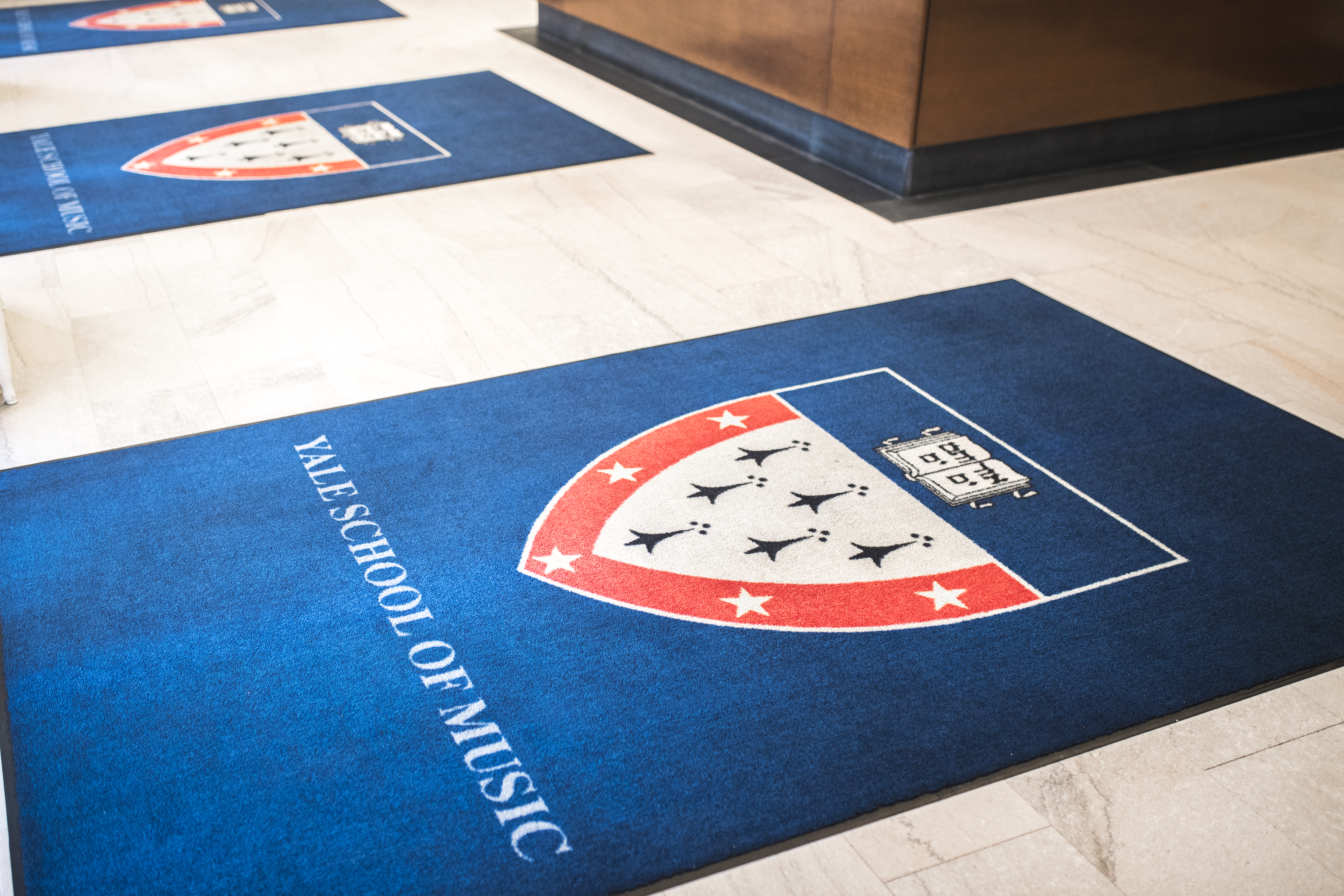
I see a lot of discussion on social media about whether this company or that school is doing the moral thing in the pandemic, and I think it’s reasonable to criticize wealthy institutions when they lay off employees with little severance or health-care coverage or when they fail to help college students with housing if they can’t go home. But some organizations use their ample resources more ethically. Consider Yale University’s School of Music.

Zach Finkelstein writes at Middle Class Artist about a massive stimulus package for music students that earlier this month, the Yale University School of Music “offered its students, over 200 young musicians — a relief package on a sweeping, unprecedented scale.

“In a March 31st letter to alumni, Dean Robert Blocker outlined an ambitious plan to provide aid, including ‘a one-time stipend of $500’ to all students to assist with travel and expenses; full pay, despite social distancing, for all student employees through May 1st, 2020; and relocation of all international students who could not return home to University housing.

“For the remainder of the semester, Blocker announced that all classes and degree recitals have moved online. …

adams20center2001

Photo: Matt Fried

“The Yale School of Music is in a rarefied position among its peers to provide aid. Under the leadership of Dean Blocker, the school has grown its endowment from $29 million to over $400 million, in part due to a ‘transformative $100 million gift.’ Since 2005, thanks to this generous donation all students admitted receive a full tuition award and fellowship.’ …

“Alumni interviewed were deeply moved by the School’s actions on behalf of students: ‘I am proud to know that my alma mater, the Yale School of Music, is taking proactive, compassionate steps to aid its students during the unprecedented COVID-19 crisis. … By putting its considerable resources to good use – such as housing students, disbursing emergency funds, or paying student employees for cancelled work — the YSM is taking a lead role among its peers in finding a helpful, humane response. This is a wildly scary time for many musicians around the world, and it is heartwarming to see a world-class educational institution stand up and support its artists.’

“Another alumni also stated their pride in Yale, and that the email ‘showed the generosity possible from heavily-endowed institutions as well as a level of interpersonal caring that has not been exemplified across the board, in the university or professional settings. Our student colleagues are some of the most vulnerable and impressionable amongst us, and Yale’s willingness to help with issues of housing and travel, as well as extending a generous financial donation to each student, sets a great example to the community at large.’ ”

You might say, Well, look what a wealthy institution it is! But there is no end of examples of wealthy institutions that are not doing much of anything. The Kennedy Center in Washington, DC, for example, received $25 million from Congress as part of a coronavirus relief package and promptly furloughed workers, saying it was running out of money. And while Amazon’s Jeff Bezos gives millions to Covid-19 relief, he is making extra billions for himself and not protecting his workers.

So I have to applaud whoever does the right thing for people who are in their care.

More at Middle Class Artist, here.

Read Full Post »

Photo: Cole Wilson
Chad Cooper gave up his Wall Street career to run a music school.

There’s nothing like a story of a guy turning from the big bucks to pursue service to others. One such story was recently reported by Martin J. Smith in Fast Company. It’s about a managing director at Deutsche Bank in New York who left the Wall Street life behind to save a community-oriented music school.

Fortunately, his wife was totally on board.

Smith writes that Chad Cooper’s banking job “came with a substantial salary, bonuses, a generous expense account, and business-class travel. [But] two years ago, after a 16-year Wall Street career [he] walked away from all that to take the executive director’s job at the nearly insolvent Brooklyn Conservatory of Music. …

“Since Cooper took the reins in August 2016, the 121-year-old nonprofit institution in Brooklyn’s Park Slope neighborhood has seen a 71% increase in individual donors over fiscal 2016 and a fivefold increase in attendance after shifting its development model from a single annual gala to a handful of special events. Assets have shown a net increase of $400,000 over fiscal 2016. Attendance at its flagship Community Music School is up 19%.”

Fast Company (FC): ” ‘After 16 years as an investment banker, you opted out. Why?’

Chad Cooper (CC): ” ‘Even as a Stanford GSB student, my intention was to work in the private sector, then ultimately return to the social sector. But once you start down a private-sector path, it can be daunting to pivot. For me, the stars aligned when the Brooklyn Conservatory of Music, this incredible organization whose board I’d joined, was in dire need of management skills I’d spent my career developing. …

” ‘Before I went to business school, I worked for four years for the city of St. Louis doing inner-city economic development. I also launched a grassroots nonprofit organization that helped mobilize younger people to take an active role in city revitalization efforts. That was a really big part of my life, so when I came to Stanford, I had a strong sense of what I wanted out of business school, and I wanted to bring that back in some way to the nonprofit sector. I had planned for that and tried to save up a little money to have enough security to take myself out of moneymaking for a while. …

” ‘I’d been serving on the board of directors at the conservatory for two years, and just after the business school reunion, the conservatory’s executive director resigned. Having served as the conservatory’s treasurer, I knew it was in dire financial shape. …

” ‘I worked for a guy named Charles Kindleberger in St. Louis for four years — he ran the urban planning department — and I always marveled at how extraordinarily intelligent and thoughtful and effective he was as a senior manager for the city. He could have been a great professor, or a lawyer, or businessperson.

” ‘He would have been successful at whatever path he chose in life. But he had committed himself to public service, and I have great respect for people like Chuck. A lot of capable people commit themselves to service and do it their whole life.’

FC: ” ‘You agreed to work the first two years at the conservatory for no pay. How were you able to afford to do that?

CC: ” ‘I send my kids to public school. My wife works full time. We don’t live an extravagant life. I didn’t walk away from my banking career with a huge amount of wealth, but there are a lot of people who get by with a lot less than I do in New York City and give of themselves in profound ways. …

” ‘I really love what I do. I’m totally energized going into the office every day. … I inherited an organization that really needed fundamental change, and it’s enormously motivating and exciting to come to work and to have that intense focus and energy for turning a place around and building something for the future. We provide music therapy to 1,500 people, including those with autism, and kids whose parents are incarcerated, and seniors with dementia, and I see how transformative their experiences are. It’s gratifying to see the work we do with 6,000-plus New Yorkers every year who otherwise would have no access to music education. That’s enormously motivating to me.’ ”

More at Fast Company, here.

Read Full Post »

Photo: Pinecone.org
Becoming a musician should not stress students out. That’s why students at a music school in Manchester, England, are encouraged to take time for a well-rounded life.

Our niece is a music teacher and youth orchestra conductor in North Carolina. Her husband and all three of her children are also accomplished musicians. One thing that’s hard to remember now is that when she was studying music in college, she was very stressed out.

That’s something a music school in Manchester, England, is determined to prevent as it launches its new wellness program.

Photo: UIG/Getty Images 
The Royal Northern College of Music in Manchester, which has about 800 students, is promoting physical and mental wellness for students.

Sally Weale writes at the Guardian, “The Royal Northern College of Music has become the first conservatoire to appoint a lecturer in musicians’ health and wellbeing, to help equip students to deal with the pressures of a career in music.

“The number of students reporting mental health concerns has risen sharply across higher education in recent years, and the RNCM is concerned its students have to deal with the additional pressure of concerts and recitals as well as long hours of practice.

“Sara Ascenso, a clinical psychologist and trained pianist, will start at the college in January. Her role will include lecturing and research, and she will also develop the health and wellbeing provision across the college, ensuring it is tailored to musicians’ needs.

“Kathy Hart, the RNCM students’ union president, said … ‘The work needed to build such a difficult career can come at a price, both physically and psychologically. … The more work we put in, the higher the stakes become – and the more devastating the impact if we are held back by injury or mental health struggles.’

“The Manchester college plans to lay on extra counselling sessions for students, particularly when performance pressures are at their peak, plus wellbeing activities such as yoga to help prevent injury. The RNCM also intends to extend its community outreach so more students get to work with people in need.

Ascenso said: ‘We want our students to learn how to make music with excellence, but also how to live fulfilling lives as musicians and as human beings more generally.’

More at the Guardian, here.

Photo: Mark Bell
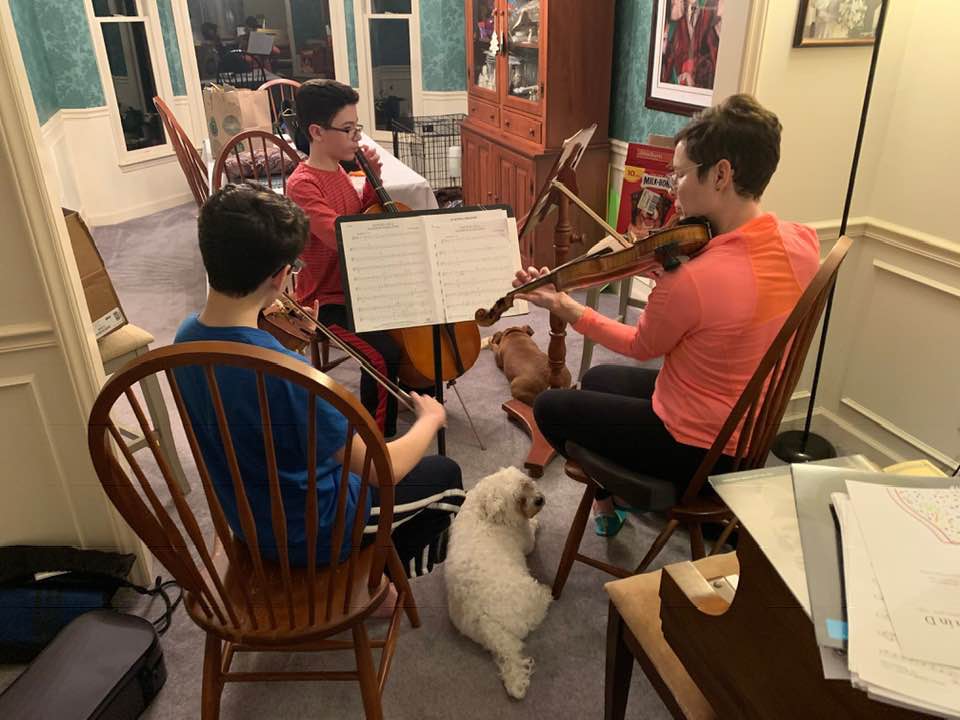
A relaxed family recital communicates even to the dogs that music is something to enjoy.
021719-mother-and-sons-and-dog-enjoy-music

Read Full Post »