Feeds:
Posts
Comments

Posts Tagged ‘pesticide’

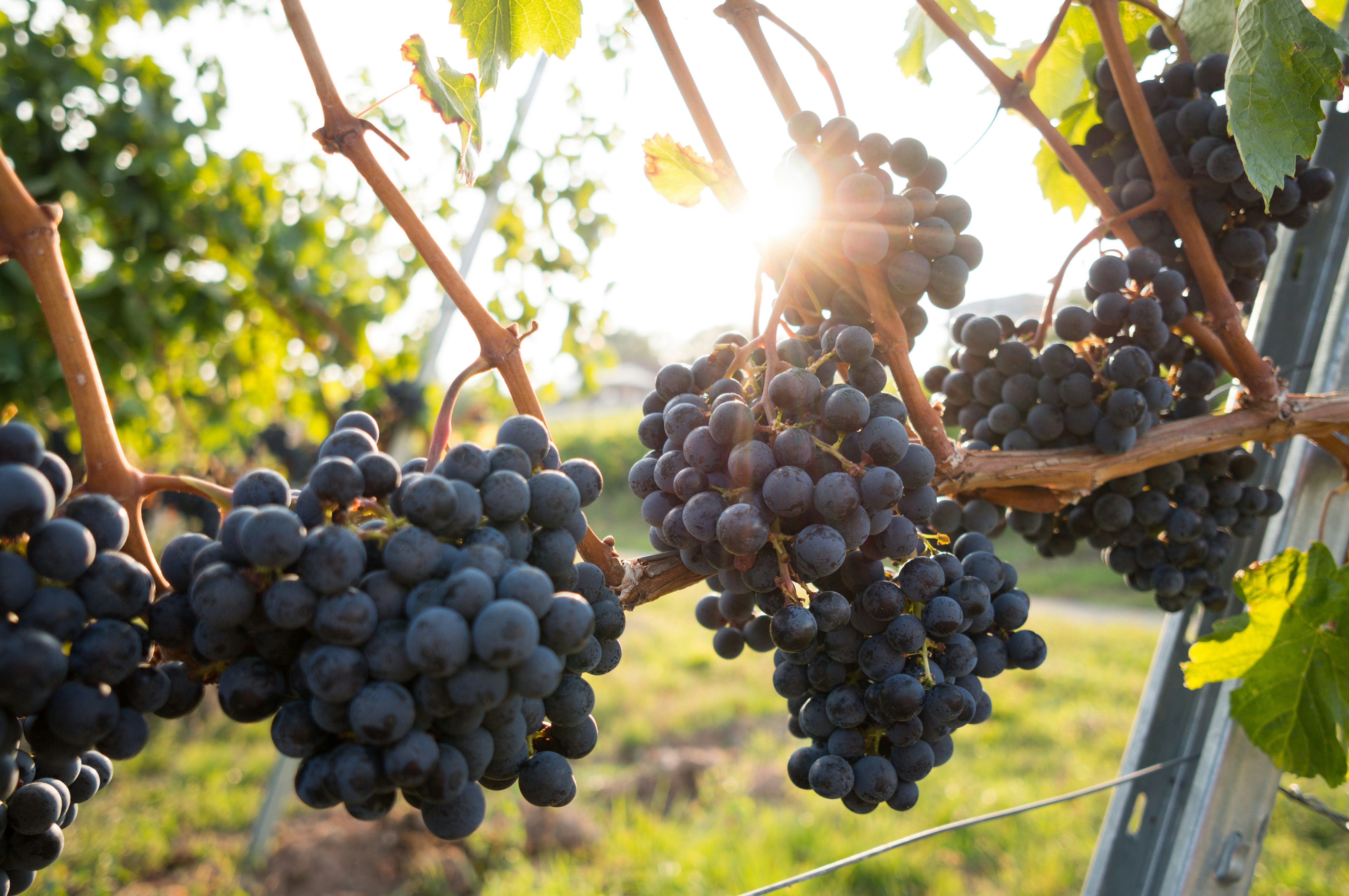
Photo: David Kohler via Unsplash.
Vintners are discovering the importance of bringing back earthworms.

In many parts of the world, growers who have relied on herbicides and pesticides are learning about the benefits of healthier soil, and so they’re getting rid of soil-damaging practices.

In today’s story, we have an example of vintners in the UK who have caught up with recent bio-friendly practices in France. They have not made their changes out of kindness to the planet, although that’s a side effect. They’ve done it to produce a better grape.

Helena Horton writes at the Guardian, “Vineyards are generally the most inhospitable of landscapes for the humble earthworm; the soil beneath vines is usually kept bare and compacted by machinery.

“But scientists and winemakers have been exploring ways to turn vineyards into havens for worms. The bare soil is problematic because worms need vegetation to be broken down by the microorganisms they eat. Pesticides are also highly harmful to the invertebrate, as is the practice of compacting the earth: worms need the soil to be porous so they can move through it.

“Earthworms … aerate soil, and they pull fallen leaves and other organic matter into the earth and recycle them. But their populations have declined by a third in the UK over the past 25 years due to pesticide use and over-tilling of soil.

“Marc-André Selosse, a professor at the National Museum of Natural History in Paris, has been urging vineyards to increase grass and plant cover on their soil, and reduce the amount they till, to save the worms.

“Selosse said: ‘In France, the vineyards are 3% of the agricultural area, and they are using 20% of the chemicals. In vineyards, for the soil there is a lot of treatments, so there’s a lot of compaction, and there is a lot of pesticides used.’ …

“Worms had not yet vanished from the most intensively farmed vineyards, he said, but they did need to be supported with more regenerative practices.

“ ‘I think the worms are at a low level,’ he said. ‘They are just surviving, but they are still there, which means that no one is thinking of buying earthworms for the soil, because they are there. It’s like Sleeping Beauty; they are there at very low level, and we have to wake them. But once again, in soil, we have resilience. It’s one part of biodiversity where they are so numerous that we were not able to kill all of them.’ …

“Selosse said the main thing vineyards could do for worms was to stop tilling the soil – breaking it up and turning it over – even if that means that herbicides such as glyphosate are used instead to remove weeds. … ‘In the future, sooner or later, we’ll have to stop glyphosate also but for now, tilling is the first cause of worm problems.’

“Now some vineyards in the UK are making worm-friendly wine. When Jules and Lucie Phillips, co-owners of Ham Street Wines in Kent, started their vineyard, they were advised to grow conventionally by tilling and using pesticides, but were horrified by the results.

“Jules said: ‘After we did that, we went out and we dug a soil pit immediately after planting, and then also later in the season, and we realized the soil was just dead.’ There were no worms. It was smelling not particularly interesting at all, and the structure was poor.’ …

“The pair had a revelation. ‘We just thought, this is completely the wrong way of farming and we need to do something different. We want life in our soils. And so we began the conversion to organic in that same year, and we’re now certified biodynamic.’

“Rather than using pesticides, they applied herbal teas to the vines to promote plant health, Jules said: ‘For example, horsetail tea has a real high silica content, and that improves the leaf cell wall and means that it’s more resilient.’

“The couple run a no-till system under the vine: ‘We’ve let the cover crop grow really long, and we typically let it grow right up into the canopy up until about flowering, and then we’ll mow it back. And the benefits of that are huge. The cover crop is really growing and really establishing that root structure and getting it to its maximum point. And finally, we put a big mulch on top of the soil that’s going to feed those worms and feed that soil life.’

“This has hugely helped their worm population: ‘We’ve seen our worm counts increase massively from basically none to around 20 or 30 in a spade full. So extrapolate that up to a square metre, and it’s a very decent volume.’

“Rob Poyser, a viticulturist at the regenerative wine consultancy firm Vinescapes, said that growing wildflowers in the vineyards they consult on had also brought great results. ‘We think in between three and five years we can take a bare soil and bring it back to life, into a thriving ecosystem,’ he said. ‘We’ve used things like cover crops to bring this vineyard to life, to build the fertility into this system, and organic matter. We’re bringing life back to these soils we’re using. We’re letting nature do it.’

“Poyser said they allowed wildflowers to grow all over the vineyards, and clients were delighted when clover, for example, sprung up because ‘clovers are great companion plants under the vine for grapevines; they’re also loved by earthworms.’ “

More at the Guardian, here. No paywall.
Read Full Post »

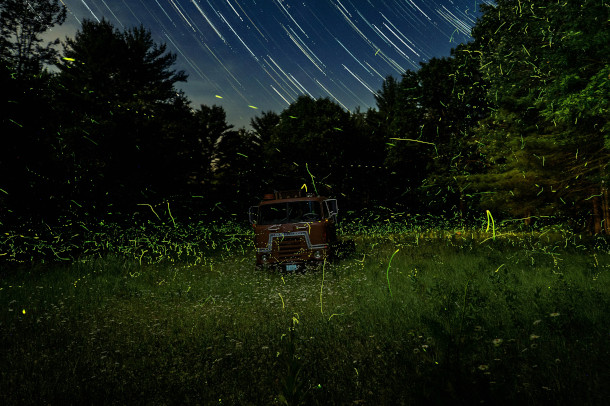
Photo: Robert Ritchie, Unsplash via Living on Earth.
The streaks of light in this 30-minute timelapse image show fireflies in a Wisconsin field.

Where are the fireflies of our childhood? Although the population perked up around here this past summer, possibly because of all the rain, firefly lovers have reason to be worried about the long term. Today’s story explains what’s going on — and how we can all help.

Eric Berger writes at the Guardian, “Max Vogel, a 29-year-old public defense attorney, was picnicking with friends in early August at Prospect Park in Brooklyn, New York, when he noticed flashes of light appear in the air around him.

“They were fireflies, bioluminescent insects that the Washington DC native had not seen while living in Oregon, where there are few, if any. For many Americans who live where fireflies do, their flashing lights at dusk are a tangible rite of summer – though one that may now be under threat. …

“Vogel said, ‘It’s like a shooting star that just is surprising and gives you the childlike wonder of how you felt when you first saw fireflies in your yard.’

“Even in areas of the US where there are typically fireflies, people are especially excited to see them this year because there appear to be more this summer after a steady decline in recent years, according to scientists.

“Despite that welcome news, researchers caution that it does not necessarily signal a reversal of the downward trend. They remain concerned about the long-term viability of the firefly family, which includes more than 2,000 species, some of which are at risk of extinction due to factors such as light pollution and climate change.

“ ‘It’s been really uplifting to hear all of the reports of huge increases in fireflies,’ said Candace Fallon, senior endangered species conservation biologist for the Xerces Society for Invertebrate Conservation. ‘But they are also insects, and insects are notorious for having populations that bounce up and down each year, and so it’s hard to say that their populations are increasing from a single year of data.’

“Fireflies, also known as lightning bugs, are beetles that come out at night during summer and produce a bioluminescent gleam, primarily to attract a mate.

“Cultures around the world treasure the bugs, including in Japan, where they are symbols of love and fallen soldiers.

“ ‘Catching fireflies is a relatively harmless thing that you can do that really connects you to your natural world,’ said Matt Schlesinger, chief zoologist with the New York Natural Heritage Program, which is participating in a project to identify which firefly species occur in state parks.

“Scientists in the US and Canada do not have baseline data on firefly species, which makes it difficult to quantify how much the population has decreased, and they must instead rely on anecdotal reports and documented habitat loss, which point to a downward trajectory, Fallon said.

“She and other researchers conducted a study published in the journal PLOS One which found that 18 species in North America are threatened with extinction. But the scientists also did not have enough data on more than half of the assessed species to determine their extinction risks. …

“The primary factor behind fireflies’ decline is habitat loss and degradation, according to the Xerces Society. That includes land being disrupted by development, light pollution and pesticide use. Artificial lighting at night makes it hard for the bugs to communicate and mate, Fallon said.

“Climate change, including an increase in droughts and rising sea levels, also affect firefly populations, she said.

“Still, there are some firefly species that appear to be doing ‘just fine,’ Schlesinger said [adding that] the kinds that specialize in particular habitats are the ones struggling. …

“ ‘If they can still have a big year, at least those species are probably doing fine and have the potential to recover,’ Schlesinger said. That said, ‘any single year doesn’t tell you about the long-term trajectory of firefly populations. …

“Kids should continue the tradition of venturing out with jars in the summer but should then release the bugs rather than collecting them, Schlesinger said.

“Other ways to help fireflies survive include: not using pesticides, reducing artificial lighting at night, and allowing the grass to grow long and the leaves to pile up in your yard.

“ ‘A lot of fireflies pupate in leaves, and so when we rake those and put them in bags, we’re destroying their habitat at a very small scale,’ Schlesinger said.

“Despite the concerns about extinction, Fallon is encouraged by master gardeners in Arkansas who created a firefly sanctuary, and by lawmakers in Maryland who approved legislation earlier this year which introduces new regulations on what type of lighting can be bought with state funds. …

“ ‘I think we have enough time to make a difference.”

More at the Guardian, here. See also the radio show Living on Earth, here.

Read Full Post »

Fellow parishioner Phil Villers has a strong social-justice side, having volunteered for years with Amnesty International and similar organizations. He also runs businesses. Bella English recently wrote about his latest venture for the Boston Globe, describing how the for-profit company benefits low-income people around the world. 

Writes English, “Phil Villers has founded several high-tech companies, but the one he oversees now offers something much more basic: a way to alleviate hunger in developing countries. GrainPro, Inc., which Villers runs out of Concord, makes airtight, impermeable bags of polyvinylchloride, similar to the material used by the Israeli Army to protect its tanks in the desert heat.

“The bags are critical because about one-fourth of grain products grown in developing countries or shipped to them — rice, peanuts, maize, seeds, beans — are lost to insects or rodents, or rot in cloth or jute storage bags.

“GrainPro’s ‘cocoons’ are made of the same material as the company’s bags, and … can reduce grain losses from 25 percent to less than 1 percent, Villers says. [The] company concentrates on hot and humid countries in Africa, Asia, and Latin America. …

“ ‘We eliminate the need for pesticides, and we can protect food supplies against all kinds of calamities such as typhoons and earthquakes,’ Villers says.

“During Typhoon Haiyan, which recently devastated the Philippines, the rice, cocoa, and seeds stored inside the cocoons were protected. In fact, GrainPro’s products are all made at a factory on the former US Naval Base at Subic Bay, 75 miles from Manila.” More.

One thing I would’ve like English to ask him about is how the plastic gets recycled. Too often one public good seems in conflict with another public good. More than likely, Villers has a plan for recycling.

Photo: Essdras M Suarez/ Globe Staff
“We eliminate the need for pesticides, and we can protect food supplies against all kinds of calamities such as typhoons and earthquakes,” said Phil Villers, on his “ultra-hermetic” grain bags and storage “cocoons.”

Read Full Post »