Feeds:
Posts
Comments

Posts Tagged ‘Poland’

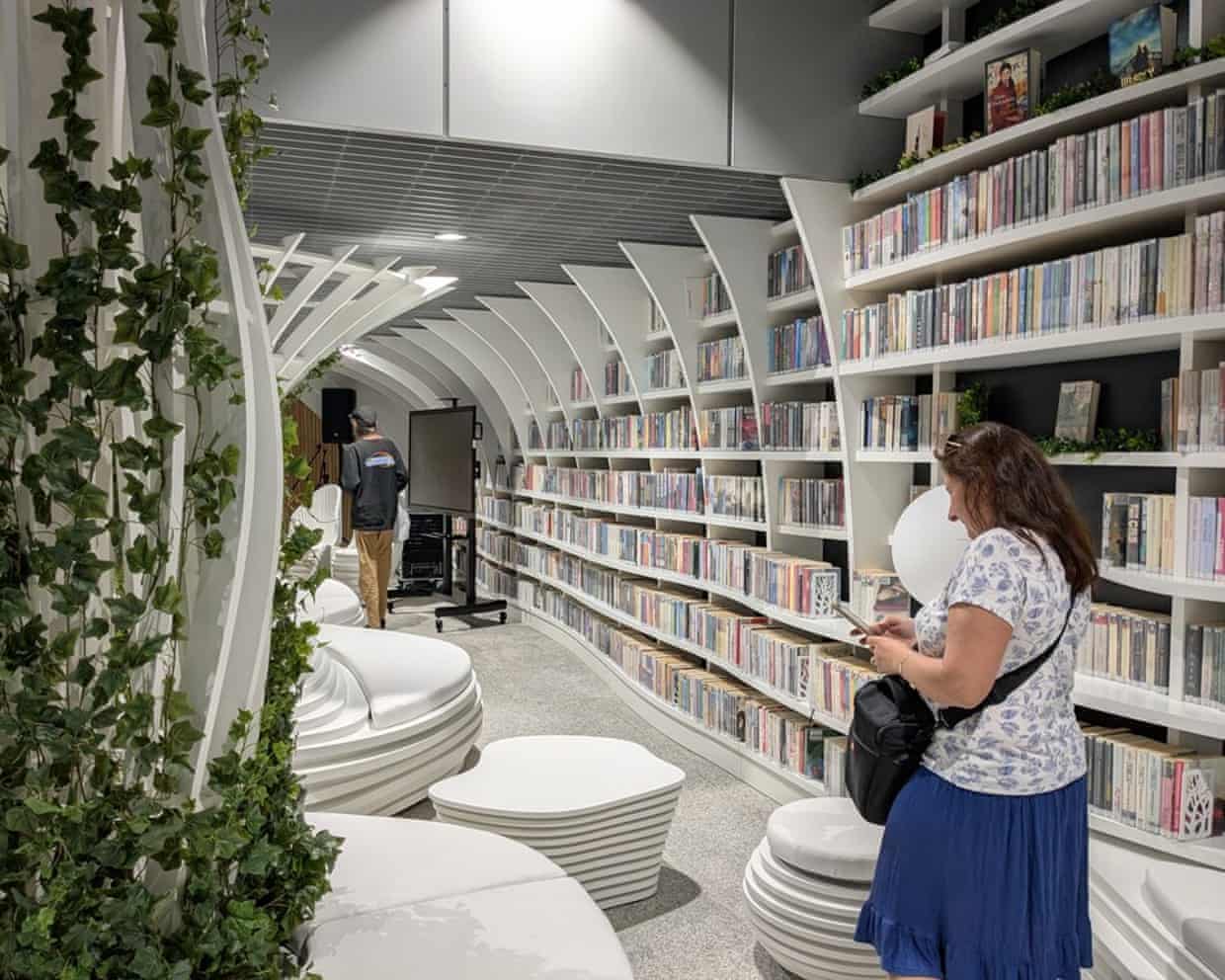
Photo: Biblioteka Publiczna w Dzielnicy Targówek m.st. Warszawy.
A library has opened in a new metro station in Warsaw. 

Fans of libraries know that libraries have a way of popping up in all sorts of unlikely — even inimical — places. If you search on the word at this blog, you will find stories about libraries on horseback, in impoverished countries, in war zones, and wherever people find comfort from reading.

Jakub Krupa reported for the Guardian about a new library in a Polish subway station.

“An ‘express’ library has opened in a new metro station in Warsaw, aiming to provide an appealing cultural space to encourage residents and commuters to forgo smartphones in favor of books and, thanks to fresh herbs growing in a vertical garden, a dash of subterranean greenery too.

“The stylish Metroteka [in] the Kondratowicza M2 line metro station in the Polish capital’s Targówek district offers two reading areas for adults and children, as well as a space for public readings and events.

“About 16,000 books are on offer. … Readers can return them on site or through a street-level parcel locker for books, available 24/7.

“Visitors can study or work in a communal area, borrow a laptop to browse the internet, or simply sit down with a complimentary coffee or hot chocolate to unwind after rush hour travel on the metro. …

” ‘Our dream is for Metroteka to become an educational and cultural centre, and not just a place where you borrow your books from,’ says the deputy director of Targówek library, Grażyna Strzelczak-Batkowska. …

“She says the unique subterranean location brings the library closer to busy commuters, ‘both geographically and in terms of time you need to spend on getting the book.’ …

“More than 400 books were leased on the first day, mostly recommended school readings, as well as travel guides and ‘all sorts of how-to books.’

“The library’s innovative model aims to encourage Poles to read more. The annual survey by the National Library of Poland found that only 41% of respondents had read at least one book in 2024, down from the high 50s in the late 1990s and early 2000s, as people turn to TV, streaming services, and phones for entertainment instead.

“These numbers are higher than in southern Europe, but lower than in the Nordic countries, or even the neighboring Czech Republic, the National Library’s director, Tomasz Makowski, says.

“He says there are historical reasons for it – with Poland losing 70% of libraries in the second world war, ‘we had several generations that did not see their parents or grandparents in front of a wall of books’ – but also cultural as ‘reading is not something associated with adulthood,’ but with ‘schools, teachers, librarians, and usually mothers reading to children.’

“ ‘Opening a library in a metro station is like a dream for us,’ Makowski says, as it challenges that stereotype. ‘Libraries should be beautiful and open; inviting, not intimidating. It’s not a shrine, but a place where you can spend time freely, take part in discussions, public consultations, or meet people,’ he says.

“He says the National Library has also opened a ‘loud’ reading room, breaking with the tradition that such areas need to maintain silence, where ‘no one shushes you or tells you to keep quiet. To our surprise, it’s still pretty quiet, but they also talk, give tutoring, different kinds of lessons.’ ”

Good photos at the Guardian, a free paper, here.

What do you think of the library’s chances? I love the optimism behind this effort but can’t help picturing what the subways I know well are like. Has anyone else commuted to work this way?
Read Full Post »

 Illustration: Eleanor Shakespeare/Bridgeman Images/The Guardian.

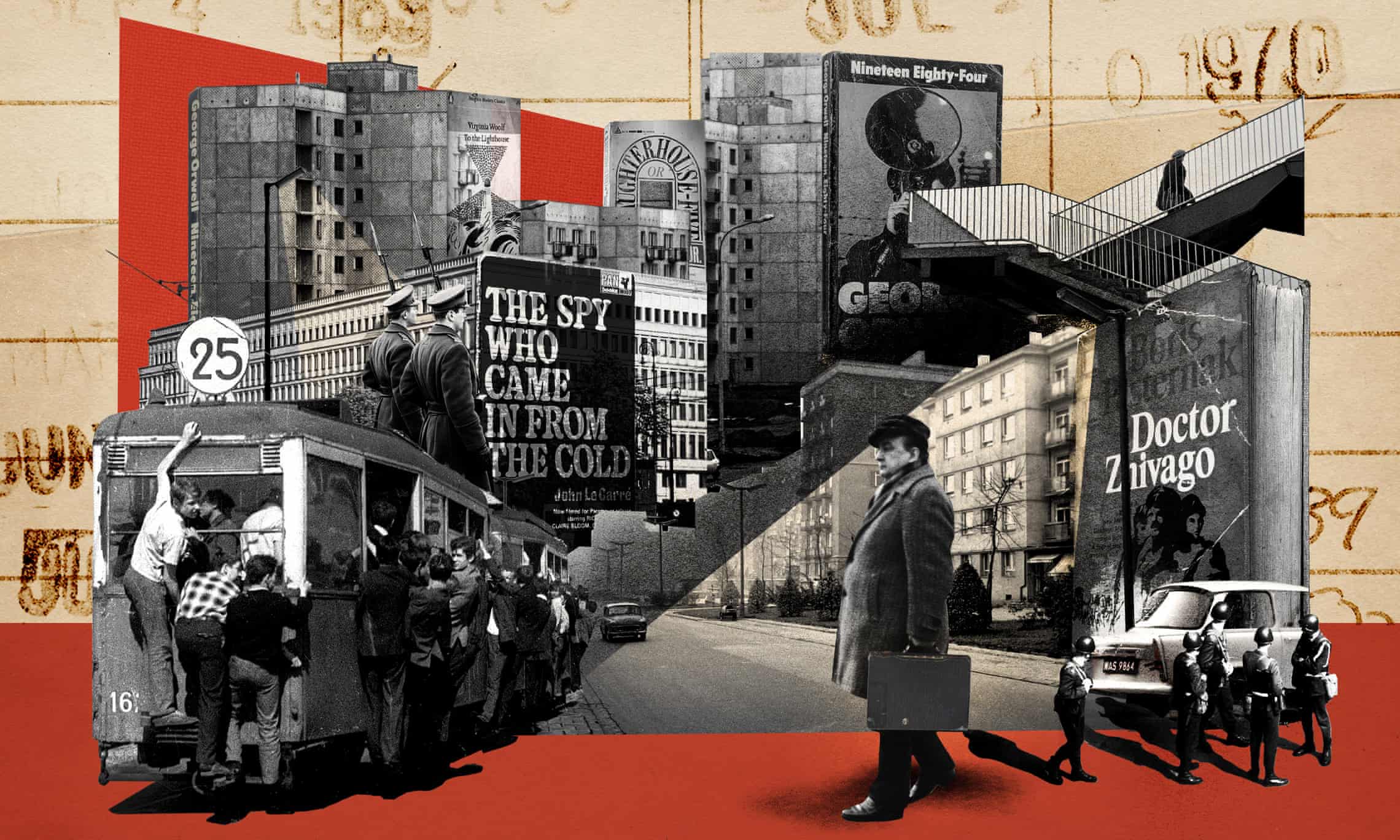
Of course, it couldn’t happen here, right? As we children always said during the time of the Cold War when someone opposed us, “It’s a free country!” And if we had applied that to reading material, we would have known we could read whatever we wanted. No need to smuggle anything in.

Well, what would that be like? In an edited extract from Charlie English’s book about Poland, The Best Kept Secret of the Cold War, the Guardian gives us an idea.

“The volume’s glossy dust jacket shows a 1970s computer room, where high priests of the information age, dressed in kipper ties and flares, tap instructions into the terminals of some ancient mainframe. The only words on the front read ‘Master Operating Station,’ ‘Subsidiary Operating Station’ and ‘Free Standing Display.’ Is any publication less appetizing than an out-of-date technical manual?

“Turn inside, however, and the book reveals a secret. It isn’t a computer manual at all, but a Polish language edition of Nineteen Eighty-Four, George Orwell’s famous anti-totalitarian novel, which was banned for decades by communist censors in the eastern bloc.

“This copy lives now in the library of Warsaw University, but for much of the cold war it belonged to the Polish writer and dissident Teresa Bogucka. It was Teresa’s father, the art critic Janusz Bogucki, who first brought it to Poland. In 1957, during a window of liberalization that opened after Stalin’s death, Janusz picked up the Orwell translation from a Polish bookshop in Paris, smuggled it back through the border and gave it to his daughter. Teresa was only 10 or 11 years old then, but she was a precocious reader, and recognized the ways in which communist Poland mirrored Orwell’s fictional dystopian state. …

“Years later, in 1976, when Bogucka joined the emerging Polish opposition movement, she decided to create a library of books that had bypassed the state censor, and donated her own small collection, including this Nineteen Eighty-Four. The SB security service, Poland’s KGB, kept continual watch on her, eavesdropping on her conversations, arresting her and searching her apartment, so she asked neighbors to store the forbidden books. Much of the time, though, they would be circulating among readers, since this would be a ‘Flying Library,’ which rarely touched the  ground.

“Bogucka’s system of covert lending ran through a network of coordinators, each of whom was responsible for their own tight group of readers. She sorted the books into categories – politics, economics, history, literature – and divided them into packages of 10, before allocating each coordinator a particular day to pick up their parcel, which they carried away in a rucksack. The coordinator would drop the books back the following month at a different address, before picking up a new set.

“The demand for Bogucka’s books was such that soon she needed more, and these could only come from the west. Activist friends passed word to London, where émigré publishers arranged shipments of 30 or 40 volumes at a time, smuggling them through the iron curtain aboard the sleeper trains that shuttled back and forth between Paris and Moscow, stopping in Poland along the way. By 1978, Teresa Bogucka’s Flying Library had a stock of 500 prohibited titles.

“How many people read her copy of Orwell’s book in those crucial cold war years? Hundreds, probably thousands. And this was just one of millions of titles that arrived illegally in Poland at that time. As well as via trains, books arrived by every possible conveyance: aboard yachts; in secret compartments built into vans and trucks; by balloon; in the post. Mini-editions were slipped into the sheet music of touring musicians, or packed into food tins or Tampax boxes. In one instance, a copy of Aleksandr Solzhenitsyn’s The Gulag Archipelago was carried on a flight to Warsaw hidden in a baby’s nappy.

“What some in the east suspected, but very few knew for sure, was that the uncensored literature flooding the country wasn’t reaching Poles by chance. It was sent as part of a decades-long US intelligence operation, known in Washington as the ‘CIA book program,’ designed, in the words of the program’s leader, George Minden, to assault the eastern bloc with an ‘offensive of free, honest thinking.’ Minden believed that ‘truth is contagious,’ and if they could only deliver it to the oppressed peoples of the Soviet zone, it was certain to have an effect.

“From today’s vantage point, when disinformation threatens western liberal democracy as never before, and censorship and book bans are once again turning schools and libraries into ideological battlegrounds, the CIA literary programs appear almost quaint.

Although they had political goals, they must rank among the most highbrow of psychological warfare operations.

“Along with copies of the Manchester Guardian Weekly and the New York Review of Books, the CIA sent works by blacklisted authors such as Boris Pasternak, Czesław Miłosz and Joseph Brodsky, anti-totalitarian writings by Hannah Arendt and Albert Camus, literary fiction from Philip Roth and Kurt Vonnegut, writing advice from Virginia Woolf, the plays of Václav Havel and Bertolt Brecht, and the spy thrillers of John le Carré.

“Later, as well as smuggling books, the CIA would fund and ship presses and printing equipment into Poland, so that the banned titles could be reproduced in huge quantities by underground printers in situ. Few individuals were more central to these latter operations than the dissident publisher Mirosław Chojecki, known to the CIA by the cryptonym QRGUIDE.

“On a Tuesday evening in March 1980, the police came to arrest Chojecki for the 43rd time.”

Exciting stuff! Read more at the Guardian, here. No firewall.

Read Full Post »

Photo: Lenora Chu.
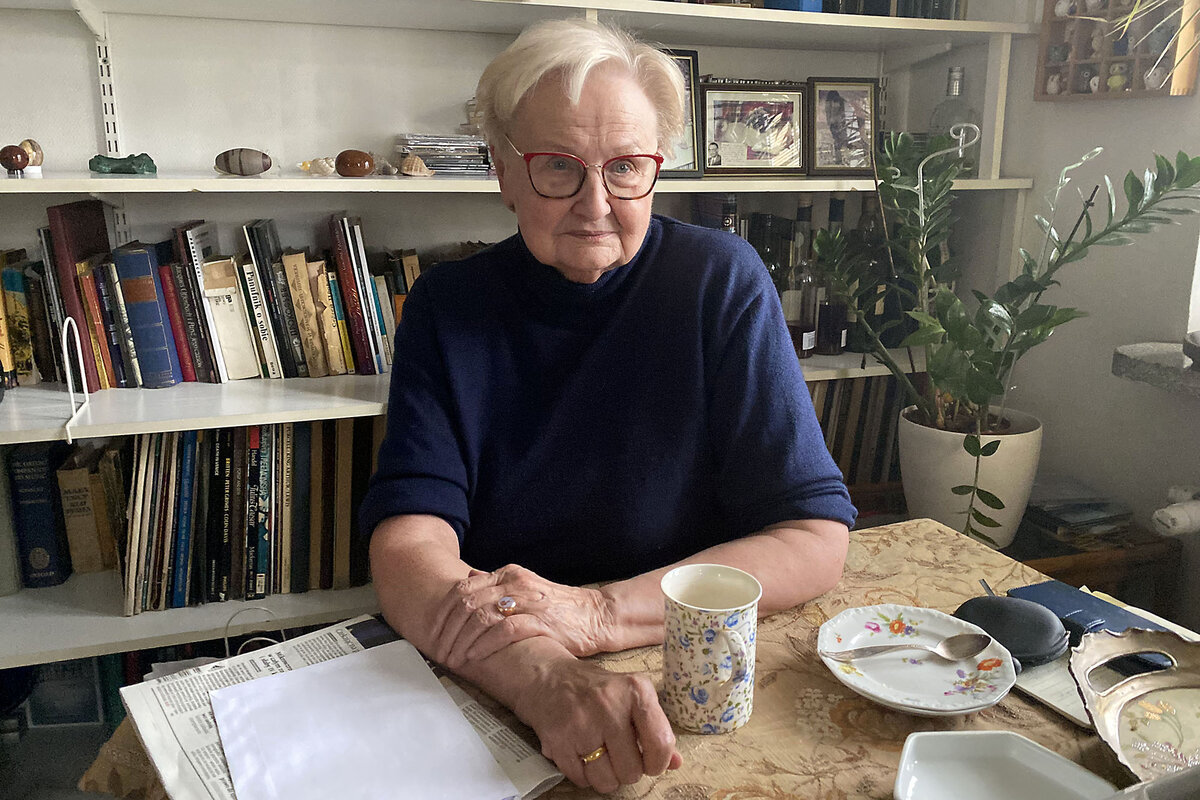
Ewa Łętowska, the elder stateswoman who helped build the legal framework of democratic Poland after communism, sits in her Warsaw flat last February.

Never underestimate the power of a woman. It may be under the radar, but woe to those who think they can always manipulate the quiet ones.

Lenora Chu of the Christian Science Monitor recalls, “It was late fall of 1987 in Poland, and the economic and social forces here were fueling tremors that would eventually fell communism across the Soviet bloc.

“Among a group of influential men – law professors – at a dinner party one evening was a Communist Party member brainstorming how to throw a bone to pro-democracy activists. The group was tasked with floating a name for a human rights ombudsman; that of legal scholar Ewa Łętowska kept surfacing. A devoted academic who had pumped out two decades of legal research on topics as benign as consumer protections and contract law, she was a respectable but safe choice.

“ ‘They said, “We want a woman, because women might be easier to manipulate,” ‘ Ms. Łętowska says in an interview in her Warsaw flat, lined floor to ceiling with books and opera records. She laughs at this memory that she possesses only because her lawyer husband was among the men feasting on schnitzel at that monthly table for regulars.

“If it was a wallflower they wanted, it turned out to be a miscalculation of historic proportion: They launched a stateswoman.

“Her trajectory as Poland’s top human rights thinker, she says, started ‘loudly, and with a bang’ when she was named the country’s human rights ombudsman soon after the dinner party, pioneering the balance between the state and the individual in the waning days of communism.

“She was an accidental influencer who, four decades later, now in her 80s, is a sought-after talking head, issuing viral social media posts about democracy. And when voters sent their right-wing government packing last October, a coalition of progressives turned to the wisdom and experience of Ms. Łętowska and her contemporaries.

“They’re looking for help to fix Poland’s institutions after the populists turned the country away from the European Union, rolled back civil rights such as abortion, took over the media and judiciary, and questioned the country’s humanitarian aid duties.

” ‘Ms. Łętowska’s value to Polish society cannot be overstated, says Helena Chmielewska-Szlajfer, a sociologist and assistant professor at Koźmiński University. ‘She’s a living legend, and she has the authority of this wise, powerful woman who set the institutions right in the beginning. She worked on this at a time it was the hardest – the intermediary stage between communism and democracy. And she still has much to say.’

“In 1980, the world saw burly Solidarity unionist Lech Wałęsa leading a revolt against communist authorities for worker rights – and eventually winning a Nobel Prize for it. But it was the progressive technocrats quietly blooming in that politically fertile time who did the less spectacular but essential work of building a democratic legal framework.

“Until then, Ms. Łętowska had forged her career as an impartial civil law professor, neither courting the communist regime nor joining the opposition. [She] now confidently says she … ‘was a state official to society, who brought more dialogue, more transparency. At the same time, I didn’t want a political future.’

“In an era when one didn’t easily trust one’s neighbor, there was little subversive in her ‘good girl’ youth to suggest she would emerge a strong voice for human rights and democracy. … On rare study trips abroad — few Polish scholars were trusted to leave the country — she might use German colleagues’ photocopiers to reproduce expensive legal tomes, like handbooks and casebooks on human rights law. …

“After law school in the 1960s, she published articles about civic law issues, rising through the ranks as a professor at the Polish Academy of Sciences’ Institute of Law Studies.

“A trip to the West – Hamburg, Germany – in the early 1980s was a turning point. She happened upon a demonstration by feminists. … From the other side of the street, she could see citizens hurling insults at the women.

“ ‘And in between you could see a line of police, with stone faces making sure no one gets hurt, being completely indifferent, and providing this space for demonstrating,’ says Ms. Łętowska. ‘It was the first time in my life I saw police not beating demonstrators – but rather protecting them. This is how I finally understood how things should be.’

‘The people of Hamburg would never know how much credit they should take, quite by accident, in my education,’ she says.

“Half a decade after that trip, she was named Poland’s first human rights official, judging the conduct of the state toward its citizens. … Should political parties have to register with the state? No, she famously wrote in 1988, when Poland was still under communist rule: ‘The constitution stated clearly: if parties want to form, let them form. Registration is required only for associations.’ …

“After the communist regime fell in 1989, she found herself among the legal scholars helping to modernize the Polish Constitution.”

More at the Monitor, here. Piotr Żakowiecki contributed to this report.

Read Full Post »

Photo: The documentary Fat Kathy.
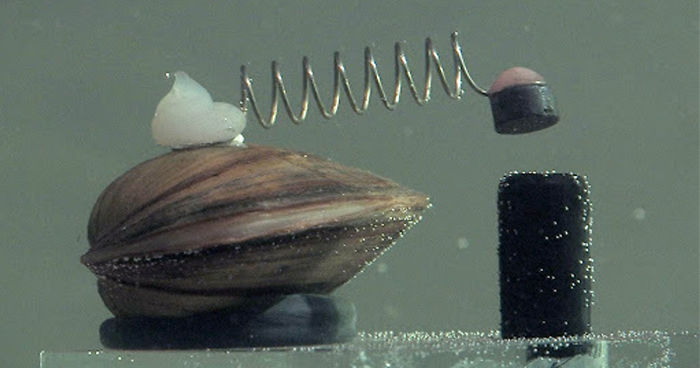
In Warsaw, clams are used to test for toxicity in the water supply.

I have blogged before about the role of oysters and oyster shells in cleaning up polluted water (for example, here and here), but today’s story suggests other mollusks are equally hard at work.

Judita K writes at Bored Panda, “Some manmade things are better left to nature. [That’s why parts of] the world have decided to trust clams and mussels to monitor the cleanness of their water. Despite most of us being used to seeing clams on a fancy dinner plate, some of them get a more important mission — monitoring the purity of drinking water. …

“The water quality in Warsaw, the capital city of Poland, is monitored by … well, yes, clams. A Polish Tumblr user who goes by nickname Ftgurdy explained that the city of Warsaw gets its water from a river and ‘the main water pump has 8 clams that have triggers attached to their shells. If the water gets too toxic, they close, and the triggers shut off the city’s water supply automatically.’

“There’s a whole documentary on that, called Fat Kathy, and you can check out its trailer here. It follows how the main scientist-malacologist watches over the system’s operation. …

“Municipal Water and Sewage Enterprise in the Capital City of Warsaw confirms the use of fish and mussels for biomonitoring. They explain that they use biomonitoring at Warsaw Waterworks to increase the safety of the water treatment process. …

“The mollusks first undergo an acclimatization process after being caught and brought to the laboratory. It takes about two weeks. During that time, scientists also determine the natural opening of their shell — clams leave a slight opening and feed by filtrating water. Within one hour, one clam can filter and thus analyze the quality of 1.5 liters of water.

They live only in completely clean waters and shut their shells immediately if they sense any impurity.

“After completing their acclimatization process, clams are placed in a specially designed flow tank. They are connected to the system controller that sends data to a computer which records the degree that the clams’ shells are open all the time. If the water quality deteriorates, the clams close their shells to isolate themselves from the contaminated environment. That automatically triggers an alarm and shuts down water supply while scientists perform laboratory tests.

“In order for the clams not to get used to the water that’s being tested, they only serve for three months. After their service is done, they are transported back to the same water they were taken from and are marked by the scientists so they don’t pick up the same clams again.

“This Polish Waterworks company claims that this biomonitoring method is one of the most effective proven technologies for water quality testing. According to them, mussels monitor water quality for over 8 million people in Poland. Turns out, Minneapolis is using this method as well. Minneapolis Water Treatment and Distribution Services credit 12 mussels for keeping the water clean and safe.

“ ‘They are filter feeders, so they are feeding off of the water that’s in there, pulling the nutrients down,’ said George Kraynick of Minneapolis Water Works. ‘They live for up to 50 years, they are there 24/7 and they are happy in the tank, just feeding. [After they’ve served their time] most likely, we will just set them free in the river. … Minneapolis is currently the only city in the US that uses clams for biomonitoring.”

The writer also includes great comments on this technology from Twitter and elsewhere on the internet.

More at Bored Panda, here. No firewall. If you prefer your sources to be less like Tumblr and more like the Economist, click here.

Hat tip: John.

PS. You might also like to read how Dr. Thabile Ndlovu in Eswatini (formerly Swaziland) is building a national bank of water data to ensure the water is safe to drink: here. She and her team are particularly focused on the danger of heavy metals.

Read Full Post »

Photo: DeansBeans.
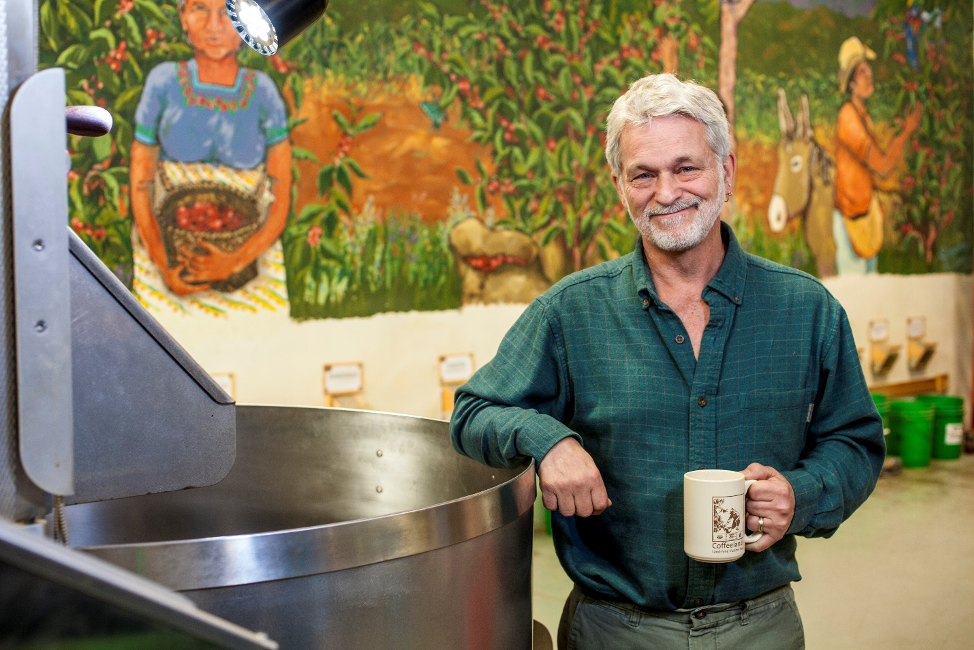
Dean Cycon of Dean’s Beans and his wife decided to go to Poland to help World Central Kitchen feed the influx of Ukrainian refugees. They both have forebears that were chased out of Europe by Russia.

Do you know the legend of the Jongleur de Notre Dame?

My francophone blogger friends should correct me if I get this wrong, but the way I remember it is that a man wanted to present a gift at the statue of the Virgin Mary but was desperately poor. He had a different kind of gift, though — a talent for juggling. The story goes that he juggled with all his heart and soul in front of the sculpture, and it gently bowed its head to him.

That’s the kind of miracle that feels real.

Today people are donating money and whatever talents they have in order to help Ukrainians invaded by Russia. First off, John, my son, who continues to employ optical engineers in Ukraine for remote work.

Another Massachusetts resident, Dean Cycon of Dean’s Beans Organic Coffee, is going with his wife, Annette, to Poland to work with World Central Kitchen, which is feeding thousands of Ukrainian refugees. Dean and Annette both have forebears they say were chased out of Europe by Russia. Their story is detailed at the Greenfield Recorder, here.

Boston doctors, interviewed here, made YouTube videos to teach ordinary Ukrainians how to treat war wounds. According to the Washington Post, The video is less than 40 seconds long — but its creators say it could help save lives in Ukraine.

‘The data we know from the battlefield is that a significant amount of deaths are preventable with taking these steps,’ Eric Goralnick, an emergency medicine physician at Brigham and Women’s Hospital in Boston. …

“Goralnick is the doctor shown acting out the tutorial in the short video, which provides a list of actionable steps written in Ukrainian. Another video, about 4½ minutes long, features a more detailed, step-by-step narration in Ukrainian by Nelya Melnitchouk, a Ukrainian-born oncology surgeon at Brigham and Women’s Hospital.” More.

The nonprofit group End Hunger New England is pivoting from mostly local needs to help Ukrainians, too, but according to the Christian Science Monitor, the group was stumped about how to deliver the meals so far away. Then a Boston-based shipping company, BOC International, stepped up. “It’s handling all the logistics,” the Monitor reports, No charge.”

Along with Asakiyume, I myself have joined a crowd of editor-types to help media people in Kyiv clean up translations of events so the Ukrainians can share the latest on Anglophone social media.

I am so grateful for this opportunity, which Asakiyume, a friend I met 25 years ago when we were both copyediting at a management magazine, offered me.

How it works: bilingual Ukrainians translate local news into English the best they can, then send it to colleagues to check as well as to “proofreaders,” mostly American. As proofreaders, we try to make the English sound more natural.

The organization we are helping works 24 hours a day. I know I’m getting more out of it than I am giving. Talk about real! If I want to sacrifice, I ought to sign up for the sparse 2 a.m. shift.

Read Full Post »

Photo: Kacper Pempel/Reuters
In the top photo jeweler Katarzyna Depa, 26, holds a silver ring with coal at her atelier in Katowice, Poland. Below, Grzegorz Chudy, 36, paints at his atelier in Katowice, where affordable rents have drawn artists.

Having recently watched the devastating 1976 documentary Harlan County, USA about a Kentucky mining strike, I’ve become a little more skeptical about longtime miners’ ability to transition to a new kind of life. Although I have blogged about efforts to help miners learn programming skills, for example, or be trained for jobs in the solar industry, such things may attract only younger people.

In this story from Public Radio International (PRI), we learn about recent changes in Poland, where the conservative government still supports the mining despite climate-change issues.

“When the Wieczorek mine, one of the oldest coal mines in Poland, closed [last] March, Grzegorz Chudy noticed for the first time the neighborhood was vibrant with trees in the full bloom of spring. The smell was heady.

” ‘It was incredible. You never knew all those trees were there,’ he told Reuters in his art studio in a housing estate for mining families in the southwestern Polish city of Katowice. ‘The smell wasn’t there while coal was being transported on trucks. The dust covered it up.’

“The Wieczorek mine in Katowice, with its towering brick shaft, is among dozens closing down throughout Poland, home to one of the most polluted coal mining regions in Europe. …

“Poland has had a painful and difficult experience with the economic transition from coal. Even as it counts down to [November 2018 climate talks], it announced plans for a new coal mine in the south of the country.

“Its government drew support in part from those with an emotional attachment to the job security, social fabric and national pride associated with mining that overlooked the downsides for health and the planet. …

“Chudy, 36, whose paintings often depict the life and architecture of Nikiszowiec, is one of hundreds of people who have moved to the area, drawn by its industrial feel and affordable housing.

“Built to house the families of miners at the start of the 20th century, Nikiszowiec was designed as a self-sufficient neighborhood with its own communal bread ovens and pigsties, as well as a bath house for miners and laundry facilities. …

“Those in the artistic community say their work could only exist with the inspiration provided by decades of mining.

” ‘For me using coal in a different way than it used to be, which was energy, shows its completely new face, so we can call it our new, cool black gold,’ said Katarzyna Depa, who makes jewelry from coal.

“But for those with mining in the blood, moving on is harder and the smell of coal dust is as sweet as blossom. Above all, they miss the community spirit even if it meant shared danger and hardship.”

More at PRI — which is, by the way, an amazing window on the world. Check it out if you don’t know it.

Read Full Post »

I liked this story by Penny Schwartz from the Sunday Globe. It’s about the painstaking work of restoring a magnificent synagogue built in the 17th and 18th centuries and destroyed by the Nazis in WW II.

“For the last 10 years, Laura and Rick Brown have been immersed in the art and architecture of Poland’s historic Gwozdziec synagogue. …

“Now, after a decade of research and building small-scale models, the Browns and their international team of 300 carpenters, artists, and students have created a nearly full-scale replica of the the triple-tiered roof and intricately painted ceiling and cupola of the Gwozdziec synagogue, considered one of the most magnificent, well-documented of the wooden synagogues of the era. …

“ ‘They really have done something miraculous,’ said Barbara Kirshenblatt-Gimblett, professor of performance studies at New York University’s Tisch School of the Arts, who was tapped to lead the museum’s exhibit development team. …

“The Browns’ approach to building, using traditional tools and techniques dating back to the time the synagogue was built, offered something beyond having a copy of the synagogue roof built as a prop, Kirshenblatt-Gimblett said. …

“Both sculptors, the Browns came to the Gwozdziec project as founders and directors of Handshouse Studio, an educational nonprofit in Norwell [Massachusetts] that replicates historic objects using authentic methods. …

“Looking back on the journey, Laura and Rick say they are humbled by the hundreds of people, including many MassArt students and graduates, who have given so much time to this project.

“They are grateful to MassArt for allowing them the flexibility to create courses designed for the project including a series of Lost Historic Paintings’ classes analyzing and replicating quarter-scale, then half-scale models of the Gwozdziec synagogue ceiling panels.

“The 85 percent scale replica represents more than the grandeur of a long ago synagogue, Laura said. ‘This object speaks to a very painful history that is still very alive,’ she said.” More.

Photo: Jonathan Wiggs/Globe Staff
Artist Rick and Laura Brown at their studio in Hanover, Massachusetts.

Read Full Post »

Try to praise the mutilated world.

Remember June’s long days,
and wild strawberries, drops of wine, the dew.
The nettles that methodically overgrow
the abandoned homesteads of exiles.
You must praise the mutilated world.
You watched the stylish yachts and ships;
one of them had a long trip ahead of it,
while salty oblivion awaited others.
You’ve seen the refugees heading nowhere,
you’ve heard the executioners sing joyfully.
You should praise the mutilated world.
Remember the moments when we were together
in a white room and the curtain fluttered.
Return in thought to the concert where music flared.
You gathered acorns in the park in autumn
and leaves eddied over the earth’s scars.
Praise the mutilated world
and the gray feather a thrush lost,
and the gentle light that strays and vanishes
and returns.

—Adam Zagajewski (Translated, from the Polish, by Clare Cavanagh.)
Published in the New Yorker, September 24, 2011

Read Full Post »

Some years before Suzanne launched Luna & Stella, her brother started his own entrepreneurial business, Optics for Hire. John’s work has entailed regular trips to Ukraine and Belarus to meet with optical engineers.

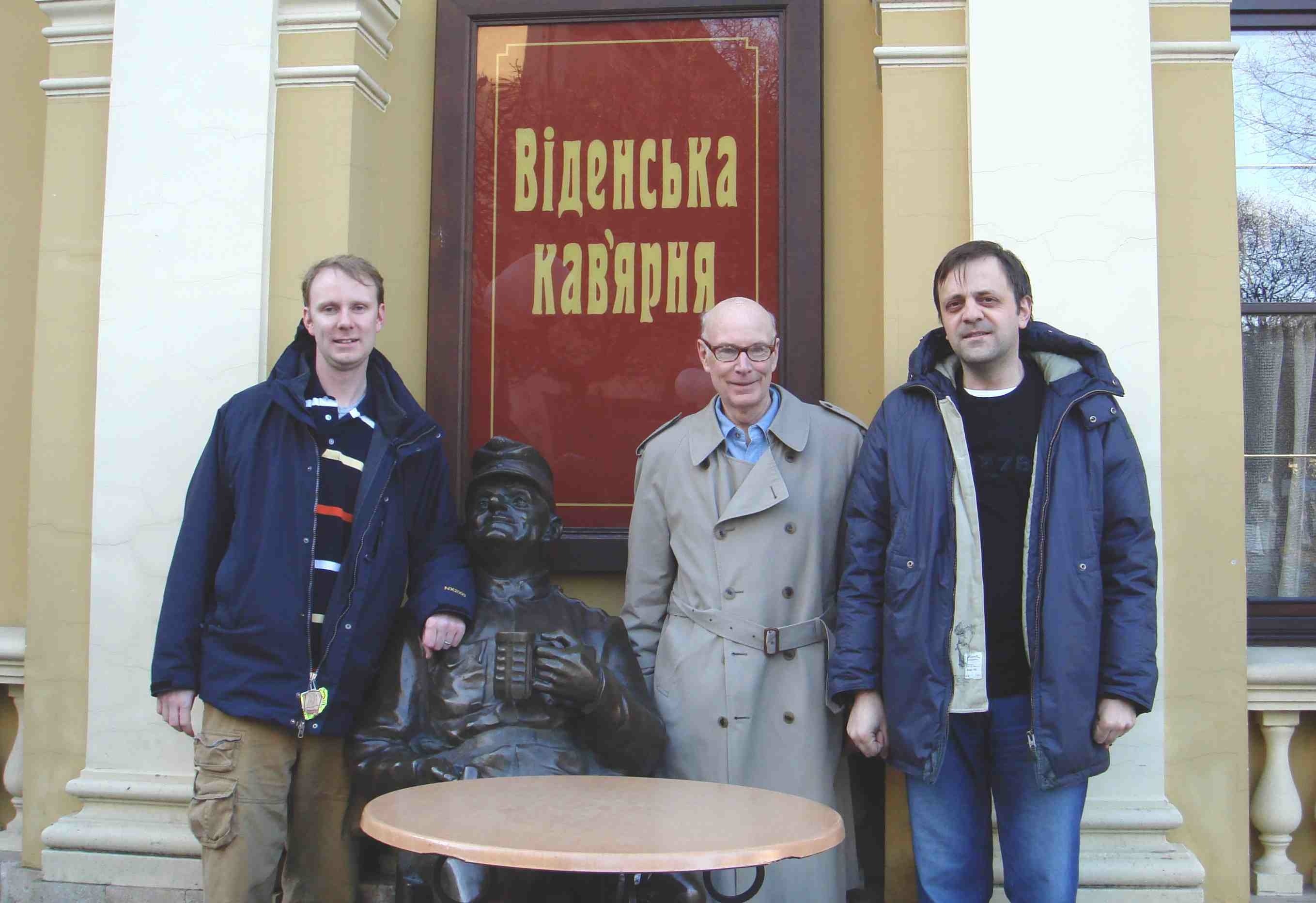
In 2008, his dad decided to join him on a trip to Lviv, Ukraine (called Lvov when it was part of Poland). Here they are.

John is on the left, then the Good Soldier Švejk (Schweick), then my husband, then a Ukrainian engineer.

Do you know the Good Soldier Švejk? He is a character in a Czech antiwar novel written after WW I. The book reemerged as the thing to read around the time of the Vietnam War. The Wikipedia write-up says in part:

“It explores both the pointlessness and futility of conflict in general and of military discipline, specifically Austrian military discipline, in particular. Many of its characters, especially the Czechs, are participating in a conflict they do not understand on behalf of a country to which they have no loyalty.

“The character of Josef Švejk is a development of this theme. Through possibly feigned idiocy or incompetence he repeatedly manages to frustrate military authority and expose its stupidity in a form of passive resistance: the reader is left unclear, however, as to whether Švejk is genuinely incompetent, or acting quite deliberately with dumb insolence.”

I was delighted to see that Švejk is still appreciated in Lviv.

Meanwhile, whenever John goes to Lviv, I always ask him to hunt down the lost masterpiece of the Jewish writer Bruno Schulz, best known for The Street of Crocodiles. He is said to have given his greatest work to a Catholic friend for safekeeping just before being shot in the street by a Nazi officer. I have read a good bit about him, including the biography Regions of the Great Heresy, and I am really worried about the missing work, The Messiah. He was an amazing writer.

 This write-up on the Internet generally coincides with what I have read about Bruno Schulz, except for the emphasis on his Polishness. Nations fight over his legacy because that part of the world has shifted so often. Israel also thinks he is theirs and about 15 years ago undercover agents upset Ukraine mightily by absconding with a mural Schulz had painted and taking it to a museum in Israel. The web write-up also mentions the great Israeli writer David Grossman’s novel about Schulz,  See Under: LOVE, a difficult read.

Read Full Post »