Feeds:
Posts
Comments

Posts Tagged ‘pollinator’

Photo: Biodiversity for a Livable Climate.
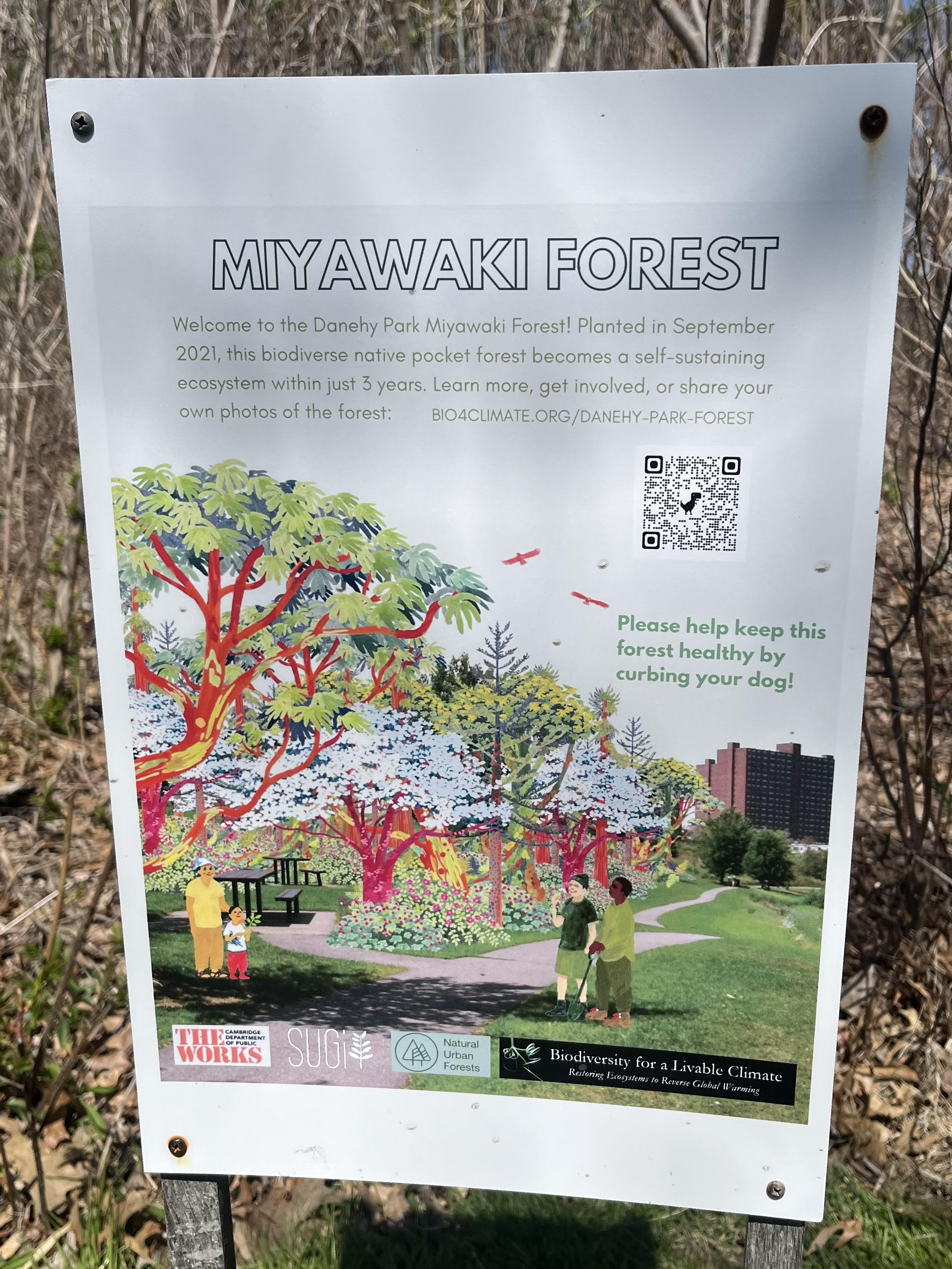
A Miyawaki forest at Danehy Park in North Cambridge, Massachusetts, planted on September 25, 2021 — with the help of enthusiastic volunteers. Other Miyawaki forests don’t look like much in April. But just watch!

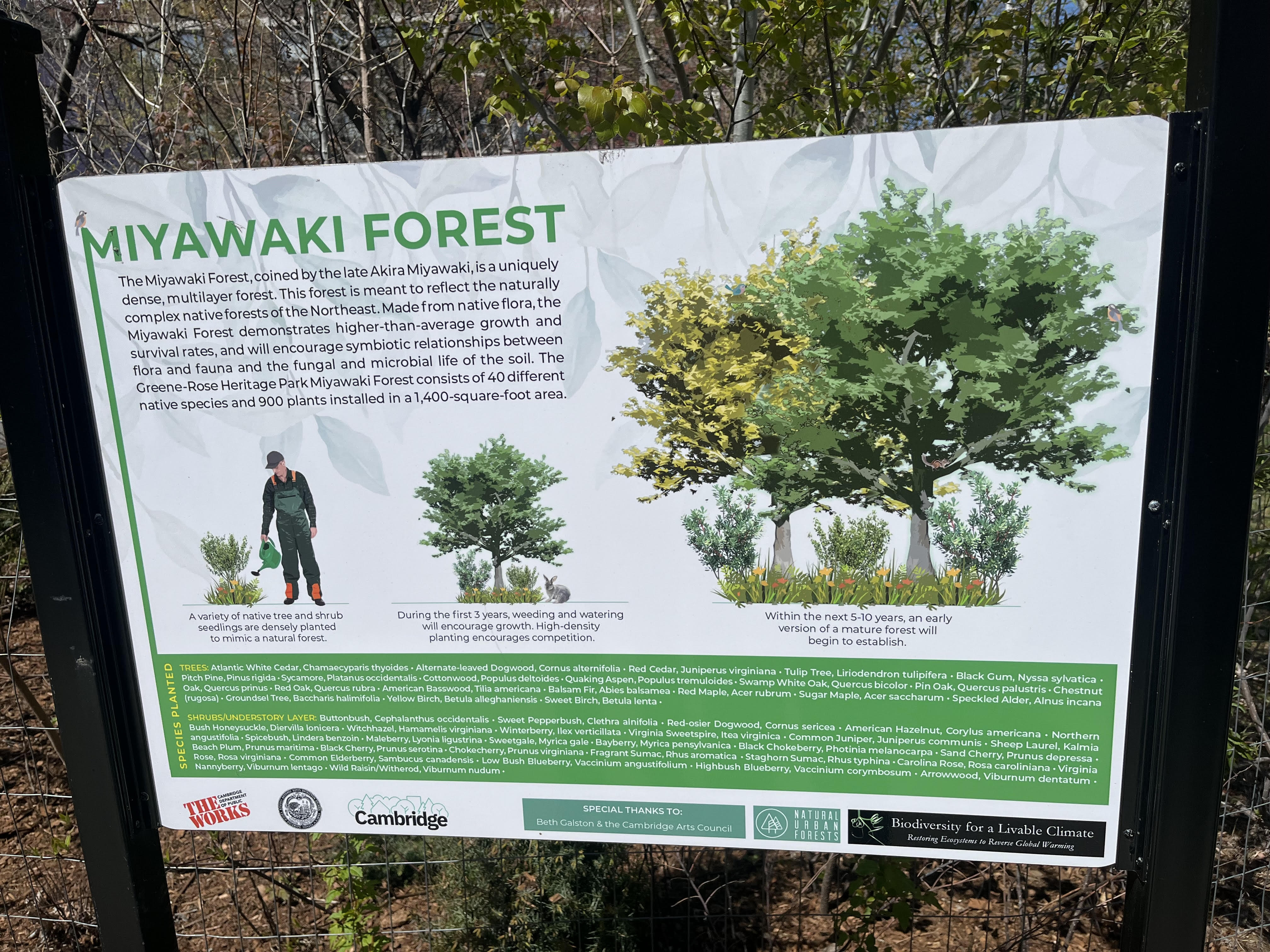
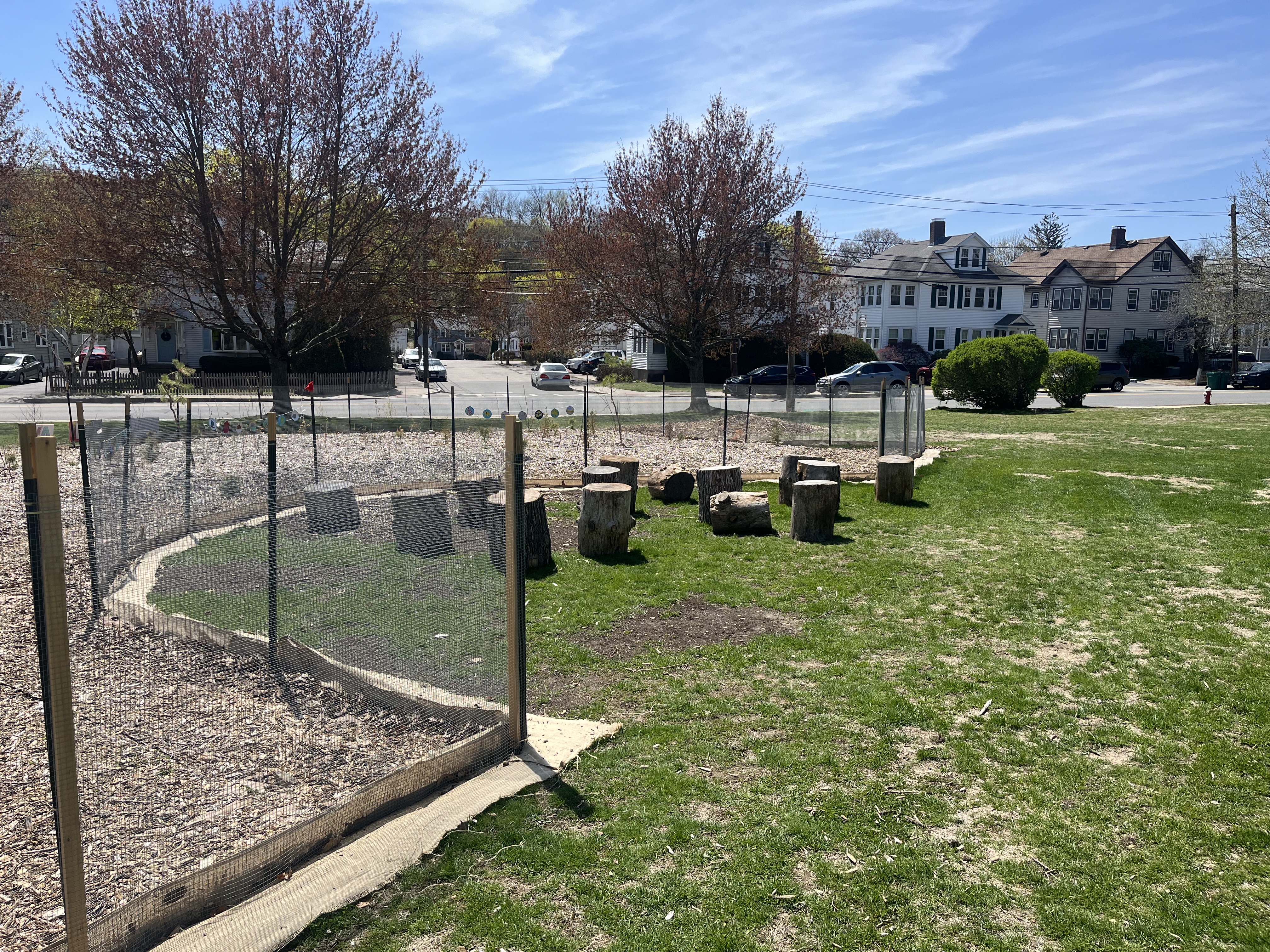
Although I blogged about Miyawaki mini urban forests in 2023, here, and again after a tip from Hannah in Philadelphia, here, I had never seen one in person and didn’t really understand the concept. These are not forests you take a walk in. They are deliberately planted too densely for entering, which is why one elementary school asked for a crescent shape to let kids see the native plants that their teachers were talking about.

On a special day in April, my friend Jean Devine of Biodiversity Builders took two of us on a tour of three Miyawaki Forests and the site for one that she and students at her local high school are building.

Now I think I get it. In order to have a healthy climate, we need a healthy, biodiverse planet. And the effects of even very small sites can spread. Birds, small animals, pollinators, and other critters flourish in these biodiverse pockets.

Biodiversity for a Livable Climate: Restoring Ecosystems to Reverse Global Warming says, “The Miyawaki Forest is an ultra dense, biodiverse pocket forest that recreates the complexity of natural forests and the relationships and processes that help them grow strong and resilient. By giving home to a vast array of native species, they boost the biodiversity of the area and nurture pollinators, supporting and restoring ecosystems. They sequester carbon in the soil, reduce air pollution and soil contamination, improve water absorption to buffer against flooding and erosion, and cool the surrounding area to mitigate the urban heat island effect. They also create a living classroom for people and communities to learn about native ecology, engage in stewardship, and experience the interconnectedness of the natural world.”

GBH tv provides a forum on the concept, asking, “What can hold more than 500 species, sequester more than 500 lbs. CO2/year, be 10F cooler than its surroundings, soak up lots of rainwater, and be made by and for children in a space no bigger than a tennis court? A ‘mini-forest’ planted using the Miyawaki Method, of course!

“Biodiversity for a Livable Climate hosts Miyawaki-Method advocates Hannah Lewis (Bio4Climate Compendium editor) and Daan Bleichrodt (The Netherlands’ Tiny Forest initiative leader), as they talk about mini-/tiny-forests and their role in climate resilience, urban beautification, and connecting all of us to nature.” More here.

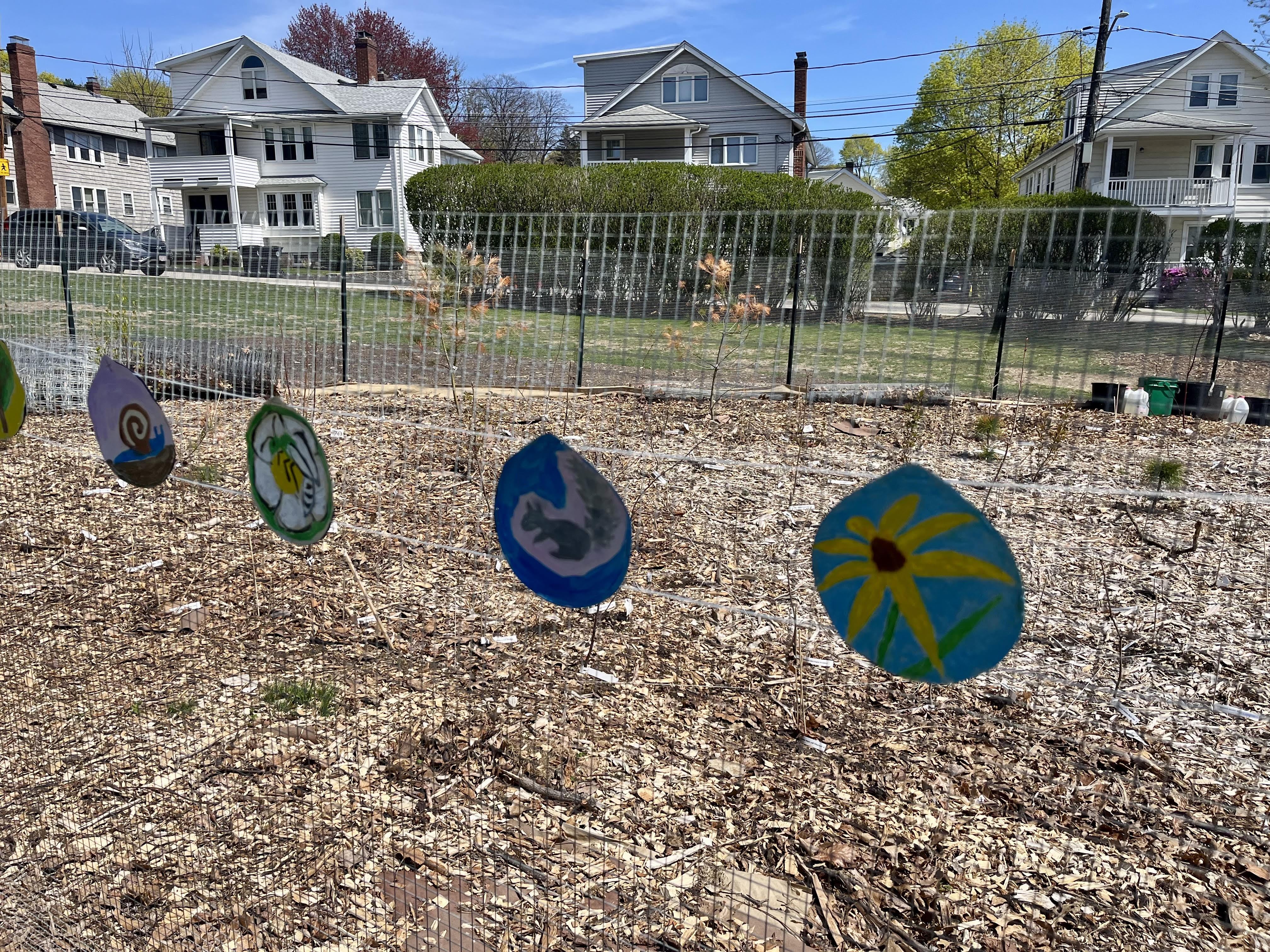
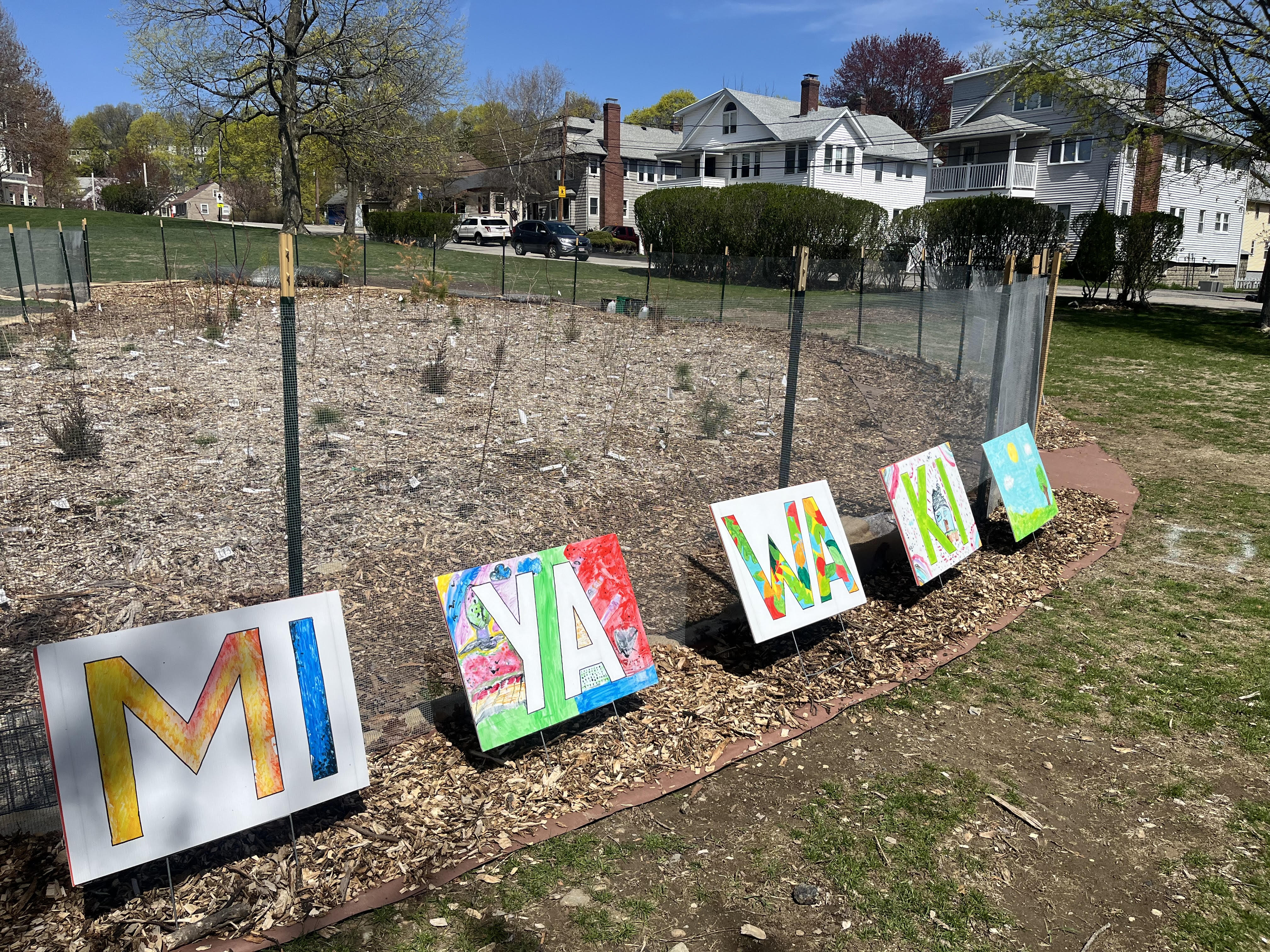
My photos are from mini forests Massachusetts, one in a large park in Cambridge, one in a Cambridge neighborhood’s pocket park, and one at an elementary school in Watertown. At the latter, the children sit on tree stumps for classes. Note the art they created for their forest, too. The forest doesn’t look like much in April, but just wait!

More at Biodiversity for a Livable Climate, here, and here.
Read Full Post »

Photo: MassAudubon.
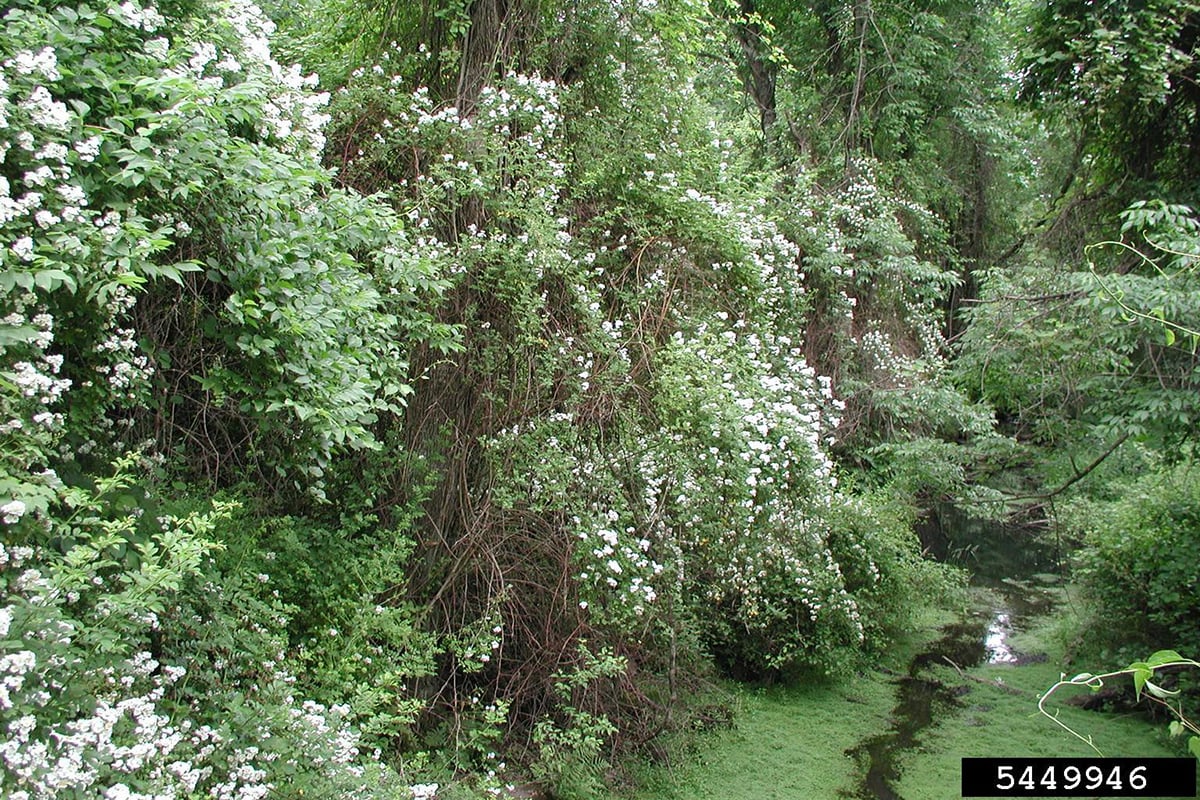
The invasive multiflora rose forms dense thickets in fields and field edges, crowding out other species.

The problem with invasive species that aren’t native to a region is that they crowd out the local species, and that has a snowball effect. We colonists crowded out indigenous people, which among other things, undermined wisdom about protecting nature. In the plant world, local pollinators don’t get what they need to pollinate. The list goes on.

Frank Carini reports at ecoRINews on how invaders hurt both the environment and the economy: “Invasive Asian shore crabs are outcompeting young lobsters. Invasive snake worms and hammerhead worms are burying themselves deeper into southern New England, where the former consumes the top layer of soil and dead leaves where the seeds of plants germinate, and the latter is toxic and transmits harmful parasites to humans and animals.

“Invasive multiflora rose and oriental bittersweet have long been embedded in the region, crowding out native vegetation and strangling trees. …

“Last summer, the Intergovernmental Science-Policy Platform on Biodiversity and Ecosystem Services (IPBES) for the United Nations issued a global assessment providing clear evidence of this growing threat.

“In a paper recently published in the journal Nature Ecology & Evolution, the authors of last year’s assessment — 88 experts representing 101 organizations from 47 countries — outline the main findings from that report and echo the need for urgent action.

Laura Meyerson, a University of Rhode Island professor of invasion science and habitat restoration ecology and editor-in-chief of the journal Biological Invasions, is a contributing lead author on the IPBES assessment and a lead author on the recent paper. …

“She said, ‘Our research produced overwhelming and unequivocal evidence that the negative impacts of biological invasions far outweigh any benefits and that those who depend most on nature suffer the worst consequences.’

“The researchers documented some 37,000 invasive species that had been introduced by people to areas around the world. Of those, about 3,500 species were considered harmful invaders that negatively affect nature and people’s quality of life. 

“The number of invasive species — major drivers of global biodiversity loss, according to Meyerson — are expected to continue to grow. Some 200 new species are expected to be added annually by human activities in regions that have not recorded such invaders before, according to the June 3 paper. And established invasives will continue to expand their ranges, spreading into new countries and choking out native species.

“The paper also noted that simple extrapolations from current impacts from invasive species are likely to underestimate the level of future impacts, and drivers of biodiversity loss, such as the climate crisis, are acting in concert and those interactions are increasing biological invasions. …

“ ‘It’s critically important that we all do our part to reverse current trends,’ Meyerson said. ‘The public can make sure that the plants they are buying for their gardens are native species. Pet owners should not release animals, like rabbits or Burmese pythons, that are no longer wanted into the wild.’

“For example, red-eared sliders — native to the Southeast, the south-central United States, and northern Mexico — are the most popular pet turtle in the United States and available at pet shops around the world. But this turtle species lives for about 30 years, so they are often released where they don’t belong after pet owners tire of them. As a result, they are considered one of the world’s 100 most invasive species.

“Meyerson is also the senior author on a global study that explored the extent of biological invasions on lands owned or managed by Indigenous people. The study was published in Nature Sustainability in late May.

“The spread of animal and plant species into new regions by humans is increasing rapidly worldwide, with thousands of species now present in regions outside their native range. The research team, which included scientists from Australia, Austria, Germany, Hungary, and the United States, investigated the spread of invasive species to lands managed by Indigenous people and found significantly fewer invaders in those areas compared with other natural areas.

“ ‘This was a really important finding because even after controlling for the remoteness and accessibility of Indigenous peoples’ lands and how land is used, in general, the numbers of invasive species are lower, as is biodiversity loss,’ Meyerson said. …

“Researchers analyzed millions of available data points from around the globe on the distribution of non-native plant and animal species. On average, there were 30% fewer non-native species on Indigenous lands. The study suggested the enormous difference is primarily due to sustainable land use, a higher proportion of forests, and lower accessibility to humans.

“Indigenous people represent ethnic groups that settled in regions long before the arrival of Europeans, such as Native Americans, the Aborigines of Australia, and the Sami in Scandinavia. About 28% of the land surface around the globe is inhabited by Indigenous people. Most of these areas are in remote regions and many have enormous importance for conservation of biodiversity such as the Amazon basin and wilderness areas in the Arctic.”

More at ecoRI News, here. No firewall. Donations solicited.

Read Full Post »

A bullied homeowner in a homeowners association won the right to have natural landscaping. The governor is expected to sign a bill that affects every gardener in Maryland.

Jean is my go-to source for information on saving the planet by protecting insects, planting native species, and getting rid of yard chemicals.

Yesterday she sent me a cool article about a tyrannical homeowners association that bit off more than it could chew when it told one couple what to plant.

Nancy Lawson wrote at Human Gardener, “If you live in a community governed by a homeowners association [HOA] in Maryland, your HOA will soon no longer be allowed to require you to grow turfgrass. It can no longer prohibit you from planting native plants and creating wildlife habitat. The Maryland General Assembly has spoken, quietly and firmly, joining a growing number of states last week by passing House Bill 322, the low-impact landscaping legislation that specifically codifies your right to be wildlife-friendly, plant-friendly, and environmentally conscious.

“You can thank my sister, Janet Crouch, for that. … Three and a half years ago, Janet and her husband Jeff began receiving demands from the Beech Creek Homeowners Association in Howard County that they convert their beautiful 15-year-old pollinator gardens to turfgrass. In a series of bullying and nonsensical letters, the HOA’s contracted law firm, Nagle & Zaller, wrote that a garden ‘without the use of pesticides in which they have maintained “native plants” to provide food for birds, bees, and other insects and animals’ is ‘completely contrary to the overall design scheme for the Association, which is a planned development.’ … Attorney Sean Suhar used quotes around words and concepts he apparently viewed as suspicious, such as ‘garden,’ and wrote disparagingly of the Crouches’ ‘environmentally sensitive agenda.’

The law firm’s letters displayed a seemingly boundless ignorance by trying to demonize my sister and her husband for adding ‘plantings which grow back every year.’

“Throughout this process, there was virtually no opposition from politicians, and even the national association representing HOAs supported the legislation. When we testified for the bill the first time at last year’s hearing, the curmudgeonly delegate who’d voted against other environmental proposals that day surprised us all by asking, ‘Who wouldn’t support pollinator gardens?’

“His question was more than rhetorical for my sister. Janet’s HOA board was so unsupportive of pollinator gardens that it paid the law firm of Nagle & Zaller about $100,000 of the community’s money — made up entirely of homeowners’ dues — to try to get rid of the one in my sister’s  yard. …

“The entire case against the Crouches was built on the complaints of one neighbor, who grows Japanese barberries in front of his house and fills his lawn with blue chemicals that I have filmed running down toward the wooded and stream-filled park during rainstorms. He also hires pesticide sprayers routinely and accused the Crouches’ of attracting mosquitoes, even though his eroded lawn pools with standing water and provides perfect mosquito habitat. One of the most ludicrous complaints of all from this man — whose property and entire neighborhood abuts forest where owls, foxes, squirrels, chipmunks and many other animals live — was repeated in illogical screeds from the lawyers proclaiming that ‘numerous squirrels are being attracted to the subject property. The neighbor fear [sic] this will affect their property.’

“Claims of squirrel takeovers may sound laughable, but since 2017, it has been no laughing matter for Janet, who poured her heart into saving the garden that has offered so much solace to her family and so much habitat to the community’s birds and other wildlife. …

“In preparation for a ‘hearing’ process in 2018, we prepared many documents and photos, only to arrive and discover it was all a sham. Suhar, the HOA lawyer, immediately told my sister to ‘shut up’ when she tried to speak and yelled at me to ‘be quiet.’ …

“Unfortunately there was no law against such abusive behaviors, nothing to prohibit HOAs from acting in a kind of Wild West, arbitrary fashion toward gardens and nature and the people who love them. Until now. …

“We will be eternally grateful to wildlife biologist John Hadidian, native nursery expert Rob Jenkins, and realtor Kristi Neidhardt for their wisdom, insight and bravery in signing on to help with the case. Most of all, Jeff Kahntroff and Matt Skipper of Skipper Law took on what most lawyers consider to be an unwinnable issue. …

“It’s easy to become overwhelmed by the forces against nature, but my sister has taught me that you can change those tides by becoming a force of nature. ‘I’m a shy person,’ she told me last week, ‘and I don’t usually put myself out there like this.’ But she’s never countenanced bullies and has defended me from them since I was a little girl. This time, she was defending the plants and animals and her family, who felt attacked in their own home of 20 years. … Thanks in large part to the bravery and fortitude of Janet Crouch, many more people in my home state will now be allowed to nurture the bees, butterflies and other wildlife in their own backyards.

“The bill is waiting for the governor’s signature and is set to become law in October.”

More here. Hat tip: Jean at Meadowmaking.

Read Full Post »

042520-bee-hotel-outside

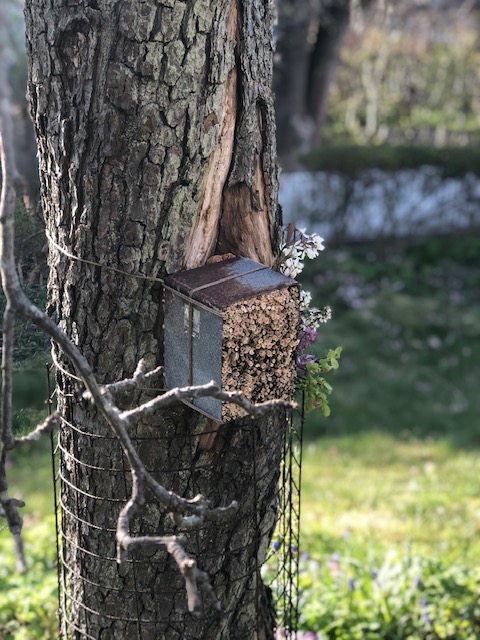
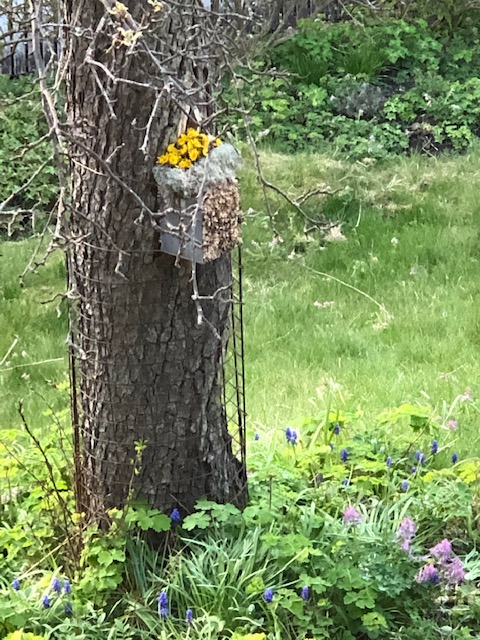
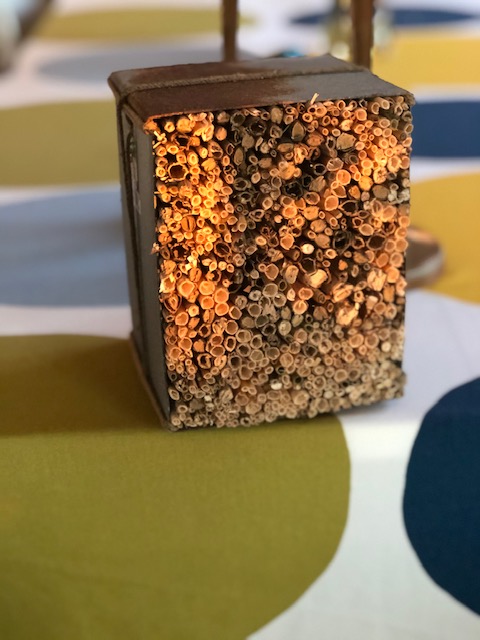
After I posted yesterday about the bee hotels and other pollinator-friendly initiatives in Costa Rica, I received several delightful photos taken by Lolo Dahlsten in Sweden. A member of Erik’s extended family, Lolo writes, “I had some fun Saturday a week ago when I made this bee hotel. The metal part is actually two zinc shelves tied together with some tarred rope. The other day I put some moss and dandelions on the roof 🌻🌱🐝 Today there’s only the moss left.”

Of course, I had to show you all that bee hotels are a real thing — not just in Costa Rica. And it looks like you can also bring your bee hotel indoors for company at dinnertime.

Hat tip: Stuga40

042520-bee-hotel-with-dandelions-Sweden

042520-bee-hotel-by-Lolo


Read Full Post »