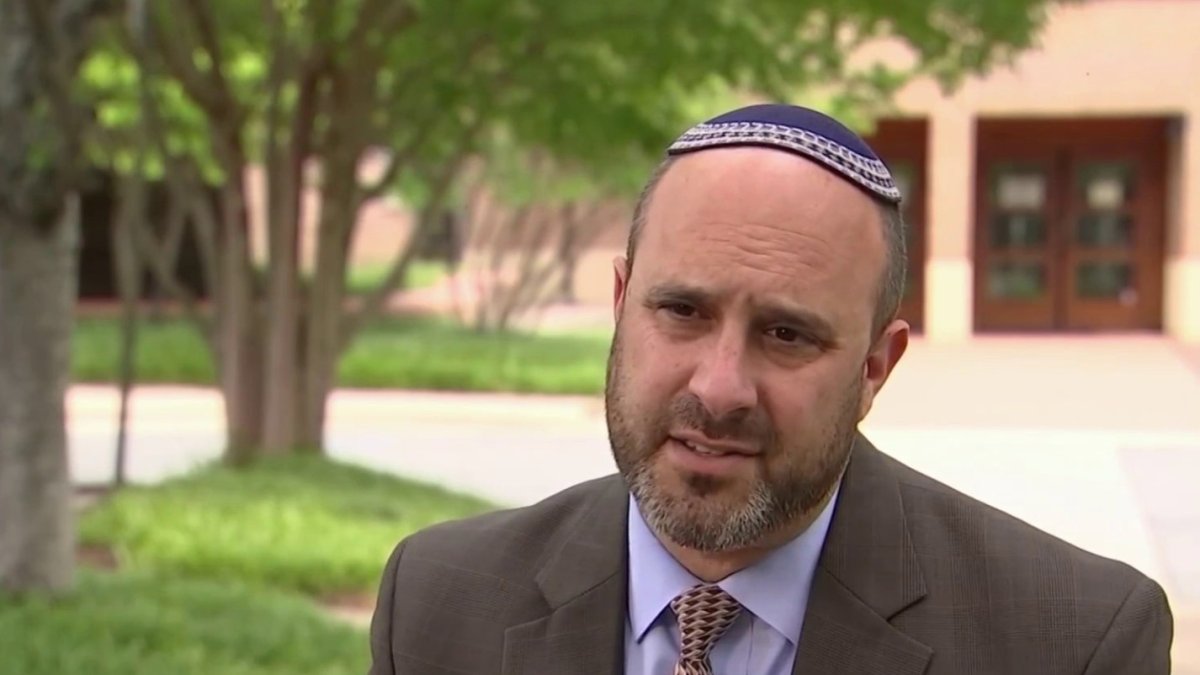
In Potomac, Maryland, Har Shalom rabbi Adam Raskin has pulled together faith leaders help support Afghan refugees.
When leaders of differing faiths recognize they are all called to do the same kinds of good works, great things can happen. Today’s example is from Potomac, Maryland.
Sydney Page writes at the Washington Post, “Adam Raskin, a rabbi at Congregation Har Shalom in Potomac, Md., knew how difficult the situation was for Afghan refugees in the Washington region.
“Since the historic airlift out of Kabul last year, more than 3,700 Afghan evacuees have been resettled in the District [of Columbia, DC], Maryland and Virginia, overwhelming social service agencies and leaving some refugee families waiting for housing and in limbo.
“Raskin and his congregants decided to help by sponsoring a refugee family.
‘We thought it was very much in line with our values,’ Raskin said. ‘For Jews, many of whom were refugees from places of persecution, there is a special sensitivity for this issue.’
“As members of the congregation began researching the resettlement process, they quickly learned how complicated it can be, and how many resources are required.
“ ‘We could do this on our own,’ Raskin recalled thinking to himself, ‘but wouldn’t it be amazing to collaborate with a Christian and Muslim congregation? … This is a country where religions don’t have to be at odds with each other, but actually where religious communities collaborate and find common ground,’ Raskin said.
“He contacted St. Francis Episcopal Church and the Islamic Community Center of Potomac to gauge their interest in an interfaith initiative, and both congregations were enthusiastically on board.
“ ‘We definitely wanted to get involved,’ said Sultan Chowdhury, who was one of the founding members of the Islamic center, and currently serves as its trustee. ‘God gave us an opportunity to truly learn about each other. It is wonderful to see how close we are.’
“Kathy Herrmann, the parish life coordinator at St. Francis, agreed.
“ ‘I have felt such a kinship with them and such a warmth and love emanating from the other two,’ she said. ‘We all have the same goal to help this family become acclimated and feel the love that we have for them.’ …
“The congregations have recruited volunteers to collaborate, including Stew Remer, who has been a member of Congregation Har Shalom since 1982 and has spearheaded the effort.
“ ‘We created an informal partnership where we are working together to provide support for the family,’ Remer said. ‘It’s amazing that we’re doing this with other organizations.’
“He started by contacting various resettlement agencies to learn more about how to sponsor an Afghan family. He got in touch with the Immigration and Refugee Outreach Center, which connected him with the [Wahdat family — a 36-year-old father, a 30-year-old mother and their 19-month-old daughter].
“For the past month, the congregations have divvied up responsibilities to support the newcomers. The church has taken on a health-care advocacy role, identifying doctors and dentists willing to provide pro bono services for the family. The mosque, meanwhile, has been helping with translation services and assisting with cultural needs, such as providing traditional Afghan clothing. The synagogue has been organizing transportation, legal and financial support, as well as helping the family to apply for food stamps and Medicaid. …
“Christianity, Islam and Judaism are all considered Abrahamic religions that view Abraham, a prophet, as the patriarch of their faith. The Bible highlights Abraham’s hospitality and his willingness to welcome strangers. …
“ ‘We have enjoyed the privilege of being together, trying to understand each other better and propagate peace,’ Chowdhury said. ‘It’s eye opening for all of us, and it’s a blessing.’
“ ‘This isn’t a short-term project. We are in it for the long haul,’ said Herrmann.”
Check out the Post, here. It has details on the State Department’s sponsor program, which guides those who want to help resettle the Afghan families. Americans owe them.


 Suzanne's Mom's Blog