Feeds:
Posts
Comments

Posts Tagged ‘sanctuary’

Photo: A nonprofit called Don’t Forget Us, Pet Us.
Kiki on her cart, which she moves around on her own.

Today’s article is from that section of the Washington Post that focuses on cheery stories, often about animals. We learn about a rescued sheep with a talent for learning new tricks.

Sydney Page writes at the Washington Post, “A sheep named Kiki zips around the yard of an animal sanctuary in a motorized wheelchair. She navigates on her own, tilting a joystick with her head to move forward and back, left and right.

“ ‘She’s like a crazy teenager; she wants to go very fast,’ said Deb Devlin, president of the Don’t Forget Us, Pet Us sanctuary in North Dartmouth, Massachusetts.

“Kiki was born with limited mobility and cannot walk. … At birth, Kiki’s mother rejected her and refused to feed her, which is not uncommon when a lamb is sick or disabled. The farm where Kiki was born didn’t have the resources to look after her and contacted Don’t Forget Us, Pet Us to see if they could help. Devlin went right away, in December 2021, to see the 11-day-old lamb.

“ ‘When I first saw her, I felt so sad for her,’ said Devlin, who co-founded the nonprofit sanctuary in 2016. ‘She was on this gentleman’s lap, she was wrapped in a blanket, and she was shivering.’

“Kiki can feel sensations from her neck down, though she is unable to move herself. During Kiki’s first months at the sanctuary, Devlin and other volunteers tried physical therapy, chiropractic treatments, laser therapy and even tendon release surgery. None of it worked.

“[So] Devlin began focusing on what Kiki could already do. She decided to experiment with toys as enrichment. … She got interactive, press-and-play children’s toys and quickly noticed that Kiki was able to operate them using her head.

“ ‘When she got the hang of the toy, she would press through the buttons until she got to her favorite song, “Twinkle, Twinkle,” ‘ Devlin said. ‘She would stop and put her head on it and gaze up, listening to the music.’

“Then Kiki began to dance. … Seeing how easily Kiki controlled the toys, Devlin suspected she might also be able to use a joystick to navigate. …

“Devlin and her team of five volunteers experimented with trying to adapt Kiki’s stroller into something she could maneuver herself, but they struggled to come up with a design. …

“After joining e-bike groups on social media for advice, Devlin tried a motorized wheelchair. She reached out to Mobility Equipment Recyclers of New England — a wheelchair store in North Kingston, Rhode Island — and secured a motorized chair for Kiki with the help of donations.

“Devlin then zip-tied a cargo stroller body to the wheelchair base and repositioned the joystick so Kiki could reach it with her head. The result was a cart Kiki could move on her own. …

“When Kiki took control of the wheelchair for the first time, everyone was stunned.

“ ‘It took seconds for her to start driving it,’ Devlin said [adding] it was clear Kiki knew what she was doing.

“ ‘She knows the cause and effect of that joy stick and that she is moving herself,’ she said. …

A video the sanctuary shared on social media of Kiki driving around the yard went viral, drawing thousands of comments.

“Everybody online finds her so inspirational,” Devlin said. “The only thing we were really lacking with Kiki was independent mobility, and now she has it.”

Of the more than 7,000 comments on a Facebook post of the video, Devlin said, the majority are positive. … Still, some commenters questioned her quality of life.

“ ‘For me, those reactions were very hard,’ Devlin said, explaining that Kiki gets regular wellness checks to ensure she isn’t in pain or discomfort. …

“Kiki eats and drinks, grazes, sunbathes, makes music with a chime set, watches Disney shows, listens to Taylor Swift and even kayaksShe dances and visits schools and meets with children who have disabilities, helping them feel less alone. …

“Now that Kiki can drive on her own, volunteers said she’s developed a sassy side.

“ ‘You tell her it’s time to stop and she’ll look at you and drive away,’ said volunteer Jess Bullock. … Bullock said despite her mobility challenges, Kiki seems like a very happy girl. …

“Devlin said Kiki’s story is one of resilience and hope. ‘She has had such an impact on so many,’ she said. ‘Everyone is just so taken by Kiki and her journey.’ ”

More at the Post, here. I guess I’m guilty of speciesism, but I admit that the thing I like best about Kiki is that her success cheers human children who have disabilities. What is your take?

Read Full Post »

Photo: Gianmarco Di Costanzo.
Lek Chailert devoted her life to rescuing abused elephants. Now caring for 120 of them, she fears for their future in Asia.

The stylist at my salon sometimes talks about her love for elephants. She’s the one who opened my eyes to what elephants and other animals suffer from captivity. I had never thought much about it, assuming that zoos were good, helping children to learn about the wild and saving endangered animals from extinction. Those things may be true to some extent, but not always.

Today’s story is about a woman who set up a rescue operation for elephants in her homeland.

Patrick Greenfield writes at the Guardian, “Saengduean Lek Chailert was five years old when she saw an elephant for the first time. It was in chains, lumbering past her home in rural Thailand on its way to help loggers pull trees from the forest. Back then, she saw the giant mammals like everyone else – as animals that served humans. But that changed the day she heard a scream from the forest.

“Chailert was 16 when she heard the terrible noise. She scrambled through the trees until she found the source: a bull elephant scrabbling in the mud as it tried and failed to drag a log out of a ditch. Every failed attempt was met with punishment from the loggers and mahout, the elephant keeper. …

“ ‘The elephant looked at me and I felt the fear and anger. I felt helpless and confused. My heart hurt a lot,” says Chailert. …

“The incident changed the direction of Chailert’s life forever. She was from a poor family – there was no electricity or school in her village – but she vowed to do something for the animals she loved.

“Before a ban on logging in natural forests in Thailand in 1989, elephants were a key part of the industry. In the early 20th century, there were an estimated 100,000 elephants in Thailand. Thousands were worked to death or left with severe injuries. …

“After the ban, many elephants were used by the country’s rapidly growing tourism industry to give performances and rides. …

” ‘Camp owners were competing with each other for tourists,’ she says. ‘They would train their elephants to dance, ride a motorbike, play darts or hula hoop, walk on a rope or play a harmonica. This brought more suffering to elephants.’

“It took Chailert a few attempts to fulfill her dream of finding a way to care for Thailand’s elephants. In 1996, she sold everything she had and borrowed money to set up an elephant sanctuary. She paid $30,000 for four hectares (10 acres) of land to provide a home to nine elephants.

“She insisted that there would be no elephant rides or performances. Her family invested money to help but after disagreements over how to run the park, she left the project, taking the elephants with her.

“Then, Chailert got lucky. National Geographic was filming a documentary with the Hollywood star Meg Ryan about Thailand’s wild elephants, which were estimated to number 4,000 to 4,400 by 2023; Chailert and her newly released elephants featured in it.

“In the US, a Texas couple, Bert and Christine Von Roemer, saw the TV program and contacted Chailert, donating enough money to buy a 20-hectare parcel of land in the Mae Taeng district of northern Thailand, near Chiang Mai. In 2003, Elephant Nature Park was born.

‘Today, about 120 rescue elephants are at the park, which has grown to more than 1,000 hectares, home to a small fraction of the 3,900 or so domesticated elephants in the country. The sanctuary’s work has an enormous social media following on Instagram and Facebook.

“Elephants arrive from all over Thailand. …

” ‘Some arrive with huge mental issues. Some stand like a zombie; some are aggressive, they swing their head back and forth. When they arrive, we do not allow our staff to use any tools or do anything that might make them feel threatened. We are gentle. We have to give them our love to make them trust us. We have to be patient,’ she says.

“New arrivals are almost always put into quarantine and slowly introduced to the herd. Over time, they are accepted. When their ears start to flap and their tails start to whirl, the elephants are happy, says Chailert. …

“Today, the conservation scheme is funded by visitors and volunteers who pay to work on the project. But despite the success of the sanctuary, Chailert fears for the future of Asian elephants, which she believes are decreasing in Thailand, despite official figures showing a steady increase in the population.

“ ‘Throughout Asia, many people are starting to hate elephants. Human-wildlife conflict is a big problem. Many died from being shot and poisoned,’ she says.

“ ‘Many have lost their habitat and water sources so they have to go to golf clubs and rice fields – places that don’t belong to them. So, people get angry and make the elephant into a monster. The future will depend on the government policy to resolve this,’ she says.”

More at the Guardian, here. PS. The Guardian doesn’t have a paywall. Please consider donating to keep their journalism alive.

Read Full Post »

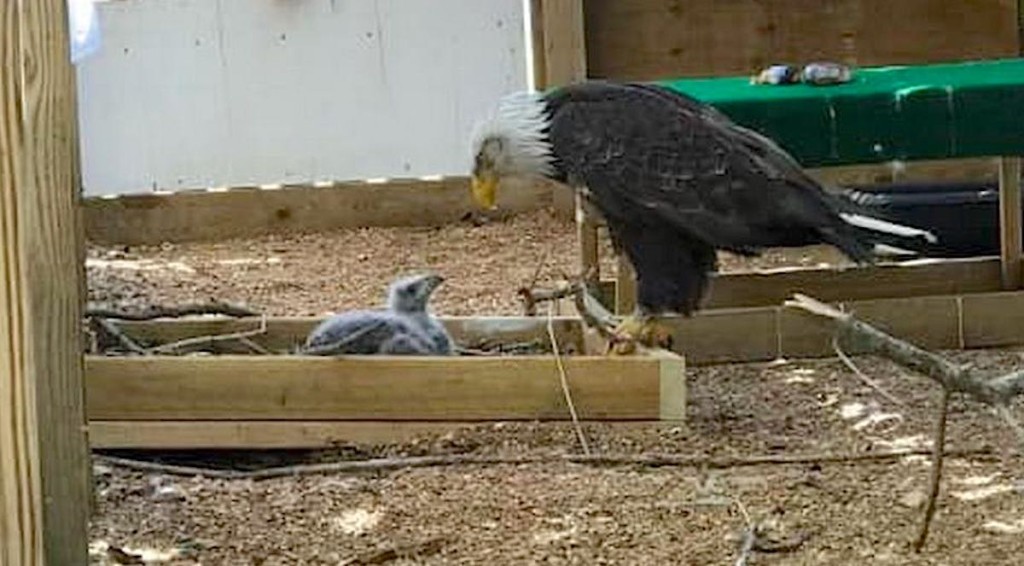
Photo: World Bird Sanctuary on Facebook.
Murphy the bald eagle really want to be a dad and tried hatching a rock. Friends helped him adopt an orphaned eaglet.

Sometimes humans actually do the right thing by critters. For example, in today’s story, they gave a hand to a bald eagle who wanted so much to be a parent that he tried hatching a rock.

Praveena Somasundaram reports the story at the Washington Post.

“Visitors to the World Bird Sanctuary in Valley Park, Mo., started to worry about Murphy [in March]. They saw the 31-year-old bald eagle sitting in one spot in the aviary, barely moving, and worried that he was sick or injured. As the month went by, so many visitors brought their concerns to the keepers that the sanctuary posted a sign near the enclosure explaining why the eagle sat so still underneath his perch and atop a makeshift nest.

“ ‘Murphy is not hurt, sick, or otherwise in distress,’ the sign read. ‘He has built a nest on the ground, and is very carefully incubating a rock. We wish him the best of luck!’

“A tweet about Murphy’s mission quickly went viral, leading thousands to follow along as he tried to hatch the rock, though they knew it was impossible. Then, in a twist, Murphy’s new fans got to see the eagle become a father after all when, in early April, he began to bond with an eaglet the sanctuary received.

” ‘He was sitting on a rock and everybody told him, “It’s a rock, it’s not going to hatch,” ‘ said Dawn Griffard, CEO of World Bird Sanctuary. ‘And all of a sudden, in his mind, it hatched and he has a chick.’

“Murphy first arrived at the sanctuary, which tries to release the birds it receives back into the wild, about 30 years ago. He was transported from Oklahoma with a broken leg that was treated at World Bird Sanctuary before he was released. But he soon returned with a broken wing.

“Staff determined he had suffered permanent damage that made him unable to fly or survive in the wild, where most eagles live 20 to 30 years, and he has lived at the sanctuary ever since.

“Murphy was in the center’s bald eagle aviary with four others in early March when staff first noticed that he’d taken to one of the rocks in the enclosure.

“Over several weeks, Murphy had become so protective of his rock that he wouldn’t allow the other four eagles near his side of the enclosure, Griffard said. If they tried to come anywhere close, he screamed or charged at them.

“While Murphy had not incubated like that before, Griffard said it’s not uncommon for birds during the spring breeding season when their hormones run high. …

“A few days after Murphy had started to protect his ‘rock baby’ too aggressively, on April 4, the sanctuary staff moved him to a separate, private enclosure, she said. … That same week, rescuers brought a baby eaglet to the sanctuary from Ste. Genevieve, Mo., following a windstorm that had blown its nest down. The other eaglet it had shared the nest with died in the fall, Griffard said.

“After the eaglet was checked for injuries, the sanctuary staff’s next task was to figure out which eagle to bond it with. … Murphy was ‘the best choice.’ …

“But Murphy only had experience caring for a rock. So sanctuary staff decided to place the eaglet in a small cage they then put inside Murphy’s nest. They monitored the bonding process carefully through a camera in the enclosure. The eaglet was released from its cage on April 13, after about a week in the nest with Murphy. …

“That morning, Murphy was given a full fish, and the eaglet had small chunks placed in the nest to eat. When keepers checked to make sure both had eaten, Murphy’s fish had been torn apart, but the eaglet’s pile of fish was untouched.

“However, the eaglet’s crop, an area under its chin where food is stored, was full — meaning Murphy had fed his chick. …

“Soon, staff will begin training the eaglet to fly and to hunt, preparing the chick to be released back into the wild this summer. But, Griffard said, people shouldn’t worry too much about Murphy being sad or lonely when that happens.

“ ‘There is a point where eagle parents know that it’s time for the chick to leave,’ she said. ‘And they almost kick the chick out of the nest. So, he’ll know.’ ”

More at the Post, here.

Meanwhile, if you wake up early, you can watch an osprey (“fish eagle”) feed its baby in real time, here. Today feeding started at 6:09 a.m. Eastern Daylight Savings.

Read Full Post »

Photo: קלאופטרה.
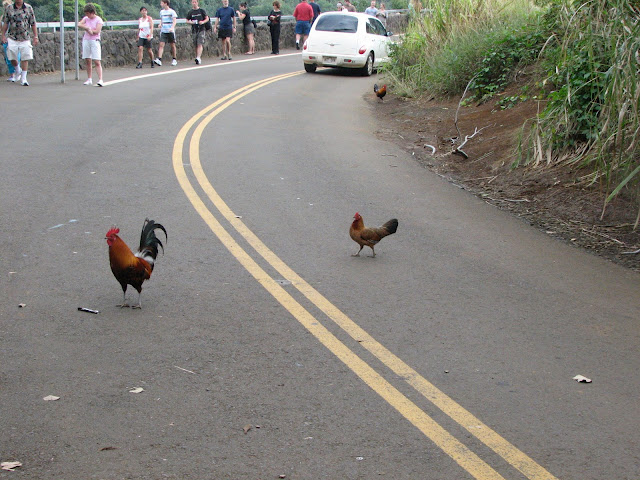
Part of “Matanya’s graduation project” at Wikipedia. See amusing answers to the perennial question “Why did the chicken cross the road?

The way the people at the Farm Sanctuary in Watkins Glen, NY, talk about the animals they study reminds me so much of the naturalist Sy Montgomery, a frequent visitor to Boston Public Radio. I only ever heard her speak disparagingly of one critter, and it was one without a brain. To her, all creatures have personalities, even souls.

Emily Anthes reported recently at the New York Times about the Farm Sanctuary.

“It was a crisp October day at Farm Sanctuary, and inside the small, red barn, the chicken people were restless.

“A rooster, or maybe two, yodeled somewhere out of sight. A bruiser of a turkey strutted through an open door, tail feathers spread like an ornamental fan. And a penned flock of white-feathered hens emitted tiny, intermittent squeaks, an asynchronous symphony of chicken sneezes.

“The hens were experiencing a flare-up of a chronic respiratory condition, said Sasha Prasad-Shreckengast, the sanctuary’s manager of research and animal welfare, who was preparing to enter the chicken pen. She donned gloves and shoe covers, threw on a pair of blue scrubs and then slipped inside, squatting to bring herself face-to-face with the first hen who approached.

“ ‘Who are you?’ she cooed.

“Ms. Prasad-Shreckengast meant the question literally. She was trying to find the birds that were enrolled in her study: an investigation into whether chickens — animals not often heralded for their brainpower — enjoy learning.

“But her question was also the big philosophical one driving the new, in-house research team at Farm Sanctuary, a nonprofit that has spent more than 35 years trying to end animal agriculture. …

“A growing body of research suggests that farmed species are brainy beings: Chickens can anticipate the future, goats appear to solicit help from humans, and pigs may pick up on one another’s emotions.

“But scientists still know far less about the minds of chickens or cows than they do about those of apes or dogs, said Christian Nawroth, a scientist studying behavior and cognition at the Research Institute for Farm Animal Biology in Germany. ‘I’m still baffled how little we know about farm animals, given the amount or the numbers that we keep,’ he said. …

‘They have their own desires, and their own wants and preferences and needs, and their own inner lives — the same way that human people do,’ said Lauri Torgerson-White, the sanctuary’s director of research.

“Now the sanctuary is trying to collect enough data to convince the general public of the humanity of animals.

“ ‘Our hope,’ Ms. Torgerson-White said, ‘is that through utilizing really rigorous methodologies, we are able to uncover pieces of information about the inner lives of farmed animals that can be used to really change hearts and minds about how these animals are used by society.’

“The sanctuary is conducting the research in accordance with its own strict ethical standards, which include giving the animals the right to choose whether or not to participate in studies. Consequently, the researchers have sometimes found themselves grappling with the very thing that they are keen to demonstrate: that animals have minds of their own.

“And today, the birds in ‘West Chicken’ seemed a bit under the weather. Ms. Prasad-Shreckengast crossed her fingers that a few of them might still be up for a brief demonstration. …

“Farm Sanctuary began not as a home for rescued animals but with a group of young activists working to expose animal cruelty at farms, stockyards and slaughterhouses.

“ ‘We lived in a school bus on a tofu farm for a couple of years,’ said Gene Baur, the president and co-founder of the organization. But in the course of its investigations, the group kept stumbling upon ‘living animals left for dead,’ he recalled. ‘And so we started rescuing them.’ …

“In 2020, the organization, which now houses about 700 animals, began assembling an internal research team. The goal was to assemble more evidence that, as Mr. Baur put it, ‘these animals are more than just pieces of meat. There’s emotion there.

‘There is individual personality there. There’s somebody, not something.’

“The research team worked with Lori Gruen, an animal ethicist at Wesleyan University, to develop a set of ethics guidelines. The goal, Dr. Gruen explained, was to create a framework for conducting animal research ‘without dominance, without control, without instrumentalization.’

“Among other stipulations, the guidelines prohibit invasive procedures — forbidding even blood draws unless they are medically necessary — and state that the studies must benefit the animals. And participation? It’s voluntary. …

“The idea is not entirely novel. Zoo animals, for instance, are often trained to cooperate in their own health care, as well as in studies that might stem from it. But such practices remain far from the norm.

“For the researchers at Farm Sanctuary, voluntary participation was not only an ethical imperative but also, they thought, a path to better science. Many prior studies have been conducted on farms or in laboratories, settings in which stress or fear might affect animals’ behavior or even impair their cognitive performance, the researchers note.

“ ‘Our hope is that they’re able to tell us more about what the upper limits are for their cognition and emotional capacities and social structures because of the environment that they’re in and because of the way we are performing the research,’ Ms. Torgerson-White said.

“Although the approach is unconventional, outside scientists described the sanctuary’s ethical guidelines as admirable and its research questions as interesting.”

“ ‘The idea that you could study these species, who are usually only studied in sort of pseudofarm conditions, in more naturalistic environments that actually meet not just their needs but even their most arcane preferences — I think they’re right,’ said Georgia Mason, who directs the Campbell Center for the Study of Animal Welfare at the University of Guelph. ‘I think that really allows you to do something special.’ ”

More at the Times, here. You might also be interested in this op-ed at the Times by Sarah Smarsh on the difference between “harvesting” animals on small farms and harvesting them in the big, industrialized farms that dominate our food supply.

Read Full Post »

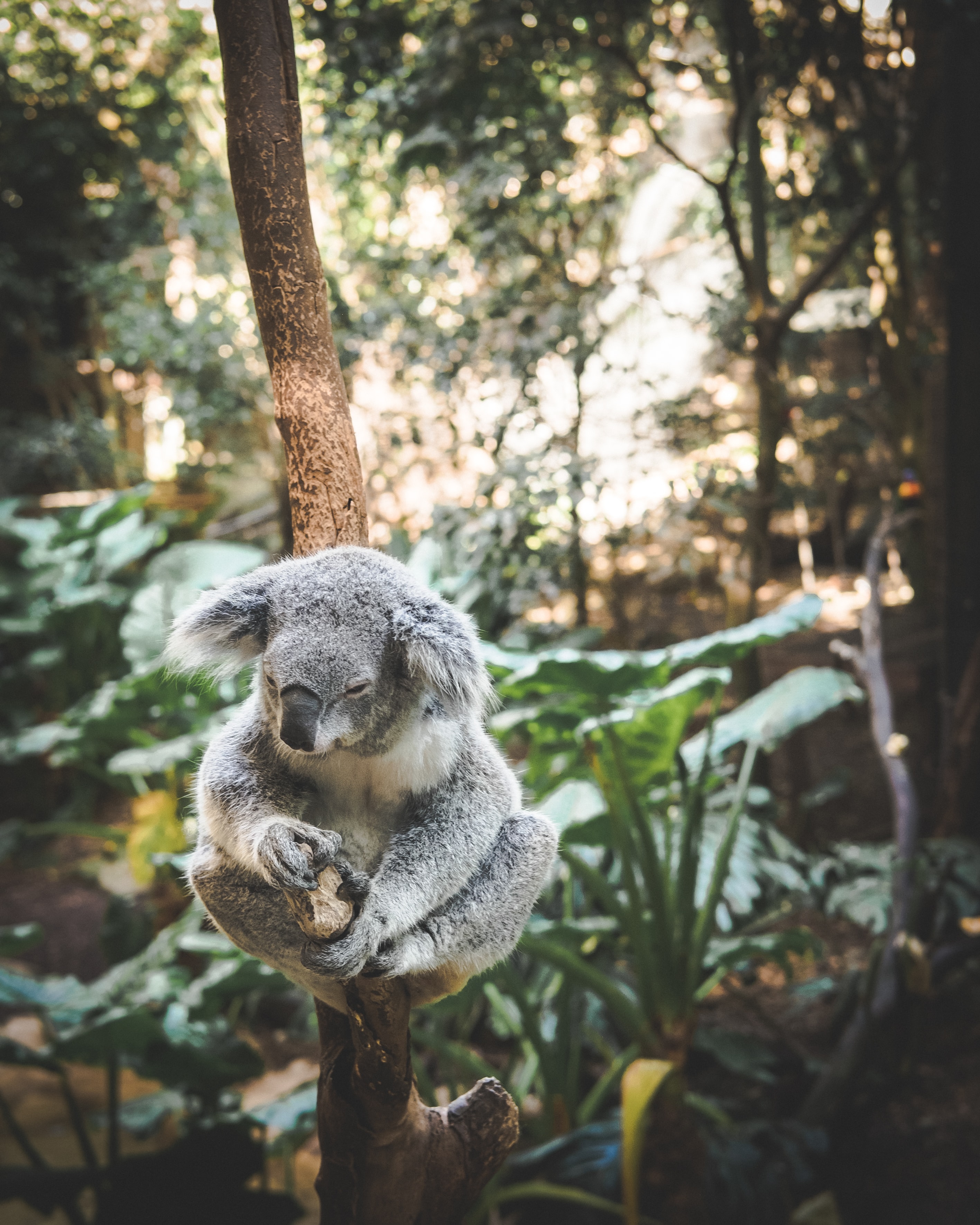
Photo: Daniel Norris via Unsplash.
Koalas, decimated by Australian bush fires in recent years, may be surviving at higher elevations than previously expected.

Researchers in Australia are trying to unravel a mystery about koalas in order to protect them. But some koalas may be doing OK on their own.

Michael E. Miller reports at the Washington Post that the scientists “had been stalking the remote, fire-scorched stretch of forest for an hour in the sizzling midday sun when Karen Marsh spotted something on the trunk of a tall mountain gum.

“ ‘Do you see all the claw marks?’ the ecologist asked a student research assistant, pointing to scratches in the wood above a blackened base. ‘Something definitely likes going up this tree.’

“Marsh peered up at the canopy of eucalyptus leaves, hoping to catch a glimpse of the animal she and a small team had spent weeks searching for — a koala. But one of Australia’s most iconic animals is getting harder to find.

“Two years ago, when bush fires supercharged by climate change killed or displaced an estimated 3 billion animals, thousands of koalas were among the dead. Between the blazes, drought, disease and deforestation, almost a third of the country’s koalas have disappeared since 2018, according to one conservation group. The federal government is weighing whether to label half the country’s koalas as endangered.

“The collapse is especially severe in New South Wales, where the bush fires destroyed 70 percent of some koala populations and a state inquiry warned that the species will probably go extinct before 2050 without urgent government intervention.

“Marsh and her colleagues had come to Kosciuszko National Park on a mission. For decades there had been speculation that koalas roamed its 1.7 million mountainous acres.

Now, with the 2019-2020 bush fires boosting funding and urgency, the scientists aimed to determine whether koalas were hiding in one of the country’s best-known wilderness areas.

“The discovery would do more than just increase the known number of koalas. It would also add to growing evidence that koalas can live at higher elevations, raising hopes that the marsupials might survive global warming better than feared.”

According to the Post, koalas were hunted nearly to extinction from the late 18th century to the early 20th. Even after hunting was outlawed, they “continued to suffer from a chlamydia epidemic and a habitat shortage as eucalyptus forests were paved for subdivisions. Although adapted to Australia’s frequent dry spells, the animals couldn’t cope with a climate-change-fueled drought in 2018 and 2019 that saw dehydrated koalas literally dropping from trees.

“Then came the Black Summer bush fires, which burned more than 20 percent of Australia’s forests. Marsh, a research fellow at Australian National University in Canberra, watched as the blaze roared to within a few hundred yards of her house. She and her colleagues began receiving calls from people who had rescued koalas, some badly singed but others simply emaciated.

“ ‘They were in awful condition,’ Marsh said of the roughly 30 koalas that ended up at the lab. As nocturnal animals, even a small rise in temperature can make koalas less hungry. But heat can also play havoc with a koala’s ability to break down the toxins in eucalyptus.

“While Marsh and her colleagues nursed the koalas back to health, they were pleased to see the notoriously picky eaters were able to consume some types of epicormic growth, the green shoots that sprout from burned eucalyptus trees and can be especially toxic. That enabled the researchers to release the animals into the scorched landscape a few months later. When they did, they were surprised to find that koalas that had survived in the bush were doing just as well.

“ ‘Essentially, they recovered by themselves in the wild,’ Marsh said, adding that the findings, though still provisional, suggest koalas that survive bush fires are less susceptible to starvation than feared. …

“Scientists have long speculated that the stunning wilderness surrounding Australia’s highest peak could harbor koalas, but a 1940 sighting was followed by decades of silence. Then, in 2016, a motorist spotted a male koala crossing a highway running through the park and snapped a picture. The incident sparked renewed interest, and in the past three years, National Parks cameras set up to detect invasive species such as foxes and deer in Kosciuszko have captured images of koalas on four occasions. …

“With the koala mating season ending this month, the researchers have only a few more weeks to search for the animals in Kosciuszko. But they are only now recording some of the most promising sites, and the first batch of audio files have already come back with lots of potential hits.” More at the Post, here.

Should we be worried that human activity, often the cause of devastation to the koala world, should be pushing into a sanctuary? Those humans better not be carrying anything flammable!

Read Full Post »

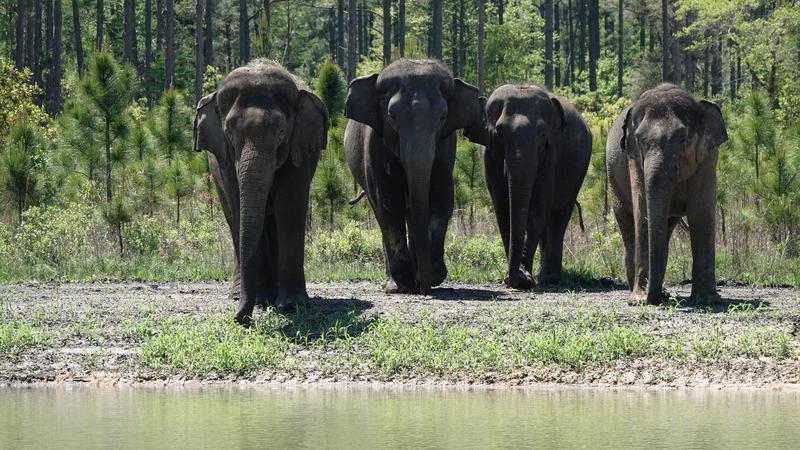
12 Asian elephants have arrived at White Oak Conservation.
Stephanie Rutan / Via White Oak Conservation

Because of the heat wave, I went out for my walk at 5:30 this morning, while it was still pleasant. I saw a bluebird, a couple rabbits, and a snapping turtle that crossed a bridge and launched herself 20 feet into the river. That was her choice.

The subjects of today’s story went a long time without having choices like the ones snapping turtles, wild rabbits, and bluebirds enjoy. Having spent many years doing tricks in the circus, they now reside at a 135-acre sanctuary where staff say they can hide for days at a time. Life is not completely natural, but it’s better than the circus.

Cathy Free reports at the Washington Post, “For about two decades, elephants that performed with the Ringling Bros. and Barnum & Bailey Circus were sent to a reserve in central Florida when they became too old to balance on two legs and parade around arenas doing tricks and dancing for large crowds. …

“In recent weeks, the former circus elephants have begun moving to a 135-acre sanctuary, one that is not affiliated with the circus that for years was accused of mistreating and abusing the gentle giants.

“Three weeks after being let loose in the White Oak Conservation center in Yulee, Fla., the first group of elephants has been exploring the new surroundings, and staff members say they don’t see some of them for days at a time. When they do spy the large animals, they say, they are swimming in the deep end of a pond or having a dust bath, followed by a nap in the shade. They also snack on watermelon and banana buffets.

“Employees say it was an emotional moment to watch the elephants walk out of their barn together for the first time into the lush acreage.

“ ‘There was more than one wet eye that day,’ said Michelle Gadd, who leads the White Oak preserve for endangered and threatened species such as cheetahs, rhinos, okapi, zebras and condors. …

“Ringling Bros. retired all of its elephants in 2016, ending a 145-year tradition, after pushback from the public about the pachyderms being forced to perform. … A year-and-a-half after the elephants were retired, the circus closed shop because of declining ticket sales. …

“Philanthropists Mark and Kimbra Walter arranged to purchase all 32 of the former Ringling Bros. elephants and have them transported 200 miles from Central Florida to Yulee, outside Jacksonville. The Walters bought the 17,000-acre White Oak sanctuary in 2013, and have been expanding it since. …

“Eventually, the elephant portion of the refuge will cover 2,500 acres and feature nine linked areas with enough water holes, forests, grasslands and wetlands to support the entire herd, said Nick Newby, 41, who leads the elephant caretaker team and helped plan the habitat.

“ ‘We wanted it to be as natural as possible, and we wanted to consider the social dynamic as well,’ Newby said. ‘Elephants are very sociable animals, so we like to study them, see what their personalities are like and then try to mix and match them with other elephants they might like to cohabitate with.’ …

“For Newby, who has worked with elephants for 18 years (mostly in zoos), there was a sense of elation as he watched the animals wander through their new home.

“ ‘It’s all about the elephants, so to see them out there doing natural elephant behaviors like swimming, was exhilarating and rewarding,’ he said. …

“Asian and African elephants are endangered in the wild because of loss of habitat and illegal poaching, [Gadd] said. The World Wildlife Fund estimates that there are about 415,000 elephants in Africa, while less than 50,000 remain in Asia.

“Wildlife conservation studies have shown that between 15,000 and 20,000 elephants are held in zoos or are still used by safari companies and circuses around the world. …

“Plans haven’t yet been developed for the public to view the elephants from afar, but Newby said the ultimate goal would be for somebody to look through a pair of binoculars at the White Oak refuge and feel as though they were watching elephants in their natural habitat.

“ ‘The gentle giants at the sanctuary are ambassadors for elephants in the wild,’ he said. ‘It’s our duty to make sure that their future is better than their past, and that their tomorrows are better than their yesterdays.’ ”

More at the Post, here.

Read Full Post »