Feeds:
Posts
Comments

Posts Tagged ‘national park’

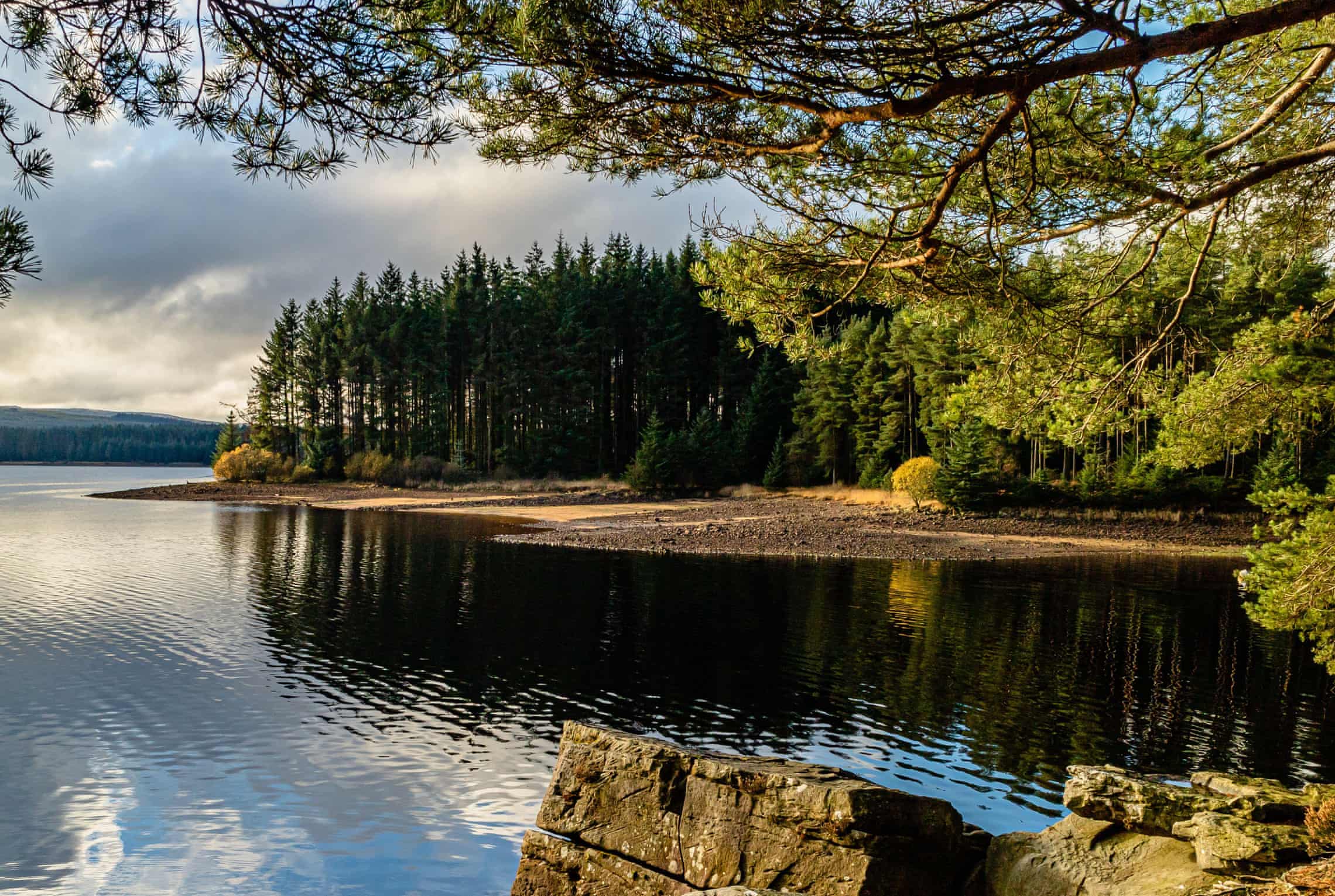
Photo: James Hodgson/Alamy.
Kielder Water is one of the largest man-made lakes in Europe. 

I like reading about different parts of England, whether in novels or the blogs of people who know whereof they speak because they live there. (Bereaved Single Dad is especially good on the topic of Yorkshire.)

Annabelle Thorpe describes a beautiful Northumberland forest at the Guardian. Her article is full of helpful travel tips for readers who plan on going.

“Deep in Kielder Forest, on the northern side of the vast Kielder Water stands Silvas Capitalis, a giant, two-storey timber head, one of the most striking of the 20 sculptures tucked between the pines. It’s an eerie sight, almost shocking; its mouth ajar, as if astounded by all it sees. It’s my first visit to Kielder,” writes Thorpe, “and my face has been wearing a similar expression since I stepped out of the car at the lakeside trying to take in the scale of the landscapes unfolding around me.

“Kielder doesn’t look like England – at least, not the England I know. For a start, it’s vast; 250 sq miles (648 sq km), with 158m trees, mostly sitka spruce conifers planted by hand. And even though it’s a plantation, there’s a wilderness feel that reminds me of Finland or Canada; a great swathe of nature at its most intense. It’s a working forest, involving 500 full-time jobs (not including tourism) and 2026 marks the centenary of the very first plantings, when the UK was in need of timber reserves after the demands of the first world war.

“The desolate moorland around Kielder Castle had been identified as a suitable site for a new forest by Roy Robinson, who was instrumental in the creation of the Forestry Commission in 1919. ‘He was a visionary,’ says Alex MacLennan, part of the Kielder team for more than 20 years. ‘It was hard farming country, but perfect for forestry. Originally, there were eight villages planned, to house the timber workers. But three decades later, when the first trees were ready to be felled, mechanization and new tools such as chainsaws meant they only needed three.’ …

“ ‘It’s given a very different feel to the place,’ says Gary Storey, general manager of Waterside, ‘and a chance to replant with different species, native to the UK – silver birch, oak, aspen, wild cherry – something other than the sitka spruce.’

“The careful management of Kielder has made it a benchmark for forestry in the UK, not least for the low-impact tourism that has been carefully folded in. Aside from Kielder Waterside, there are a handful of places to stay. … “ ‘We’re not Center Parcs, and we’re never going to be,’ says Liz Blair, director of the Kielder Partnership, when we chat over coffee. ‘But we’re working to make sure it’s accessible and welcoming for everyone, however you want to enjoy it.’

“Many people who visit, including me, set off along the Lakeside Way; a 26-mile (42km) route that encircles Kielder Water, linking the sculptural works and immersing walkers and cyclists in the dense forest. When I visit, the silence that hangs between the trees feels almost thick enough to touch. … But if Kielder is quiet by day, at night it becomes almost unworldly; a pitch-black void, bereft of almost all signs of life, save for the bright stars of England’s first dark sky park (the Northumberland international dark sky park). …

“It’s the Northumberland dark skies festival when we visit. … Kielder is a place of superlatives; England’s biggest forest, the UK’s largest human-made lake by capacity, the darkest skies – along with quite possibly the most terrifying mountain bike trails in the country. The Deadwater Double Black Downhill opens officially on 1 May, a rock-strewn, ledge-filled, vertiginous route that I wouldn’t want to walk, let alone cycle. It’s one of several new initiatives planned to celebrate the centenary, including a new Room on the Broom trail for kids, based on the book by Julia Donaldson and Axel Scheffler; the Kielder celebration weekend (4-6 Sept); and the reopening of Kielder Castle in the summer after extensive renovations.

“The forest may be vast, but it’s just one part of the Northumberland national park; the least populated and least visited of the UK’s 15 national parks. Coming from the built-up south-east, there’s an extraordinary beauty in the stark, untouched landscapes – a stillness, a peace, unmatched by anywhere closer to home.”

More on visiting Kielder Forest at the Guardian, here.
Read Full Post »

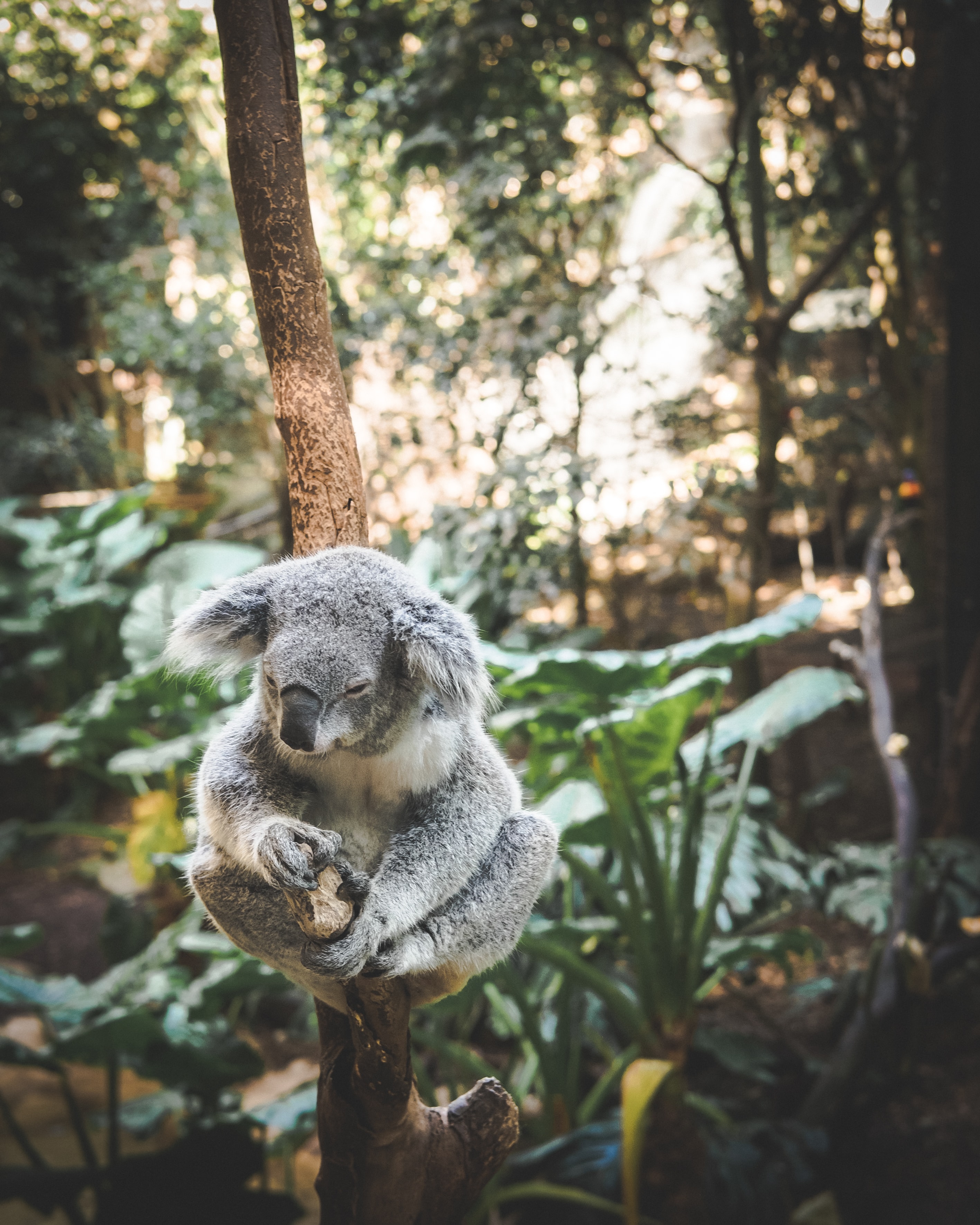
Photo: Daniel Norris via Unsplash.
Koalas, decimated by Australian bush fires in recent years, may be surviving at higher elevations than previously expected.

Researchers in Australia are trying to unravel a mystery about koalas in order to protect them. But some koalas may be doing OK on their own.

Michael E. Miller reports at the Washington Post that the scientists “had been stalking the remote, fire-scorched stretch of forest for an hour in the sizzling midday sun when Karen Marsh spotted something on the trunk of a tall mountain gum.

“ ‘Do you see all the claw marks?’ the ecologist asked a student research assistant, pointing to scratches in the wood above a blackened base. ‘Something definitely likes going up this tree.’

“Marsh peered up at the canopy of eucalyptus leaves, hoping to catch a glimpse of the animal she and a small team had spent weeks searching for — a koala. But one of Australia’s most iconic animals is getting harder to find.

“Two years ago, when bush fires supercharged by climate change killed or displaced an estimated 3 billion animals, thousands of koalas were among the dead. Between the blazes, drought, disease and deforestation, almost a third of the country’s koalas have disappeared since 2018, according to one conservation group. The federal government is weighing whether to label half the country’s koalas as endangered.

“The collapse is especially severe in New South Wales, where the bush fires destroyed 70 percent of some koala populations and a state inquiry warned that the species will probably go extinct before 2050 without urgent government intervention.

“Marsh and her colleagues had come to Kosciuszko National Park on a mission. For decades there had been speculation that koalas roamed its 1.7 million mountainous acres.

Now, with the 2019-2020 bush fires boosting funding and urgency, the scientists aimed to determine whether koalas were hiding in one of the country’s best-known wilderness areas.

“The discovery would do more than just increase the known number of koalas. It would also add to growing evidence that koalas can live at higher elevations, raising hopes that the marsupials might survive global warming better than feared.”

According to the Post, koalas were hunted nearly to extinction from the late 18th century to the early 20th. Even after hunting was outlawed, they “continued to suffer from a chlamydia epidemic and a habitat shortage as eucalyptus forests were paved for subdivisions. Although adapted to Australia’s frequent dry spells, the animals couldn’t cope with a climate-change-fueled drought in 2018 and 2019 that saw dehydrated koalas literally dropping from trees.

“Then came the Black Summer bush fires, which burned more than 20 percent of Australia’s forests. Marsh, a research fellow at Australian National University in Canberra, watched as the blaze roared to within a few hundred yards of her house. She and her colleagues began receiving calls from people who had rescued koalas, some badly singed but others simply emaciated.

“ ‘They were in awful condition,’ Marsh said of the roughly 30 koalas that ended up at the lab. As nocturnal animals, even a small rise in temperature can make koalas less hungry. But heat can also play havoc with a koala’s ability to break down the toxins in eucalyptus.

“While Marsh and her colleagues nursed the koalas back to health, they were pleased to see the notoriously picky eaters were able to consume some types of epicormic growth, the green shoots that sprout from burned eucalyptus trees and can be especially toxic. That enabled the researchers to release the animals into the scorched landscape a few months later. When they did, they were surprised to find that koalas that had survived in the bush were doing just as well.

“ ‘Essentially, they recovered by themselves in the wild,’ Marsh said, adding that the findings, though still provisional, suggest koalas that survive bush fires are less susceptible to starvation than feared. …

“Scientists have long speculated that the stunning wilderness surrounding Australia’s highest peak could harbor koalas, but a 1940 sighting was followed by decades of silence. Then, in 2016, a motorist spotted a male koala crossing a highway running through the park and snapped a picture. The incident sparked renewed interest, and in the past three years, National Parks cameras set up to detect invasive species such as foxes and deer in Kosciuszko have captured images of koalas on four occasions. …

“With the koala mating season ending this month, the researchers have only a few more weeks to search for the animals in Kosciuszko. But they are only now recording some of the most promising sites, and the first batch of audio files have already come back with lots of potential hits.” More at the Post, here.

Should we be worried that human activity, often the cause of devastation to the koala world, should be pushing into a sanctuary? Those humans better not be carrying anything flammable!

Read Full Post »