Feeds:
Posts
Comments

Posts Tagged ‘plantation’

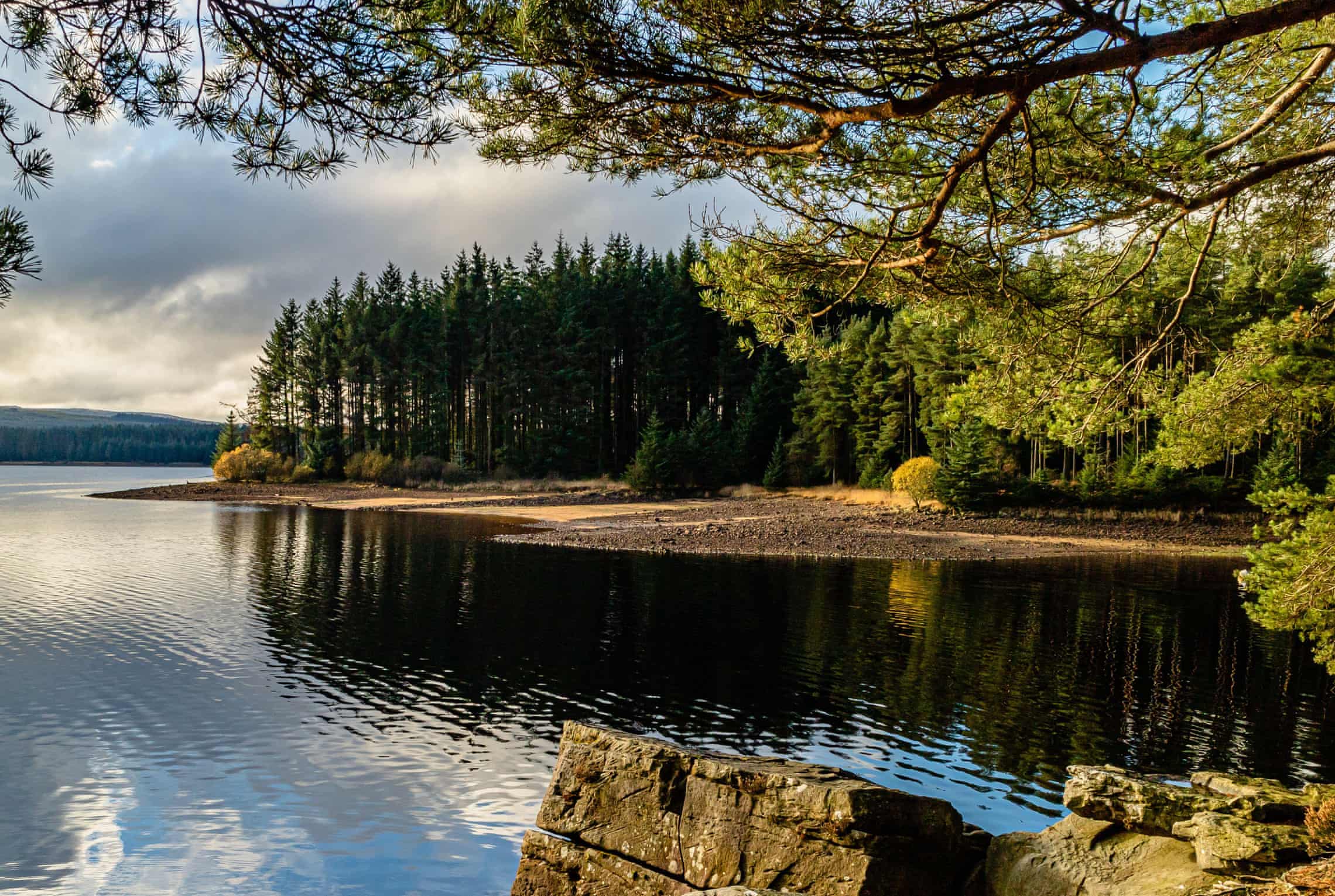
Photo: James Hodgson/Alamy.
Kielder Water is one of the largest man-made lakes in Europe. 

I like reading about different parts of England, whether in novels or the blogs of people who know whereof they speak because they live there. (Bereaved Single Dad is especially good on the topic of Yorkshire.)

Annabelle Thorpe describes a beautiful Northumberland forest at the Guardian. Her article is full of helpful travel tips for readers who plan on going.

“Deep in Kielder Forest, on the northern side of the vast Kielder Water stands Silvas Capitalis, a giant, two-storey timber head, one of the most striking of the 20 sculptures tucked between the pines. It’s an eerie sight, almost shocking; its mouth ajar, as if astounded by all it sees. It’s my first visit to Kielder,” writes Thorpe, “and my face has been wearing a similar expression since I stepped out of the car at the lakeside trying to take in the scale of the landscapes unfolding around me.

“Kielder doesn’t look like England – at least, not the England I know. For a start, it’s vast; 250 sq miles (648 sq km), with 158m trees, mostly sitka spruce conifers planted by hand. And even though it’s a plantation, there’s a wilderness feel that reminds me of Finland or Canada; a great swathe of nature at its most intense. It’s a working forest, involving 500 full-time jobs (not including tourism) and 2026 marks the centenary of the very first plantings, when the UK was in need of timber reserves after the demands of the first world war.

“The desolate moorland around Kielder Castle had been identified as a suitable site for a new forest by Roy Robinson, who was instrumental in the creation of the Forestry Commission in 1919. ‘He was a visionary,’ says Alex MacLennan, part of the Kielder team for more than 20 years. ‘It was hard farming country, but perfect for forestry. Originally, there were eight villages planned, to house the timber workers. But three decades later, when the first trees were ready to be felled, mechanization and new tools such as chainsaws meant they only needed three.’ …

“ ‘It’s given a very different feel to the place,’ says Gary Storey, general manager of Waterside, ‘and a chance to replant with different species, native to the UK – silver birch, oak, aspen, wild cherry – something other than the sitka spruce.’

“The careful management of Kielder has made it a benchmark for forestry in the UK, not least for the low-impact tourism that has been carefully folded in. Aside from Kielder Waterside, there are a handful of places to stay. … “ ‘We’re not Center Parcs, and we’re never going to be,’ says Liz Blair, director of the Kielder Partnership, when we chat over coffee. ‘But we’re working to make sure it’s accessible and welcoming for everyone, however you want to enjoy it.’

“Many people who visit, including me, set off along the Lakeside Way; a 26-mile (42km) route that encircles Kielder Water, linking the sculptural works and immersing walkers and cyclists in the dense forest. When I visit, the silence that hangs between the trees feels almost thick enough to touch. … But if Kielder is quiet by day, at night it becomes almost unworldly; a pitch-black void, bereft of almost all signs of life, save for the bright stars of England’s first dark sky park (the Northumberland international dark sky park). …

“It’s the Northumberland dark skies festival when we visit. … Kielder is a place of superlatives; England’s biggest forest, the UK’s largest human-made lake by capacity, the darkest skies – along with quite possibly the most terrifying mountain bike trails in the country. The Deadwater Double Black Downhill opens officially on 1 May, a rock-strewn, ledge-filled, vertiginous route that I wouldn’t want to walk, let alone cycle. It’s one of several new initiatives planned to celebrate the centenary, including a new Room on the Broom trail for kids, based on the book by Julia Donaldson and Axel Scheffler; the Kielder celebration weekend (4-6 Sept); and the reopening of Kielder Castle in the summer after extensive renovations.

“The forest may be vast, but it’s just one part of the Northumberland national park; the least populated and least visited of the UK’s 15 national parks. Coming from the built-up south-east, there’s an extraordinary beauty in the stark, untouched landscapes – a stillness, a peace, unmatched by anywhere closer to home.”

More on visiting Kielder Forest at the Guardian, here.
Read Full Post »

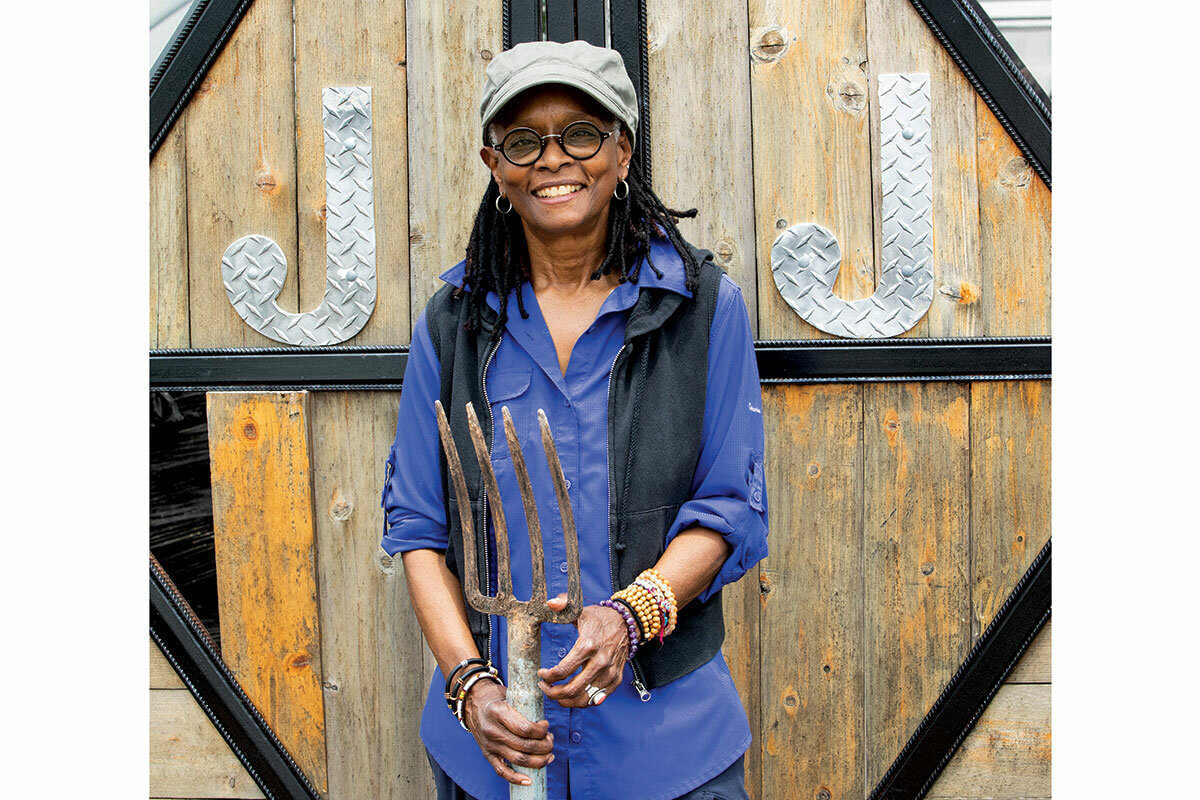
Photo: Melanie Stetson Freeman/CSM.
Konda Mason, founder of the nonprofit Jubilee Justice, poses at her farm in Alexandria, Louisiana, May 7, 2023. She teaches Black farmers a sustainable and environmentally friendly method for growing rice.

There are people who try their hand at many different things over a lifetime until something clicks. Or until all the pieces converge to make a new whole.

Consider Konda Mason, currently of Louisiana. Diane Winston has a long article about her at the Christian Science Monitor.

“It’s past daybreak on a muggy July morning when Konda Mason reaches the farm, a 5-acre plot in rural Louisiana. Mindful of the heat to come, several workers are already weeding, and Ms. Mason – her daily meditation and yoga done – is ready for a busy day.

“She’ll field calls from farmers and suppliers, check the progress of the industrial rice mill she’s building, and meet with a journalist curious about why a Black Buddhist from Oakland, California, is growing rice in a red county of a very red state. …

“A slender, muscled woman with waist-length dreadlocks, Ms. Mason sees the farm as the apex of her efforts as a social entrepreneur and eco-spiritual activist. Today she’s sporting a red bandanna to shade herself from the sun, but in her nearly 70 years, she has worn many hats. She’s been a concert promoter, filmmaker, and supporter of Black innovators and problem-solvers. As with her other endeavors, this new project manifests the values that have guided her life: love, justice, community, and a willingness to leap into the unknown.

“ ‘I was taught by my family that I had a role to play in making this world a better place,’ Ms. Mason told listeners in her keynote address at the 2015 Wisdom 2.0 forum in San Francisco. …

“ ‘The question I ask myself is, how can you go deeper, what do you have to let go of in order to do that, and are you willing to do it?’

“This time, going deeper meant leaving her home, her sister, her partner, and her friends to promote what she hopes is a revolution in rice production. Her goal is to support a more sustainable and less expensive way to grow rice, in hopes of staunching the loss of Black-owned farmland. Working alongside an agronomist from Cornell University, she uses what’s called the System of Rice Intensification, common in developing nations but new to American farmers. Going deeper has also meant mastering the complexities of soil and weed management, crop rotation, fertilization, the milling of rice, and bringing it to market. Equally complex, of course, is working in a region where race relations are historically fraught. …

“Though deeply committed to Buddhism, Ms. Mason is not an evangelist. At the farm, she rarely discusses her practice, and if she does, she talks about mindfulness, not Buddhism.

“ ‘Konda’s had many lives, and I never thought there would be a home for her,’ says Dianne Houston, a longtime friend. ‘But the combination of working on the land with people who share her beliefs about social justice – all the boxes are checked.’

“Ms. Mason’s work on the 3,700-acre former plantation is equal parts passion project, spiritual mission, and response to the loss of 12 million acres of Black farmland over the past century. … Since arriving in Louisiana in 2020, Ms. Mason has grown a network of nearly a dozen Black farmers whom her team visits regularly. Her agronomy colleagues offer technical assistance, and she provides rice seed and access to loans. She secured a centrally located, solar-powered industrial mill for processing the plants, and has a distributor to help with marketing. When she’s not working the land or promoting the project, Ms. Mason sometimes dons another hat, leading intentional conversations across racial and economic divides.

“Both the farming project and the conversations are part of Jubilee Justice, a nonprofit Ms. Mason created to help change a system that she says has profited by discriminating against people of color and despoiling the planet. It’s the natural outcome of her lifework. …

“in 1973, when she arrived for her first year at the University of California, Berkeley, … a new friend introduced her to yoga and broadened her taste in music. Soon Ms. Mason was running the Berkeley Jazz Festival, a well-funded community program sponsored by the university. Ultimately, she left school to team up with the manager for Sweet Honey in the Rock, a Black, female a cappella group whose music blended blues, gospel, and jazz. The two joined forces to promote female musicians. 

“ ‘We would put a Native American group with a Black group or a lesbian group,’ she says. ‘We kept building coalitions. We did it all over the country.’  …

“[Some years later in Louisiana] she helped organize a gathering of progressive women; most of the wealth-holders were white, and the activists people of color. Among the attendees was Elizabeth Keller, a white woman and devout Christian. Her grandfather had purchased a former plantation in Louisiana, hoping to ‘redeem’ the land, but he never did. When he died, he left all 3,700 acres to her.

“At the gathering, Ms. Keller spoke about the farm and her desire for healing there. She had prayed for someone to show her the way, and, to her surprise, Ms. Mason seemed to be the answer to that prayer.  The plantation could be redeemed, Ms. Mason realized, by using the System of Rice Intensification (SRI) to cultivate a pilot crop and develop a network of Black farmers to adopt the technique. 

“Ms. Keller, acknowledging that Ms. Mason ‘saw something I couldn’t,’ agreed to let her use the land.  Now Ms. Mason needed expertise. She cold-called Erika Styger, the Cornell agronomist, who knew from working with farmers around the world how SRI increases crop yields, improves the soil, cuts costs, enhances profits, and reduces the environmental impact of rice production. It took some convincing, but in the end, Ms. Mason’s vision and practicality persuaded her to provide technical assistance.”

Read more at the Monitor, here. No firewall. Subscriptions are encouraged and are reasonably priced.

Read Full Post »

Photo: Kenneth K. Lam/Baltimore Sun.
Harold Morales, left, an associate professor at Morgan State University, loads boxes of vegetables with help from Troy Costner, center, and Artar Isreal, right, at Plantation Park Heights Urban Farm to deliver to a community center.

In a time of wintry weather and a return to isolation, it’s nice to think of warmer days and communities working outdoors together. Today’s story is about an urban farm in Baltimore that is providing healthful food where it’s needed most.

Stephanie Garcia writes at the Baltimore Sun about Plantation Park Heights Urban Farm.

“The lot at the corner of Springhill and Cottage avenues in Baltimore used to be vacant. Today, it’s home to one of the top 10 innovative farms in the country, according to the American Farm Bureau Federation.

“Known as Plantation Park Heights Urban Farm, it was founded eight years ago by Richard Francis, affectionately known as Farmer Chippy, who was looking for a community from the Caribbean diaspora in Baltimore and wanted to grow food for — and with — Park Heights residents.

“The farm has grown beyond Park Heights, with farmers aiming to grow 250,000 pounds of food across 30 city-owned vacant lots, all leased by the Plantation. … Collectively, these farmers and others in Baltimore plan to build the city’s first AgriHood, or a marketplace and community-shared agriculture and training resource institute. …

“Francis [has] secured partnerships with the University of Maryland, Coppin State University and Holistic Wellness and Health, which offers fresh plant-based cooking classes.

” ‘We’ll be positioned and ready to serve our youngest citizens, those who are at risk in Park Heights,’ Francis said. ‘The institute is going to put agriculture in the classroom and following through with our children so that they can become farmers and chefs before they become scientists, doctors and lawyers.’ …

“Francis said the farm’s name is intentionally provocative. ‘We wanted to remind children of the colonizers, that this is where it all started,’ Francis explained. ‘One group produces and the other group developed a thriving economy. Today, we say equal rights and justice for all on the Plantation. Let’s include those who were left out.’

“Agriculture is found across Baltimore, with over 20 urban farms and 100 community gardens, according to the Baltimore Office of Sustainability. It is a hotbed for art and community service, hosting poetry open mics and bringing quality produce to Maryland correctional institutions. [The Plantation] also has connected families with resources beyond farming and agriculture, helping dozens of neighbors with energy-saving grants and other services to help prevent eviction and homelessness.

“One community partner is the Morgan State University Center for the Study of Religion and the City. … Harold Morales, an associate professor of philosophy and religious studies at Morgan State, usually visits the urban farm on Thursday afternoons. He can be found pulling weeds, planting, harvesting and distributing one of the 300 free food boxes donated weekly through a U.S. Department of Agriculture program. Morales also helps with grant writing and research for the Plantation. …

“Park Heights Renaissance, a nonprofit organization focused on land and economic development, awarded the Plantation a $25,000 grant to support agriculture in classrooms across four public elementary schools in Park Heights. Children ages 5 to 15 are learning how to grow, harvest and package nutrient-dense foods for families in the community.

“Morales refers to the Plantation as a little piece of the Caribbean in Park Heights, where land, food and community come together. ‘Shovel, rakes, soil. Those are the things you need to survive in the urban context, but that’s not what people usually think,’ Morales said.

“Francis has seen plenty of similarities to his native Trinidad and Tobago. ‘Park Heights is like a Third World city. It has been neglected, it is heavily populated with Black and Brown people,’ he said. ‘It has a port, and it has a thriving economy happening outside of the poverty. We have an amazing educational system in the Caribbean, just like here with Johns Hopkins and the likes. But we are still unable to retain our talent, because most of these people graduate and go outside for opportunities.’ …

“Caribbean crops like sugar cane, sweet potatoes and Trinidad scorpion peppers are grown at the Plantation. Youth farmers learn that plantain leaves have healing properties for bites or stings and can be used like a bandage. …

“ ‘What’s often referred to as food deserts more appropriately should be called food apartheid,’ Morales said. … Francis echoes that sentiment and wants to transform Park Heights from a food desert into a food oasis. AgriHood Baltimore is key for this vision to come to fruition. ‘It is the close of the summer season for us, and we’re getting ready for next year,’ he said. ‘We’re coming bigger, better, faster and stronger.’ “

More at the Baltimore Sun, here.

Read Full Post »