Feeds:
Posts
Comments

Posts Tagged ‘satisfaction’

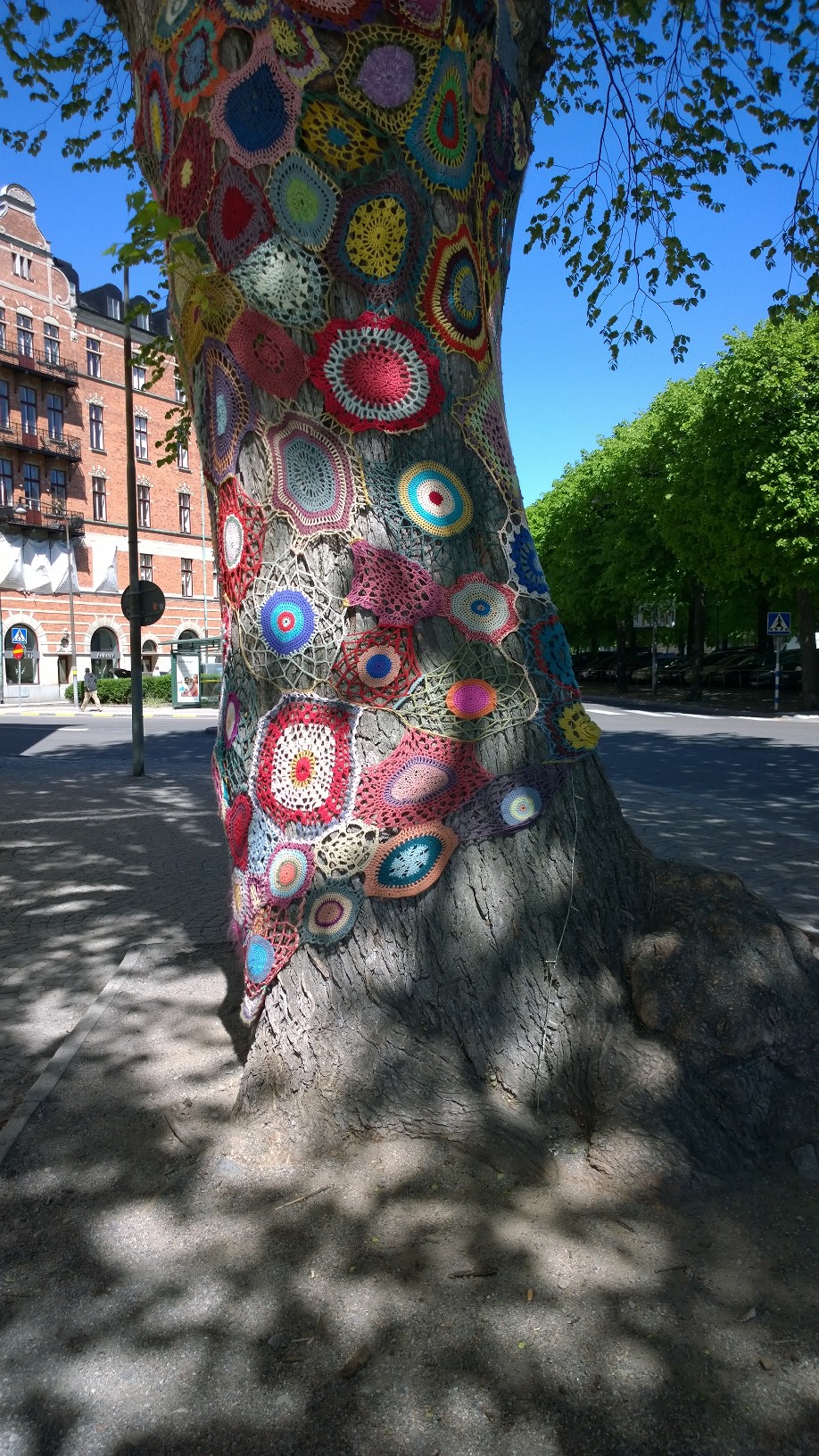
052917--crocheted-tree-Stockholm

Photos: Suzanne and John’s Mom.
Crocheted tree in Stockholm, 2017.

Working with your hands, creating something that is all you — how satisfying that can be! Today’s story is on the latest research showing that that can be good for you and the people around you.

As Nicola Davis wrote at the Guardian, “Winston Churchill had painting, Judi Dench is famous for her rude embroidery and Tom Daley has been known to knit at the Olympics. Now researchers say we could all benefit from creative endeavors and that such pursuits have a bigger influence on life satisfaction than having a job.

“While arts and crafts have long been used to aid mental health, experts said most research has looked at their effect on patients rather than the general population, and tend to look at specific activities.

“However, the researchers have now said such interests could be an important tool for improving public health in general.

“Dr Helen Keyes, a co-author of the research from Anglia Ruskin University, said: ‘It’s quite an affordable, accessible and ultimately popular thing for people to do. And that’s key. You’re not going to be shoving something down people’s throats that they don’t want to do.’

“Writing in the journal Frontiers in Public HealthKeyes and colleagues reported how they analyzed data from more than 7,000 people aged 16 or over who took part in the face-to-face ‘taking part survey’ by the UK Department for Culture, Media and Sport between April 2019 and March 2020.

“As part of the survey participants were asked to rate various aspects of their well-being on 10-point scales, report whether they took part in arts or crafts, and provide demographic details.

“The team found that just over 37% of participants reported taking part in at least one art or craft activity in the past 12 months – ranging from painting to pottery and photography. …

“The results revealed that people who engaged with creating arts and crafting had greater ratings for happiness, life satisfaction and feeling that life was worthwhile than those who did not, even after taking into account other factors known to have an impact – including age, gender, deprivation, poor health, and employment status. …

“Among other results the team found engaging in arts and crafts was associated with an increase in happiness on a par with aging by 20 years (as Keyes notes, well-being goes up slightly with age), while the sense that life was worthwhile was more strongly associated with crafting than being in employment.

“Keyes said [the reults] might reflect that not everybody is in a job they find fulfilling, while people often have a sense of mastery or ‘flow’ when undertaking arts and crafts – experiencing control, achievement and self-expression. …

“Keyes said smaller clinical trials have suggested engaging in arts and crafts can increase well-being. Keyes also acknowledged the increases in well-being associated with creating arts and crafting were very small – on average engaging in such activities was only linked with a 2% higher rating for the feeling that life was worthwhile. But, she said, the results remained meaningful at a population level. …

“Keyes said that backing such activities would offer a simpler route for governments to improve the nation’s well-being than other factors that are known to have a big effect. …

“ ‘But it’s a really quite cheap, easy, accessible thing for us to engage people in.’ ”

What was the last craft you tried your hand at? I made a pottery vase.

More at the Guardian, here. No paywall.

I used to make collage greeting cards.

Read Full Post »

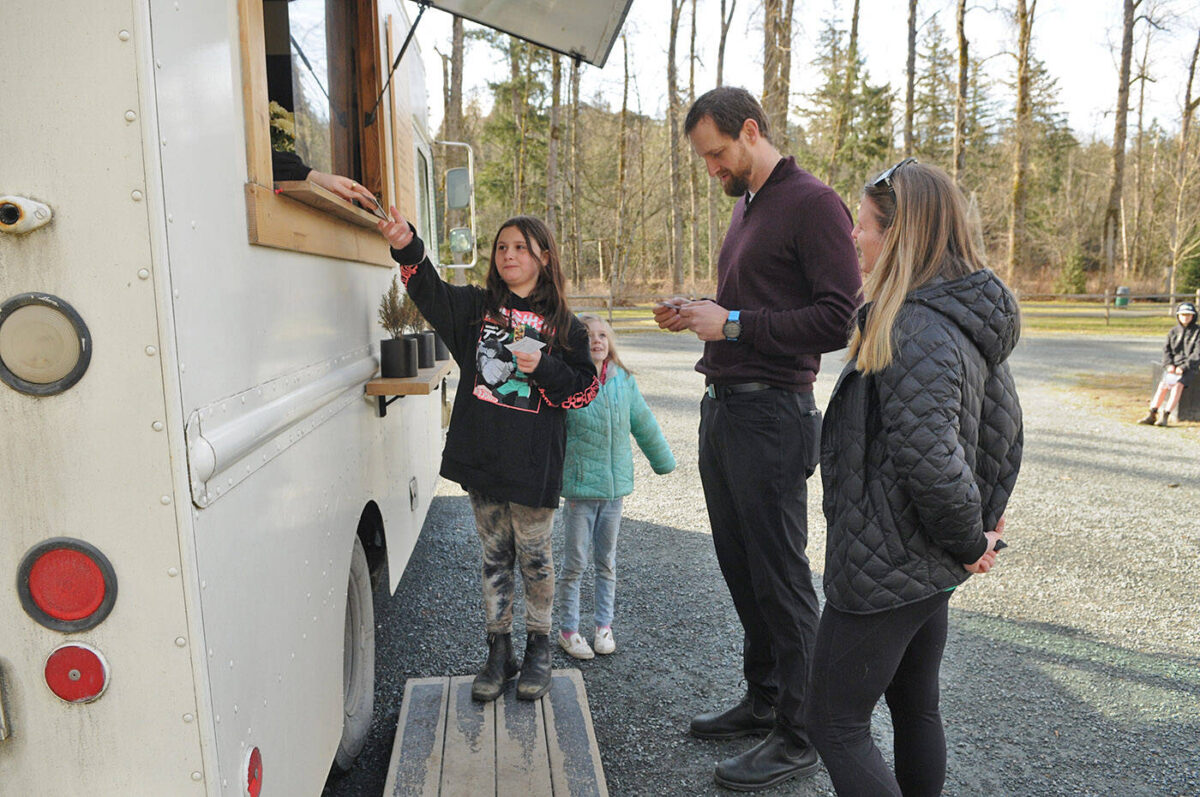
Photo: Jenna Hauck/ Chilliwack Progress.
Children in Canada buying coffee for two strangers at Vedder Park during Watson Elementary’s Kindness Project on March 15. It’s all part of the curriculum.

How do you raise children who are kind? Partly by example. And maybe partly by putting generosity in the school curriculum. It can’t hurt to set aside a time for kids to know the satisfaction of committing random acts of kindness.

Sydney Page at the Washington Post writes about an experiment in Canada.

“While writing report cards several years ago, Jennifer Thiessen was troubled by something. Her third-grade students were being evaluated on subjects such as math and science, but not on life skills — such as social responsibility and kindness.

“ ‘That’s the stuff that I feel is really important for them to learn and carry forward in their lives,’ Thiessen said. … ‘There are so many important life lessons I wanted to teach them outside of the curriculum,’ said Thiessen, a teacher at Canada’s Watson Elementary School in Chilliwack, British Columbia.

“She mentioned her concerns to Kyla Stradling, then a fellow teacher at the school, and they hatched a plan. They assigned their students a project that had nothing to do with standard school subjects. Instead, it was centered on spreading goodwill. They called it the ‘Kindness Project.’

“ ‘If we could be that spark of kindness, we could inspire others to do acts of kindness,’ Thiessen told her third-graders in 2018.

“Students from two separate third-grade classes made cupcakes at home and sold them for $1 during a series of bake sales at the school. They raised about $400 and used the proceeds to purchase small gifts — things like bouquets of flowers, dog treats, chocolate bars and coffees — and handed them out to strangers near the school.

‘The students felt joy inside of them; that they did something that day that mattered,’ Thiessen said.

“Many of the gift recipients seemed ‘caught off guard’ at first, she said, though they were all in when the students explained what the project was about. Some were moved to tears. … She decided to make it a yearly activity for third-graders at the school.

“ ‘This project isn’t about who can read the best and who is best at math,’ she said. ‘This is an everybody project. It doesn’t have any limitations when it comes to ability.’

“For the past five years, third-grade students at Watson Elementary have embraced the Kindness Project. They host several bake sales to raise money, and each class adds their own spin to the assignment. During the pandemic, for instance, students collected funds to put together care packages for front-line workers.

“ ‘Every year, we sit down with them and ask them how they want to spend the money,’ Thiessen said. …

“Occasionally, students can be ‘a little overzealous,’ she said. As she brainstormed with her class this year, one child enthusiastically said: ‘Let’s buy someone a house!’ …

“Given the success of the project, the school decided to broaden it this year to involve five classes — including three third-grade classes, and some students in second and fourth grades. They started selling cupcakes each week at the school in February, and over five weeks, they raised more than $1,000 — the highest amount yet. …

“This year, the 100 students split up into several groups to focus on different initiatives. While one group wrote cards and bought small gifts to hand out to strangers, another put together care packages with essential supplies — including toothbrushes, snacks, gloves, socks and sanitizer — for homeless children and teens. Other students made a ‘teacher appreciation bin’ filled with treats and goodies and dropped it off at a nearby school.

“On March 15, the students and chaperones divided and carried out their various kindness missions. Some stayed at coffee shops surrounding the school, offering to buy beverages for strangers, while others waited around a local park, passing out dog treats and fresh flowers. Several students did a forest cleanup. …

“Though the goal of the project is to start a chain of kindness within the community (one man offered up $20 toward next year’s fundraising effort, Thiessen said), it’s also intended to show the students what they are capable of.

“ ‘I think what I want most for them is to know that it doesn’t matter where you come from or how old you are, you can do something that is good,’ Thiessen said.”

The idea of buying someone a house is not necessarily “overzealous,” I’d say. It shows the kid is already thinking about about adult-sized needs. Isn’t that the point?

More at the Post, here. For a version with no firewall, click on the Chilliwack Progress, here.

Read Full Post »

In the workplace, people talk a lot about setting goals, achieving goals, surpassing goals.

I guess that’s reasonable enough for organizations. If you sell 5,000 widgets this month and can sell 10,000 next month, that’s good for the company, and you may feel personal satisfaction, too. You may get a trophy for being widget-seller of the month or a free pizza — maybe even a promotion.

Some people do serious goal setting in their nonwork lives, too. I have a colleague who is helping her husband start a church. Another colleague recovered from a life-threatening event, decided to grab the gusto, and now pushes herself to skydive, dance all night, and launch her own company while working full-time elsewhere.

Personally, I don’t think I have goals. At least not Big Hairy Audacious ones (as Jim Collins and Jerry Porras said in an article I worked on back in the day).

I have finally realized that small accomplishments give me more satisfaction: get the document with the metadata to the webmaster by the end of the day; figure out how to connect the new printer to the home computer; remember to mail two packages on Tuesday; make soup.

What gives you satisfaction?

Read Full Post »

The site ReadWriteWeb has an interesting piece on smiling and life satisfaction.

“Researchers J. Patrick Seder and Shigehiro Oishi at the University of Virginia in Charlottesville discovered that smile intensity from a single Facebook profile photo in the first semester of college predicted self-reported life satisfaction three and a half years later, at the time of college graduation.

“This type of study isn’t actually unique to Facebook, however. A 2011 study by Harker and Keltner showed that female students smiling in their college graduation yearbook photos from 1958 and 1960 were reportedly happier 30 years later. A similar study by Abel and Kruger (2010) found that professional baseball players who smiled more intensely in archival photos lived seven years longer than those who didn’t smile much.” Read more.

I hope you’re smiling.

Read Full Post »