Feeds:
Posts
Comments

Posts Tagged ‘snowy owl’

On Sunday, the Concord Bookshop had a guest speaker, bird maven David Allen Sibley.

There was a great turnout to hear him and to have him sign the new edition of his guide.

He talked about his painting process and his interest in perception as it applies to people who are convinced they see a bird they are looking for. From what he has read, he says, it’s very much like the phenomenon of witness identification of suspects — many factors may distort what witnesses think they see. (Consider the old guy in the play Twelve Angry Men, for example, who didn’t have his glasses on.)

When asked how 12 people who identified the probably extinct ivory-billed woodpecker in Louisiana in recent years could all be wrong, he tries to explain why it’s likely: They get only a glimpse, they are desperate to see it, they are being paid to find it, etc.

I want to believe they saw it, of course, but I thought his points were interesting.

Also interesting was the way he paints. He has a very good sense of the profile of the bird, having drawn birds since he was seven. So in the wild he looks for identifying markers, sketches in the profile, and adds the marks. Then he paints the bird in the studio. He does a lot of research, but once he has done all he can, he takes only about an hour to do each painting.

Read more at Sibley’s website, here, and at his Facebook page, here.

Below is a bird that a woman in the audience Sunday asked about, the Snowy Owl. The questioner wanted know whether the many Snowy Owls that were sighted around New England this winter would stay. He said that, no, they were already heading back to the Arctic and only came because there were a lot of babies hatched up north this year and not enough food to go around.

Art: David Allen Sibley
Snowy owl

Read Full Post »

Photograph: Mark Brown, Boston Globe

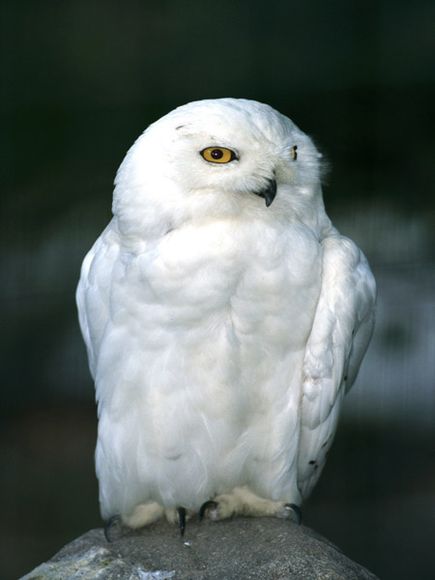
What a treat! A poet who follows this blog just sent me two lovely poems about a snowy owl she once saw. Or perhaps I should say, she once experienced. She would appreciate feedback on the poems, so please let me know your reactions in the Comments feature. E-mail is fine, too, suzannesmom@lunandstella.com. (And if you have a photo of a snowy owl in flight, I will replace the rather contemplative owl from National Geographic, below.)

Snowy Owl, by Nancy Greenaway

White shuttle of silken feathers
wefting across cloud warp of winter gray,
silently weaving sky with sea,
looming above watching walkers
tucked between patchworks
of stone-bound fields
and folds of silvered awe.

Snowy Owl 2, by Nancy Greenaway

Wide-winged whiteness
sensed before seen
swooping soundlessly
under low-lying layers
of cloud gauze

white on white
white on gray
soft on soft

too large to be living
and airborne

too white to be
worldly and wild

floating unruffled
on drafts of arctic cold

piercing consciousness
not with bill
or talon
or quill

but with light
and motion

avian divinity
spirited from
another dimension

penetrating dusk
by force of feathers

Read Full Post »

Jim Robbins writes in today’s NY Times that snowy owls are showing up where they have never been seen before (Hawaii!). Bird lovers are thrilled, and scientists are puzzled.

“From coast to coast across the northern United States, a striking number of snowy owls have been swooping onto shorelines and flying over fields this winter, delighting bird-watchers and stirring speculation about the cause of the spike. …

“Why so many more of the birds are showing up is largely a mystery, [Denver Holt, director of the Owl Research Institute in Charlo, Mont.] said. ‘We do know they had a really good breeding year, and there was plenty of food last year,’ he said. Instead of no chicks, or one or two, a single nest will produce five, six, seven or more fledglings in a good breeding year, he said.

“The owls are even showing up in urban and suburban areas, along highways, on signs and fence posts, and in other places where people can more easily spot them. It has been a good snowy owl year at Logan Airport in Boston, too. Because the airfield looks like tundra, snowy owls tend to flock there, and they must be trapped and removed.

“ ‘We’ve removed 21 so far this year, and the average is six,’ said Norman Smith, who works for the Massachusetts Audubon Society and traps the birds. The most ever trapped was 43 in 1986, Mr. Smith said, ‘but the year’s not over.’ ” Read more here.

WordPress blogger Photo Nature Blog captures birds really well. Here is one of a snowy owl getting ready to take off.

The owl below is from the National Geographic.

Read Full Post »