Feeds:
Posts
Comments

Posts Tagged ‘star’

Photo: Amir Hamja for The New York Times.
Bracelets sent to Gabrielle Nevaeh, the former star of Nickelodeon’s That Girl Lay Lay, who is in Stranger Things: The First Shadow on Broadway. “It’s a reminder that my work is reaching people,” she says.

Did you ever ask for an autograph? Mail a fan letter? Throw “jelly babies” at the Beatles?

I have sometimes written a letter to an actor or author, but mostly to argue about some interpretation. I am not sure anyone would consider me a true fan, but there are people out there who go to enormous lengths to connect to the object of their admiration.

At the New York Times, Sarah Bahr shares what she has learned about them.

“The fan mail landscape in New York theater is alive and well. Across the theater district, stage managers and theater employees collect fan art, stuffed animals and other gifts of appreciation that are sent to stars, ferrying the items to mailboxes and dressing rooms.

“ ‘It’s so cool that people still send me things after all these years,’ said Joey Fatone, the former ’N Sync singer who recently ended his run in the Broadway musical & Juliet.

“He estimated that each week he received about a dozen handwritten letters and several packages, including one containing a track suit emblazoned with “& Joeyet,” a play on his name and the jukebox musical’s. ‘I read as much as I can, but there’s so much,’ said Fatone, 48. …

Somewhat unexpectedly, these decidedly analog gestures have endured in the age of social media.

“Fans are combing stars’ Instagram feeds and TikTok reels for clues to their favorite snacks, their astrological signs and even the names of their pets.

“ ‘It’s surprising how well they know your interests,’ said Elizabeth Gillies, 32, the Victorious star who recently finished a five-month run as Audrey in the Off Broadway revival of Little Shop of Horrors.

“During the run, a fan sent her a large pillow with a photo of her French bulldog, Otis, and another got her a set of miniature cans of Canada Dry Ginger Ale, a favorite drink. She also received a custom hat with the plumbob mood icon that floats above characters heads in The Sims, which is her favorite video game. One even drew a picture of Otis dressed as Audrey, and her co-star Milo Manheim’s spaniel, Louie, dressed as Seymour.

“ ‘The creativity and the attention to detail are extraordinarily impressive,’ said Gillies, who framed the portrait. ‘It’s incredibly heartwarming to know that people are not only paying attention to your artistry, but they’re also paying attention to you.’

“Gabrielle Nevaeh, the former star of Nickelodeon’s That Girl Lay Lay who is in Stranger Things: The First Shadow on Broadway, likes to read letters in her dressing room during intermission.

“ ‘It’s a reminder that my work is reaching people,’ said Nevaeh, 20, who plays the strong-willed high school student Patty Newby in the show.

“So what do people write to stars? Often, Fatone said, people express gratitude — for his music, for the joy his performance brought them, for his decades-long career.

“ ‘I get letters that say, “Thank you so much for being in my life all these years,” ‘ he said.

“Michelle Williams, the former Destiny’s Child singer who is playing the mysterious Viola Van Horn in the stage adaptation of Death Becomes Her on Broadway, said it makes her day when she reads a letter from a writer who is struggling and has found inspiration in her work.

“ ‘Someone sent me a letter last week saying, “I deal with depression and anxiety, and I see how you’ve overcome and you’re back on Broadway,” ‘ said Williams, 46, who took a break from the Broadway musical Once on This Island in 2018 to seek treatment for depression. …

“Some of the letters are typed; some are handwritten. Fatone said he also receives invitations to weddings and bar mitzvahs — or sometimes requests for him to sign the invitations themselves. …

“As much as the stars said they have appreciated the mail, it just isn’t possible keep all of it.

“ ‘I can’t throw away anything handmade or handwritten,’ Gillies said on a recent afternoon, shortly before clearing out her dressing room — including two large storage bins of fan mail — at the Westside Theater following her Little Shop run. ‘So I’m sort of an organized hoarder for all of the fan letters and fan gifts that I’ve received.’ ” More at the Times, here.

I once wrote René Auberjonois to see if my family could visit backstage at Big River. He wrote back a welcoming postcard, and we got to chat a bit after the show.
Read Full Post »

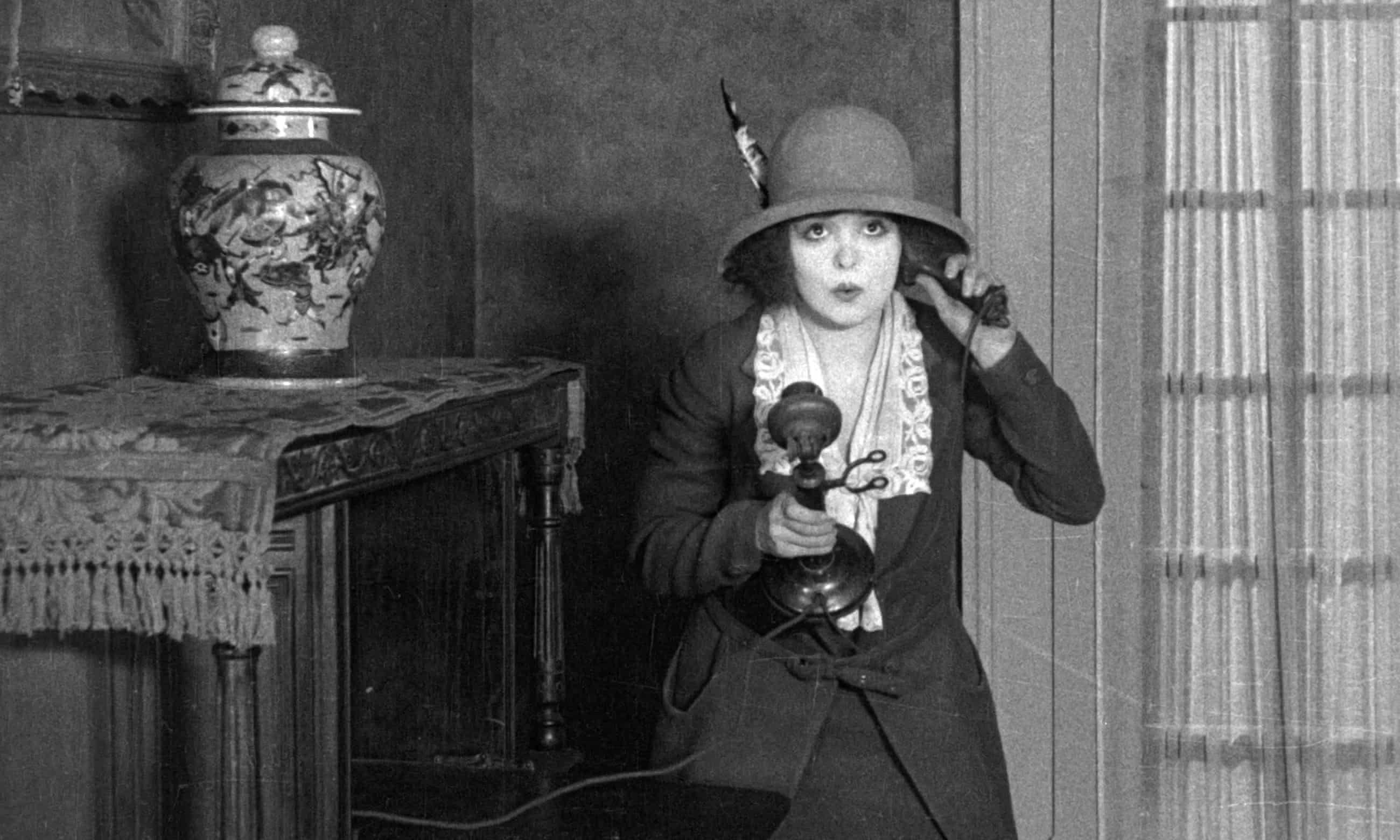
Photo: San Francisco Silent film festival.
Clara Bow in newly rediscovered The Pill Pounder, a 14-minute film. 

We had one of the first televisions (1948? 1949?) because my father was writing a story for Fortune. It was a Dumont, a big wooden box with a tiny black and white screen. There wasn’t much content available at the time, so we watched lots of silent movies. I can’t remember if I ever saw any of starlet Clara Bow’s films, but I wouldn’t be surprised. I was too young to register names of actors.

Pamela Hutchinson writes at the Guardian, “A century after she first began to turn heads, Clara Bow is ‘It’ once more. The iconic flapper of the silent film era inspired Margot Robbie’s character Nellie in Damien Chazelle’s Hollywood epic Babylon, is name checked on Taylor Swift’s forthcoming album ‘The Tortured Poets Department,’ and yesterday at the San Francisco Silent Film Festival, one of her earliest films was shown for the first time since the days of bathtub gin.

“The story of the film’s discovery has already caused excitement online. Film-maker Gary Huggins inadvertently snapped up a slice of lost silent film history at an auction in a car park in Omaha, Nebraska, that was selling old stock from a distribution company called Modern Sound Pictures. Hoping to bid on a copy of the 1926 comedy Eve’s Leaves that he had spotted on top of a pile, Huggins was informed that he could only buy the whole pallet of movies, not individual cans. The upside? The lot was his for only $20.

“Huggins soon discovered that his new pile of reels included 1923’s The Pill Pounder, a silent comedy that had been thought to be lost for decades. It is a short, two-reel film, shot on Long Island, New York. … The film stars rubber-faced vaudeville veteran Charlie Murray, the so-called ‘Irish comedian’ who was actually from Laurel, Indiana. He plays a hapless pharmacist, the ‘pill pounder’ of the title, who is trying to host a clandestine poker game in the back room of his drugstore.

“What few realized until Huggins watched the film, was that it also features 17-year-old Bow in a supporting role. She plays the girlfriend of Murray’s son, played by James Turfler, who had already appeared with Bow in her second film Down to the Sea in Ships, directed by Elmer Clifton and screened in 1922. …

“In this, one of her earliest surviving performances on film, Bow looks even younger than her years. Although she lacks the sleek Hollywood glamour she later acquired, she has the charisma to turn a thankless bit-part into something of a scene-stealer. The critics took note: based on the evidence of this film, the Exhibitors’ Trade Review described her as ‘perhaps the most promising of the younger actresses.’ …

“The film, which has been restored by the festival’s organizers and was screened with accompanying music from composer Wayne Barker, now looks remarkably good for its age. The festival’s senior film restorer, Kathy Rose O’Regan, said it was in great shape when they received it. She added: ‘We imagined it was screened maybe a few times, but there’s hardly any damage.’ …

“It is still incomplete, being in what Stenn called a ‘beta version.’ That’s because the copy Huggins found was not from the 1920s, but a 35mm print from the 1950s or 1960s of an edit of the film that was destined to become part of a 16mm compilation of old silent films with a comic voiceover poking fun at its archaic aspects. The intertitles have been removed and there are a few scenes and shots missing, too. This process is deeply unflattering to old movies, but it has been responsible for preserving versions of silent films that would otherwise have been lost. …

“ ‘For me, it is a pretty perfect 14-minutes of fun,’ says O’Regan. ‘It would be nice to know what the titles were, but you can certainly get the gist without them.’

“Stenn called the tale of the film’s discovery ‘miraculous’ and … explained that there was reason to believe that some of the discarded material was among the other cans that were sold at the Omaha auction. The hunt is on to round out The Pill Pounder, and several people have joined in the search, combing through thousands of reels.”

More at the Guardian, here. No paywall.

Read Full Post »

Photo: Dale Robinette/ Lionsgate Publicity.
Emma Stone and Ryan Gosling are not primarily dancers, but thanks to coaching, they did a good job dancing in the film La La Land.

Fred Astaire and Ginger Rogers were film stars who were best known for dancing. But what if your stars need to dance but know no more steps than the average partygoer? For stunts, you get stunt experts, but do you also get experienced dancers to stand in? Can’t imagine how that would work.

Haley Hilton has the answer at Dance Magazine, “From Patrick Swayze lifting Jennifer Grey above his head in Dirty Dancing, to John Travolta and Uma Thurman doing ‘The Twist’ in Pulp Fiction, to Emma Stone and Ryan Gosling tapping their way through ‘A Lovely Night’ in La La Land, dancing Hollywood A-listers have made simple steps iconic on the silver screen. Behind the movie magic and clever choreography is a hard-working choreographer, navigating the challenges unique to actors with varying levels of skills in dance. Leading industry choreographers Chloé Arnold, Marguerite Derricks and Mandy Moore [say] creating choreography for celebrities takes a different set of skills — and amount of time — than working with elite professional dancers.

“ ‘With dancers, you know they can do anything you come up with,’ says choreographer and tap dancer Chloé Arnold, who created the moves for Ryan Reynolds, Will Ferrell and Octavia Spencer for the 2022 holiday film Spirited. ‘Whereas with celebrities, you have to first build trust, then take the time to discover how their body naturally moves.’ Uncovering strengths is the first step: For example, certain actors­ might have an innate musicality. Once a choreographer is aware of that, they can highlight that strength while avoiding steps that magnify their weaknesses.

“Marguerite Derricks, who choreographed for the Amazon Prime series ‘The Marvelous Mrs. Maisel’ from 2016 to 2022, believes that adaptability is essential when choreographing for A-listers. ‘Once I have the script, I go into a studio with an assistant and put together movement ideas,’ she says. ‘Then I take those ideas to the actors, but I’m very ready to change up the moves. Right when I walk in, I tell them I have hundreds of ideas in my pocket, so if we try something that looks great and feels good we continue. If not, I will remove it and start playing with new ideas.’

“Derricks, whose movement has been featured in more than 50 films and 40 television shows, cultivates an open dialogue with performers and a low-stress environment in the studio. ‘It’s not about pushing a style or an idea on actors, but going in as their confidant and cheerleader, and making them feel comfortable,’ she says. ‘When they see my patience, they are more patient with themselves.’

“When La La Land choreographer Mandy Moore works with celebrities, she makes sure that she will have ample time to teach them to dance. ‘On set, things can change and shift, and if the actor understands the basics of movement and weight changes, as well as the choreography, they will be able to make changes without melting down.’ She, too, enters the rehearsal space with an open mind. ‘I am someone who preps everything to a T, knowing it could all change the first second I get into rehearsal,’ she says. …

“Having an A-lister on a project will bring attention to the work, but for these three choreographers, the benefits extend far beyond that. ‘What actors bring to the choreography is so rich — they totally embody the character,’ Derricks says. ‘I get so excited because I know that in some ways, they will take my movement deeper than even dancers can.’ That’s why Derricks encourages dancers to take acting classes. ‘You can kick and spin and pas de bourrée, but the magic is how you put it all together in a story. Acting brings greater depth to your dancing.’

“The Spirited celebrities shared their genuine enthusiasm for tap with their massive fan base—as well as their appreciation for the dancers on set. … ‘Everyone was so kind, and there were no big egos,’ [Arnold] says. ‘If one of the actors grasped something and the other didn’t, they would respond with comedy. If the steps didn’t work out and needed to be changed, they were trusting. They could have challenged me or pushed back, but there were no excuses.’ …

“ ‘So much of choreography is reading the room,’ Derricks says. ‘When working with actors for the first time, I want them to know that I am here for them. I’m not here to win an award. I will do whatever I can to help make them comfortable and confident for the scene.’

“Building that confidence is no easy task. Moore says she’s found many actors have been told they’re not good dancers, leading to insecurities. ‘It’s time-consuming, but you need to help them believe in themselves,’ she says. ‘It’s almost like therapy — you don’t want to feed into their complex. You want them to leave you loving dance.’ One of the ways Moore fosters confidence in the rehearsal studio is by not having mirrors on the walls. ‘I don’t want them to get critical of how they look,’ she says. She also holds off on filming portions of rehearsal until the dancers are ready.

“Navigating difficult personalities is another potential challenge. When casting dancers, choreographers can choose who to work with, but when they are part of a larger work with celebrities, they don’t have that luxury. Arnold does all she can to change the energy in the room. ‘If you are seeing negative things, introduce alternatives,’ she says. ‘Dress for the betterment of the space. Sometimes I will come in wearing a message T-shirt that says something uplifting. Be kind, lead by example and make sure the rest of the cast feel supported by you.’ ”

More at Dance, here. No firewall. Nice pictures from movies.

Read Full Post »

2048

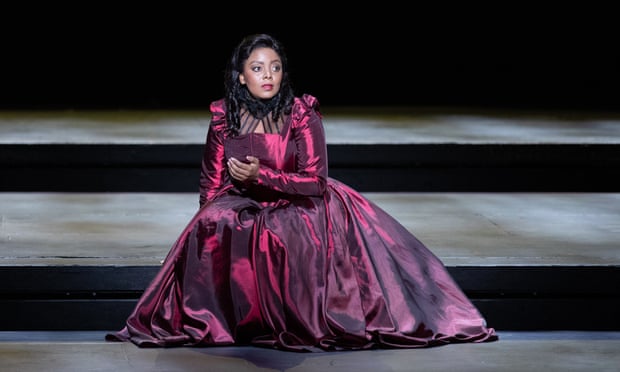
Photo: Kim Stevens/Cape Town Opera
Vuvu Mpofu in a production of Donizetti’s
Maria Stuarda in Cape Town last year.

Who can say why certain random things draw our lives in one direction or another? Did a Mozart aria and a DVD of La Traviata draw this young opera star into an unfamiliar career because her family loved singing? Because the music was so sad? Whatever the reason, Vuvu Mpofu overcame many obstacles because of that powerful draw.

Dalya Alberge writes at the Guardian, “Vuvu Mpofu had never heard opera until, aged 15, she was overwhelmed by a Mozart aria at a school concert. In her home town of Port Elizabeth, South Africa, there were no opera teachers, the library had only one book on the subject, and her classmates were scornful of her interest. But Mpofu overcame all these hurdles: she taught herself to sing by mimicking the singers on two opera DVDs and, several years later, her talent was spotted by a voice coach.

“Now, at 28, the soprano has mentors in the world’s foremost opera companies. … Stephen Langridge, artistic director of Glyndebourne, said Mpofu had a ‘unique’ talent. … ‘People who sing very high in the soprano range can be very impressive … She keeps a humanity and warmth in the sound.’

“Mpofu has been taken aback by such accolades. It is a long way from the two DVDs – one of La Traviata and the other of The Magic Flute – she watched repeatedly as a teenager. ‘I come from a small town in South Africa,’ she said. ‘I never dreamed of any of this.’ Recalling the first time she watched La Traviata, she said: ‘It was overwhelming. I cried while I was watching it. It took my breathe away … I kept on watching, just mimicking how they sang, how they acted. That’s how I taught myself.’

“Mpofu went on to audition successfully for the South African College of Music at Cape Town University, a remarkable feat for someone with no formal training. A voice coach there spotted her potential and helped her get a student loan – although she has yet to pay it off.

“ ‘We were not rich,’ Mpofu said of her family, who loved singing, whether it was gospel, traditional music or choral. ‘I didn’t have things that other kids did … but my mum made sure that we always ate morning, afternoon and evening. At school, people didn’t bring lunches. You had money … If [mum] didn’t have it, I would just make myself bread. I was OK.’

“As she didn’t have a formal music background, her initial studies were challenging, particularly as her mother died not long after she had started. Nevertheless, she went on to study for four years as an undergraduate and two years as a postgraduate.

“Mpofu overcame other challenges. She was mugged by a man with a knife the day before she entered the International Hans Gabor Belvedere singing competition, opera’s ‘world cup,’ when it was staged in Cape Town.

“This was so traumatic that she nearly dropped out of the competition. But, feeling that music was ‘some sort of remedy,’ she sang an aria from La Traviata that got her into the final. She also came third in the prestigious international Operalia competition. …

“Mpofu said competitions had really helped her career. The Belvedere got her noticed by Diane Zola of the Metropolitan Opera, who became one of her mentors. ‘Entering competitions is a way of getting yourself out there to be seen by important people,’ she said. ‘Also, it builds confidence.’ ”

More at the Guardian, here.

Read Full Post »

Love your universe. Here’s how.

First, as we discussed, there is forest bathing (note the comment on the June 15 post about regular forest-bathing excursions in Lowell, Mass.). Now we turn to star gazing. For both, you need to leave behind superfluous stuff like social media and bright lights.

Margaret Regan writes for the Guardian, “Take a nighttime drive into Arizona Sky Village, in a remote valley in south-east Arizona, and the only thing you can see clearly are the millions of stars twinkling overhead. Beyond the light show, the sky is a deep inky black, and the ground below is nothing but shadows. Dimmed car headlights might pick up spooked jackrabbits hopping through the desert brush, but the village’s unlit houses are all but invisible in the darkness.

“That’s the way the residents of this astronomy-loving community like it. The less light, the better their view of the universe.  …

“Arizona Sky Village is home to a quirky community of stargazers. Shielded by the nearby Chiricahua mountains from urban sky glow – scientists’ poetic name for light pollution – nearly every house in the rural 450-acre development has its own domed observatory, complete with an array of telescopes.

“Outdoor lights are strictly forbidden; blackout shades are required in every window of every house; and nighttime driving is discouraged. Most residents don’t want to be bothered with driving at night anyway: they’re too busy scanning the skies.

“ ‘This is what we do,’ villager Frank Gilliland says cheerfully one starry night as he peers through the community’s biggest telescope, a 24-incher belonging to neighbor Rick Beno. At the moment, the scope is aimed at the Milky Way through an open hatch in the dome of Beno’s personal observatory, giving Gilliland a crystal-clear view of the Orion nebula, a remarkable 1,344 light years away. …

“Most of the Sky Villagers had technical or scientific careers – Dr Fred Espenak, a bona fide astronomy pro, is a retired Nasa astrophysicist known as Mr Eclipse – but [Arizona Sky Village founder Jack] Newton spent his working life managing department stores in his native Canada. He always made time for the sky though, rambling miles into the countryside outside his hometown of Victoria. …

“When Jack retired, the Newtons wanted a break from rainy Victoria and its murky skies. After a first retirement stop at a sky village in Florida, Newton and development partner Gene Turner came out to Arizona to scout dark places.

“The isolated stretch of treeless desert they found outside Portal was perfect: it was sparsely populated, 150 miles distant from Tucson, the nearest city, and velvety black at night. Now some 21 households live there peaceably under Newton’s Law: they cover up their windows and they turn off the ‘goddam’ lights. …

“Even Arizona’s state government – not known for progressive policies – has restricted electronic billboards. The flashy placards are allowed only in several designated sites at least 75 miles from the venerated Grand Canyon and from the Kitt Peak and Mt Lemmon observatories. In 2012, the then governor Jan Brewer vetoed a 2012 attempt to light up more of the state’s highways with dancing electronic videos, declaring that she refused to put astronomy in jeopardy. As she noted, the industry contributes $250m annually to Arizona’s economy and employs more than 3,300 people.” More here.

Seems a shame to have to make economic arguments to do good, but whatever works. We do need to keep seeking common ground when addressing challenges.

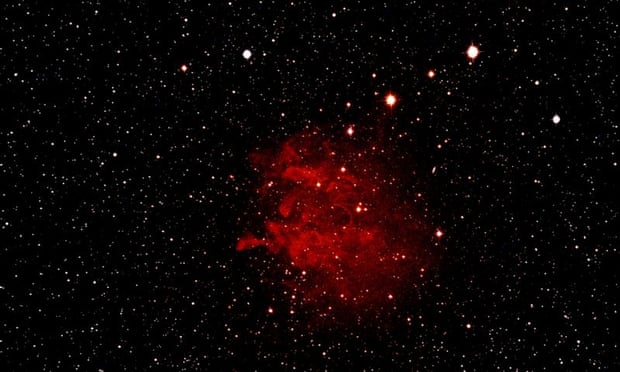
Photograph: Rick Beno
Emission Nebula in Aries. Arizona Sky Village is one of the best places in America to see the stars.

Read Full Post »