Feeds:
Posts
Comments

Posts Tagged ‘tea’

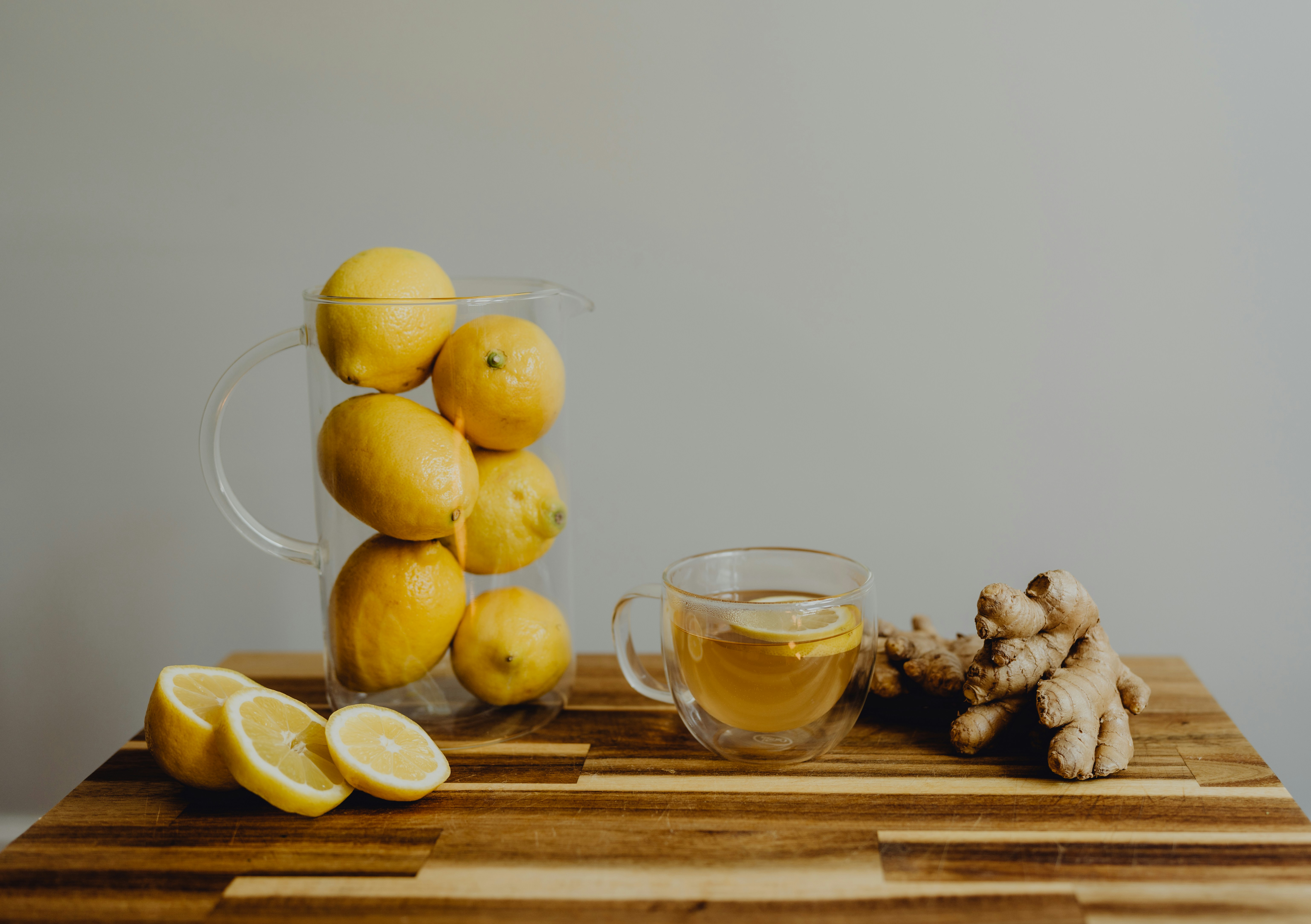
Photo: Kelly Sikkema via Unsplash.
It’s amazing how many cultures use lemon and ginger tea to treat colds.

I have volunteered as an English as a Second Language (ESL) assistant for about eight years. Recently Teacher Allissa’s assignment for her students was to write about the home remedies their families use. These are adult students from countries as diverse as Turkey, the Dominican Republic, Afghanistan, Peru, China, Haiti, Cambodia, Guatemala …

Note the cold remedy mentioned most.

“When my children have a fever, I put them in the bathtub with warm water, salt and vinegar. It’s so good to lower the fever.”

“When someone is sick, I boil chamomile tea for them. I also make lentil soup or chicken soup.”

“In my country, when a person is sick, l give them some tea, some vegetable oil, soup and cinnamon tea.”

“I treated the children’s colds with tea with raspberry and lemon, and also tea with ginger, honey and lemon. For colds and viruses, the best noodle soup in chicken broth is served with a garlic yogurt mixture. Tasty and healthy for cough. In my country, Azerbaijan, many herbs grow in the mountains for various diseases.”

“Lemon tea is good for cough.”

“In China, we always think ginger tea can help people keep away colds.”

“Lemon tea is helpful to keep your immune system strong. Lemon contains vitamin C. Make sure to wear a hat, gloves, and a scarf if you’re going outside to stay comfortable.”

“I remember when I was in Haiti and had a sore throat, my mother used to boil ginger and lemon tea. Then when it was ready, she put honey in it. Then she gave me the tea to drink, and after a while I felt better.”

“Lemon is good for the people who are sick. For example, if they have a sore throat or are losing their voice. I make a lemon syrup with hot water and salt and keep it for one year. If you keep it more then a year, it’s no good. When you are sick, boil it with the water and drink it. The next day you will feel better.”

“When I have a cold, I prefer to drink lemon tea with honey. It is very useful for sore throat and runny nose. I also take anise tea for any stomach disorders.”

“I remember when I was a little girl and my mother would put limes with salt on my wrists and feet to help lower down my body temperature when I was sick. I’m really grateful that she taught me this because I now use this method to help cure my kids when they’re sick.”

“Lemon tea is very good for your body, especially when you have a fever and sore throat. When I have a fever, I drink it and it helps me. I advise you always to drink lemon tea.”

“Mint is a relaxing plant. When I have a stomach ache, I make mint with lemon tea. Oregano is the best herb with a roast chicken. Lavender is a miracle plant for me. It’s for detoxing, good sleep and headaches.”

“We treat colds with hot tea with ginger, lemon and honey. Prepare hot chicken broth soup with noodles and add garlic.”

“In Peru when we are sick with cough and fever, we drink hot water, a fresh eucalyptus leaf and also chamomile and a small piece of ginger, and we sweeten it with honey. We also rub our chest and back with Vicks VapoRub, and at night before sleeping, we place a slice of onion under the soles of our feet and put on our socks. The next day we take out the slice of onion, and the onion is all black and it is thrown in the trash, because it has already absorbed part of the cold. The onion strengthens our immune system. You can also place half an onion on top of the nightstand. The smell of the onion absorbs the flu viruses that are in our bedroom; it also serves to relieve asthma and helps the respiratory tract.”

I shared the onion idea with my 12-year-old granddaughter when she had flu last week. She didn’t try it.

Please share your own home remedies.

Read Full Post »

Photo: Safeed Rahbaran/New York Times via the Las Vegas Sun.
“George Lee at the Four Queens Hotel and Casino in Las Vegas, on Jan. 16, 2024. Lee was the original Tea in ‘George Balanchine’s The Nutcracker,’ ” says the New York Times. “A documentary filmmaker found him and a lost part of ballet history in Las Vegas.”

Several of my good friends from college are Chinese. I don’t know if I am stereotyping my friends, but having come from a throughly impractical family, I was impressed at once with what seemed to me a startling level of practicality. Practicality about what kinds of courses to take for what kind of well-paying jobs; even practicality about potential marriage partners.

So one of the things that struck me about the mother in today’s lovely story was the way she helped her son earn rice during the Japanese occupation of China and her advice to him when they headed to America.

Siobhan Burke reports at the New York Times, “Among the blaring lights and all-hours amusements of downtown Las Vegas, in a sea of slot machines at the Four Queens Hotel and Casino, George Lee sits quietly at a blackjack table, dealing cards eight hours a day, five days a week, a job he’s been doing for more than 40 years.

“Lee, 88, was likely in his usual spot when the filmmaker Jennifer Lin was sifting through old photos at the New York Public Library for the Performing Arts in 2022, wondering what had become of a dancer with a notable place in ballet history. Pictured in a publicity shot for the original production of ‘George Balanchine’s The Nutcracker,’ in the role known as Tea, was a young Asian dancer identified as George Li.

“For Lin, a veteran newspaper reporter turned documentarian, the picture raised intriguing questions. In 1954, when the photo was taken, it was rare to see dancers of color on the stage of New York City Ballet, the company Balanchine co-founded. Who was this young man, this breaker of racial barriers, this pioneer? Was he still alive? And if so, what was he up to?

“ ‘I became absolutely obsessed with trying to find out what happened to George Li,’ Lin said in a video interview.

“In just over a year, that obsession has blossomed into a short film, Ten Times Better, that chronicles the unexpected story of Lee’s life: from his childhood in 1940s Shanghai, where his performing career began; to a refugee camp in the Philippines, where he fled with his mother, a Polish ballet dancer, in 1949; to New York City and the School of American Ballet, where Balanchine cast him in ‘The Nutcracker’; to Flower Drum Song on Broadway, his first of many musical theater gigs; and ultimately, to Las Vegas, where he left dance for blackjack dealing in 1980. (He changed the spelling of his last name in 1959, when he became a United States citizen.) …

“ ‘So many years I haven’t done ballet,’ Lee said over coffee at the Four Queens on a recent Sunday, after his shift. ‘And then suddenly Jennifer comes and tries to bring everything up.’ …

“Lin was not the only one who had been searching for Lee. In 2017, while organizing an exhibition on ‘The Nutcracker,’ Arlene Yu, who worked for the New York Public Library at the time and is now Lincoln Center’s head archivist, was puzzled by the relatively few traces of him in the library’s vast dance collection. ‘Whereas if you look at some of his peers in ‘The Nutcracker’ in 1954, they went on to careers where there was a lot more documentation.’ …

“Lee, in his heyday, was a dancer to know. At just 12, he was already winning public praise. In a preview of a recital of the King-Yanover School in Shanghai, the North China Daily News called him an ‘extremely promising young Chinese boy, whose technique is of a very high standard.’ A reviewer wrote that he ‘already may be said to be the best Chinese interpreter of Western ballet.’ (Lee saved these newspaper clippings and shared them with Lin.) …

“Lee’s mother, Stanislawa Lee, who had danced with the Warsaw Opera, was his first ballet teacher; as a child, he would follow along with her daily barre exercises. Shanghai had a significant Russian population, and with that a robust ballet scene. To earn money, Stanislawa arranged for her son to perform in nightclubs — ‘like a polka dance, or Russian dance, or sailor dance,’ Lee said. The clubs would pay them in rice. …

“In 1951, an American friend of Lee’s father sponsored them to come to New York, where he introduced Lee to the School of American Ballet, City Ballet’s affiliated school. As Lee narrates these twists and turns in the film, one memory anchors his recollections. Before they immigrated, his mother issued a warning. ‘You are going to America, it’s all white people, and you better be 10 times better,’ he recalls her saying. ‘Remember that: 10 times better!’

“The footage of Lee in his 20s suggests he took that advice to heart. In television appearances — with the company of the ballet star André Eglevsky, and in a number from Flower Drum Song on the Ed Sullivan Show — his power and precision dazzle.

“ ‘He was good; he was really good,’ [Phil Chan, cofounder of Final Bow for Yellowface, an initiative focused on ending offensive depictions of Asians in ballet] said. ‘Clean fifth, high jump, polished turns, stick the landing — the training is all there. He’s already 10 times better than everybody else.’ …

“In a 1979 interview heard in the film, the former City Ballet soloist Richard Thomas, who took over the role of Tea, raves about Lee’s peerless acrobatic jumps: ‘He was wonderful! Balanchine choreographed a variation for him that none of us have ever been able to equal.’

“As Lee remembers it … the City Ballet makeup artist put him in full yellowface, and Balanchine insisted he take off the makeup. ‘He is Asian enough! Why do you make him more?’ he remembers Balanchine saying. Lee was costumed in the Fu Manchu mustache, queue ponytail and rice paddy hat often associated with the role, now widely critiqued as racist caricatures. But he said he didn’t take offense. ‘Dancing is dancing,’ he said. …

“He pieced together jobs for more than 20 years, often unsure of what would come next. He was dancing in a Vegas revue, ‘Alcazar de Paris,’ now in his 40s, when a blackjack dealer friend suggested he go to dealer school. ‘I can’t dance all my life,’ he remembers thinking.” More at the Times, here.

Read Full Post »

Photo: Library of Congress
This powerful image symbolizes the awakening of the nation’s women to the desire for suffrage. The torch bearer is striding across the western states, where women already had the right to vote, toward the east where women are reaching out.

This month I’ve been enjoying a different tea every day after my daughter-in-law had the kind thought of giving me a teabag-a-day Advent calendar. I do like trying new teas. Today I’m thinking about the role tea has played in American history. No, not just when men threw tea into Boston Harbor to protest “taxation without representation,” but when women urged people to buy Equality Tea.

Janelle Peters writes at the Atlantic, “Access to daily necessities has long been a priority for social-reform movements. … When it came time for women to get the vote, tea played a role, too. Women such as the wealthy Alva Vanderbilt-Belmont held ‘suffrage teas,’ where support for the cause was proclaimed. The tea parties also served as fund-raisers, a practice that extended to the teas themselves.

“In California, suffragist women showed how both tea and the national movement of women’s suffrage could be democratized at the state level. Two suffrage teas generated revenue for political organizing in the run-up to the 1911 election. … Equality Tea sprang up in Northern California and spread throughout the state. In Southern California, Nancy Tuttle Craig used her position as one of the only female grocers in the state to package a ‘Votes for Women’ tea. …

“By the late 19th century, the suffragette cause had stalled in the Golden State. … It took a decade and a half for California women to prove that they had a broad base of support to gain the right to vote in state elections. The 1911 vote was hard-fought. Suffrage leagues and reform-minded women organized feverishly, but women’s suffrage still did not pass in San Francisco. This time, the rest of the state made up the difference. Tea smoothed over the gap between San Francisco, Los Angeles, and San Diego in supporting women’s suffrage.

“Equality Tea was based in Northern California. Distributed by the Woman’s Suffrage Party, it spread through the state. San Francisco storerooms served the tea in tearooms decorated with a Chinese theme. Suffrage-minded consumers could purchase Equality Tea in half-pound, whole-pound, and five-pound boxes. Varieties included Ceylon, English breakfast, young hyson, gunpowder, and oolong. Some suffrage organizations, like the Club Women’s Franchise League, served Equality Tea at their headquarters in the St. Francis Hotel on Saturday afternoons.

“[Equality Tea] was also sold at regional fairs and by mail order. Ads appeared in venues ranging from local newspapers to medical journals. Some grocers carried the tea, and

there were women who refused to pay their grocery bills if their grocer did not carry Equality Tea.

“The ability to order by mail assured that the tea’s purveyors did not discriminate against rural or lower-class residents, groups of the population with stronger support for women’s suffrage.

“Tea became a central feature of the political strategy of San Francisco suffragists. On August 22, 1911, The San Francisco Call reported that the Votes for Women club had prepared a ‘suffrage special’ train that would carry feminist speakers to the state fair in order to be heard by people from all parts of the state. … By emphasizing tea on the suffrage train, the Votes for Women club focused on how accessible the basic civic right could be.”

Read more at the Atlantic, here, while I head off for tea at Pamela’s home.

Read Full Post »

Tea and Hygge

Photo: Valentyn Volkov /Alamy
Hygge is the word Danes use to express “coziness and comfortable conviviality.” Think good friend, fireside, warm socks, cup of tea.

Upton Tea Imports in Massachusetts leads off its quarterly newsletters with little stories about the joy of tea in different time periods and parts of the world. The latest story offers background on the art of getting cozy, which the Danes call hygge, and which often involves a nice, hot cup of tea.

Upton Tea writes, “Half of the world’s happiest countries are Nordic, all of which have a penchant for hygge. [As of this writing, Denmark is] at the top of the happiness list and, perhaps coincidentally, seems to have the greatest affinity for hygge.

“Michael Booth (The Almost Nearly Perfect People) goes so far as to  claim, ‘Danes prize it more than ambergris and stardust.’ Is hygge the secret sauce to happiness, or is it just something that appeals to countries with few daylight hours during long winter months? …

“Hygge can be described as the appreciation of simple pleasures, enjoyed in a comfortable and esthetic environment in the company of close friends.”

In an article on hygge published in the New Yorker magazine, adds Upton Tea, “Anna Altman states … ‘Danish doctors recommend “tea and hygge” as a cure for the common cold.’

“It’s possible to hygge alone, wrapped in a flannel blanket with a cup of tea, but the true expression of hygge is joining with loved ones in a relaxed and intimate atmosphere.”

Nice. Tea and hygge. We knew this would get around to tea eventually. For more about hygge, check out the New Yorker article, here, and The Year of Living Danishly. And for the rest of the Upton Tea article — plus the impressive catalog — click here.

Read Full Post »

At WBUR’s The Artery, Andrea Shea has a story about a composer with a penchant for unusual texts: the package blurbs practically everyone reads at breakfast when the newspaper hasn’t arrived.

“Musicians are always searching for inspiration,” writes Shea, “and sometimes they find it in some unlikely places.

“Take Brian Friedland, a prolific Boston composer and jazz pianist who’s discovered a creative goldmine in his cupboards. He takes words on packaging for products such as granola, mouthwash and tea, then sets them to some pretty sophisticated music. Friedland calls the funny-but-serious project ‘Household Items’ and he has a new CD. …

“Friedland is not a singer, but he sees amusing, absurdist potential in labels featuring characters, quests or ‘extreme’ wording. He started foraging for inspiration about eight years ago and had an epiphany when he read a can of carpet cleaner after his cat missed the litter box.

“It read, ‘Do not. Do not puncture. Do not freeze. Do not incinerate. Do not expose to heat above 120 degrees Fahrenheit. Do not inhale.’ He made them into a percussive, vocally complex work where the singer repeats, ‘Do not! Do not! Do not puncture,’ with urgency.”

Percussionist and singer Laura Grill “performed a few songs, including one about a fragrant skin moisturizer.

“ ‘There’s one benefit of having these sort of accessible lyrics,’Grill said, ‘because people are like, “Oh right — Avon Peach Hand Lotion — I can connect with that.” ’

“Grill, also an [New England Conservatory] alum, says Friedland has found a unique solution to an age-old problem.

“ ‘As someone who enjoys composing and arranging, one of the hardest things is trying to write lyrics,’ she said, ‘so Brian finds them on his coffee packages and appliances.’ ”

Listen to Friedland’s SleepyTime tea music with lyrics taken straight from the box at WBUR, here.

Photo: Andrea Shea/WBUR
Brian Friedland, a composer who puts text from product packaging to music.

Read Full Post »

Alice Feiring has an interesting story in Newsweek.

She writes that Kazi Anis Ahmed of Bangladesh, the 41-year-old cofounder and president of a company called Teatulia, was getting his doctorate in comparative literature when his father suggested expanding the family media and construction business into tea farming. The location he had in mind was the barren northwest of the country, not far from India’s tea-growing region.

Kazi Anis Ahmed liked the idea but felt strongly that any farm of his should be organic. Additionally, says Feiring, the family’s “mission was to provide jobs to the region. …

“The lack of agricultural tradition proved a blessing because the land was virginal, not ravaged by the government-supported, synthetic-fertilizer-dominated ‘Green Revolution.’ After reading the poetic One Straw Revolution by the master Japanese farmer, Masanobu Fukuoka, Ahmed went one step beyond organic and tried to do low-intervention farming.

“The tea garden functions on minimal irrigation. They installed a plethora of plants next to the tea plants to feed and aerate the soil. What now exists is a breathtaking vision. The barren area has been transformed into an Eden with a resurgence of wildlife never seen before — recently, a pair of monkeys was spotted. The animals had not been seen in the area for decades.”

Read more at the Daily Beast. (Thanks for alerting me to this lovely story, Asakiyume.)

Photograph: Habibul Haque, Teatulia

Read Full Post »

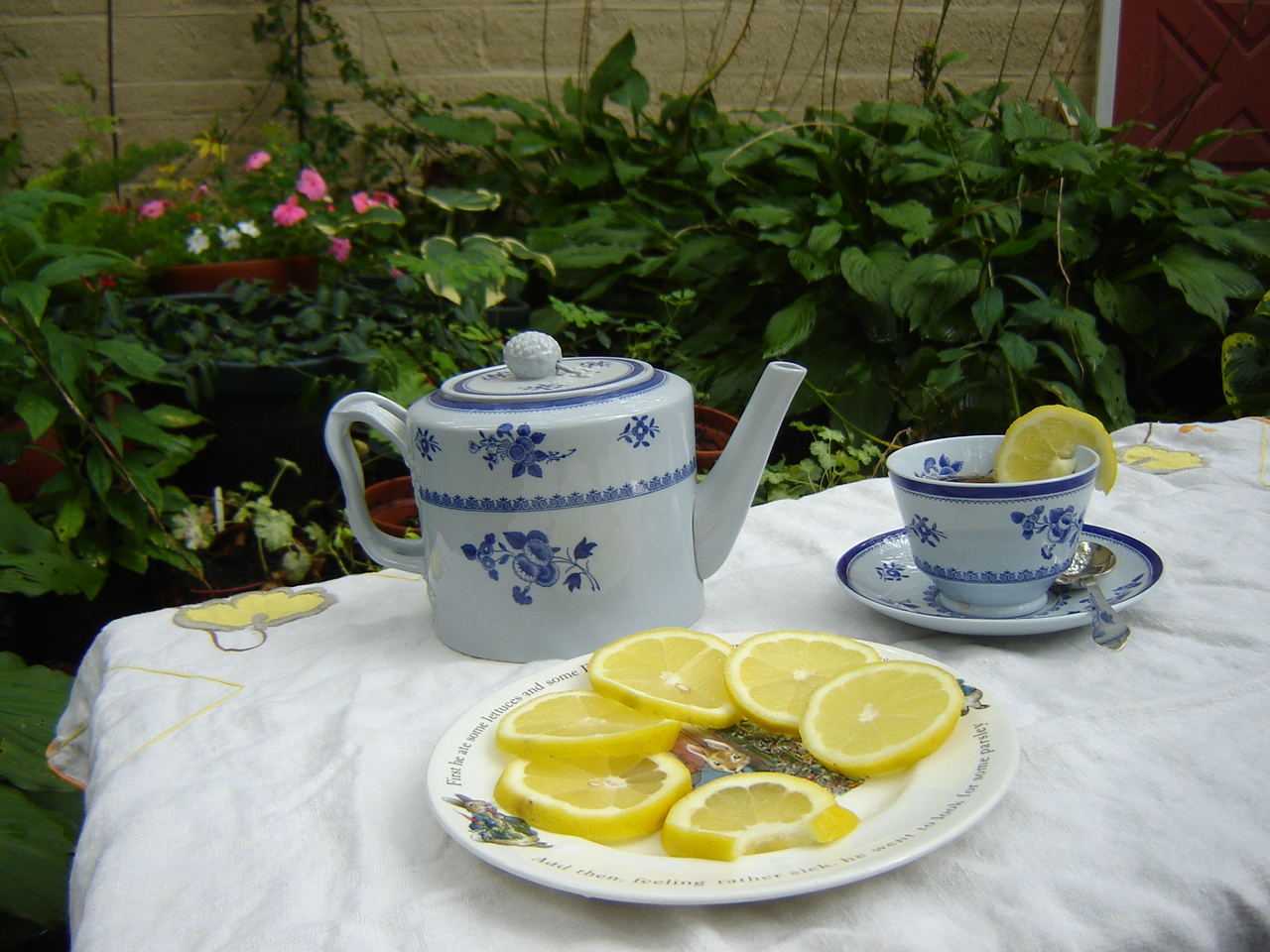
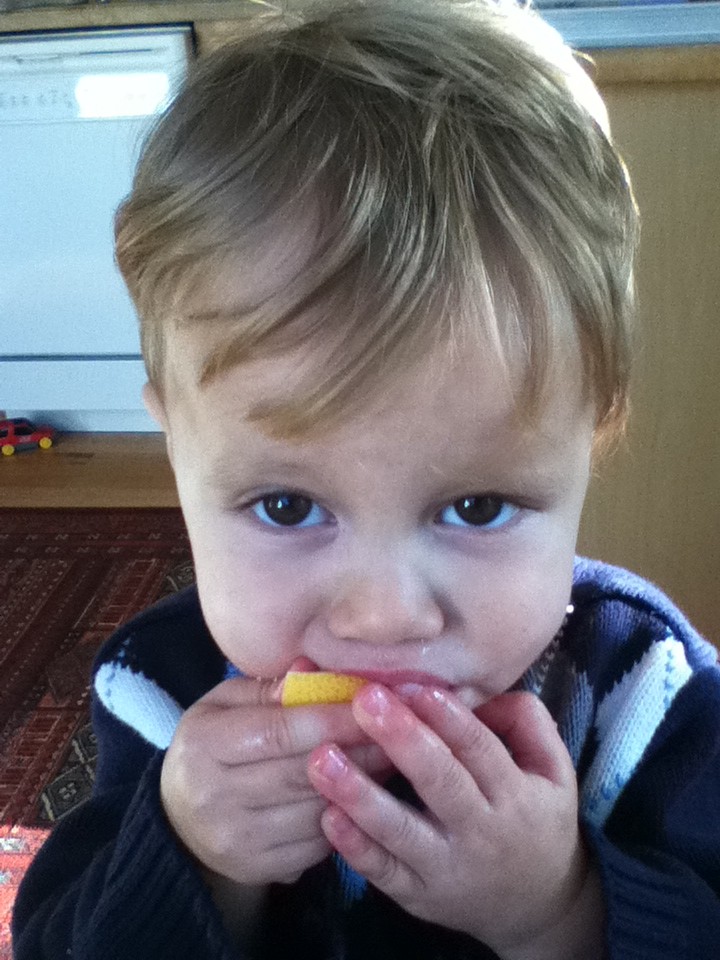
My grandmother Mabel (called Garkie by my family as the result of a gross parental misinterpretation of my infantile diction) sometimes gave tea parties. In one tea-party story, my toddler self ate all the lemons, and Garkie had to keep going to the kitchen to get more for the ladies — my mother apologizing, and Garkie saying, “No, no. I have plenty more.”

A love of citrus is an inherited trait in my family. And since it runs in my daughter-in-law’s family, too, my grandson is doubly blessed, you might say. (I’m eating the lemons in my tea as I write.)

Read Full Post »

I care about the original meanings of words. Poet John Ciardi cared even more than I do. A random thing I recall from his book How Does a Poem Mean? is that a person alert to word derivations would never say that a ship “arrived” at an oil platform in the North Sea because “arrived” is from the Latin words “to shore” and a North Sea platform is not the shore.

My office window overlooks the location of the Boston Tea Party. So lately, I have watched the museum rising from the ashes of a fire that destroyed it years ago, and I have been thinking about original tea parties.

When I was little, I loved to use the visit of a friend as an occasion for a tea party in our large attic closet. My mother or a babysitter would make a pot of tea and very buttery cinnamon and sugar toast, and my friend and I would cart it all upstairs with the cups, saucers, spoons, sugar, napkins, and milk, and have a tea party by the glow of flashlights.

Then there is my feeling for the tea party in Alice in Wonderland. That is perhaps the most important tea party to me because, at age 10, I understudied Alice in a local production of the play, which had been adapted from the book by New York television director Binny Rabinowitz.

I think part of the reason I loved that experience so much was because Alice is a sensible little girl who tries hard to follow all the rules laid down for her, but she is surrounded by completely inconsistent, stubborn, unreliable, and unreasonable adults. In spite of the enormity of the task, she keeps trying to help these grownups make sense. I loved the tea party scene, in which my best friend, Carole, was the dormouse (“Twinkle, twinkle, twinkle … zzzz”). Today I’m thinking about the fact that, other than Alice herself, all the tea party participants were quite mad.

Quite, quite mad.

Read Full Post »