Feeds:
Posts
Comments

Posts Tagged ‘tour’

Photo: AP/Luis Andres Henao.
“Voices of Gullah” members, Joe Murray, from left, Minnie “Gracie” Gadson, Rosa Murray and Charles “Jojo” Brown, sing Gullah spirituals at the Brick Baptist Church, St Helena Island, South Carolina.

Not long ago, I read a fascinating memoir called The Water Is Wide, by Pat Conroy, about teaching poor children on a South Carolina island in 1969-1970. The depravation on that island was troubling to read about.

Today’s story about a different South Carolina island shows a different side. The island elders in this article about preserving tradition have agency.

Luis Andres Henao writes for the Associated Press (AP), “Minnie ‘Gracie’ Gadson claps her hands and stomps her feet against the floorboards, lifting her voice in a song passed down from her enslaved ancestors who were forced to work the cotton and rice plantations of the South Carolina Sea Islands.

“It’s a Gullah spiritual, and the 78-year-old singer is one of a growing group of artists and scholars trying to preserve these sacred songs and their Gullah Geechee culture for future generations. …

“On a recent summer day, her voice rang out inside Coffin Point Praise House. It’s one of three remaining wooden structures on St. Helena Island that once served as a place of worship for the enslaved, and later, for generations of free Black Americans.

“Gadson grew up singing in these praise houses. Today, as a Voices of Gullah member, she travels the U.S. with others in their 70s and 80s singing in the Gullah Creole language that has West African roots.

“ ‘This Gullah Geechee thing is what connects us all across the African diaspora because Gullah Geechee is the blending of all of these cultures that came together during that terrible time in our history called the trans-Atlantic slave trade,’ said Anita Singleton-Prather, who recently performed and directed a play about Gullah history.

“The show highlighted Gullah contributions during the American Revolution, including rice farming and indigo dying expertise. At the theater entrance, vendors offered Gullah rice dishes and demonstrated how to weave sweetgrass into baskets.

“More than 5,000 descendants of enslaved plantation workers are estimated to live on St. Helena Island, the largest Gullah community on the South Carolina coast where respect for tradition and deep cultural roots persists.

“Singleton-Prather [says] that despite slavery’s brutality, the Gullah people were able to thrive, ‘giving our children a legacy — not a legacy of shame and victimization, but a legacy of strength and resilience.’ …

” ‘It’s important to preserve the Gullah culture, mainly because it informs us all, African Americans, where they come from and that it’s still here,’ said Eric Crawford, author of Gullah Spirituals: The Sound of Freedom and Protest in the South Carolina Sea Islands.

“For most of his life, he hadn’t heard the word Gullah. That changed in 2007 with a student’s master’s thesis about Gullah culture in public schools.

“ ‘As I began to investigate it, I began to understand that “Nobody Knows the Trouble I’ve Seen,” “Roll Jordan Roll,” “Kumbaya!” — all these iconic songs came from this area,’ he said.

“Versions of these songs, he said, can be traced back to the 19th century when ‘Slave Songs of the United States,’ the first book of African American spirituals, was recorded on St. Helena Island. …

“He was so curious that he traveled to St. Helena, where he met the singers and began recording their music. … Crawford said, sitting on the original wooden pews of the island’s Mary Jenkins Praise House, ‘They were forced to go to their owners’ church and stay in the balcony. But then in the evening, typically on Sunday evenings, Tuesday and Thursday, they had this space by themselves, away from the watchful eye of the owners, and they could engage in their own songs.’ …

“At a recent concert they clapped their hands in one rhythm, stomped the floor in another and swayed, singing at the island’s Brick Baptist Church.

“ ‘These singers are as close as we would ever come to how the enslaved sang these songs,’ Crawford said. ‘That authenticity — you just cannot duplicate that.’

“He began to take the singers on tour in 2014. Since then, they’ve performed across the U.S. as well as in Belize and Mexico. The touring band’s members include Gadson; 89-year-old Rosa Murray; 87-year-old Joe Murray; and their son, Charles ‘Jojo’ Brown.

“ ‘I’m gonna continue doing it until I can’t do it no more, and hope that younger people will come in, others younger than me, to keep it going,’ said Brown who, at 71. …

“His mother agrees. Sitting in her living room, surrounded by framed photos of dozens of grandchildren, she said she’ll continue singing for them.

“ ‘I hope and pray one or two of them will fall in my footsteps,’ she said.”

More about the Gullah culture at AP, here.
Read Full Post »

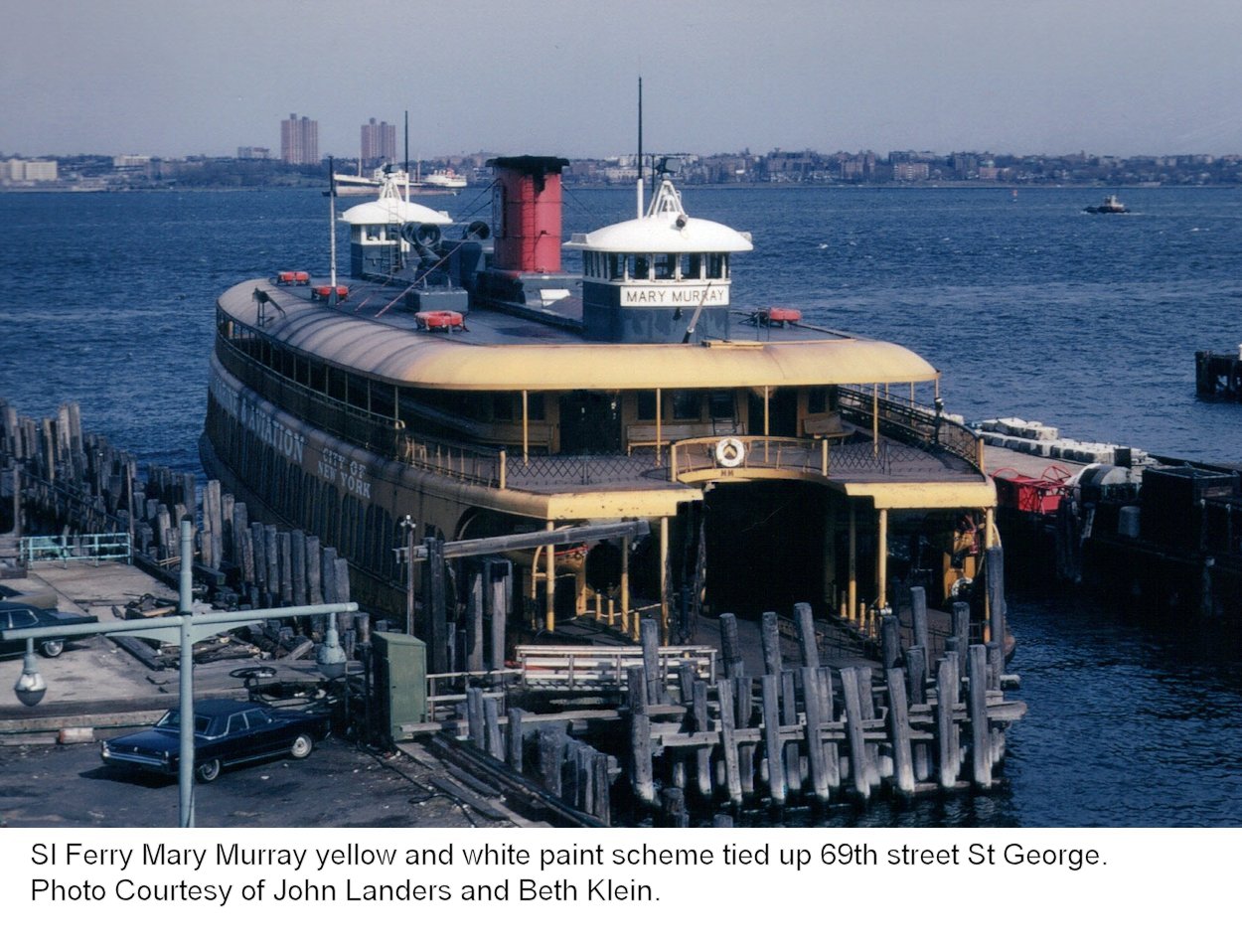
Although the Staten Island of actor Pete Davidson and Saturday Night Live is a running joke, there is more to this borough of New York City than people realize.

Liza Weisstuch at the Washington Post decided to visit as a tourist and found a lot of surprises.

“In 1916, a young woman with dreams of making it big on Broadway lit off from her home in Cincinnati, leaving her young children with their grandparents, and arrived in New York City. She never found success as an actress. Instead, she opened an antiques gallery on Madison Avenue in Manhattan and developed a keen fondness for — rather, obsession with — Tibetan art and took up residence on Lighthouse Hill, a leafy enclave of Staten Island.

“While Jacques Marchais never set foot in Asia, she accrued what remains one of the largest collections of Tibetan art outside Tibet. It’s all housed in the Jacques Marchais Museum of Tibetan Art, which she opened in 1947, next to her home. It took her nine years to build, during which time she collected stones in her pickup truck that were used in the construction of the museum and terraced garden.

“ ‘It’s a wonder there were any stones left on Staten Island after she was done,’ the museum’s executive director, Jeff Gaal, told me, pointing out the flat roof, trapezoidal-trimmed windows and doors with crosscut wood posts, a few of the elements in the style of a Tibetan monastery in the United States. …

“One day last spring, I sat for a while in the garden outside. It was easy to understand why Marchais found it a refuge from Manhattan.

“Staten Island, which sits 5.2 miles south of New York City’s Financial District and measures 58.5 square miles, has been called many things: the greenest borough, the Forgotten Borough, Staten Italy, the Rock, the city’s dump. (It was the site of a noxious 2,000-plus-acre landfill, one of the world’s largest, for more than 50 years. A project to turn it into green space is underway, with some sections now open to the public.) …

“Arguably today’s most famous Staten Islander is SNL prodigy and boyfriend to the stars Pete Davidson, who wrote and starred in Judd Apatow’s The King of Staten Island in 2020. …

“Over the past few months, I’ve made a few trips to the borough to see things I sheepishly and shamefully never knew there were to see. And learning what makes the island so unique has brought my understanding of New York City — and it’s no exaggeration to say other parts of the world, too — into clearer focus.

“Case in point: Tibet. And also, Sri Lanka. A community of Sri Lankans from the South Asian island nation has grown here over the past few decades. Lakruwana [restaurant], which opened its first location in Manhattan in the 1990s and its second here in 2000, is a bedrock of the community. It’s run by Jayantha Wijesinghe and her husband, Lakruwana, who met on the Staten Island Ferry. He oversees the place and decorated it with art, furniture and Buddhist sculptures he shipped over from Sri Lanka. She’s the chef, and her visually arresting dishes emphasize traditional flavor — curries and sambals. Their daughter, Julia, created a Sri Lankan museum, the first outside the country, in the restaurant’s basement in 2017. She was 18. …

“What was fast becoming an Asian-arts-oriented expedition continued a few days later when I returned to visit Snug Harbor Cultural Center & Botanical Garden, an 83-acre campus that encompasses three museums, 14 botanical gardens, two art galleries and a two-acre urban farm where produce is grown for some of New York City’s most famous restaurants. Among the sites is the New York Chinese Scholar’s Garden, an otherworldly … tranquil space, a re-creation of Ming Dynasty Chinese gardens. Sounding like the stuff of fairy tales, the buildings were fabricated in China by 40 artisans, then shipped to New York City and assembled here in the late 1990s in accordance with old-world methods. That’s to say: no nails, screws or glue, just pegs securing the latticework. …

“Snug Harbor is not why people call Staten Island ‘the greenest borough.’ You can chalk that up to the Greenbelt, a 2,800-acre expanse of parks, trails and open spaces that cuts diagonally across the center of the island. (For scale, Central Park is 843 acres.) The park on top of the aforementioned dump nearly doubles the island’s green space. Red foxes, groundhogs, beavers, deer, wild turkeys and great blue herons are just a sampling of the wildlife that roam the woods and wetlands. …

“Going back to the Lenape Indians who lived here when the Dutch arrived, life and commerce revolved around the farmland. And the sea. A visit to the museum at Historic Richmond Town, a collection of 40 structures (including outhouses) on the site of a 17th-century village, offers insight on that, with its display of old local oyster shells, some as large as adult shoes. …

“A visit to the National Lighthouse Museum, located in a former Coast Guard station a few minutes from the ferry terminal, gave me a clearer understanding of the island’s critical role in the evolution of the nation’s lighthouse network.”

More at the Post, here.

Read Full Post »

penguins6-1080x720-1

Photo: Nelson Atkins Museum of Art
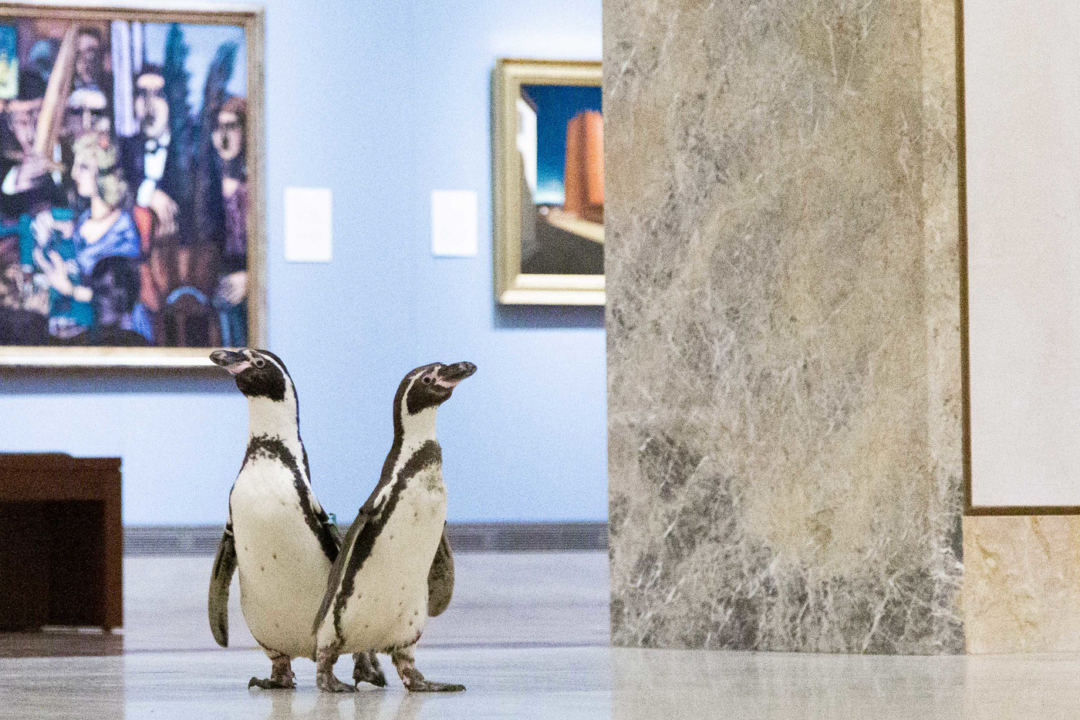
Staff wondered what kinds of art these Humboldt penguins from the Kansas City Zoo would gravitate toward when given leave to wander in a museum.  

You’ve probably seen as many invitations as I have to tour closed art museums online, and maybe you’ve already accepted an offer. I myself needed the extra nudge of touring a museum in the company of penguins.

Sarah Rose Sharp writes at Hyperallergic, “As reported by Time, three art-savvy Humboldt penguins from the Kansas City Zoo were given leave to wander a couple of the galleries at the Nelson Atkins Museum of Art earlier in May.

“A video produced by the museum shows the little fellas wandering the marble floors and pausing to look at Impressionist and Baroque master paintings in galleries that were carefully checked to ensure the safety of both the works of art and their avian visitors.

“ ‘We’re so happy to welcome our colleagues from the zoo,’ said Nelson Atkins Executive Director Julián Zugazagoitia, in the video, ‘and they’ve brought special friends, and actually, we’re seeing how they’re reacting to art.’ ” More.

Back at Time, Tara Law wrote that Zugazagoitia thought the penguins “would be most interested in the works by Claude Monet, because they are ‘soothing’ and resemble water. However, the waddling visitors seemed to be most engaged with the Baroque works, including those by Caravaggio. …

“ ‘They stop, and look and wonder. … It really brought us joy, and I think it brings the community together when the love of animals and the empathy we feel for them is also reinforced by the love that we feel for art.’ …

“Although the museum has not yet announced a reopening date, Zugazagoitia says it has been working to keep its community engaged, including by migrating its festival celebrations online.” More at Time.

I sure do like people who have ideas. Although the Duchess in Alice in Wonderland insisted, “‘Tis love, ’tis love that makes the world go ’round,” I can’t help thinking that inventiveness, playful and otherwise, is pretty important, too.

Read Full Post »

Speaking of theater, here’s a new one on me.

According to Edward Rothstein in the NY Times, “Passengers on ‘The Ride’ — a tour bus with floor-to-ceiling windows and nightclub-style audio — tool through Manhattan, encountering such (pre-arranged) sights as a businessman breaking into tap dance, a juggler tossing hot dogs, and a ballerina in a glowing tutu dancing around Columbus Circle.” Read more.

I’d love to look out a bus window and see a businessman breaking into a tap dance. Years ago, I knew a tap dance teacher who wanted to organize groups of “shoppers” who could suddenly break into choreographed tap routines up and down supermarket aisles. Am still looking for them.

I do have to wonder what NYC tourists expect to see when they look out bus windows. An artsy guy, my brother’s classmate, was walking down the street in Greenwich Village minding his own business one day in the sixties when someone leaned out of a bus and called, “There’s one of them now!” One of what? he wondered.

Whatever you’re looking for in New York, you can probably find it. All you have to do is believe.

Read Full Post »